Blogs

-
Oct 10 2026
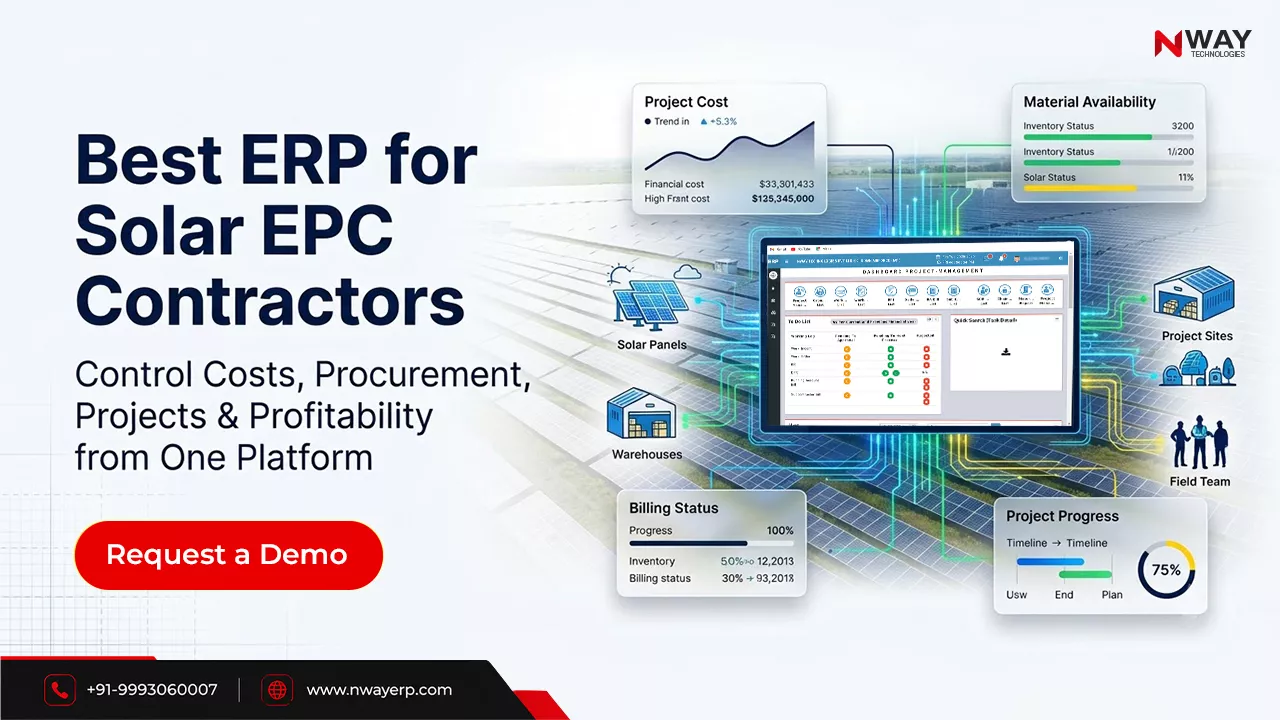 Table of Contents: Introduction Why Solar EPC Companies Need Specialized ERP Solutions 10 Essential Features Every ERP for Solar EPC Contractors Must Have How to Evaluate the Best ERP for Solar EPC Contractors Common ERP Selection Mistakes Strategic Summary Table Conclusion Introduction Imagine a 50 MW solar power project nearing installation phase. The engineering team has issued revised drawings. Procurement is tracking delayed inverter deliveries. Site teams are requesting additional cable quantities. Finance is reviewing budget deviations. Meanwhile, project leadership is under pressure to maintain margins and meet commissioning deadlines. Now imagine all of this information sitting in separate spreadsheets, WhatsApp groups, emails, and disconnected software systems. Unfortunately, this is still the reality for many solar EPC contractors. As India’s renewable energy sector continues expanding, project complexity is increasing rapidly. Solar EPC companies are managing larger project portfolios, geographically distributed sites, higher compliance requirements, and tighter profit margins. In this environment, ERP is no longer simply a finance system. It has become the operational command center of a successful solar EPC organization. The question is not whether to implement ERP. The real question is: What features should an ERP for Solar EPC Contractors include to create measurable business value? Why
 -
Oct 08 2026
 Table of Contents: Introduction Why Excel Became the Default Tool in Construction Where Excel for Construction Management Works Well The Hidden Moment When Excel Starts Failing Where Excel Fails in Construction Management When Should a Construction Company Move Beyond Excel? How Construction ERP Software Complements Excel Conclusion Introduction A project manager receives a call from the finance team. “Can you share the latest project cost report in the next 15 minutes?” The report exists. Somewhere. One version is with the site engineer. Another is in the planning department. Procurement has updated material costs in a different spreadsheet. Finance maintains its own workbook. Meanwhile, management is looking at yesterday’s data while the site team is working with today’s numbers. This scenario plays out daily across construction companies in India. The issue is not that Excel is a bad tool. In fact, Excel remains one of the most widely used tools in construction. It powers estimates, budgets, quantity calculations, vendor comparisons, and project reports. The real challenge begins when businesses grow. What worked for one project and fifteen employees often becomes a bottleneck when managing multiple projects, hundreds of vendors, distributed teams, and crores worth of project costs. This raises an important
 -
Sep 30 2026
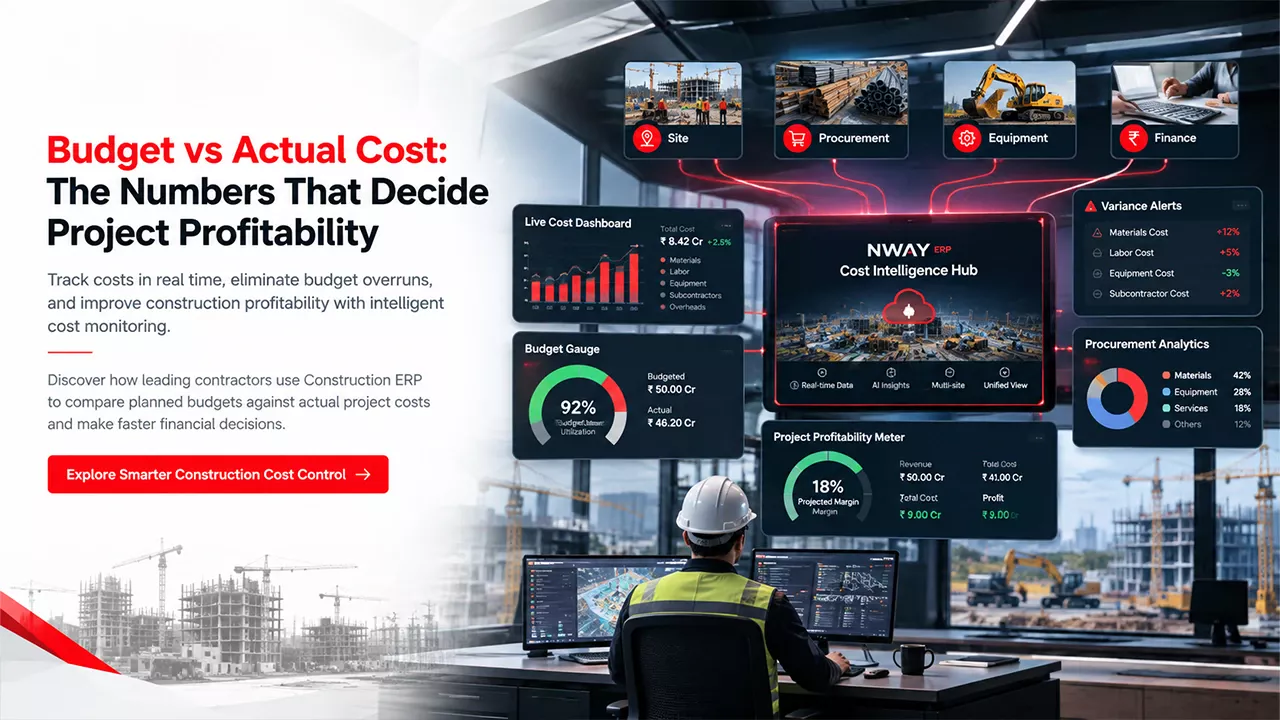 Budget vs actual cost in construction compares the planned cost of work with what was really spent on it. Calculate it as Cost Variance = Budgeted Cost − Actual Cost. A negative result means an overrun. For projects still in progress, compare the budgeted cost of work completed (earned value) with actual cost. Example: Budget ₹55 lakh, actual ₹57.7 lakh → variance −₹2.7 lakh (−4.9%), an overrun. Table of Contents: What Does Budget vs Actual Cost Mean? Why Budget vs Actual Cost Matters in Construction Step-by-Step Process for Calculating Budget vs Actual Cost Manual Monitoring vs ERP-Based Cost Management How Construction ERP Improves Budget vs Actual Tracking Cost Impact Framework: Where Budget Variances Usually Start Future of Construction Cost Management Conclusion Imagine a contractor winning a ₹50 crore infrastructure project with an estimated margin of 12%. On paper, the project looks healthy. Three months later: Material prices increase unexpectedly. Additional machinery is deployed. Labour productivity declines due to site challenges. Procurement delays force emergency purchases at higher rates. Individually, these expenses appear manageable. Collectively, they reduce project profitability significantly. The biggest problem is that many organizations discover these variances only during monthly reviews or project closure audits. By that point,
 -
Sep 28 2026
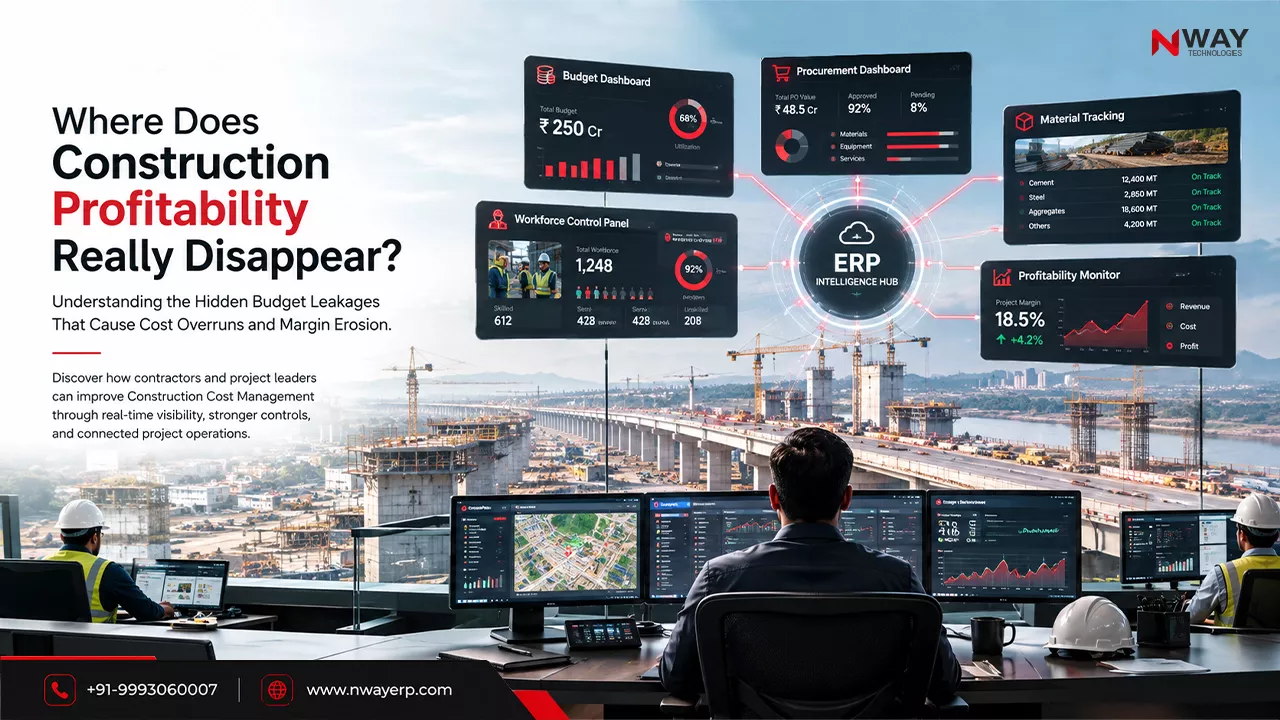 Table of Contents: Introduction The Hidden Nature of Construction Budget Leakages The 7 Biggest Causes of Budget Leakages in Construction Projects How Construction ERP Software Reduces Budget Leakages Construction Budget Leakage Cheat Sheet Conclusion Introduction A contractor wins a ₹200 crore infrastructure project with healthy projected margins. Six months later, cash flow is tightening, procurement teams are requesting additional budgets, labor productivity is declining, and finance reports indicate rising costs. Management immediately investigates. The surprising discovery? There was no single major problem. Instead, profitability escaped through dozens of seemingly minor issues: Excess material consumption Unapproved purchases Rework from drawing revisions Delayed subcontractor reconciliations Idle manpower Equipment downtime Late detection of cost variances These are budget leakages. Across India, UAE, Saudi Arabia, and the wider GCC region, tighter margins and increasingly complex projects are making Construction Cost Management a boardroom priority rather than just a project control function. The critical question is no longer: “Why did the project go over budget?” It is: “Where did the money start leaking?” The Hidden Nature of Construction Budget Leakages Unlike a structural failure or schedule delay, budget leakages rarely create immediate alarms. They accumulate quietly. A few extra tons of steel. A few days
 -
Sep 25 2026
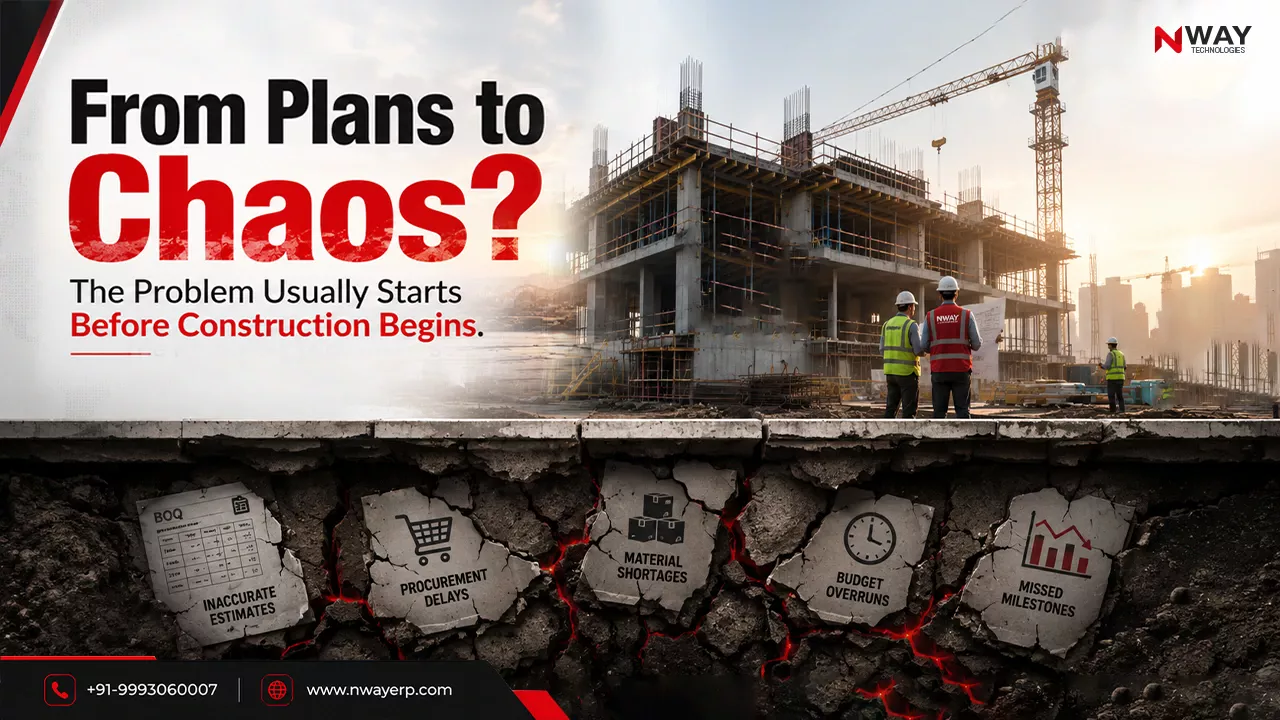 Most construction projects don’t fail because teams lack experience. The BOQ is approved. The schedule is finalized. Procurement plans are prepared. Resources are assigned. Yet six months later, the same project is dealing with delayed approvals, material shortages, budget overruns, and missed milestones. The uncomfortable reality is that project chaos rarely begins on-site. It begins much earlier in the gap between planning and execution. Research from McKinsey found that large construction projects frequently suffer major cost and schedule overruns, while productivity growth in construction has remained significantly below many other industries for decades. Meanwhile, productivity challenges continue to be driven by communication gaps, fragmented planning, and weak information flow rather than purely technical execution issues. The problem is not the plan itself. The problem is that most organisations cannot maintain visibility once execution begins. Table of Contents: Executive Summary The Real Problem Isn’t What You Think Why Traditional Methods Fail Four Challenges That Turn Plans into Chaos What Successful Construction Companies Do Differently Where Construction ERP Fits In What’s Changing in 2026 and Beyond Conclusion Executive Summary Many construction businesses assume project delays are caused by labour shortages, vendor issues, or changing project conditions. While these factors contribute, the bigger
 -
Sep 17 2026
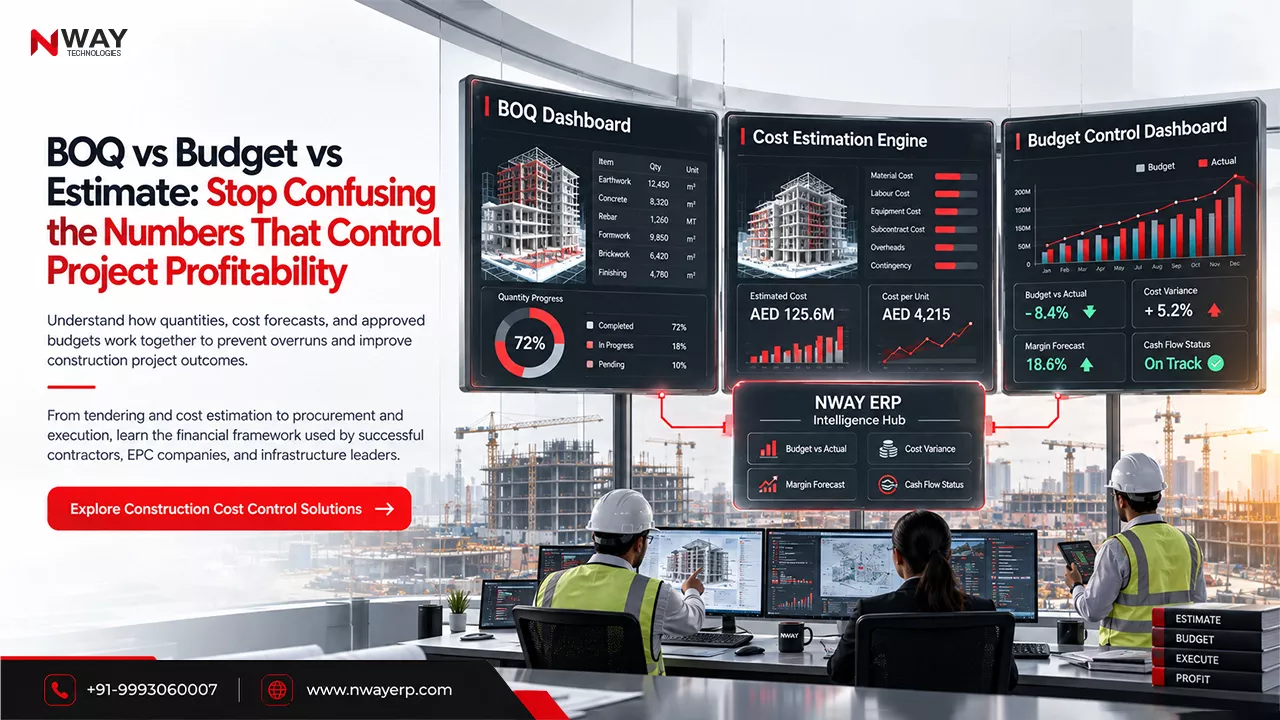 Table of Contents: Introduction Understanding the Construction Cost Framework What Is a BOQ (Bill of Quantities)? What Is a Construction Cost Estimate? What Is a Construction Budget? BOQ vs Budget vs Estimate: Side-by-Side Comparison Real-World Scenario: Where Things Go Wrong Hidden Risks of Confusing BOQ, Estimate, and Budget Best Practice Checklist for Contractors and EPC Companies How Construction ERP Connects BOQ, Budget, and Cost Estimation Conclusion Introduction Imagine a contractor wins a ₹100 crore infrastructure project. The bid was competitive, the quantities were checked, and management felt confident about projected margins. Six months later, the project is facing procurement disputes, budget overruns, and cash flow pressure. When management investigates, the problem is not a major design change or unforeseen site condition. It is something much simpler: The project team treated the BOQ, estimate, and budget as if they were the same thing. This confusion is surprisingly common across contractors, builders, EPC firms, and infrastructure companies. Teams often discuss “project cost” as one number when in reality multiple financial documents guide a project from tendering to execution. As projects become larger, margins become tighter, and stakeholder scrutiny increases across India, the UAE, Saudi Arabia, and the wider GCC region, understanding the
 -
Sep 15 2026
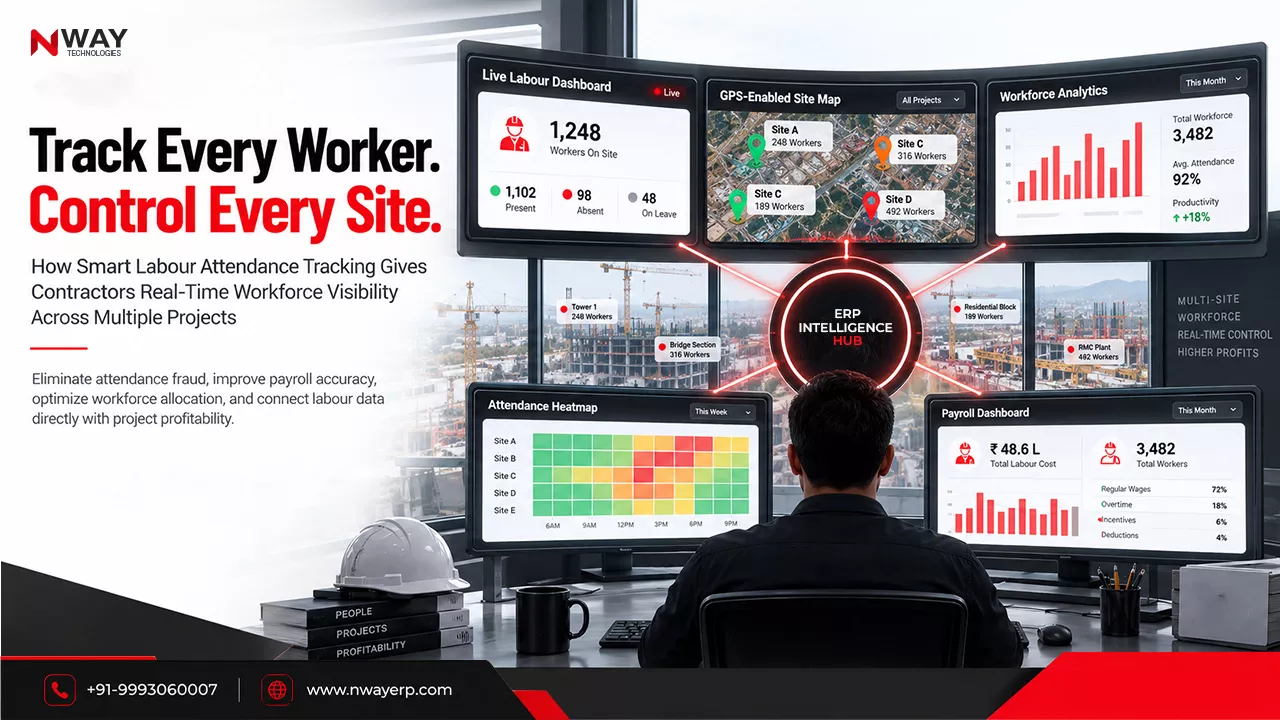 Table of Contents: Introduction Why Labour Attendance Tracking Matters More Than Ever The Unique Challenge of Multi-Site Construction Workforce Management The Evolution of Labour Attendance Management Strategic Comparison: Manual vs Digital Attendance Tracking Technologies Powering Modern Construction Site Attendance Tracking A Practical Framework for Tracking Labour Across Multiple Sites Best Practice Checklist for Construction Workforce Management Conclusion What Is Construction Site Attendance Management? Imagine managing a construction company with 3,500 workers spread across twelve active projects. Every morning begins with supervisors collecting attendance manually. By afternoon, workers have moved between sites. By evening, project managers are asking questions nobody can answer confidently: How many workers were actually present today? Which project is understaffed? Which subcontractor deployed fewer workers than committed? How much labour cost was incurred today? Why is productivity declining at Site 7? Now multiply that uncertainty across an entire month. For contractors, developers, EPC companies, and infrastructure firms, labour represents one of the largest controllable costs. Yet many organizations still rely on paper registers, spreadsheets, and verbal updates for workforce monitoring. The problem is no longer attendance. The problem is visibility. As construction projects become larger, geographically distributed, and schedule-driven, construction labour attendance tracking has evolved from a
 -
Sep 10 2026
 Table of Contents: Introduction Understanding the Difference: Tracking vs Managing Labour Where Excel Starts Failing Contractors Construction Workforce Management: Why Real-Time Visibility Matters Labour Management Software vs Excel: Detailed Comparison Hidden Risks of Managing Labour Through Excel What Modern Labour Management Software Delivers The CFO Perspective: Labour Visibility Equals Financial Control Labour Management Software + Construction ERP: The Bigger Advantage When Should a Contractor Move Beyond Excel? Best Practice Checklist for Contractors Conclusion Introduction Imagine managing 1,200 workers spread across six project sites. Every morning, supervisors collect attendance manually. At the end of the week, HR teams consolidate spreadsheets from different locations. Payroll calculations require multiple reviews, and project managers still struggle to answer a simple question: “How many workers are actually on-site today, and what is their productivity?” This scenario is common across construction, infrastructure, EPC, and contracting businesses. For years, Excel has been the default tool for workforce tracking. It is familiar, inexpensive, and easy to deploy. However, as projects become larger, contractor ecosystems become more complex, and compliance requirements increase, Excel often transforms from a useful tool into an operational bottleneck. Today’s contractors require visibility across manpower deployment, productivity, attendance, payroll, compliance, subcontractor management, and project performance.
 -
Sep 08 2026
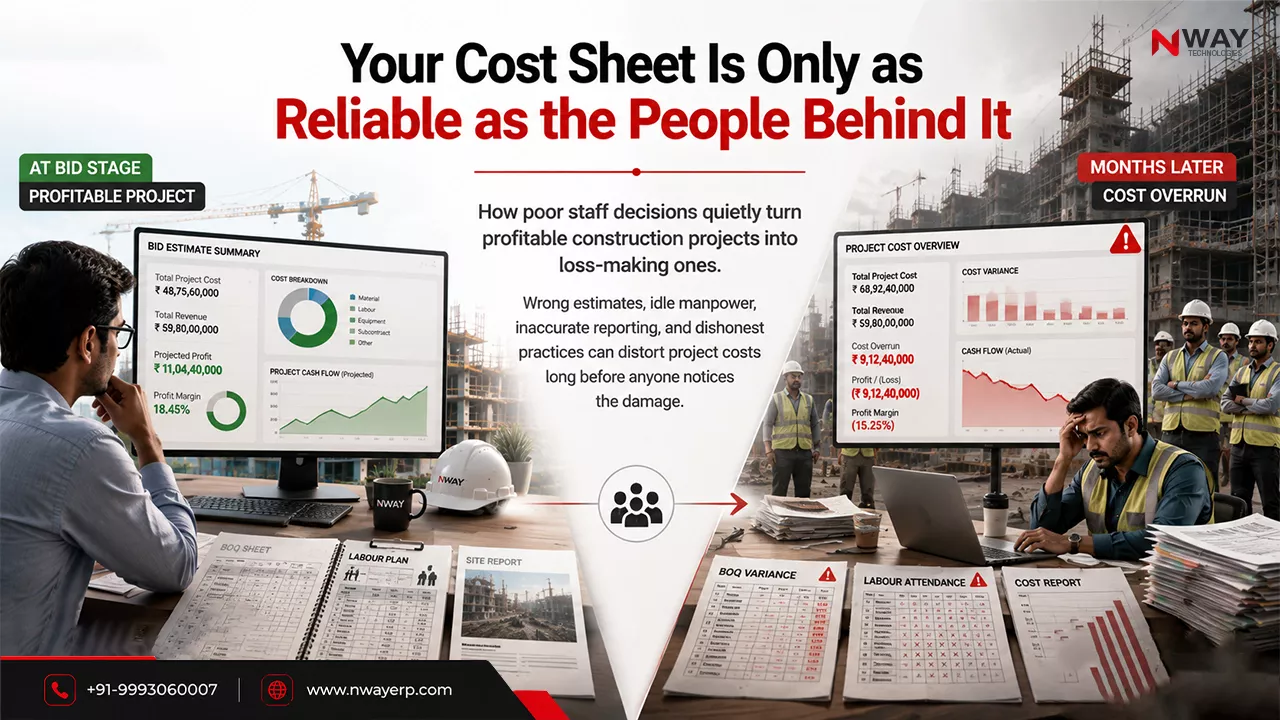 Table of Contents: Introduction Why Construction Cost Analysis Depends on People More Than Spreadsheets The Hidden Risk of Hiring for Designation Instead of Competence The Hidden Cost Nobody Tracks: Idle Staff How Labour Productivity Directly Influences Project Profitability Incompetence Is Costly, Dishonesty Is Worse Why This Problem Is So Common in Construction Conclusion Introduction Most contractors have experienced it. The estimate looked solid. The quantities were checked. The rates seemed accurate. The projected profit was acceptable. Yet six months later, the project is consuming cash faster than expected, labour costs are rising, and management is struggling to understand where the margins disappeared. In many cases, the problem is not steel prices, cement rates, or client delays. The problem is people. Every construction cost analysis depends on human inputs. Estimators prepare quantity calculations. Site engineers report productivity. Supervisors verify manpower attendance. Procurement teams raise purchase requests. Billing engineers certify executed quantities. When the wrong people are involved, either because they lack competence or because controls are weak, incorrect information enters the system. Once that happens, every decision based on that information becomes unreliable. This is not a rare contractor problem. It is a challenge faced across the construction industry. Understanding how
 -
Sep 03 2026
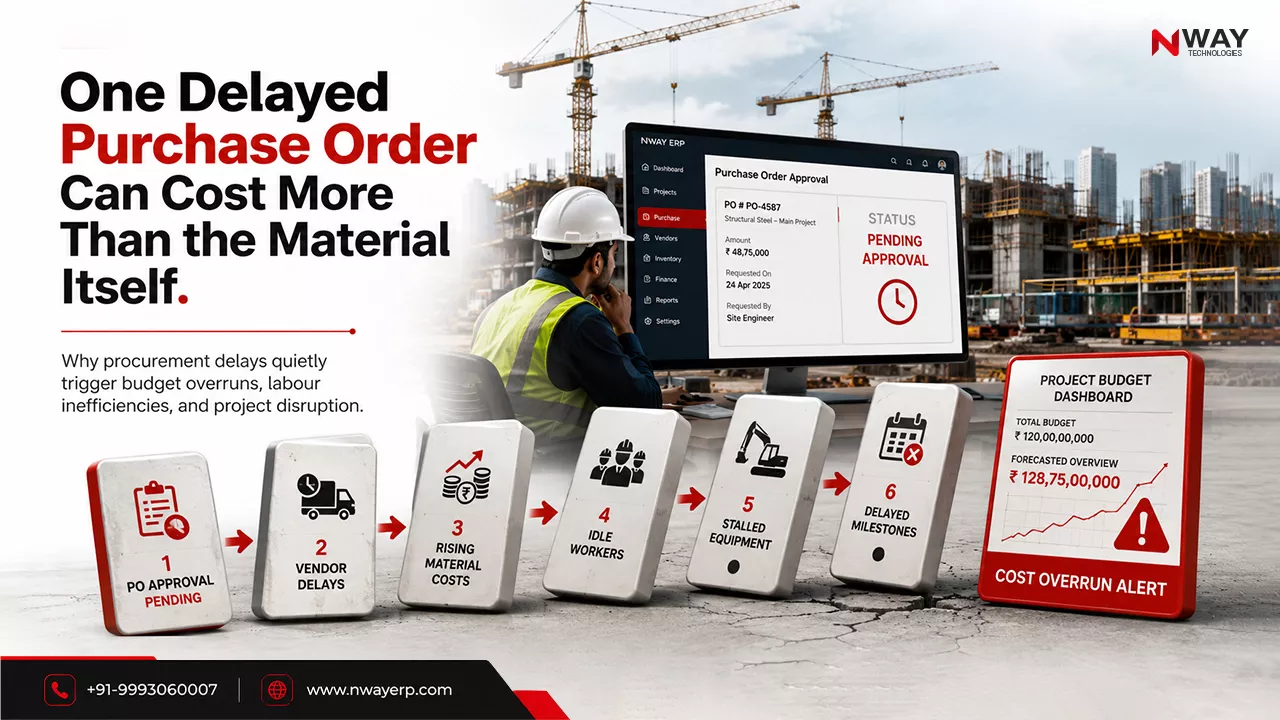 Table of Contents: Introduction Why Procurement Delays Don’t Stay in Procurement The Chain Reaction Nobody Sees Coming Lead-Time Risk: The Hidden Budget Killer How a Delayed Purchase Order Becomes a Cost Overrun The True Cost of Material Procurement Delays Why Traditional Procurement Methods Make Delays Worse What Strong Construction Procurement Management Looks Like Conclusion Introduction A project manager reviews the weekly progress report and discovers that a critical activity has slipped by three weeks. The immediate assumption is usually the same: “The supplier delayed delivery.” But suppliers are often blamed for problems that started much earlier. The steel didn’t arrive late because the supplier failed. The cement wasn’t unavailable because the market suddenly ran out. The MEP package wasn’t delayed because logistics stopped working. In many cases, the real cause is much simpler and much more dangerous: the purchase order was raised too late. Construction companies rarely lose money because of one dramatic mistake. They lose money because small delays accumulate, interact, and create consequences far beyond their original source. A delayed design approval pushes vendor selection back. A delayed vendor selection pushes the purchase order back. A delayed purchase order extends procurement lead times. The extended lead time exposes
 -
Aug 26 2026
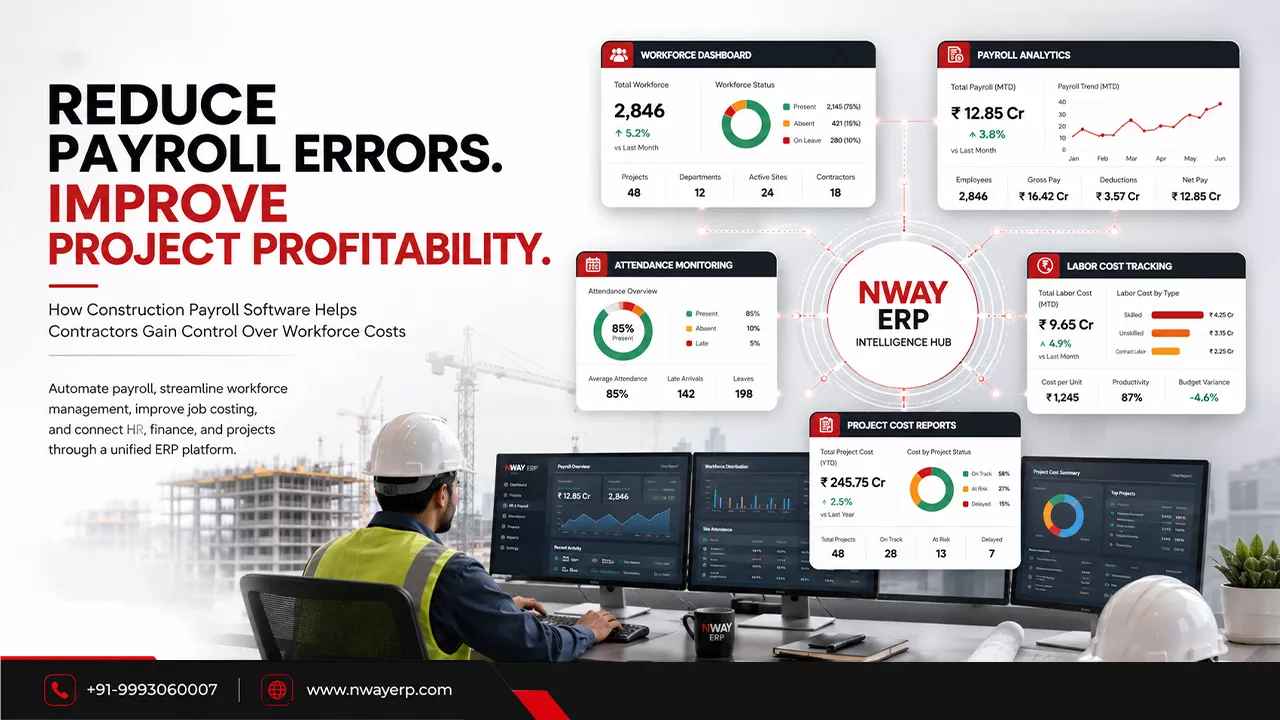 Table of Contents: Introduction Why Payroll Errors Are So Common in Construction The Hidden Cost of Payroll Errors How Construction Payroll Software Reduces Errors The Role of Payroll Contract Management Connecting Payroll with Construction Job Costing How Construction ERP Software Creates a Single Source of Truth A Practical Payroll Error Reduction Framework Construction Payroll Accuracy Cheat Sheet Introduction Imagine a large infrastructure project with 800 workers deployed across multiple locations. The finance department receives handwritten attendance records from site supervisors, overtime details arrive through spreadsheets, and subcontractor labor data is submitted days later. When payroll is processed, dozens of discrepancies emerge. Workers dispute overtime calculations. Project managers question labor cost reports. Finance teams spend days reconciling records instead of focusing on strategic planning. This scenario is not unusual. Construction payroll is fundamentally more complex than payroll in many other industries. Workforce mobility, multiple shifts, project-specific labor allocation, contractor payments, compliance requirements, and varying pay structures create an environment where errors can easily occur. As contractors, developers, EPC companies, and infrastructure firms scale operations, traditional payroll methods become increasingly difficult to manage. This has accelerated the adoption of construction payroll software, integrated HRMS solutions, and Construction ERP Software platforms designed specifically
 -
Aug 21 2026
 Table of Contents: Introduction Why Real Estate Companies Need More Than Basic Software The 7 Factors Every Real Estate Company Should Evaluate Before Choosing an ERP Cloud ERP vs Traditional ERP Systems ERP Selection Roadmap for Mumbai Developers The Business Impact of Modern Real Estate ERP Solutions Conclusion Introduction Real estate ERP software in Mumbai must do more than handle accounting. It must connect land and approvals, construction costs, bookings, customer collections, and MahaRERA reporting in one system because Mumbai developers run multiple towers, redevelopment projects, and contractor networks at once. This checklist covers the seven features to evaluate, the compliance your ERP must handle, typical costs, and implementation timelines so that you can shortlist the right ERP for your projects. Mumbai remains one of India’s most competitive real estate markets. Developers today manage multiple projects, large contractor networks, evolving regulations, and increasingly demanding customers. Yet many organizations still operate through disconnected systems where project data, accounting information, procurement records, and customer details are stored in separate applications. This lack of visibility creates delays, reporting gaps, and decision-making challenges. As projects become larger and more complex, companies are shifting toward ERP for Real Estate platforms that integrate project management, finance,
 -
Jul 25 2026
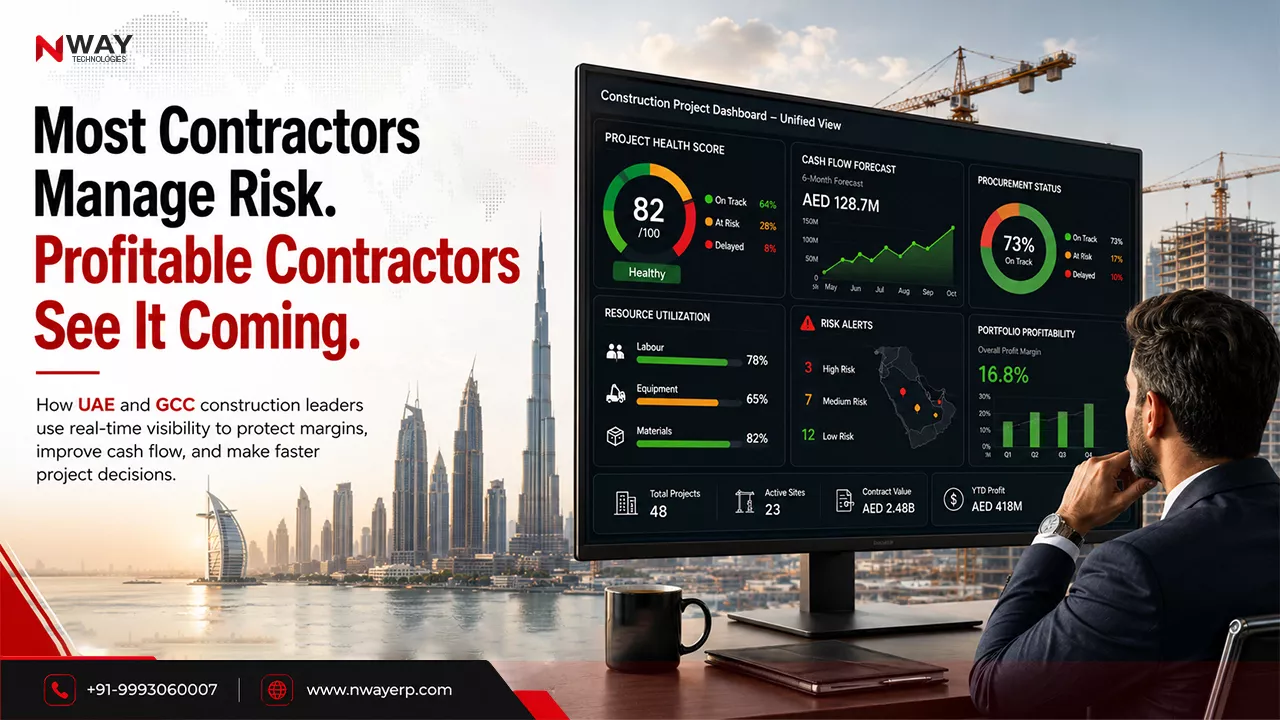 Executive Summary Across the UAE and wider GCC construction industry, the most profitable contractors are changing how they think about risk. Rather than focusing exclusively on risk management frameworks, committees, and mitigation plans, leading organizations are investing in something more powerful: Construction Risk Visibility. The difference is subtle but significant. Risk management attempts to respond to problems. Risk visibility helps organizations identify emerging issues before they become problems. In an environment dominated by mega-projects, compressed schedules, global supply chains, subcontractor dependencies, and increasing compliance requirements, visibility has become the foundation of effective decision-making. This shift is redefining construction risk management UAE practices and shaping the next generation of digital transformation strategies across GCC construction businesses. Table of Contents: A Hidden Profitability Challenge Emerging Across the GCC Why This Matters in the UAE & GCC The Real Problem Isn’t What You Think Why Conventional Practices Are No Longer Effective Modern Approach to Solving the Problem How Construction ERP Supports These Goals What’s Changing in 2027 and Beyond Conclusion A Hidden Profitability Challenge Emerging Across the GCC The GCC construction market is entering a new phase. Saudi Vision 2030, UAE infrastructure expansion, industrial diversification projects, logistics corridors, renewable energy developments, giga-projects, and
 -
Jul 21 2026
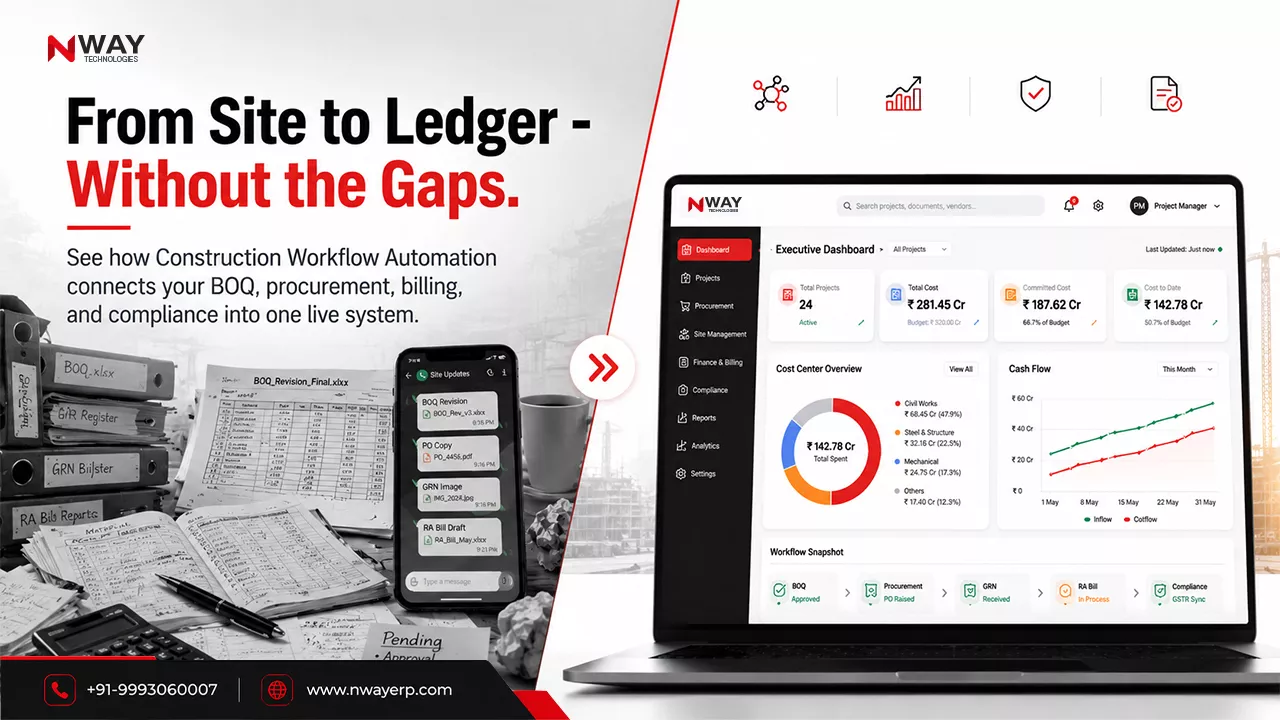 A site engineer emails a Bill of Quantities revision at 9 p.m. The purchase team, unaware, releases a purchase order against the old BOQ the next morning. Three weeks later, during RA billing, the mismatch surfaces and by then it has already cost the project a material overorder, a delayed GRN reconciliation, and a tense conversation with the client’s quantity surveyor. This is not hypothetical. It is Tuesday, in thousands of construction offices. Multiply that scenario across procurement, subcontractor billing, compliance filings, and site progress tracking, and you get a construction business that is perpetually one spreadsheet away from a costly surprise. This is the operational reality that construction workflow automation is built to solve — not by adding more software to the stack, but by connecting the sequence of approvals, documents, and cost centers that make up a project lifecycle for construction and infrastructure firms of every size. Table of Contents: The Construction Industry’s Productivity Problem What Is Construction Workflow Automation? The Inefficiencies of Manual Operations The Real Cost of Manual Workflows The Power of Automation: A New Operating Model for Construction Revolutionising Construction Management with ERP Software Conclusion The Construction Industry’s Productivity Problem The numbers make the case
 -
Jul 14 2026
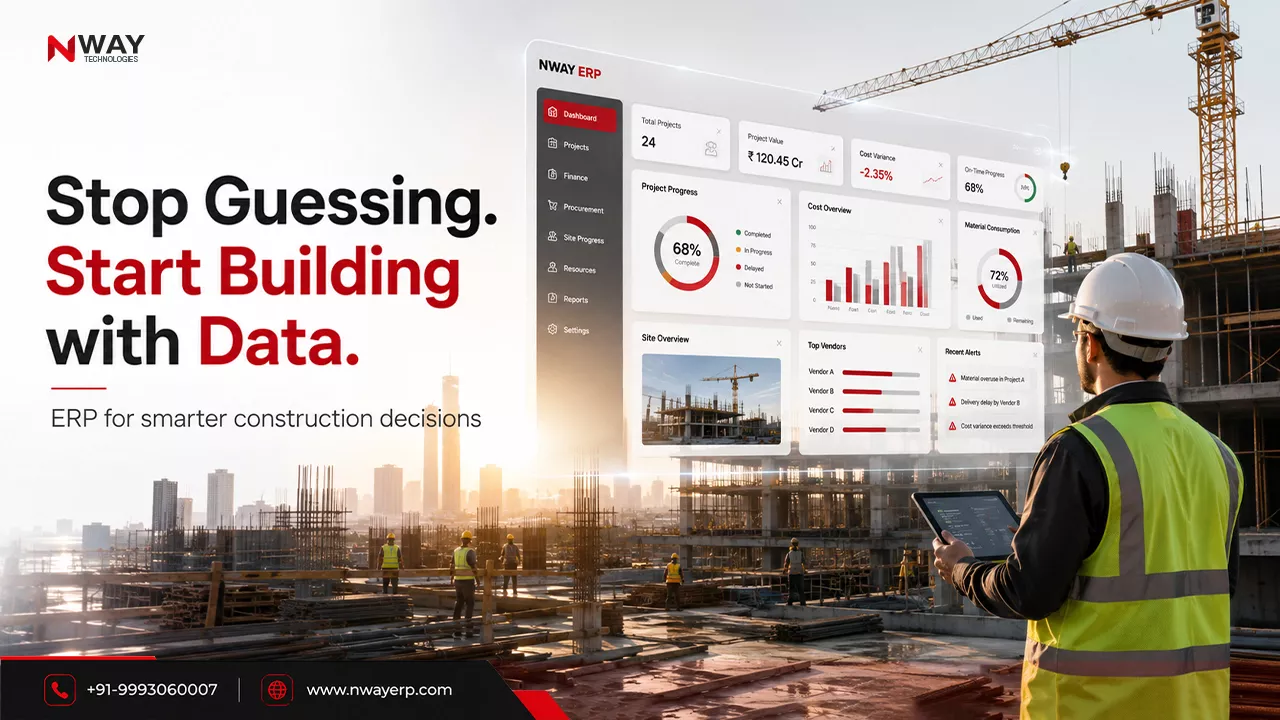 Table of content Introduction Industry Reality The Limitations of Traditional Construction Management The Challenges in Construction Management ERP-Driven Data Decision Ecosystem Construction ERP Benefits Why Nway ERP Fits the Need Conclusion Introduction A site engineer notices that material consumption on-site is higher than planned. The BOQ shows one figure; procurement records show another, and the finance team is working with last month’s data. By the time the discrepancy is investigated: Costs have already escalated Procurement decisions are delayed Project margins are impacted This is a common challenge in the construction industry, where project decisions are often made without access to real-time, unified data. Now imagine a different approach: A single dashboard that shows live material usage, cost variance, procurement status, and vendor performance updated in real-time. That’s the shift from reactive to data-driven construction management, powered by ERP. Larn mor about the Common Challenges in Construction Management & How Nway ERP Solves Them Construction projects are complex ecosystems involving multiple stakeholders, moving resources, and continuously evolving budgets. Yet, most decisions—whether related to procurement, scheduling, or financial control are often based on incomplete or outdated information. This leads to: Cost overruns Delays in execution Inefficient resource allocation In today’s competitive environment,