Table of content
- Introduction
- Industry Reality
- The Limitations of Traditional Construction Management
- The Challenges in Construction Management
- ERP-Driven Data Decision Ecosystem
- Construction ERP Benefits
- Why Nway ERP Fits the Need
- Conclusion
Introduction
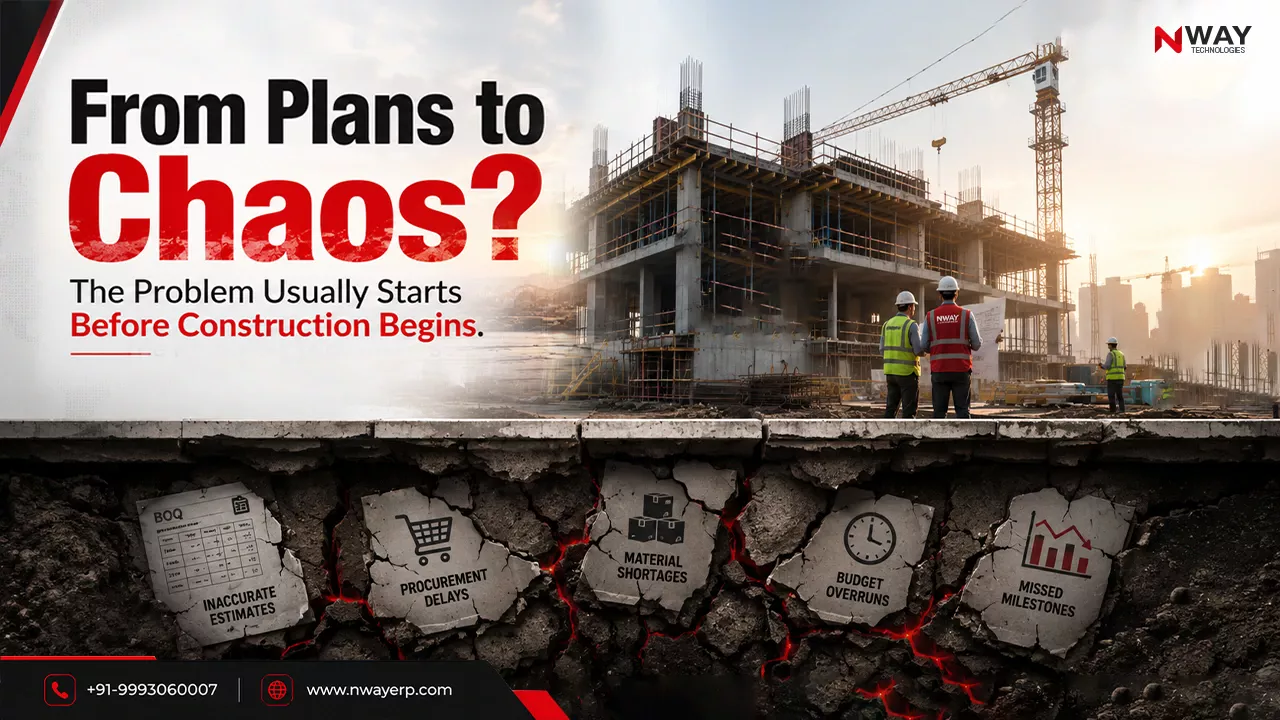
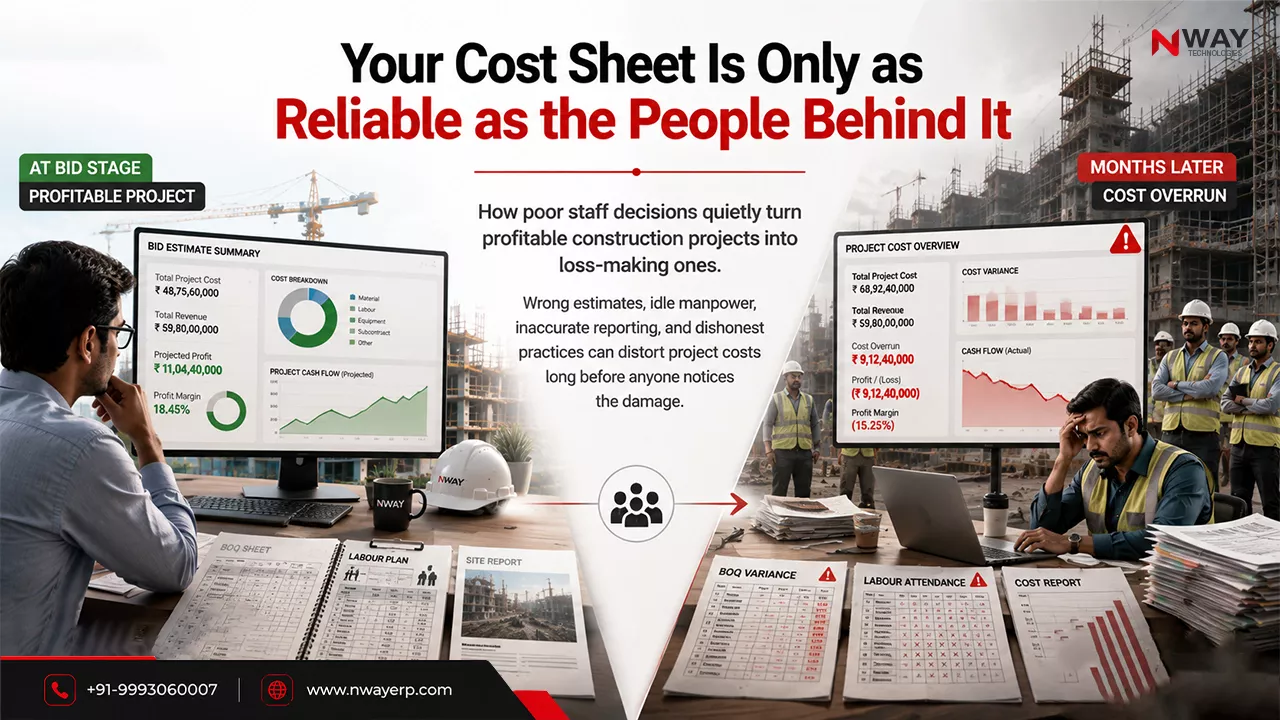
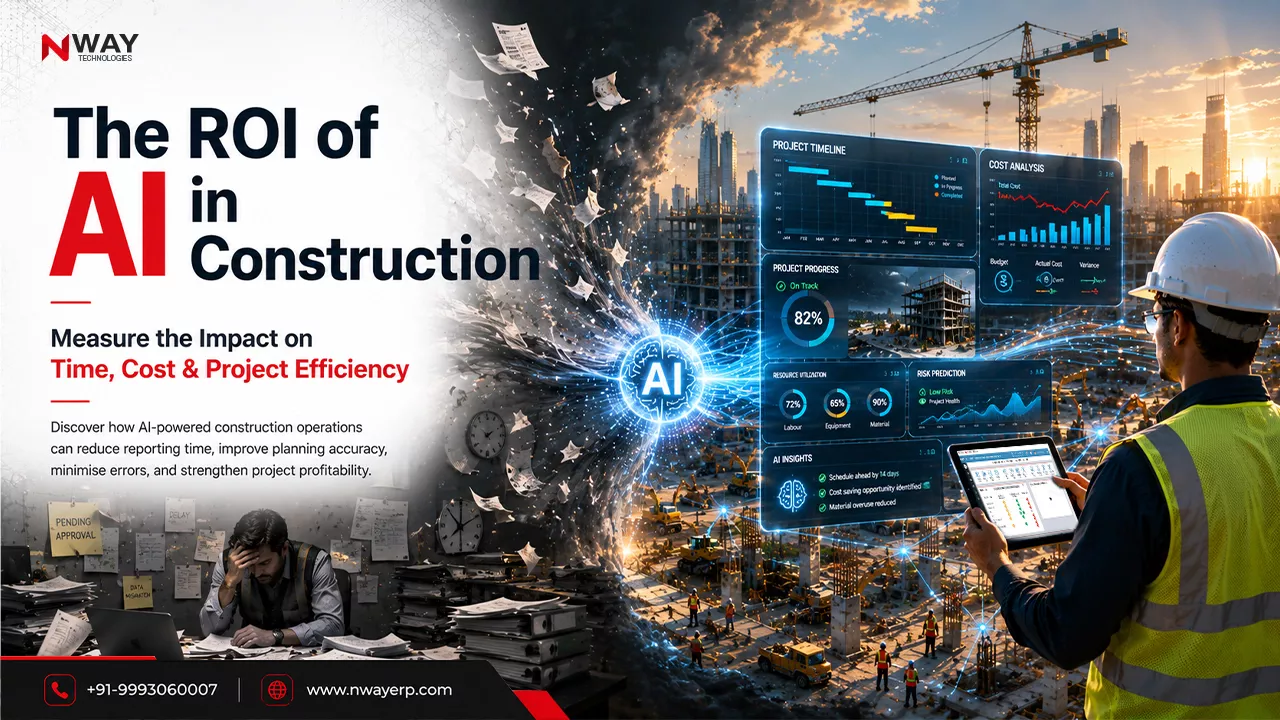
A site engineer notices that material consumption on-site is higher than planned. The BOQ shows one figure; procurement records show another, and the finance team is working with last month’s data.
By the time the discrepancy is investigated:
- Costs have already escalated
- Procurement decisions are delayed
- Project margins are impacted
This is a common challenge in the construction industry, where project decisions are often made without access to real-time, unified data.
Now imagine a different approach:
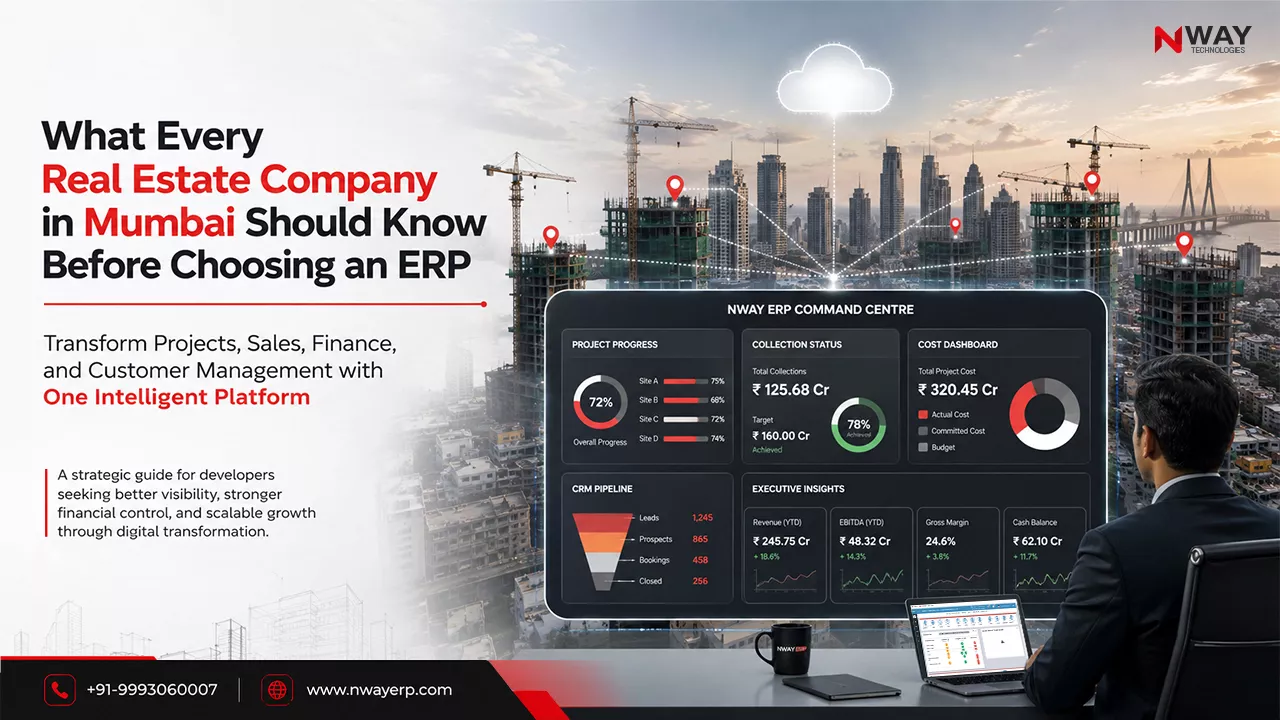
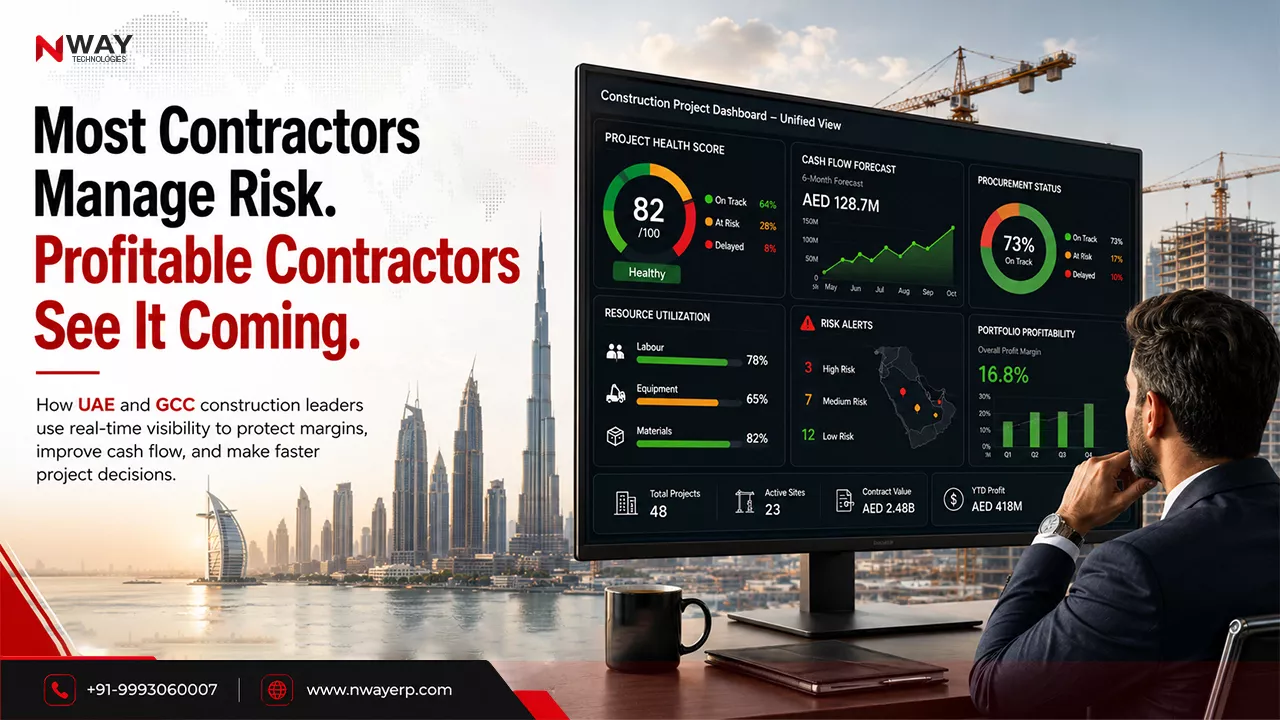
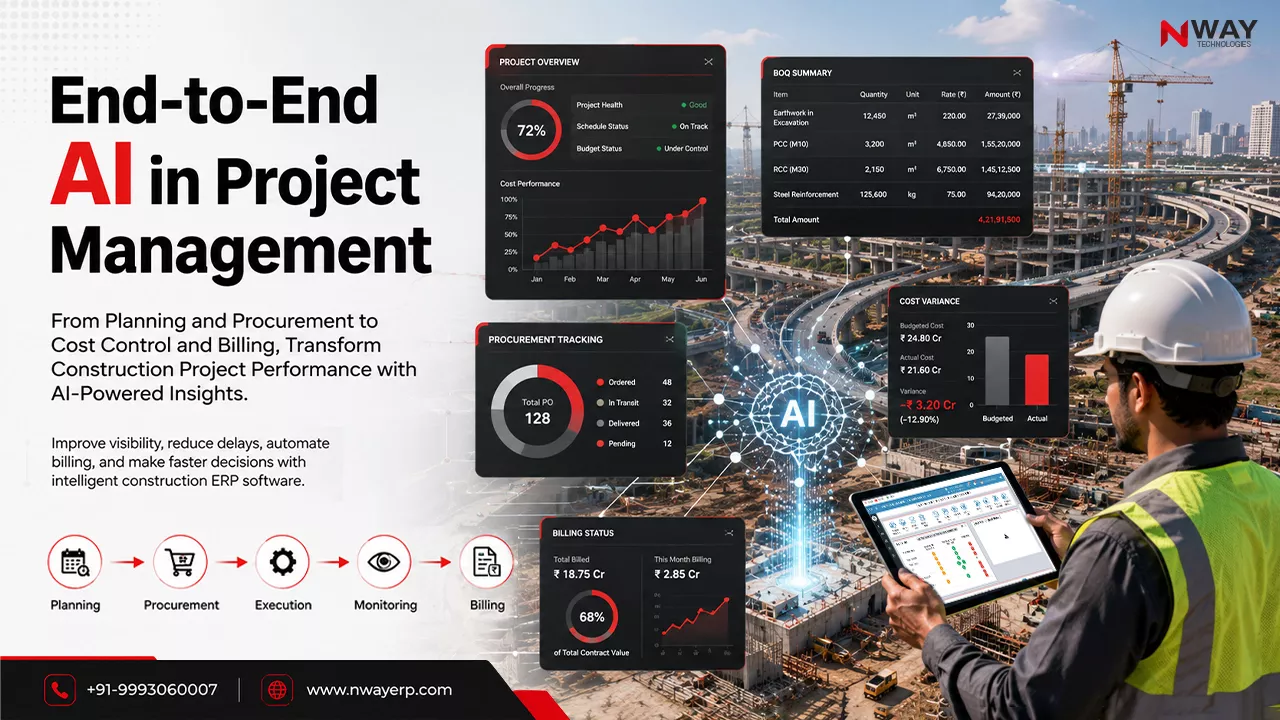
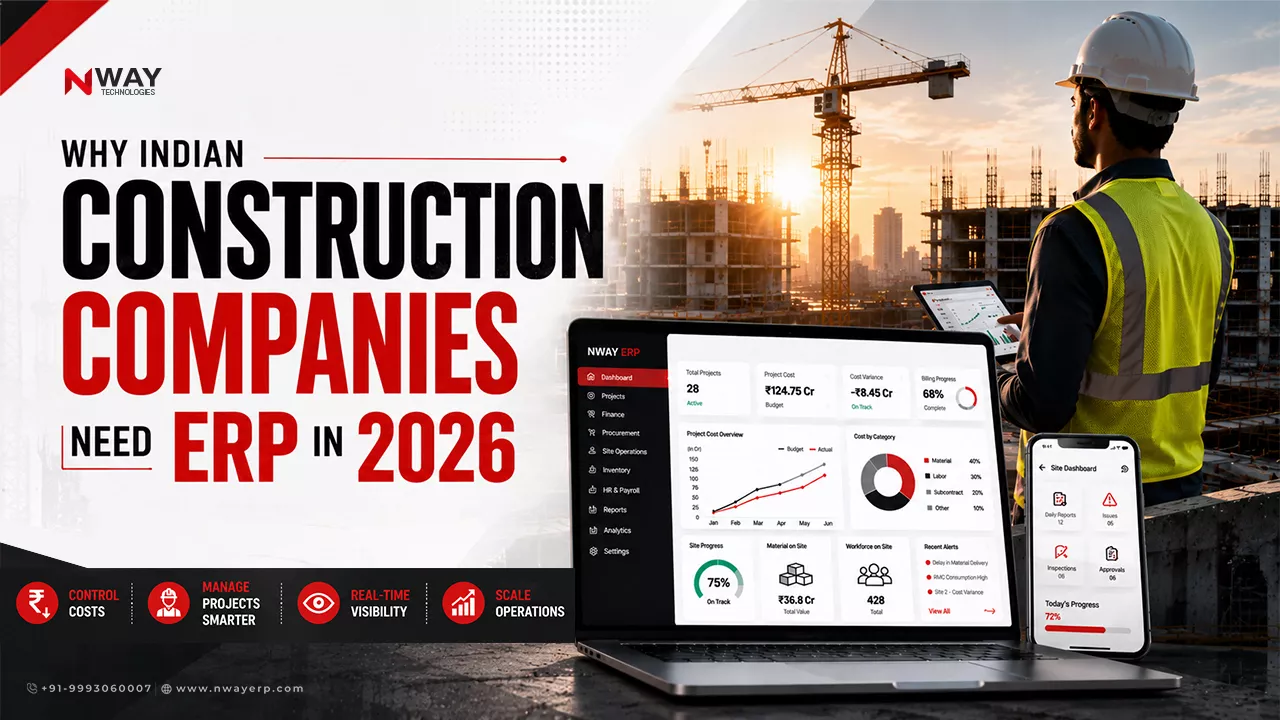
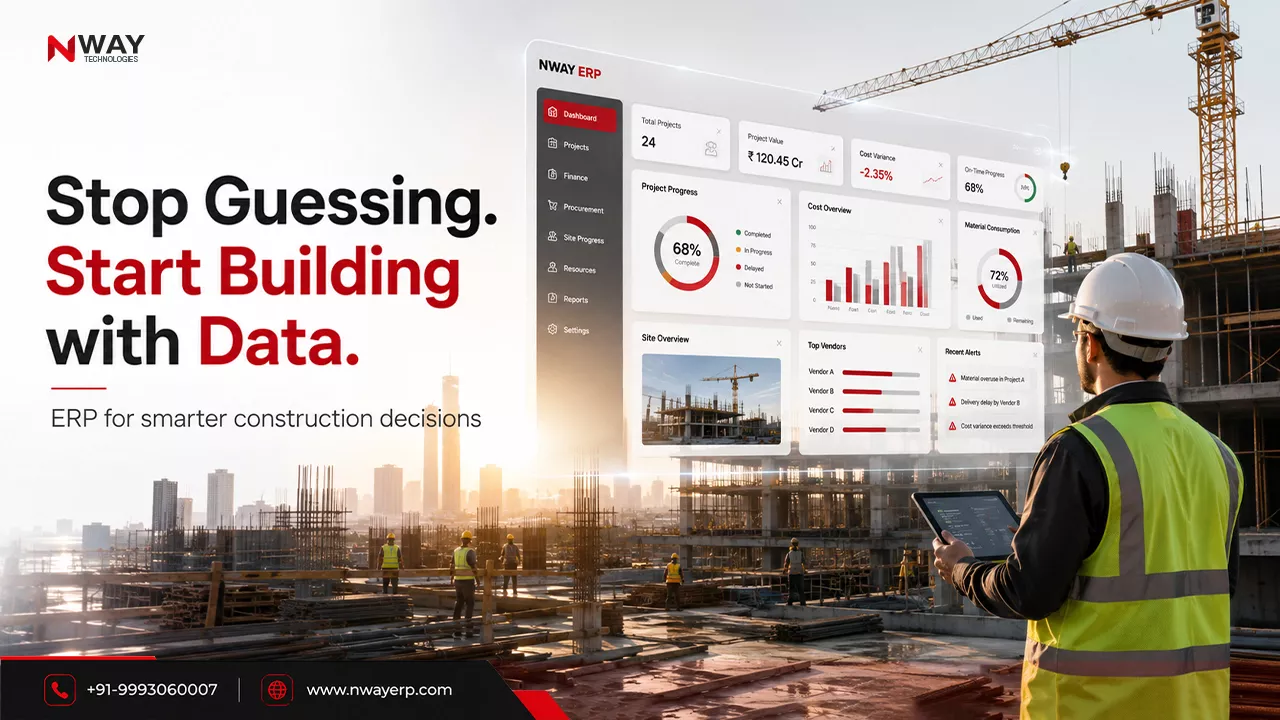
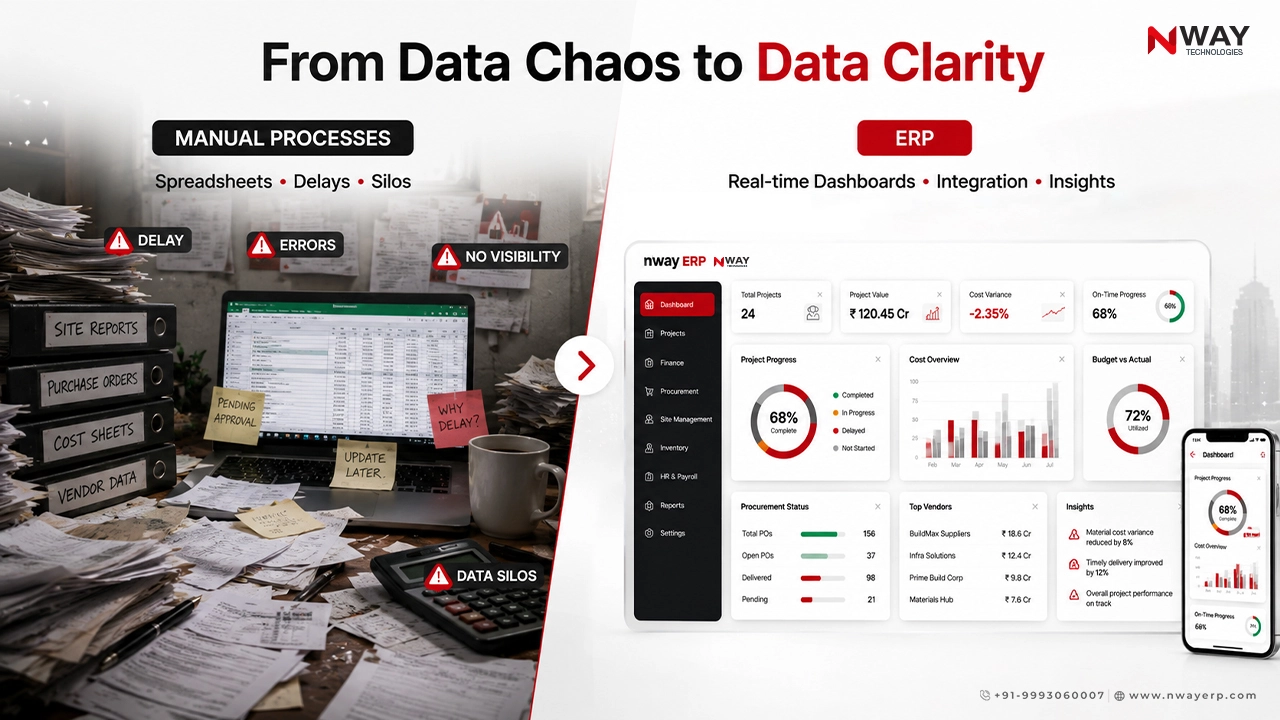
A single dashboard that shows live material usage, cost variance, procurement status, and vendor performance updated in real-time. That’s the shift from reactive to data-driven construction management, powered by ERP.
Larn mor about the Common Challenges in Construction Management & How Nway ERP Solves Them
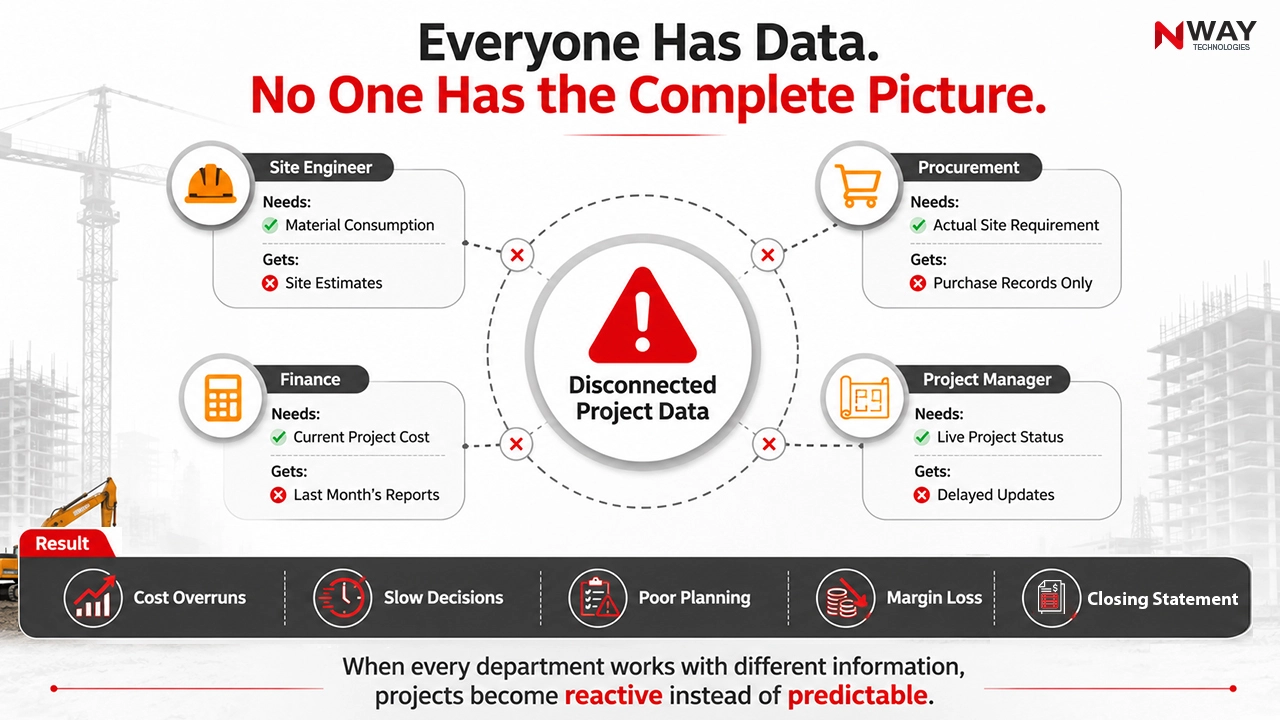
Construction projects are complex ecosystems involving multiple stakeholders, moving resources, and continuously evolving budgets. Yet, most decisions—whether related to procurement, scheduling, or financial control are often based on incomplete or outdated information.
This leads to:
- Cost overruns
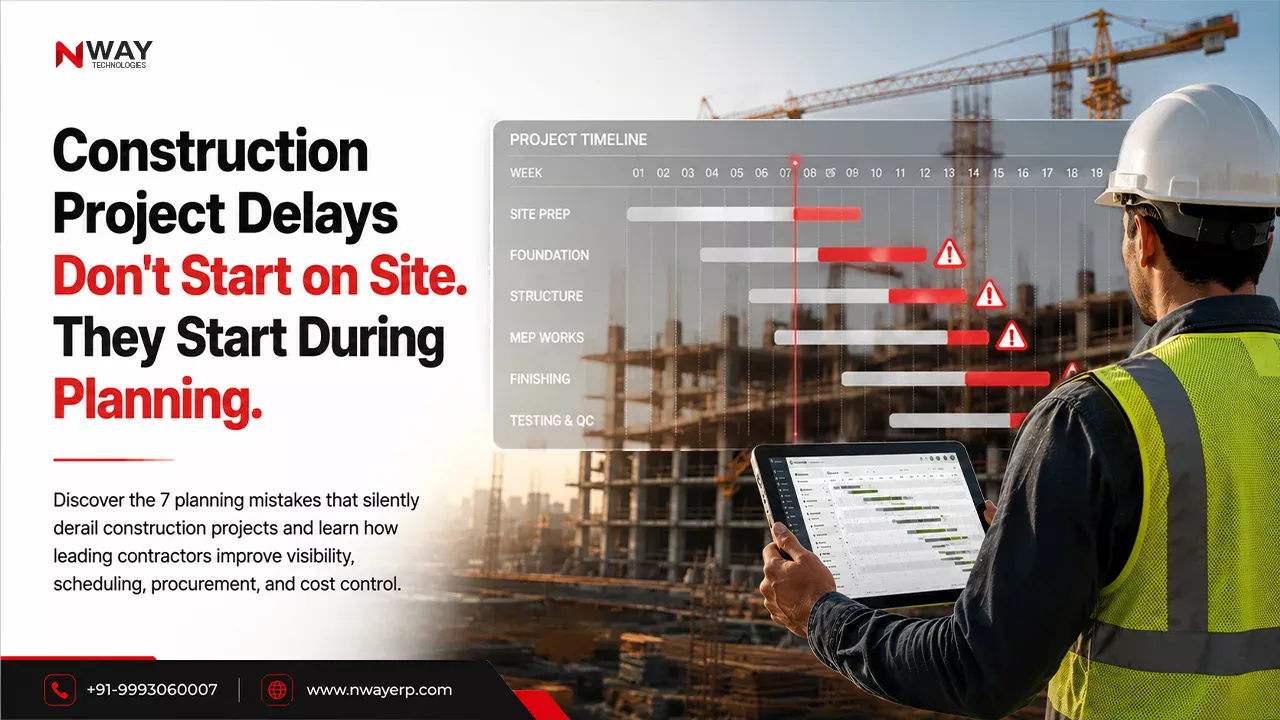
- Delays in execution
- Inefficient resource allocation
In today’s competitive environment, relying on instinct or fragmented data is no longer viable. Businesses need real-time intelligence to drive every decision.
This is where ERP software for the construction industry becomes essential, turning scattered data into actionable insights that enable faster, smarter, and more profitable decisions.
Industry Reality
The construction industry is one of the world’s largest sectors, yet it continues to struggle with low productivity growth, significantly lower than other industries.
At the same time, digital adoption is increasing. However, most construction firms operate across multiple disconnected systems, creating inefficiencies and duplication of effort.
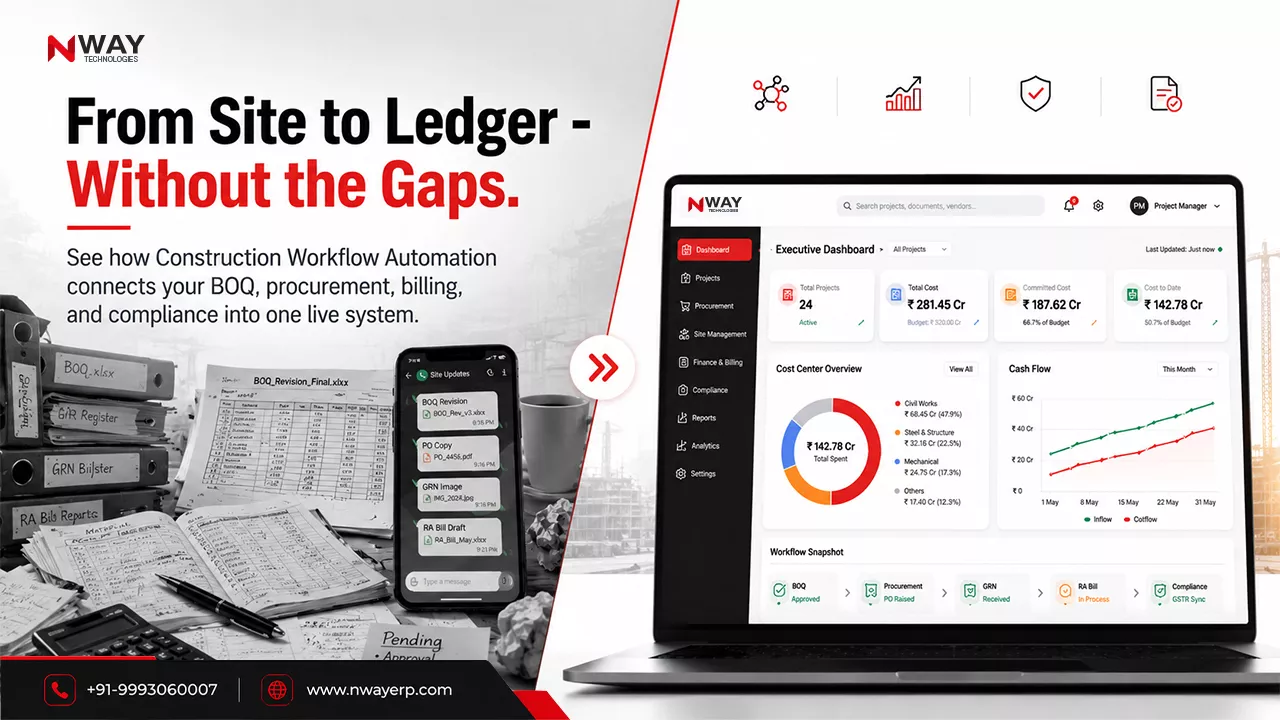
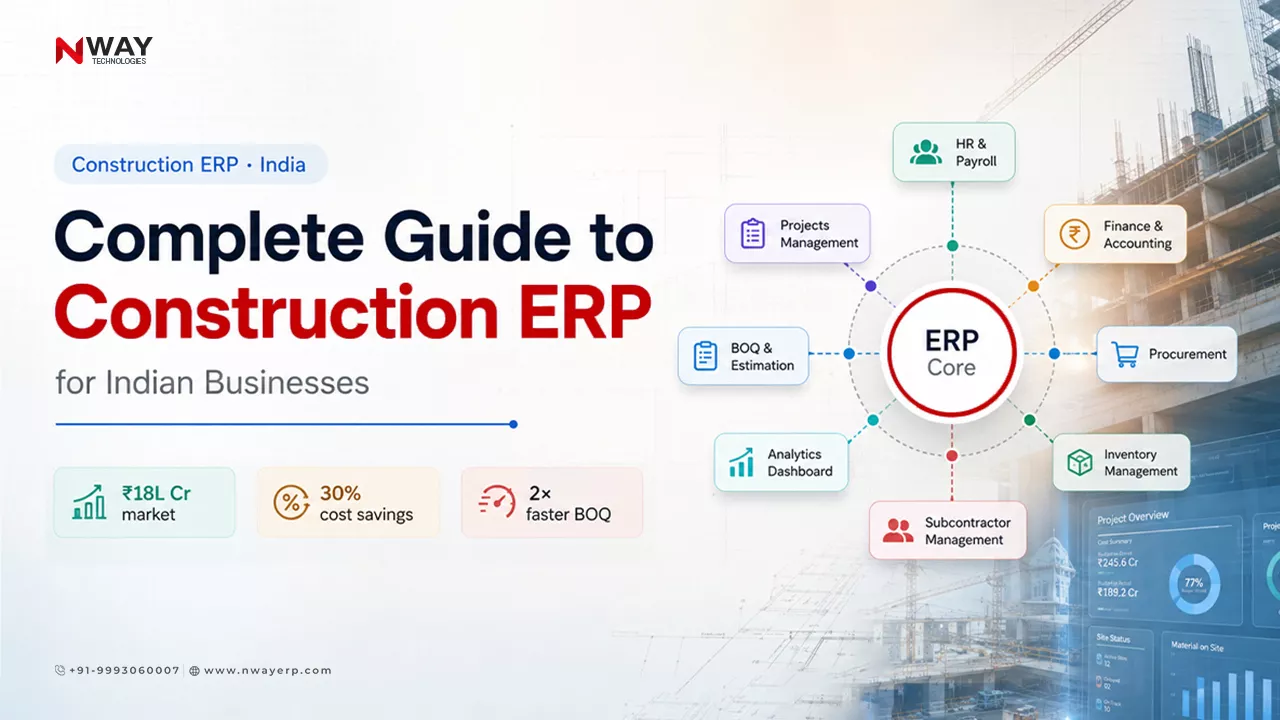
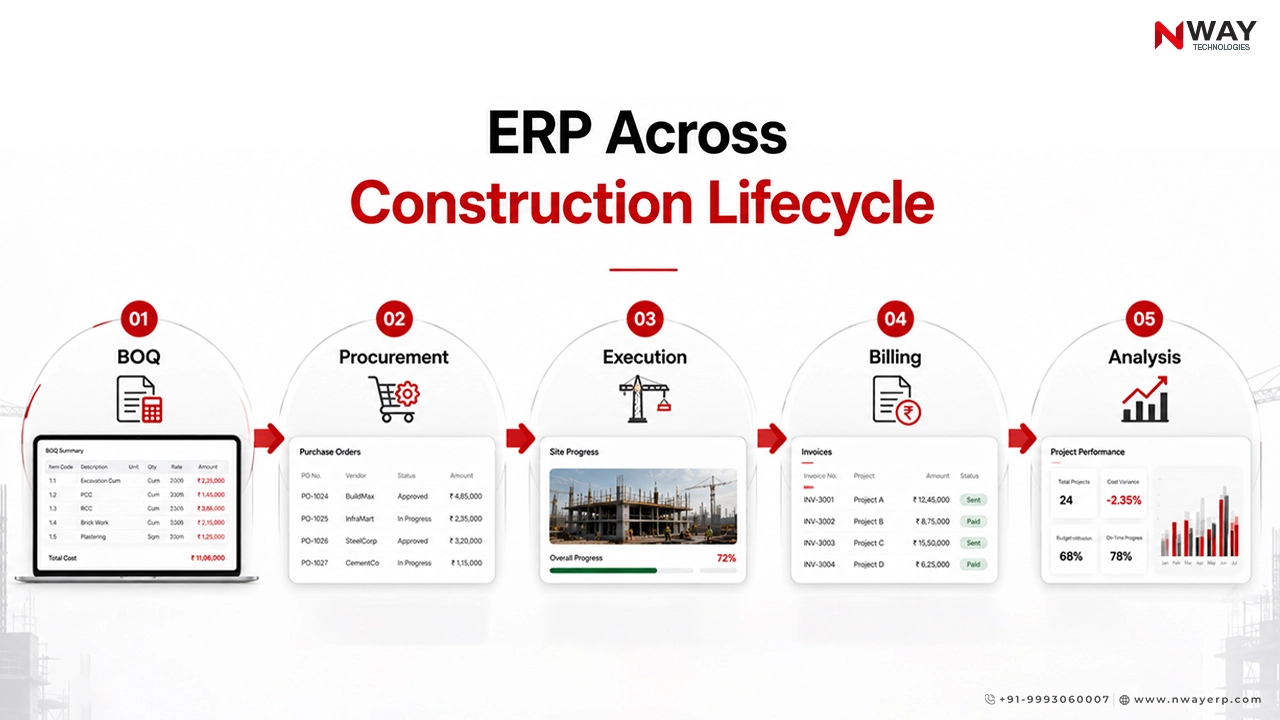
ERP systems are addressing this gap by becoming the central platform for managing the construction project lifecycle, from BOQ estimation and procurement to execution and financial reporting.
Today, a large portion of general contractors are already using ERP systems, highlighting a strong shift toward integrated, data-driven operations.
The Limitations of Traditional Construction Management
Fragmented Data Sources
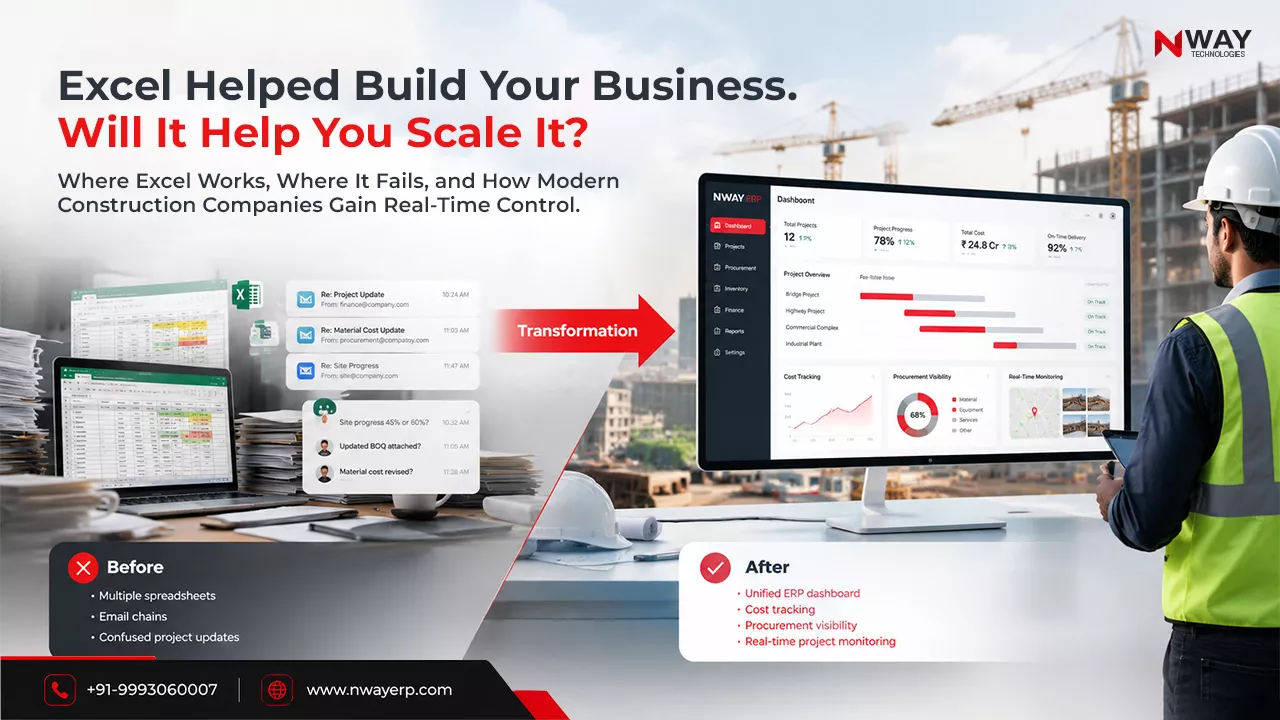
Construction teams today rely on a mix of multiple tools and systems that are often not connected with each other. This includes:
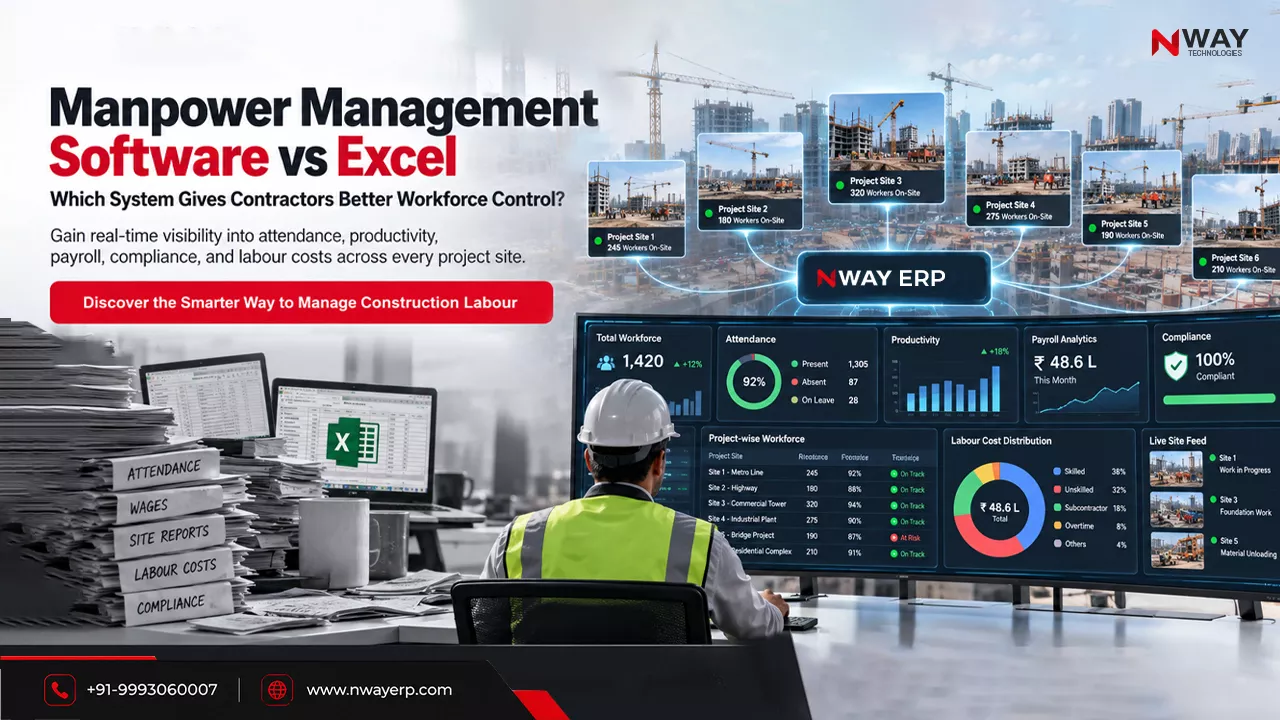
- Excel-based reports for tracking progress and calculations
- Standalone accounting software for managing finances
- Manual updates from site teams, often shared through calls or messages
Because these systems operate in isolation, they create data silos. As a result, information is scattered, duplicated, and often inconsistent across departments, making it difficult to maintain a single source of truth.
Delayed Decision-Making
In the absence of real-time, integrated data, decision-making becomes slow and reactive rather than proactive. Teams often face challenges such as:
- Procurement decisions being delayed due to lack of accurate demand visibility
- Financial reports becoming outdated before they are even reviewed
- Site-level issues being identified only after they escalate into bigger problems
These delays reduce overall agility and can negatively impact project timelines and outcomes.
Lack of Visibility Across Projects
When systems are disconnected, it becomes extremely difficult for organisations to maintain complete visibility across multiple ongoing projects. This leads to challenges in:
- Tracking project performance in real time across different sites
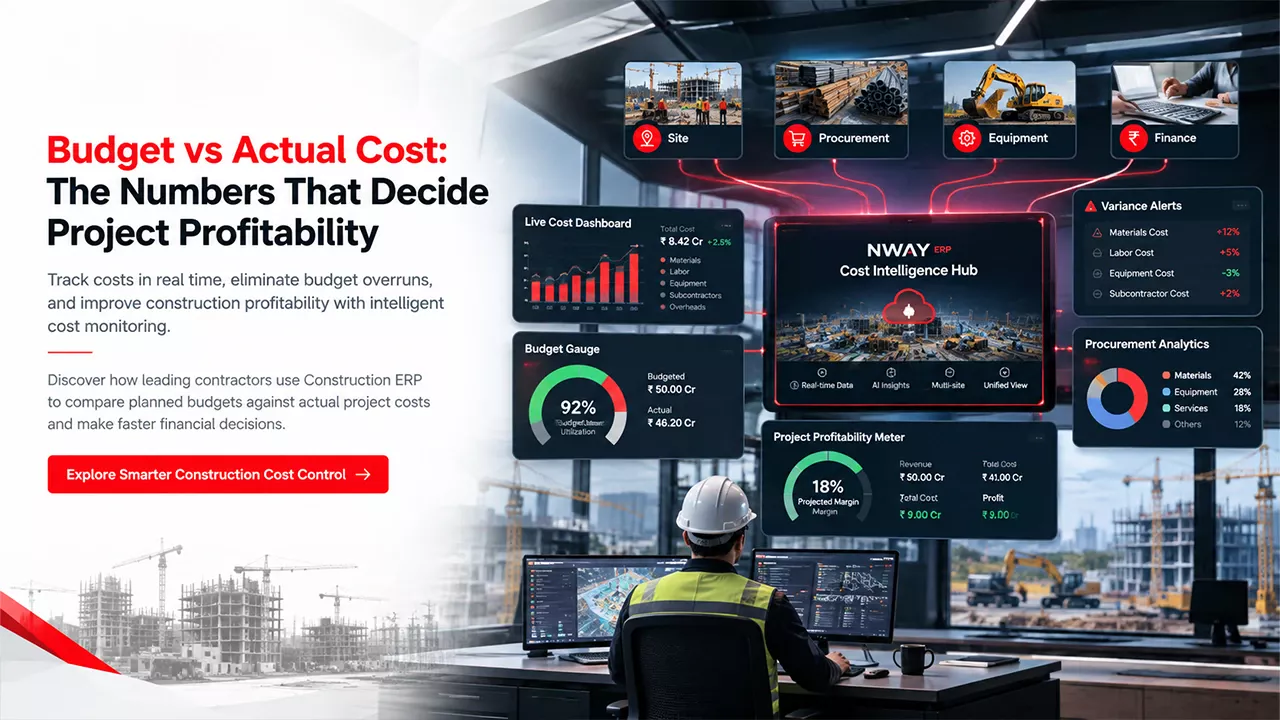
- Monitoring actual costs versus planned budgets with accuracy
- Ensuring consistent control and coordination across all active projects
Without clear visibility, leaders struggle to make informed, data-driven decisions at both the operational and strategic levels.
Hidden Costs of Inefficiency
Fragmented workflows and manual processes introduce several hidden costs that are not always immediately visible. These include:
- Increased time spent on data entry, validation, and reconciliation
- Higher chances of human errors and rework
- Lost productivity due to duplicated efforts across teams
- Delays that lead to indirect financial losses and reduced profitability
Over time, these inefficiencies accumulate and significantly impact both project performance and overall business growth.
According to the ERP Today Report, “Fixing Construction’s Margin Visibility Problem With ERP” disconnected systems in construction are a quantifiable margin risk. With only 17% of organisations achieving single-entry cost data flow, SIs and transformation leaders have a clear integration mandate: eliminating duplication between site, procurement, and finance is now a measurable commercial outcome, not a modernisation aspiration.
Identify gaps in your current systems and uncover opportunities for data-driven efficiency.
The Challenges in Construction Management
1. Cost Overruns
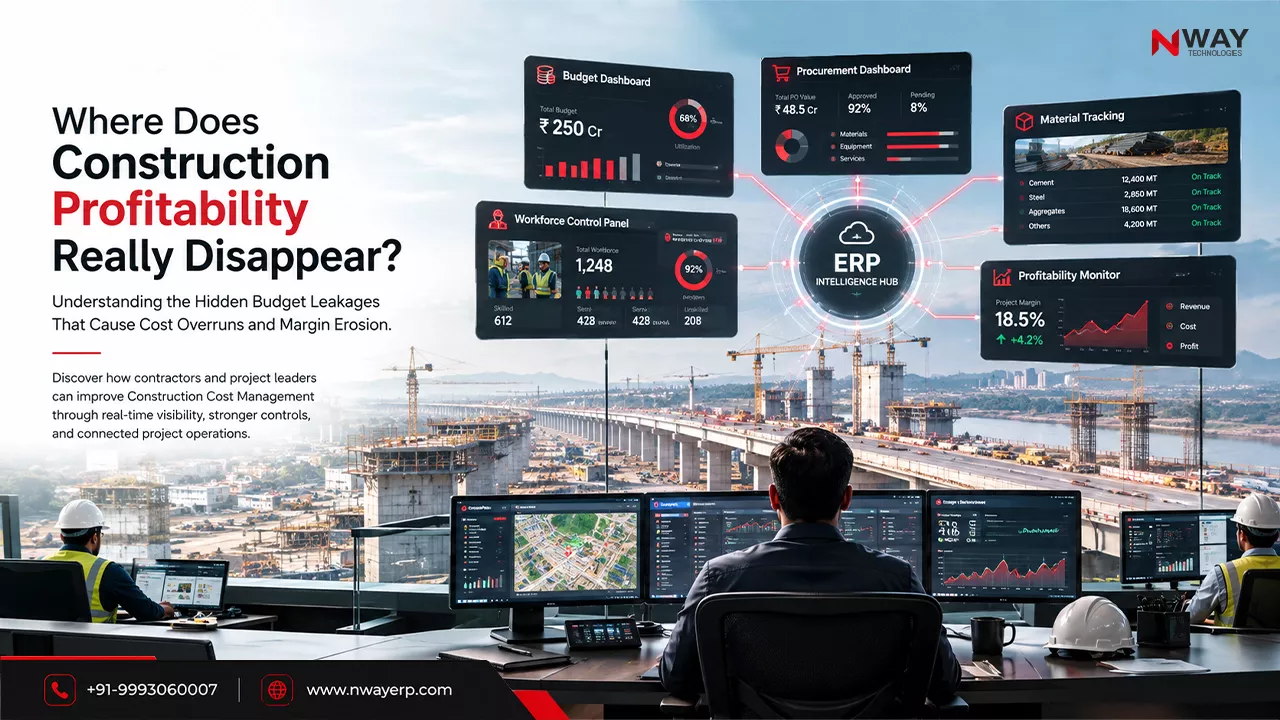
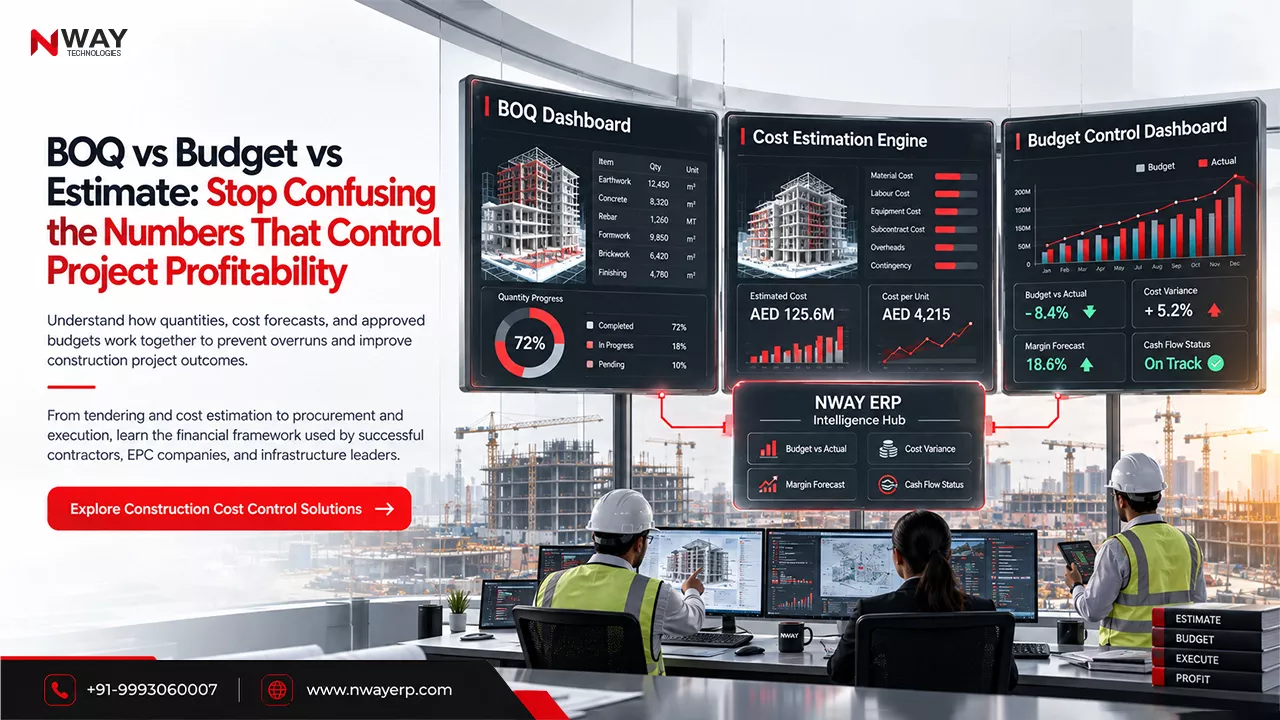
A common challenge in construction projects is the mismatch between BOQ estimates and actual execution costs. Inaccurate forecasting, unexpected changes, and a lack of real-time tracking often lead to budgets exceeding initial expectations. This not only affects project profitability but also creates financial strain on overall operations.
2. Inefficient Procurement
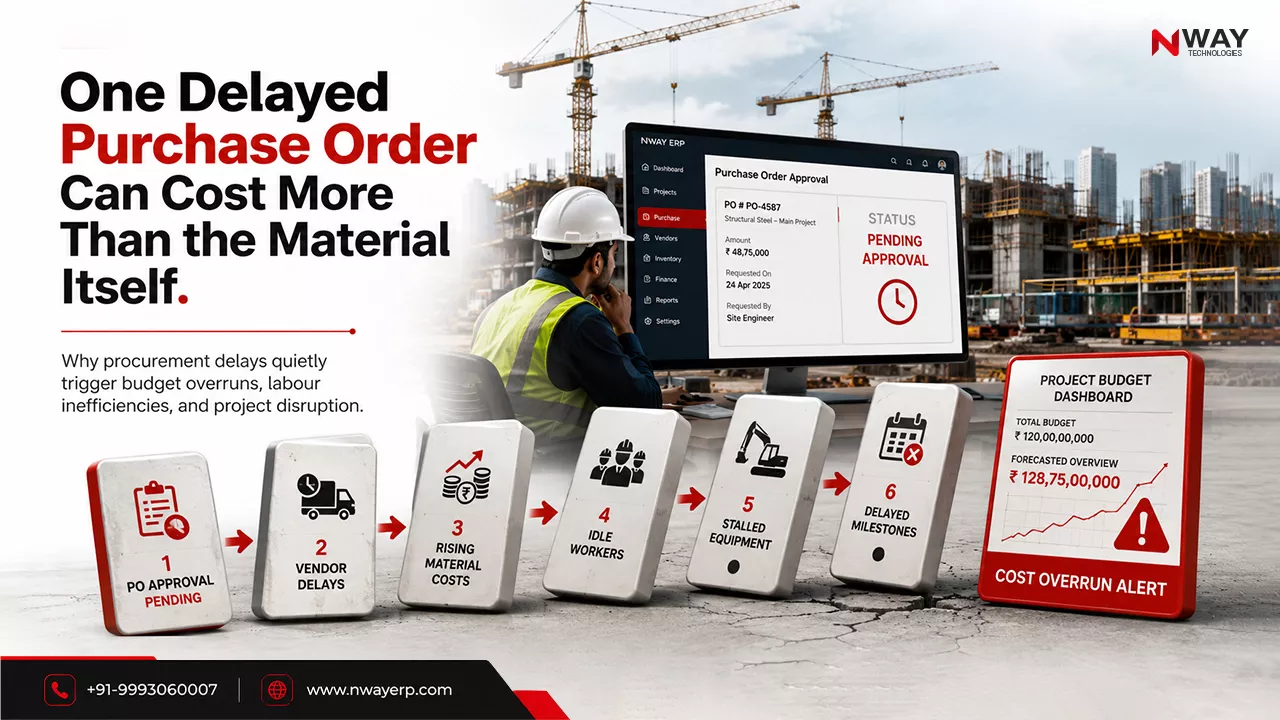
When systems are not properly connected, procurement processes become disorganised and reactive. Lack of synchronised data often results in delayed material orders or unnecessary bulk purchasing. This either slows down project execution or increases inventory costs, both of which impact efficiency and cash flow management.
3. Poor Site-to-Office Coordination
Effective coordination between site teams and office management is critical, yet manual updates and fragmented communication channels create significant gaps. Information from the field is often delayed or incomplete, making it difficult for management to make timely and accurate decisions. This disconnect can lead to errors, rework, and project delays.
4. Lack of Predictive Insights
In many cases, decisions are made based on past data rather than forward-looking insights. Without advanced analytics or integrated systems, organizations struggle to anticipate risks, cost variations, or project delays. As a result, decision-making becomes reactive instead of proactive, limiting the ability to optimize outcomes.
5. Limited Data Accessibility
Access to real-time, reliable data remains a major challenge across the construction ecosystem. Legacy systems and disconnected platforms restrict the flow of information, making it difficult for teams to access critical insights when needed. This lack of accessibility reduces transparency, slows down response times, and hinders overall operational efficiency.
ERP-Driven Data Decision Ecosystem
1. Centralised Data for Complete Visibility
ERP systems bring together key project functions into a unified platform, including estimation and BOQ, procurement, project execution, and financial management. This integration eliminates fragmented data and establishes a single, reliable source of truth across the organisation.
Outcome: Improved real-time visibility into project performance, enabling faster and more informed decision-making.
2. Real-Time Cost Tracking & Control
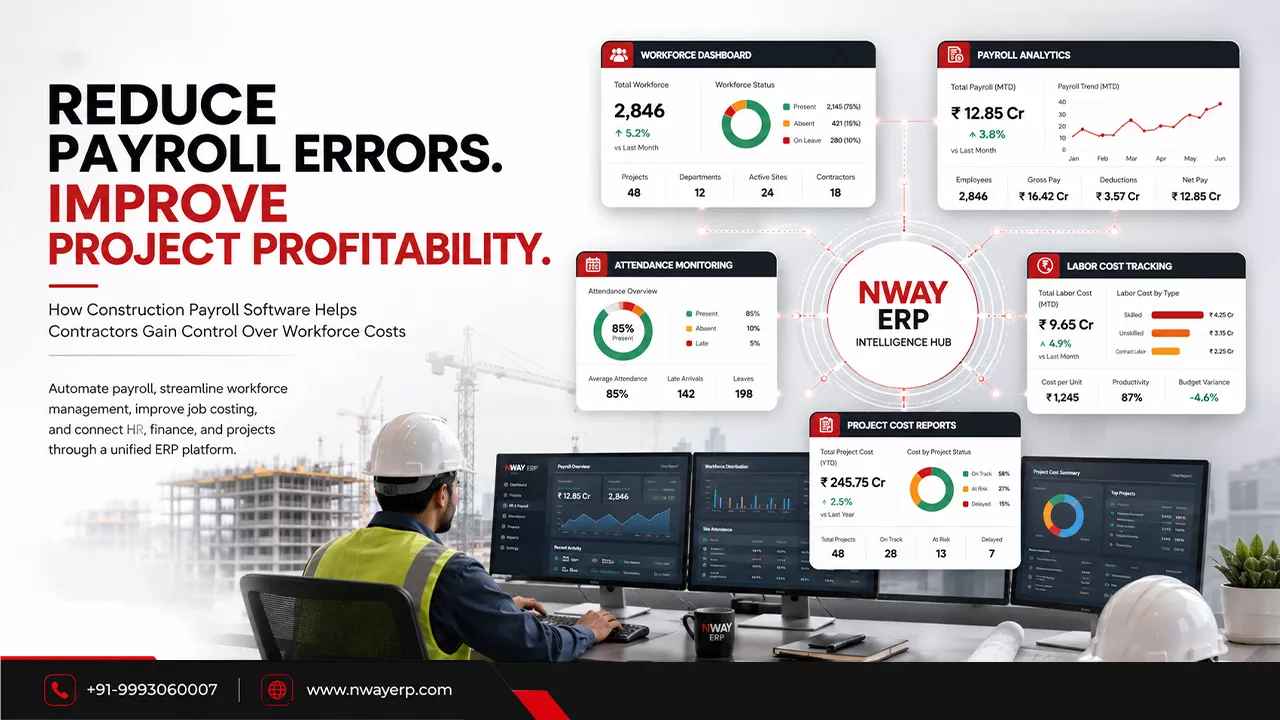
ERP solutions provide continuous visibility into financial performance through live job costing, budget monitoring, and expense tracking. This allows organisations to stay aligned with financial plans throughout the project lifecycle.
Outcome: Stronger cost control, early identification of potential overruns, and improved operational efficiency. Many organisations experience noticeable cost savings after implementing ERP systems
3. Data-Driven Forecasting & Planning
By leveraging historical and real-time data alongside AI-powered construction analytics, ERP systems enable more accurate forecasting, smarter scheduling, and proactive risk identification. AI-Powered ERP in construction helps project teams detect cost variances, predict delays, and recommend corrective actions before they impact project performance. Organizations can anticipate costs, optimize project schedules, and proactively identify potential risks.
Outcome: More strategic, data-driven decision-making and improved project predictability.
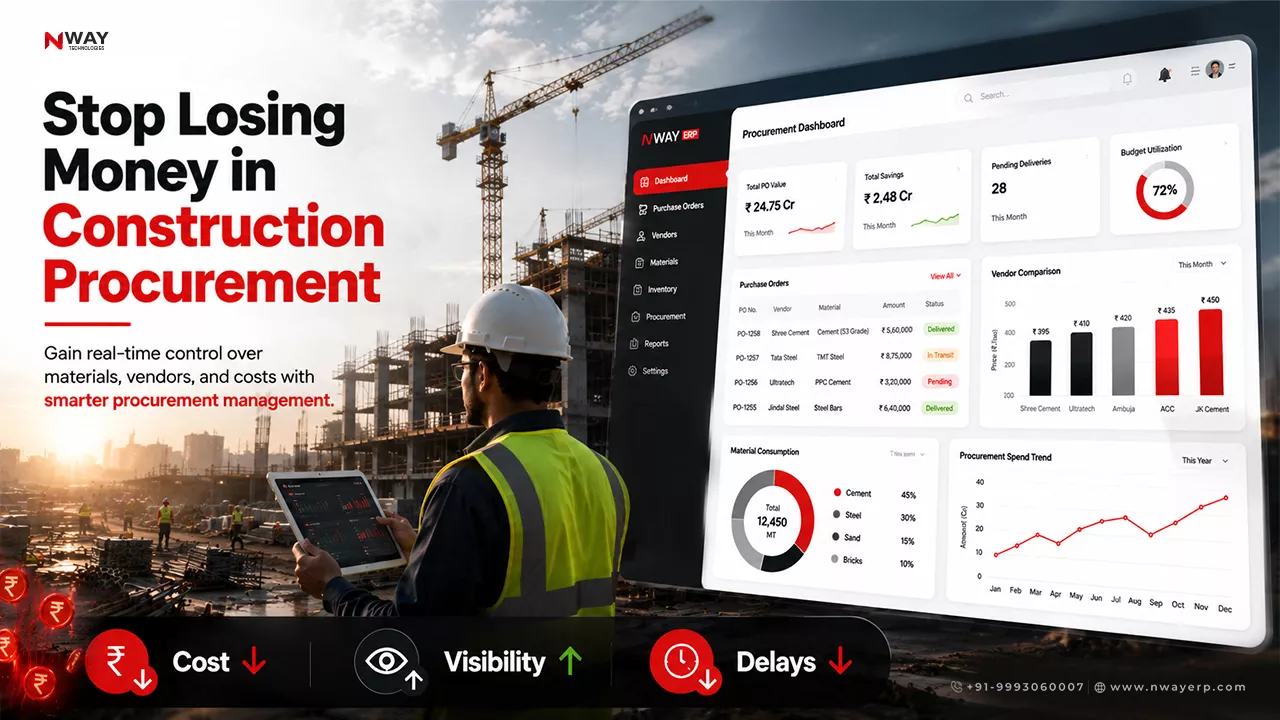
4. Intelligent Procurement Management
ERP connects procurement processes with inventory availability, project timelines, and supplier performance. This ensures materials are sourced efficiently and aligned with actual project needs.
Outcome: Reduced material wastage, better vendor management, and more streamlined procurement cycles.
5. Seamless Collaboration Across Teams
Cloud-based ERP platforms enhance coordination by providing mobile access to site teams and real-time updates to management. This ensures that everyone is always working with the same information.
Outcome: Faster approvals, improved communication, and greater accountability across teams.
Construction ERP Benefits
Financial Benefits
- Enhanced visibility into cash flow across projects
- Reduced financial leakages and better expense management
- Stronger control over profit margins and overall financial performance
Operational Benefits
- Streamlined and automated workflows across departments
- Faster approvals and reduced processing delays
- Less dependency on manual work, leading to higher efficiency
Strategic Benefits
- More informed, data-driven decision-making
- Higher chances of successful project delivery
- Improved ability to scale operations and support business growth
Overall Impact of ERP Adoption
- Better control and oversight of project activities
- Stronger decision-making supported by analytics and real-time insights
According to a Deloitte’s enterprise AI infrastructure survey: A 2028 outlook, 86% of respondents expect AI infrastructure budgets to increase over the next three years, with spending projected to more than triple on average and grow even faster for large enterprises.
Why Nway ERP Fits the Need
While ERP adoption is increasing, successful implementation depends on using a solution built for construction workflows.
Nway Construction ERP aligns with industry needs through:
- BOQ-driven project management
- Integrated procurement and inventory
- Real-time project dashboards
- Cloud-based accessibility
Its design makes it especially suitable for:
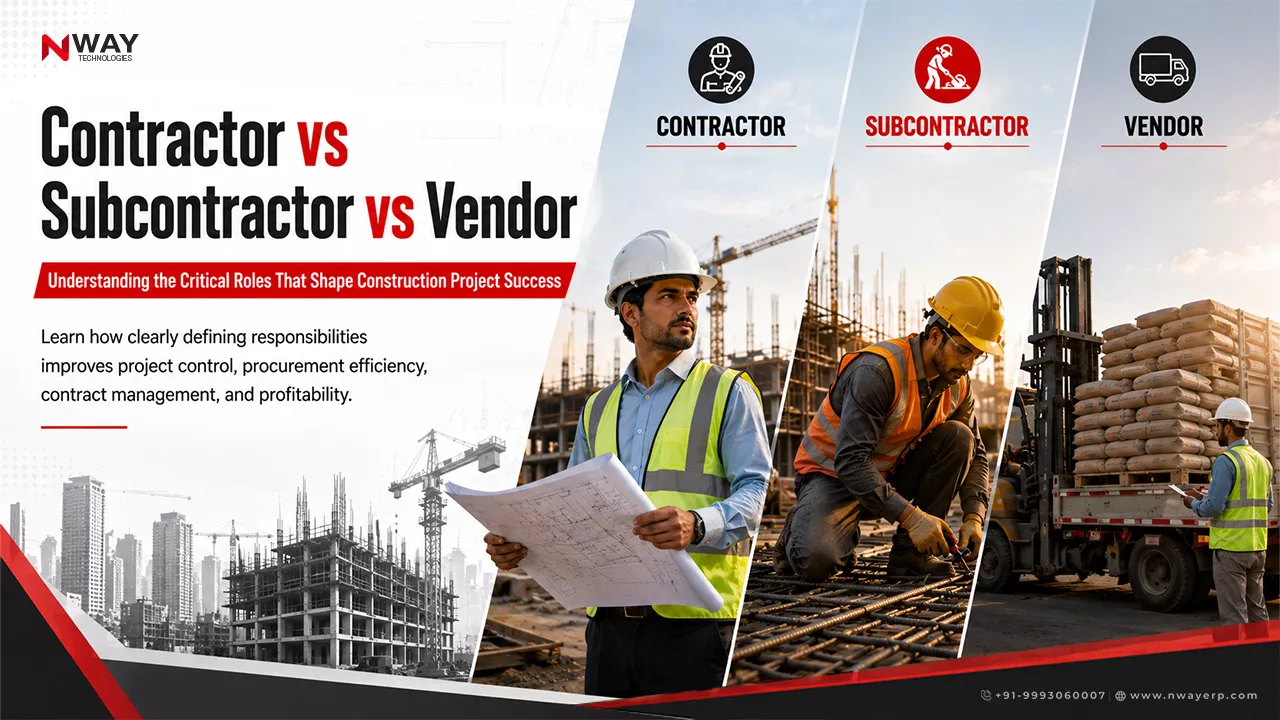
- Contractors managing multiple projects
- Builders seeking better cost visibility
- Infrastructure firms scaling operations
(see: Maximizing ROI with NWAY Construction ERP Solutions)
Conclusion
The future of construction lies in data-driven construction management.
As project complexity increases, relying on disconnected systems and manual processes leads to inefficiencies, delays, and loss of profitability. These traditional approaches limit visibility and slow down critical decision-making across the project lifecycle.
Indian companies can no longer delay ERP adoption. With rising competition, tighter margins, and increasing project demands, the ability to make faster, data-backed decisions has become essential for staying competitive and sustainable.
ERP software for the construction industry transforms how decisions are made—enabling real-time visibility, faster response, and stronger control over every project.
The shift is clear:
From reactive decision-making → to predictive and data-driven execution.
Key Takeaways
- ERP centralizes construction data into a single platform
- Enables real-time visibility across projects
- Improves cost control and forecasting
- Reduces manual processes and delays
- Supports scalable and data-driven growth
See how real-time construction data can transform your project outcomes