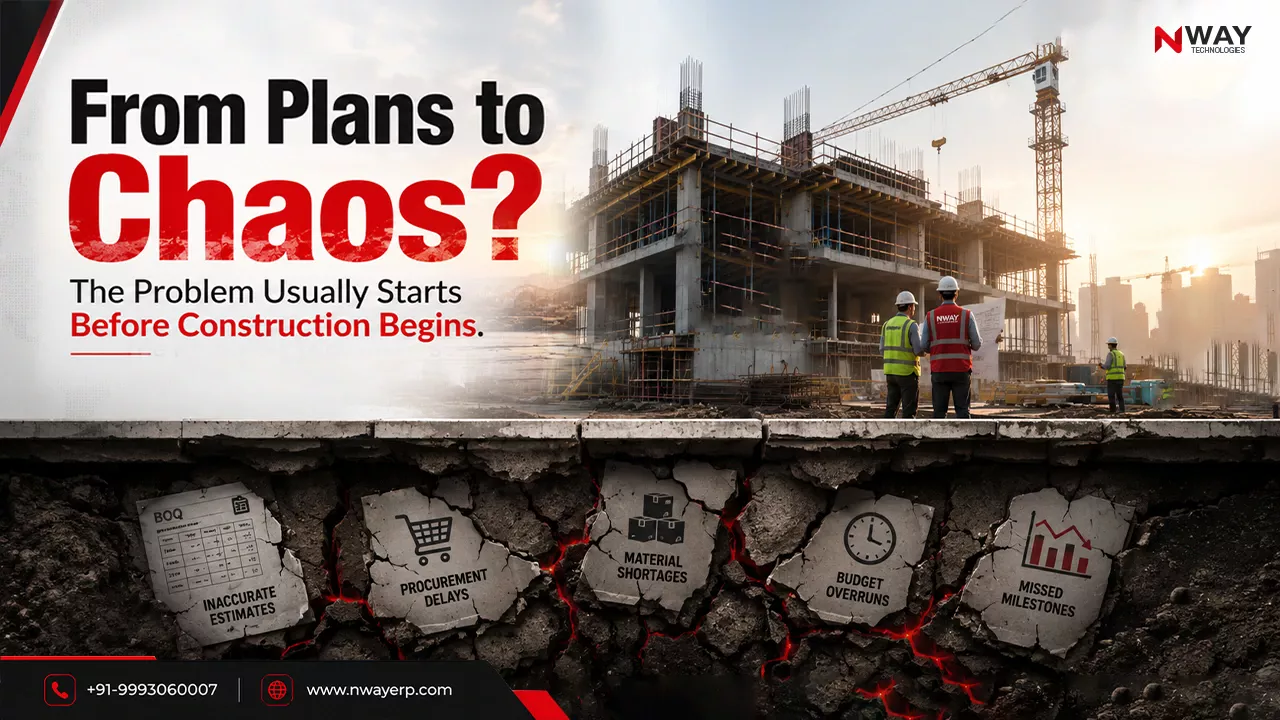
Most construction projects don’t fail because teams lack experience.
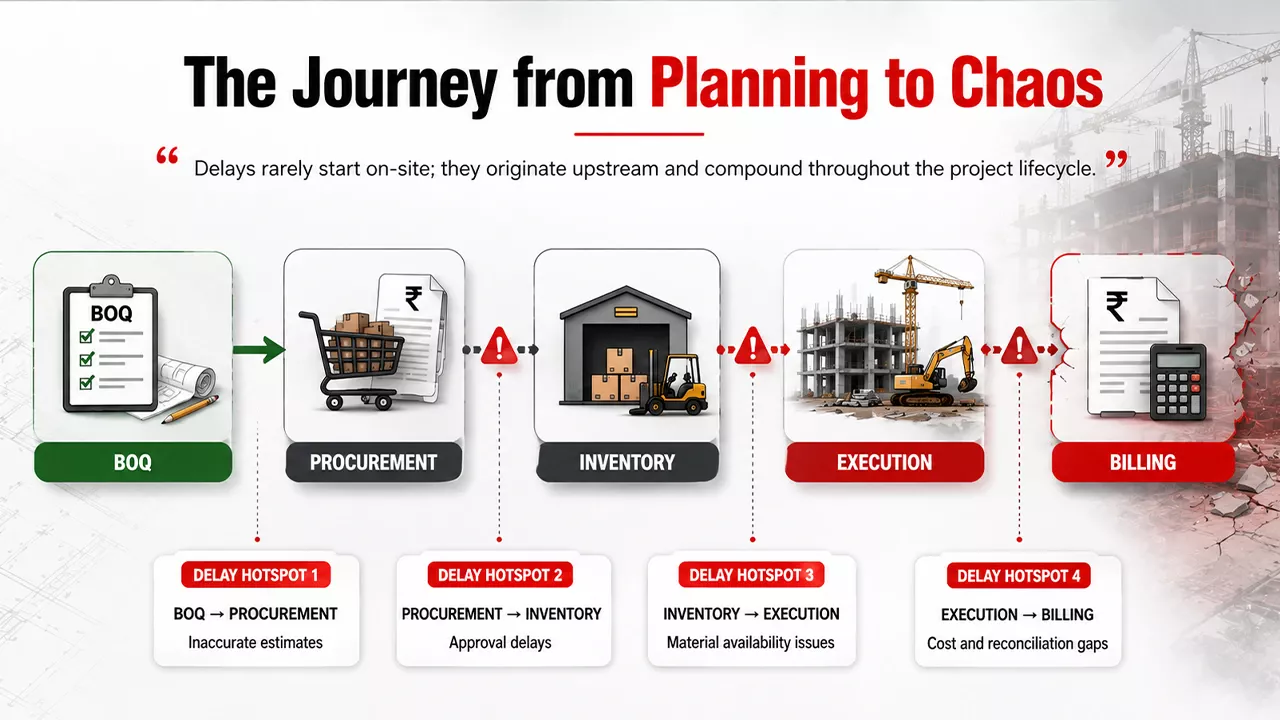
The BOQ is approved. The schedule is finalized. Procurement plans are prepared. Resources are assigned.
Yet six months later, the same project is dealing with delayed approvals, material shortages, budget overruns, and missed milestones.
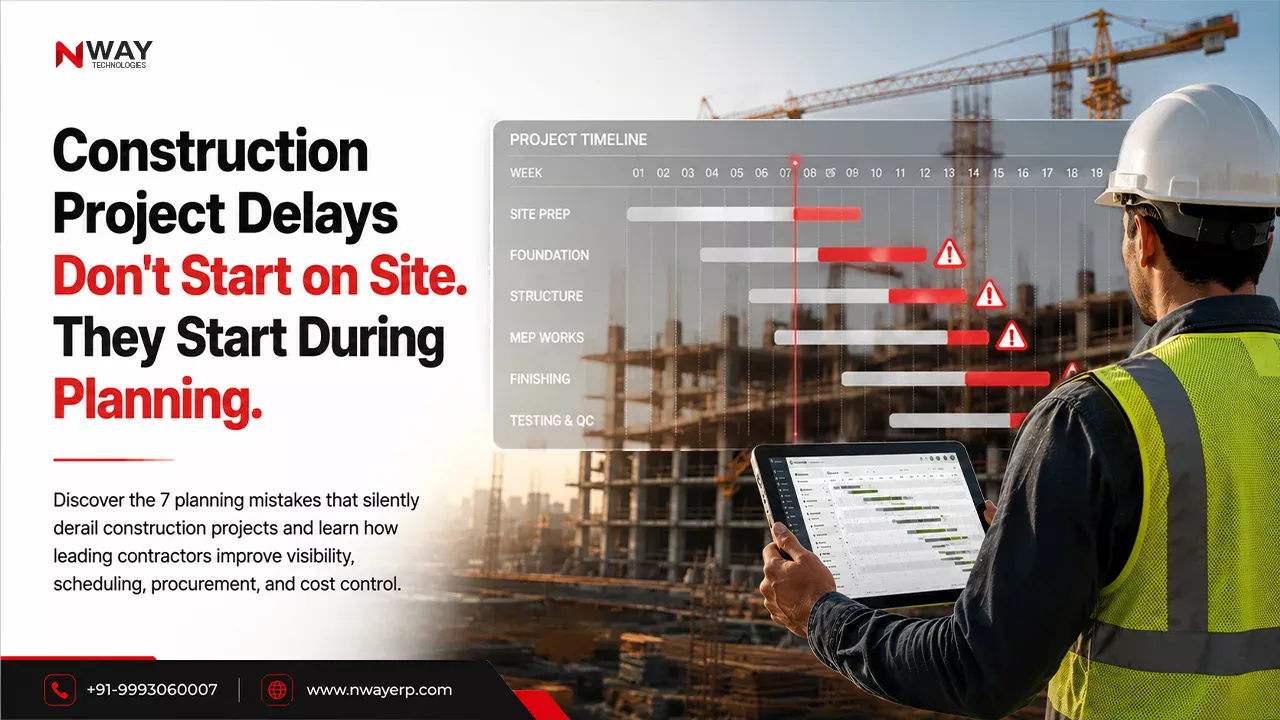
The uncomfortable reality is that project chaos rarely begins on-site. It begins much earlier in the gap between planning and execution.
Research from McKinsey found that large construction projects frequently suffer major cost and schedule overruns, while productivity growth in construction has remained significantly below many other industries for decades. Meanwhile, productivity challenges continue to be driven by communication gaps, fragmented planning, and weak information flow rather than purely technical execution issues.
The problem is not the plan itself.
The problem is that most organisations cannot maintain visibility once execution begins.
Table of Contents:
- Executive Summary
- The Real Problem Isn’t What You Think
- Why Traditional Methods Fail
- Four Challenges That Turn Plans into Chaos
- What Successful Construction Companies Do Differently
- Where Construction ERP Fits In
- What’s Changing in 2026 and Beyond
- Conclusion
Executive Summary
Many construction businesses assume project delays are caused by labour shortages, vendor issues, or changing project conditions.
While these factors contribute, the bigger issue is often fragmented with project management.
When planning, procurement, finance, inventory, and site operations operate in silos, decisions become reactive instead of proactive.
Modern Construction Project Management is no longer about creating better schedules. It is about creating continuous visibility throughout the project lifecycle.
The Real Problem Isn’t What You Think
Most companies focus on execution problems.
But projects rarely spiral into chaos because workers stop working.
They spiral because information stops flowing.
Consider a typical project environment:
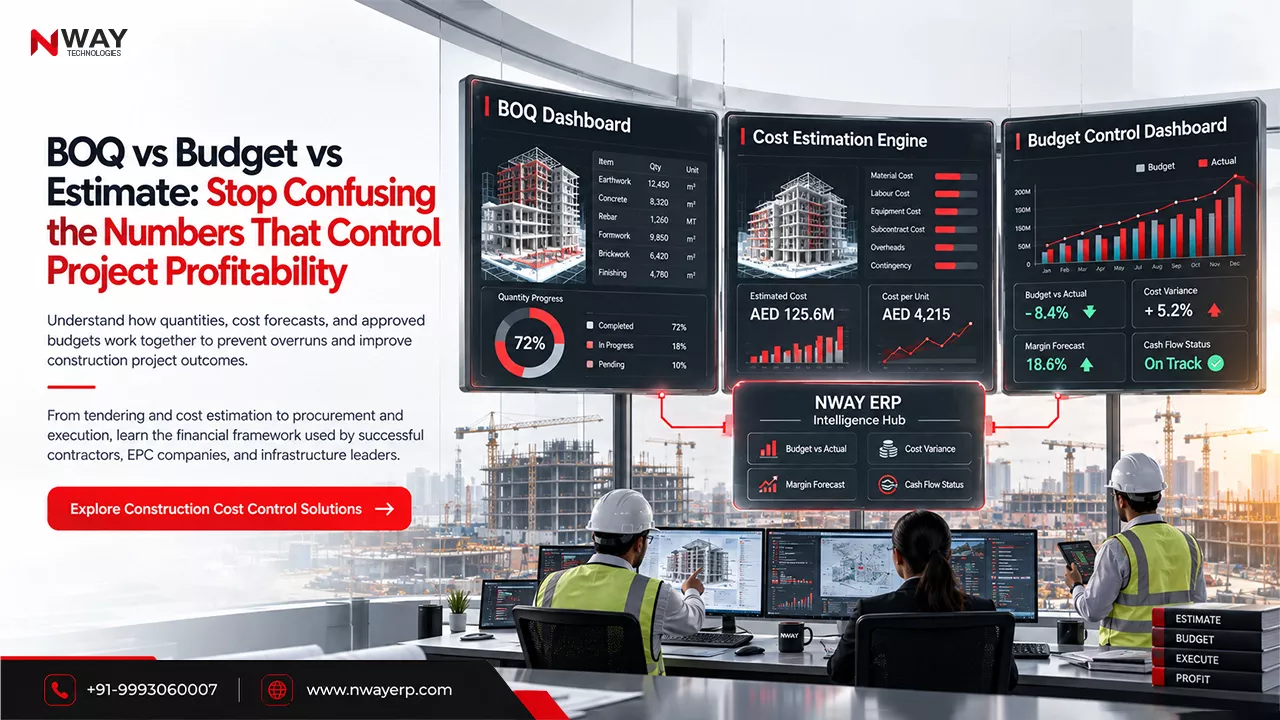
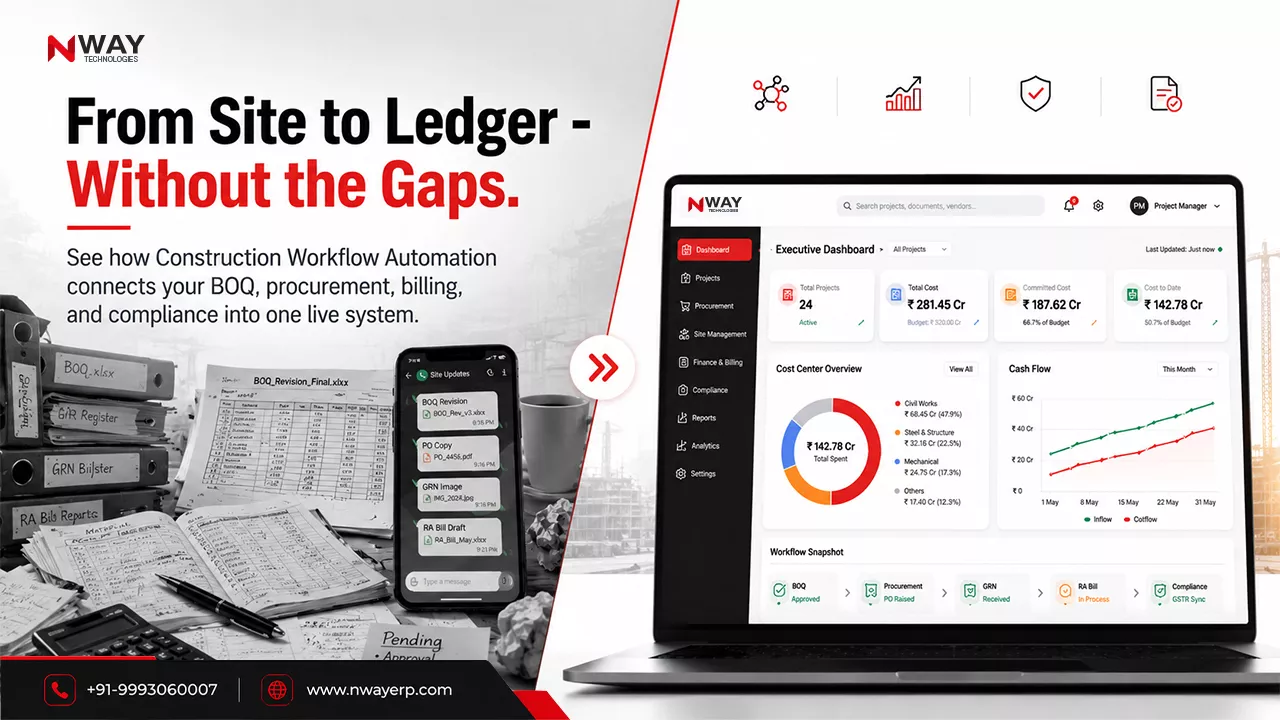
- BOQ maintained in spreadsheets
- Procurement tracked separately
- Site updates shared through calls or WhatsApp
- Finance reviews monthly reports
- Management receives delayed information
Everyone is working hard.
Yet everyone is working from different versions of reality.
Insight
The biggest challenge in construction today is not project complexity.
It is decision latency.
By the time leadership identifies a problem, the impact has already reached costs, timelines, or margins.
Why Traditional Methods Fail
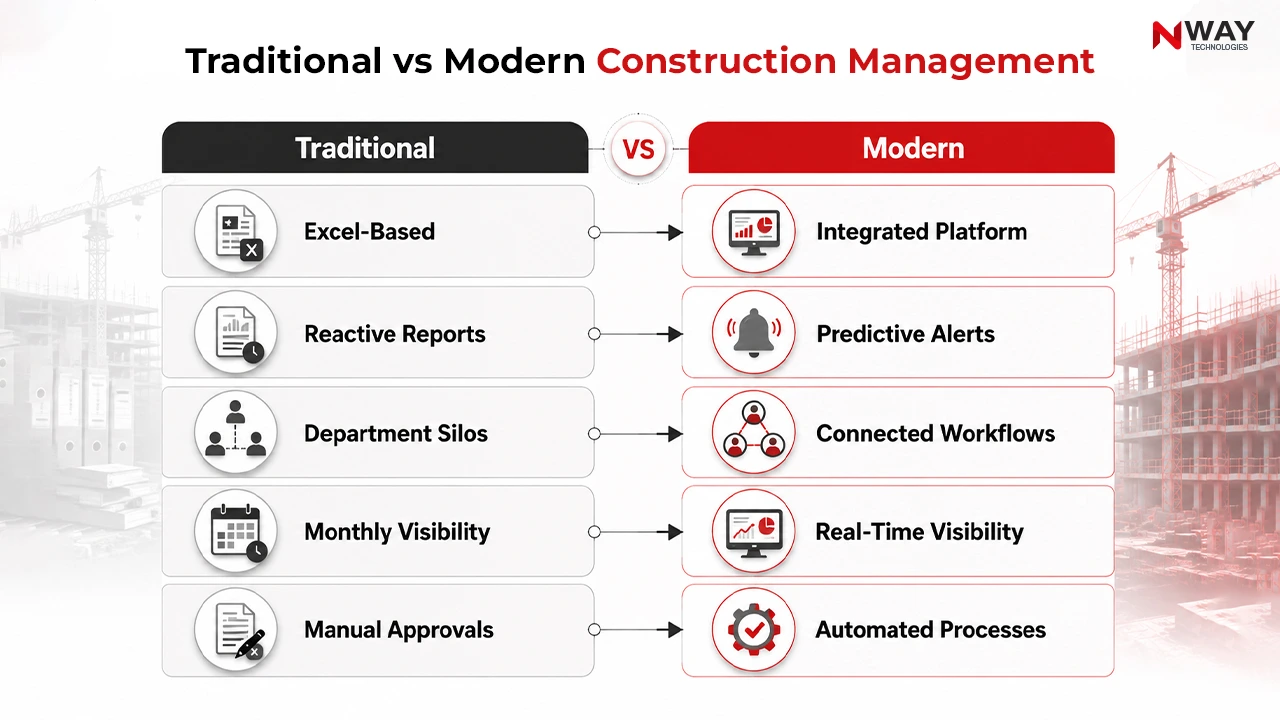
1. Excel Creates an Illusion of Control
Spreadsheets work for individual tasks but struggle with dynamic projects.
When BOQ revisions, procurement changes, material consumption, and budget adjustments happen simultaneously, manual updates quickly become outdated.
The result:
- Data inconsistencies
- Delayed decisions
- Procurement mistakes
- Cost tracking gaps
2. Manual Approvals Slow Projects
Many project delays are not caused by suppliers.
They are caused by waiting.
Material requests, vendor approvals, billing approvals, and purchase requests often pass through multiple stakeholders before action is taken.
Small delays accumulate into major schedule overruns.
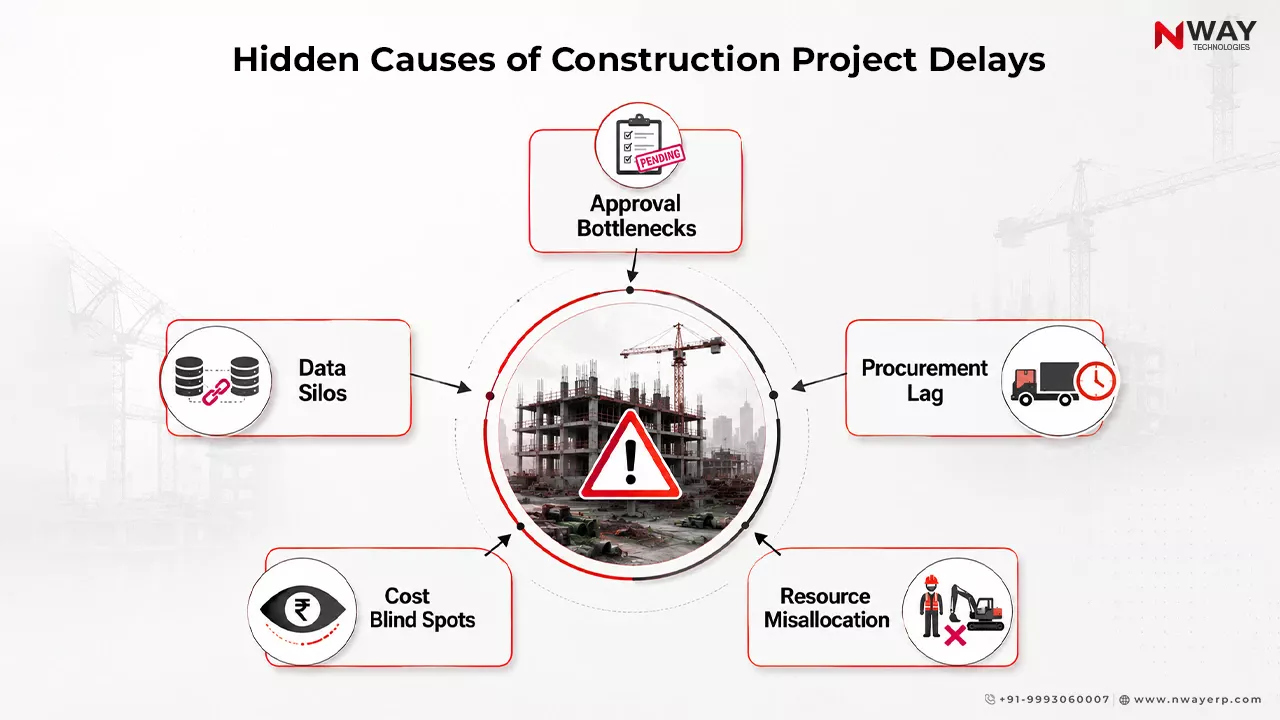
3. Fragmented Systems Create Blind Spots
A common challenge in construction businesses is that finance, procurement, inventory, and project teams operate through disconnected tools.
Without a single source of truth, management cannot see project reality in real time.
Poor information flow and communication breakdowns across construction projects can lead to significant operational inefficiencies, delays, rework, and increased costs.
If your organisation is still managing projects through disconnected systems, it may be time to evaluate whether your current processes can support future growth.
Four Challenges That Turn Plans into Chaos
Procurement Disconnect
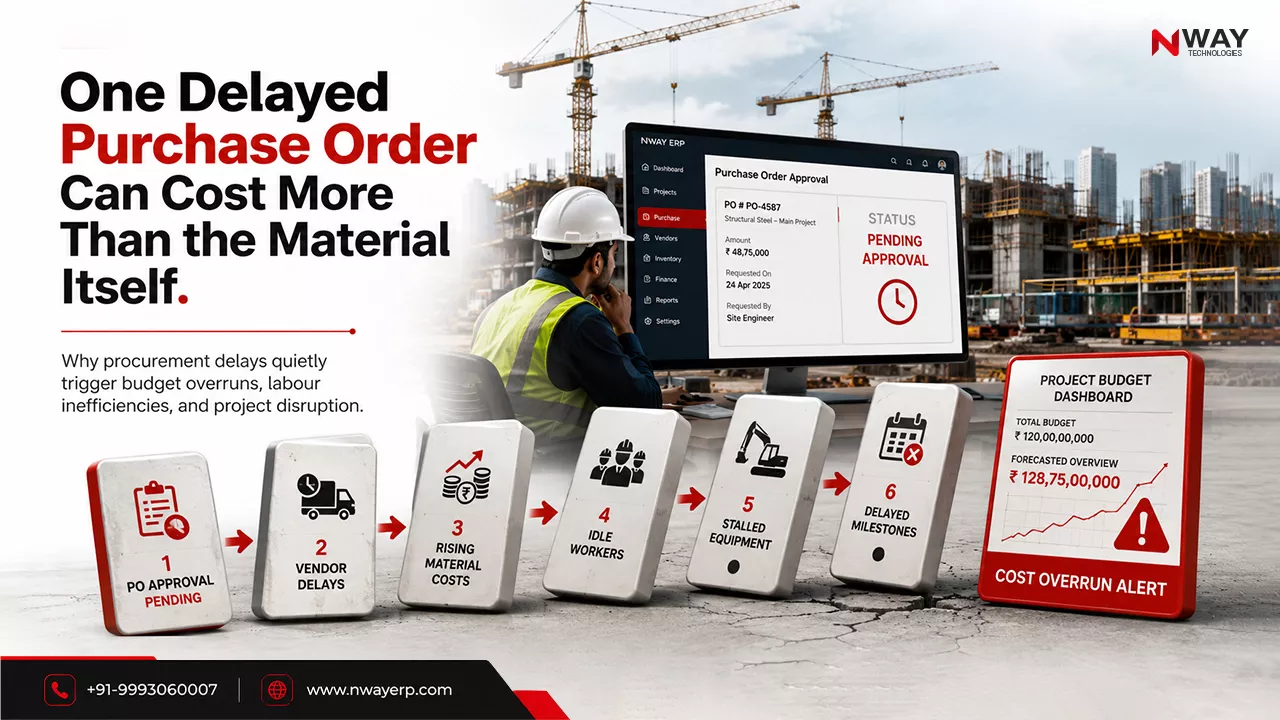
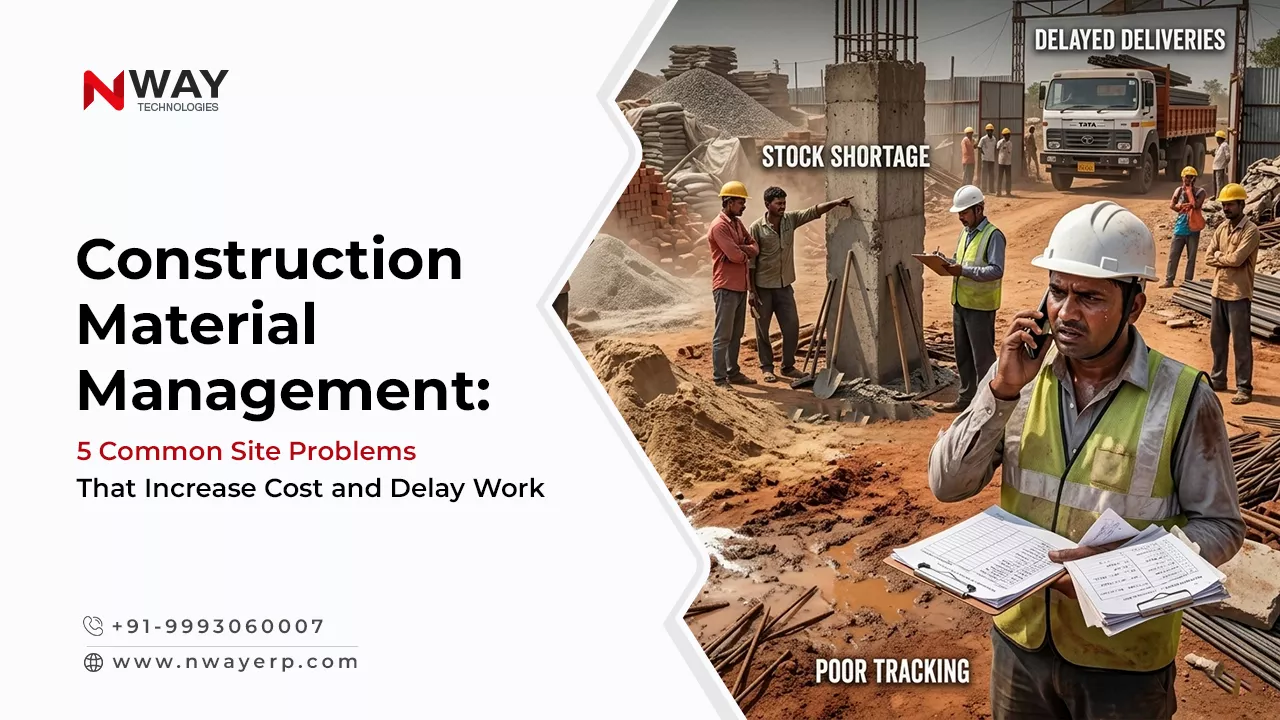
A project schedule assumes materials will arrive in four weeks.
Procurement discovers an eight-week lead time.
The information reaches project leadership too late.
What follows is predictable:
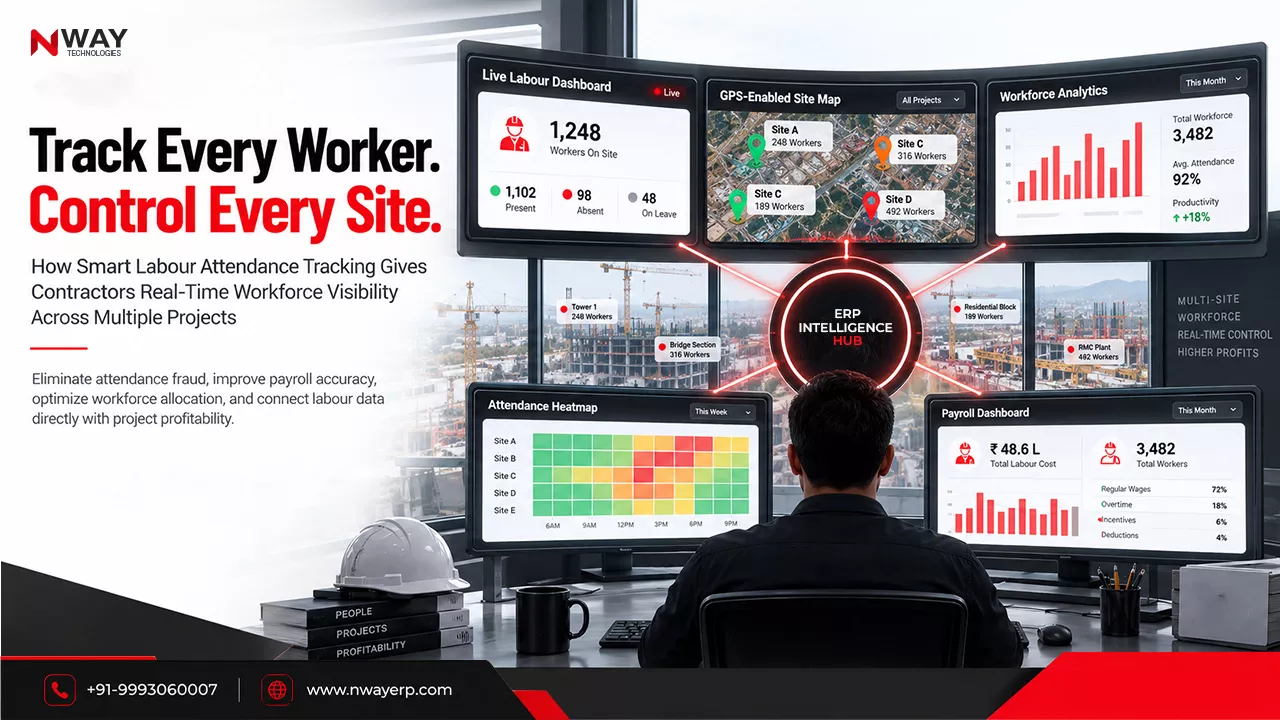
- Idle labour
- Delayed activities
- Higher costs
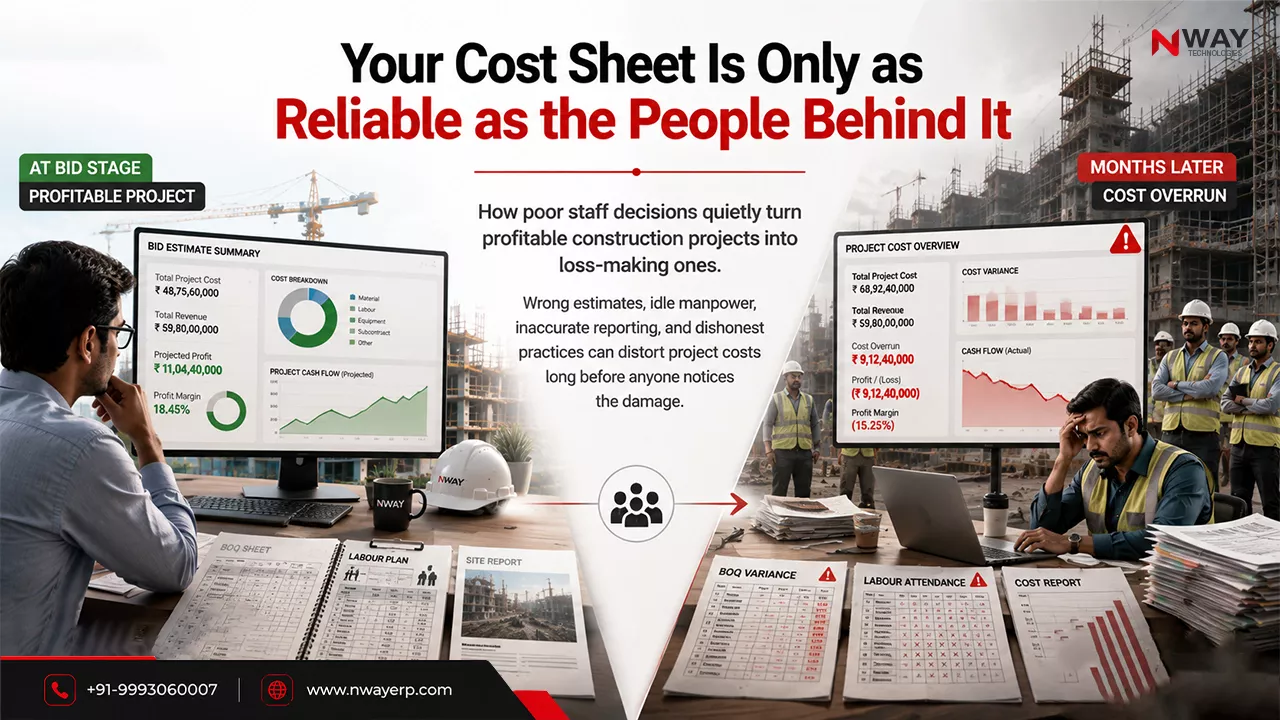
Cost Overruns Detected Too Late
Many organizations still compare budgets against actuals once a month.
The issue?
Cost overruns happen in real time.
By the time monthly reviews identify a problem, corrective action becomes much harder.
Resource Allocation Problems
Equipment, labour, and subcontractors are often shared across multiple projects.
Without centralised visibility, double allocation and underutilization become common.
What appears to be a resource shortage is often a visibility problem.
Poor Communication
Construction projects involve numerous stakeholders:
- Site engineers
- Procurement teams
- Contractors
- Consultants
- Finance teams
When communication isn’t documented and centralized, disputes and rework become inevitable.
What Successful Construction Companies Do Differently
Leading contractors are shifting away from reactive project management.
Instead, they focus on four principles:
- Single Source of Truth – All project information from BOQ and procurement to billing and cost tracking must be connected.
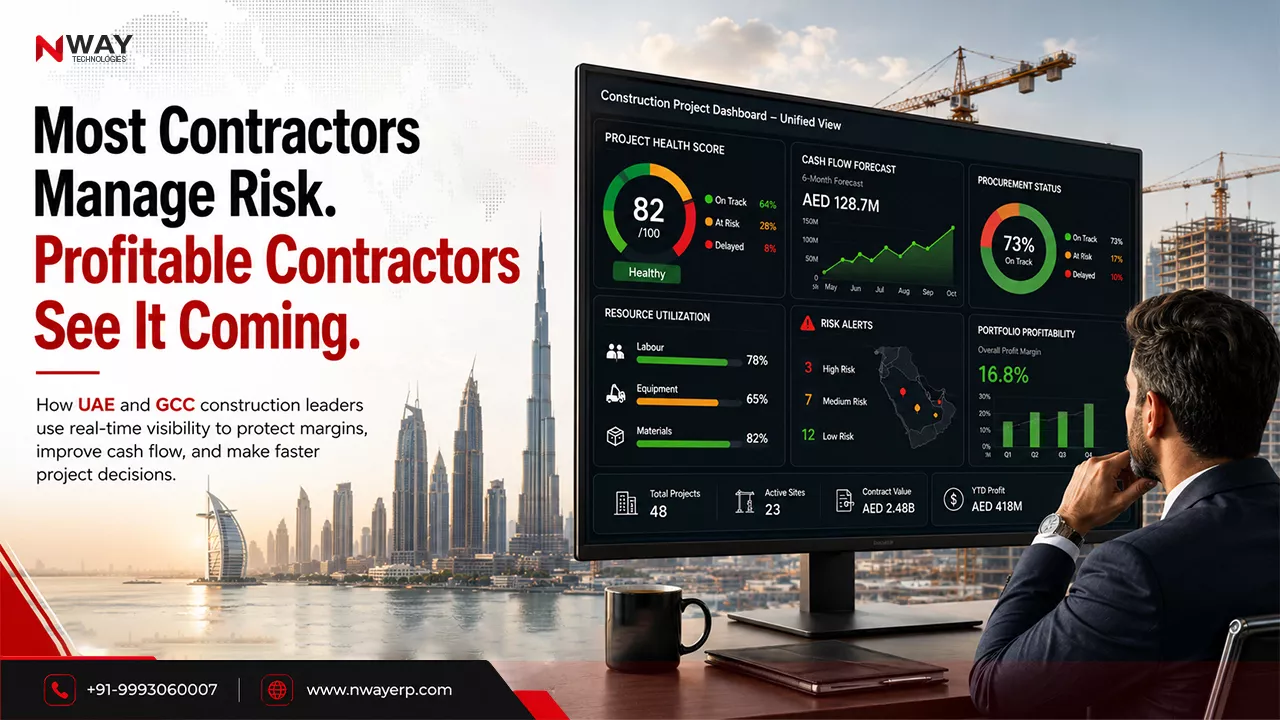
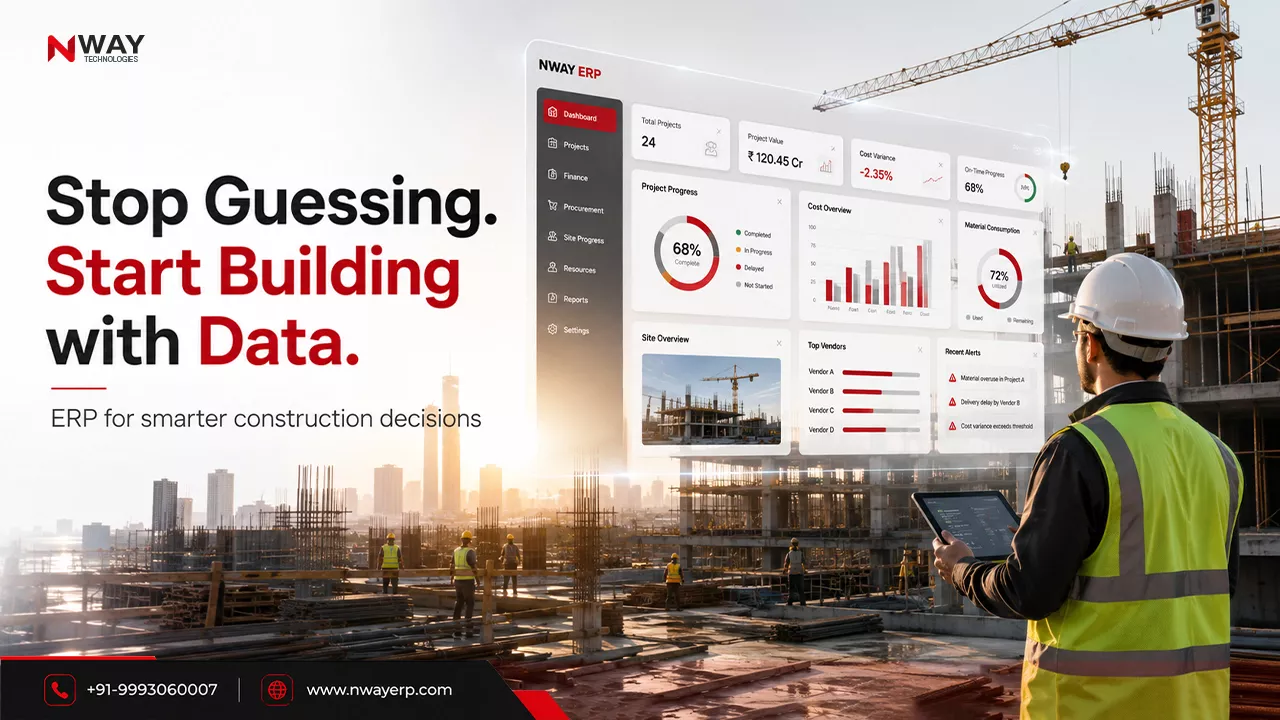
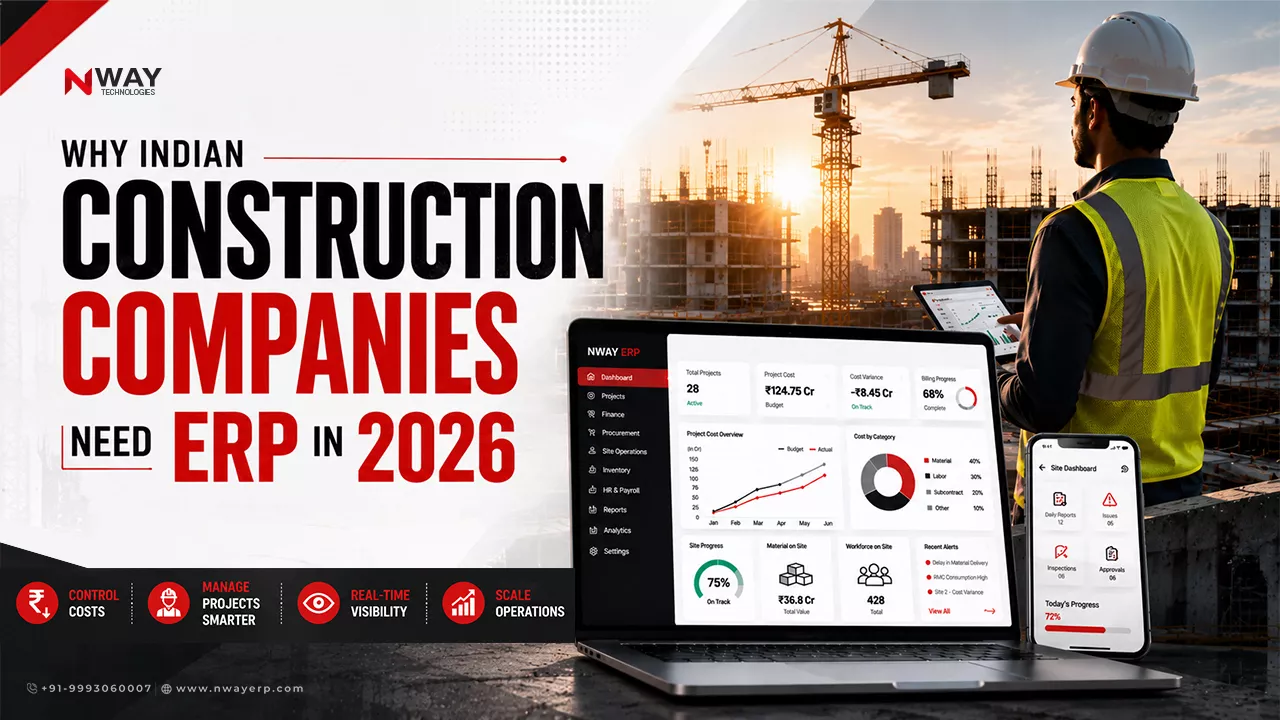
- Real-Time Visibility – Leaders need live access to: Budget vs Actual, Material consumption, Vendor performance, Project progress
- Connected Workflows – Planning, procurement, inventory, execution, and billing should function as one continuous process.
- Predictive Project Controls – The best-performing companies no longer ask: “What went wrong?” They ask: “What is likely to go wrong next?”
Where Construction ERP Fits In
Technology alone does not solve project management challenges.
However, integrated systems provide the visibility modern projects require.
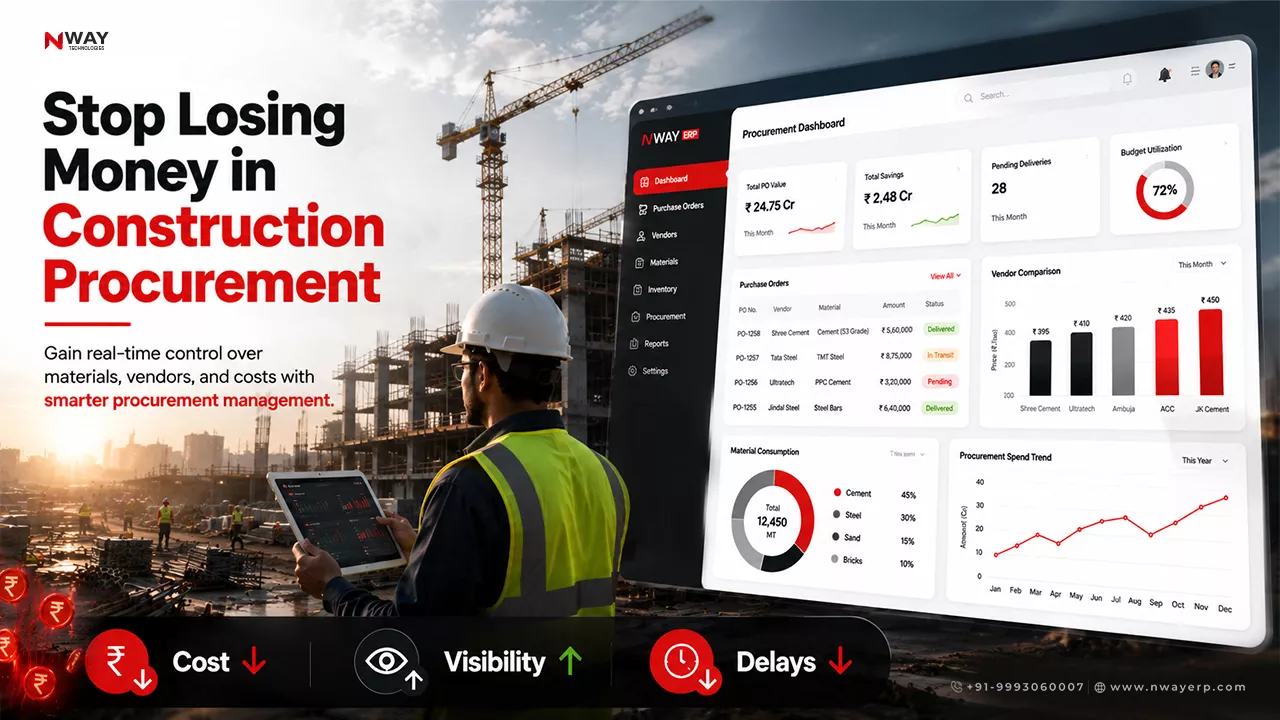
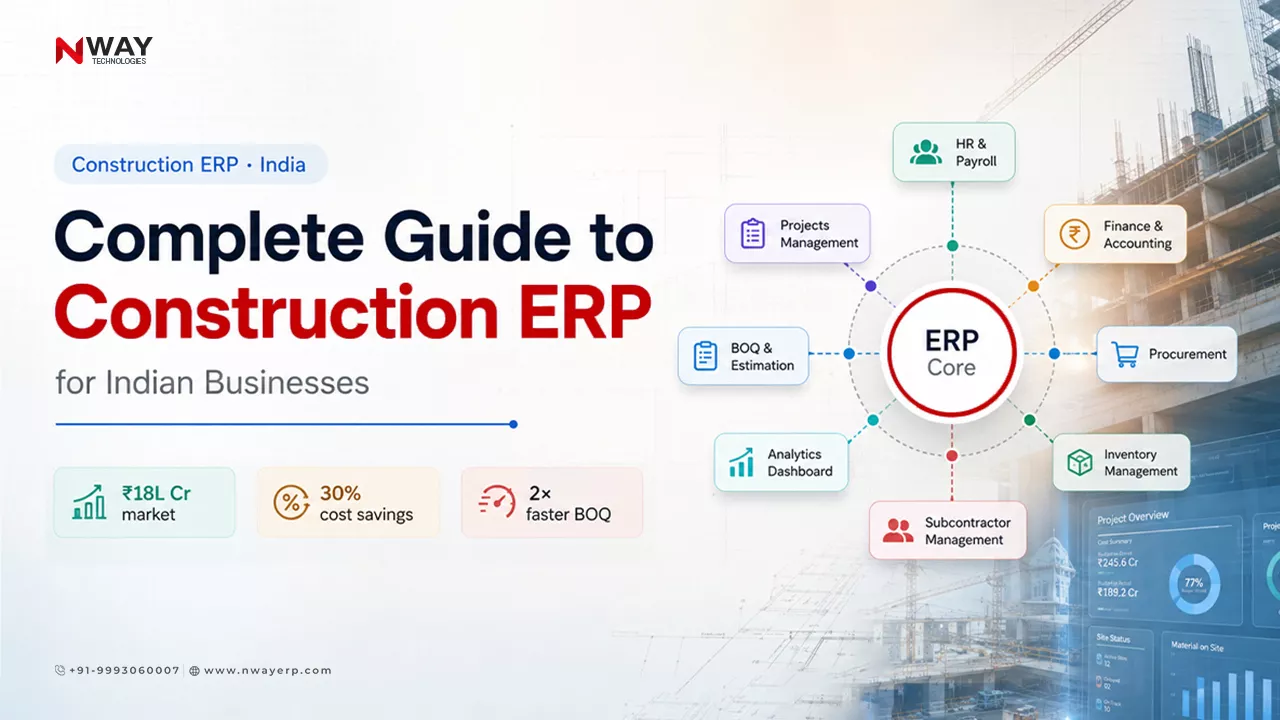
A modern Construction ERP Software platform helps organisations connect:
- Construction Project Planning
- Procurement
- Material Reconciliation
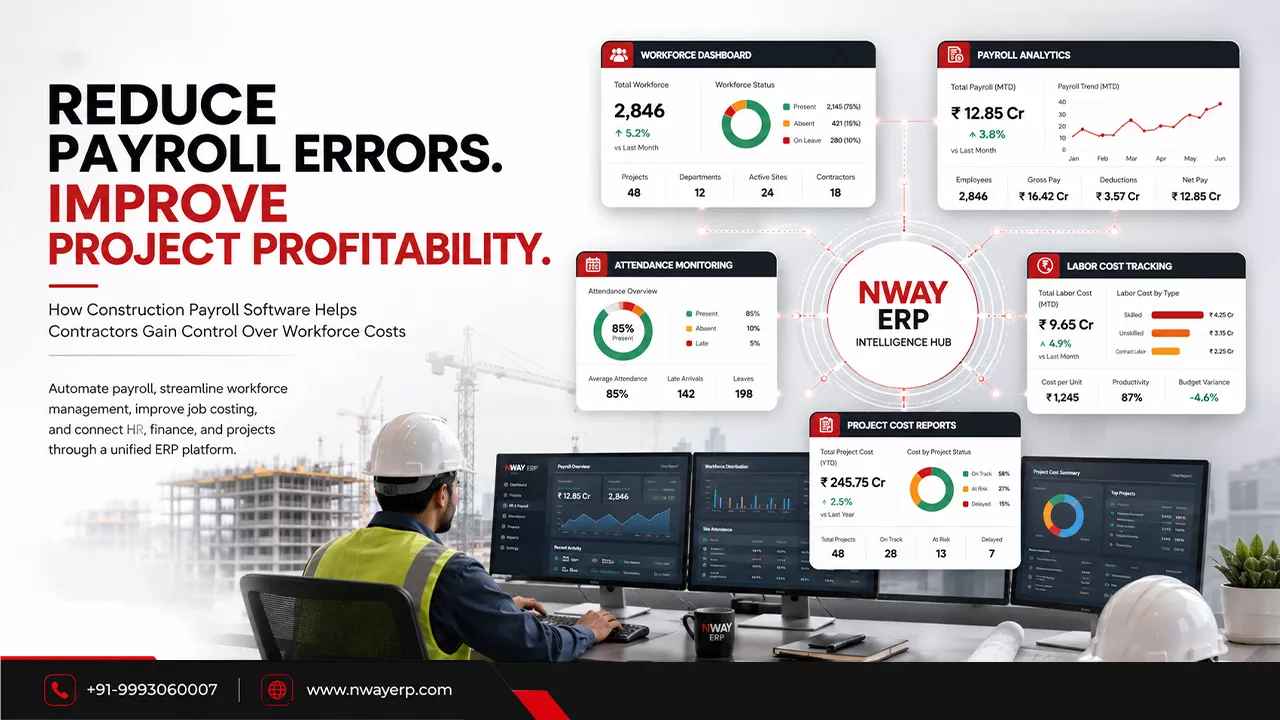
- Construction Accounting
- Site Management
- Equipment Utilization
- Multi-Site Visibility
The real value is not automation.
The real value is better decision-making.
When project information flows across departments, teams can identify risks before they become delayed.
What’s Changing in 2026 and Beyond
Construction management is entering a new phase.
Deloitte’s engineering and construction outlook points to growing adoption of AI, connected construction, digital workflows, and data-driven operations.
Three trends are shaping the future:
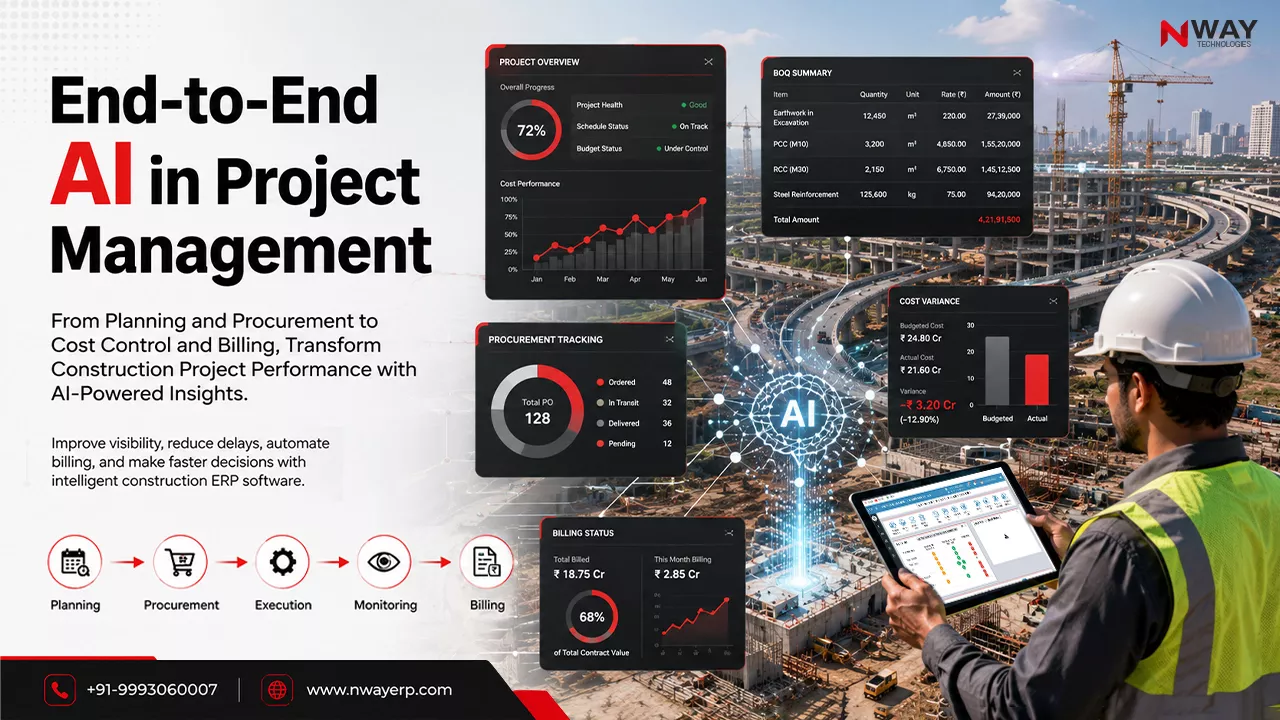
- AI-Powered Risk Identification – Systems can increasingly identify schedule risks, procurement bottlenecks, and cost variances before they affect project outcomes.
- Predictive Analytics – Organisations are moving beyond dashboards toward forecasting future issues based on historical and live project data.
- Centralised Operations – Improving data capabilities remains a significant opportunity for construction businesses, enabling better visibility, coordination, and decision-making across projects and operations.
The companies that gain visibility first will create competitive advantages in profitability and project delivery.
Conclusion
Construction projects rarely descend into chaos overnight.
The process is gradual.
A delayed approval here. A procurement gap there. A budget variance nobody notices. A critical update trapped inside a spreadsheet.
Eventually, small disconnects become major project risks.
The firms that consistently deliver projects on time and within budget are not necessarily those with the most detailed plans.
They are the ones with the clearest visibility throughout execution.
In today’s environment, Construction Project Management is no longer about managing activities alone.
It is about managing information.
Key Takeaways
- Most Construction Project Delays originate before site execution begins.
- The biggest challenge is often fragmented information, not poor planning.
- Excel and manual processes struggle to support complex, multi-site projects.
- Real-time visibility is becoming essential for effective Project Management in Construction.
- Integrated systems and data-driven workflows help organizations move from reactive management to proactive decision-making.
Before investing in more people, consider whether better project visibility could solve the problem first.