Table of Contents:
- Introduction
- Understanding the Construction Cost Framework
- What Is a BOQ (Bill of Quantities)?
- What Is a Construction Cost Estimate?
- What Is a Construction Budget?
- BOQ vs Budget vs Estimate: Side-by-Side Comparison
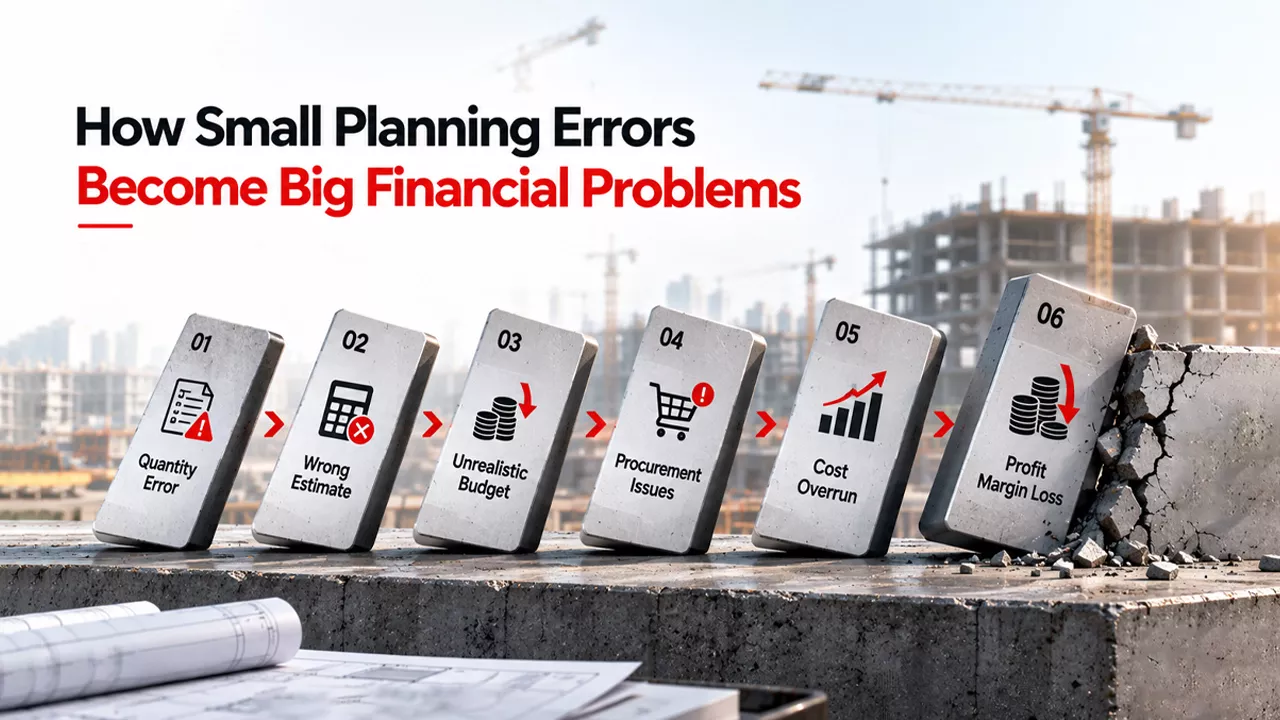
- Real-World Scenario: Where Things Go Wrong
- Hidden Risks of Confusing BOQ, Estimate, and Budget
- Best Practice Checklist for Contractors and EPC Companies
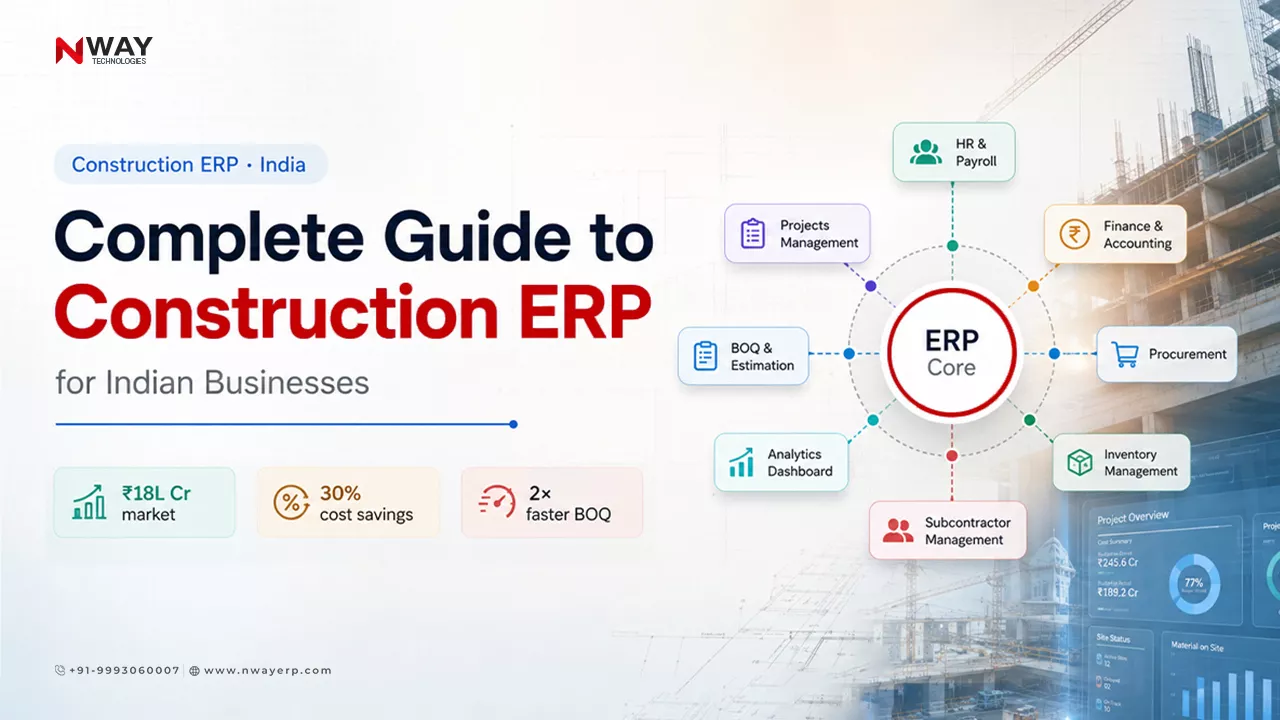
- How Construction ERP Connects BOQ, Budget, and Cost Estimation
- Conclusion
Introduction
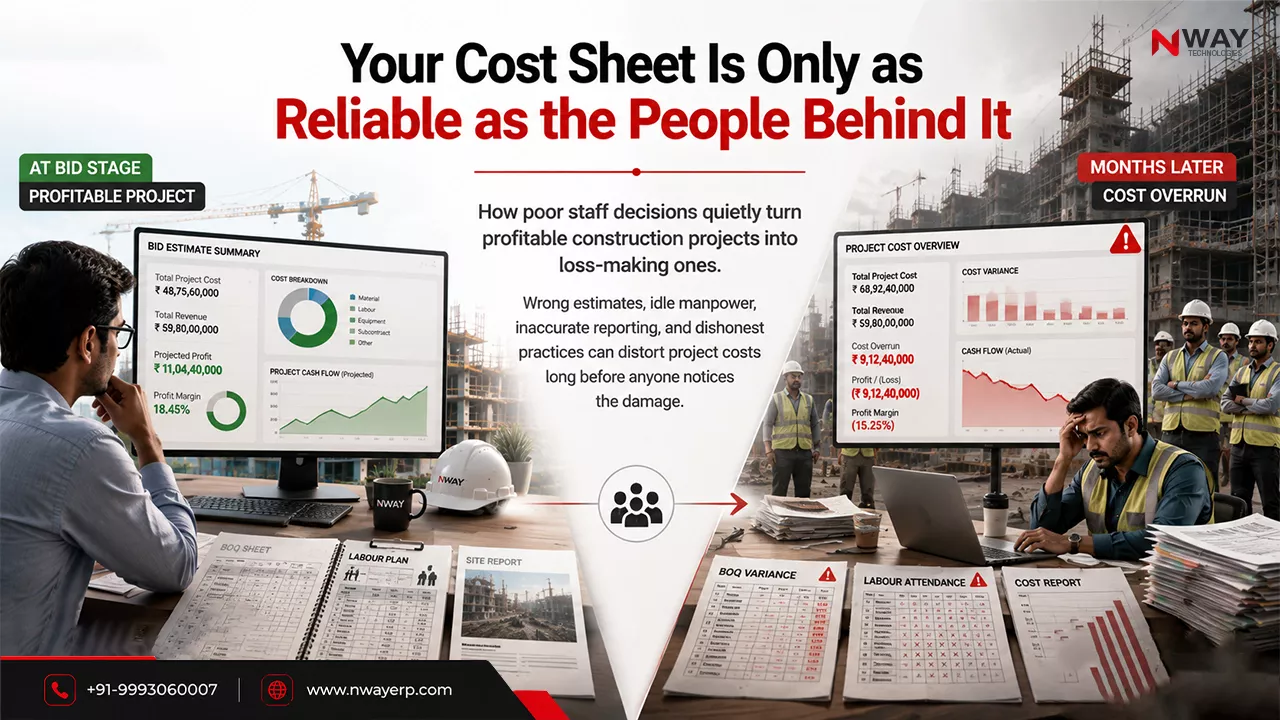
Imagine a contractor wins a ₹100 crore infrastructure project. The bid was competitive, the quantities were checked, and management felt confident about projected margins.
Six months later, the project is facing procurement disputes, budget overruns, and cash flow pressure.
When management investigates, the problem is not a major design change or unforeseen site condition. It is something much simpler:
The project team treated the BOQ, estimate, and budget as if they were the same thing.
This confusion is surprisingly common across contractors, builders, EPC firms, and infrastructure companies. Teams often discuss “project cost” as one number, when in reality multiple financial documents guide a project from tendering to execution.
As projects become larger, margins become tighter, and stakeholder scrutiny increases across India, the UAE, Saudi Arabia, and the wider GCC region, understanding the difference between a construction BOQ, a construction cost estimate, and a construction project budget is no longer optional.
It is a prerequisite for effective construction cost management.
Understanding the Construction Cost Framework
Before comparing them individually, it helps to understand how these documents fit together.
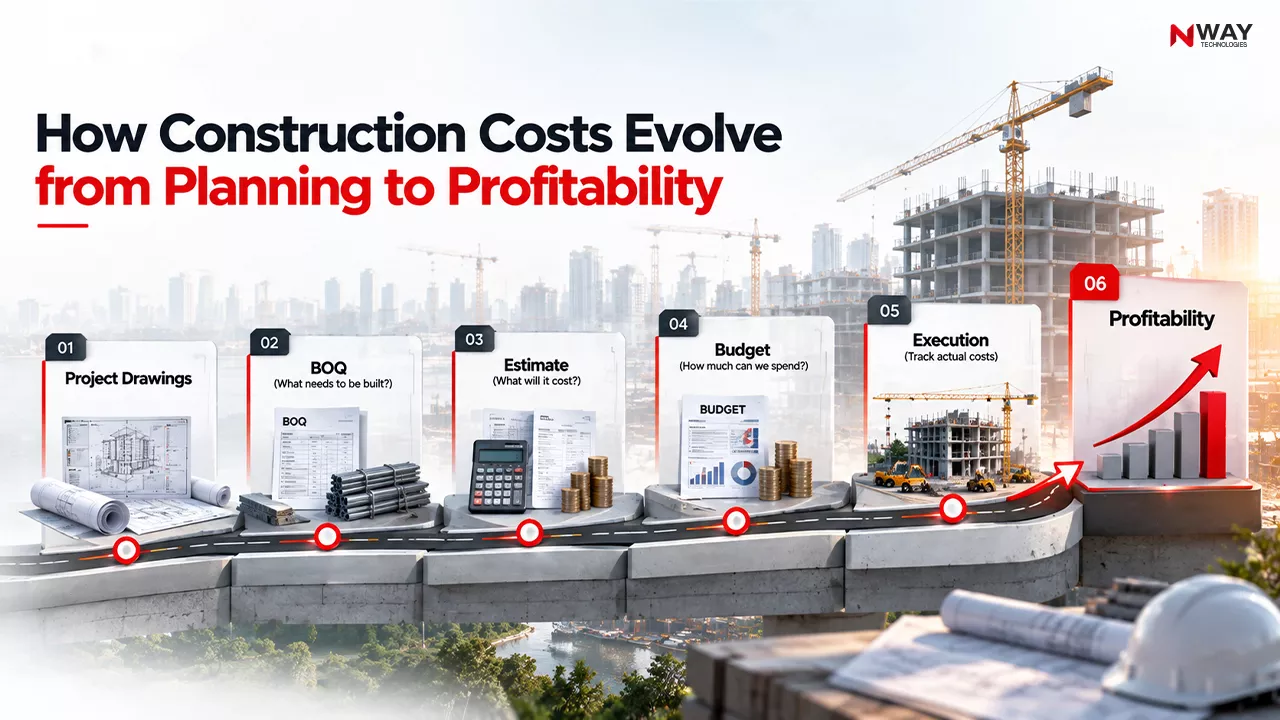
The Construction Cost Planning Flow
Step 1 – Design & Drawings
Step 2 – BOQ Preparation
Step 3 – Cost Estimation
Step 4 – Budget Approval
Step 5 – Project Execution
Step 6 – Cost Monitoring & Control
Think of this as a chain.
If one link is weak, every downstream decision becomes unreliable.
What Is a BOQ (Bill of Quantities)?
A Bill of Quantities (BOQ) is a structured document that lists all measurable construction items required for a project.
It focuses primarily on:
- Quantities
- Units
- Scope of work
- Material requirements
- Trade breakdowns
A BOQ answers:
“What work needs to be done and how much of it is required?”
Example –
| Item | Unit | Quantity |
|---|---|---|
| Earthwork | m³ | 5,000 |
| Concrete | m³ | 1,200 |
| Reinforcement Steel | MT | 180 |
| Brickwork | m² | 8,500 |
Notice something important:
There’s no project budget here.
The BOQ only quantifies the work.
Why BOQ Matters
A well-prepared BOQ supports:
- Accurate tendering
- Better procurement planning
- Material forecasting
- Quantity reconciliation
- Contract administration
- Progress billing
Expert Tip
Many contractors lose money because they focus on rates while overlooking BOQ accuracy.
A 5% quantity error on a high-value item such as steel, bitumen, or structural concrete can erase project margins before execution even begins.
What Is a Construction Cost Estimate?
A construction cost estimate uses BOQ quantities along with pricing assumptions to forecast how much a project is expected to cost.
It adds:
- Material rates
- Labor costs
- Equipment expenses
- Subcontractor costs
- Site overheads
- Risk allowances
- Profit margins
A cost estimate answers:
“What is this project likely to cost?”
Example
| Cost Component | Value |
|---|---|
| Materials | ₹55 Crore |
| Labour | ₹16 Crore |
| Equipment | ₹8 Crore |
| Site Overheads | ₹7 Crore |
| Contingency | ₹4 Crore |
| Total Estimated Cost | ₹90 Crore |
Why Construction Cost Estimation Matters
Accurate project cost estimation helps organizations:
- Evaluate project feasibility
- Submit competitive bids
- Forecast cash flow
- Plan procurement
- Calculate expected margins
- Assess project risks
Common Mistake
Many organizations assume:
BOQ = Estimate
This is incorrect.
A BOQ contains quantities.
A cost estimate converts those quantities into money.
What Is a Construction Budget?
A construction budget is the approved financial limit assigned to the project after strategic review and approval.
Unlike an estimate, which is predictive, the budget becomes an operational control tool.
The budget answers:
“How much are we willing and approved to spend?”
Example
| Category | Budget Allocation |
|---|---|
| Material | ₹52 Crore |
| Labour | ₹15 Crore |
| Equipment | ₹8 Crore |
| Overheads | ₹6 Crore |
| Contingency | ₹4 Crore |
| Total Budget | ₹85 Crore |
In this scenario:
- Estimate = ₹90 Crore
- Budget = ₹85 Crore
Management now expects teams to execute within budget constraints.
Why Budgets Matter
A strong construction project budget:
- Controls spending
- Improves accountability
- Supports cash flow planning
- Enhances profitability tracking
- Enables early cost intervention
Quick Insight
An estimate predicts.
A budget commits.
That distinction matters hugely in construction financial management.
BOQ vs Budget vs Estimate: Side-by-Side Comparison
Strategic Comparison Matrix
| Factor | BOQ | Estimate | Budget |
|---|---|---|---|
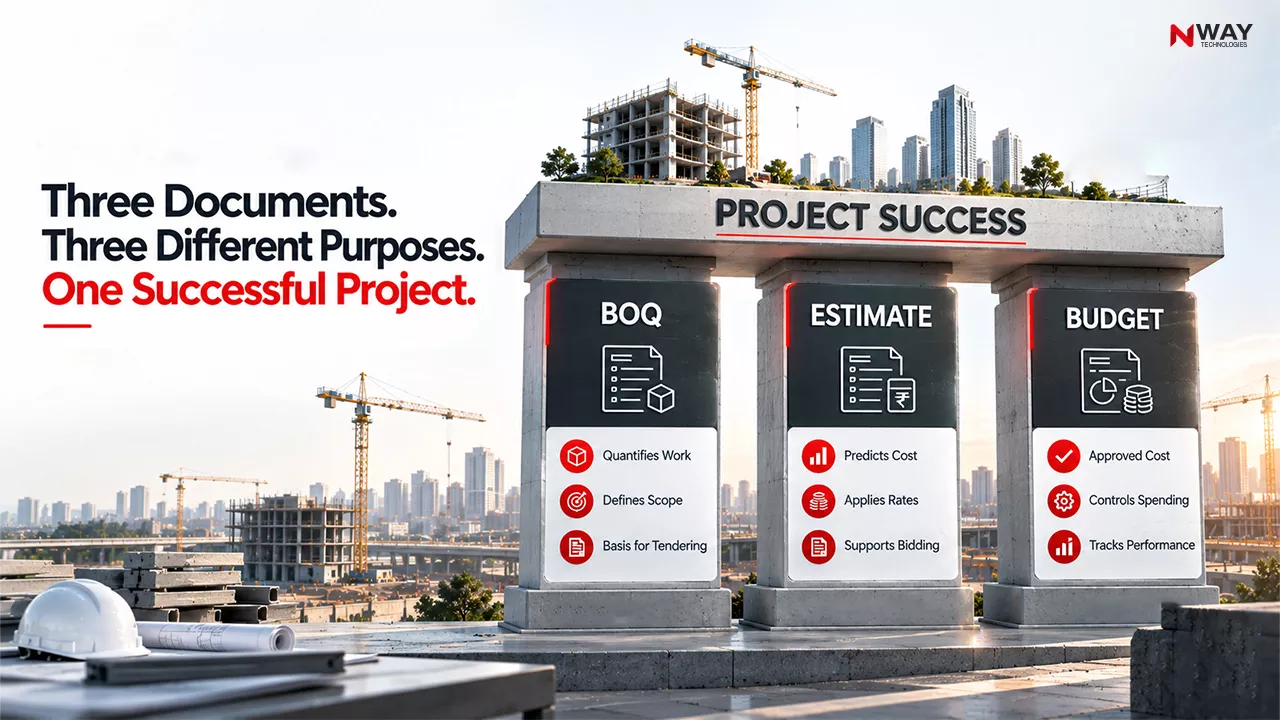
| Purpose | Quantify work | Predict cost | Control spending |
| Focus | Quantities | Expected cost | Approved cost |
| Created By | QS/Estimator | Cost Engineer | Management/Finance |
| Includes Rates | Sometimes | Yes | Yes |
| Includes Contingencies | No | Yes | Yes |
| Used For Tendering | Yes | Yes | Limited |
| Used For Cost Control | Limited | Reference | Primary |
| Updated During Execution | Rarely | Occasionally | Frequently |
| Impacts Procurement | High | High | High |
Real-World Scenario: Where Things Go Wrong
Consider an EPC contractor executing a power plant package.
Situation
BOQ:
- 1,000 MT Steel
Estimate:
- Steel Rate = ₹65,000/MT
Budget:
- ₹65 Crore allocated
Three months later:
Steel price increases to ₹75,000/MT.
Result
- The BOQ remains unchanged.
- The estimate becomes outdated.
- The budget becomes insufficient.
Without proactive cost tracking, management discovers the variance only after procurement commitments are made.
This is exactly why effective construction cost planning requires all three documents to work together.
Hidden Risks of Confusing BOQ, Estimate, and Budget
- Risk 1: Underpriced Bids – Poor estimation based on inaccurate quantities results in aggressive bidding and reduced margins.
- Risk 2: Procurement Leakage – Procurement teams purchase materials without linking consumption to BOQ quantities.
- Risk 3: Budget Overruns – Site teams spend based on estimates rather than approved budgets.
- Risk 4: Cash Flow Pressure – Actual spending exceeds planned expenditure, creating working capital stress.
- Risk 5: Delayed Decision-Making – Management lacks visibility into quantity variance and budget variance.
Best Practice Checklist for Contractors and EPC Companies
| Planning Stage | Execution Stage | Governance Stage |
|---|---|---|
| Validate BOQ independently | Track actual vs BOQ quantities | Conduct monthly variance reviews |
| Review drawing revisions | Monitor actual vs budget costs | Reforecast budgets regularly |
| Create multiple estimation scenarios | Review procurement commitments weekly | Link billing with physical quantities |
| Include escalation assumptions | Analyze productivity variance | Maintain approval workflows |
| Define contingency thresholds | Maintain category-wise cost dashboards |
How Construction ERP Connects BOQ, Budget, and Cost Estimation
Traditionally:
- BOQ in Excel
- Estimate in another sheet
- Procurement in emails
- Finance in accounting software
The result is fragmented project visibility.
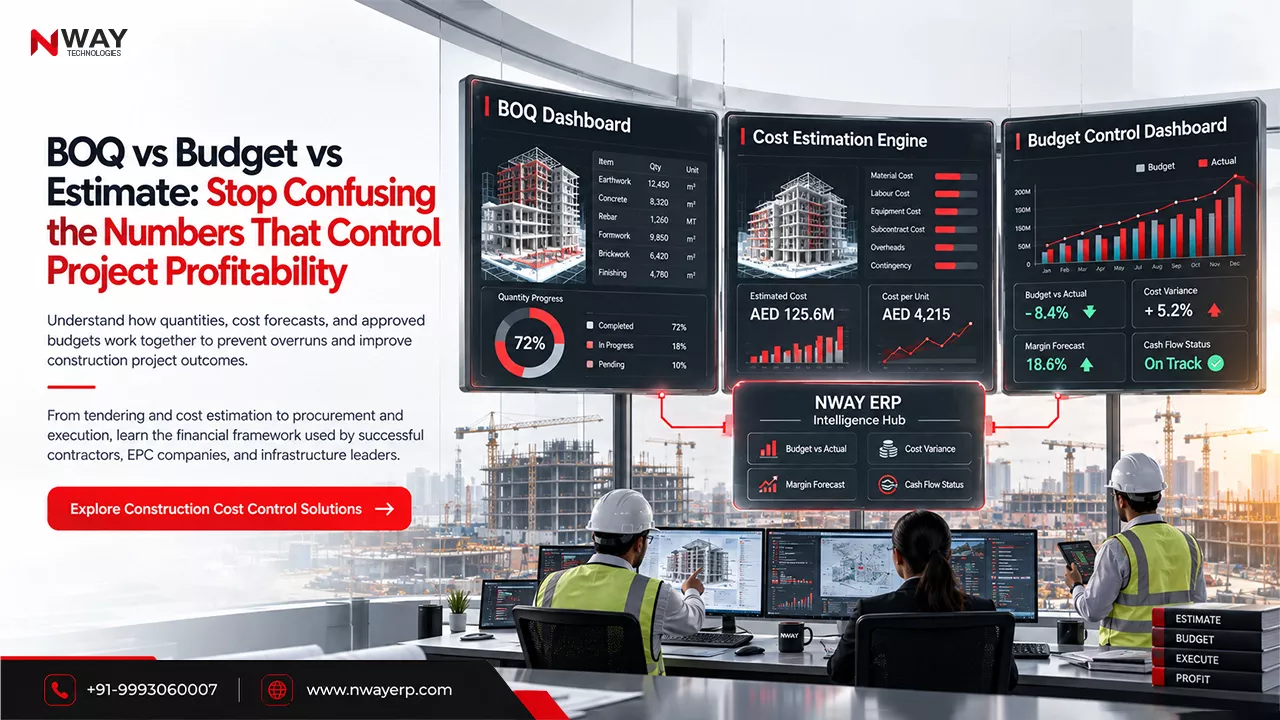
Modern construction ERP platforms create a single source of truth.
ERP-Enabled Construction Cost Control Framework
| Function | ERP Benefit |
|---|---|
| BOQ Management | Centralized quantity tracking |
| Cost Estimation | Standardized rate analysis |
| Budget Management | Real-time cost monitoring |
| Procurement | Budget-linked purchasing |
| Billing | BOQ-based RA billing |
| Finance | Project-wise profitability |
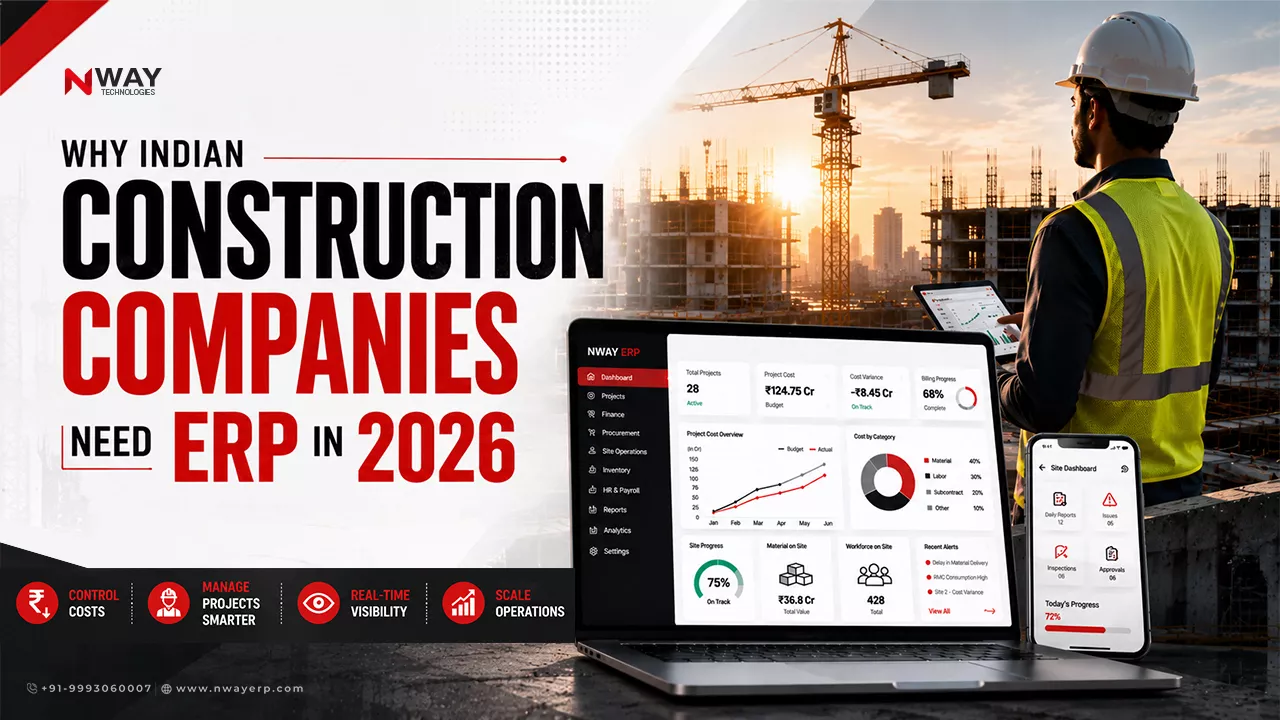
| Dashboards | Live budget vs actual tracking |
Did You Know?
Many cost overruns do not happen because projects exceed scope.
They happen because management becomes aware of the variance too late.
Real-time dashboards help identify deviations while corrective action is still possible.
Conclusion
The debate around BOQ vs Budget vs Estimate is not merely about terminology.
It is about how construction businesses manage risk, control costs, and protect margins.
A BOQ defines the measurable scope. A construction cost estimate transforms scope into projected financial outcomes. A construction budget establishes the financial boundaries within which the project must operate.
Organizations that treat these as separate but interconnected disciplines achieve stronger construction cost management, better forecasting accuracy, and improved profitability.
As construction projects become increasingly complex across India, UAE, Saudi Arabia, and the broader GCC region, the winners will not simply be the companies that build faster. They will be the companies that understand their numbers better.
And that journey starts with understanding the difference between the BOQ, the estimate, and the budget.
(Also Read: Contractor vs Subcontractor vs Vendor)