Table of Contents:
- Introduction
- The Hidden Nature of Construction Budget Leakages
- The 7 Biggest Causes of Budget Leakages in Construction Projects
- How Construction ERP Software Reduces Budget Leakages
- Construction Budget Leakage Cheat Sheet
- Conclusion
Introduction
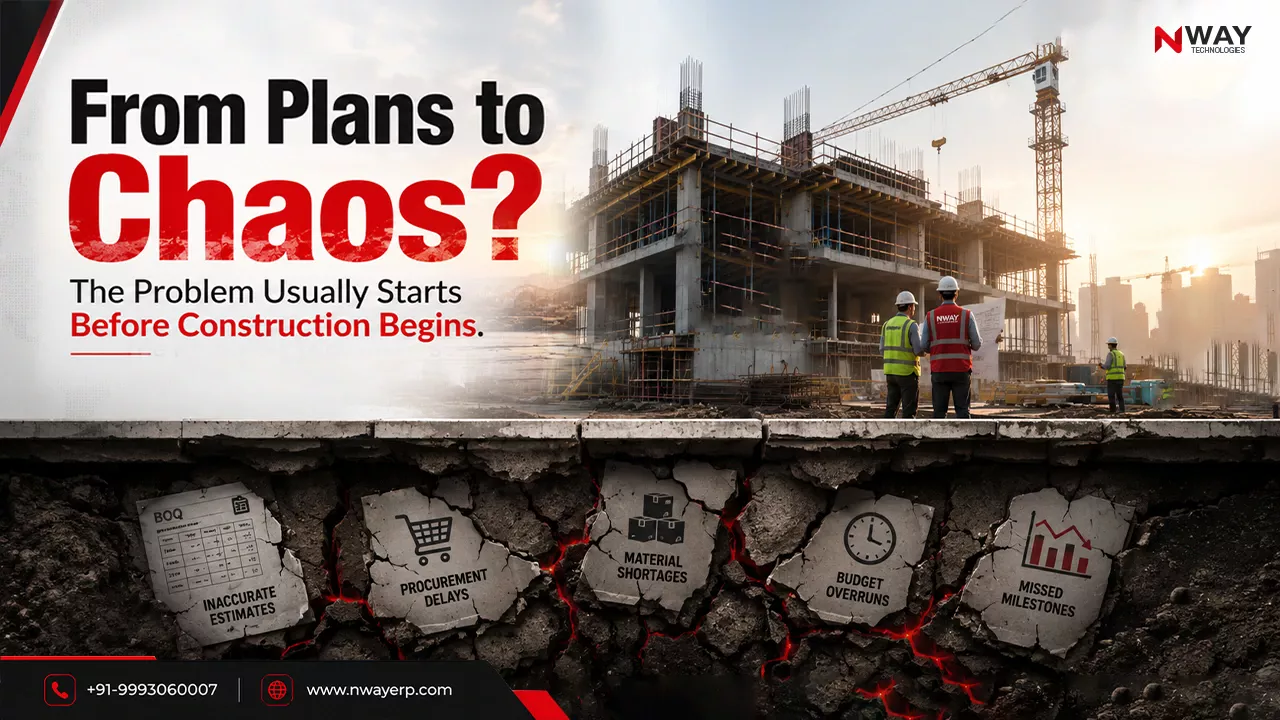
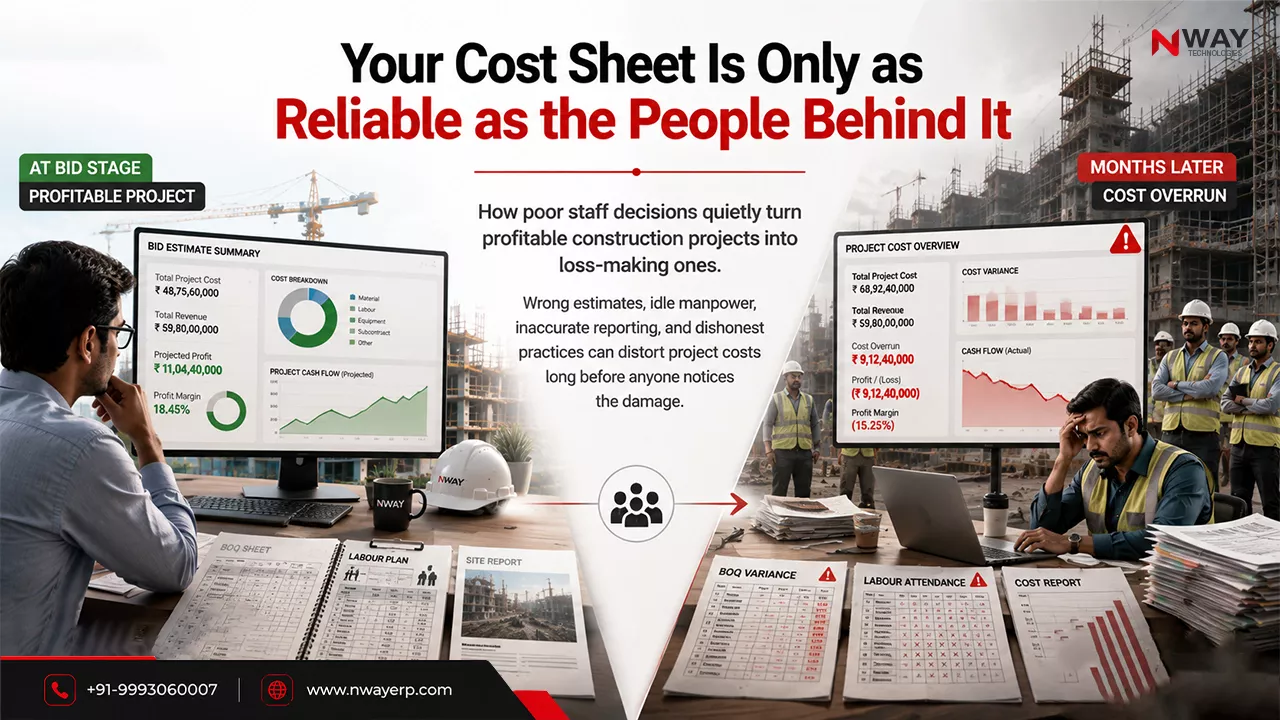
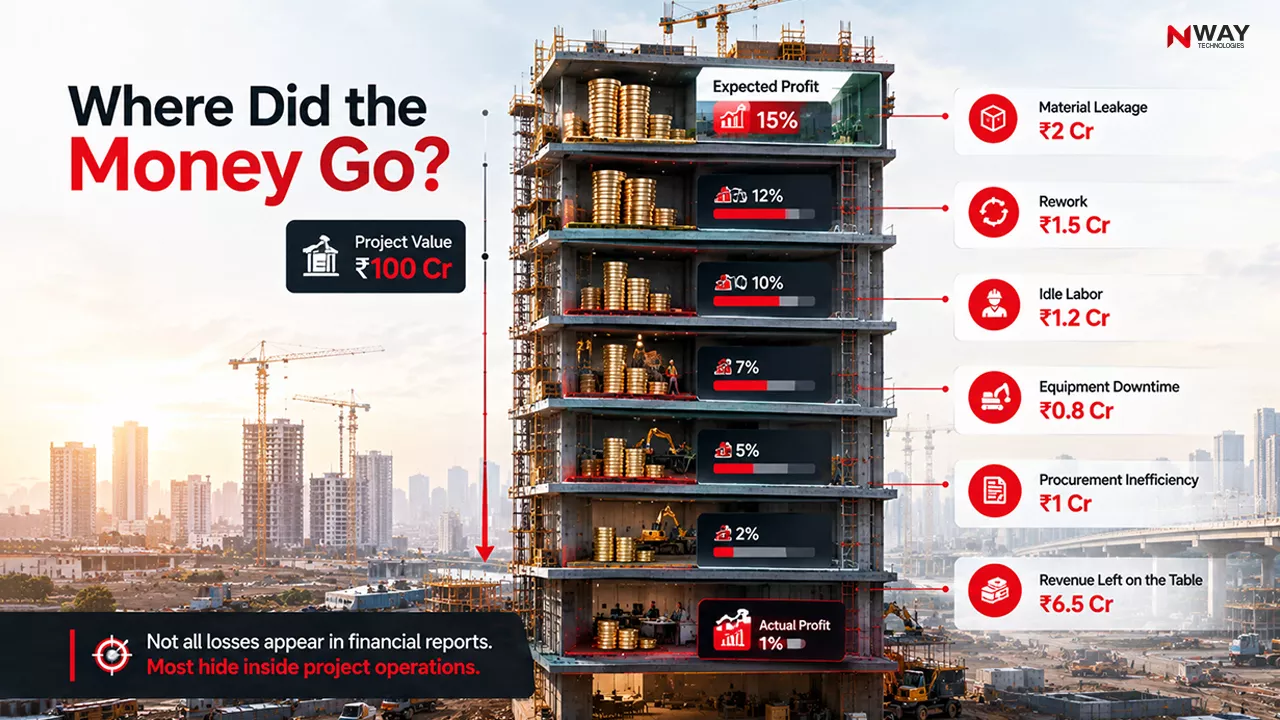
A contractor wins a ₹200 crore infrastructure project with healthy projected margins. Six months later, cash flow is tightening, procurement teams are requesting additional budgets, labor productivity is declining, and finance reports indicate rising costs.
Management immediately investigates.
The surprising discovery?
There was no single major problem.
Instead, profitability escaped through dozens of seemingly minor issues:
- Excess material consumption
- Unapproved purchases
- Rework from drawing revisions
- Delayed subcontractor reconciliations
- Idle manpower
- Equipment downtime
- Late detection of cost variances
These are budget leakages.
Across India, UAE, Saudi Arabia, and the wider GCC region, tighter margins and increasingly complex projects are making Construction Cost Management a boardroom priority rather than just a project control function.
The critical question is no longer:
“Why did the project go over budget?”
It is:
“Where did the money start leaking?”
The Hidden Nature of Construction Budget Leakages
Unlike a structural failure or schedule delay, budget leakages rarely create immediate alarms.
They accumulate quietly.
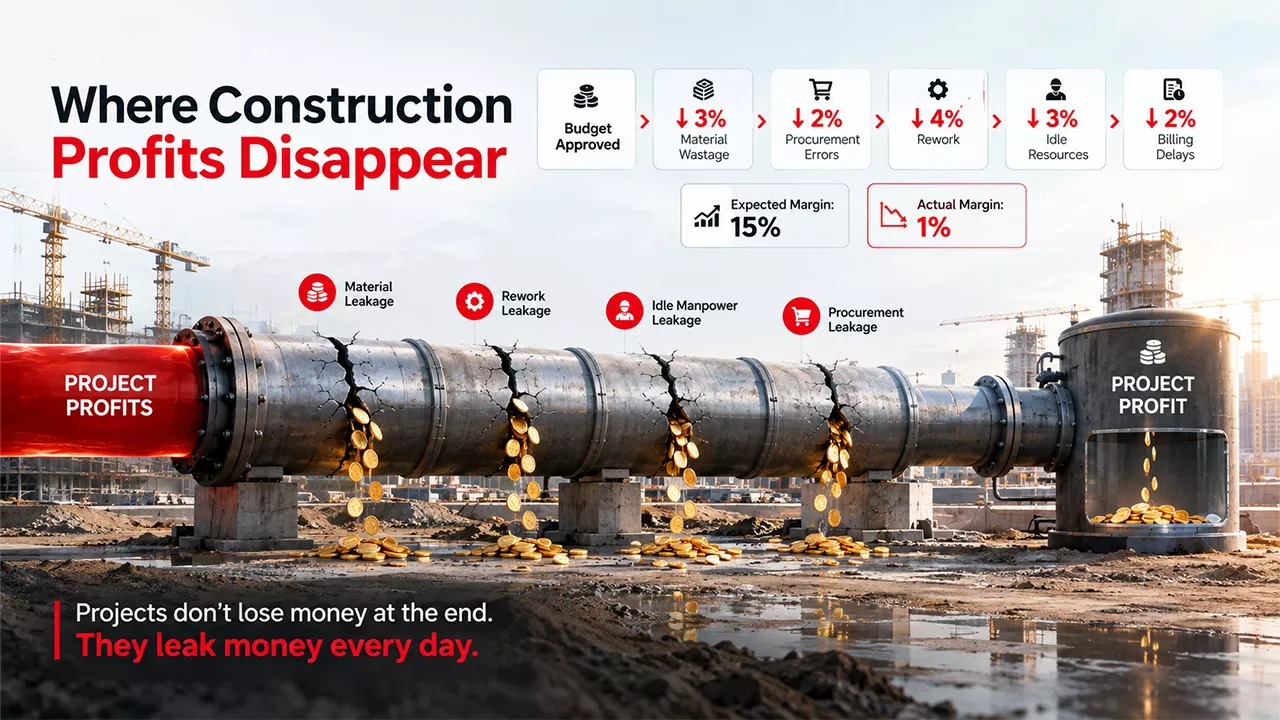
A few extra tons of steel. A few days of idle equipment. A few unapproved purchases. A few hours of rework.
Individually they appear insignificant.
Collectively they can wipe out project profitability.
Why It Matters
Even a project that appears on schedule can still suffer from serious financial leakage.
Common consequences include:
- Reduced project margins
- Increased working capital requirements
- Client disputes
- Procurement inefficiencies
- Delayed cash collection
- Lower competitiveness in future bids
Quick Insight
Profit does not usually disappear in one transaction. It leaks through hundreds of untracked decisions.
The 7 Biggest Causes of Budget Leakages in Construction Projects
1. Poor Construction Budget Planning
Most budget leakages begin during project planning.
When cost estimates rely on outdated rates, incomplete quantity assessments, or optimistic assumptions, the project starts with a financial disadvantage.
Common Challenges
- Incomplete BOQ verification
- Unrealistic productivity assumptions
- Ignored escalation risks
- Insufficient contingencies
- Underestimated resource requirements
Industry Example
A contractor budgets concrete work assuming historical labor productivity. Actual site conditions reduce output by 20%.
Even though execution is technically successful, labor costs exceed forecasts throughout the project. See: – Solution ( Finance & Accounts )
Common Mistake
Treating the estimate as a fixed reality instead of a forecast.
2. Material Leakage and Wastage
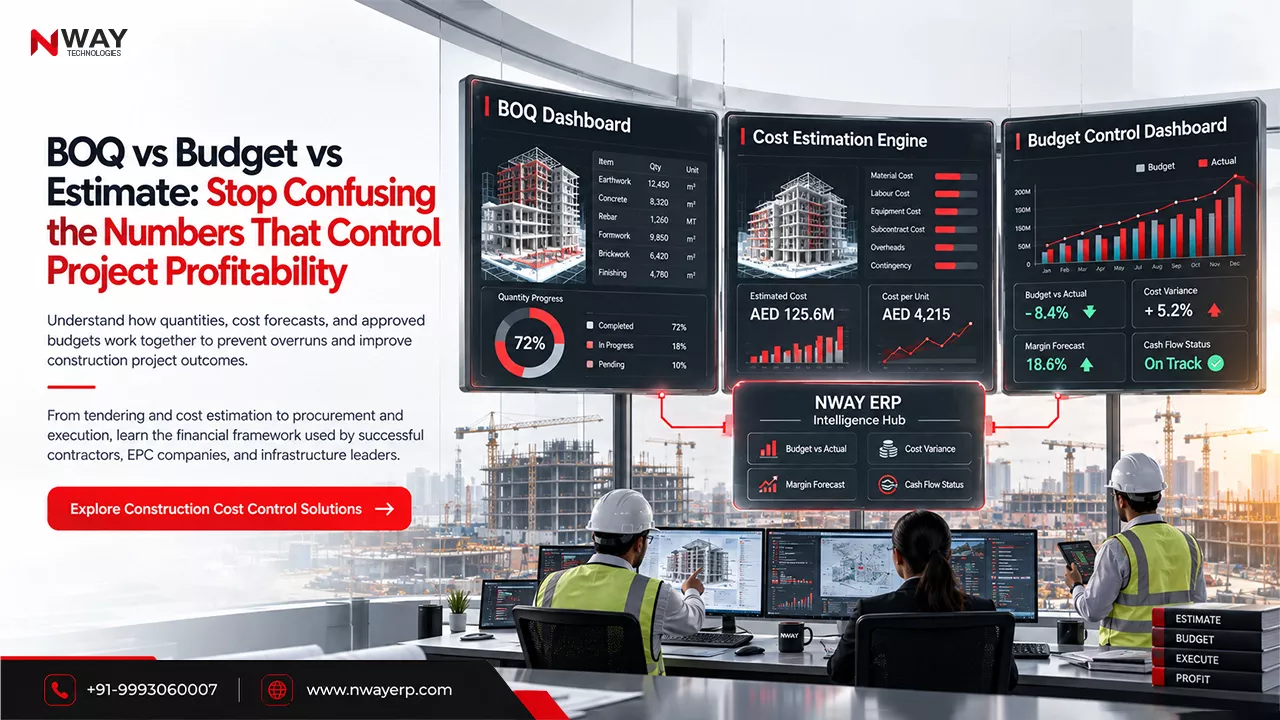
Materials often represent 40% to 60% of total project costs.
Even small variances create significant financial impact.
Hidden Risks
- Excess issue quantities
- Overstocking
- Theft and pilferage
- Damage during storage
- Poor consumption monitoring
Best Practice Checklist
- Track issue vs consumption
- Compare consumption against BOQ
- Monitor site-wise material usage
- Automate stock transfers
- Conduct regular reconciliations
Expert Tip
If material variance is reviewed monthly, the problem has already become expensive.
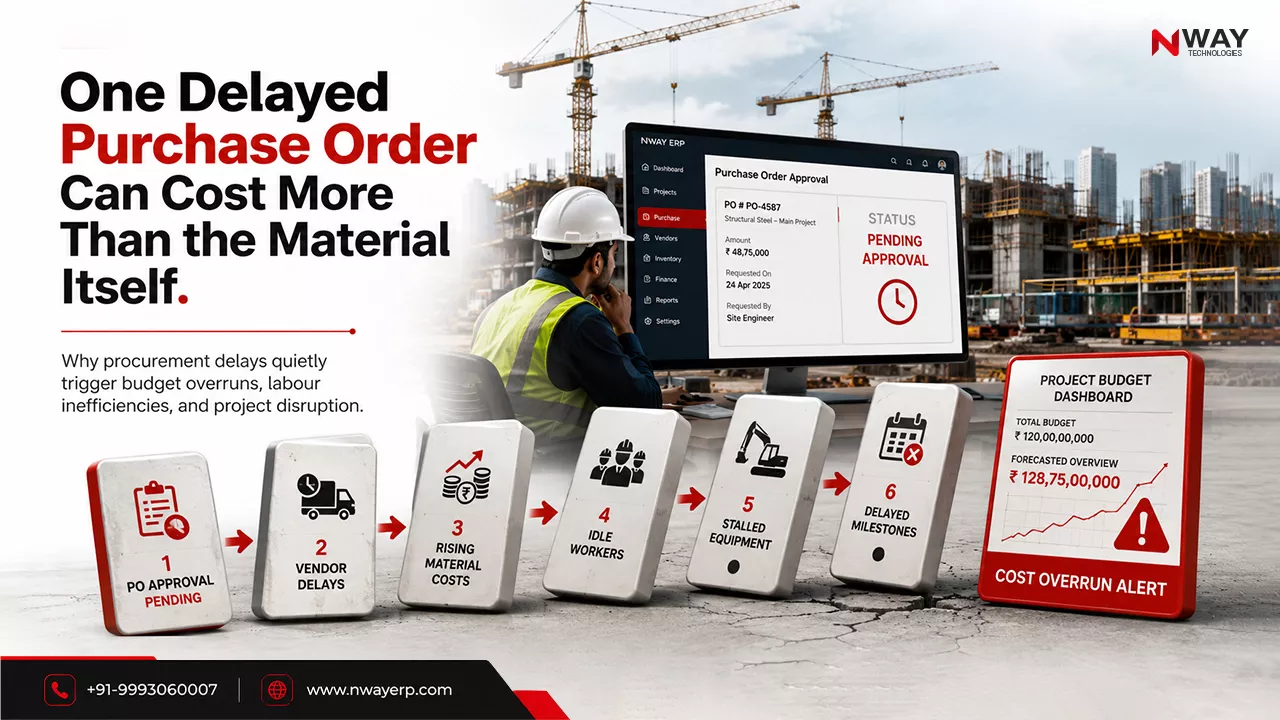
3. Procurement Inefficiencies
Procurement decisions directly influence project profitability.
However, many organizations still depend on email chains, calls, and spreadsheets.
Typical Leakage Areas
- Emergency purchases
- Duplicate orders
- Price inconsistencies
- Delayed approvals
- Unverified vendor rates
Cost Impact Framework
| Procurement Issue | Cost Impact |
|---|---|
| Late purchase orders | Idle labor and equipment |
| Emergency buying | Higher material costs |
| Poor vendor comparison | Reduced margins |
| Untracked commitments | Budget overruns |
| Missing approvals | Compliance risk |
Did You Know?
Many project budgets appear healthy until procurement commitments are included. Actual financial exposure is often much higher than visible expenses.
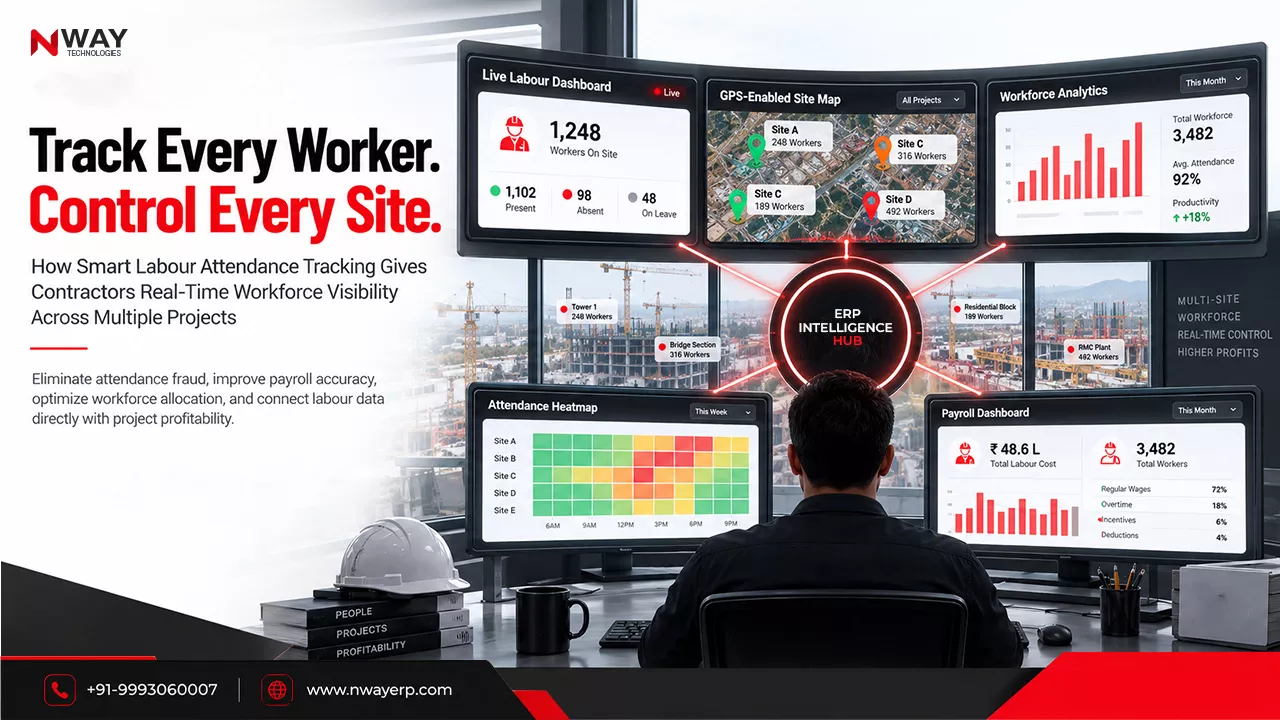
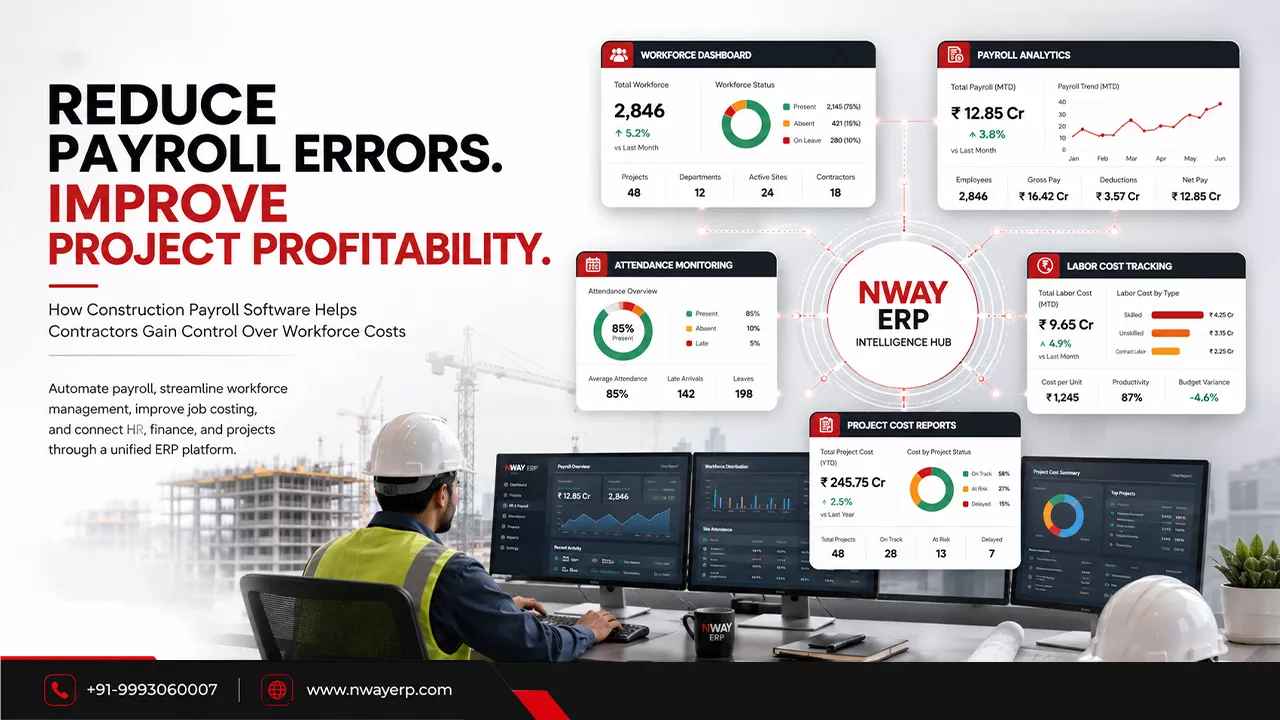
4. Labor and Resource Underutilization
Labor is one of the largest controllable project costs.
Unfortunately, it’s also one of the most difficult to monitor accurately.
Signs of Resource Leakage
- Idle workforce
- Duplicate responsibilities
- Poor crew allocation
- Low productivity
- Delayed decision-making
Before vs After Resource Visibility
| Without Visibility | With Real-Time Tracking |
|---|---|
| Manual attendance | Automated workforce tracking |
| Productivity assumptions | Actual productivity metrics |
| Delayed reporting | Real-time dashboards |
| Resource imbalance | Optimized allocation |
Why It Matters
An idle engineer, supervisor, or machine may not attract attention today.
Over a 12-month project, that hidden cost becomes substantial.
5. Rework and Quality Failures
Rework is one of the most destructive forms of budget leakage because contractors pay twice for the same work.
Sources of Rework
- Drawing version confusion
- Poor supervision
- Design changes
- Inadequate quality control
- Communication failures
Hidden Costs Beyond Rework
- Additional labor
- Material replacement
- Equipment costs
- Delayed billing
- Schedule disruption
Quick Insight
Every rework activity creates a double loss:
- Direct repair cost
- Lost opportunity to perform productive work
6. Delayed Project Cost Tracking
Many organizations discover problems at month-end.
Unfortunately, budget leakages don’t wait for monthly reports.
The Traditional Problem
Project teams often manage:
- Procurement in one system
- Inventory in another
- Finance elsewhere
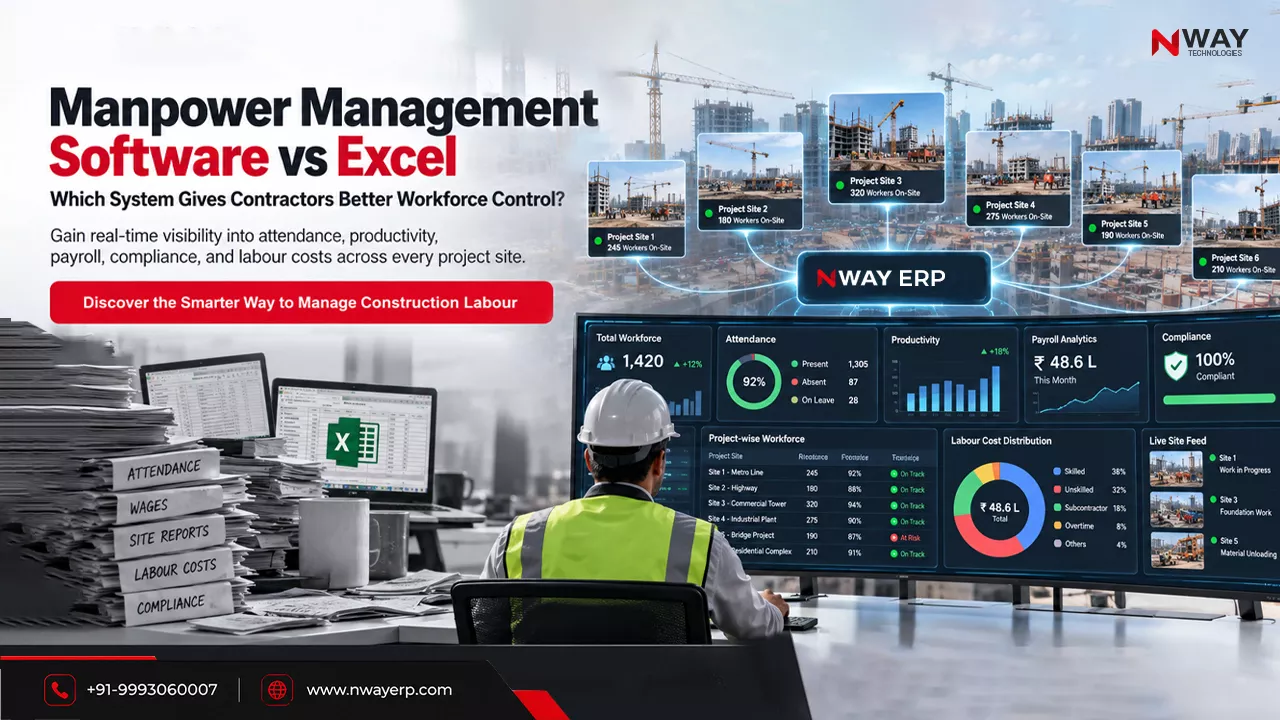
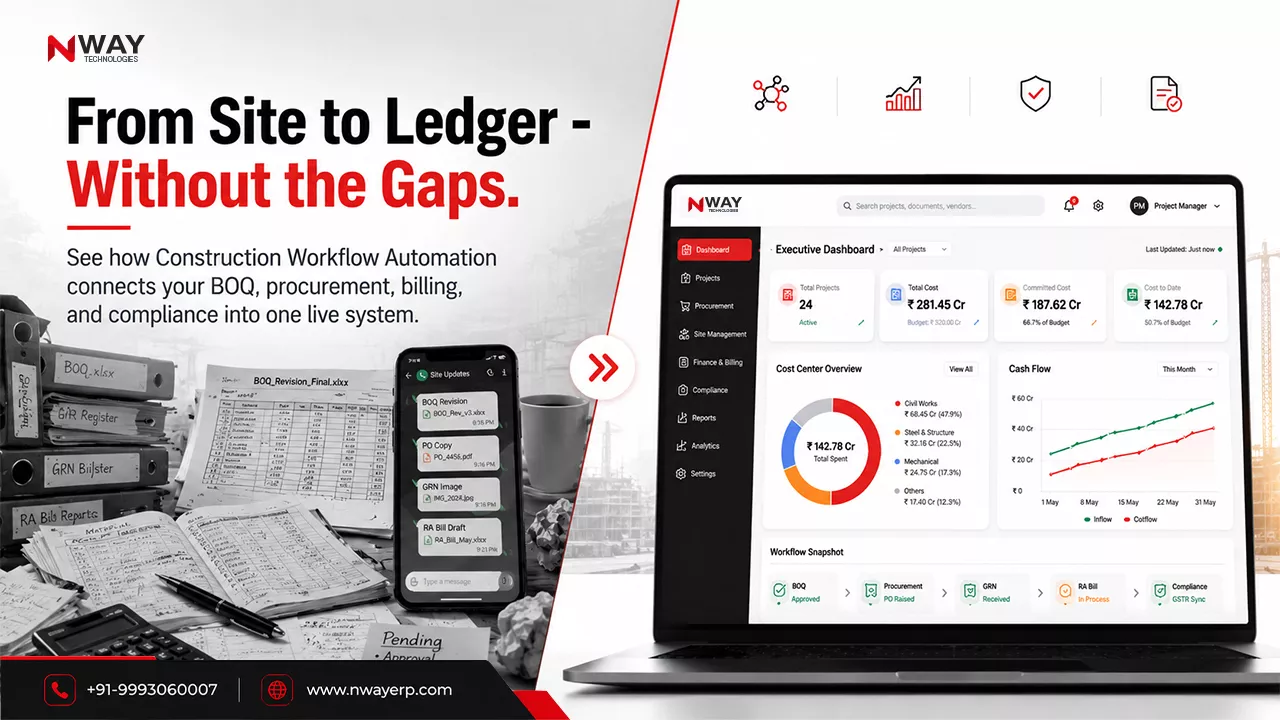
- Site reports through WhatsApp and spreadsheets
This creates a lag between reality and reporting.
Construction Cost Control Maturity Model
| Level | Cost Visibility |
|---|---|
| Level 1 | Excel-based tracking |
| Level 2 | Weekly reporting |
| Level 3 | Department dashboards |
| Level 4 | Integrated project visibility |
| Level 5 | Real-time cost intelligence |
Expert Recommendation
The objective of Construction Project Cost Management is not historical reporting.
The objective is early intervention.
7. Lack of System Integration
Many construction companies have data.
What they lack is connected data.
Common Scenario
Finance says: “Project is on budget.”
Project team says: “We need additional funds.”
Procurement says: “Several commitments are not yet recorded.”
All three statements may be correct because each department sees only part of the picture.
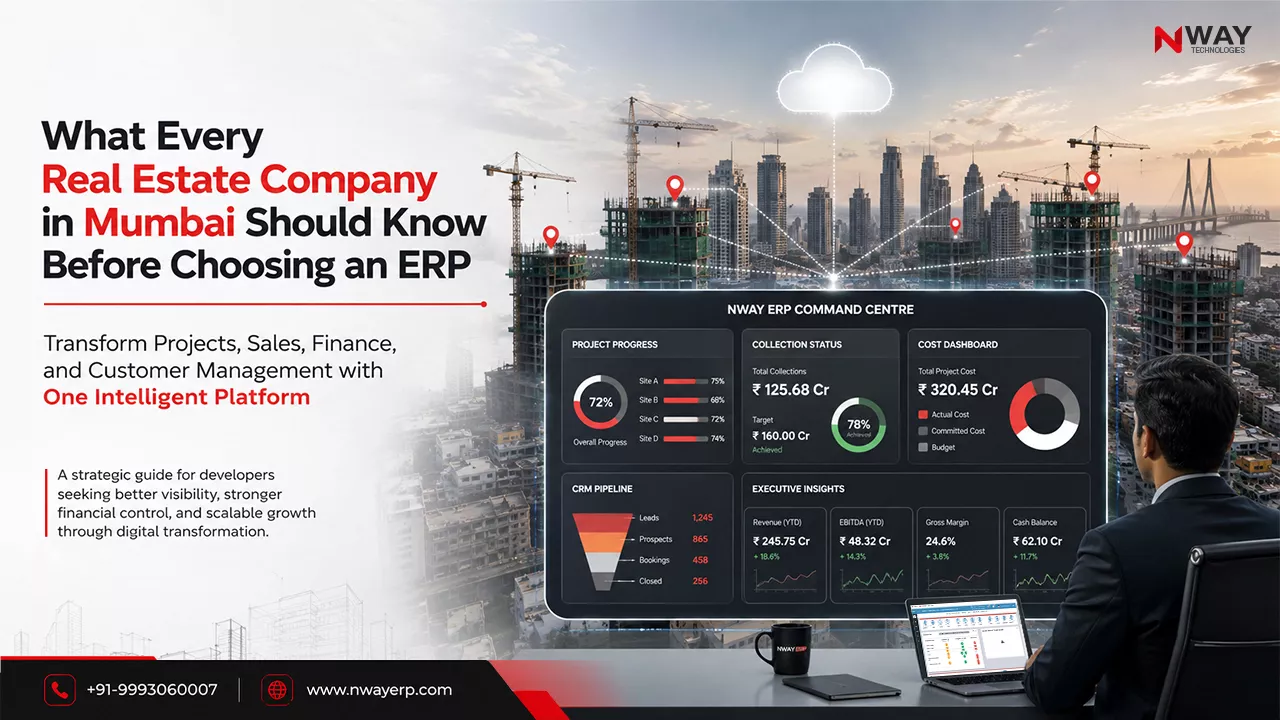
How Construction ERP Software Reduces Budget Leakages
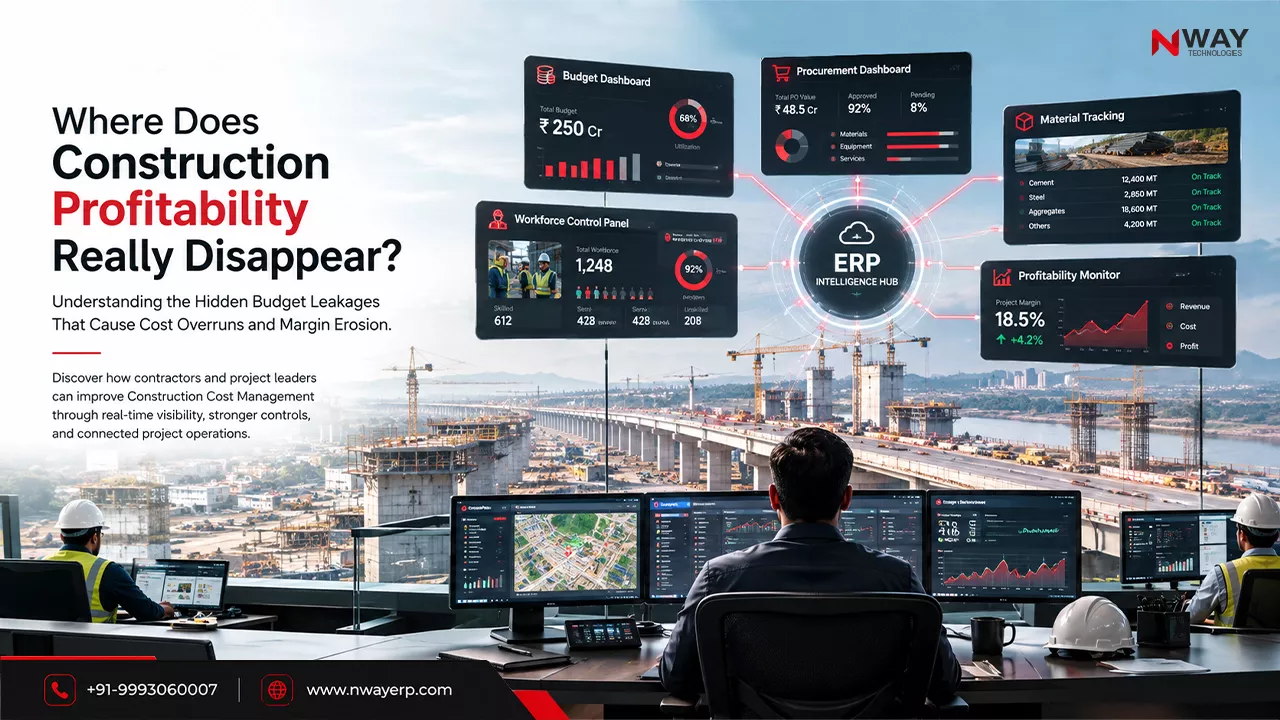
Modern construction ERP software creates a single source of truth across projects.
Instead of relying on disconnected systems, ERP platforms connect:
- Budgeting
- Procurement
- Inventory
- Equipment
- Labor
- Billing
- Finance
- Project Controls
ERP vs Manual Cost Control
| Process | Manual Environment | ERP Environment |
|---|---|---|
| Budget Tracking | Monthly review | Real-time monitoring |
| Procurement Visibility | Email-based | Workflow-driven |
| Material Reconciliation | Manual | Automated |
| Site Reporting | Spreadsheets | Mobile reporting |
| Billing Tracking | Delayed visibility | Real-time status |
| Cost Variance Detection | Reactive | Proactive |
Expected Outcomes
Organizations implementing integrated Construction Management Software often achieve:
- Early variance detection
- Better cash flow visibility
- Reduced material leakage
- Improved procurement control
- Faster project reporting
- More predictable profitability
Construction Budget Leakage Cheat Sheet
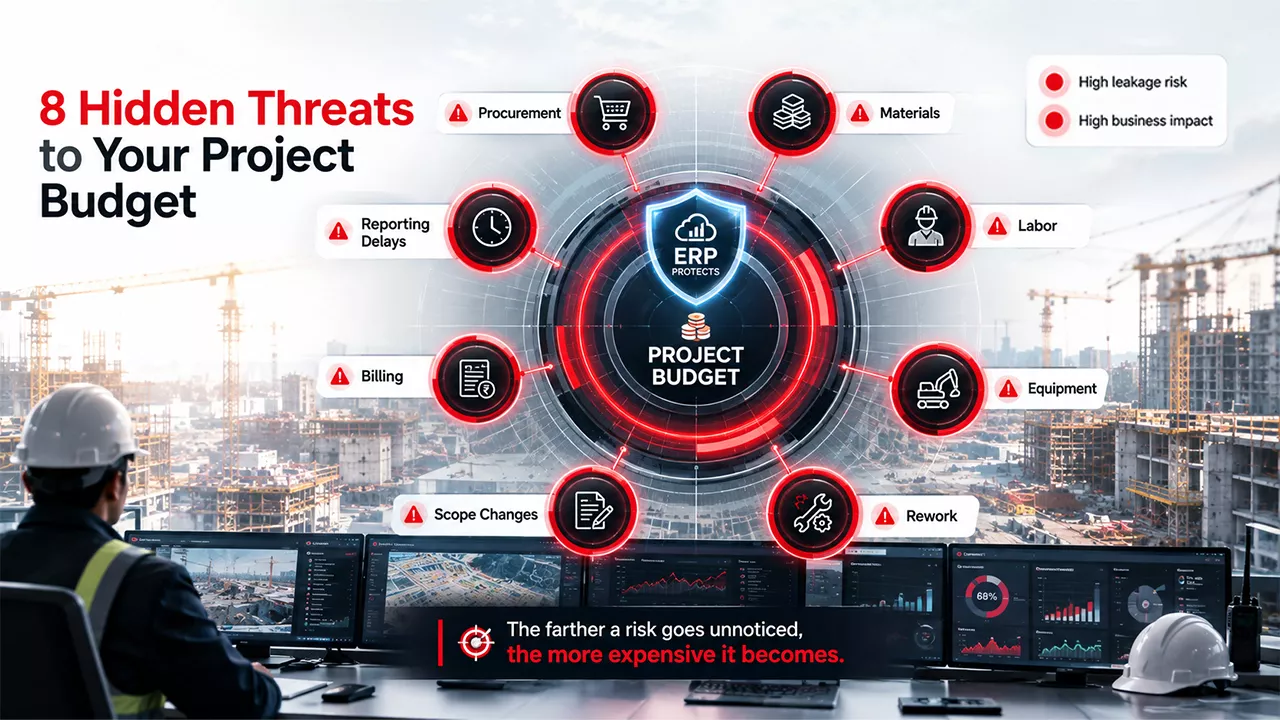
| Budget Leakage Source | Business Impact | Warning Sign | Recommended Action |
|---|---|---|---|
| Material Wastage | Increased direct cost | Consumption exceeds BOQ | Daily material reconciliation |
| Procurement Delays | Schedule impact & idle labor | Emergency purchases | Procurement workflow automation |
| Rework | Margin erosion | Frequent quality defects | Quality checkpoints |
| Idle Labor | Higher overhead costs | Workforce waiting for work | Resource planning & allocation |
| Equipment Downtime | Productivity loss | Unplanned breakdowns | Preventive maintenance |
| Scope Changes | Budget overruns | Multiple change requests | Change order control process |
| Billing Delays | Cash flow stress | Work completed but unbilled | Real-time billing visibility |
| Data Silos | Poor decisions | Different reports show different numbers | Centralized ERP platform |
Conclusion
The biggest threat to project profitability is not always a major delay, material shortage, or contractual dispute.
More often, it is the accumulation of hidden budget leakages that remain invisible until margins have already been damaged.
Effective Construction Cost Management requires organizations to move beyond periodic reporting and toward continuous cost visibility. As construction projects become larger and more complex across India, UAE, Saudi Arabia, and global markets, companies that can detect financial deviations early will outperform those relying on spreadsheets and hindsight.
The future of construction cost control belongs to organizations that connect project execution, procurement, inventory, labor, equipment, billing, and finance into a single decision-making framework. When leaders can see cost leakage as it happens, they gain the ability to protect margins before those losses become irreversible.