Executive Summary
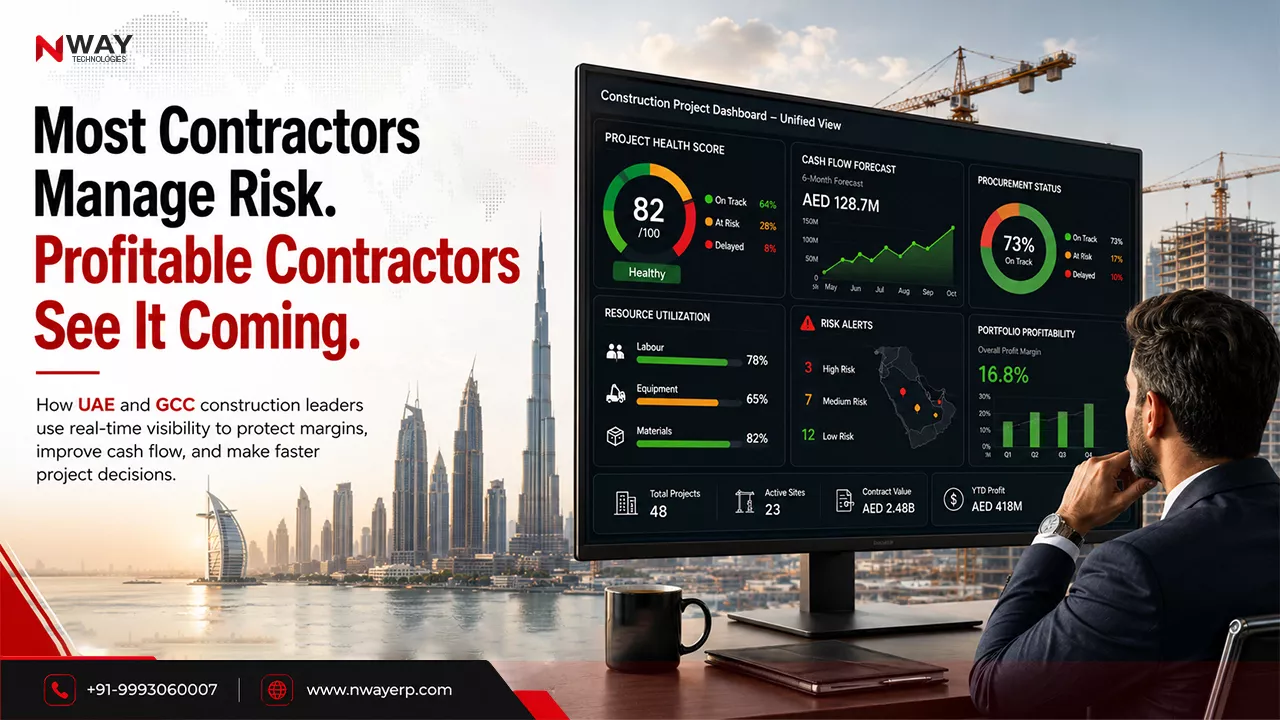
Across the UAE and wider GCC construction industry, the most profitable contractors are changing how they think about risk.
Rather than focusing exclusively on risk management frameworks, committees, and mitigation plans, leading organizations are investing in something more powerful: Construction Risk Visibility.
The difference is subtle but significant.
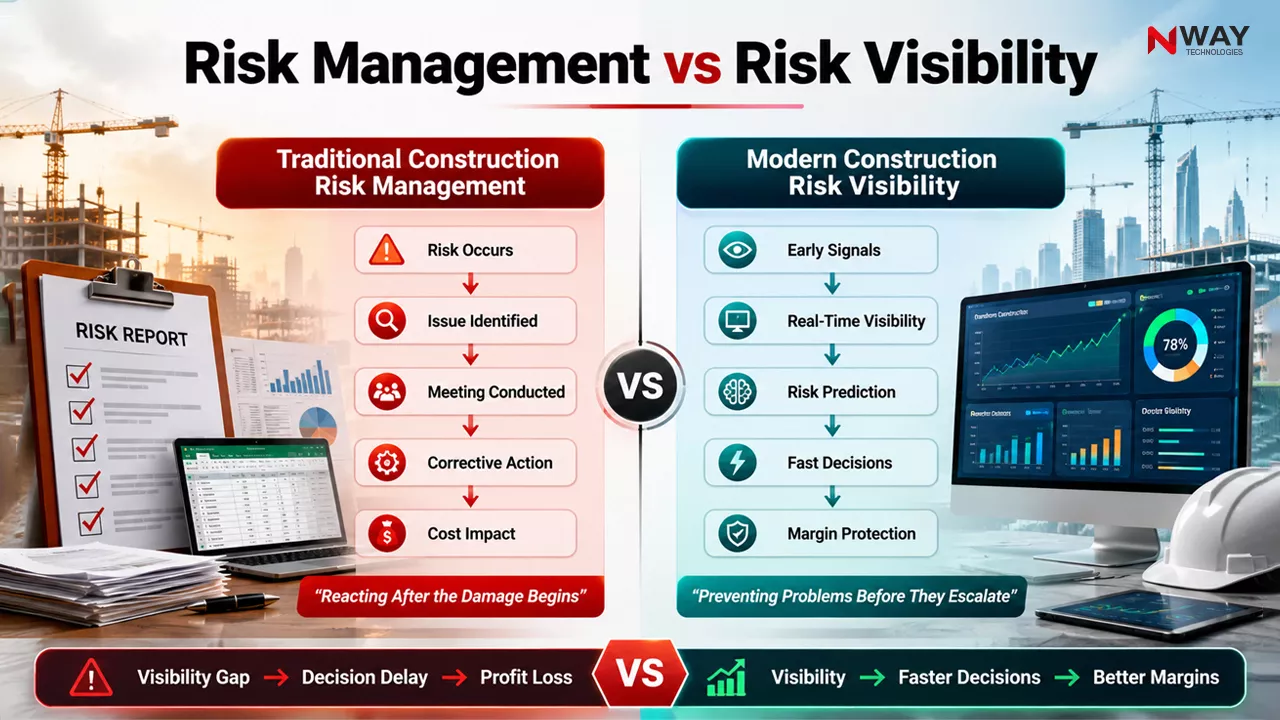
Risk management attempts to respond to problems.
Risk visibility helps organizations identify emerging issues before they become problems.
In an environment dominated by mega-projects, compressed schedules, global supply chains, subcontractor dependencies, and increasing compliance requirements, visibility has become the foundation of effective decision-making.
This shift is redefining construction risk management UAE practices and shaping the next generation of digital transformation strategies across GCC construction businesses.
Table of Contents:
- A Hidden Profitability Challenge Emerging Across the GCC
- Why This Matters in the UAE & GCC
- The Real Problem Isn’t What You Think
- Why Conventional Practices Are No Longer Effective
- Modern Approach to Solving the Problem
- How Construction ERP Supports These Goals
- What’s Changing in 2027 and Beyond
- Conclusion
A Hidden Profitability Challenge Emerging Across the GCC
The GCC construction market is entering a new phase.
Saudi Vision 2030, UAE infrastructure expansion, industrial diversification projects, logistics corridors, renewable energy developments, giga-projects, and large-scale urban developments are creating unprecedented opportunities across the region. Industry reports continue to highlight growing investment pipelines, accelerated digital transformation, and increasing demand for data-driven project delivery. (Refer:- Digital maturity in Middle Eastern construction)
- Yet many contractors are facing a paradox.
- Revenues are increasing.
- Project portfolios are expanding.
- But profitability is becoming harder to protect.
- The reason isn’t necessarily poor execution.
- It’s the inability to see risk developing in real time.
Why This Matters in the UAE & GCC
Construction businesses across the GCC operate in one of the world’s most complex project environments.
Common realities include:
- Fast-tracked project execution
- Multi-country procurement networks
- Imported material dependencies
- Large subcontractor ecosystems
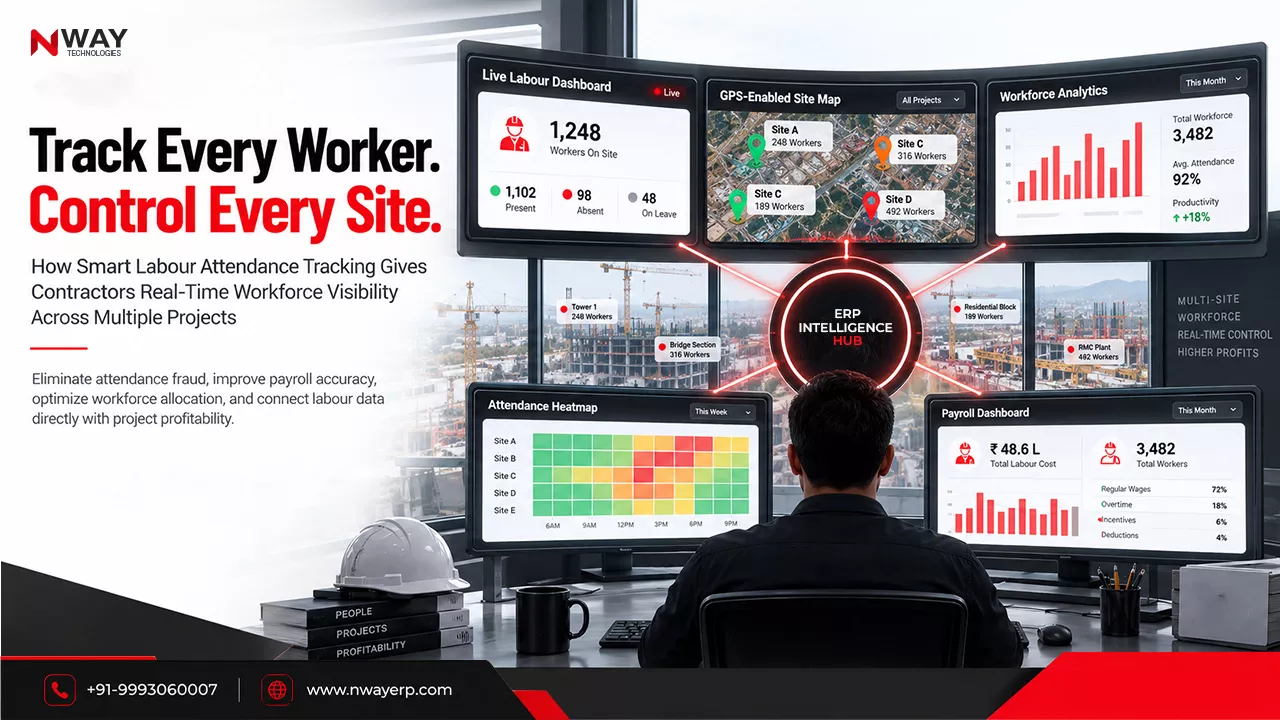
- Workforce productivity challenges
- Tight project margins
- Multi-project management requirements
- Growing ESG and compliance expectations
A single visibility gap can trigger a chain reaction:
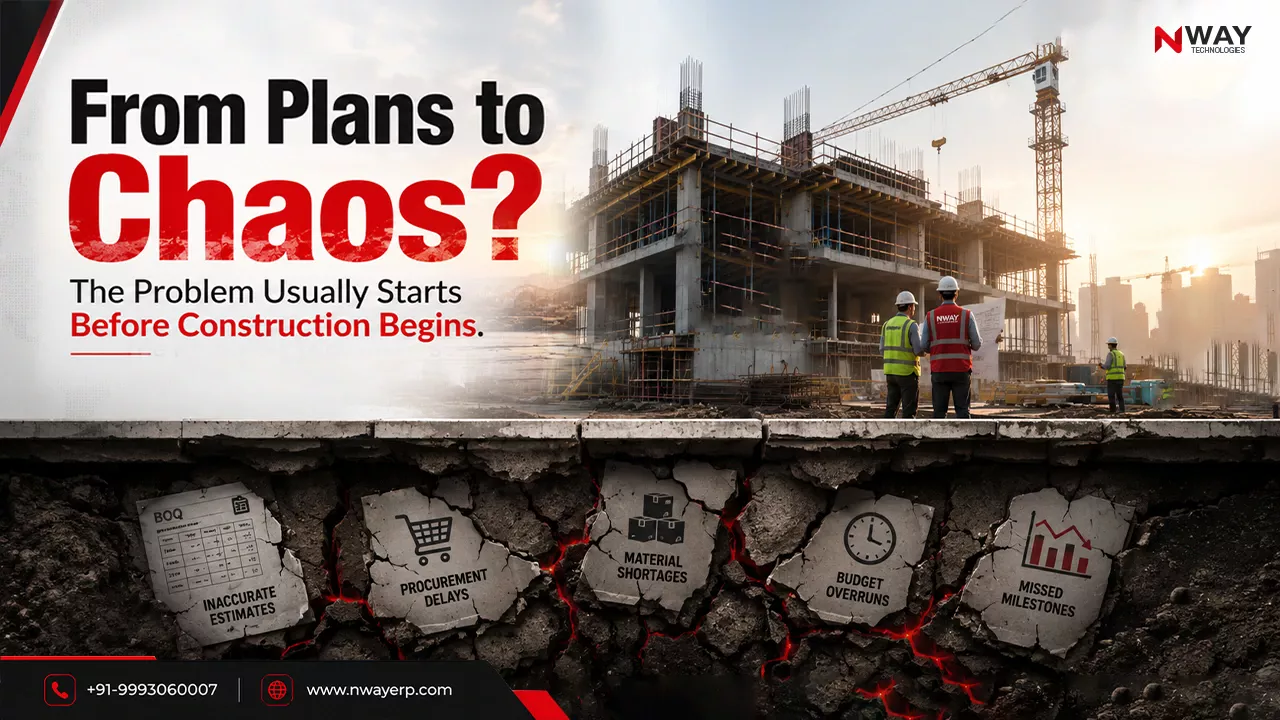
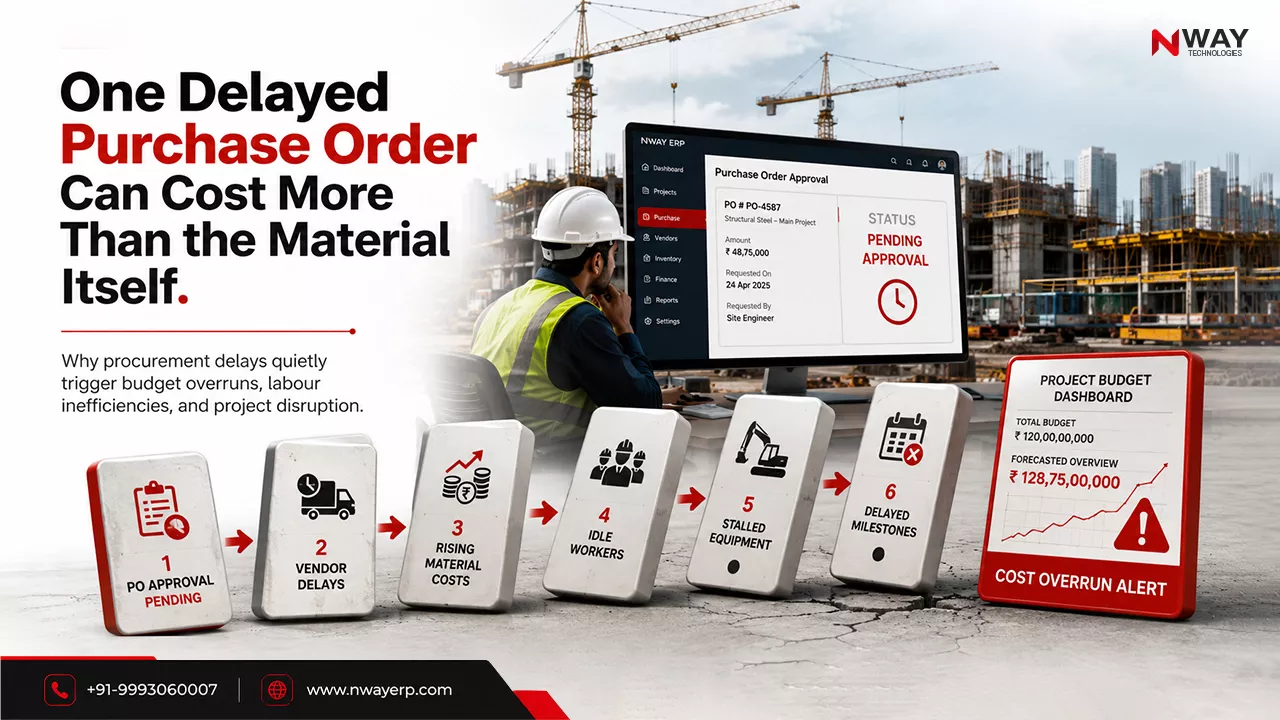
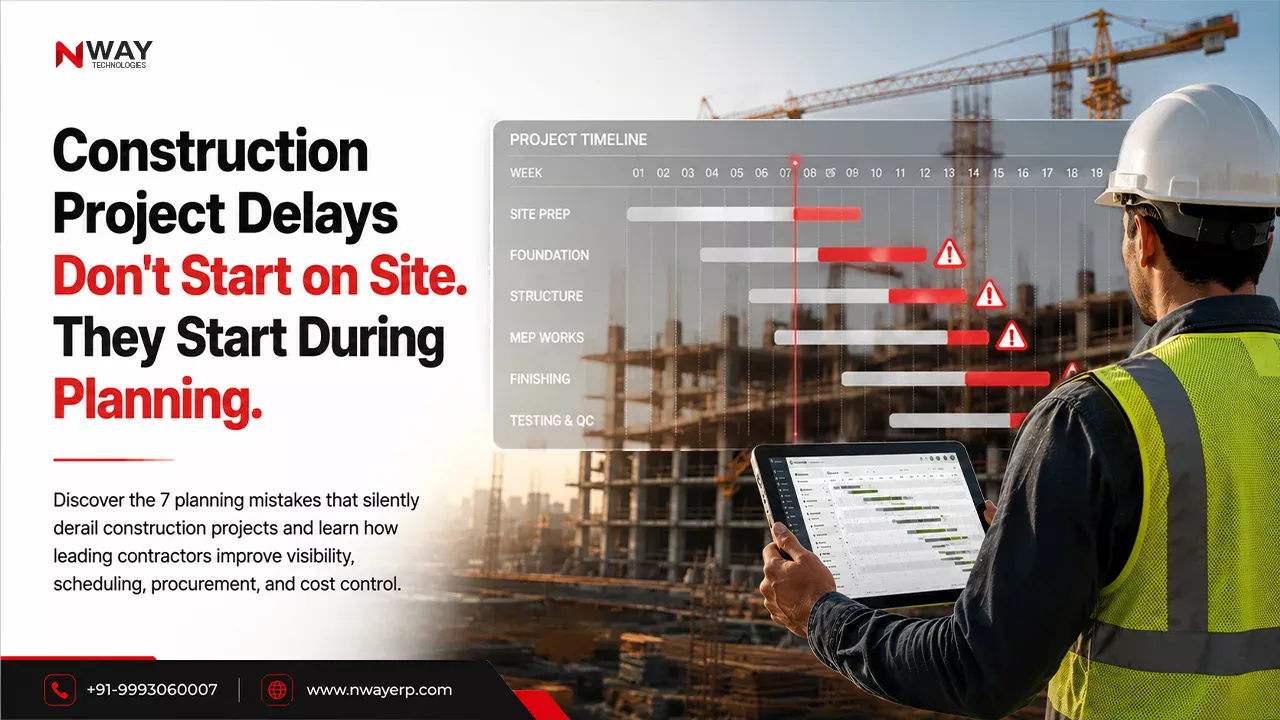
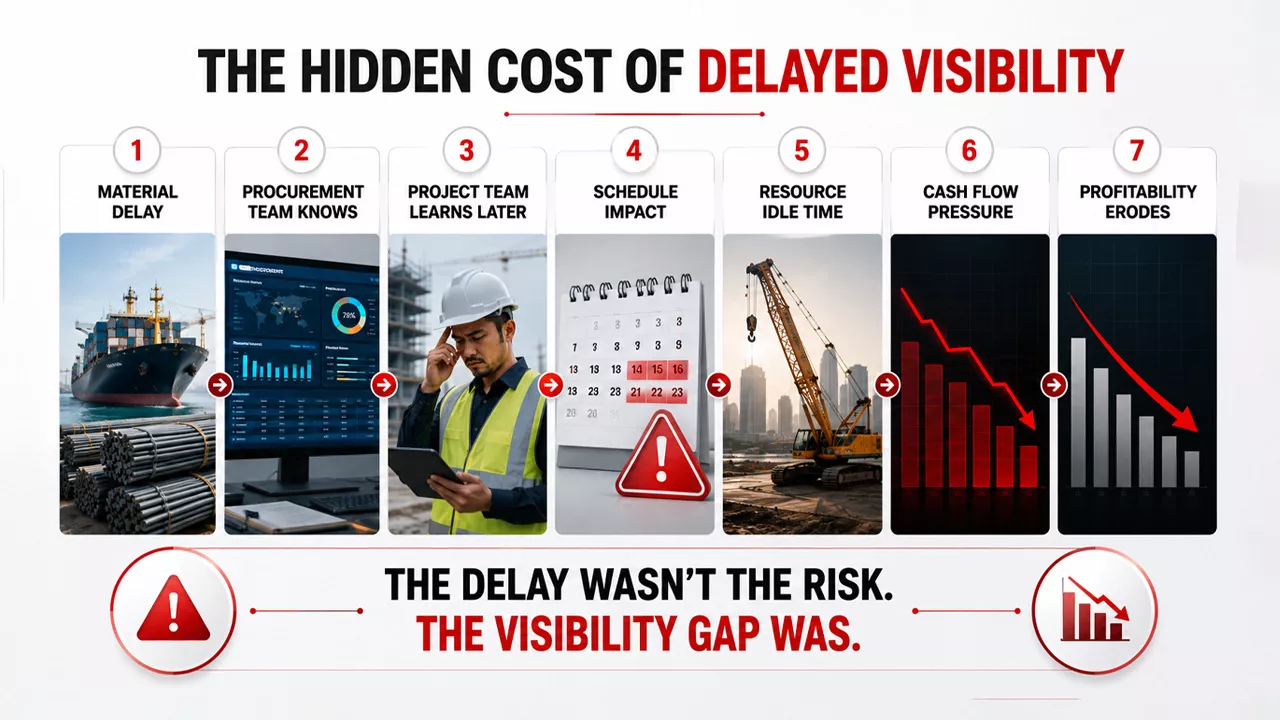
Procurement delay → Site slowdown → Resource idle time → Revenue delay → Cash flow pressure → Margin erosion.
See Risks Before They Cost You.
The Real Problem Isn’t What You Think
Most organizations believe their primary challenge is managing risk.
In reality, their biggest challenge is seeing risk emerge.
This distinction matters.
Many contractors maintain risk registers, periodic reviews, project dashboards, and governance meetings.
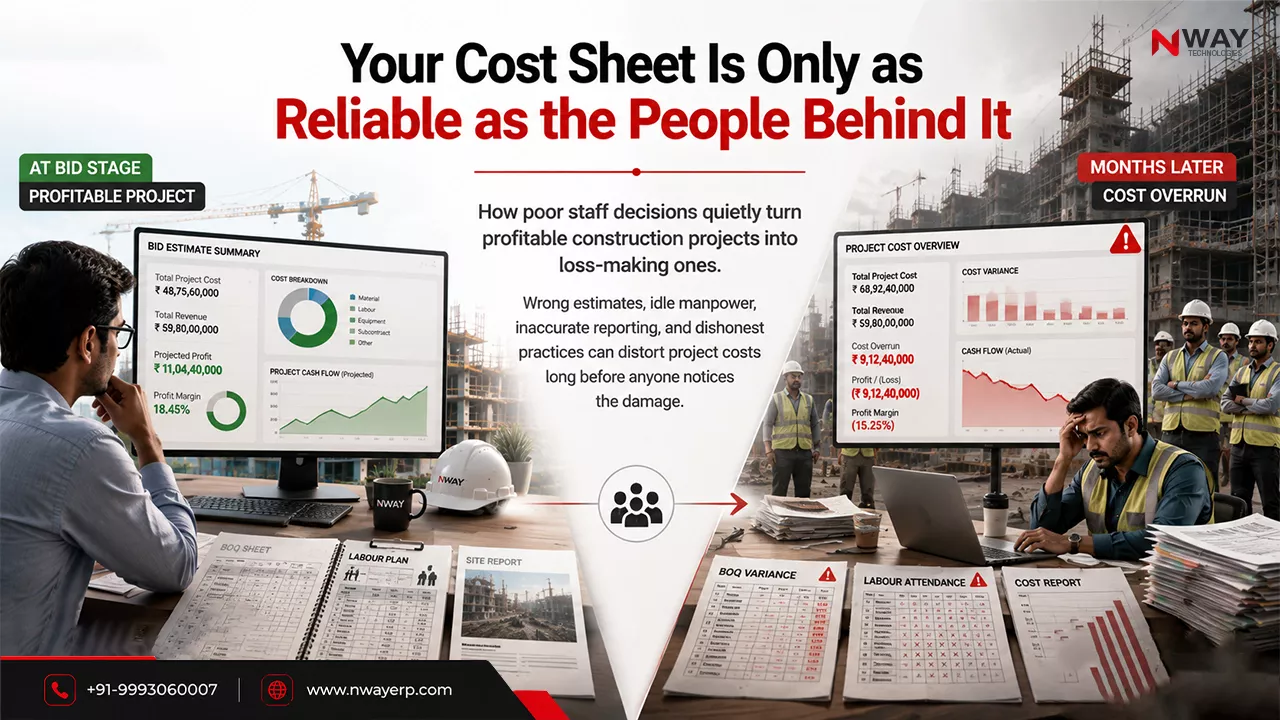
Yet projects still exceed budgets.
Why?
Because traditional risk management focuses on known risks.
Construction businesses increasingly struggle with unknown operational risks emerging from fragmented data.
Examples include:
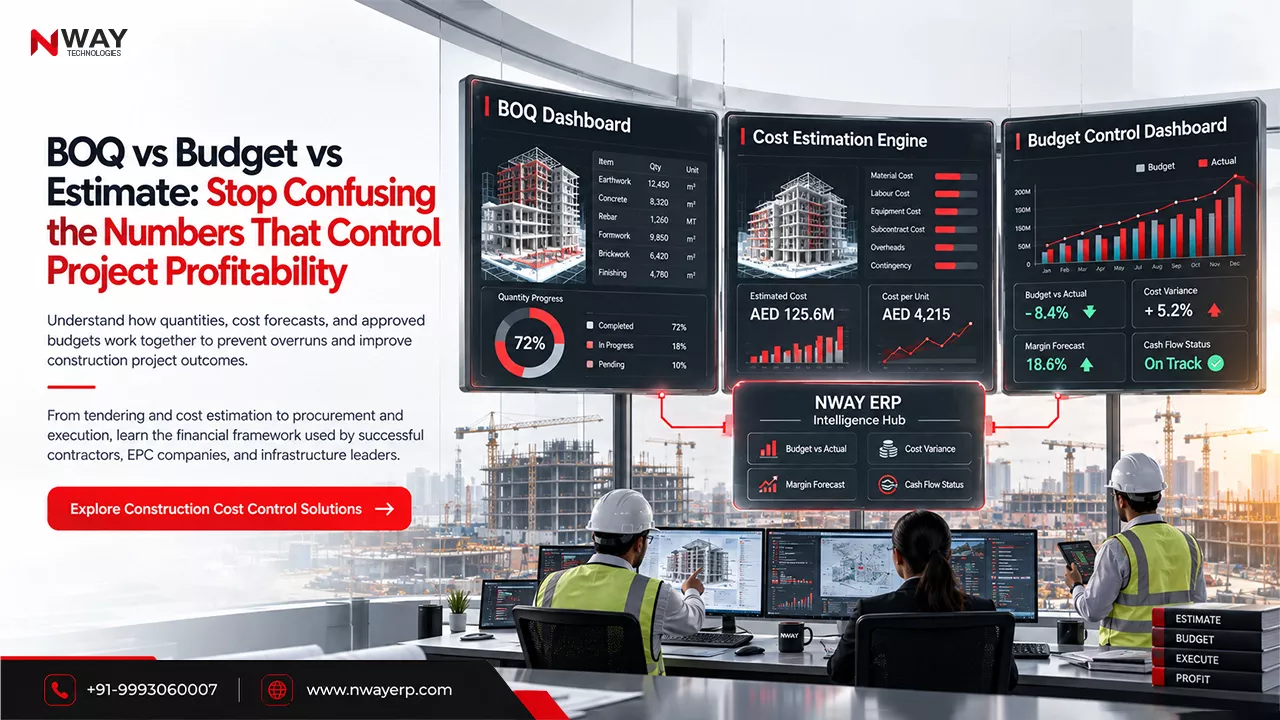
- Procurement commitments not reflected in project forecasts
- Equipment underutilization across sites
- Delayed subcontractor billing
- Unreported productivity losses
- Cash flow exposure hidden inside project schedules
Why Conventional Practices Are No Longer Effective
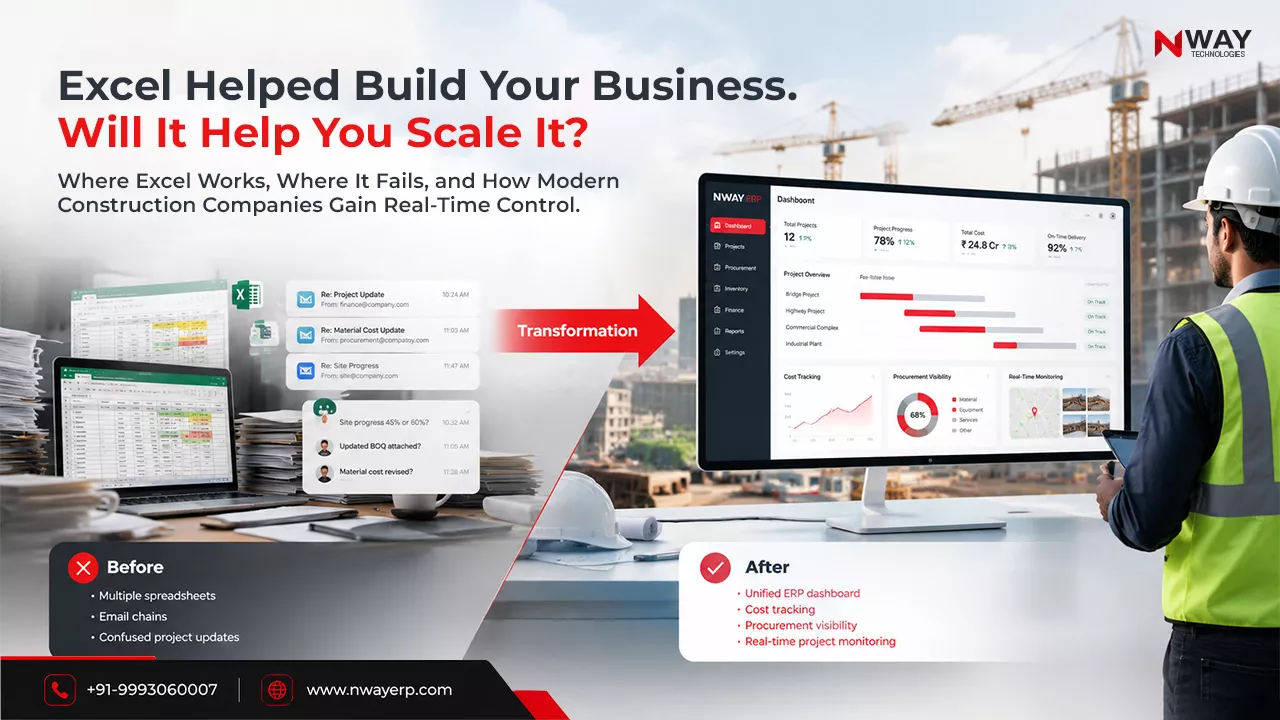
For years, contractors relied on spreadsheets, email approvals, departmental reporting, and periodic project reviews.
These approaches worked when businesses managed fewer projects and simpler supply chains.
That environment no longer exists.
Today’s construction organizations must coordinate:
- Engineering
- Procurement
- Contract Management
- Cost Tracking
- Resource Planning
- Equipment Utilization
- Site Productivity
- Construction Accounting
- BOQ Management
When each department operates independently, information arrives late.
Management becomes reactive.
Root Causes
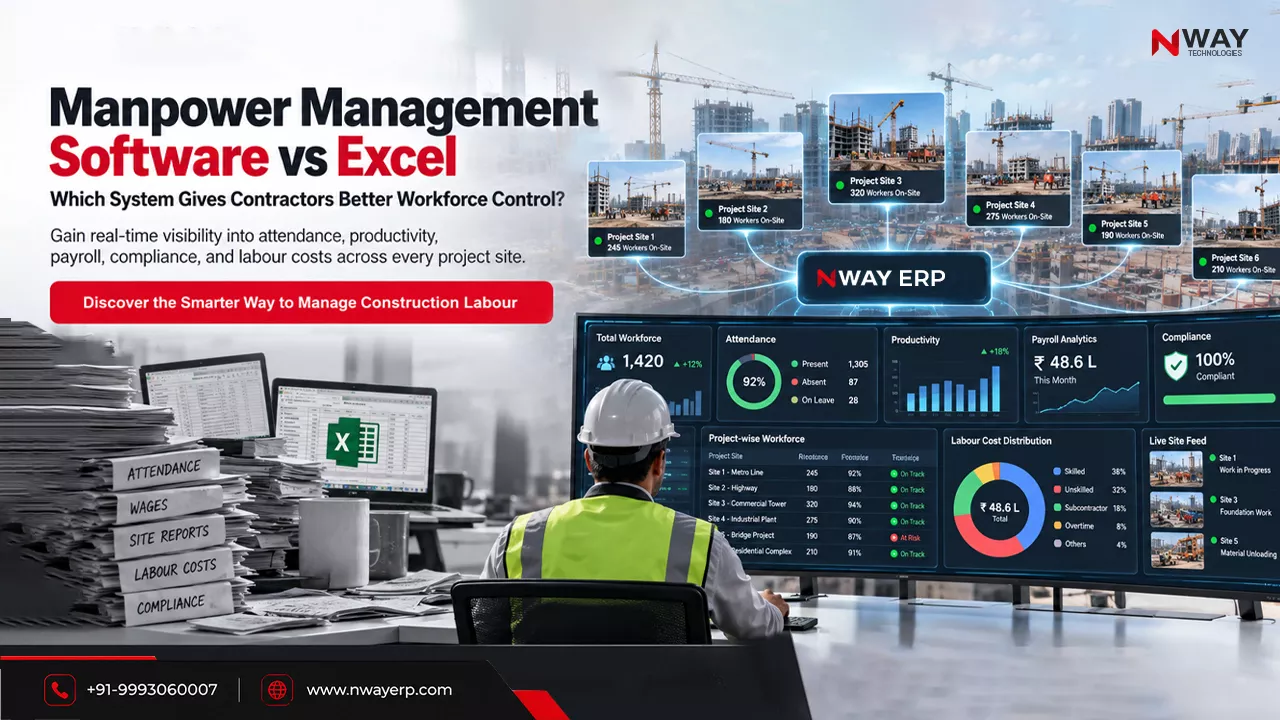
Excel Dependency
- Data resides in multiple versions across departments.
- No single source of truth exists.
Manual Reporting
- Reports represent past performance rather than current conditions
Data Silos
- Finance, procurement, operations, and project teams often work from separate datasets.
Approval Bottlenecks
- Critical decisions wait for information consolidation.
Key GCC Construction Risk Scenarios
Scenario 1: Large Infrastructure Contractor
A UAE infrastructure contractor manages highways, utility corridors, and public works projects simultaneously.
Procurement teams identify steel delivery delays.
Site teams discover the issue weeks later.
Project controls identify schedule impacts even later.
The delay wasn’t the problem.
The visibility lag was.
Result:
- Resource idle time
- Escalation costs
- Contractual exposure
- Reduced project profitability
Scenario 2: Multi-Project Real Estate Developer
A developer manages several residential towers across Dubai and Abu Dhabi.
Sales performance remains strong.
Construction progress appears healthy.
However, project-level cash flow visibility is fragmented.
Management identifies funding pressure only after vendor payments begin slipping.
Result:
- Vendor disputes
- Delayed procurement
- Reduced negotiation leverage
- Working capital strain
Scenario 3: Regional EPC Company
An EPC contractor operates across UAE, Saudi Arabia, and Oman.
Multiple projects share specialized resources.
Management lacks real-time resource allocation visibility.
Certain sites become overstaffed while critical projects face shortages.
Result:
- Productivity deterioration
- Equipment inefficiencies
- Margin leakage
- Schedule slippage
These examples highlight a common issue:
Risk emerged long before it was reported.
Modern Approach to Solving the Problem
Leading GCC construction organizations are adopting a fundamentally different approach.
Rather than managing risks after identification, they build systems that continuously expose operational signals.
The strategy includes:
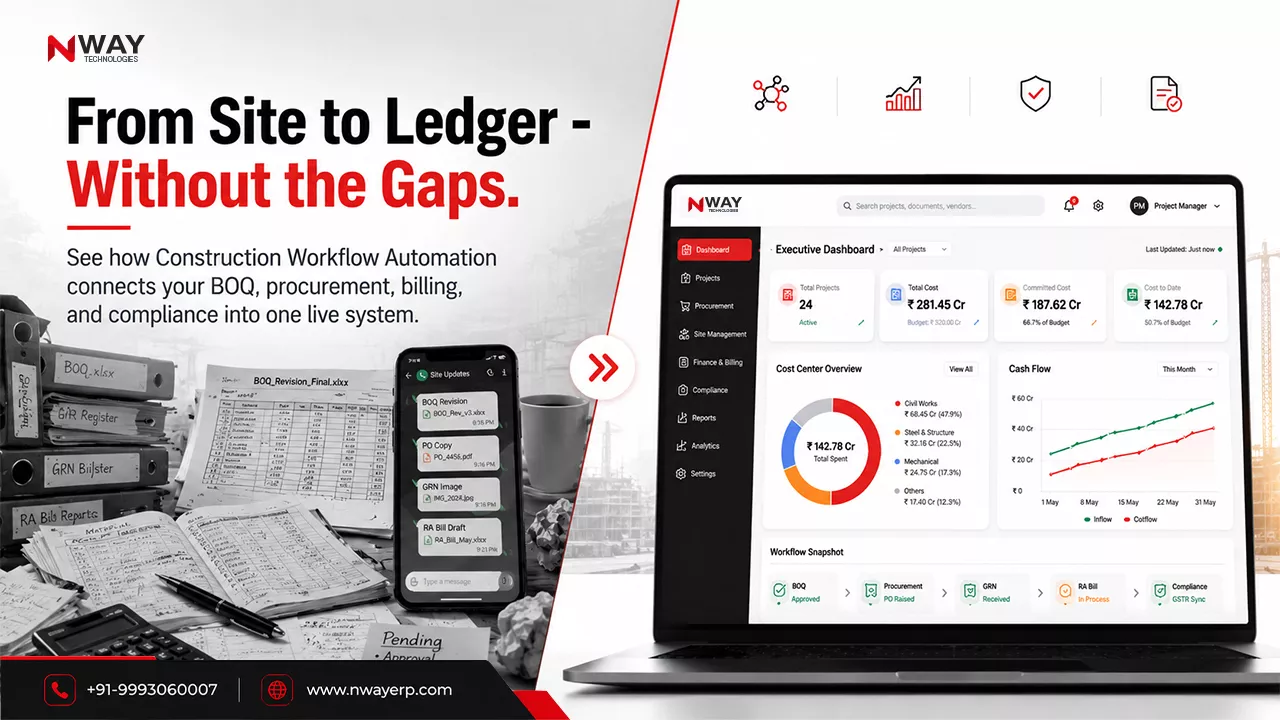
- Integrated Operations – Connecting project execution, procurement, finance, and resource planning.
- Centralised Project Controls – Creating unified project governance structures.
- Data-Driven Decision Making – Shifting from monthly reviews to continuous monitoring.
- Standardised Processes – Reducing dependency on tribal knowledge.
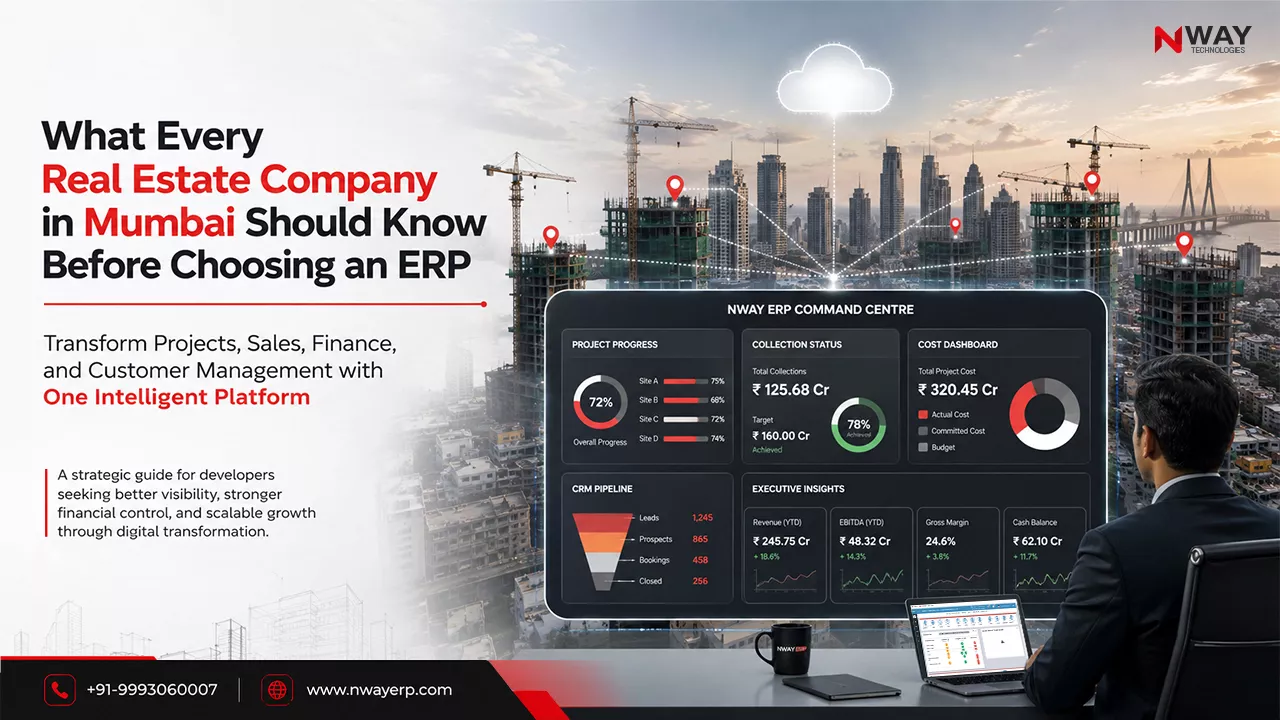
- Real-Time Project Visibility – Providing leaders with current project intelligence.
How Construction ERP Supports These Goals
Once organizations establish the visibility strategy, technology becomes the enabler.
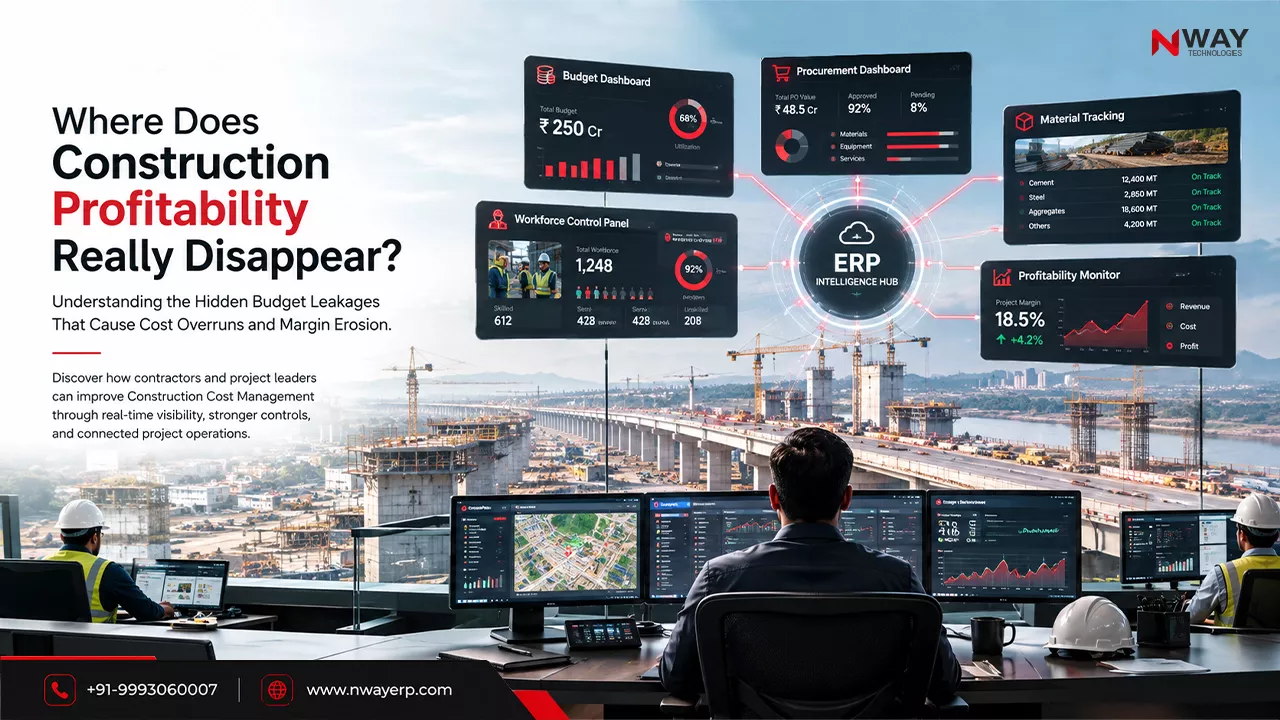
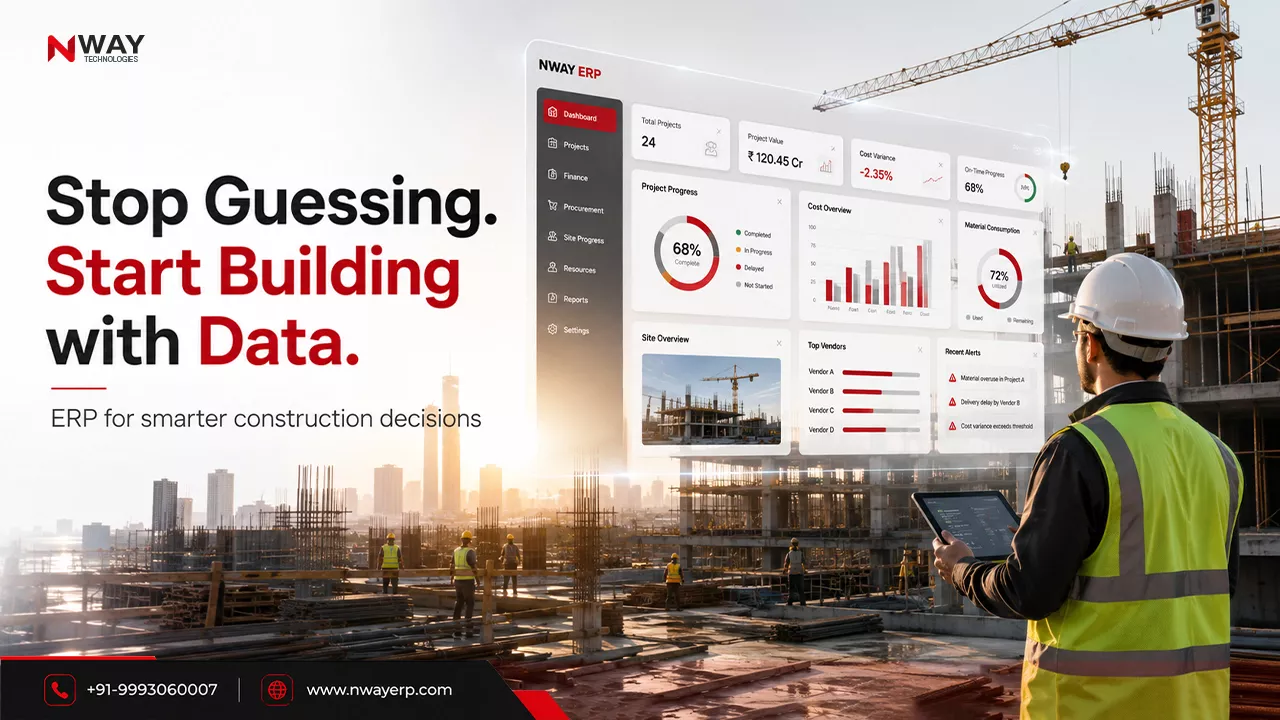
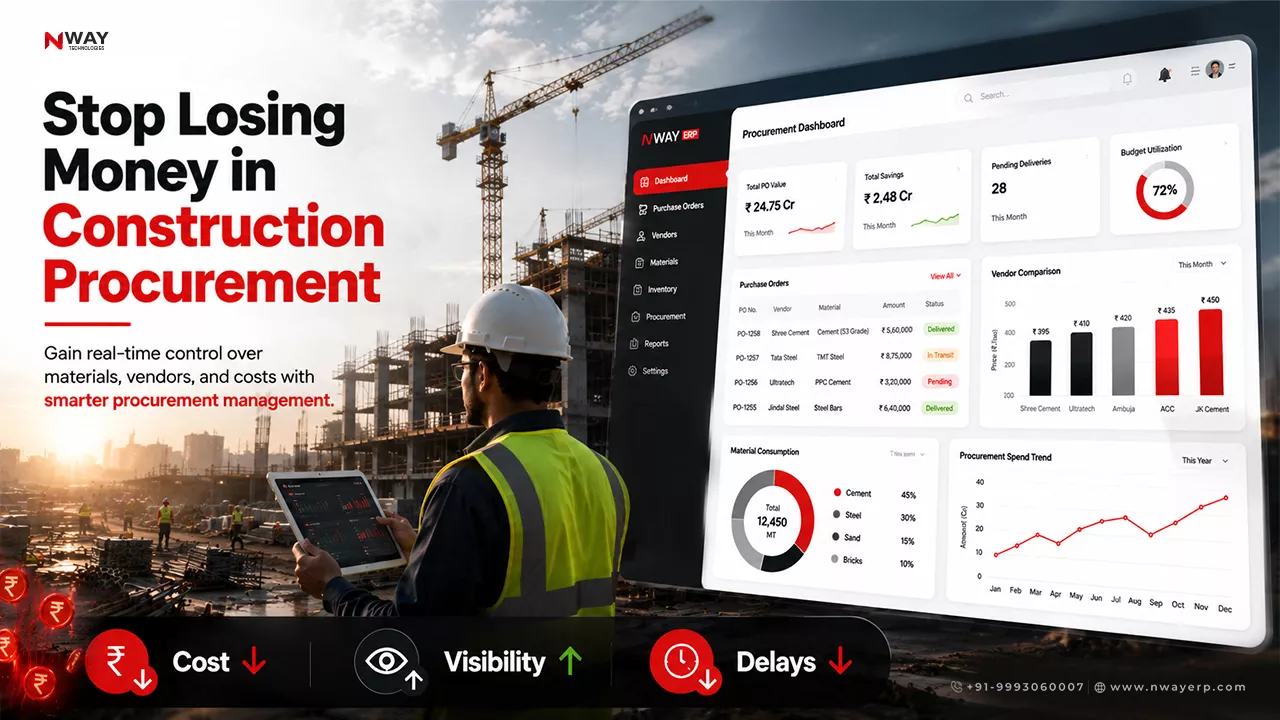
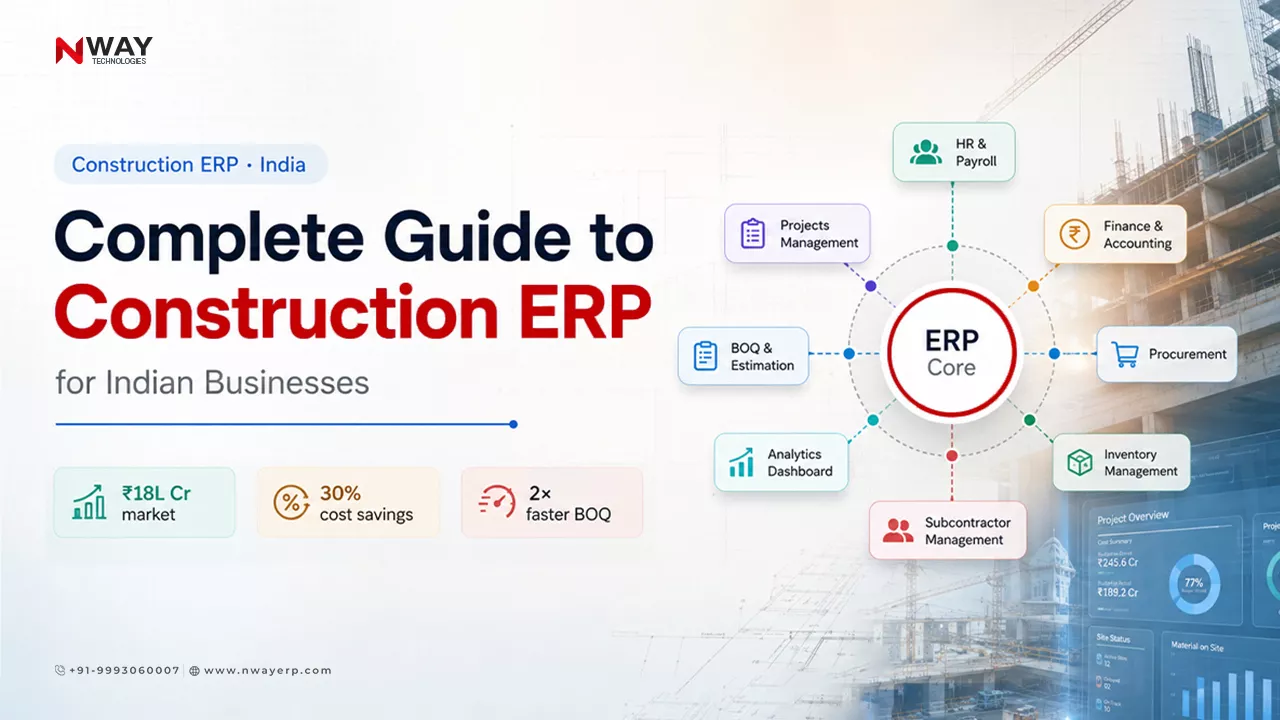
Modern Construction ERP Software solutions help centralise project information and improve operational intelligence.
The objective is not software adoption.
The objective is business predictability.
Key outcomes include:
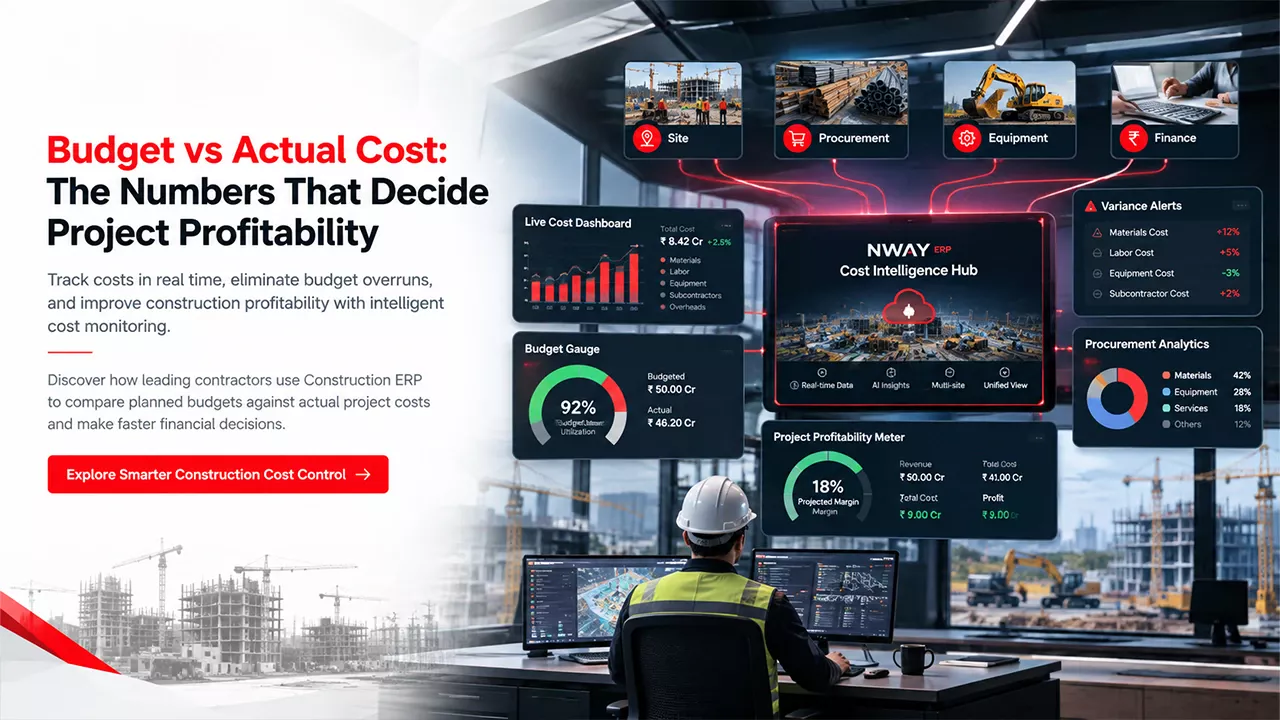
- Improved Project Profitability – Earlier identification of cost variances.
- Stronger Cash Flow Management – Linking procurement, billing, and project progress.
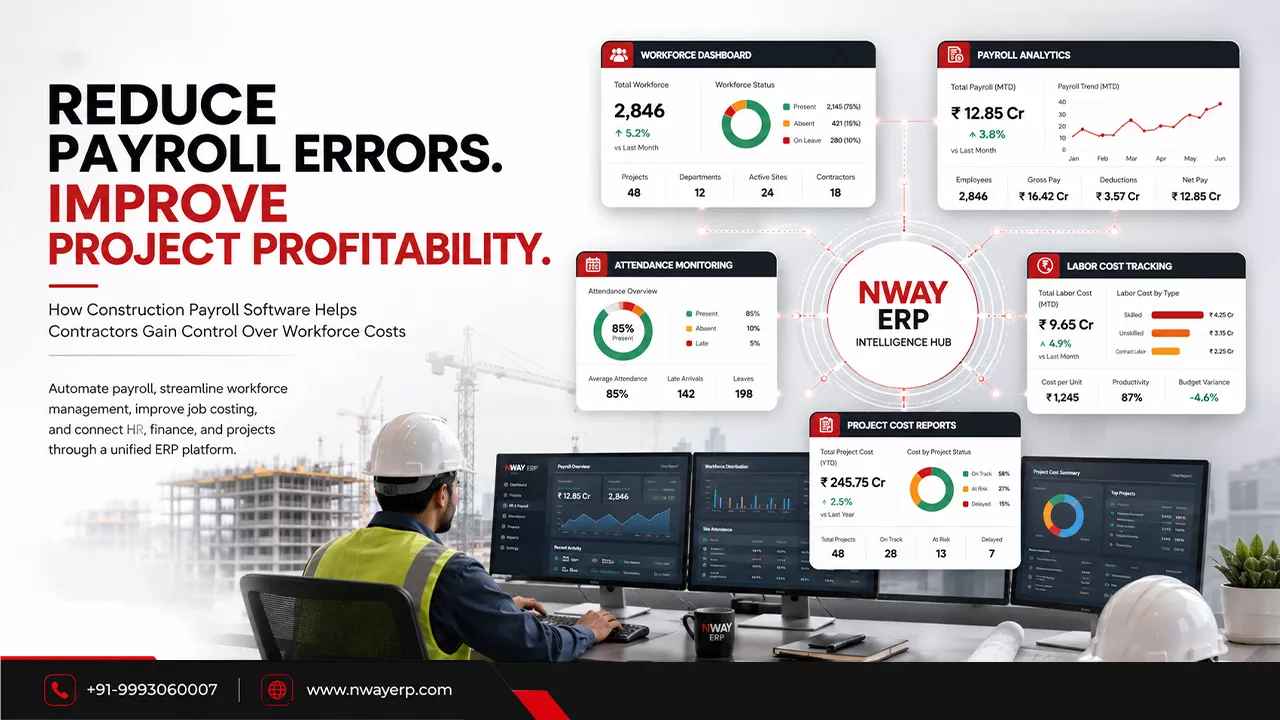
- Better Resource Planning – Improving labor, equipment, and material utilization.
- Enhanced Construction Project Monitoring – Providing leadership with real-time project status.
- Stronger Project Risk Analytics – Detecting performance deviations before they escalate.
- Faster Decision-Making – Reducing delays caused by fragmented reporting structures.
This is why demand for Construction Management Software UAE, ERP for Construction Companies, and Construction Project Control Software continues to accelerate alongside wider digital transformation initiatives.
What’s Changing in 2027 and Beyond
The next evolution of Construction Project Risk Management will be driven by intelligence rather than reporting.
Emerging trends include:
- Predictive Analytics – Identify likely schedule and cost risks before they occur.
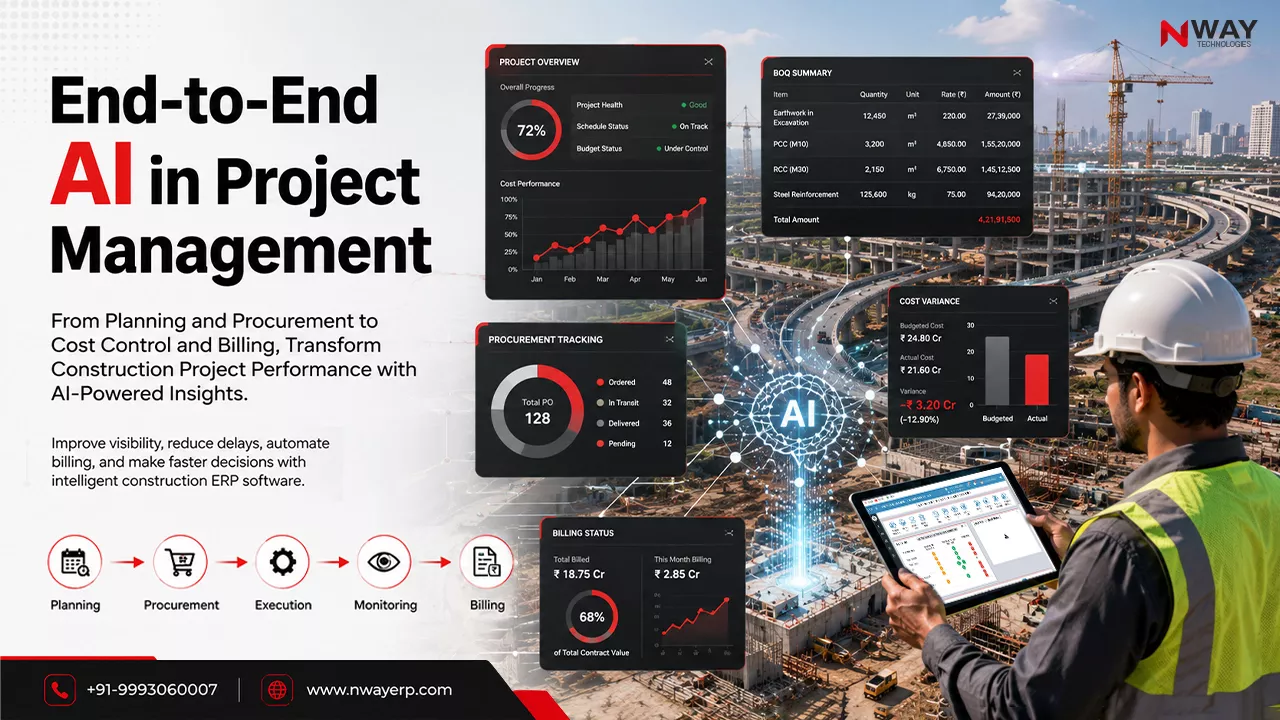
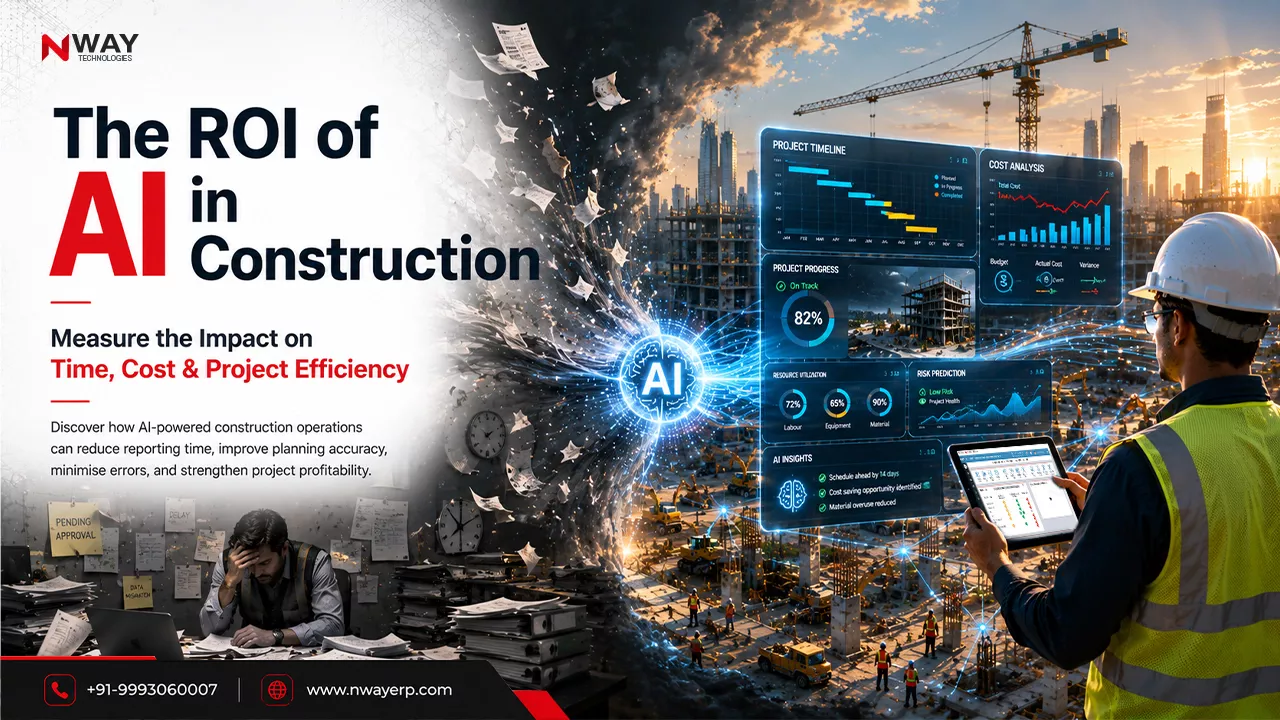
- AI-Powered Construction Intelligence – AI-Powered Construction ERP Analyzing thousands of project variables simultaneously.
- Digital PMOs – Creating enterprise-wide visibility across project portfolios.
- Connected Job Sites – Integrating field data, equipment tracking, and workforce information.
- Automated Risk Detection – Highlighting emerging risks based on operational patterns.
- Real-Time Construction Business Intelligence – Converting raw project data into executive insights.
Industry leaders are increasingly leveraging analytics-driven project controls, predictive scheduling, and data-centric decision-making to improve capital project performance.
Practical Recommendations for GCC Contractors
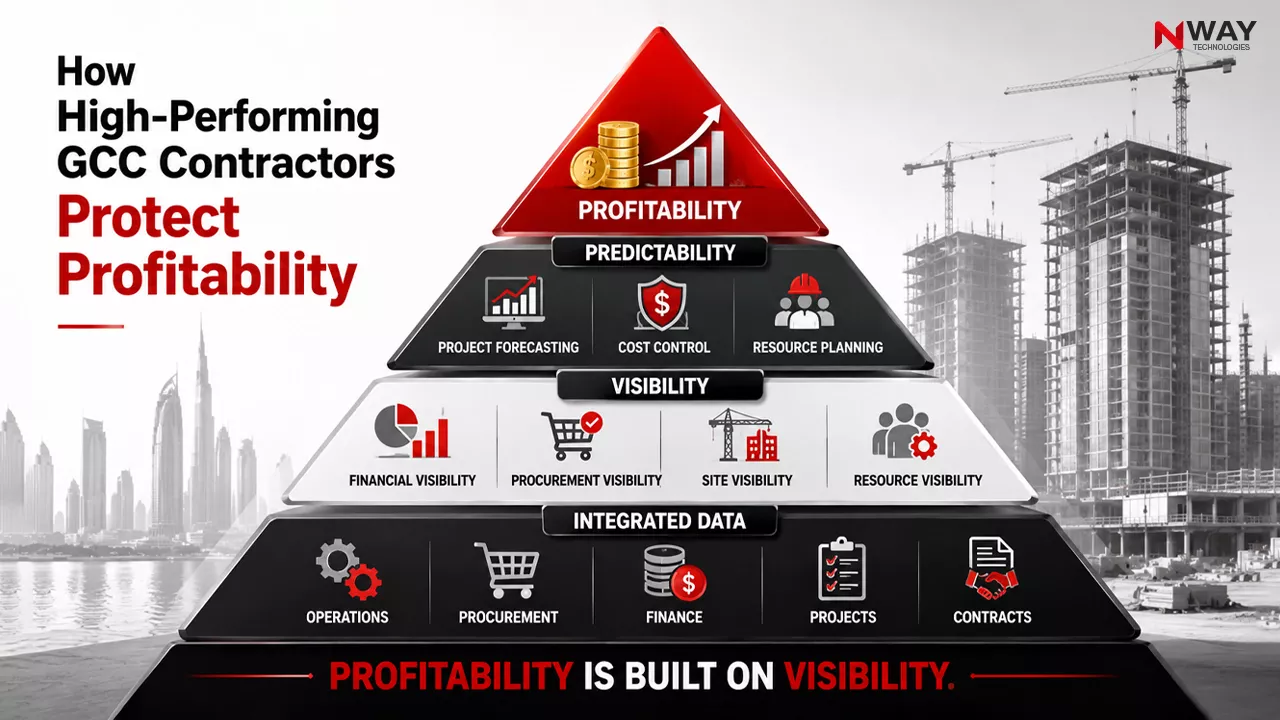
- Assess visibility gaps before reviewing risks.
- Standardize project reporting across all business units.
- Create a single source of truth for operational data.
- Integrate procurement, finance, and project controls.
- Establish real-time project dashboards.
- Track leading indicators, not just lagging outcomes.
- Invest in predictive project monitoring capabilities.
- Measure profitability at project, portfolio, and enterprise levels.
Conclusion
The future of Construction Risk Management UAE is not about building larger risk registers or conducting more review meetings.
It is about creating visibility into the operational realities that ultimately determine project success.
As GCC construction projects become larger, faster, and more interconnected, businesses that can identify risks earlier will outperform those that simply respond to risks better.
The most profitable contractors are already making this shift.
They understand that risk management protects projects.
Risk visibility protects the business.
Build Smarter, More Predictable Operations.
Key Takeaways
- Risk visibility is becoming more valuable than traditional risk management.
- Most construction risks originate from delayed information, not unexpected events.
- GCC project complexity demands real-time operational intelligence.
- Visibility gaps directly impact profitability, cash flow, and project outcomes.
- Digital transformation in construction is increasingly centered on predictive decision-making.
- Construction ERP and project intelligence platforms support visibility at enterprise scale.