Table of Contents:
- Introduction
- Why Solar EPC Companies Need Specialized ERP Solutions
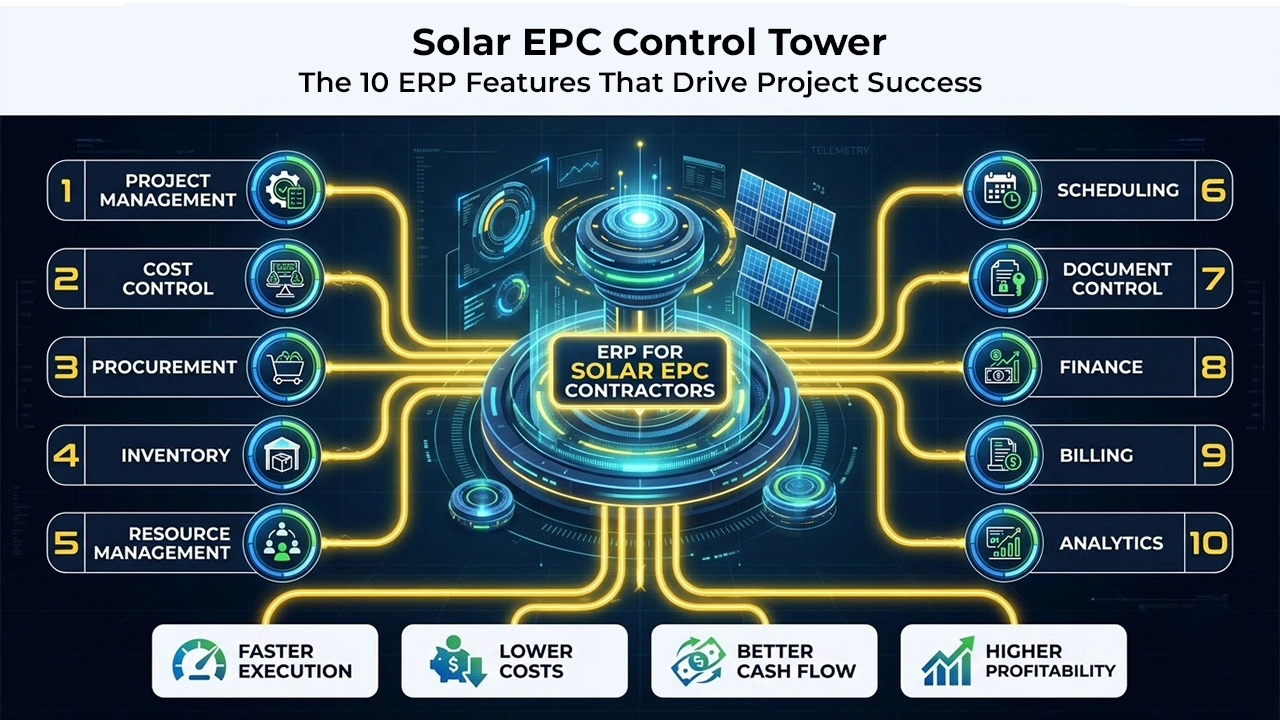
- 10 Essential Features Every ERP for Solar EPC Contractors Must Have
- How to Evaluate the Best ERP for Solar EPC Contractors
- Common ERP Selection Mistakes
- Strategic Summary Table
- Conclusion
Introduction
Imagine a 50 MW solar power project nearing installation phase.
The engineering team has issued revised drawings. Procurement is tracking delayed inverter deliveries. Site teams are requesting additional cable quantities. Finance is reviewing budget deviations. Meanwhile, project leadership is under pressure to maintain margins and meet commissioning deadlines.
Now imagine all of this information sitting in separate spreadsheets, WhatsApp groups, emails, and disconnected software systems.
Unfortunately, this is still the reality for many solar EPC contractors.
As India’s renewable energy sector continues expanding, project complexity is increasing rapidly. Solar EPC companies are managing larger project portfolios, geographically distributed sites, higher compliance requirements, and tighter profit margins.
In this environment, ERP is no longer simply a finance system.
It has become the operational command center of a successful solar EPC organization.
The question is not whether to implement ERP.
The real question is:
What features should an ERP for Solar EPC Contractors include to create measurable business value?
Why Solar EPC Companies Need Specialized ERP Solutions
Unlike conventional construction projects, solar EPC projects involve unique operational challenges:
- Large volumes of serialized assets
- Engineering-driven BOM management
- Remote site operations
- Utility coordination
- Milestone-based billing
- Complex subcontractor management
- Project lifecycle tracking from survey to commissioning
A generic ERP often struggles to support these requirements.
Solar EPC companies require industry-focused ERP software for solar EPC companies capable of connecting every stage of project execution.
Quick Insight
A solar EPC project is only as profitable as the visibility leaders have over cost, procurement, inventory, and field execution.
10 Essential Features Every ERP for Solar EPC Contractors Must Have
1. End-to-End Project Lifecycle Management
The ERP should manage the complete project journey:
From:
- Lead generation
- Site survey
- Estimation
To:
- Engineering
- Procurement
- Installation
- Commissioning
- Handover
Why It Matters
Disconnected project stages create silos that delay decision-making and increase operational risk.
Expected Outcomes
- Better project coordination
- Reduced communication gaps
- Faster handovers between departments
- Improved accountability
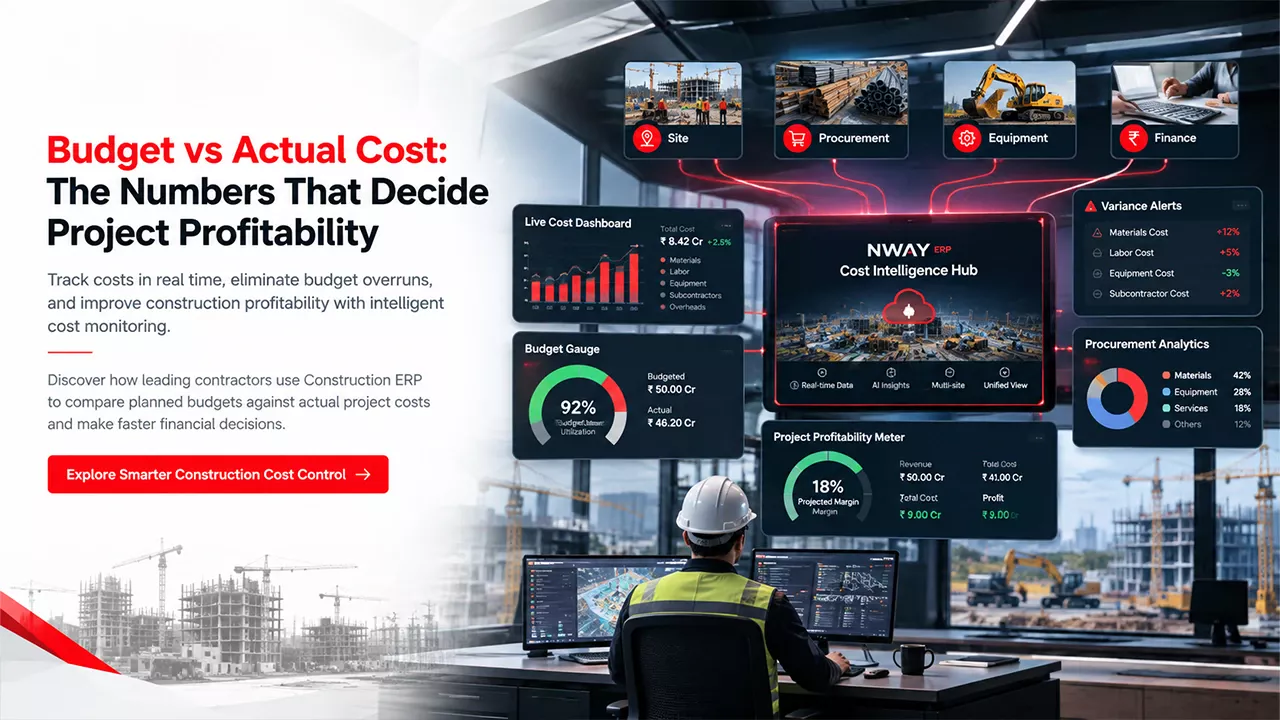
2. Real-Time Project Cost Management Software
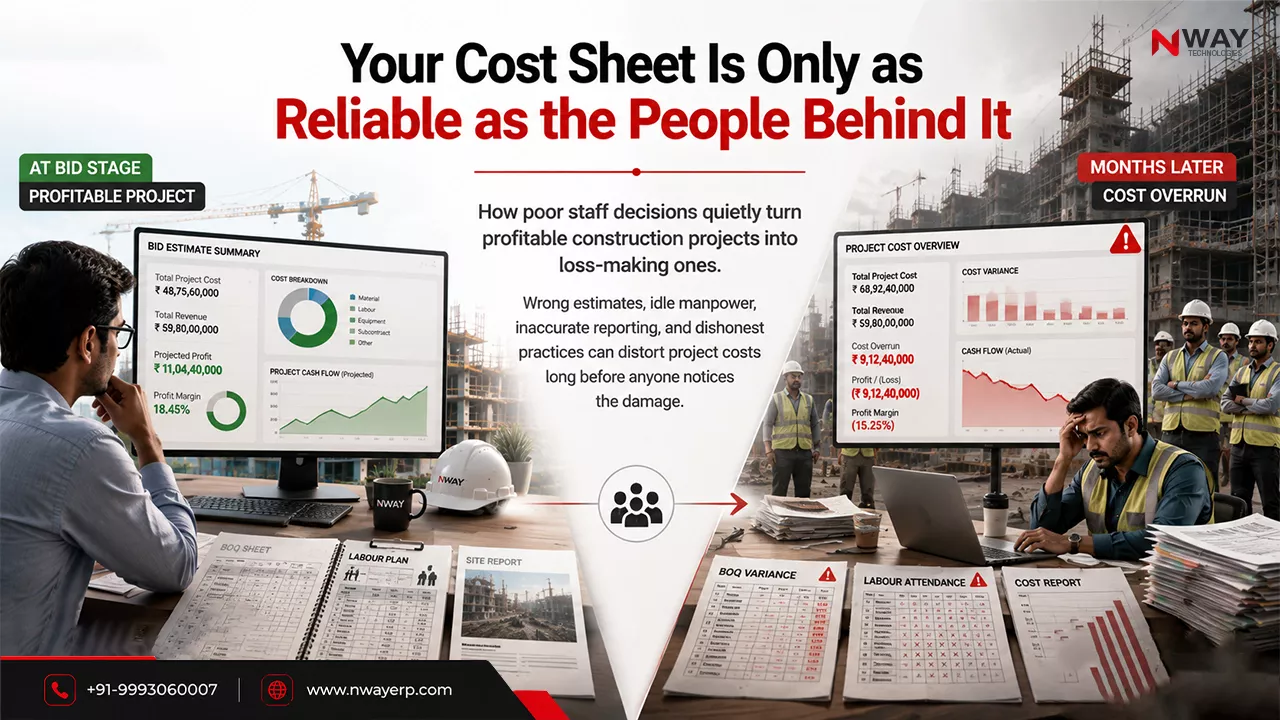
Cost control remains one of the biggest challenges in the EPC sector.
The ERP should provide:
- Budget creation
- Cost breakdown structure (CBS)
- Committed cost tracking
- Actual cost tracking
- Forecast cost reporting
- Variance analysis
Common Mistake
Many organizations only discover cost overruns during project closure.
By then, corrective action is impossible.
Expert Tip
Track costs daily against planned budgets rather than waiting for monthly reviews.
Before vs After ERP Cost Visibility Matrix
| Area | Manual Process | ERP Enabled Process |
|---|---|---|
| Budget Monitoring | Monthly | Real Time |
| Cost Variance Detection | Delayed | Instant |
| Project Profitability | Estimated | Accurate |
| Cash Flow Forecasting | Reactive | Predictive |
| Management Reporting | Manual | Automated |
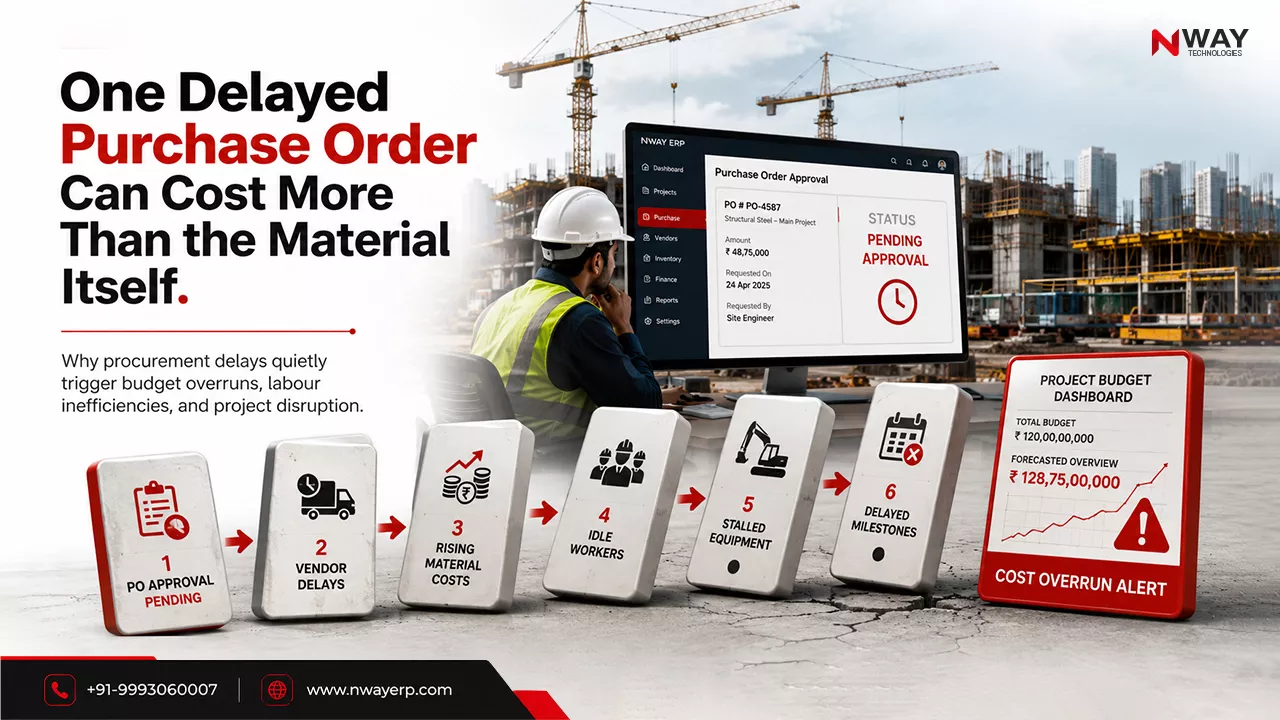
3. Advanced Procurement Management
Procurement often accounts for a significant percentage of solar project costs.
A robust ERP should support:
Procurement Features
- Purchase requisitions
- RFQs
- Vendor comparison
- Purchase orders
- Material tracking
- Approval workflows
Hidden Risks Without ERP
- Duplicate purchases
- Emergency procurement
- Vendor disputes
- Material shortages
Best Practice Checklist
- Digital approval workflow
- Vendor performance tracking
- Procurement lead-time monitoring
- Purchase budget controls
- Automated reorder alerts
4. Inventory and Solar Asset Tracking
Solar projects involve high-value assets including:
- PV Modules
- Inverters
- Transformers
- Mounting Structures
- Switchgear
- Cables
The ERP should support:
- Warehouse management
- Site inventory tracking
- Batch tracking
- Serial number tracking
- Asset movement monitoring
Did You Know?
Even small inventory mismatches on large solar projects can translate into substantial financial losses and project delays.
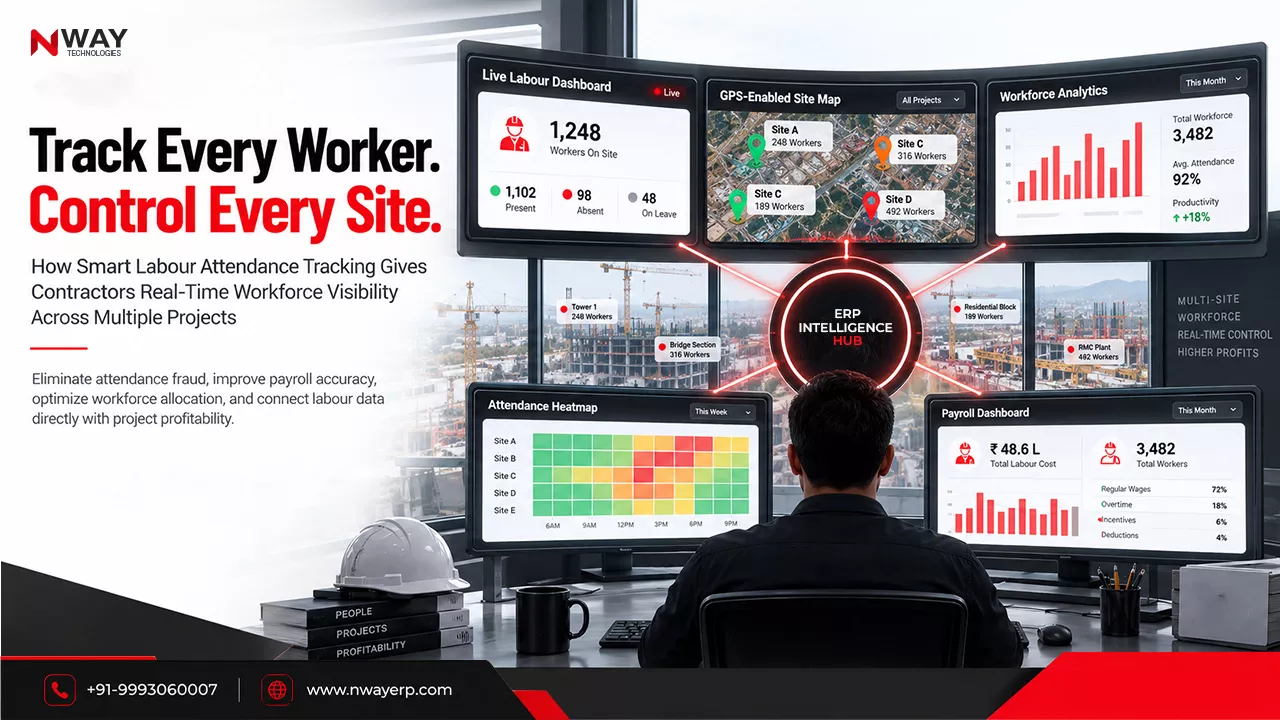
5. Resource and Manpower Management
Solar EPC projects often operate across multiple sites simultaneously.
Managing manpower manually becomes increasingly difficult.
ERP Features for EPC Contractors Should Include
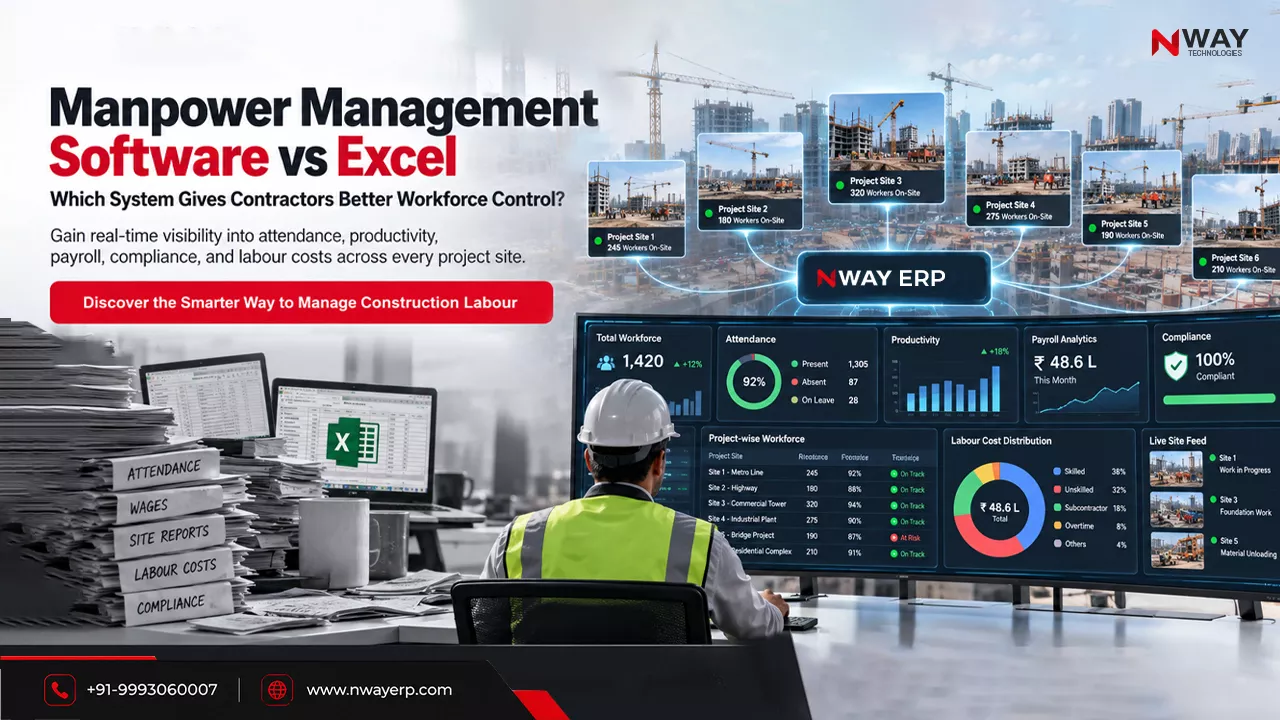
- Labour deployment
- Attendance tracking
- Contractor management
- Productivity monitoring
- Equipment allocation
Benefits
- Improved workforce utilization
- Better project planning
- Reduced idle resources
- Higher operational efficiency
6. Engineering Document & Revision Control
Engineering modifications directly affect:
- Procurement plans
- Material quantities
- Project schedules
- Installation activities
ERP systems should support:
- Version control
- Drawing approvals
- Change management
- Document repositories
Common Challenge
Teams often work using outdated drawings because revisions are not communicated effectively.
ERP Solution
Single source of truth across all project stakeholders.
7. Project Scheduling and Progress Tracking
Project delays are among the largest threats to profitability.
The ERP should enable:
- Milestone tracking
- Project scheduling
- Task assignment
- Dependency management
- Progress measurement
Industry Example
A project manager overseeing five solar sites can instantly compare:
- Planned vs Actual Progress
- Resource Availability
- Material Readiness
- Cost Status
Without requiring separate reports from each department.
8. Financial Management and Milestone Billing
Financial visibility is crucial for project sustainability.
Required Construction ERP Features
- Accounts payable
- Accounts receivable
- General ledger
- GST compliance
- Cost center accounting
- Milestone billing
Why It Matters
Solar projects often depend on milestone-based payments.
Delayed billing directly impacts cash flow.
Expected Outcomes
- Faster invoicing
- Improved collections
- Better working capital control
9. Executive Dashboards and Analytics
Leadership teams need information quickly.
The best ERP for solar EPC contractors should provide:
- Dashboard KPIs
- Project profitability
- Cash flow
- Budget vs Actual
- Procurement performance
- Material consumption
- Resource utilization
- Project progress
Quick Insight
What gets measured gets managed.
What gets managed gets improved.
10. Workflow Automation and Process Control
Automation is becoming a competitive necessity.
Processes Suitable for Automation
- Purchase approvals
- Vendor approvals
- Material requests
- Billing approvals
- Cost reviews
- Project alerts
Benefits
- Faster decision-making
- Reduced paperwork
- Improved compliance
- Higher operational efficiency
See: Powerful features and advanced functionality in ERP
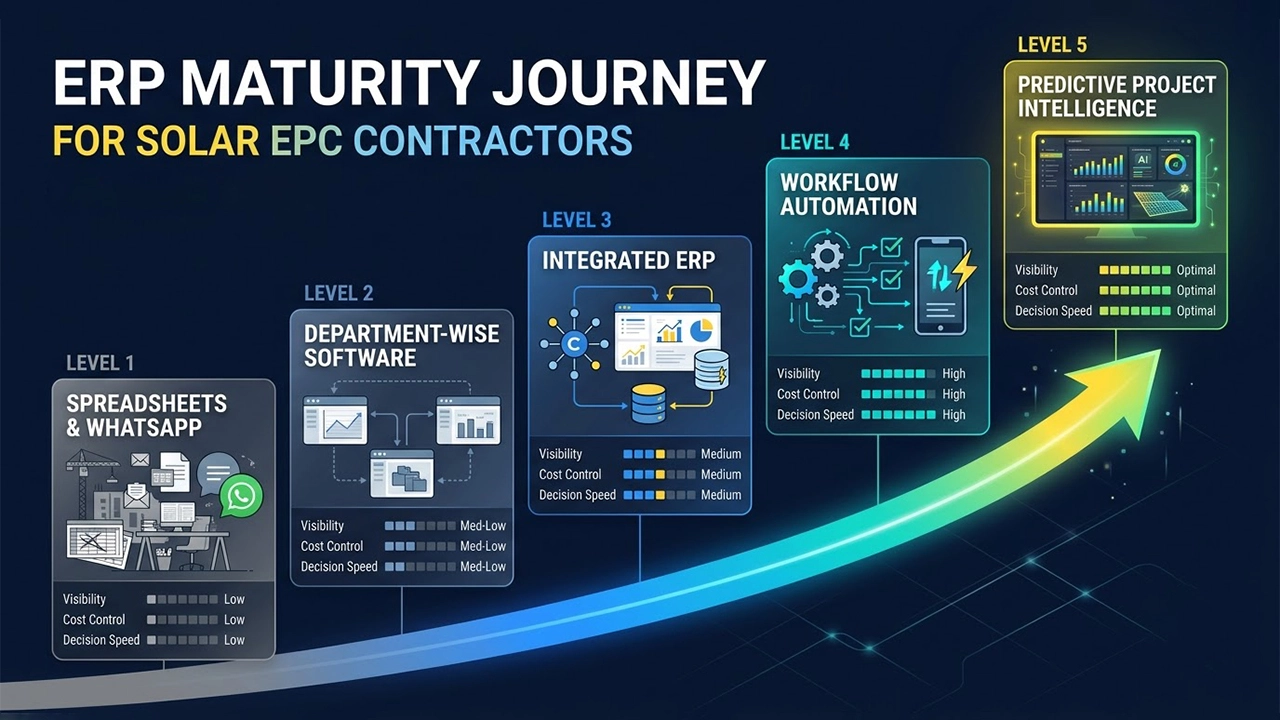
Solar ERP Maturity Model
| Level | Characteristics |
|---|---|
| Level 1 | Excel & Manual Processes |
| Level 2 | Departmental Software |
| Level 3 | Integrated ERP |
| Level 4 | Automated Workflows |
| Level 5 | Predictive & Data-Driven Operations |
Organizations reaching Levels 4 and 5 typically gain stronger project visibility, operational consistency, and better scalability.
How to Evaluate the Best ERP for Solar EPC Contractors
Not every ERP is designed for project-driven industries.
Use the following decision framework:
Evaluation Criteria
Industry Fit
- Solar EPC experience
- Construction workflows
Cost Control Capability
- Budget tracking
- Cost forecasting
Procurement Strength
- Vendor management
- Material planning
Project Controls
- Scheduling
- Progress monitoring
Reporting
- Management dashboards
- BI capabilities
Scalability
- Multi-site support
- Multi-company operations
Mobility
- Mobile applications
- Site reporting
Common ERP Selection Mistakes
- Choosing ERP based only on accounting functions
- Ignoring project management capabilities
- Underestimating implementation requirements
- Failing to define business processes beforehand
- Prioritizing price over long-term value
Strategic Summary Table
| Solar EPC Challenge | Business Impact | ERP Feature Required | Expected Outcome |
|---|---|---|---|
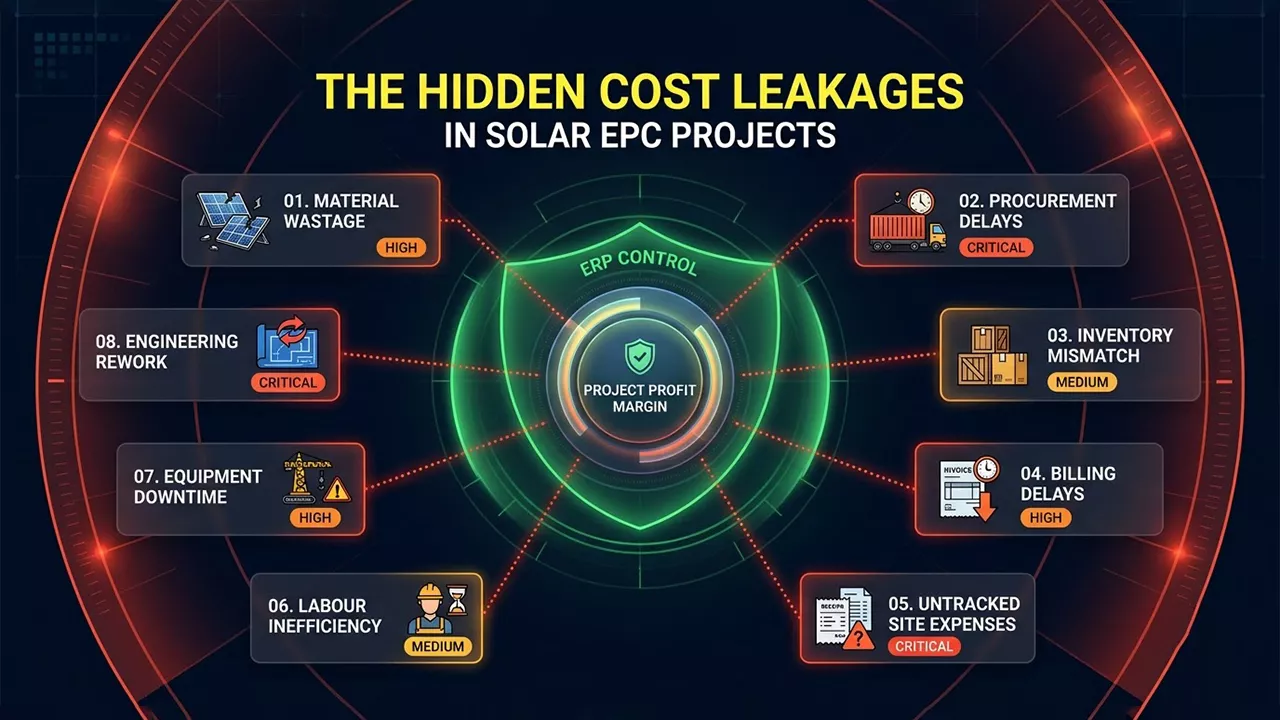
| Material shortages | Site delays | Procurement & Inventory Management | Timely availability of materials |
| Budget overruns | Reduced project margins | Project Cost Management Software | Improved profitability |
| Multiple project sites | Poor visibility | Centralized Project Dashboard | Real-time project control |
| Engineering changes | Rework and delays | Document & Drawing Management | Controlled revisions |
| Vendor coordination | Procurement bottlenecks | Vendor Management System | Faster purchasing cycles |
| Labour deployment issues | Productivity loss | Resource Management | Better workforce utilization |
| Delayed billing | Cash flow pressure | Milestone Billing Automation | Faster collections |
| Management reporting gaps | Slow decisions | Executive Dashboard & Analytics | Data-driven leadership |
Conclusion
As the solar industry becomes more competitive, project complexity continues to increase. Solar EPC contractors can no longer rely on disconnected systems and spreadsheet-driven operations to manage engineering, procurement, construction, finance, and project execution effectively.
The best ERP for solar EPC contractors acts as a unified digital control center, bringing together project cost management, procurement, inventory, scheduling, workforce management, billing, and analytics into a single source of truth.
For Indian solar EPC companies aiming to scale operations, improve profitability, and strengthen project governance, investing in a specialized construction ERP is no longer just an IT initiative. It is a strategic business decision.
Organizations that prioritize visibility, automation, and data-driven management today will be far better positioned to deliver projects efficiently and compete successfully in the next phase of renewable energy growth.
Gain complete visibility into costs, materials, resources, schedules, and profitability across every solar EPC project.