Table of Contents:
- Introduction
- Why Payroll Errors Are So Common in Construction
- The Hidden Cost of Payroll Errors
- How Construction Payroll Software Reduces Errors
- The Role of Payroll Contract Management
- Connecting Payroll with Construction Job Costing
- How Construction ERP Software Creates a Single Source of Truth
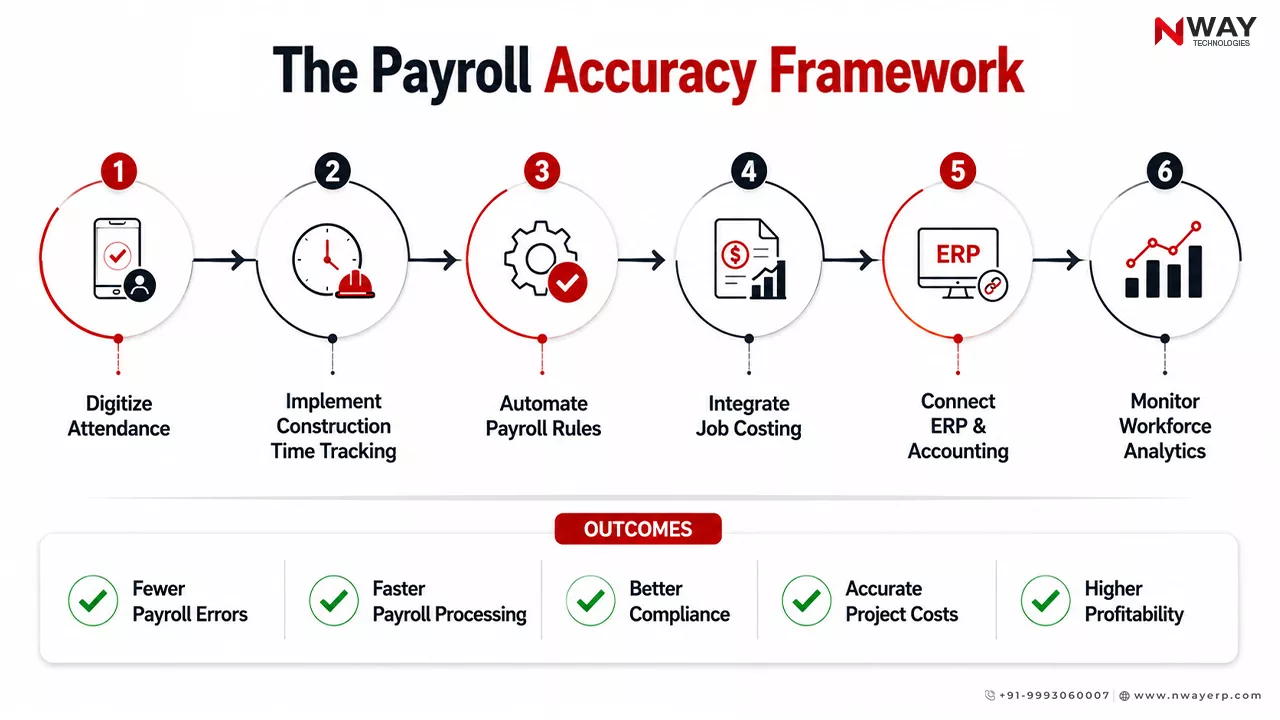
- A Practical Payroll Error Reduction Framework
- Construction Payroll Accuracy Cheat Sheet
Introduction
Imagine a large infrastructure project with 800 workers deployed across multiple locations. The finance department receives handwritten attendance records from site supervisors, overtime details arrive through spreadsheets, and subcontractor labor data is submitted days later.
When payroll is processed, dozens of discrepancies emerge. Workers dispute overtime calculations. Project managers question labor cost reports. Finance teams spend days reconciling records instead of focusing on strategic planning.
This scenario is not unusual.
Construction payroll is fundamentally more complex than payroll in many other industries. Workforce mobility, multiple shifts, project-specific labor allocation, contractor payments, compliance requirements, and varying pay structures create an environment where errors can easily occur.
As contractors, developers, EPC companies, and infrastructure firms scale operations, traditional payroll methods become increasingly difficult to manage. This has accelerated the adoption of construction payroll software, integrated HRMS solutions, and Construction ERP Software platforms designed specifically for project-driven organizations.
The key question is no longer whether payroll should be digitized.
The real question is how construction businesses can eliminate payroll errors before they impact profitability, compliance, and workforce trust.
Why Payroll Errors Are So Common in Construction
Construction projects operate in highly dynamic environments.
Unlike office-based industries, workforce data changes daily.
Common Sources of Payroll Errors
Inaccurate Time Tracking
Workers frequently move between projects, shifts, and job sites.
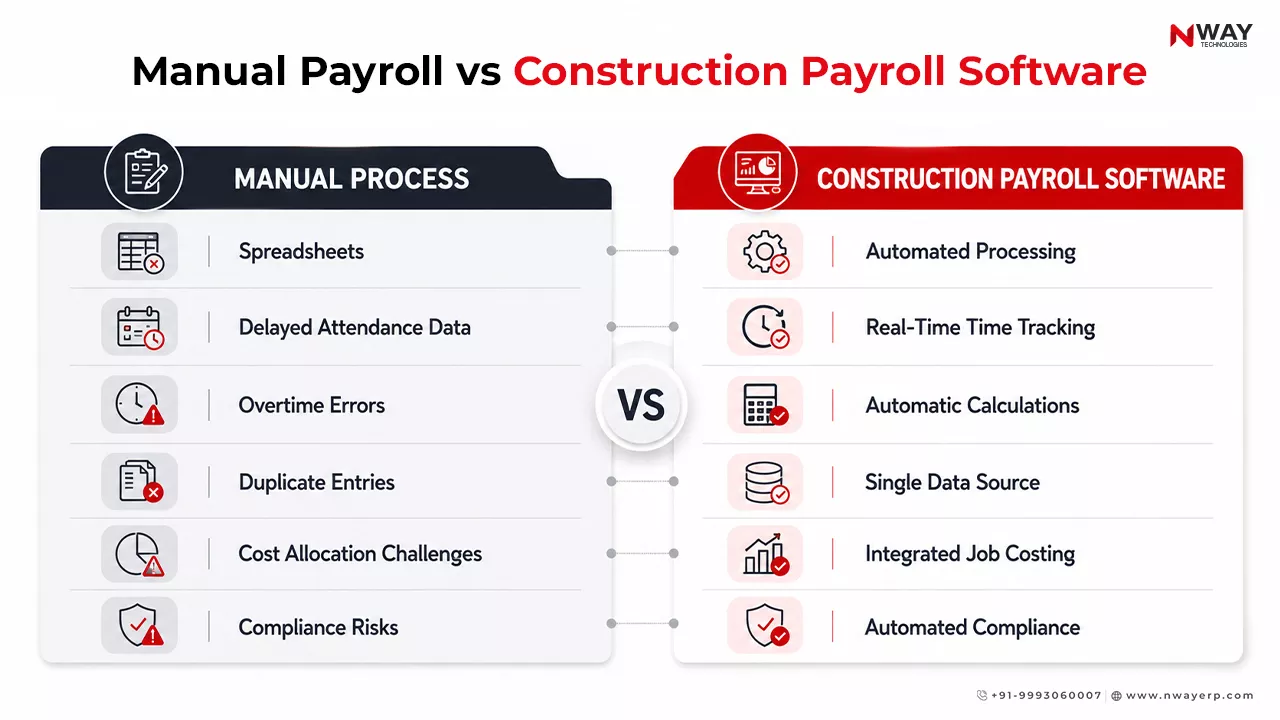
Manual attendance methods often result in:
- Missing work hours
- Duplicate entries
- Incorrect overtime calculations
- Delayed payroll updates
Complex Compensation Structures
Construction companies often manage:
- Daily wage workers
- Contract labor
- Skilled specialists
- Equipment operators
- Site supervisors
- Project engineers
Each category may have different:
- Wage rates
- Overtime policies
- Incentives
- Allowances
- Deductions
Manual payroll management becomes increasingly risky as complexity grows.
Poor Data Integration
Many organizations still use separate systems for:
- Attendance
- HR
- Payroll
- Accounting
- Project Management
Data transfer between systems often introduces errors that remain undetected until payroll processing.
Most payroll errors originate before payroll processing begins.
The root cause is often inaccurate workforce data collection rather than payroll calculation itself.
The Hidden Cost of Payroll Errors
Many organizations underestimate the financial impact of payroll mistakes.
Direct Costs
- Overpayment of wages
- Underpayment corrections
- Payroll reprocessing efforts
- Administrative overhead
Indirect Costs
- Compliance penalties
- Labor disputes
- Reduced employee trust
- Productivity losses
- Audit challenges
Strategic Costs
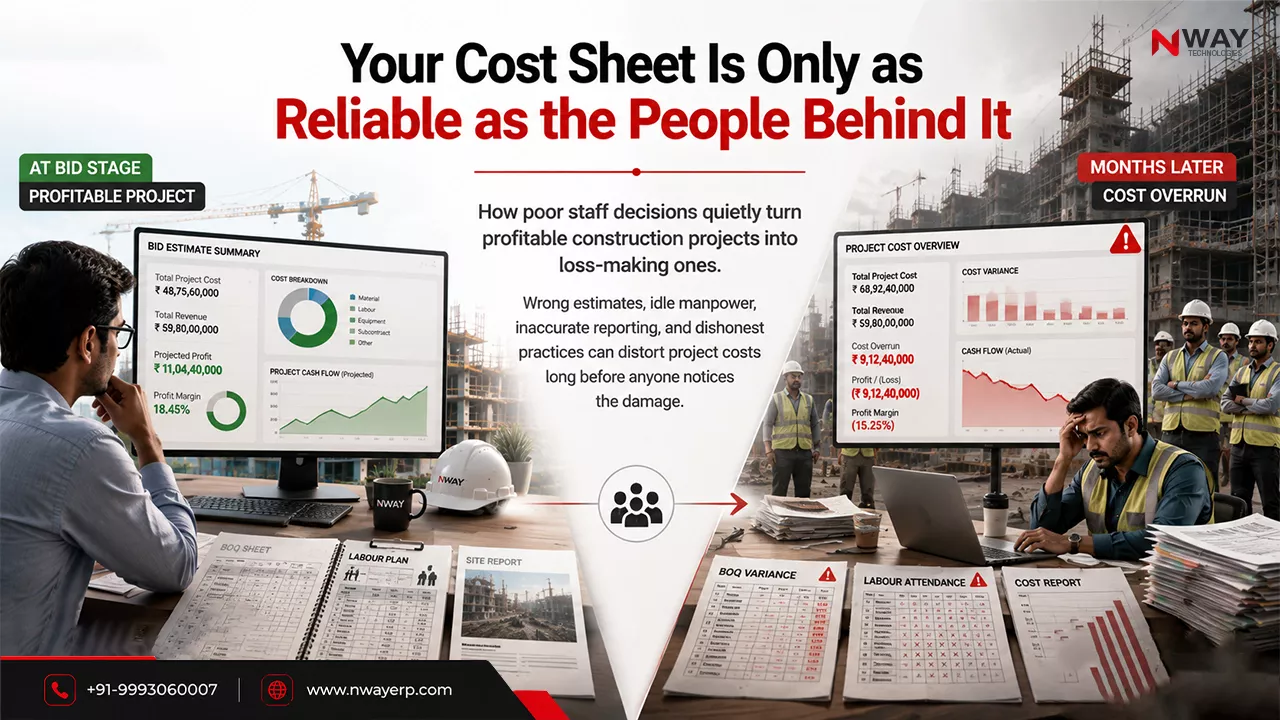
Perhaps the most overlooked consequence is inaccurate project costing.
If labor expenses are incorrect, project profitability reports become unreliable, leading to poor business decisions.
How Construction Payroll Software Reduces Errors
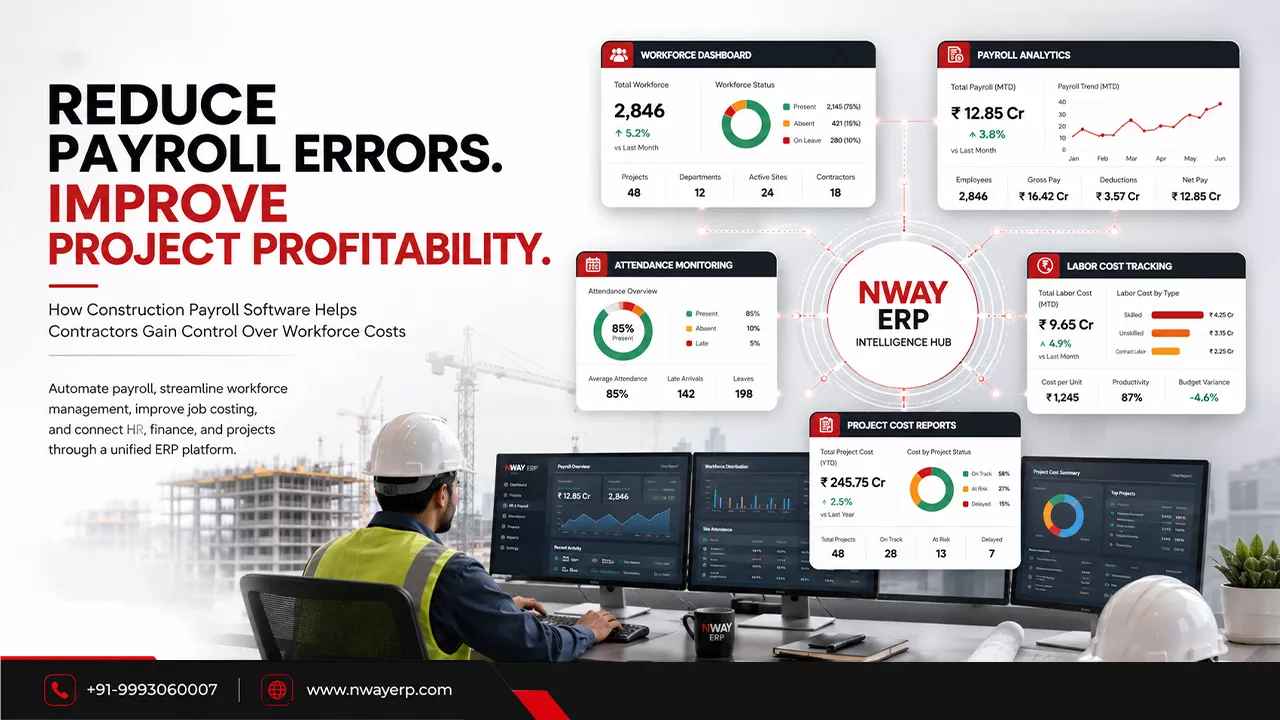
Modern construction company payroll software addresses payroll challenges through automation, integration, and real-time data visibility.
1. Automated Construction Time Tracking
Payroll accuracy begins at the project site.
Advanced time tracking solutions capture:
- Attendance records
- Shift schedules
- Overtime hours
- Break durations
- Location-specific data
By eliminating manual data entry, companies significantly reduce inaccuracies before payroll processing starts.
Expected Outcome
- Higher payroll accuracy
- Reduced disputes
- Faster approvals
- Improved workforce accountability
2. Centralized Construction Workforce Management
Construction businesses often struggle with workforce visibility across multiple projects.
Integrated Construction Workforce Management tools provide:
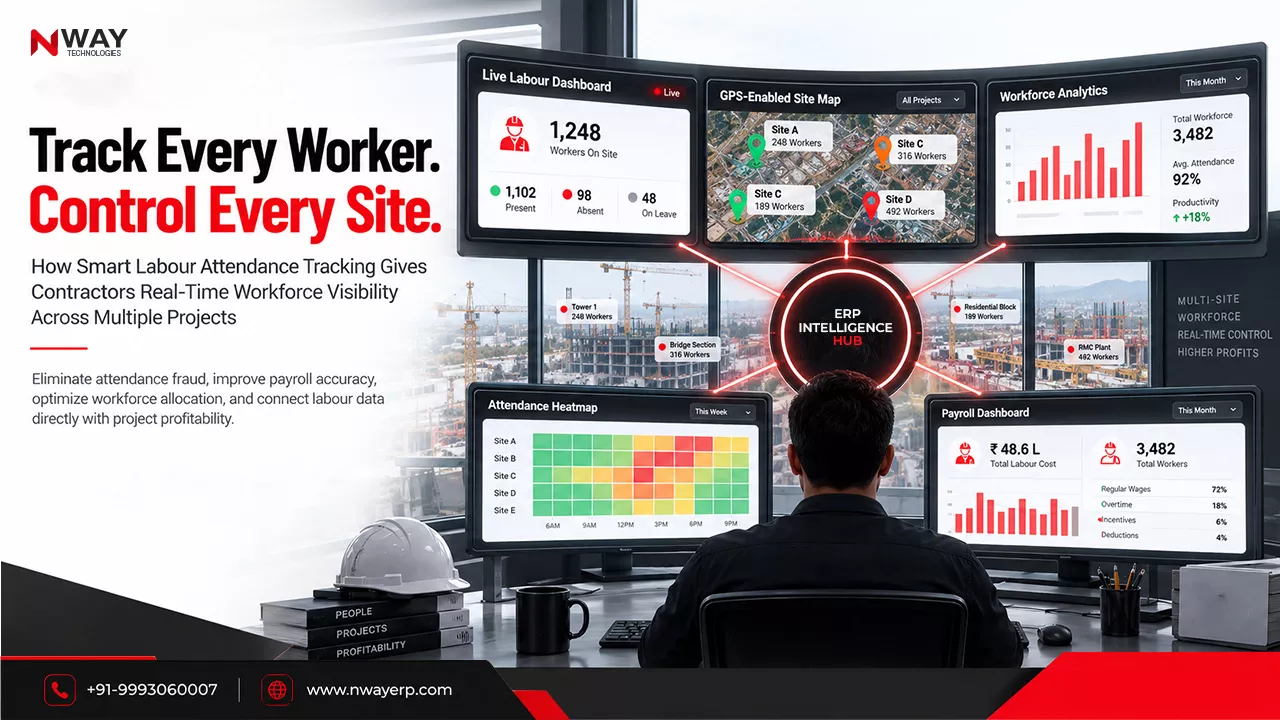
- Real-time workforce tracking
- Labor deployment visibility
- Attendance monitoring
- Skill-based allocation
- Shift planning
When workforce data flows directly into payroll systems, calculation errors reduce dramatically.
Expert Tip
Treat payroll as a workforce intelligence function rather than a finance-only process.
Organizations that connect workforce operations with payroll gain better control over labor productivity and project profitability.
3. Automated Payroll Rule Management
Construction payroll frequently involves:
- Overtime calculations
- Night shifts
- Holiday work
- Incentive policies
- Allowance structures
The best payroll software for construction automatically applies to predefined payroll policies across projects.
Instead of manually calculating variable payments, payroll teams rely on standardized automation rules.
Benefits
- Consistent calculations
- Reduced human error
- Better compliance
- Faster payroll cycles
The Role of Payroll Contract Management
Many payroll discrepancies originate from contractor and subcontractor agreements.
Why Payroll Contract Management Matters
Construction contracts frequently include:
- Different wage categories
- Overtime clauses
- Performance incentives
- Retention terms
- Site-specific conditions
Without centralized contract visibility, payroll teams may process incorrect payments.
Integrated Payroll Contract Management ensures payroll calculations align with contractual obligations.
Common Mistake
Many companies maintain contract information in separate spreadsheets while processing payroll through another system.
This disconnect often creates payment mismatches and compliance risks.
Connecting Payroll with Construction Job Costing
Payroll accuracy is important.
Payroll accuracy tied to project costs is transformational.
How Integration Improves Cost Visibility
When payroll integrates with Construction Job Costing, labor expenses are automatically assigned to:
- Projects
- Cost centers
- Activities
- Work packages
- Departments
This creates a real-time understanding of labor expenditure.
Before vs After
| Manual Payroll Environment | Integrated ERP Environment |
|---|---|
| Delayed labor cost reporting | Real-time labor visibility |
| Manual allocation errors | Automated project allocation |
| Payroll and project data disconnected | Unified cost management |
| Limited profitability insights | Accurate project margins |
| Reactive cost control | Proactive decision-making |
How Construction ERP Software Creates a Single Source of Truth
Payroll cannot operate independently in modern construction enterprises.
The most effective approach is integrating payroll into a broader construction of the ERP software ecosystem.
Key Integrated Functions
HRMS
Manages:
- Employee records
- Leave management
- Attendance
- Performance data
Payroll
Handles:
- Wage calculations
- Statutory deductions
- Salary processing
- Compliance reporting
Accounting
Tracks:
- Labor expenses
- Cost allocations
- Financial reporting
- Cash flow management
Project Management
Links workforce costs to project execution.
Did You Know?
Finance leaders often spend significant effort reconciling payroll and project cost data when systems are disconnected.
ERP-driven integration eliminates much of this manual reconciliation work.
A Practical Payroll Error Reduction Framework
- Step 1: Standardize Workforce Data Collection — Implement digital attendance and time tracking across all project locations.
- Step 2: Automate Payroll Calculations — Use software-driven payroll rules instead of spreadsheets.
- Step 3: Integrate Payroll with Job Costing — Ensure labor costs flow directly into project financials.
- Step 4: Centralize Contract Management — Align payroll calculations with contractual obligations.
- Step 5: Monitor Workforce Analytics — Use dashboards to identify anomalies before payroll processing.
Best Practice Checklist
- Use biometric or mobile attendance capture
- Implement real-time construction time tracking
- Automate overtime calculations
- Integrate payroll with construction accounting software
- Connect payroll to job costing modules
- Maintain centralized employee master data
- Standardize approval workflows
- Conduct regular payroll audits
- Monitor compliance through automated reporting
- Use ERP dashboards for payroll analytics
Mini Case Scenario
A growing EPC contractor operating across India and the GCC managed payroll using spreadsheets and separate attendance systems.
Challenges included:
- Frequent overtime disputes
- Delayed payroll cycles
- Labor cost reporting inaccuracies
- Excessive finance team workload
After implementing integrated payroll software for a construction company environment connected with HRMS and ERP:
- Attendance data became automated
- Payroll processing cycles shortened
- Project labor allocation improved
- Management gained real-time workforce cost visibility
The result was not simply a more accurate payroll.
The organization achieved better project control and stronger financial governance.
Construction Payroll Accuracy Cheat Sheet
| Payroll Challenge | Business Impact | Recommended Solution |
|---|---|---|
| Manual Timesheets | Incorrect wages and disputes | Digital Construction Time Tracking |
| Multi-Site Workforce | Inaccurate attendance data | Centralized Workforce Management |
| Overtime Miscalculations | Payroll overpayments | Automated Payroll Rules Engine |
| Subcontractor Management | Compliance risks | Payroll Contract Management |
| Delayed Payroll Processing | Employee dissatisfaction | Automated Payroll Workflows |
| Incorrect Job Cost Allocation | Poor project profitability analysis | Construction Job Costing Integration |
| Multiple Pay Structures | Administrative complexity | Configurable Construction Payroll Software |
| Disconnected Systems | Duplicate data entry | Integrated Construction ERP Software |
| Compliance Errors | Penalties and reputational risk | Automated Compliance Monitoring |
Conclusion
Payroll errors in construction projects are rarely isolated from administrative issues. They reflect broader challenges involving workforce tracking, contract management, job costing, and operational visibility.
As projects become more complex across India, the UAE, Saudi Arabia, and other GCC markets, relying on spreadsheets and disconnected systems becomes increasingly risky. Organizations that invest in integrated Construction Payroll Software, HRMS platforms, and Construction ERP Software gain far more than payroll accuracy. They build stronger workforce governance, improve financial transparency, enhance compliance, and create a foundation for scalable growth.
For contractors, EPC firms, developers, and infrastructure companies, payroll modernization is not simply an HR initiative. It is a strategic business decision that directly influences profitability, project success, and long-term competitiveness.