Table of Contents:
- What Does Budget vs Actual Cost Mean?
- Why Budget vs Actual Cost Matters in Construction
- Step-by-Step Process for Calculating Budget vs Actual Cost
- Manual Monitoring vs ERP-Based Cost Management
- How Construction ERP Improves Budget vs Actual Tracking
- Cost Impact Framework: Where Budget Variances Usually Start
- Future of Construction Cost Management
- Conclusion
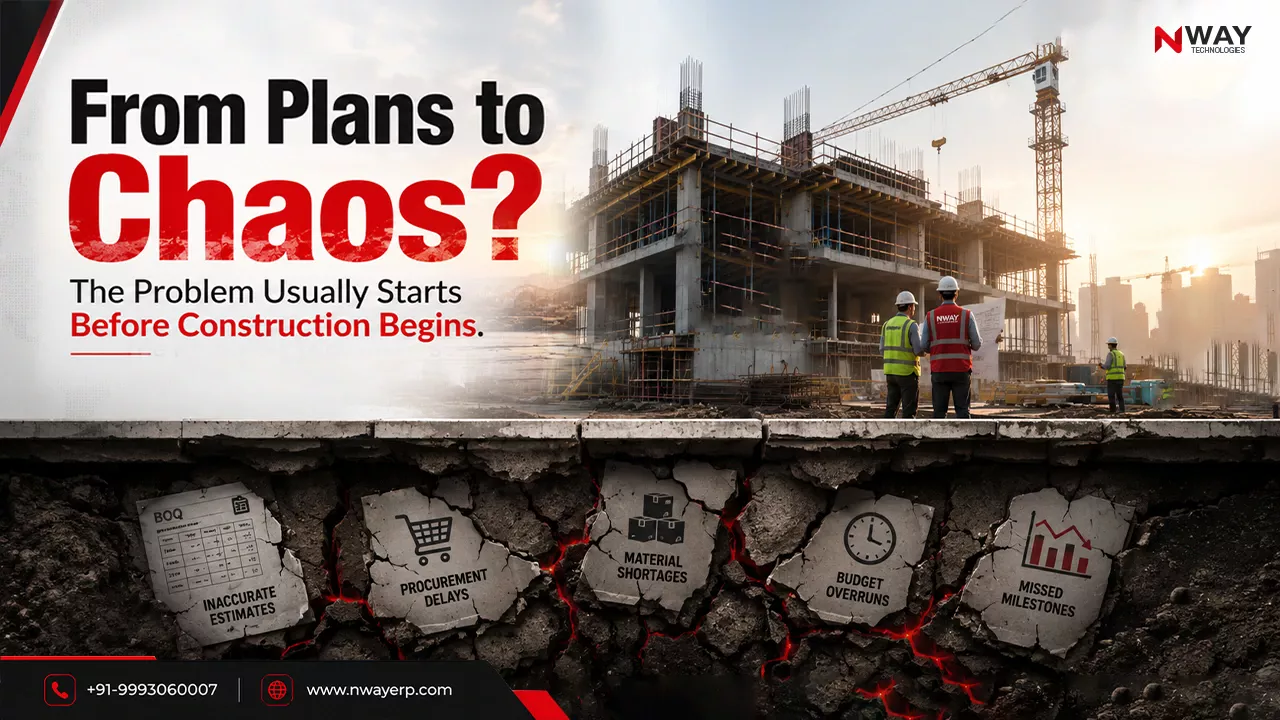
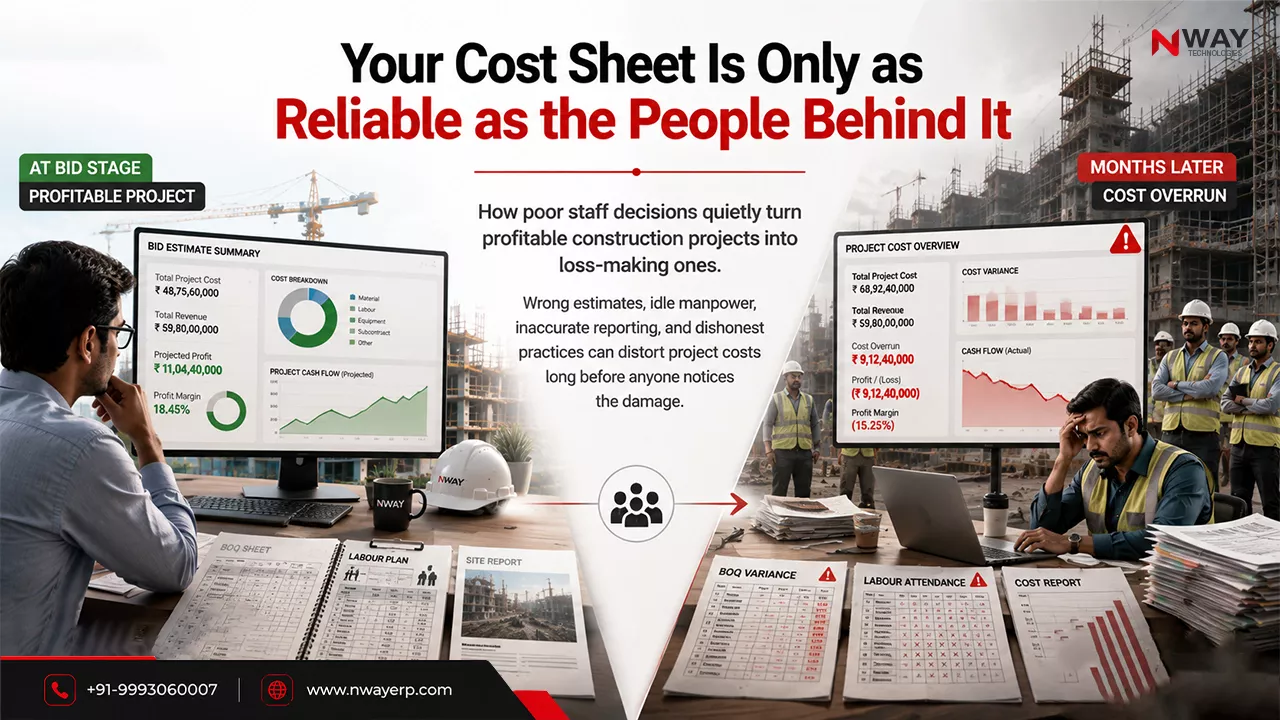
Imagine a contractor winning a ₹50 crore infrastructure project with an estimated margin of 12%.
On paper, the project looks healthy.
Three months later:
- Material prices increase unexpectedly.
- Additional machinery is deployed.
- Labor productivity declines due to site challenges.
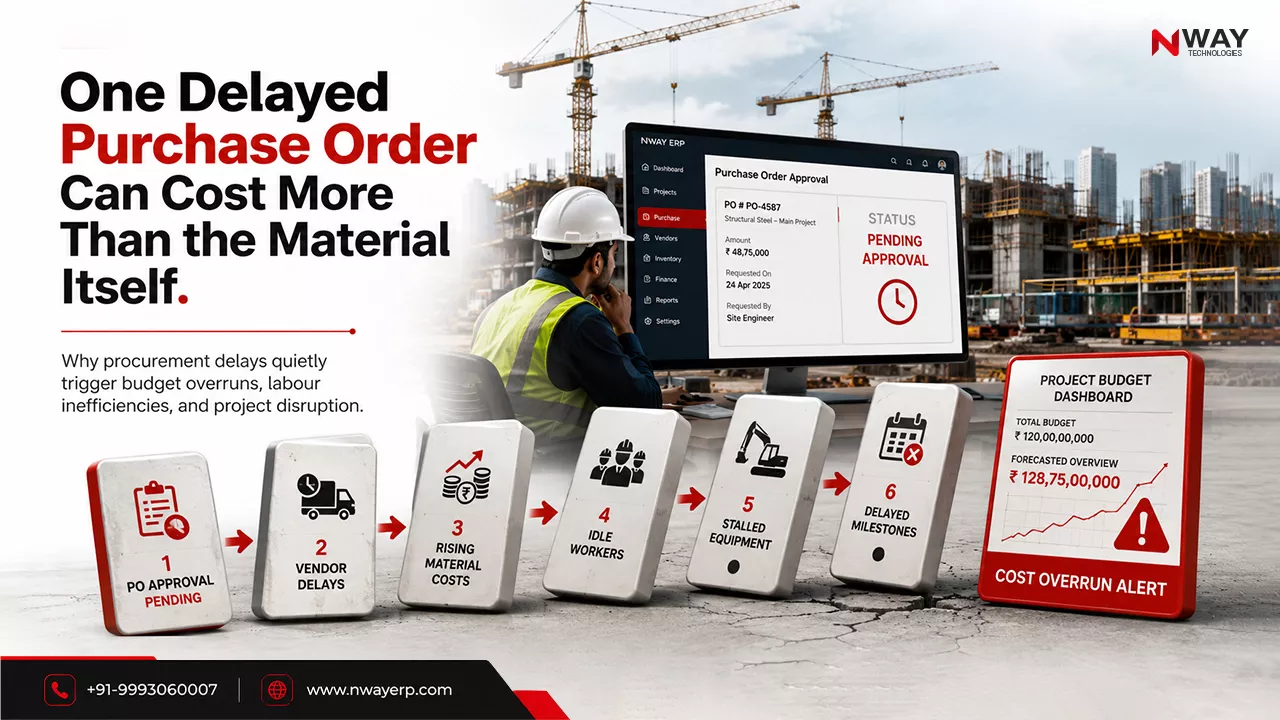
- Procurement delays force emergency purchases at higher rates.
Individually, these expenses appear manageable.
Collectively, they reduce project profitability significantly.
The biggest problem is that many organizations discover these variances only during monthly reviews or project closure audits.
By that point, corrective actions are limited.
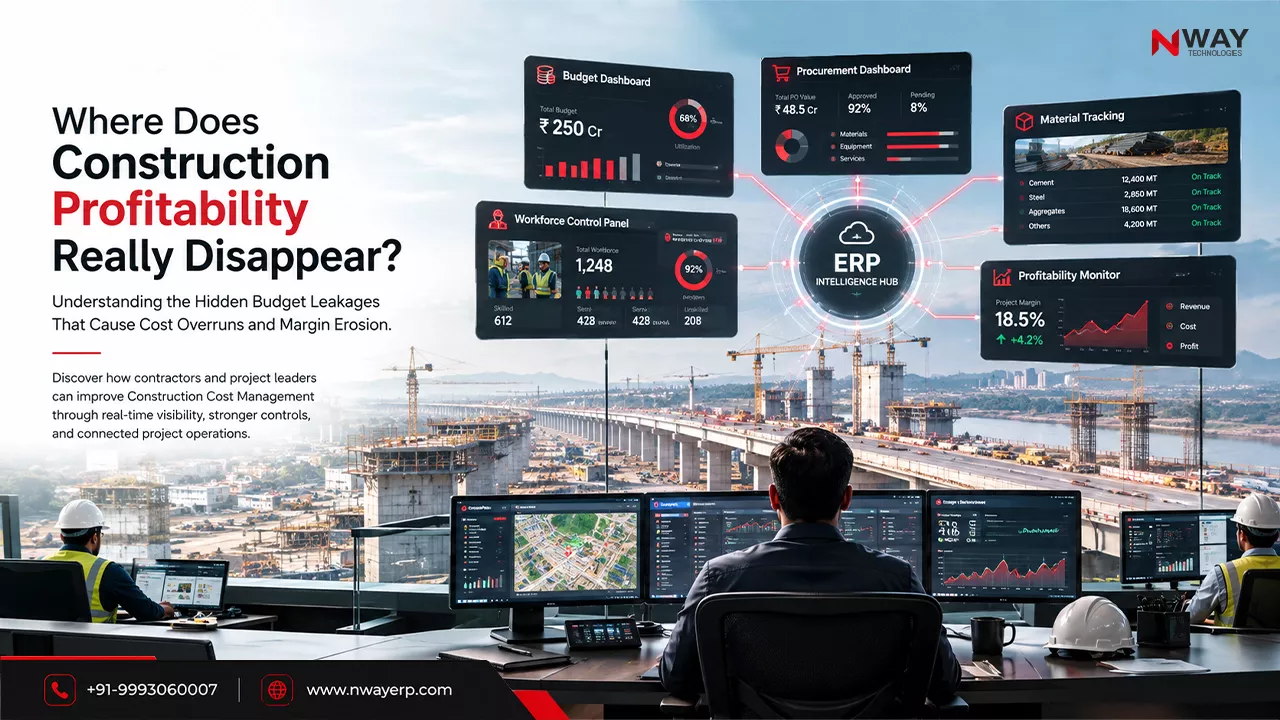
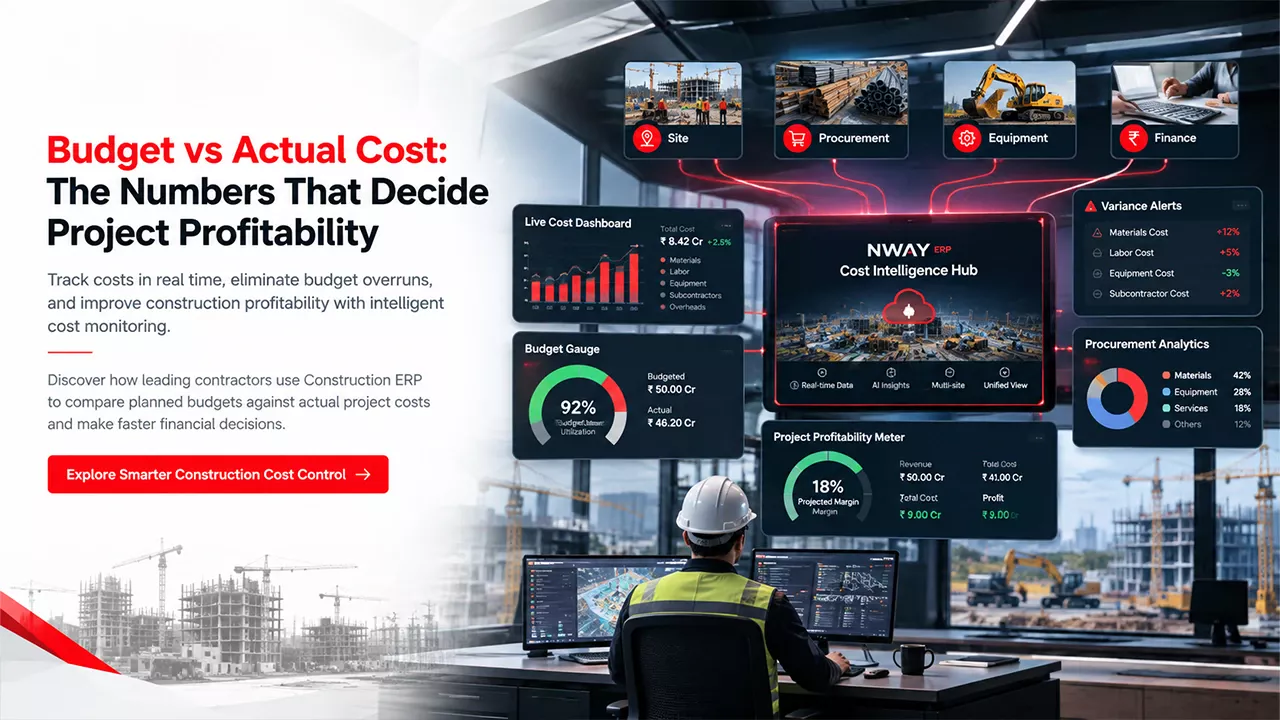
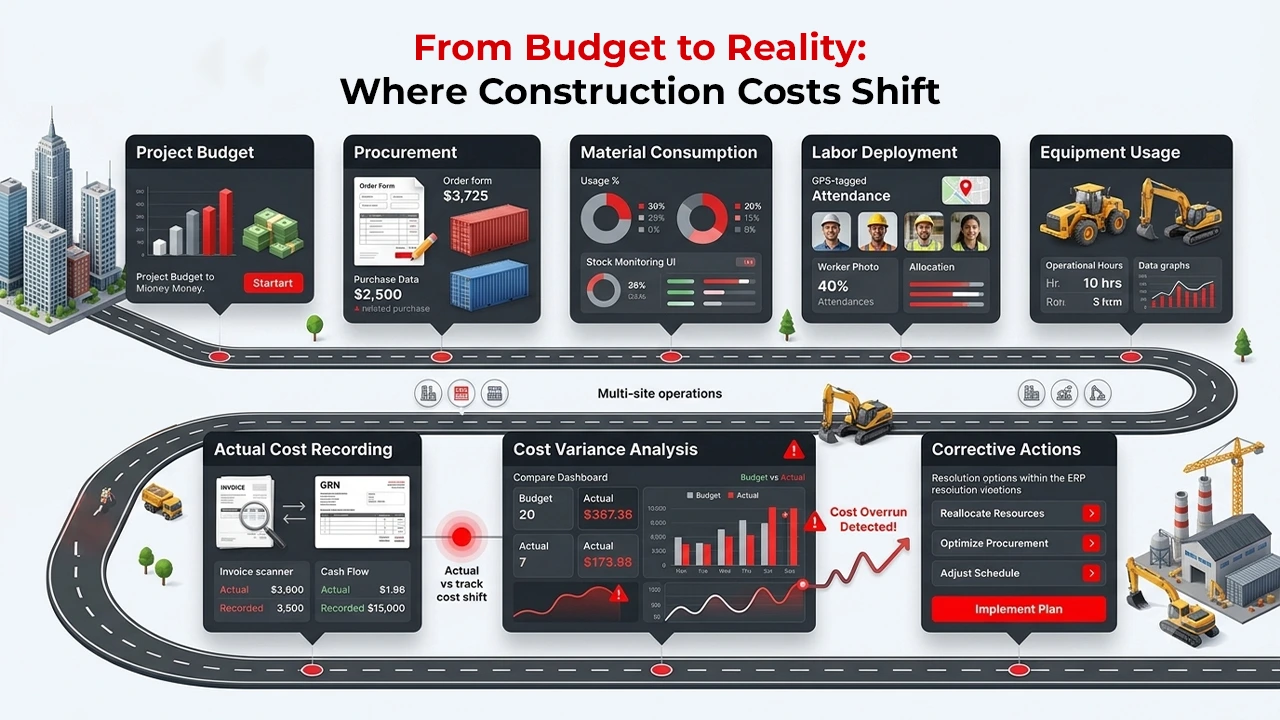
This is why modern Construction Budgeting practices focus on continuous comparison of Budget vs Actual Cost throughout the project lifecycle. (See – Solution ( Finance & Accounts ))
What Does Budget vs Actual Cost Mean?
Budget Cost refers to the planned cost established before project execution based on design specifications, quantity take-offs, labor plans, resource allocation, procurement strategies, and risk assumptions.
Actual Cost refers to the real expenditure incurred during project execution.
The comparison enables organizations to measure project financial health in real time.
Core Formula
Cost Variance = Budget Cost − Actual Cost
Or
Cost Variance (%) = ((Budget Cost − Actual Cost) ÷ Budget Cost) × 100
Example
| Cost Category | Budget (₹) | Actual (₹) | Variance (₹) |
|---|---|---|---|
| Materials | 25,00,000 | 27,00,000 | -2,00,000 |
| Labor | 12,00,000 | 11,50,000 | +50,000 |
| Equipment | 8,00,000 | 9,00,000 | -1,00,000 |
| Subcontractors | 10,00,000 | 10,20,000 | -20,000 |
| Total | 55,00,000 | 57,70,000 | -2,70,000 |
In this example, the project has exceeded the budget by ₹2.7 lakh, triggering a need for immediate cost investigation.
Why Budget vs Actual Cost Matters in Construction
1. Protects Project Profitability
A project can be delivered on time and still lose money.
Budget monitoring highlights:
- Margin erosion
- Excessive resource consumption
- Hidden operational inefficiencies
- Unexpected procurement costs
Quick Insight
A 5% cost overrun on a large infrastructure project can eliminate a significant portion of the contractor’s expected profit.
2. Improves Cash Flow Planning
Construction businesses operate within tight working capital cycles.
Budget tracking helps organizations:
- Forecast cash requirements
- Plan vendor payments
- Avoid liquidity shortages
- Manage project financing effectively
3. Enhances Decision-Making
Project leaders can make better decisions when they know:
- Where money is being spent
- Which activities are generating overruns
- Which vendors or resources create financial risks
The Major Cost Components That Must Be Tracked
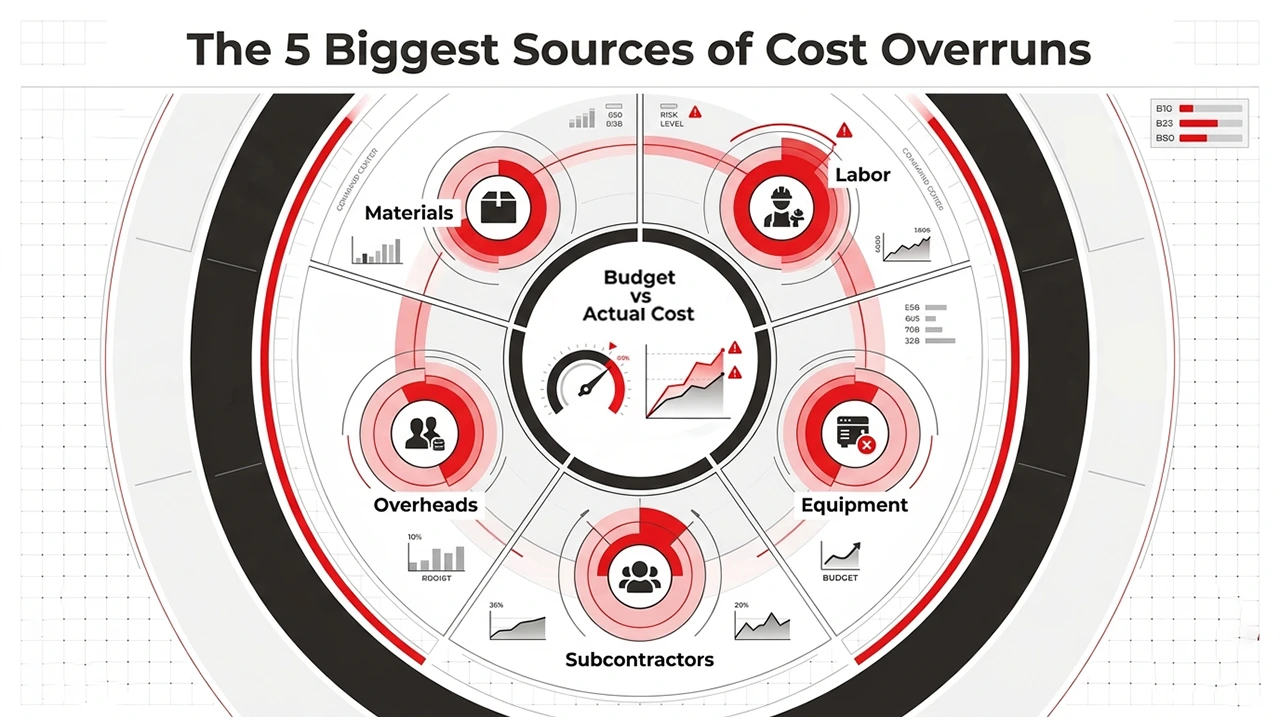
Effective Construction Project Budget monitoring requires visibility into every major cost category.
Material Costs
Includes:
- Cement
- Steel
- Sand
- Aggregates
- Finishing materials
- Consumables
Hidden Risk
Material wastage between store issues and site consumption often goes unreported.
Labor Costs
Includes:
- Skilled labor
- Semi-skilled labor
- Unskilled workforce
- Contract labor
Common Challenge
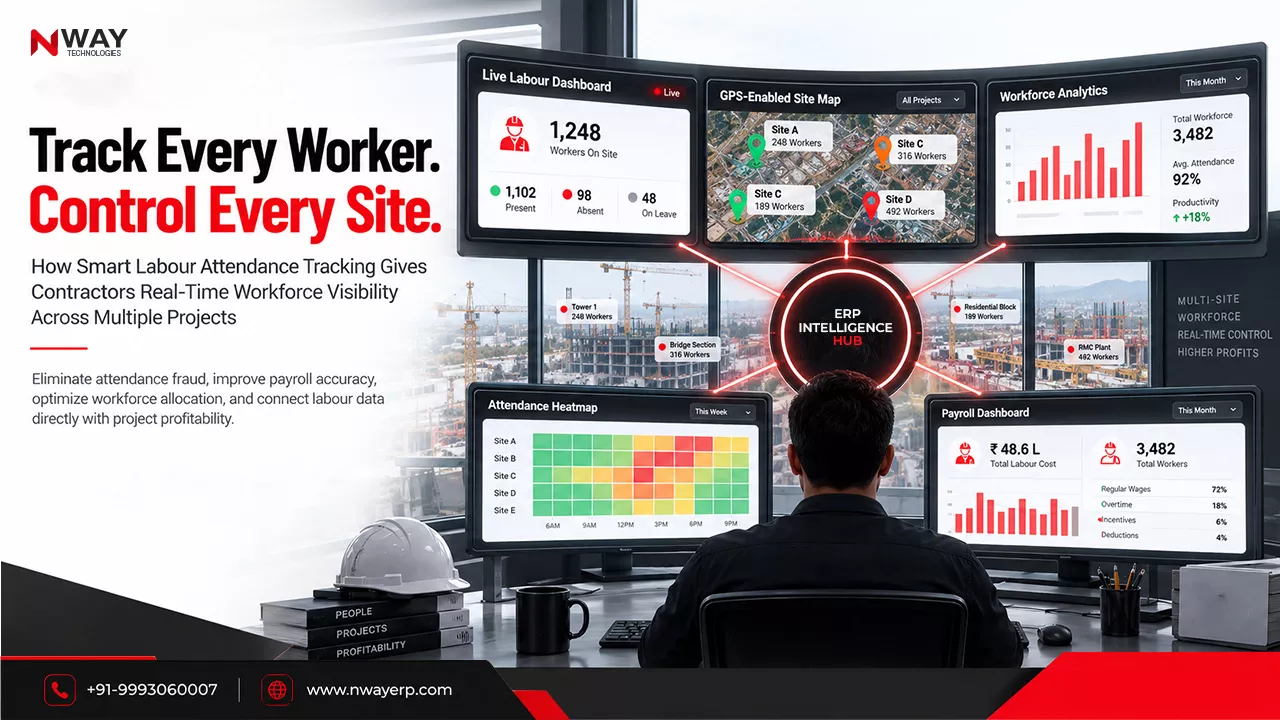
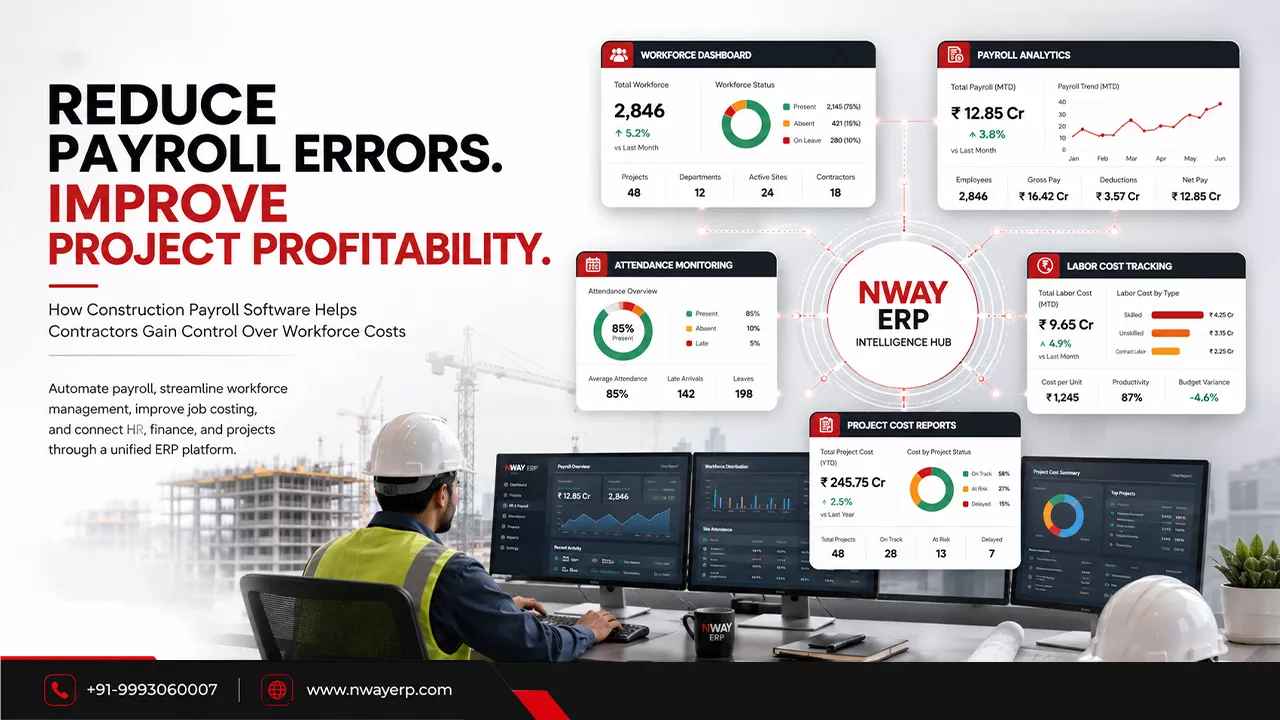
Manual attendance records frequently create payroll inaccuracies and cost leakages.
Equipment Costs
Includes:
- Rental equipment
- Owned machinery
- Maintenance costs
- Fuel consumption
- Operator expenses
Expert Tip
Equipment idle time is one of the most overlooked contributors to project cost overruns.
Subcontractor Costs
Includes:
- Civil works
- Electrical works
- Plumbing
- Specialized services
Proper verification of work progress and billing is critical for accurate cost reporting.
Indirect Costs
Includes:
- Site office expenses
- Utilities
- Security
- Temporary facilities
- Administrative costs
These costs often accumulate slowly and become substantial over long project durations.
Step-by-Step Process for Calculating Budget vs Actual Cost
Step 1: Establish a Detailed Project Budget
Before construction begins, create a baseline budget covering:
- Labor
- Materials
- Equipment
- Overheads
- Subcontractors
- Contingencies
Best Practice Checklist
- Define cost codes
- Assign budgets to activities
- Allocate contingency reserves
- Include risk assumptions
- Create approval workflows
Step 2: Capture Actual Costs Daily
Actual cost collection should occur continuously.
Sources include:
- Purchase orders
- Vendor invoices
- Payroll records
- Material issues
- Equipment logs
- Site expense reports
Common Mistake
Waiting until month-end to update actual costs creates reporting delays and missed intervention opportunities.
Step 3: Categorize Costs Properly
Every expense should be mapped to:
- Activity
- Project
- Resource
- Cost code
- Work package
This ensures accurate variance analysis.
Step 4: Perform Variance Analysis
Identify:
- Over-budget activities
- High-risk cost categories
- Scope-related expenses
- Productivity issues
Variance Analysis Framework
| Variance Type | Possible Cause |
|---|---|
| Material Variance | Wastage, Theft, Price Increase |
| Labor Variance | Low Productivity, Overtime |
| Equipment Variance | Breakdown, Idle Time |
| Procurement Variance | Emergency Purchases |
| Subcontract Variance | Change Orders |
Step 5: Take Corrective Action
Once deviations are identified:
- Renegotiate procurement contracts
- Improve resource deployment
- Reduce wastage
- Optimize manpower allocation
- Improve site controls
The objective is not reporting cost overruns.
The objective is preventing them.
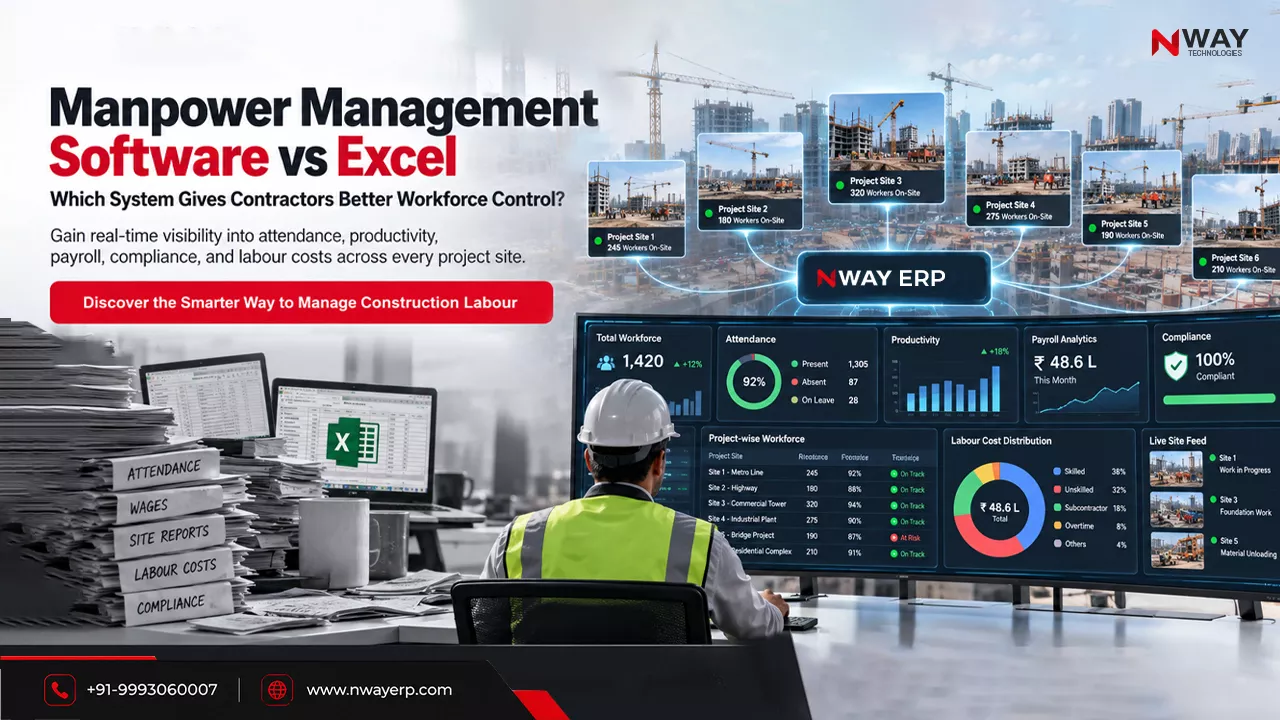
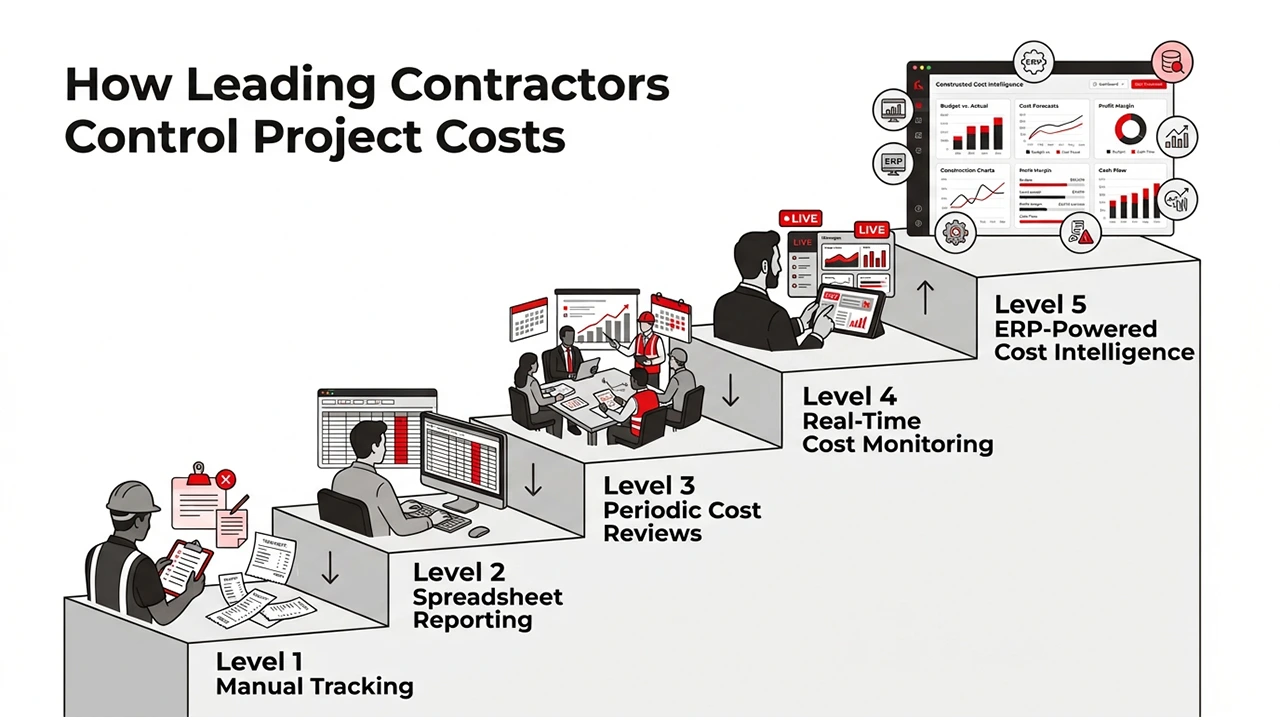
Manual Monitoring vs ERP-Based Cost Management
| Parameter | Manual Tracking | Construction ERP |
|---|---|---|
| Data Collection | Delayed | Real Time |
| Cost Visibility | Limited | Complete |
| Variance Analysis | Monthly | Continuous |
| Accuracy | Moderate | High |
| Forecasting | Difficult | Automated |
| Multi-Project Monitoring | Complex | Centralized |
| Management Reporting | Manual | Dashboard Driven |
Did You Know?
Many contractors still manage multi-crore projects through spreadsheets despite handling thousands of cost transactions every month.
How Construction ERP Improves Budget vs Actual Tracking
For growing construction companies, spreadsheets eventually become a financial blind spot.
Modern Construction Cost Control software integrates:
- Procurement
- Inventory
- Finance
- Payroll
- Equipment Management
- Site Operations
into one centralized platform.
What Happens When ERP Implemented?
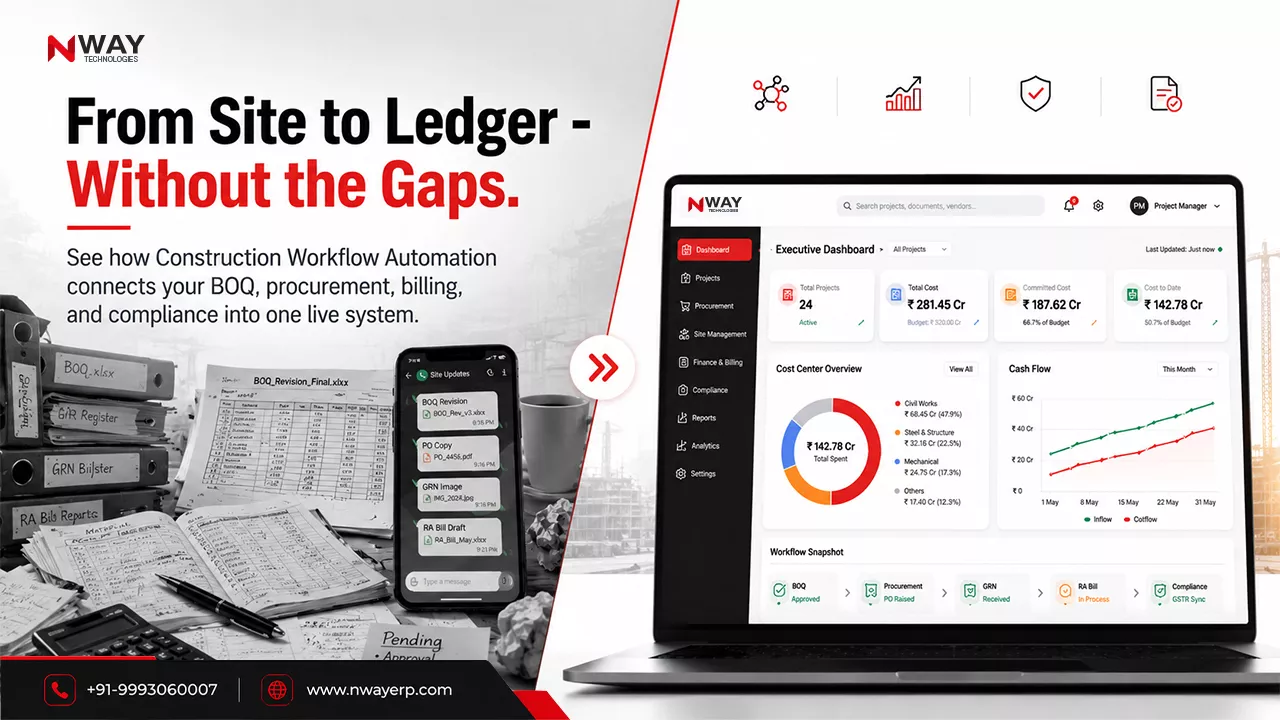
Before
- Multiple spreadsheets
- Delayed reporting
- Duplicate data entry
- Inconsistent cost tracking
After
- Single source of truth
- Real-time dashboards
- Automated cost allocation
- Instant variance analysis
- Executive-level visibility
Industry Example
A contractor managing multiple highway projects uses ERP to compare budgeted procurement costs with actual purchase orders daily.
Instead of discovering overruns at month-end, project managers receive alerts immediately, allowing procurement teams to negotiate alternatives before costs escalate further. See: Construction ERP Software
Cost Impact Framework: Where Budget Variances Usually Start
Level 5: Strategic Losses
- Incorrect bidding
- Poor Construction Cost Estimation
Level 4: Planning Losses
- Unoptimized schedules
- Resource conflicts
Level 3: Procurement Losses
- Price fluctuations
- Emergency purchases
Level 2: Execution Losses
- Rework
- Material wastage
- Productivity issues
Level 1: Operational Losses
- Attendance discrepancies
- Fuel misuse
- Unapproved expenses
Expert Insight
Most project cost overruns begin at Levels 1 and 2, but management often notices them only when they reach Level 5.
Future of Construction Cost Management
The industry is moving beyond retrospective accounting.
Forward-looking organizations are investing in:
- Predictive cost analytics
- AI-assisted forecasting
- Real-time project dashboards
- Mobile field reporting
- ERP-driven cost intelligence
Future competitiveness will belong to companies that can identify financial risks before they impact project profitability.
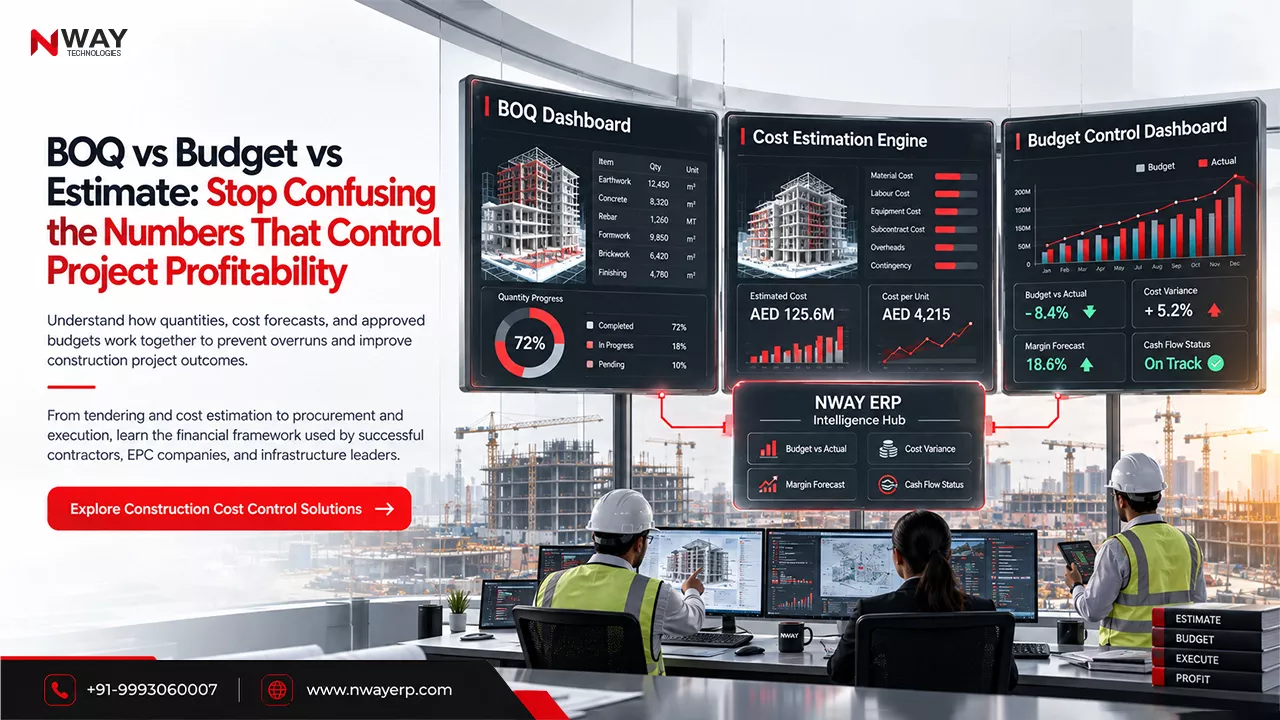
Also read: BOQ vs Budget vs Estimate: What’s the Difference?
Conclusion
Accurate construction cost estimation is only the starting point of a successful project. The real challenge lies in continuously comparing budgeted costs against actual expenditures and taking corrective action before small deviations become major financial problems.
For contractors, project managers, CFOs, and construction business owners, Budget vs Actual Cost analysis has evolved from a financial reporting activity into a strategic capability. Organizations that embrace data-driven construction project cost management, real-time visibility, and ERP-powered decision-making gain tighter construction cost control, stronger margins, improved forecasting, and greater project success rates.
In an industry where every percentage point of profit matters, the ability to measure, monitor, and manage costs in real time is rapidly becoming a competitive advantage rather than an operational convenience.