Blogs

-
Feb 02 2022
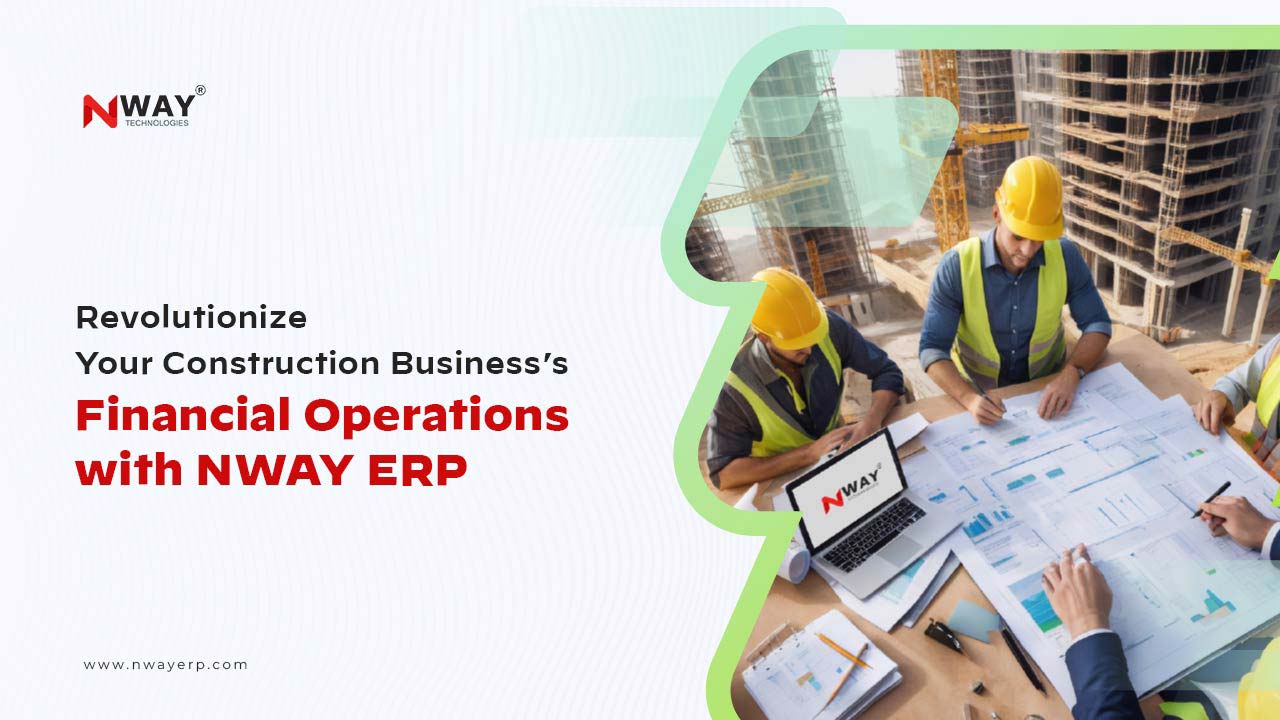
 Construction based projects are often complex and huge and managing them is easier said than done. A project manager requires innovative ideas to manage crew, material and need to minimize costs, and ensure that projects run within deadlines. So, when it comes to the current and upcoming trends in the construction domain, we need a software application to run our construction business to get maximum profit. The objective of software applications is to bring efficiency in the accomplishment of tasks and projects with minimum effort. In particular, construction companies have started to leverage the technological tool Construction Management Software. Our construction ERP software helps you to get ahead of your business competitors, but how. Read the blog to get a better understanding of how Nway Construction Management Software can help you stay ahead of industry trends. Finance Management with Nway ERP Software The entire transaction of account money is managed by the Account module in the Nway ERP software. This module covers all the accounting needs of construction companies, including expenses, balance sheets, ledger, budgets, bank statements, payment receipts, tax management, etc. It enables optimizing accounting, integrating payroll, procurement, business development, project planning, and execution. All this necessary financial data
 -
Jan 28 2022
 The construction industry runs on hundreds of moving parts happening at once — multiple sites, shifting workforces, fluctuating material prices, and tight project deadlines. It’s no surprise that challenges in the construction industry rank among the toughest of any sector to manage. The scale is real: engineering major L&T alone flagged a shortfall of 25,000–30,000 labourers in 2024, and Knight Frank/NSDC research projects India’s skilled construction workforce will need to nearly double — from roughly 6.9 million to 10.5 million workers — by 2030 just to keep pace with demand. From labour shortages and rising material costs to delayed payments and financial mismanagement, these problems don’t just slow down individual projects — they eat directly into margins and client trust. In this guide, we break down the 9 most common construction industry problems contractors and builders face today, and the practical fixes — including where the right construction management software can help — to overcome each one. Challenges in the Construction Industry: 9 Problems and How to Solve Them 1. Skilled Labour Shortage (NEW) One of the most pressing challenges in construction industry operations today is a shrinking pool of skilled workers — masons, electricians, equipment operators, site supervisors. Projects
 -
Jan 17 2022
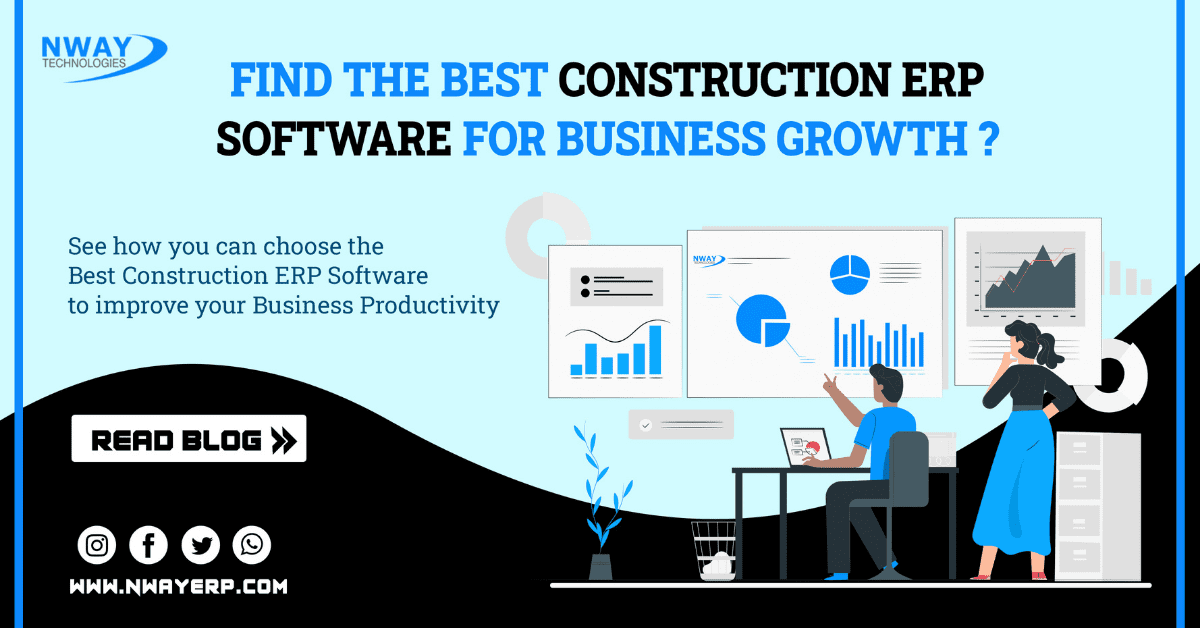 The use of construction ERP software offers various solutions with benefits and can prove to be highly beneficial for your business growth and increasing productivity. The right customized Construction ERP Software helps your business to significantly improve Financial Management, Purchase Management, HR & Payroll, Manufacturing Accounting, Store and Inventory Management, and Service Operations in a single central database. Hence the possibility of error is minimal, thus improving quality, accuracy enhanced which gives better output in construction business management. But choosing the right ERP software for construction business growth can seem a very difficult task. So today we will learn a few points that will guide you to choosing the right ERP software for your construction business. User Friendly or Responsive Dashboard A responsive dashboard is very helpful in managing the business process. If the software is responsive we can easily access each & every record about the raw material and inventory history and get the statistics with just one finger swipe. Unlimited User Access Many ERP software charges for each user to access as everyone in the business cannot use this software at every construction site. When selecting the software for your business, you should check out the Unlimited Users
 -
Jan 03 2022
 Every business needs good productivity this year and especially when it comes to the construction business, productivity matters a lot because the higher the productivity, the higher the profit. But how can you increase the productivity of your business in this new year? This is a very important question. So today we will learn about construction productivity improvement techniques and know some such ways that help you to increase productivity in your construction business. Construction Productivity Improvement Techniques Use ERP Software to Improve Productivity In construction, along with the client, it is also very important to manage the business properly to increase productivity. If you do not manage the business properly then you may face loss instead of profit in a business. To avoid this, you can use ERP software. ERP Software helps you a lot to manage your construction business because Construction ERP Software includes the management of general contractors, subcontractors, financial management, purchase management, HR & Payroll management, construction accounting management, Store & Inventory management, and service operations in one central database or a single dashboard. Benefits of ERP Software to Improve Construction Industry Productivity: Contractor Management Construction ERP Software can boost performance according to the need of your
 -
Dec 27 2021
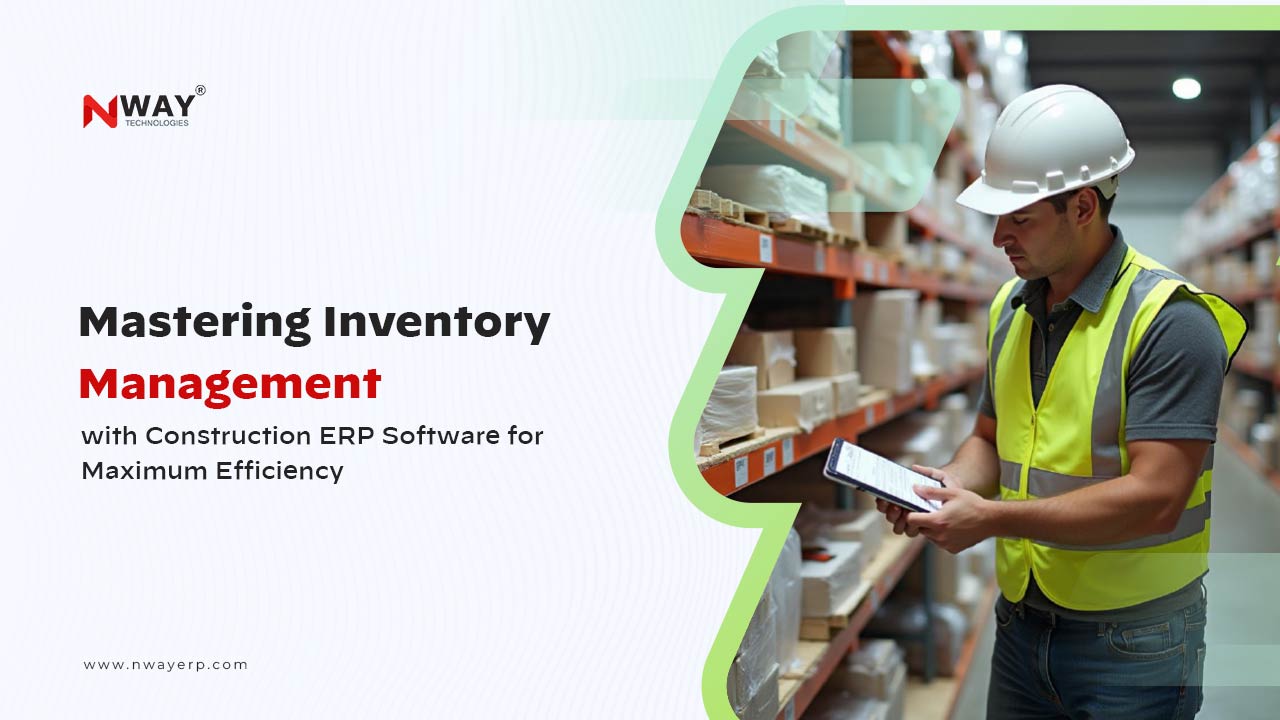
 In the construction business, managing stock and inventory is a very difficult task, even sometimes we don’t understand that our stock is about to run out or it gets exhausted and due to this our construction work stops. If you want to avoid this kind of problem in your business, use our best Construction ERP Software system to manage stock and inventory. With the help of this ERP software, you will never face such type of problem in your construction business and your work will never stop anymore. So today we will learn about this ERP software and how it can help in your business to manage stock and inventory so that you will never face the problem of stock. 1. Execute Your Plan With the help of ERP software, you can manage your material or stock inventory according to you and execute it as you planned. Inventory management is the planning and controlling on all the effort required to manage stock inventory and ensure that the correct quality and quantity of stock and material are properly specified on time, received at a reasonable cost, and available at point of use when required. Poor inventory management can increase the cost
 -
Dec 21 2021
 If the business is managed properly then its productivity can be increased a lot, but it is not easy to manage businesses. But now there is a solution to manage our business, for this you can use our ERP System for construction company. Nowadays, there are many Best Construction Management Software System in India, and not every software is the same, some features make it different from others, and many software provide a lot of features, making it very easy to manage our business. Similarly, Nway Technology also has its own ERP software which is different from all the ERP software available in the market. But what is its special feature that makes it different from other Construction ERP Software, today we will discuss them and learn about it in detail? 1. Unlimited Users The biggest feature of Nway Technologies ERP is that it gives you the license to use it for unlimited users, and you do not have to pay any extra charges or any hidden charges. Once you get the ERP package, you can give access to as many users as you want. Nway Technologies construction ERP software handles unlimited users and assists each and every customer through
 -
Nov 30 2021
 There are two types of work, one is hard work and one is smart work, everyone knows the difference between these two, but do you know how to use smart work to increase productivity in the construction industry? It is very important to use smart work because only by doing smart work we increase the productivity of the construction industry. But how do we use smart work to improve productivity in the construction industry? One of the biggest problems in the construction industry is how to manage construction. If construction work is properly managed, we can greatly increase its productivity. This article talks about 4 ways in which ERP Software can help you improve construction productivity. How to Improve Productivity in Construction Industry Improving construction productivity is critical for fulfilling project timelines, saving money, and overall efficiency. When there are numerous stakeholders, complex procedures, and time-sensitive operations, it is critical to develop productivity-boosting solutions. This article examines significant techniques to increase construction industry productivity, such as good project planning, the use of technology and automation, cooperative promotion, resource allocation optimization, and investments in training and skill development. Construction organizations can boost efficiency, minimize procedures, and generate better project results by
 -
Nov 24 2021
 Every company explores ways of simplifying its processes, minimizing costs, and maximizing profits to remain competitive, something that is more evident in the construction industry. With the evolving demands of the customers and many other issues changing the business world, construction companies are facing several challenges. Construction ERP software helps managers to devise comprehensive plans for successful civil engineering of projects from the onset of project work till the outcome and during the entire construction life cycle. ERP software offers a variety of integrated solutions that support all aspects of the construction business, from planning, project control, to cost and revenue estimation. The following are five main benefits of ERP software in the construction industry: Optimize Planning Improper planning processes can lead to project failure. Contractors can sustain heavy losses in the form of labour costs and loss of clientele because of the completion of targets in a given time. An ERP for a construction company can provide you with accurate planning of raw material, human resources, design & other resources required for successful project completion. Nway provides excellent Project planning with this ERP solution specifically designed for Road construction projects. Customizable as per your Business Needs The flexibility features
 -
Nov 20 2021
 ERP software is a business solution that provides powerful analytics using data from various construction processes such as financial management, contractor management, inventory management, human capital management, project management, vendor management, asset management, and more. Construction ERP software integrates different software systems into a single comprehensive solution to help construction managers effectively manage the full life cycle of a project. NWAY ERP – The Best Construction ERP Software Includes Unlimited User License All the company gives license for a limited user and cover incomplete information but in our ERP construction software, we provide you with unlimited user license access so that you can keep your entire customer and user data in it and you will be able to see the report accurately and get complete information about your construction business. As your organization grows, you can have an unlimited number of projects at any location and have payroll generation for thousands of employees at ease and at no extra cost. Mobile App Integration in ERP Software for Construction Industry Nway ERP provides you with the best Mobile app integration service so that you can connect all your devices to view reports accurately, get better results and improve construction company productivity.
 -
Jun 09 2021
 The COVID-19 pandemic is not stopping our businesses Instead it has enclosed the new state of work. With the power of cloud ERP technology, we have ensured business continuity, which means we are easily accessing our business systems from anywhere at any time and working in isolation without being Isolated. Cloud data has become more secure than ever. In fact, it’s been around for decades, and the many benefits of working remotely have already been felt by both sides of the business equation: flexibility, time-savings, increased job satisfaction, less stress, enhanced creativity for employees; higher productivity, reduced operating costs, fewer geographical restrictions for hiring new employees, and lower turnover rates for employers. In this article though, we will focus on the cloud-based ERP solutions by looking at their benefits to the businesses, considering the ongoing pandemic. Nway ERP Cloud-based Software for Construction, Real estate, Malls, Mines provide complete solution. list of benefits. Cost Saving Cloud-based ERP software mainly consists of a monthly or subscription service. Since the system is run through the web, the business owner doesn’t need to invest in physical assets, which means you are saving money that could be directed to other areas of the business to
 -
May 19 2021
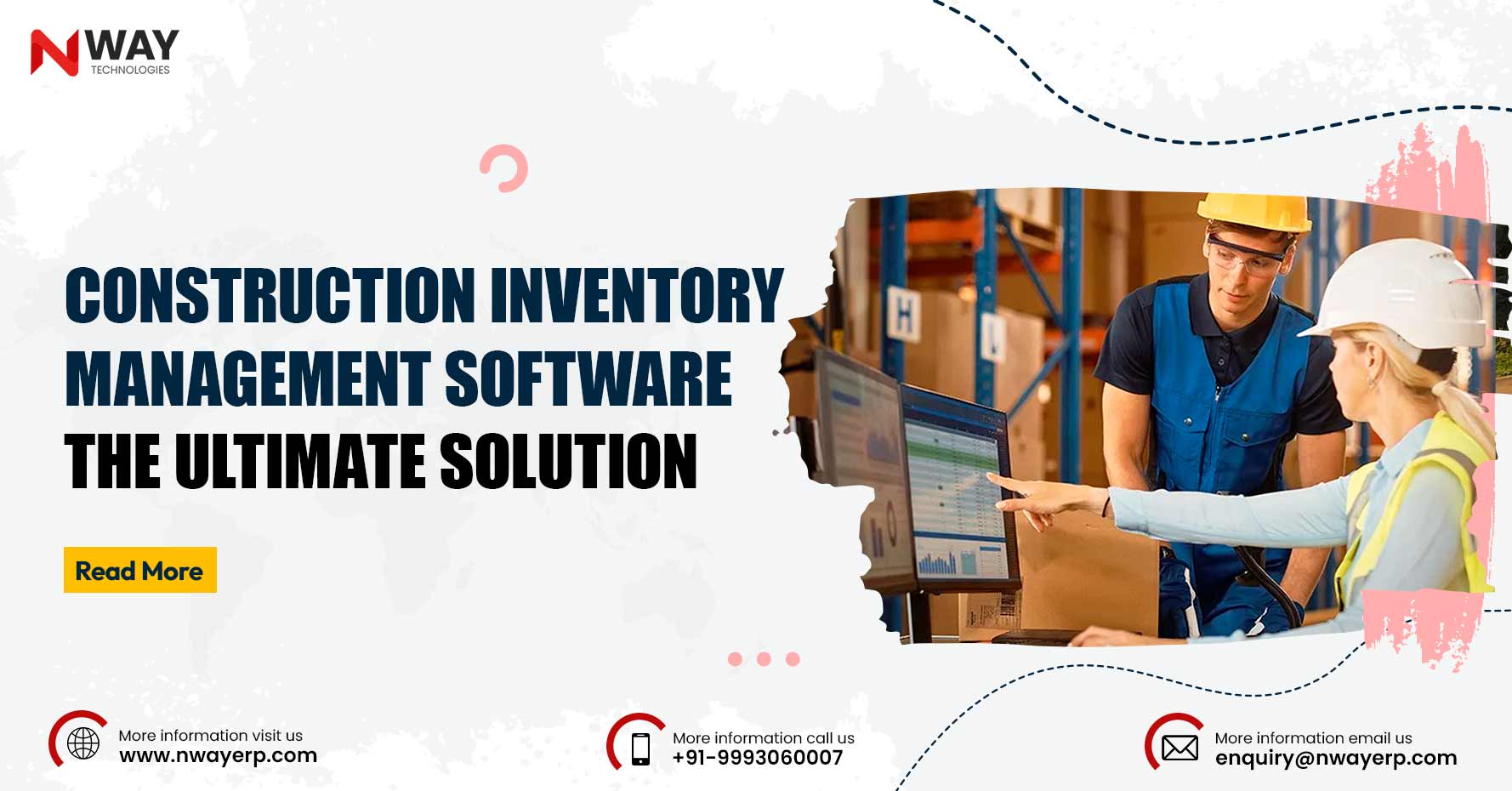 The timely stocking of goods is the critical function of construction. Construction companies may successfully and efficiently manage their inventory with the help of construction inventory management software. Through the use of this software, firms are able to lower costs, boost productivity, and boost their bottom line by streamlining and automating the ordering, tracking, and management of construction materials. Integrating the inventory module with finance and purchase enables the ERP system to generate high executive-level reports. Without the need of manual procedures or manual data entry, this software assists in tracking and monitoring inventory levels, stock movement, and stock availability. The software can also assist contractors in identifying potential cost-saving opportunities and improving their forecasting of stock needs. Construction Inventory Management Software focuses on the below aspects: Monitors inventory levels Monitoring inventory levels entails keeping track of the number of products or supplies that a company keeps on stock. This can include supplies used for manufacturing or selling things, such as raw materials, objects that are still in the production process, finished goods, and more. The goal of keeping an eye on inventory levels is to make sure a company has enough product on hand to satisfy customer demand while
 -
May 12 2021
 Concerns in Construction Industry Many construction businesses have reported the following difficulties they face, and what keeps them away from reaching a fruitful revenue. Poor Workforce Management Shipment Delays Bad Inventory Management Improper Reporting & Analysis Miscommunication Wastage of Resources Benefits of Construction Management ERP Software Implemented by NWAY Technologies: Contractor Management Construction ERP Software can boost performance according to the need of your organization with customization. Create a centralized database of all qualified contractors across the organization and monitor contractor project progress and efficiently assign/monitor tasks through automated notifications and insights. Planning & Estimation Be prepared for unforeseen changes by analysing previous reports to realizing the repetitive constraints. Mark your budget limits with timely alerts on exceeding limits. Ensures a project is achievable, measurable, specific, relevant and in the bound of time. Share the planning and ideas with customized groups in a centralized system making it a more Accountable and organized system. Project Management All sites centralized in one place, keeping track of all the task going on various sites eliminating pending culture in your organization leading towards a healthy project life cycle. Whatever department is, allot group task, and set timeline and budgets achieving bigger goals. Go as
 -
Feb 27 2021
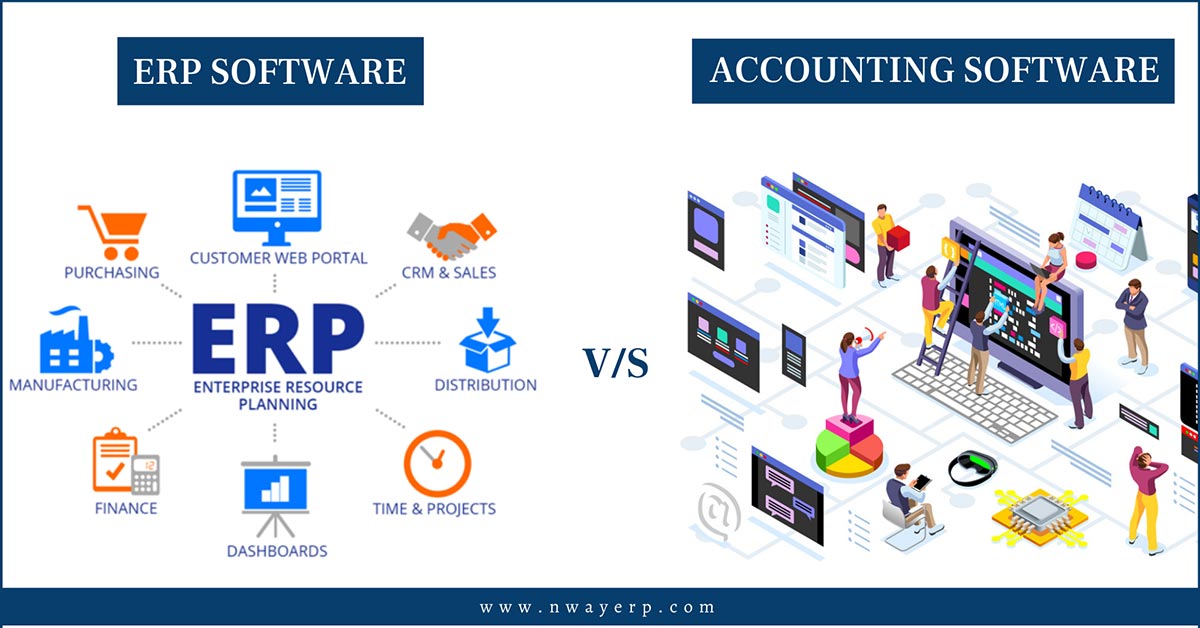 Accounting software and ERP software both help businesses manage financial information, but they solve different problems. Accounting software primarily records financial transactions such as sales, purchases, expenses, GST, receivables, and payments. Construction ERP goes further by connecting finance with project execution, procurement, materials, labour, machinery, subcontractors, billing, and project-wise cost control. For a construction company, the real difference is not simply accounting versus software automation. It is the difference between recording what has already happened and managing the operational activities that affect project cost, progress, and profitability. If you’re running a construction or infrastructure business and still relying on Tally, Busy, or Zoho Books to “manage” the company, you’ve probably already felt the gap: your books look fine, but you have no idea what’s actually happening on your sites in real time. That gap is exactly the difference between accounting software and a construction ERP system—and it’s a decision every growing contractor eventually has to make. Quick answer: Accounting software records what money came in and went out. Construction ERP connects your accounts to your sites, labour, machinery, material, and subcontractors—so you see project profitability, not just company profitability, in real time. If you’re managing more than one site or multiple
 -
Jan 20 2021
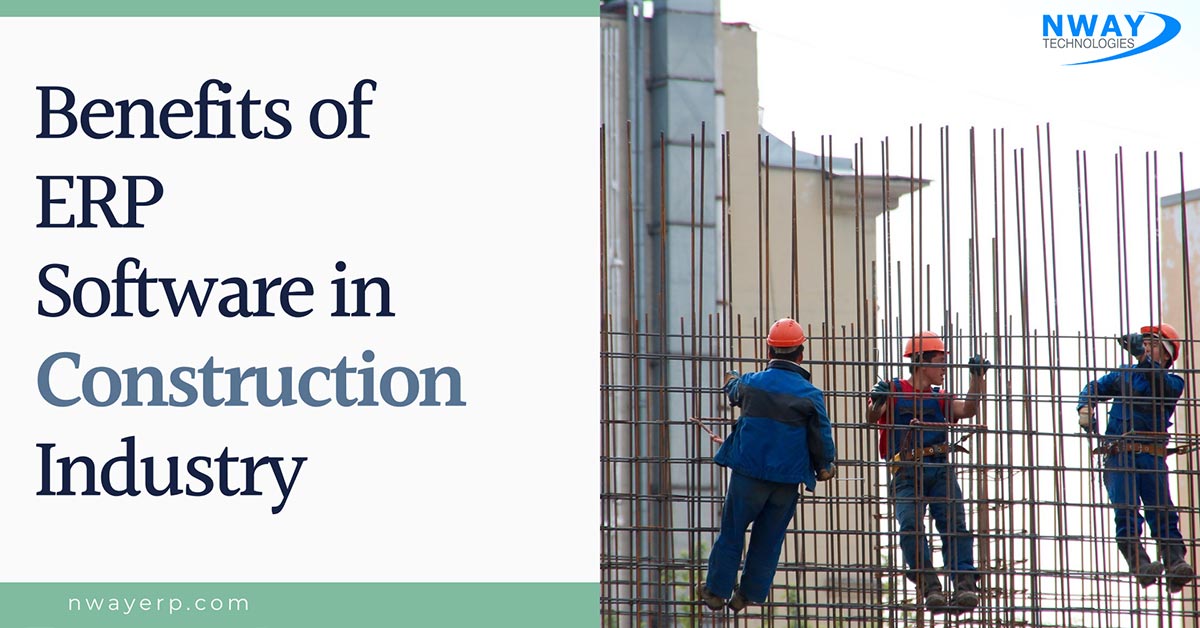 ERP (Enterprise Resource Management) is an integrated process of gathering and organizing business data through a consolidated software suite. Construction ERP Software helps managers to design comprehensive and extensive plans for successful engineering of projects from the beginning of project work till the outcome and during the entire construction lifecycle. Construction Software has been customized in different sectors including sales, material management, tendering, purchase management, general contractors, and many else. ERP Software is an advanced technology software that combines all construction business processes like accounting, payroll, purchase management, inventory management etc in one database and takes care of all the business components by removing paperwork and making manpower more productive. ERP software for the construction industry maintains all the necessary data or information regarding projects, profitability, conversion and revenue generation. Below are the Key Benefits of ERP Software in the Construction Industry: Cost Estimation Implementation of Construction ERP software can reduce your technical costs and enhance workflow in an efficient way. ERP for the construction industry is really helpful in estimating the cost of the project to plan for future work. Construction companies work on a contract basis and before getting tender, they bid for their projects for better cost
 -
Nov 03 2020
 GST e-invoicing is mandatory for eligible registered taxpayers whose aggregate annual turnover (AATO) is ₹5 crore or more in any applicable financial year from FY 2017-18 onwards. The ₹5 crore threshold came into effect on 1 August 2023. E-invoicing requires eligible B2B invoices and specified documents to be reported to an Invoice Registration Portal (IRP), where an Invoice Reference Number (IRN) and signed QR code are generated. Businesses with AATO of ₹10 crore or more must also comply with the 30-day e-invoice reporting restriction introduced from 1 April 2025. What Is E-Invoicing Under GST? E-invoicing does not simply mean creating an invoice electronically or sending a PDF invoice to a customer. Under the GST e-invoicing system, eligible businesses first prepare an invoice using their accounting, ERP or billing system. The required invoice information is then reported to an authorised Invoice Registration Portal (IRP). After the information is successfully validated, the system generates an Invoice Reference Number (IRN) and a digitally signed QR code. These details become part of the valid e-invoice. The IRP also passes relevant invoice information to the GST system, helping reduce duplicate data entry during GST reporting. In simple terms, the process works like this: Business Billing