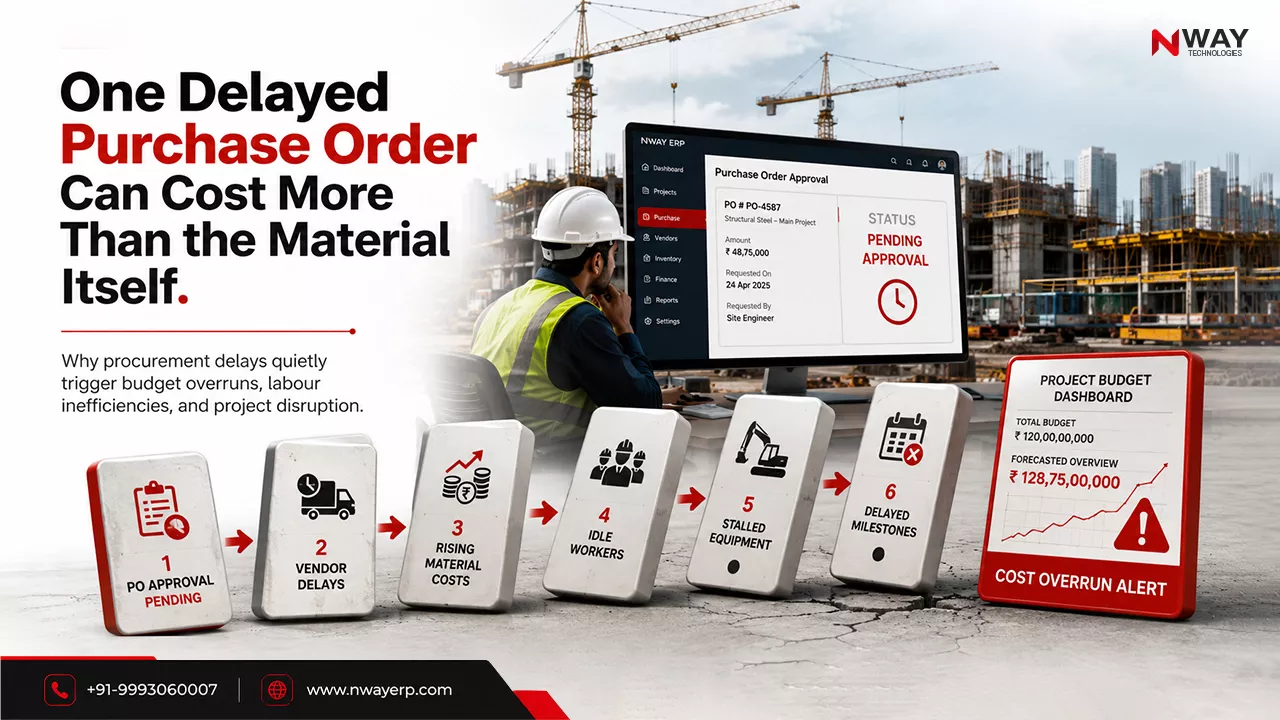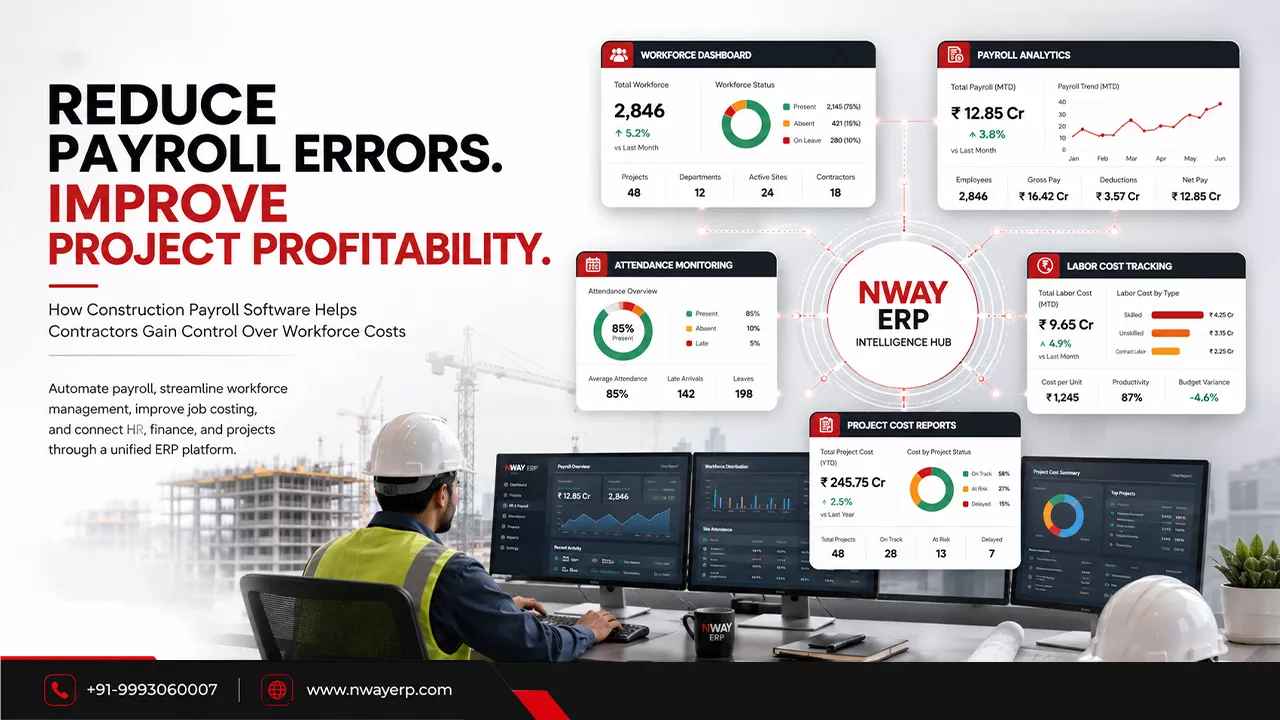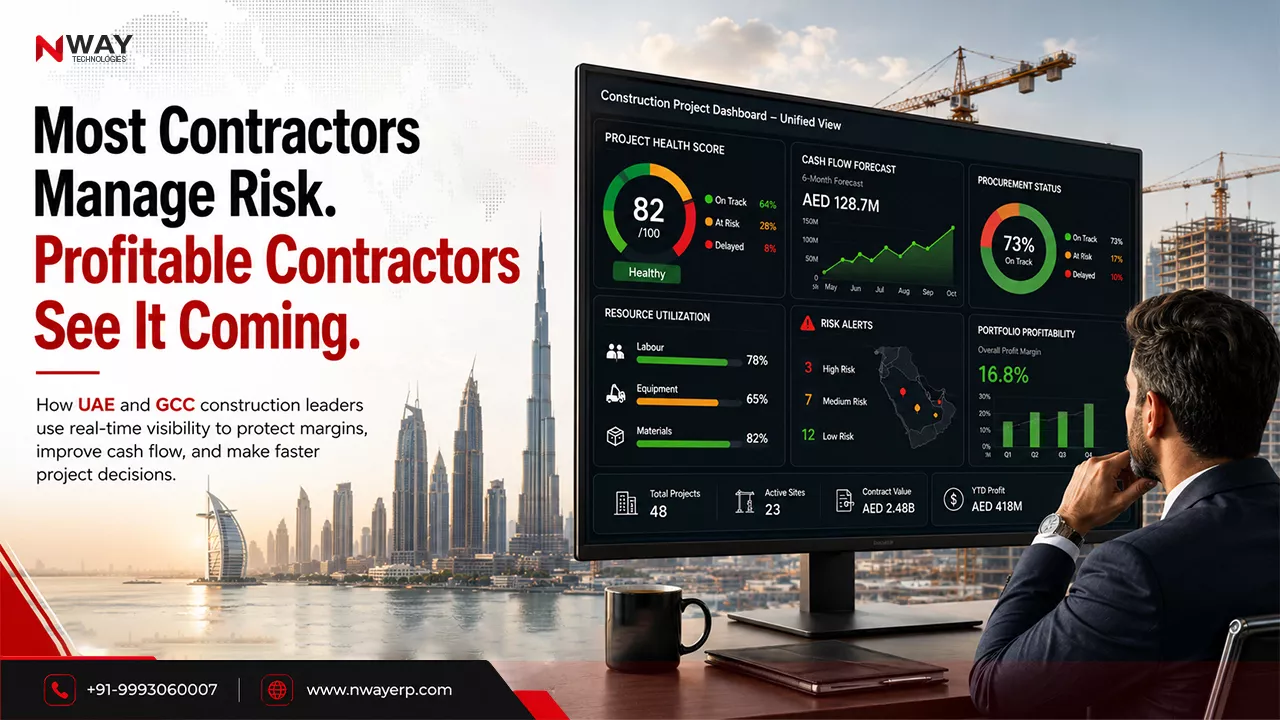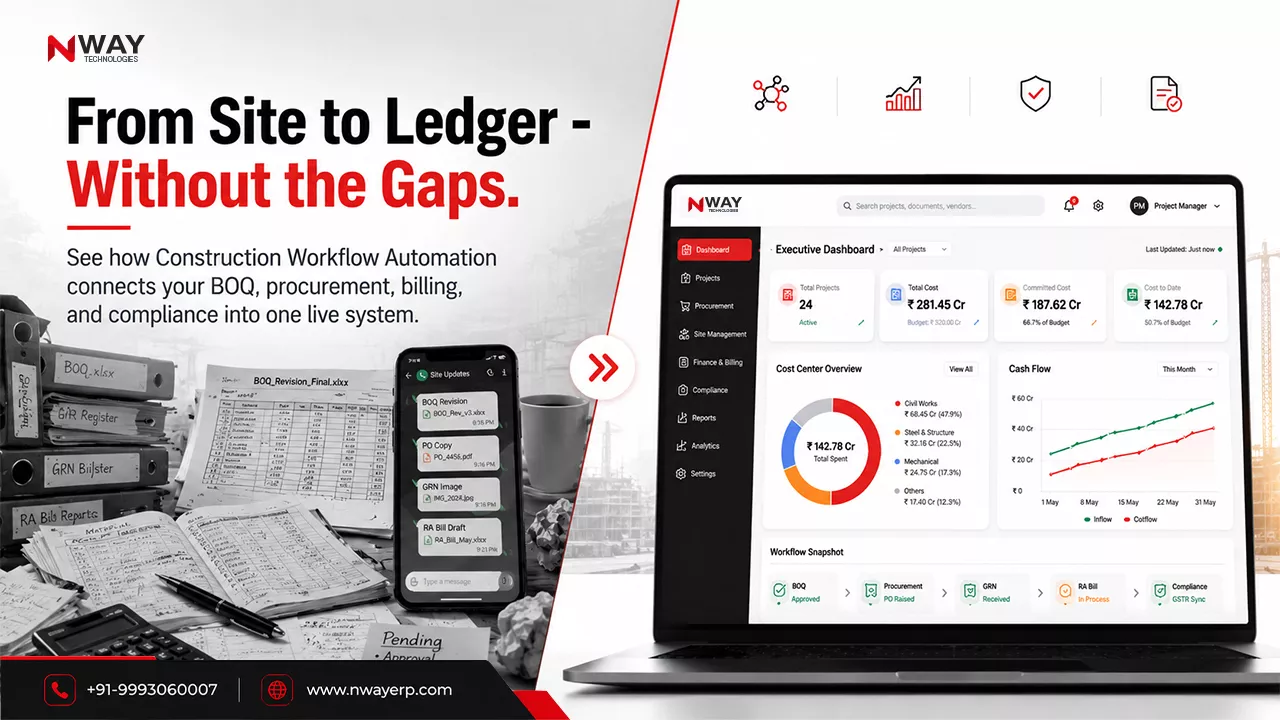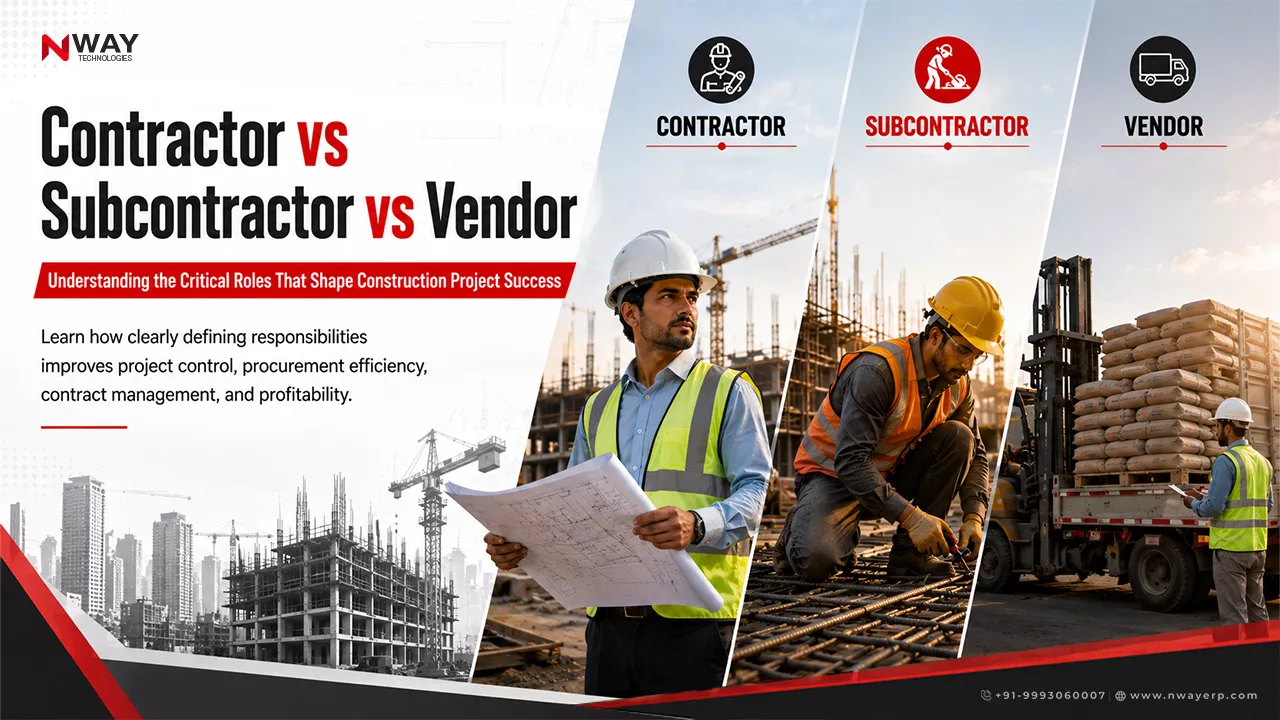
In every construction project, multiple parties work together to ensure successful delivery. However, many delays, billing disputes, and procurement challenges arise because businesses do not fully understand the contractor vs subcontractor relationship or the role of a vendor in construction. Understanding the subcontractor meaning in construction and vendor meaning in business is essential for effective project execution.
A contractor manages the overall project, a subcontractor handles specialized work, and a vendor supplies materials or services. Clearly defining these roles helps improve contract management, cost control, and construction procurement management while reducing project risks and delays.
For construction companies managing multiple sites, understanding contractor, subcontractor, and vendor responsibilities is critical for maintaining profitability and operational efficiency.
Table of Contents:
- One Project, Three Roles, and Too Much Confusion
- Why Role Clarity Is Critical in Construction
- What Is a Contractor in Construction?
- Subcontractor Meaning in Construction
- Vendor Meaning in Construction
- What Is Contract Management in Construction?
- Why This Difference Matters More Than You Think
- Conclusion
One Project, Three Roles, and Too Much Confusion
In a construction project, everything looks structured on paper: BOQs are approved, timelines are defined, and budgets are allocated. Yet, somewhere between procurement, execution, and billing, things begin to slip; cost overruns increase, delays stack up, and accountability becomes unclear.
More often than not, the root cause isn’t poor execution, it’s role confusion.
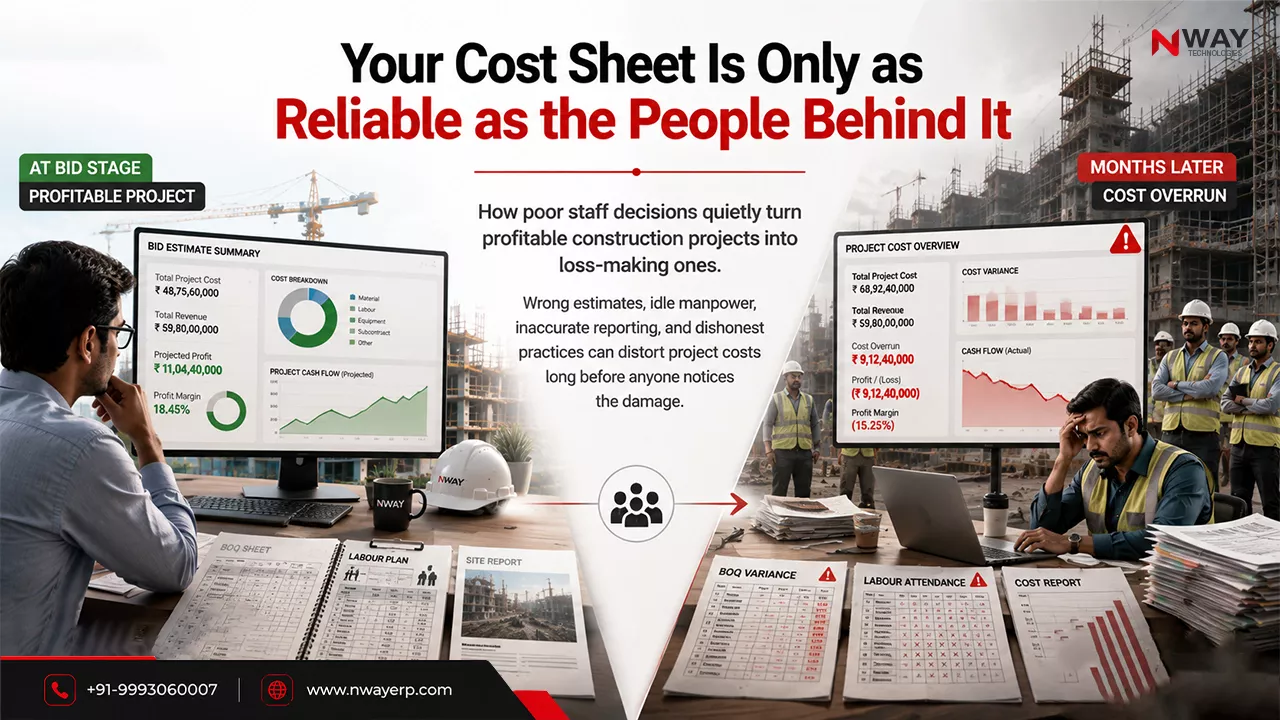
Misunderstanding the difference between a contractor, subcontractor, and vendor creates gaps in contract management, cost tracking, and project coordination. And in an industry where margins are already tight, these gaps can quietly erode profitability.
This is why understanding contractor vs subcontractor relationships and where vendors fit into the equation is not just theoretical knowledge, it’s operational clarity.
Why Role Clarity Is Critical in Construction
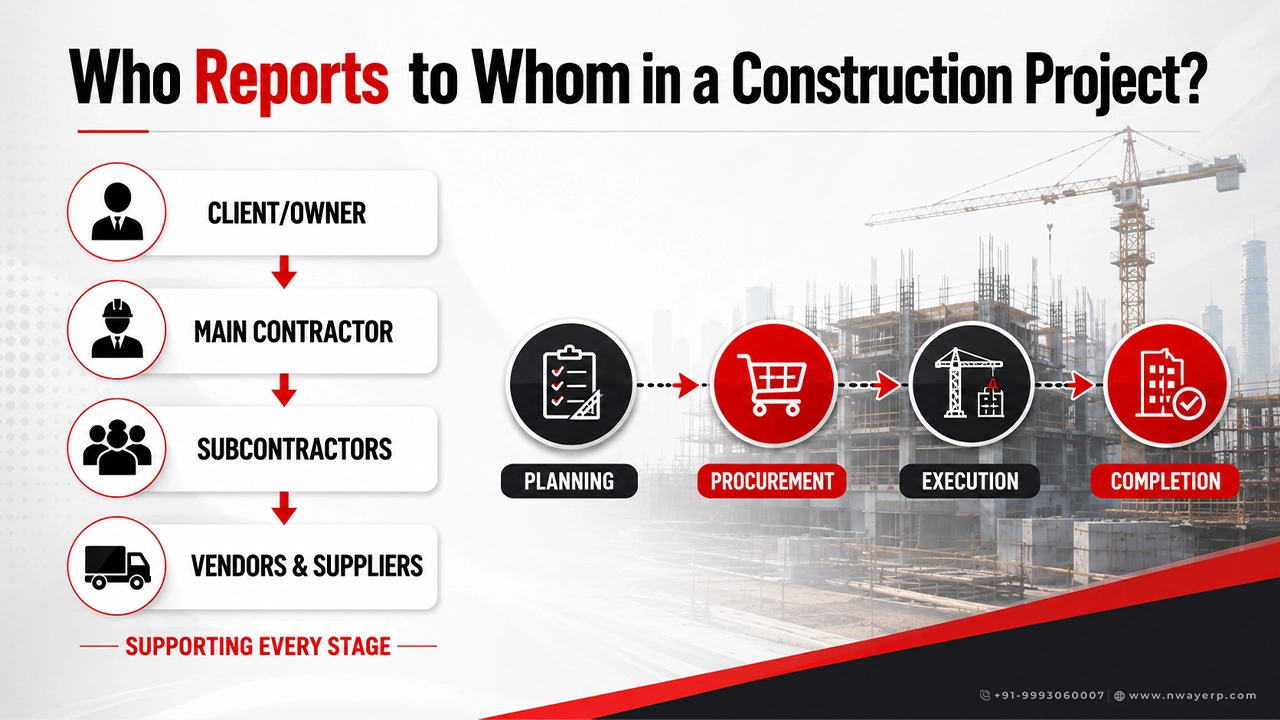
Construction projects involve multiple stakeholders across planning, procurement, execution, billing, and closure. The larger the project, the more layered these relationships become.
A contractor may be responsible for overall project delivery. Several subcontractors may handle civil, electrical, plumbing, finishing, or HVAC packages. Vendors may supply cement, steel, equipment, logistics, fuel, or digital services.
When these roles are not clearly defined:
- procurement workflows become inconsistent
- BOQ vs actual cost deviations increase
- payment cycles get delayed or misclassified
- compliance documentation becomes fragmented
- accountability becomes difficult to track
In short, unclear role mapping leads to weak project governance.
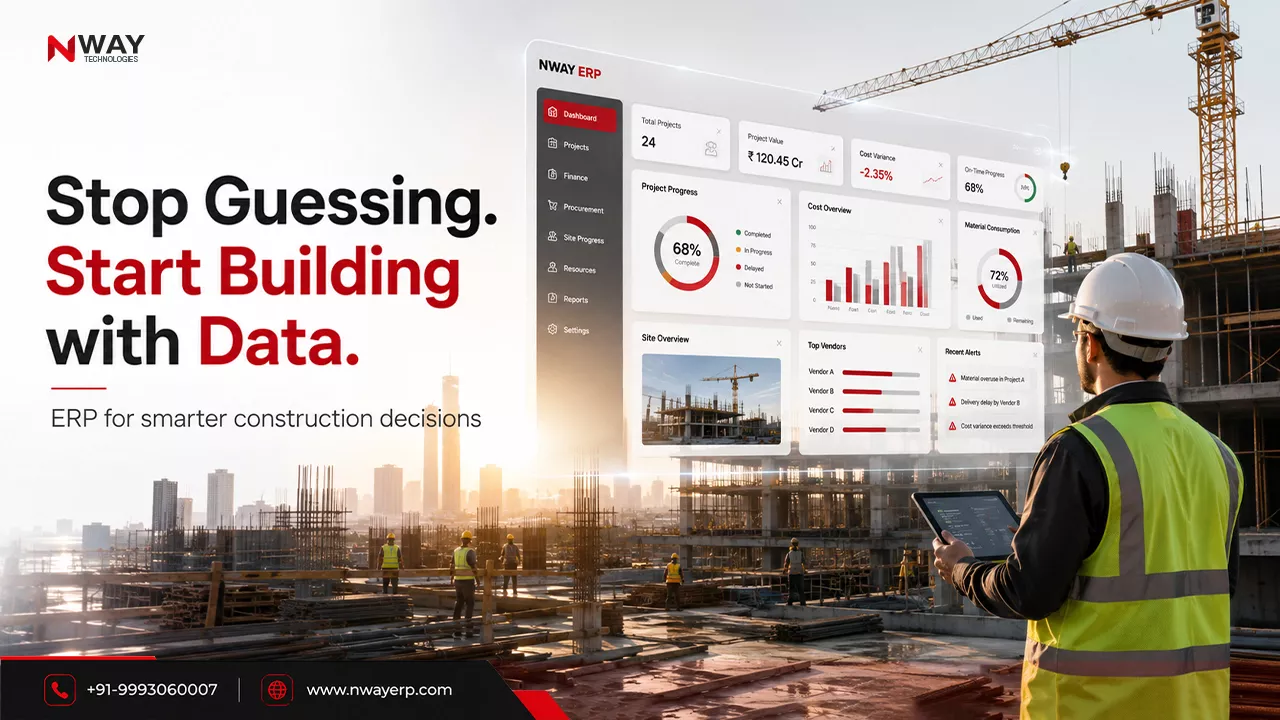
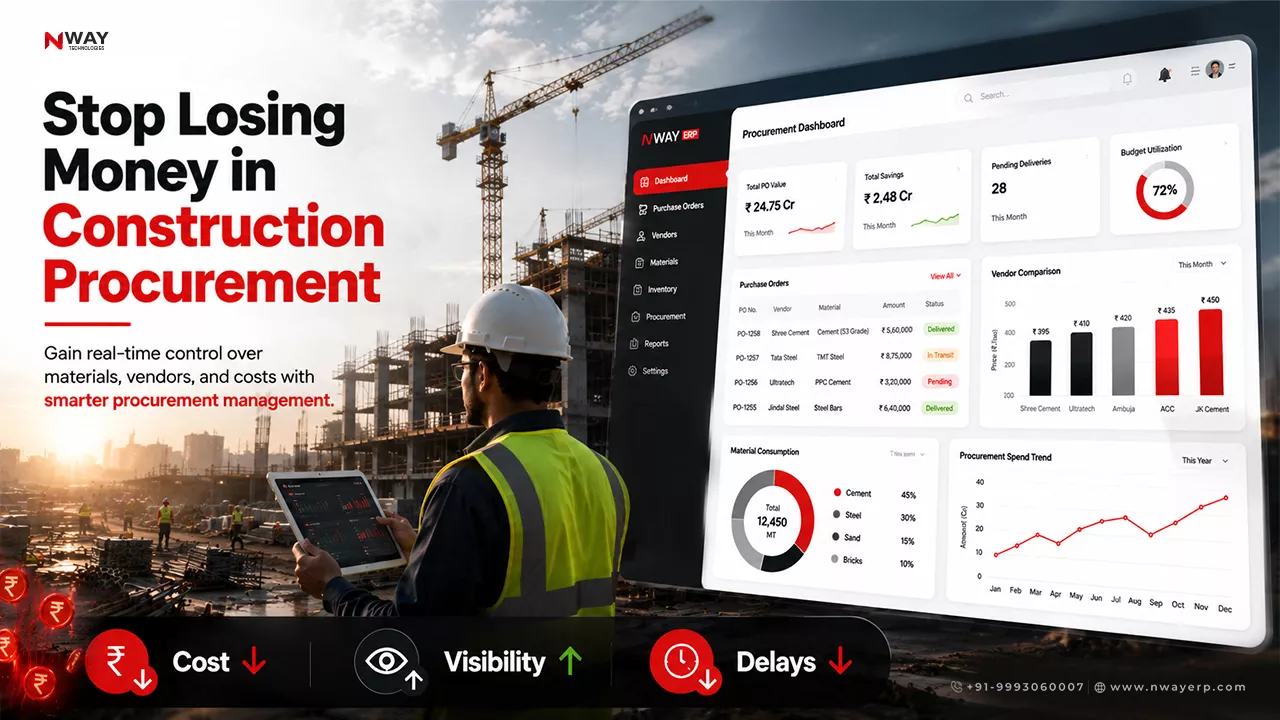
For this reason, companies investing in digital construction systems are increasingly linking role classification with procurement automation, contract workflows, vendor management, and cost control, exactly where ERP creates value through streamlined purchase management workflows and structured construction procurement management.
If you’re still evaluating which systems can support this level of clarity, our complete guide to construction ERP software in India breaks down the features and capabilities to look for.
What Is a Contractor in Construction?
A contractor usually referred to as a general contractor (GC) is the primary entity responsible for delivering the project.
Key Responsibilities:
- End-to-end project execution
- Budgeting and cost control
- Managing BOQ and project milestones
- Hiring subcontractors and coordinating activities
- Ensuring regulatory and safety compliance
A contractor works directly with the project owner and is accountable for timelines, quality, and adherence to budget.
Types of Contractors in the Construction Industry
- General Contractors
- Specialty Contractors (Electrical, HVAC, Civil)
- Design-Build Contractors
- Civil Infrastructure Contractors (roads, bridges, dams)
In short: The contractor owns the project outcome.
Subcontractor Meaning in Construction
A subcontractor is hired by the contractor, not by the client, to perform a specific portion of the work.
Examples:
- Electrical subcontractor
- Plumbing subcontractor
- Concrete or masonry specialist
- HVAC contractor
Key Characteristics:
- Works under a defined scope
- Has direct contractual agreement with the contractor
- Responsible only for their deliverables, not the entire project
- Provides specialized skills and expertise
Subcontractors execute focused tasks (like wiring or flooring) that contribute to the overall project, and their crews are typically coordinated through labour management processes that run alongside the main project schedule.
In simple terms: The subcontractor owns a part of the project.
Vendor Meaning in Construction
A vendor in construction is typically a supplier of goods or services, but without involvement in project execution.
Examples:
- Cement or steel suppliers
- Equipment rental providers
- Software or service vendors
- Fuel or logistics vendors
Key Characteristics:
- Supplies goods/services (not execution)
- Usually no direct contract with the project owner
- Relationship is transactional
- Paid based on delivery or purchase orders
A vendor provides inputs, not outcomes.
Simply put: A vendor supports the project but doesn’t build it.
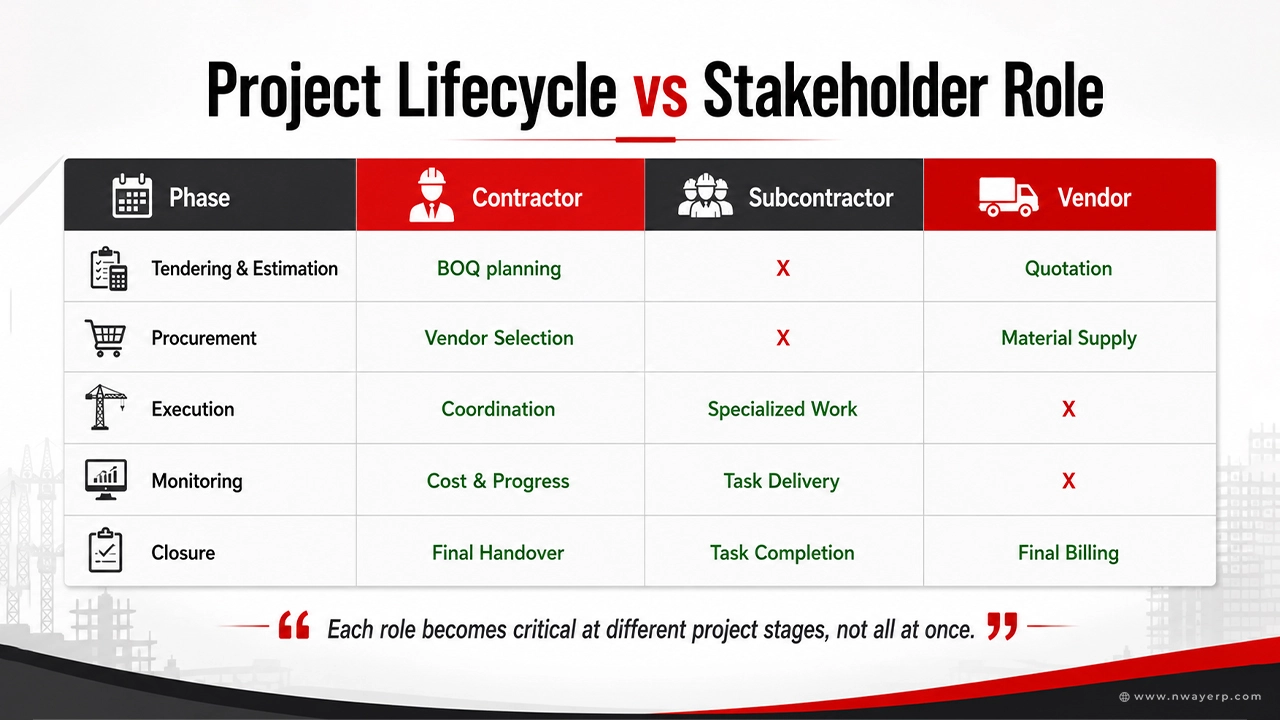
Contractor vs Subcontractor vs Vendor (Quick Comparison)
| Factor | Contractor | Subcontractor | Vendor |
|---|---|---|---|
| Relationship | Direct with client | With contractor | Transactional with contractor |
| Role | Full project delivery | Partial execution | Supplies goods/services |
| Accountability | Entire project | Specific tasks | Delivery & quality of goods |
| Contract Type | Main contract | Subcontract agreement | Purchase/Supply Agreement |
| Involvement | Planning + execution | Execution Only | Supply Only |
Want better control over subcontractor and vendor workflows? Look how construction ERP simplifies procurement and contract tracking.
Difference Between Vendor and Supplier in Construction
The terms “vendor” and “supplier” are often used interchangeably, but they are not identical.
Key Differences:
- Supplier: Provides raw materials or inputs (e.g., steel, aggregates)
- Vendor: Sells finished goods or services to businesses or end-users
Example:
- A steel manufacturer delivering bulk raw steel → Supplier
- A company selling ready-to-use construction equipment → Vendor
Understanding this distinction helps optimize procurement strategies and contract structuring.
What Is Contract Management in Construction?
Contract management refers to the process of creating, monitoring, and enforcing agreements with contractors, subcontractors, and vendors.
Core Elements:
- Scope definition
- BOQ alignment
- Cost commitments
- Change order tracking
- Payment milestones
- Compliance and documentation
Construction projects run on multiple contracts simultaneously, each with different risks and financial implications.
Why This Difference Matters More Than You Think
Cost Control & Budget Accuracy
Misclassifying a subcontractor as a vendor can result in:
- Missing labor cost tracking
- Incorrect BOQ allocations
- Poor visibility into committed vs actual cost
Procurement Efficiency
Vendors and subcontractors require different procurement workflows:
- Vendors → Purchase orders
- Subcontractors → Contract agreements
Without this distinction, procurement becomes fragmented, leading to inefficiencies.
Risk & Liability Management
- Contractors → Full project liability
- Subcontractors → Task-specific liability
- Vendors → Product/service quality liability
Incorrect role mapping can expose companies to compliance risks.
Project Scheduling & Execution
Subcontractors directly impact project timelines, while vendors impact supply availability. Treating both the same disrupts scheduling logic.
Real-World Use Case
Scenario: A Commercial Building Project
- Contractor: Manages the entire project lifecycle
Subcontractors:
- Electrical team handles wiring
- Civil team executes foundation work
Vendors:
- Cement supplier
- Equipment rental company
Problem Without Clarity:
- Cement vendor invoices incorrectly mapped as subcontractor costs
- Electrical subcontractor payments processed like vendor invoices
- Result → Cost misallocation and delayed reporting
With Proper Classification (ERP-enabled):
- Clear contract mapping
- Automated cost tracking per BOQ
- Real-time visibility into project margins
Where ERP Becomes a Gamechanger
Construction ERP systems unify:
- Procurement workflows (vendor vs subcontractor distinction)
- Contract management (scope, billing, compliance)
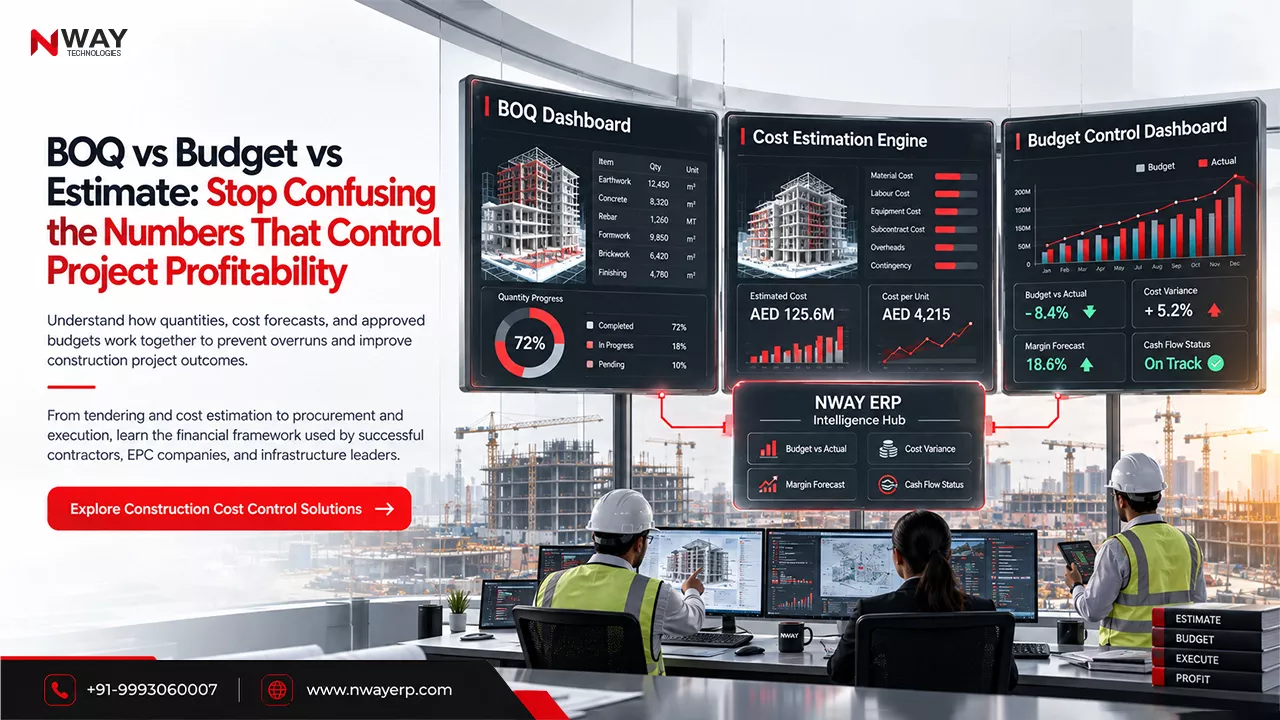
- Cost tracking (BOQ vs actual)
- Vendor & subcontractor management
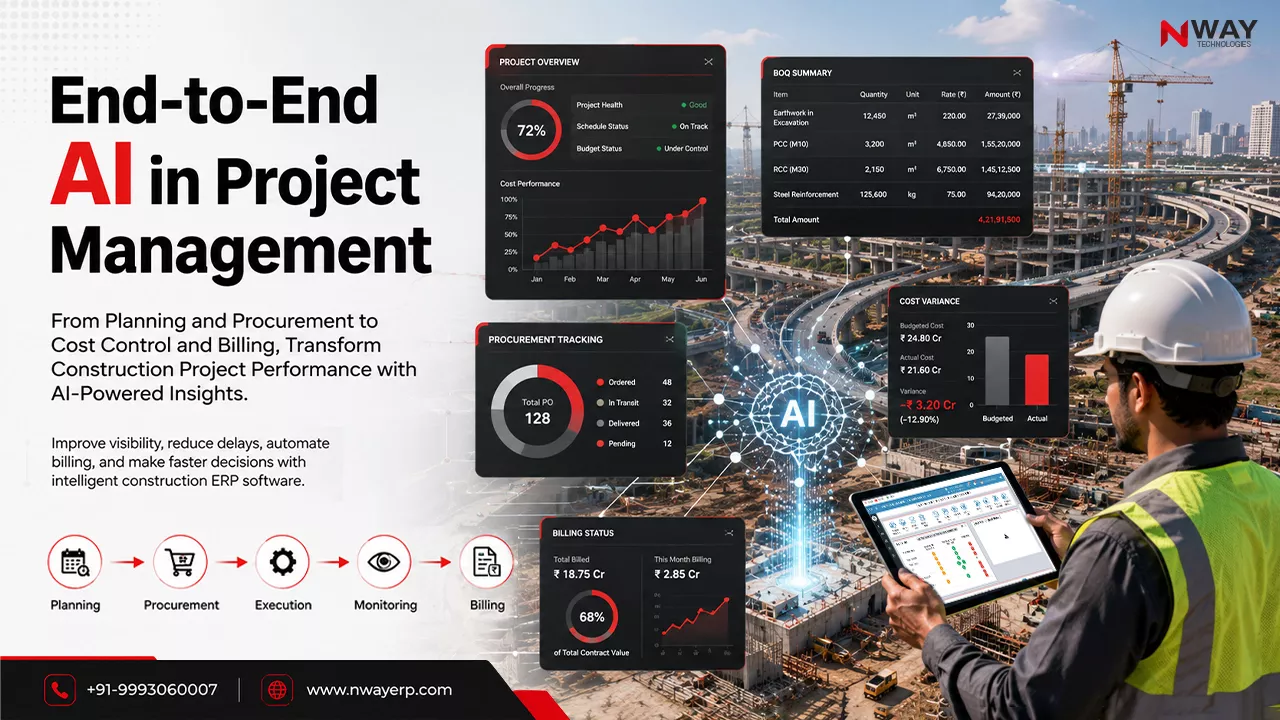
Modern ERP platforms help standardise purchase approvals, track subcontractor obligations, and provide real-time cost visibility across projects.
They eliminate:
- Manual errors
- Duplicate records
- Disconnected workflows
And enable:
- Better decision-making
- Improved profitability
- Scalable operations
Point to focus on
- Contractor vs subcontractor clarity improves project execution efficiency
- Subcontractors execute work; vendors supply materials
- Vendor vs supplier distinction impacts procurement strategy
- Contract management is critical in multi-party construction projects
- ERP helps unify procurement, finance, and project workflows
Conclusion
In construction, success is not just about execution; it’s about clarity.
Understanding the difference between a contractor, subcontractor, and vendor is foundational to:
- Efficient procurement
- Accurate cost tracking
- Strong contract governance
- On-time project delivery
When these roles are clearly defined and systematically managed, projects move from reactive execution to controlled, predictable outcomes supported by AI-powered procurement and purchasing automation.
Ready to bring structure to your project lifecycle? See how ERP can streamline your operations