Introduction
Managing a construction project today is not just about timelines, BOQs, and site execution; it’s equally about navigating complex taxation.
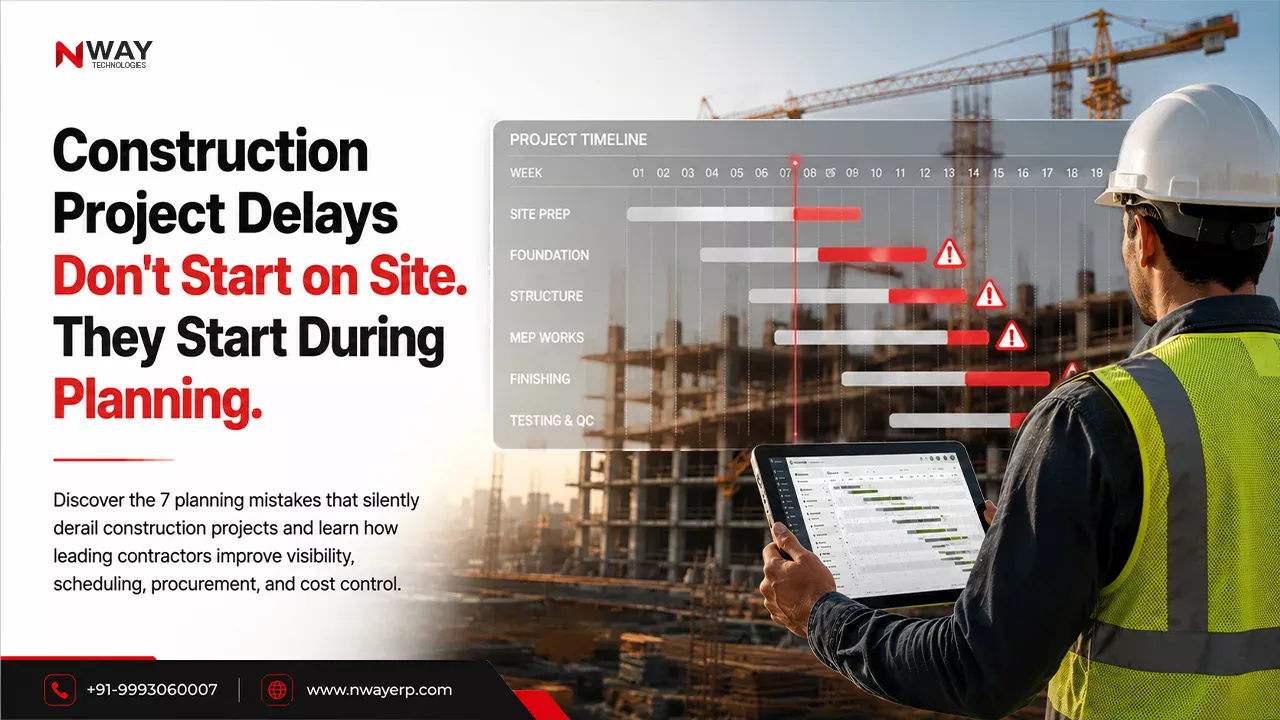
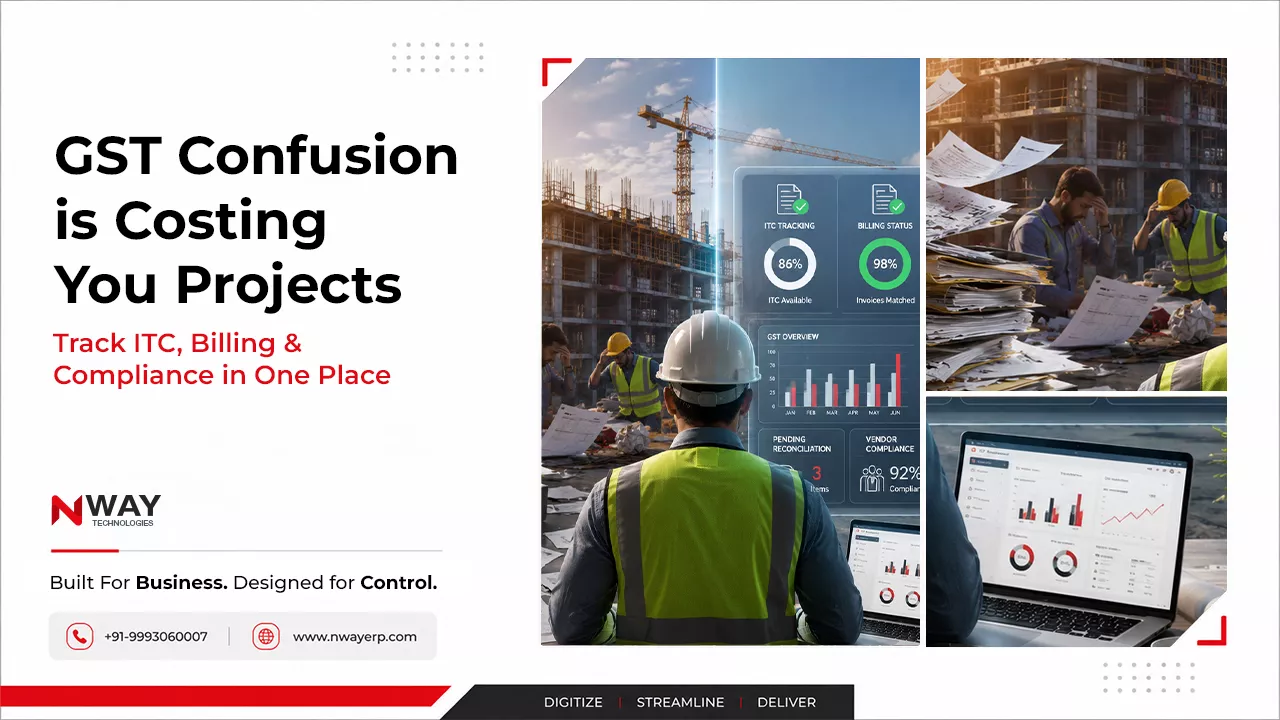
From multi-stage invoicing to tracking input tax credit (ITC) across vendors, GST in construction has introduced both transparency and complexity. For contractors, builders, and project managers, even a small compliance gap can lead to cost leakages, blocked ITC, or legal risks. These issues are among the common challenges in construction management that contractors and builders face while handling taxation, procurement, and project execution.
The challenge isn’t GST itself; it’s managing GST across fragmented project workflows.
Table of Contents:
- Construction-Specific Challenges
- What is Works Contract GST in India?
- The Challenges in Practical Terms
- How ERP Solves GST in Construction
- How NWAY ERP makes a difference here
- Conclusion
Understand GST in construction including ITC rules, contractor billing, and compliance. Learn how to simplify GST management across projects.
Construction-Specific Challenges
Construction is inherently multi-layered:
- Multiple subcontractors and vendors
- Distributed procurement across sites
- Project-based revenue recognition
- Complex BOQ-based invoicing
- Long project lifecycles
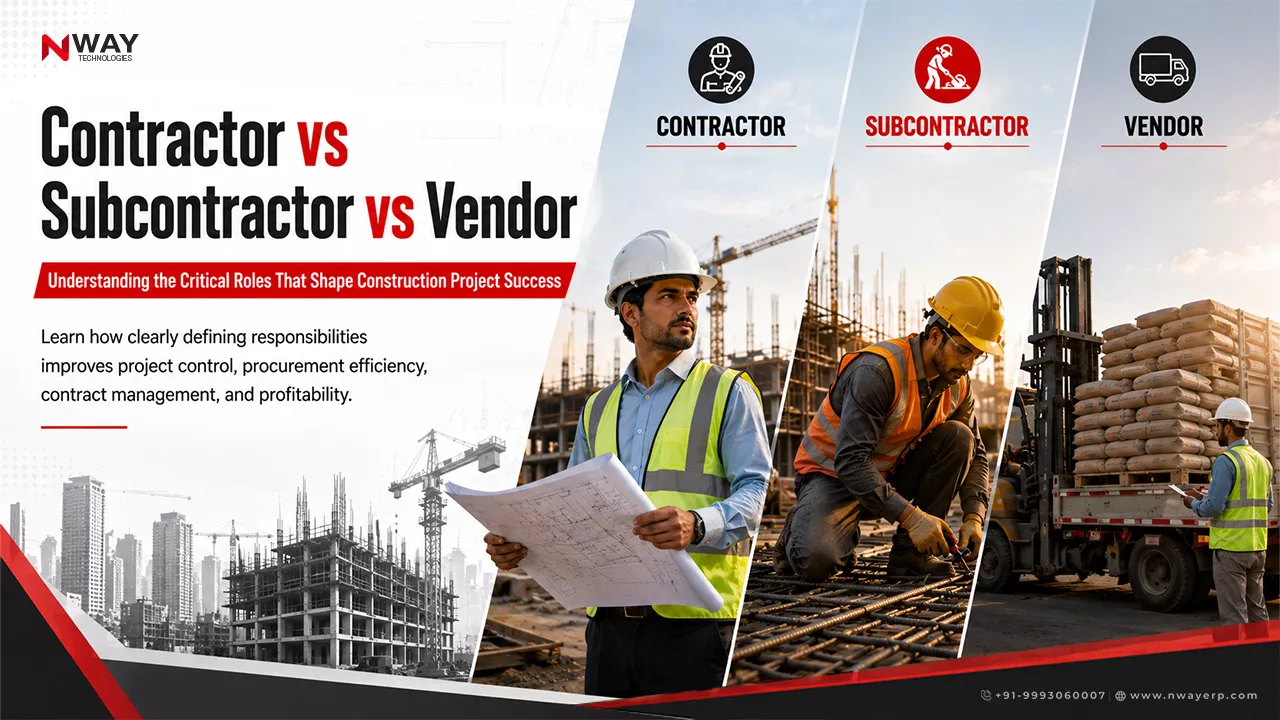
Managing relationships between contractor vs subcontractor vs vendor is critical because each stakeholder affects GST liability, invoicing, and ITC eligibility.
Unlike standardized industries, construction deals with dynamic cost structures, where GST impacts:
- Material procurement (cement, steel, etc.)
- Service contracts (labour, consultants)
- Client billing milestones
- Cash flow and working capital
What is Works Contract GST in India?
Under GST, most construction activities fall under “works contract,” defined as contracts involving the construction, installation, or repair of immovable property.
Key implication:
Entire contract = Taxed as a service (not split into goods + labour)
GST on Construction Services
Depending on project type:
- Residential: ~1%–5% (restricted ITC)
- Commercial: ~18% (ITC eligible)
- Government projects: ~12% or concessional rates
Input Tax Credit in Construction
ITC allows businesses to claim tax paid on inputs but with restrictions:
- Allowed: For further supply of works contract services
- Blocked: For self-use construction (offices, assets)
This single rule has huge cost implications.
Limitations
Despite clarity in law, execution is difficult due to:
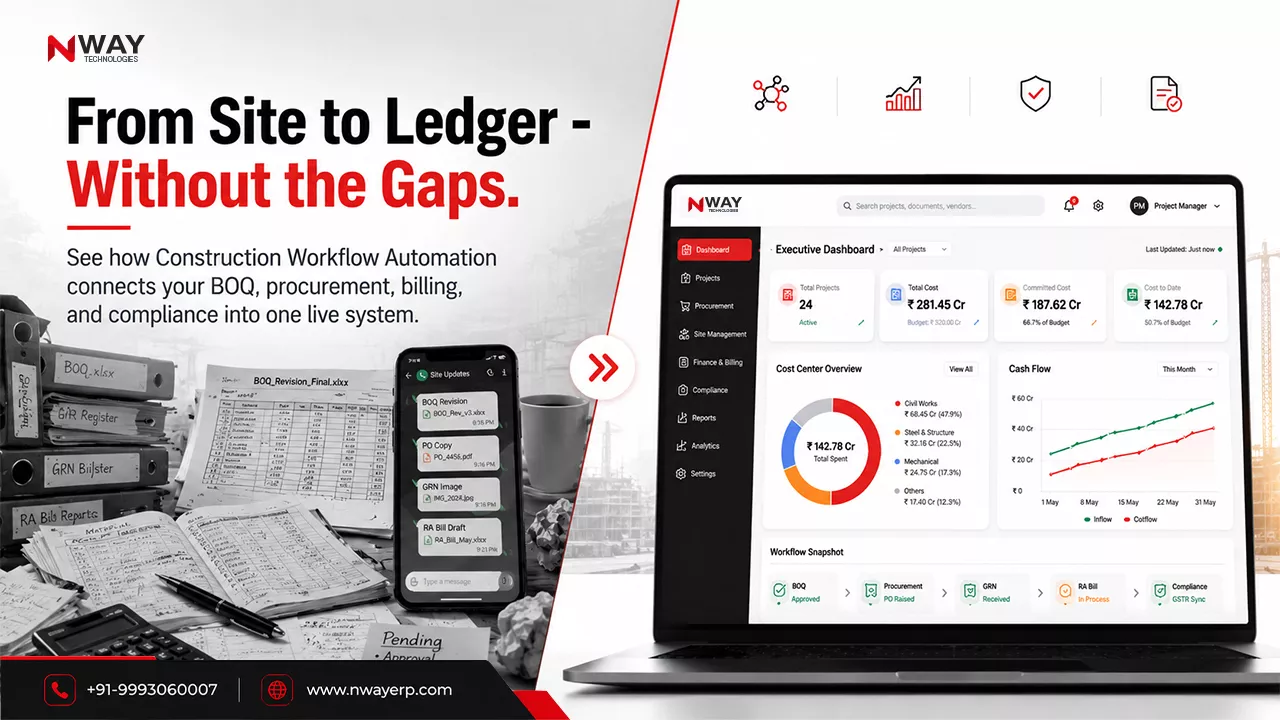
1. Fragmented Billing Systems
Different teams manage:
- BOQ estimation
- Site expenses
- Vendor bills
- Client invoices
Result: GST mismatch and reconciliation issues.
2. ITC Tracking Challenges
- Vendor compliance affects your ITC
- Payment delays beyond 180 days can reverse ITC
- Incorrect classification leads to blocked credits
3. Manual Documentation Gaps
Construction teams still rely on:
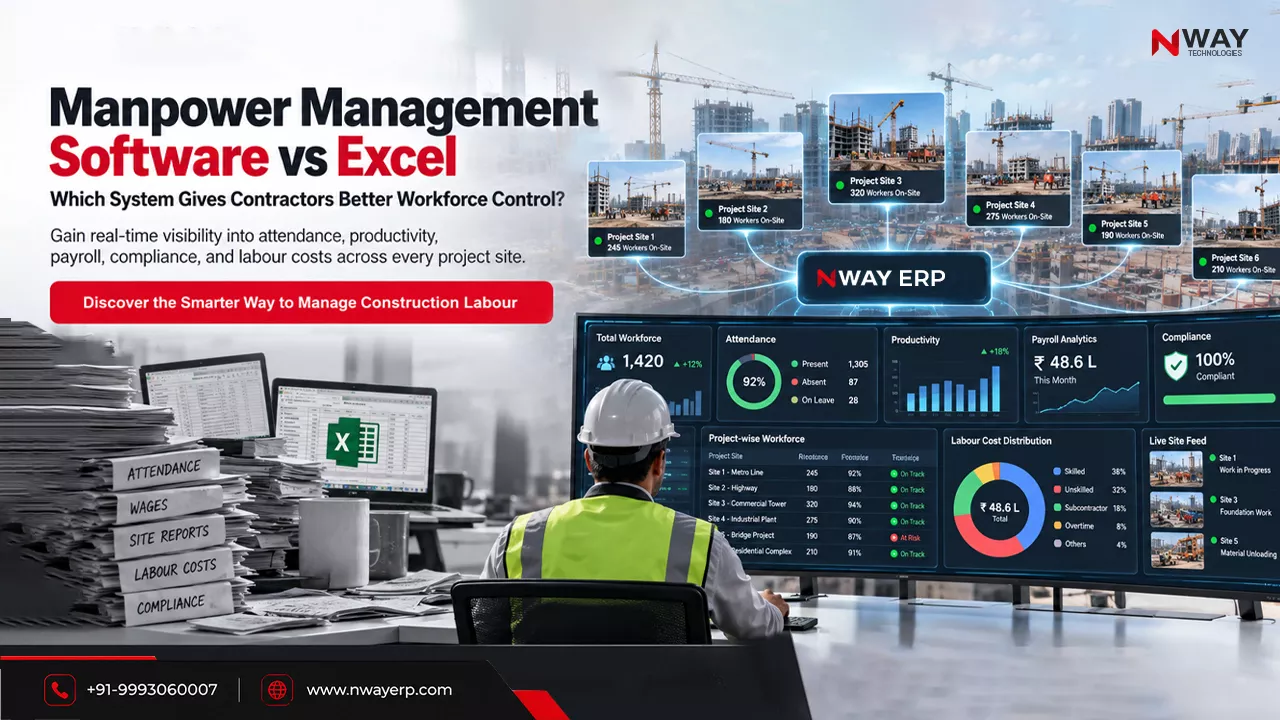
- Excel-based BOQs
- Manual invoice entries
- Disconnected project and finance data
This creates errors in GST reporting. Proper material reconciliation in construction helps ensure purchased quantities, site consumption, and GST records remain aligned.”
4. Compliance Complexity
GST compliance is not just filing returns it starts from invoicing and links to ITC eligibility and audit readiness.
Simplify GST billing, ITC tracking, and compliance with a construction-specific ERP built for real project challenges.
The Challenges in Practical Terms
Let’s break down where construction companies struggle the most:
A. GST Billing for Contractors
- GST must be applied on full contract value
- Milestone-based billing must align with project progress
- Incorrect invoicing impacts revenue recognition
Example: A contractor building a factory must issue GST invoice on each milestone (foundation, structure, finishing) with proper classification.
B. Input Tax Credit Leakages
- ITC blocked for own assets → increases project cost
- Subcontractor ITC needs validation
- Missing invoices → unrecoverable tax
Example: Hiring a subcontractor? You can claim ITC.
Building your office? ITC is blocked.
C. Compliance Across Project Lifecycle
GST applies across:
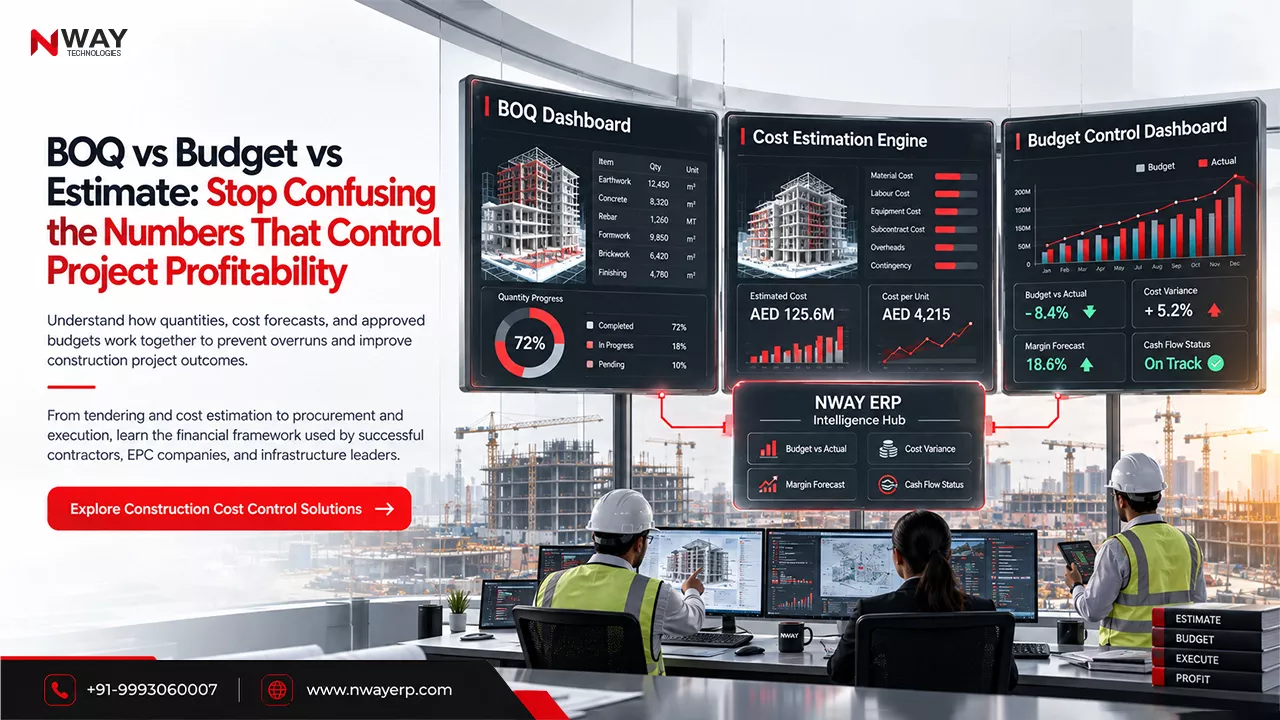
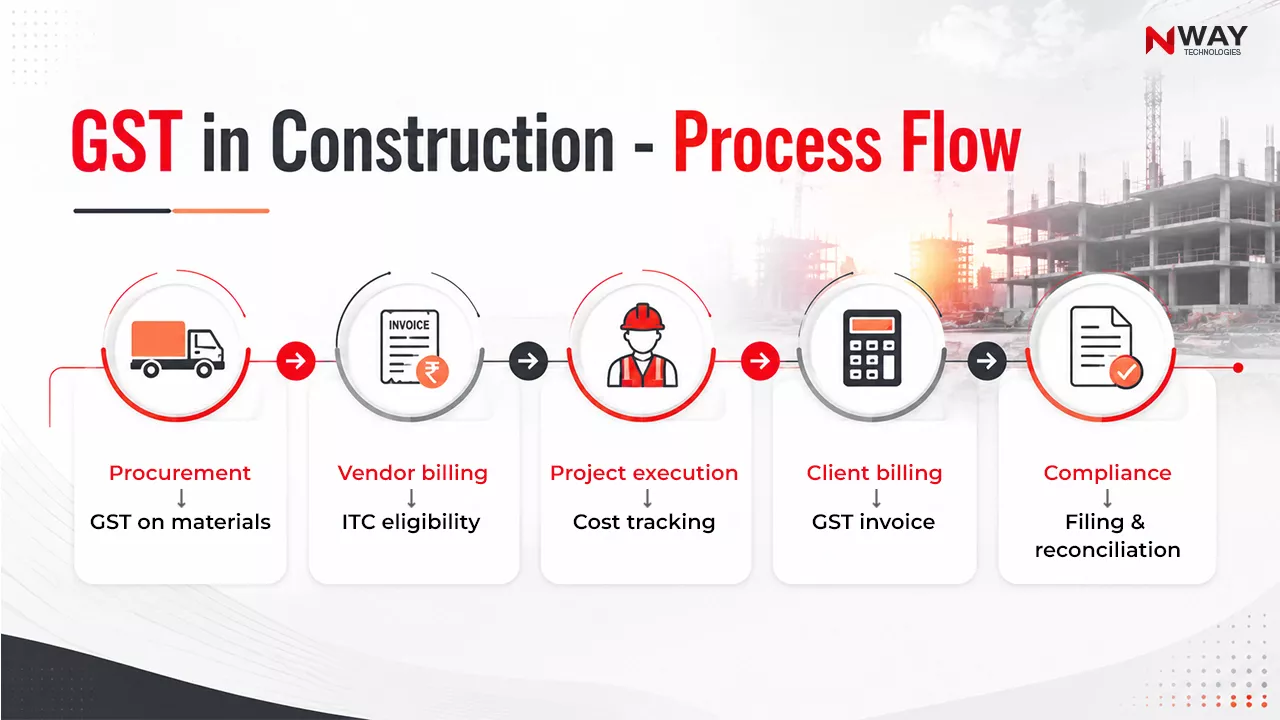
- Tendering through a robust planning and estimation module, procurement, execution, billing, and return filing.
- Procurement (material GST rates)
- Execution (vendor invoices)
- Billing (client invoices)
- Filing (returns & reconciliation)
Even a mismatch at one stage impacts the entire lifecycle.
How ERP Solves GST in Construction
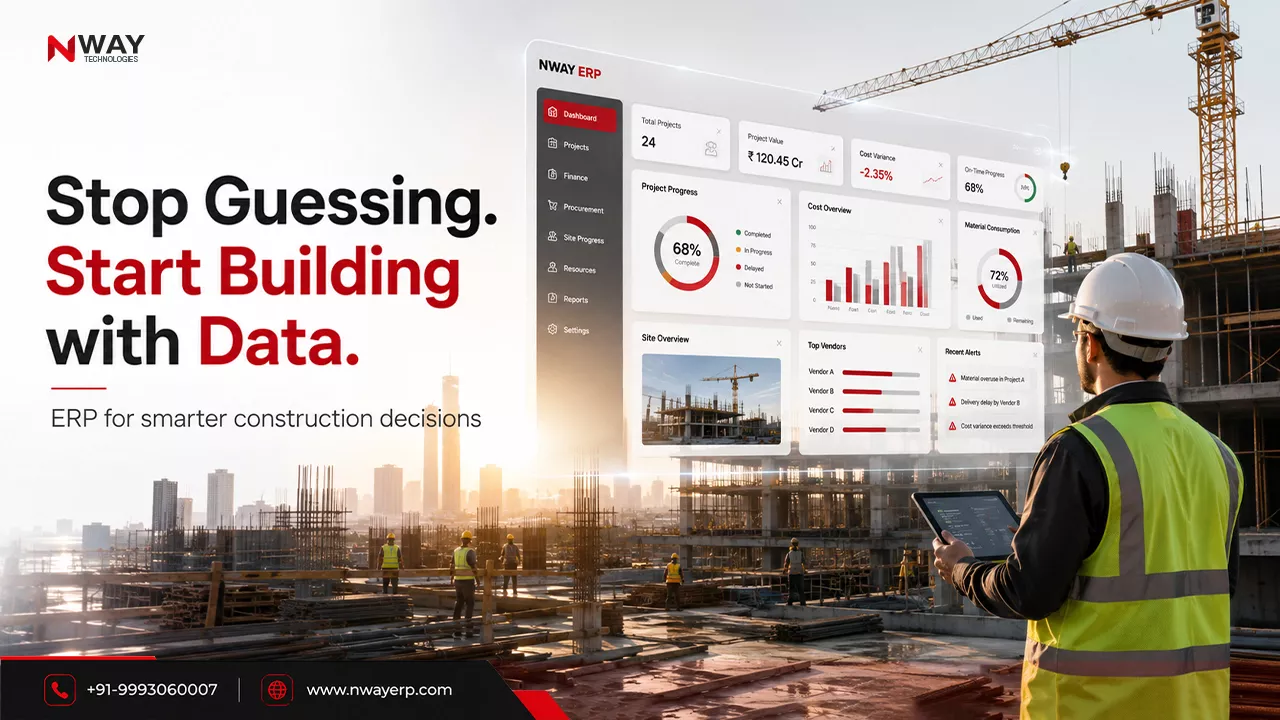
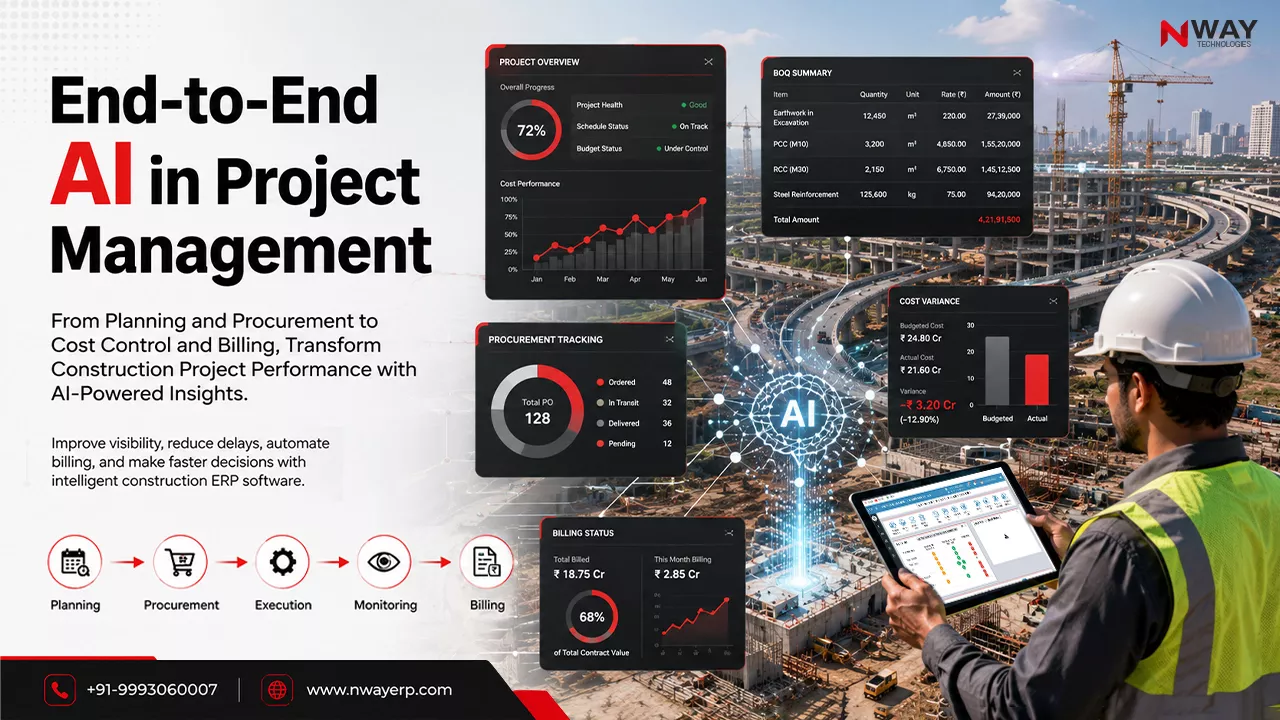
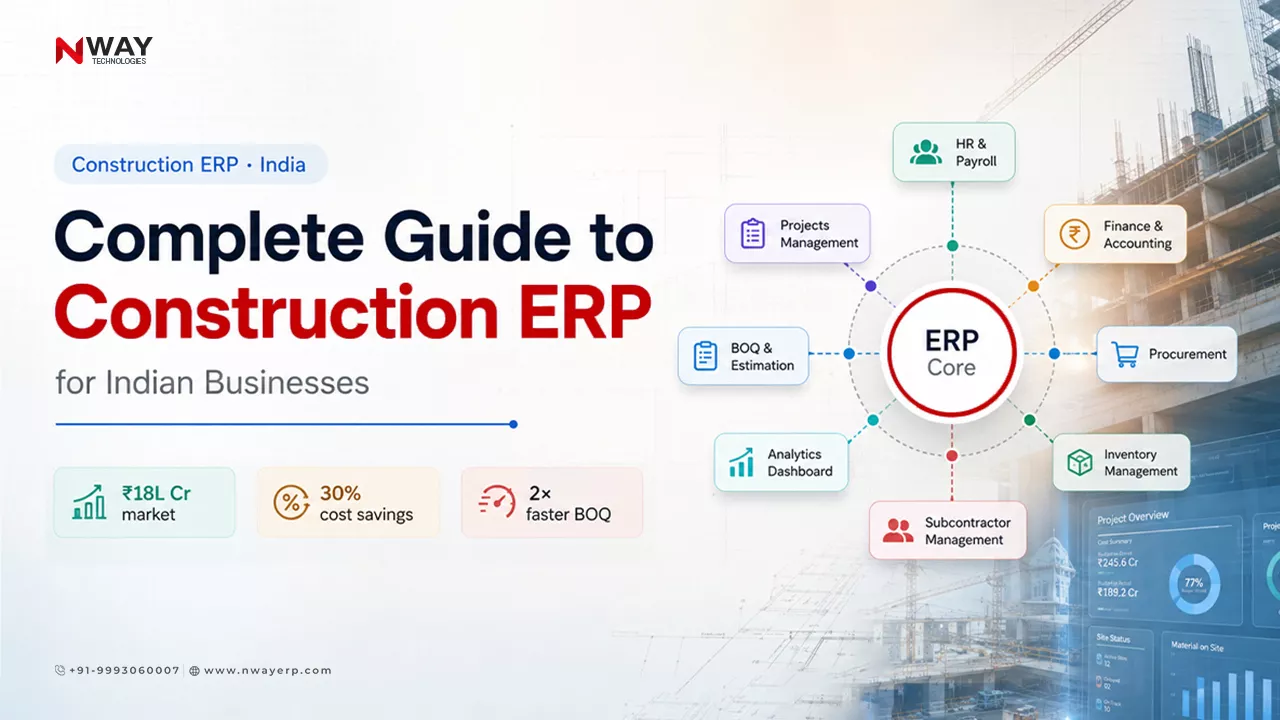
To manage GST effectively, construction firms need integrated systems, not isolated tools. Businesses evaluating digital transformation can refer to this complete guide to construction ERP software in India.
1. Centralized GST-Compliant Billing
- Auto GST calculation across BOQ items
- Correct SAC/HSN mapping
- Milestone-based invoice generation
2. Input Tax Credit Tracking
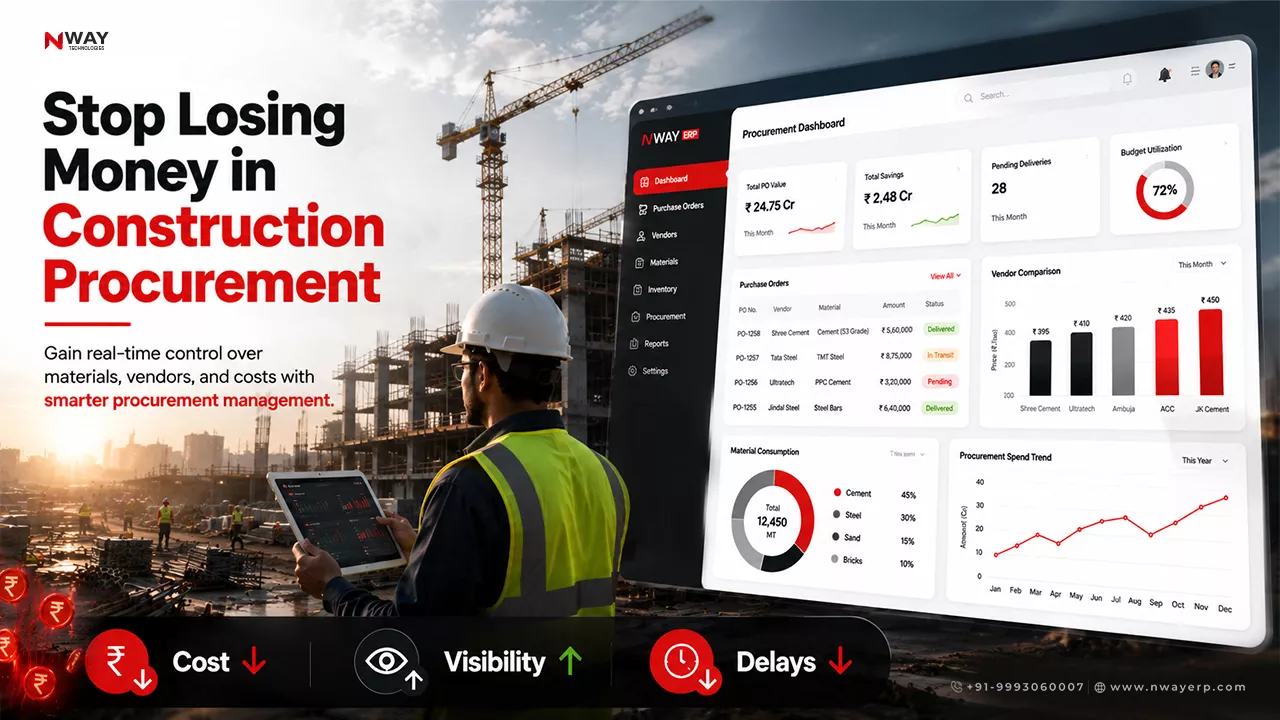
- Vendor invoice reconciliation
- ITC eligibility validation
- Real-time visibility on blocked vs usable ITC
3. Project-Level Cost Tracking
- GST integrated with cost heads
- Site-wise tax impact visibility
- Accurate project profitability
4. Compliance Automation
- GST return-ready reports
- Error detection in invoices
- Audit trails for every transaction
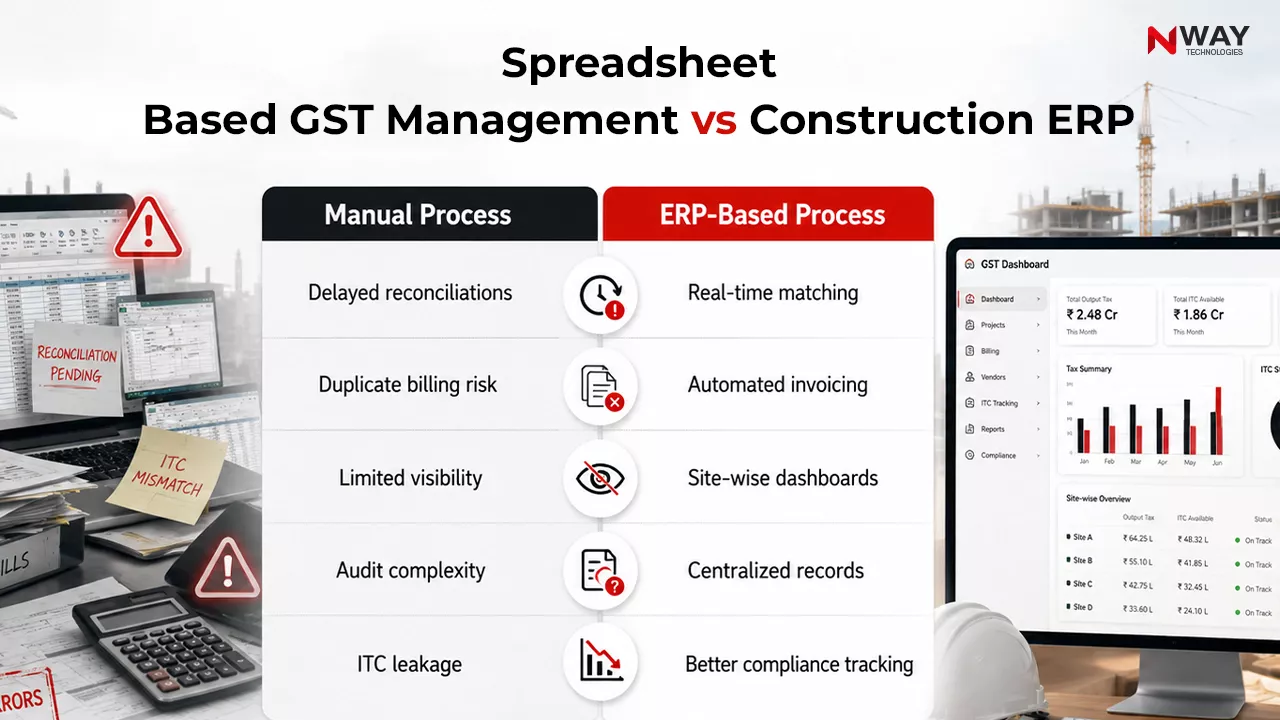
Case Example
Case 1: EPC Contractor Managing Multiple Sites
Without ERP:
- Separate Excel files per site
- ITC mismatch across projects
With system:
- Central GST tracking → better cash flow control
Case 2: Builder Handling Subcontractors
Problem:
Delayed invoices → ITC loss
Solution:
- Automated vendor compliance tracking
- Alerts for ITC eligibility windows
Case 3: CFO Managing Project Profitability
Without GST visibility:
- Profit margins unclear
With ERP integration:
- GST impact included in cost tracking
- Accurate project-level EBITDA
How NWAY ERP makes a difference here
Unlike generic accounting software, construction ERP platforms like NWAY ERP are designed around:
- BOQ-driven billing workflows
- Project lifecycle tracking
- Multi-site GST compliance
- User-based pricing
This ensures that GST is not just a finance function but integrated into operations, procurement, and execution.
Point to focus on
- GST in construction classifies most activities as works contract services
- ITC is restricted especially for self-use construction
- Billing must align with project milestones and GST rules
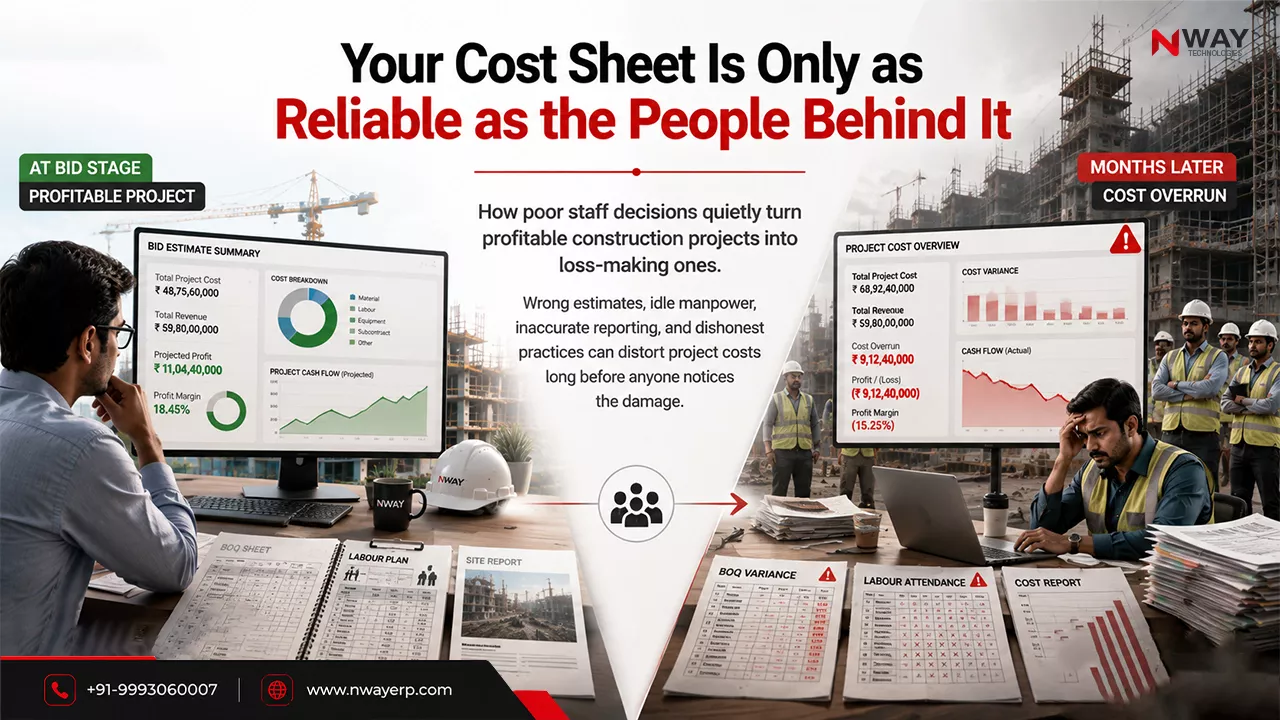
- Manual systems create ITC losses and compliance risks
- ERP integration improves visibility, control, and accuracy
Conclusion
GST in construction has simplified taxation at a macro level, but operational complexity remains high.
For contractors and project stakeholders, the real challenge is not understanding GST rules it’s managing GST across dynamic, multi-layered project environments.
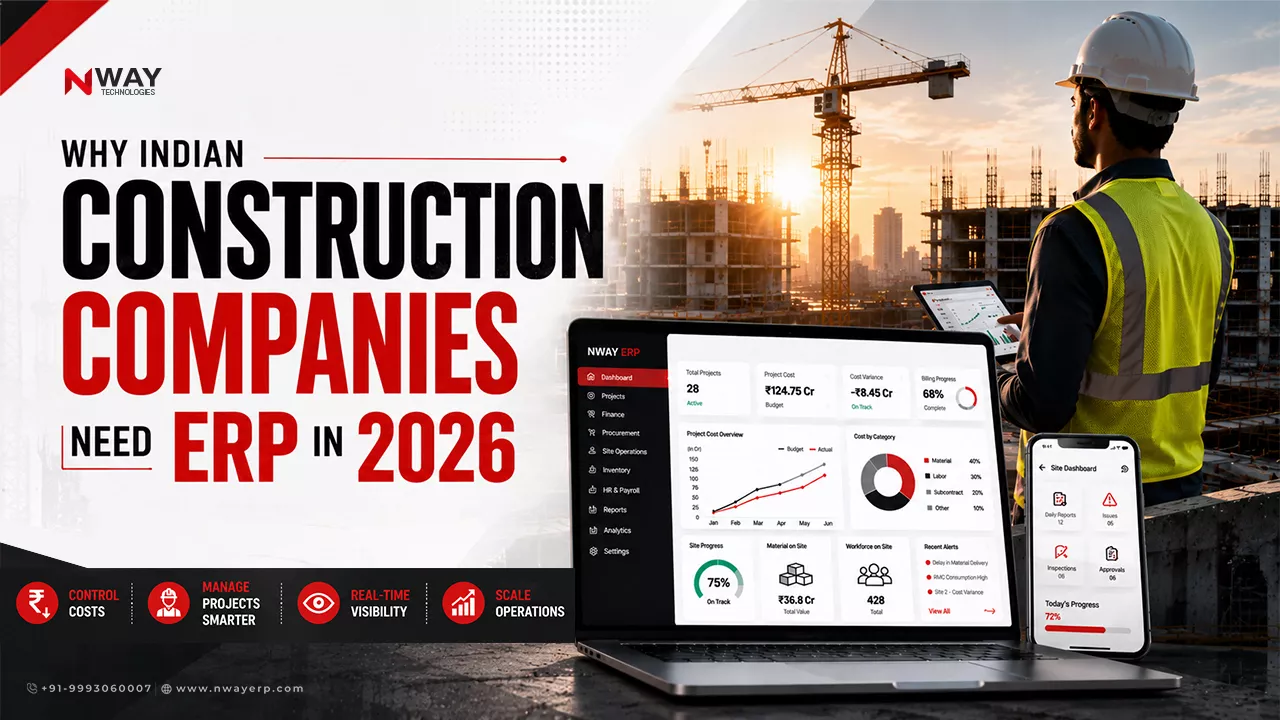
Organisations that integrate GST into their project workflows gain more than just accounting. This is one of the key reasons why Indian construction companies need ERP in 2026 to improve compliance, profitability, and project visibility.
- Better cost control
- Improved cash flow
- Stronger compliance
Book a demo to understand how leading contractors manage GST with better visibility and control.