Here is a scenario that every construction professional in India knows all too well:
A ₹80 crore commercial complex. Six contractors. Fourteen sub-vendors. Three active billing cycles. And somewhere between the site office’s WhatsApp groups, the accounts team’s Excel sheets, and the procurement manager’s email inbox, a ₹23 lakh discrepancy in the BOQ that nobody caught until the bank asked for a project completion certificate.
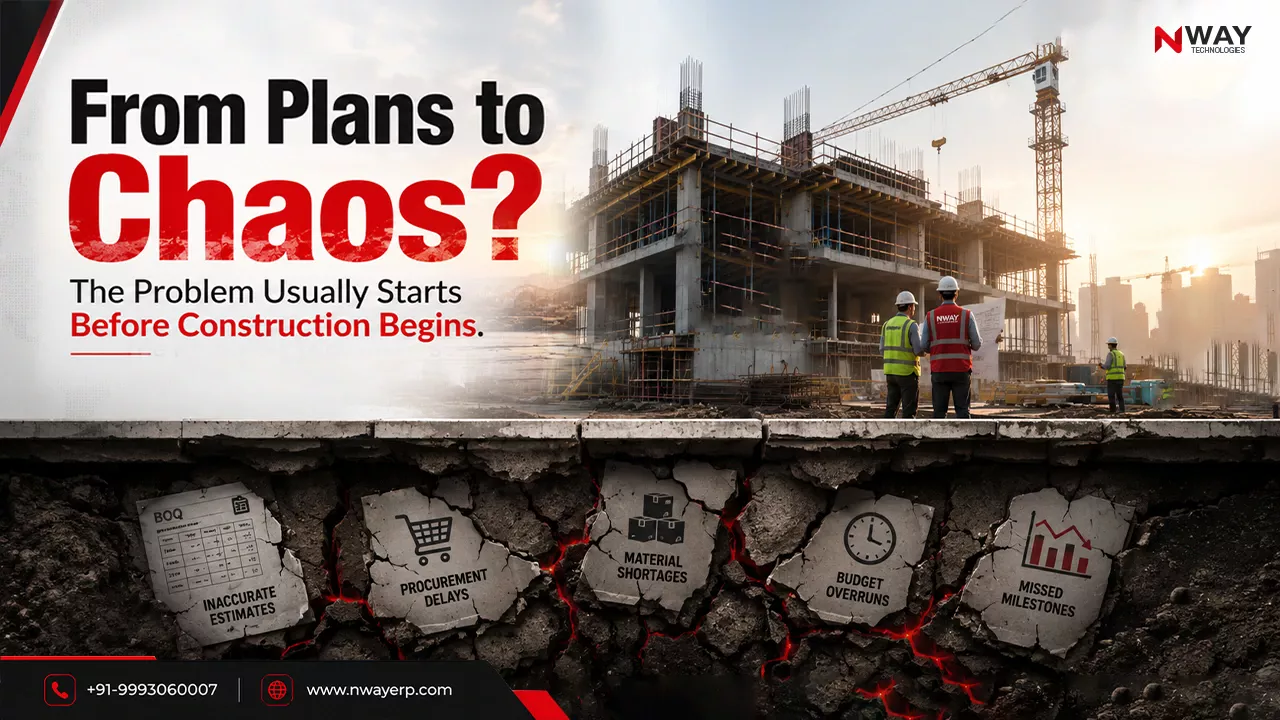
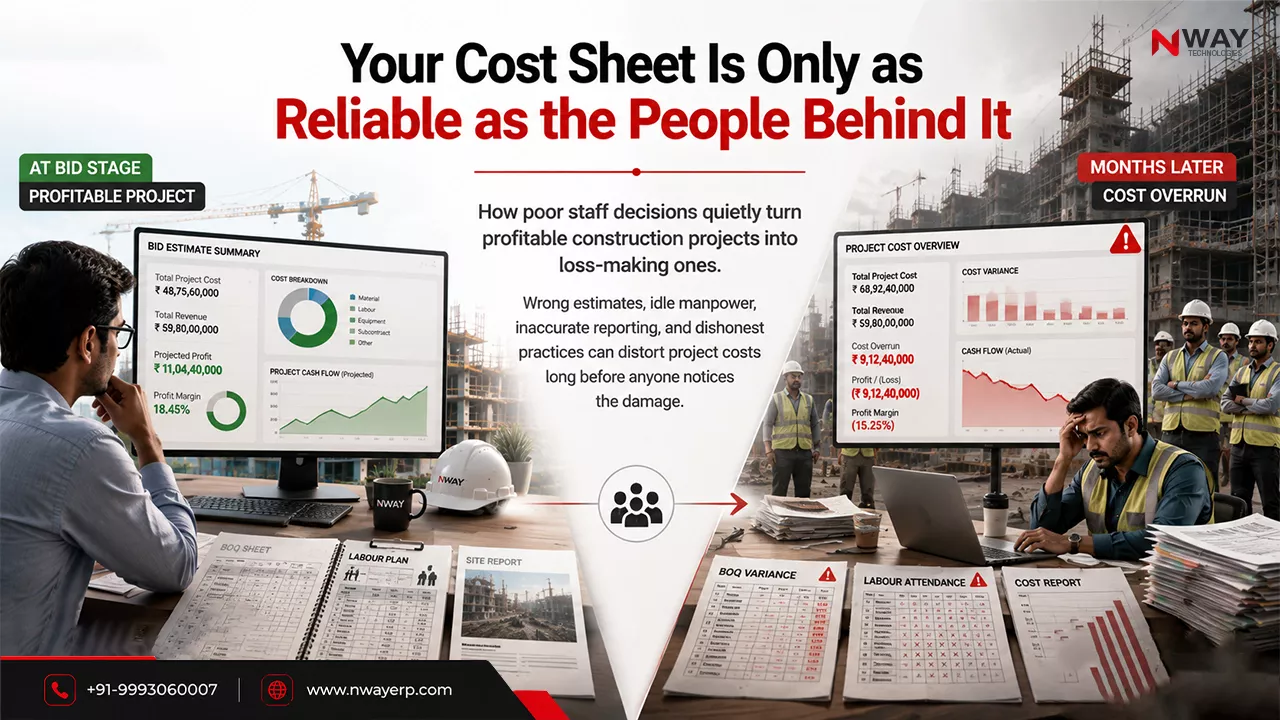
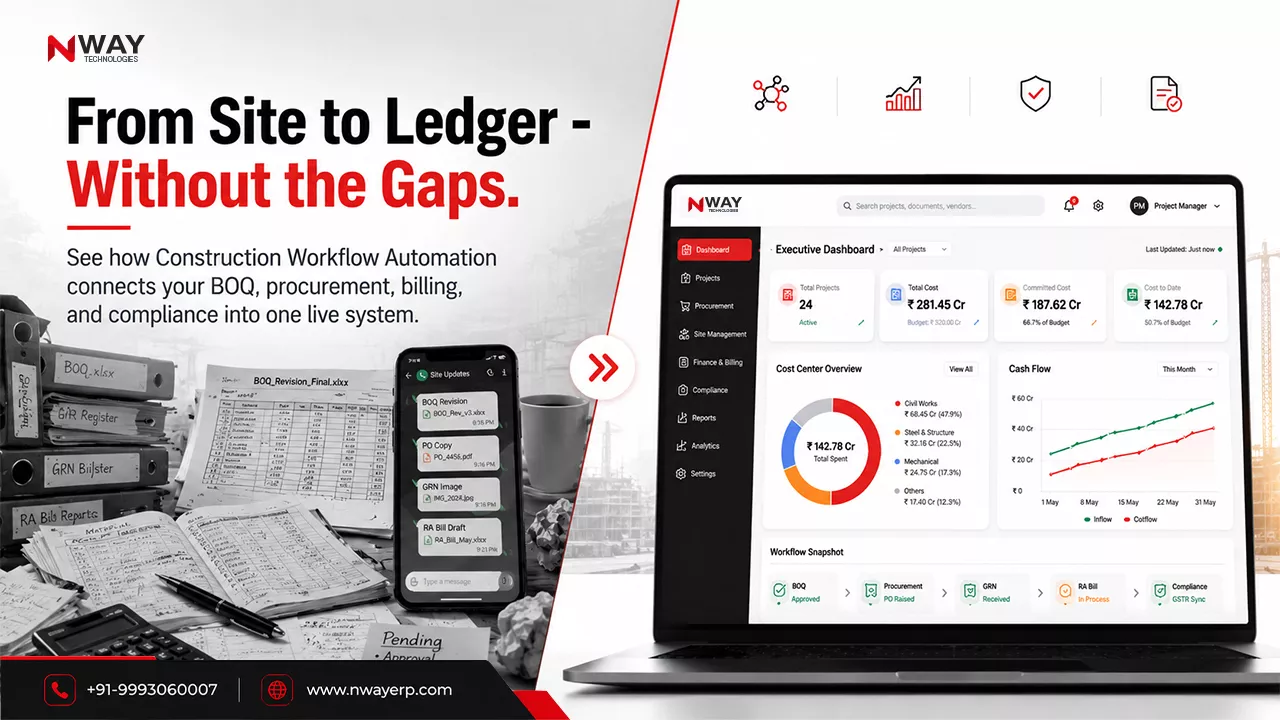
The problem wasn’t incompetence. It was the architecture of how construction projects are managed. Fragmented tools, manual handoffs, and disconnected data create invisible gaps that compound over time, surfacing as cost overruns, delayed billings, and compliance surprises.
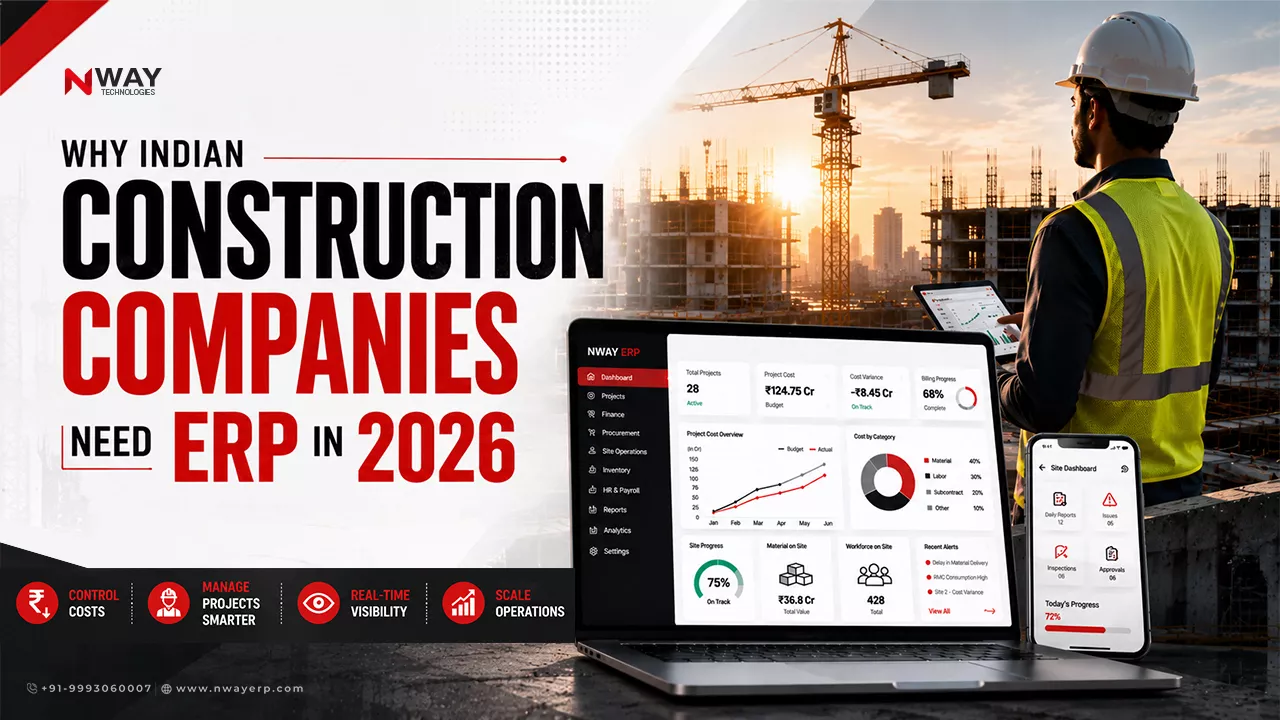
In 2026, AI in project management is no longer a futuristic luxury. For construction and infrastructure businesses managing multi-crore, multi-site projects across India, it is rapidly becoming the operational baseline that separates profitable companies from perpetually firefighting ones.
Table of Contents:
- The Reality of Construction Project Management in India
- Why Current Methods Are Failing: The Hidden Cost of ‘Good Enough’
- Where AI in Project Management Creates Real Value: Phase by Phase
- Manual vs. Generic Software vs. AI-Powered Construction ERP: A Direct Comparison
- Practical Applications: Who Benefits and How
- Built for Indian Construction: Where Domain Depth Meets AI
- Conclusion
The Reality of Construction Project Management in India
India’s construction sector contributes approximately 9% of GDP and employs over 71 million workers. Yet despite its scale, the industry’s project management infrastructure remains disproportionately in manual. A 2023 KPMG report on GSC 2023 – India Edition noted that nearly 39% of large construction projects experience cost overruns, while 40% face schedule delays, figures that have remained stubbornly consistent for over a decade.
The reasons are structural:
- Projects span multiple phases: design, BOQ finalisation, procurement, execution, and billing, each managed by different teams with different tools.
- Contractors and sub-contractors operate on fragmented communication channels, making progress tracking unreliable.
- Indian-specific compliance requirements, such as GST works contracts, RCM applicability, BOCW contributions, and GSTR-2A reconciliation, add regulatory complexity that generic software simply does not handle.
- RA (Running Account) billing, the dominant billing mechanism in construction, requires precise linkage between physical progress, BOQ line items, and cash flow, which manual systems struggle to maintain accurately.
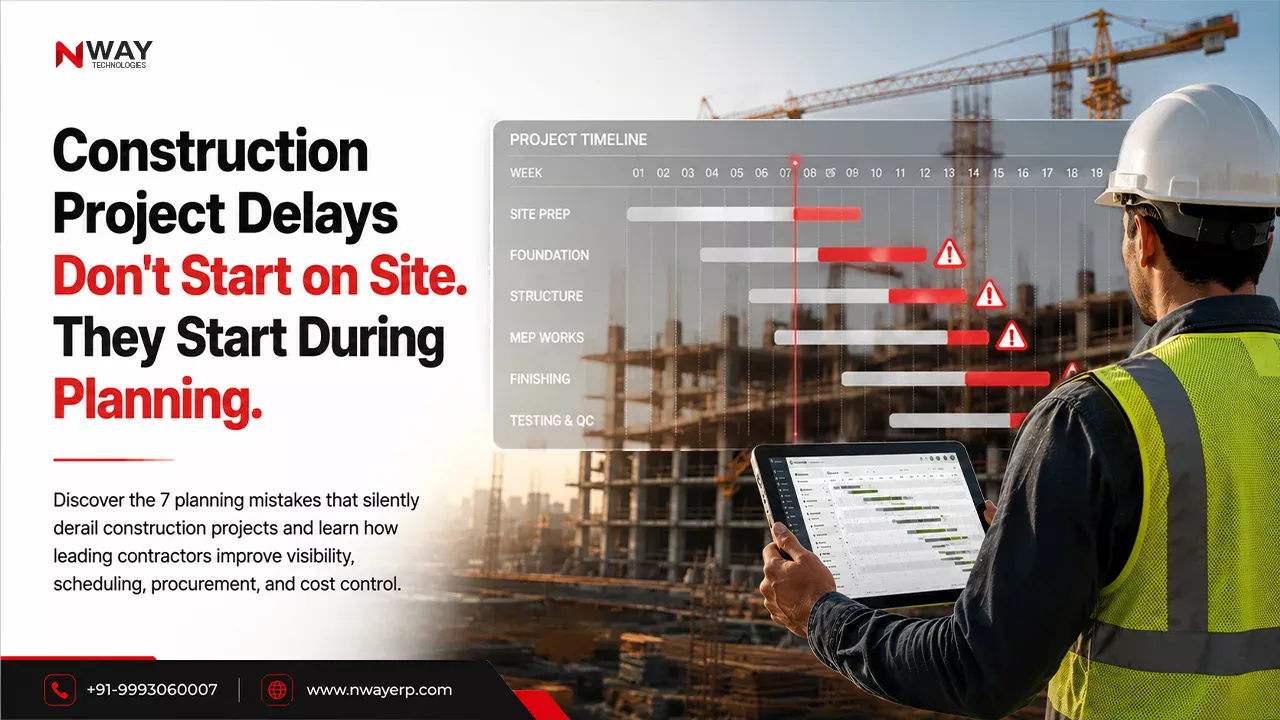
The result: project managers spend more time reconciling data than managing projects. CFOs receive cost reports that are two weeks old by the time they’re generated. And billing cycles stretch beyond contractual timelines, squeezing working capital. (See: Construction project planning mistakes lead to delays.)
Construction Industry Statistics Driving AI Adoption
The growing adoption of AI in construction management is driven by persistent challenges that affect project profitability and execution efficiency.
Key industry observations include:
- Nearly 40% of large construction projects experience schedule delay (KPMC GCS – 2023 India Edition)
- Cost overruns continue to impact a significant percentage of infrastructure and real estate projects.
- Manual billing and approval processes often delay contractor payments and negatively impact working capital.
- Procurement leakages, inaccurate forecasting, and disconnected project data remain major causes of budget variance.
- Project stakeholders increasingly require real-time visibility into costs, resources, procurement, and billing to improve decision-making.
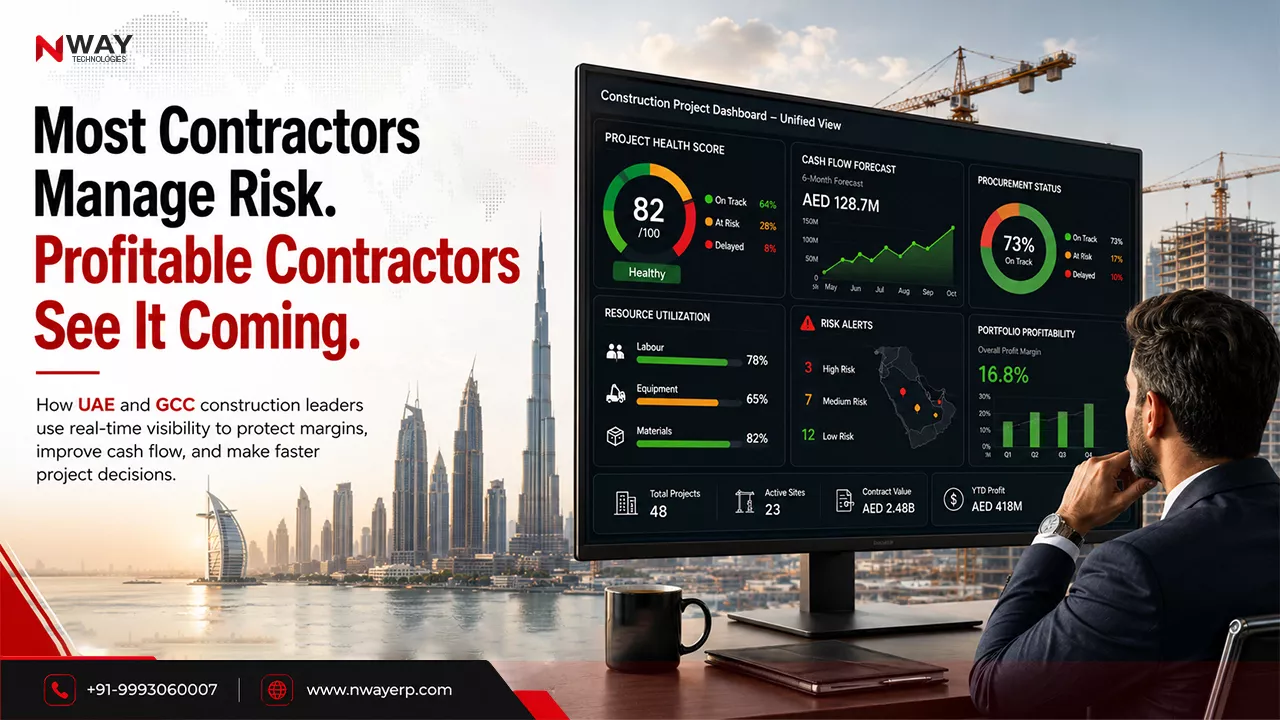
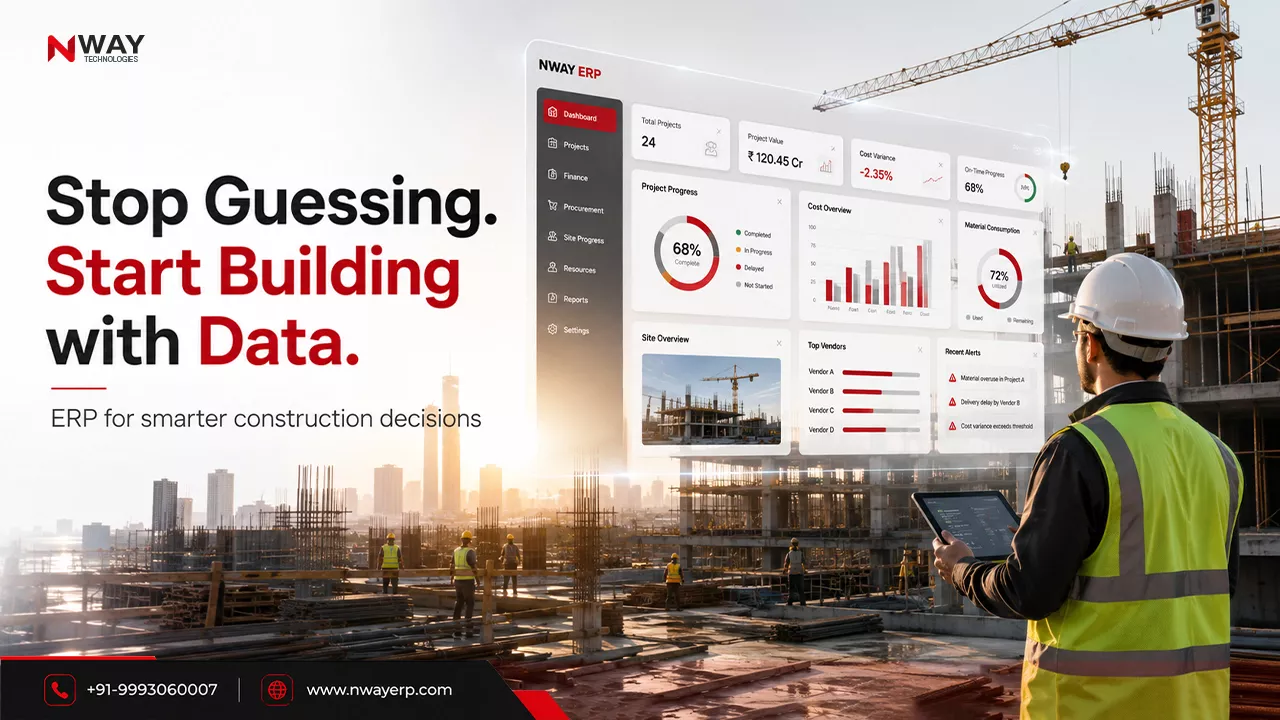
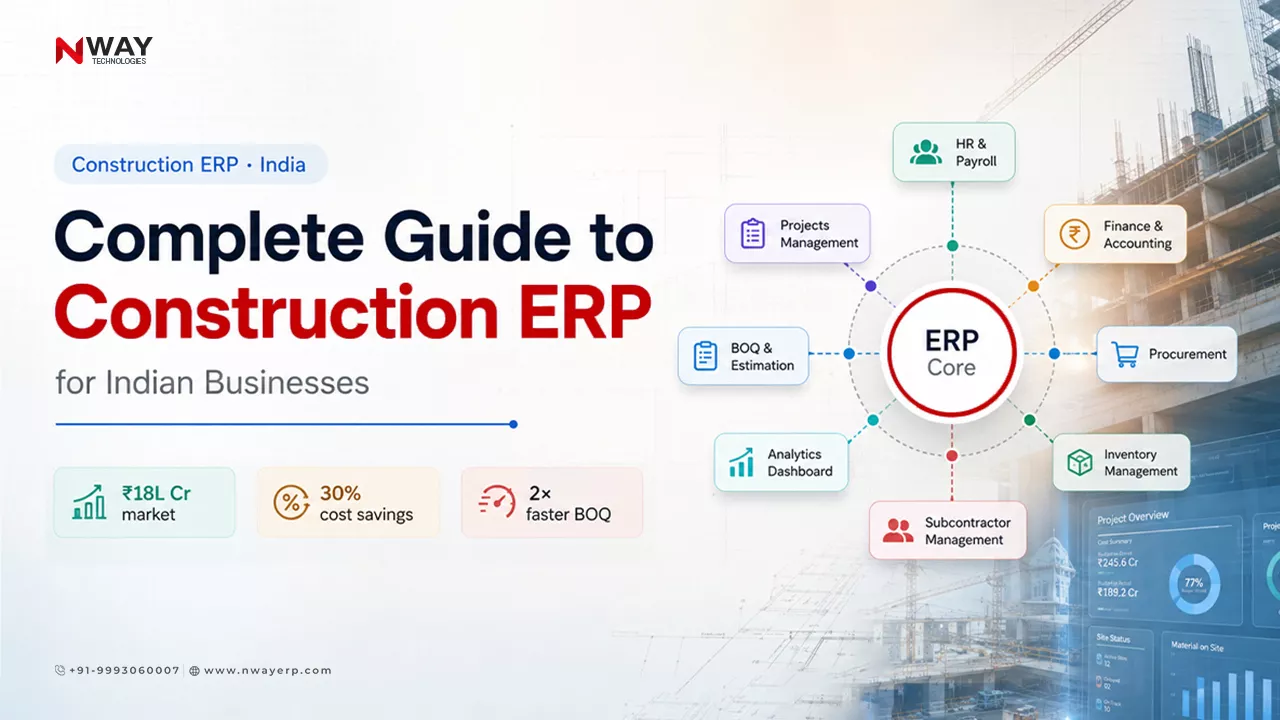
As a result, many organizations are replacing spreadsheets and disconnected systems with AI-powered construction project management software and construction ERP platforms that provide a single source of truth across projects.
Why Current Methods Are Failing: The Hidden Cost of ‘Good Enough’
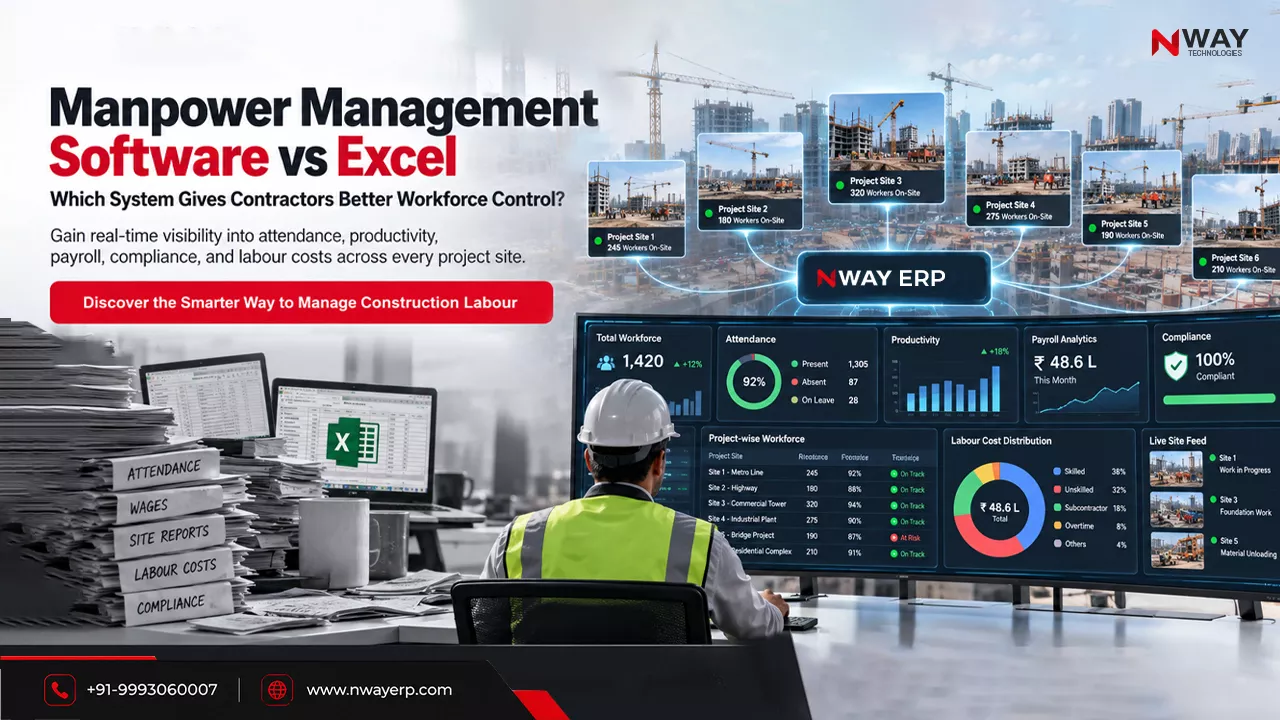
Many construction firms still rely on a combination of MS Project for scheduling, Excel for BOQ management, Tally for accounting, and WhatsApp for site updates. This patchwork approach works until it doesn’t work.
The limitations become critical at scale:
- Data silos mean a procurement decision made in one system doesn’t automatically update the cost tracker in another. The variance is discovered at month-end, not when it matters, because no system automatically reconciles procurement, cost, and billing data in real time.
- Manual RA billing preparation is time-intensive, often requiring 3–5 days per billing cycle, and is prone to arithmetic errors and revision disputes with clients.
- Compliance-related tasks, particularly ITC reconciliation under GST, RCM journal entries, and work in contract SAC classification, require specialist intervention instead of being system-managed.
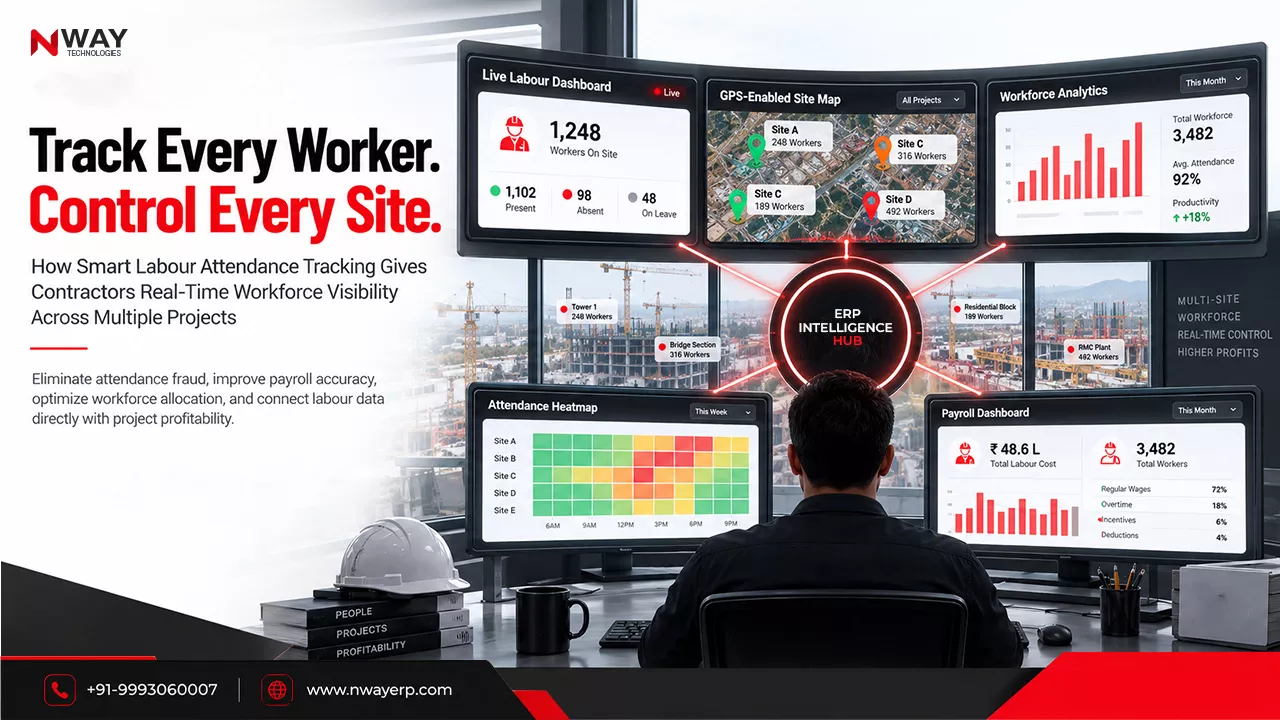
- Labour and equipment utilisation data live in physical registers, making real-time productivity analysis impossible.
- CFOs and business owners lack a consolidated view of project health across sites; they’re dependent on verbal updates and delayed reports.
The real cost of manual project management isn’t just the hours lost; it’s the decisions made on stale, incomplete, or siloed information. In construction, those decisions carry multi-crore consequences.
Where AI in Project Management Creates Real Value: Phase by Phase
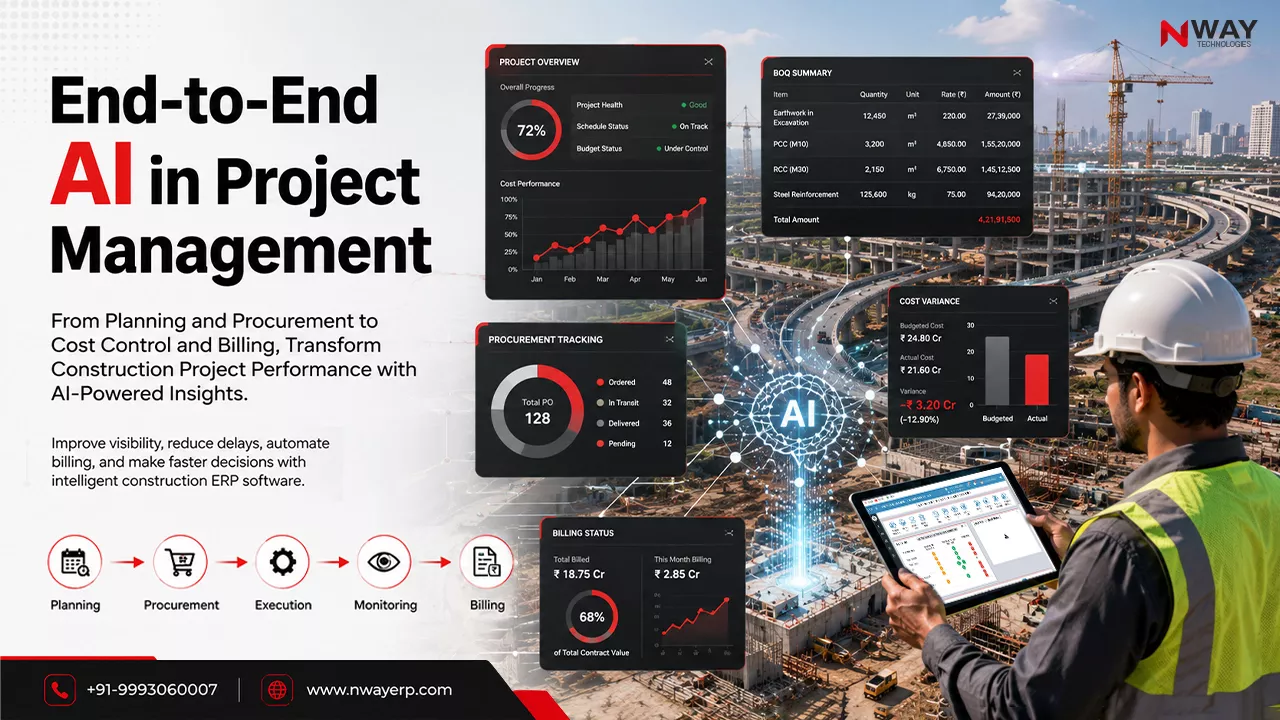
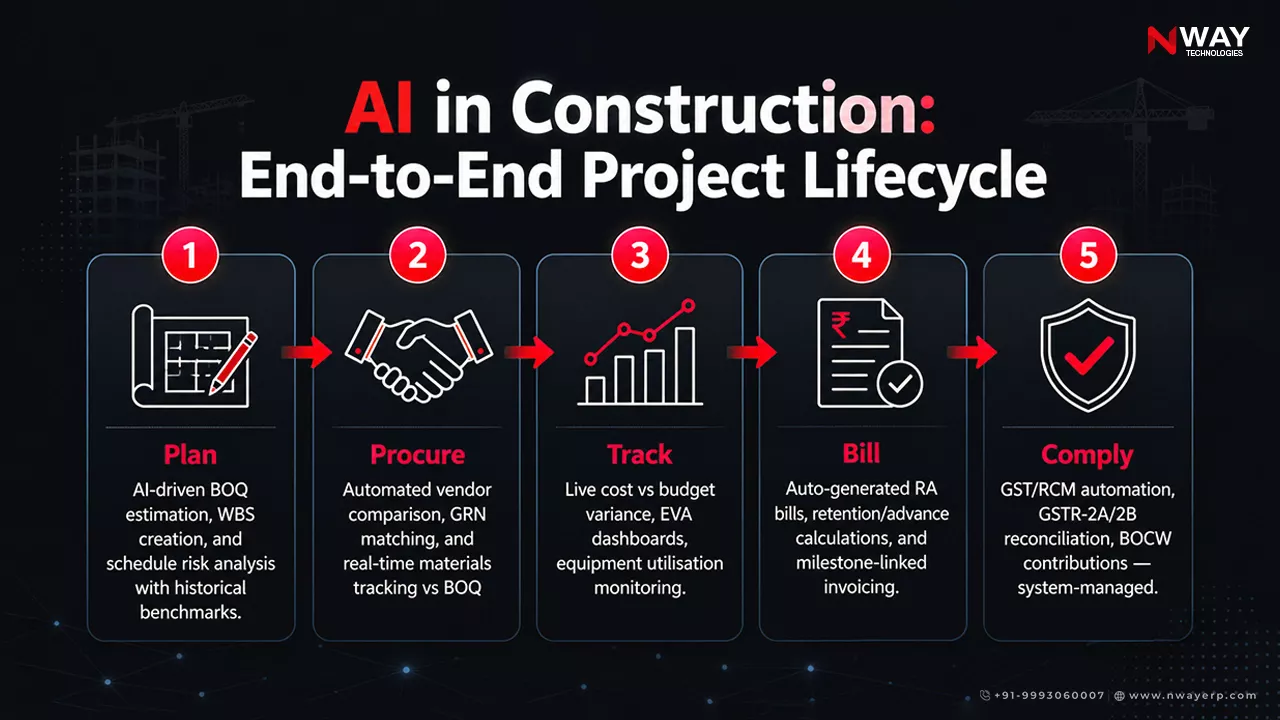
Modern AI construction ERP platforms like Nway ERP Software for construction don’t replace human judgment; it amplifies it. Automating data collection, pattern recognition, and workflow triggers gives project stakeholders the clarity and speed to make better decisions. Here’s how it maps across the construction project lifecycle:
Phase 1: AI-Powered Project Planning and BOQ Management
Planning & Estimation is where projects are either protected or exposed. AI project planning software enables construction teams to build Work Breakdown Structures (WBS) that are linked directly to BOQ line items, resource availability, and historical cost benchmarks from similar projects.
Key capabilities:
- Automated BOQ generation from drawing inputs and material specifications can significantly reduce estimation time.
- AI-driven schedule optimisation that accounts for monsoon delays, material lead times, and labour availability by region.
- Risk flagging at the planning stage, flagging phases where budget-to-timeline mismatches have historically caused overruns.
For a mid-sized contractor managing three simultaneous residential projects in Pune, this means entering a new project with a realistic budget baseline and a schedule that reflects actual ground conditions not optimistic assumptions.
Phase 2: Smart Procurement and Vendor Management
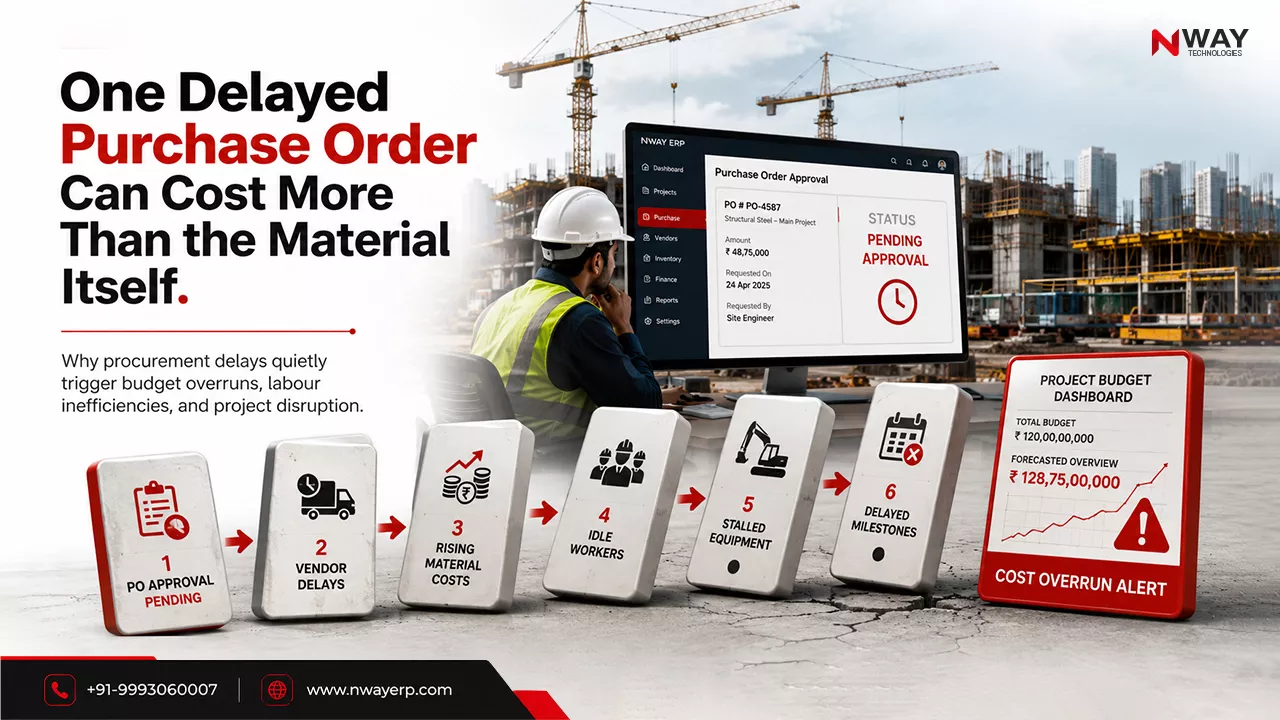
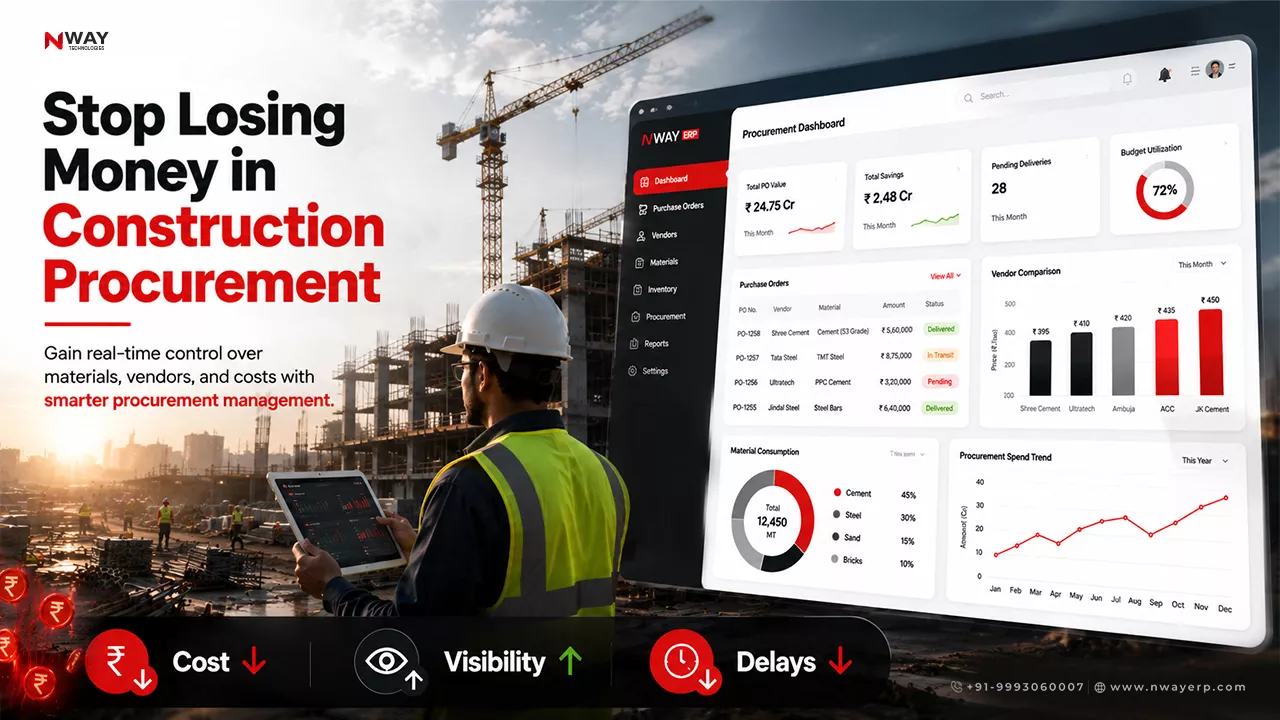
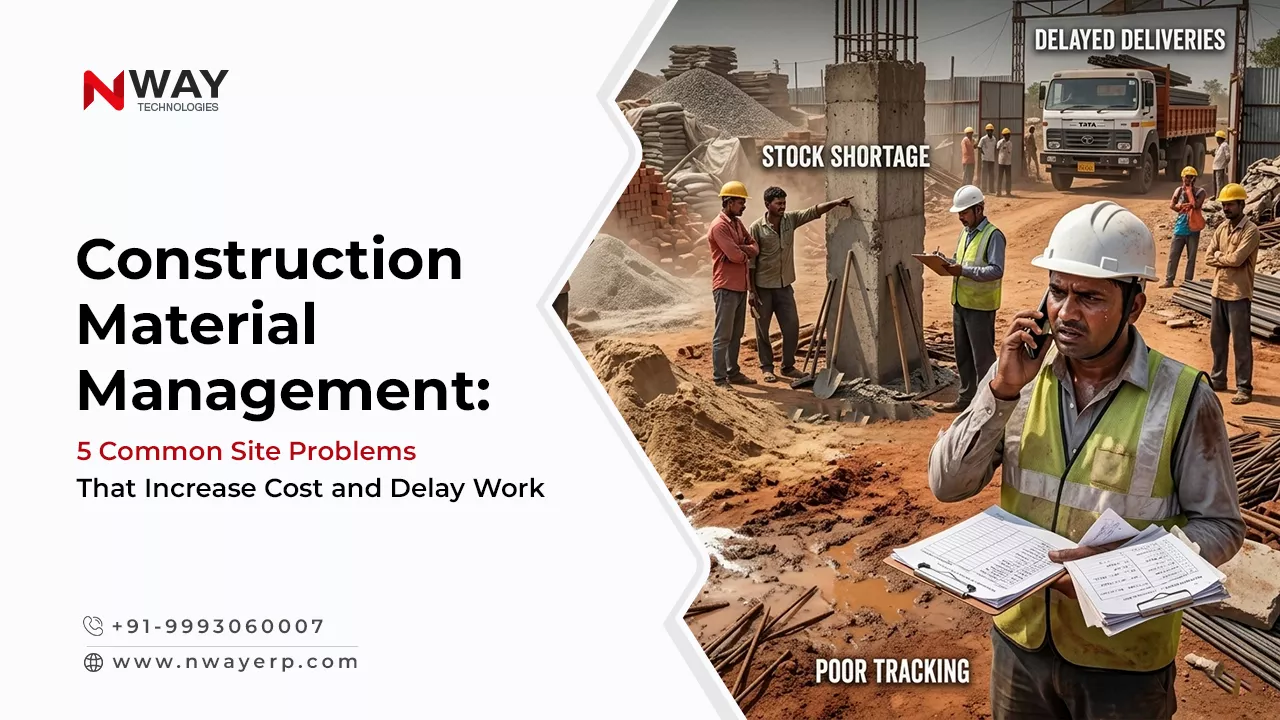
Purchase Management is one of the highest leakage areas in construction. Manual procurement processes from material indenting to GRN verification are error-prone and often disconnected from project budgets. Procurement inefficiencies often lead to material shortages, delivery delays, and uncontrolled project costs. Modern construction procurement management systems help project teams improve vendor accountability and material tracking.
AI construction project management software addresses this through:
- Automated purchase requisitions triggered by site consumption data, eliminating manual indenting.
- AI-powered vendor comparison across price, quality ratings, and delivery reliability, enabling objective procurement decisions rather than relationship-driven ones.
- Three-way matching (PO → GRN → Invoice) flags discrepancies before payments are processed, protecting the project from overbilling.
- Real-time materials-on-site tracking versus BOQ quantities, alerting site managers when consumption exceeds estimates.
Phase 3: Real-Time Cost Tracking and Budget Control
Cost overruns in construction are rarely sudden; they’re gradual, accumulating across dozens of small variances until they become visible as a crisis. AI-powered cost tracking changes this pattern.
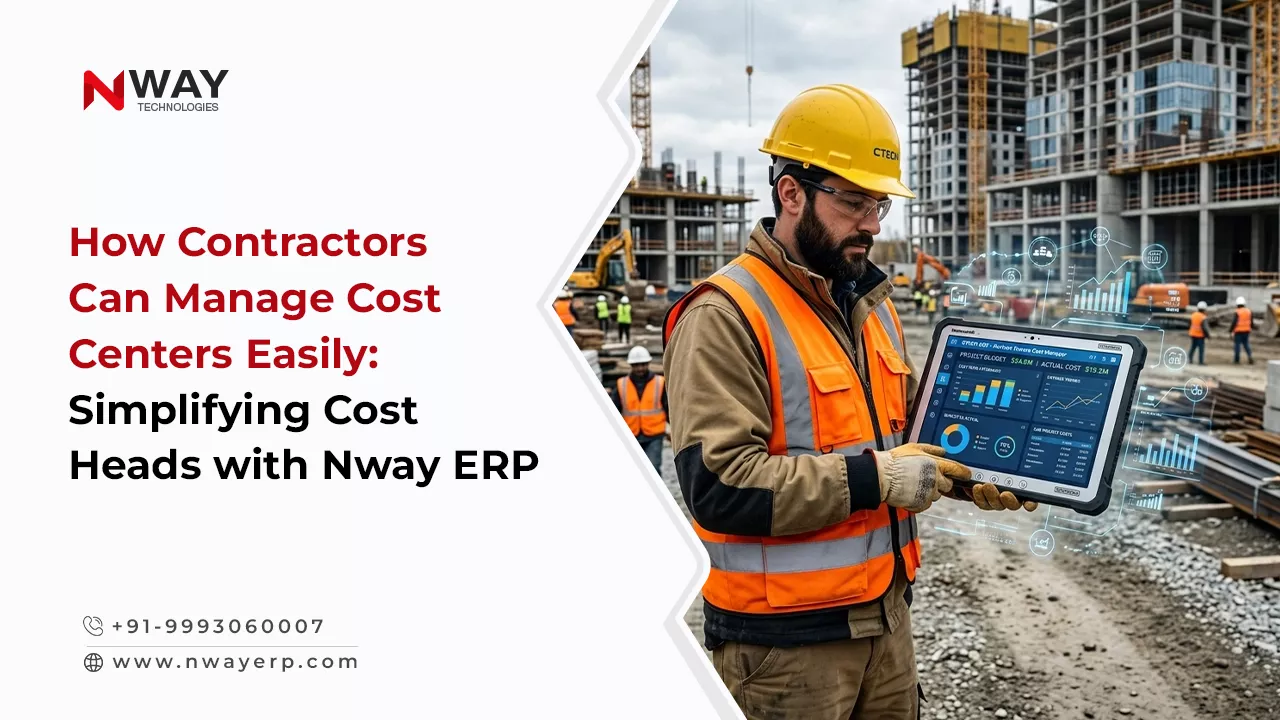
With a construction ERP with AI capabilities, cost managers can:
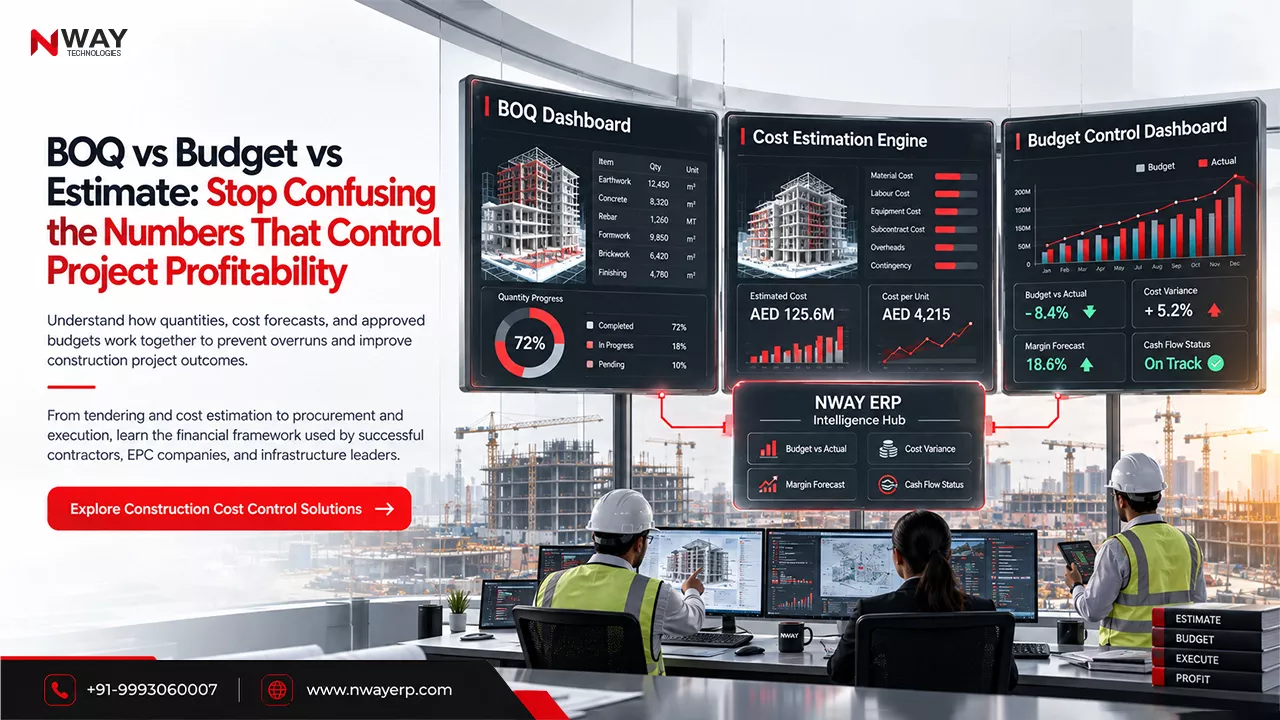
- Monitor actual-vs-budgeted expenditure at the WBS level in real time, not just at month-end.
- Receive AI-generated alerts when a cost centre exceeds its tolerance threshold before overruns compound.
- Access earned value analysis (EVA) dashboards that correlate physical project progress with financial spending, giving CFOs and Operations Heads a true picture of project efficiency.
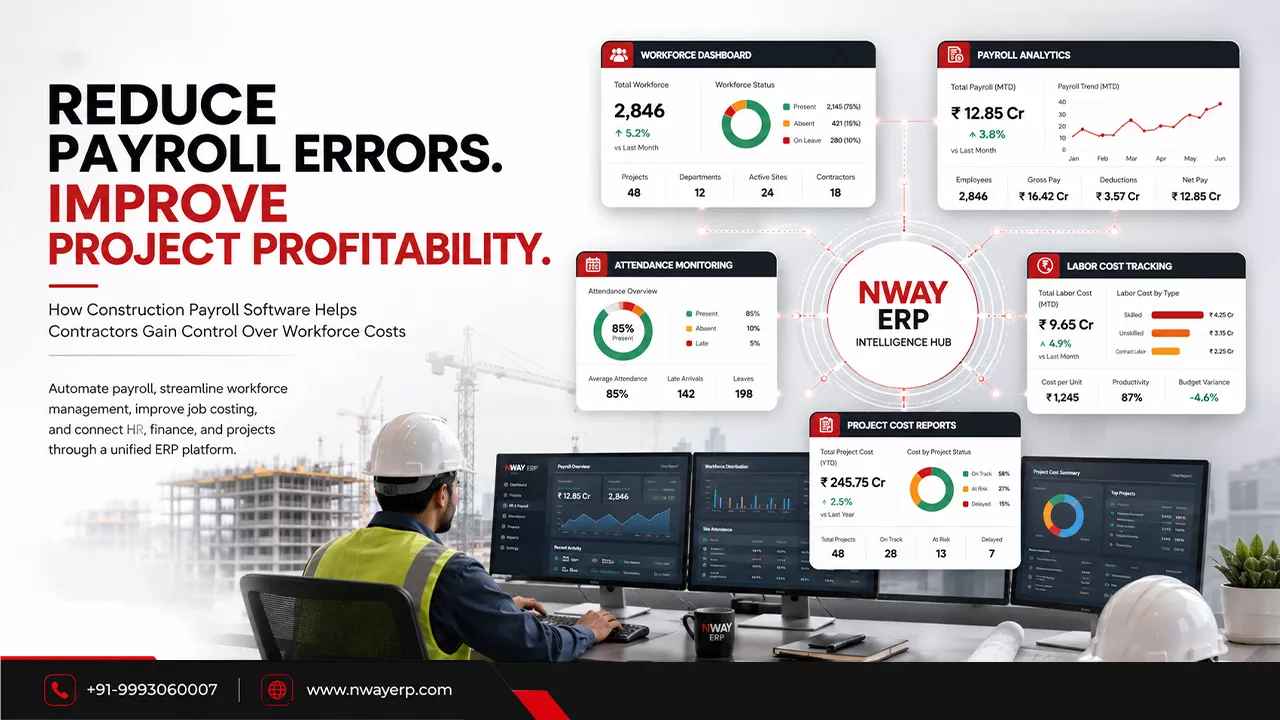
- Track equipment and labour utilization rates against planned productivity assumptions, identifying under-performing resources before they become schedule risks.
Phase 4: Automated RA Billing and Invoicing
RA (Running Account) billing is the lifeline of cash flow in construction. Yet it’s one of the most manually intensive processes in the sector, requiring cross-referencing of site measurement books, BOQ rates, previous payment certificates, and retention schedules.
AI-powered billing and invoicing software eliminates this bottleneck by:
- Auto-generating RA bills based on digitally recorded site progress, linked directly to BOQ quantities and contract rates.
- Calculating retention deductions, advance recovery, and escalation clauses automatically reducing billing disputes with clients.
- Maintaining a complete billing history linked to physical milestones, making it auditable for bank disbursements and project financing requirements.
- Sending automated billing reminders and payment tracking notifications, improving cash cycle predictability.
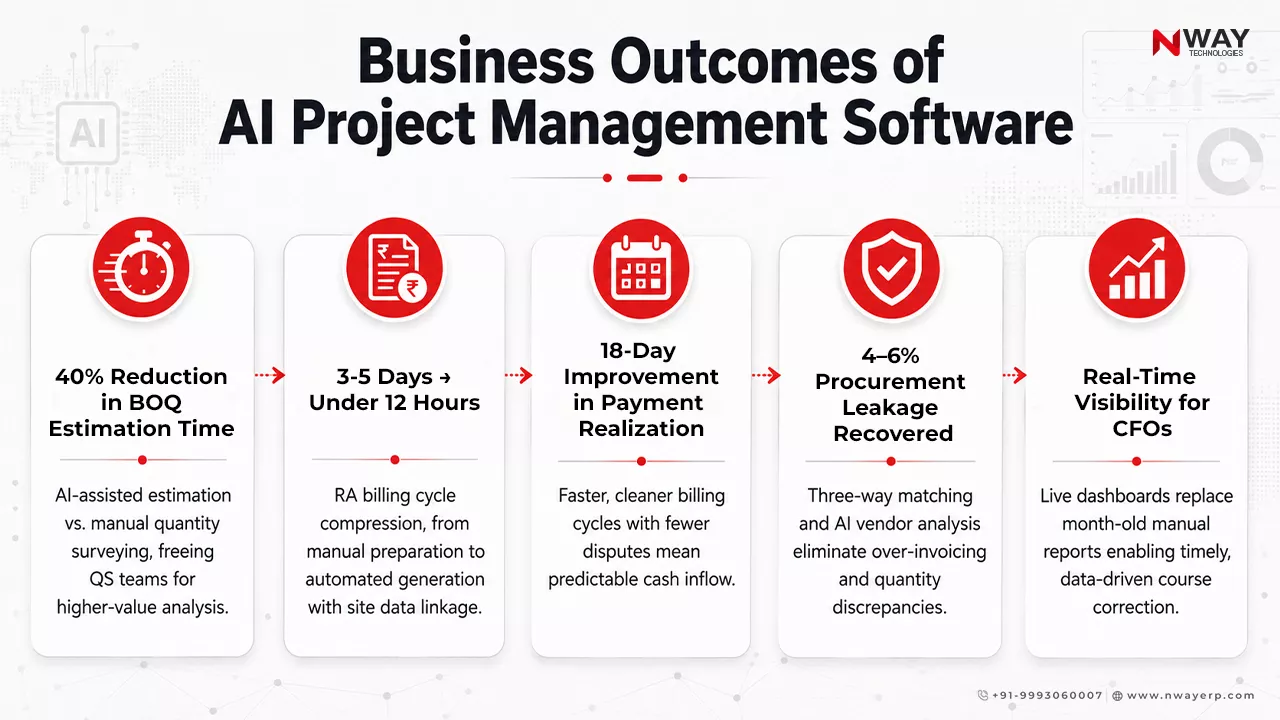
Based on Nway’s internal client implementation data, an automated project billing system reduces RA billing preparation time from an average of 3–5 days to under 12 hours, directly improving Days Sales Outstanding (DSO), a critical metric for contractor financial health.
Phase 5: GST Compliance, BOCW, and Regulatory Automation
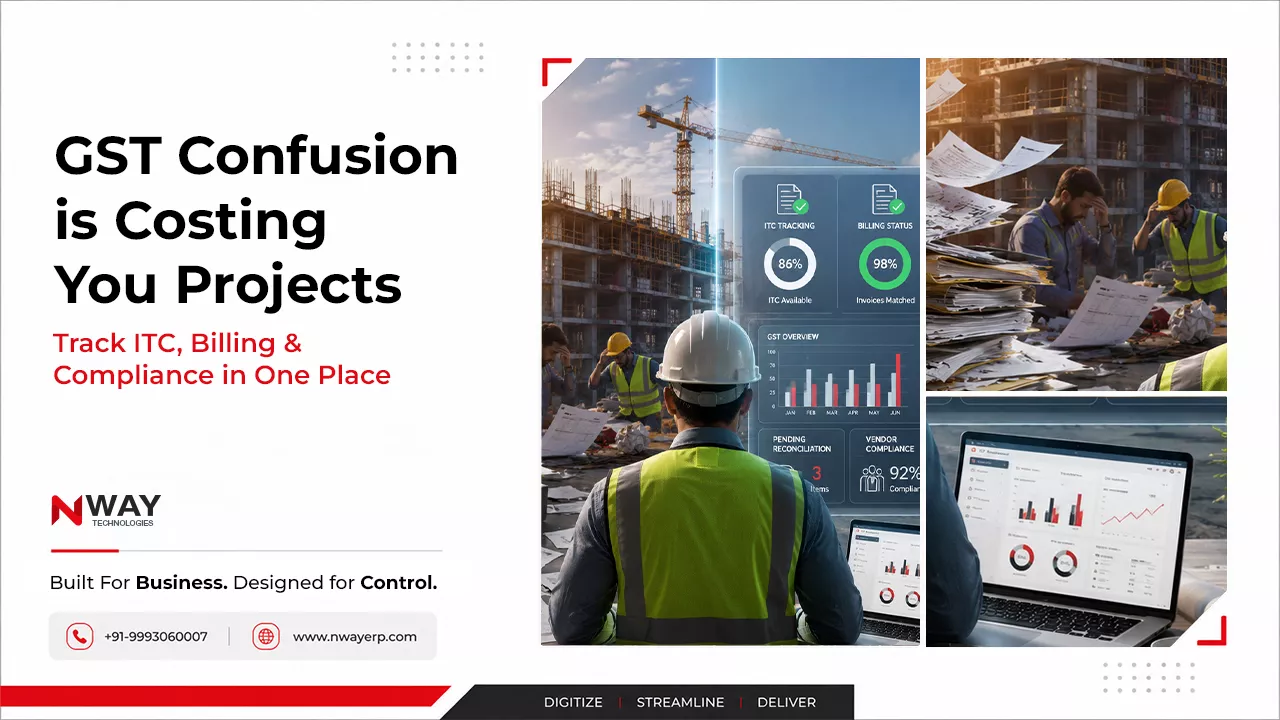
Compliance is where generic project management software fails the Indian construction sector entirely. Works contracts carry specific GST treatment; RCM applicability varies by vendor type, and BOCW contributions require systematic tracking by labour category. For many contractors, managing GST in construction, including ITC reconciliation, works contract taxation, and billing compliance, remains one of the most challenging aspects of project administration.
AI construction ERP software India-specific builds compliance into every transaction:
- Automatic SAC/HSN code assignment based on transaction type and contract structure.
- RCM identification and journal entry automation for applicable vendor categories.
- GSTR-2A/2B reconciliation that flags ITC mismatches before filing, avoiding demand notices.
- BOCW contribution tracking by project and worker category, enabling compliant labour law management.
Want to see how AI can improve project visibility from BOQ to billing?
Manual vs. Generic Software vs. AI-Powered Construction ERP: A Direct Comparison
| Capability | Manual/Spreadsheet approach | Generic PM Software | AI – Powered Construction ERP (Nway) |
|---|---|---|---|
| BOQ – Based cost Estimation | Manual, Error- Prone | Basic Templets | AI-driven auto-estimation |
| Project Schedule Planning (WBS) | Gantt in Excel | Generic task boards | WBS with milestone alerts |
| Procurement & Vendor Management | Separate spreadsheets | No construction context | GRN, PO, vendor comparison built-in |
| RA Billing / Progress Billing | Manual invoicing | Not supported | Automated RA billing cycles |
| GST / RCM Compliance | CA-dependent, reactive | No Indian tax logic | GSTR-2A/2B reconciliation, RCM alerts |
| Real-Time Cost vs Budget Variance | End-of-month reports | Limited dashboards | Live AI-powered variance alerts |
| Labour & Subcontractor Tracking | Attendance registers | Partial tracking | BOCW-compliant labour module |
| Multi-Project Oversight (CFO View) | Consolidated manually | No drill-down | Executive dashboard with drill-down |
| Scalability (Multi-site / Multi-city) | Not scalable | Partial | Cloud-native, multi-project scalable |
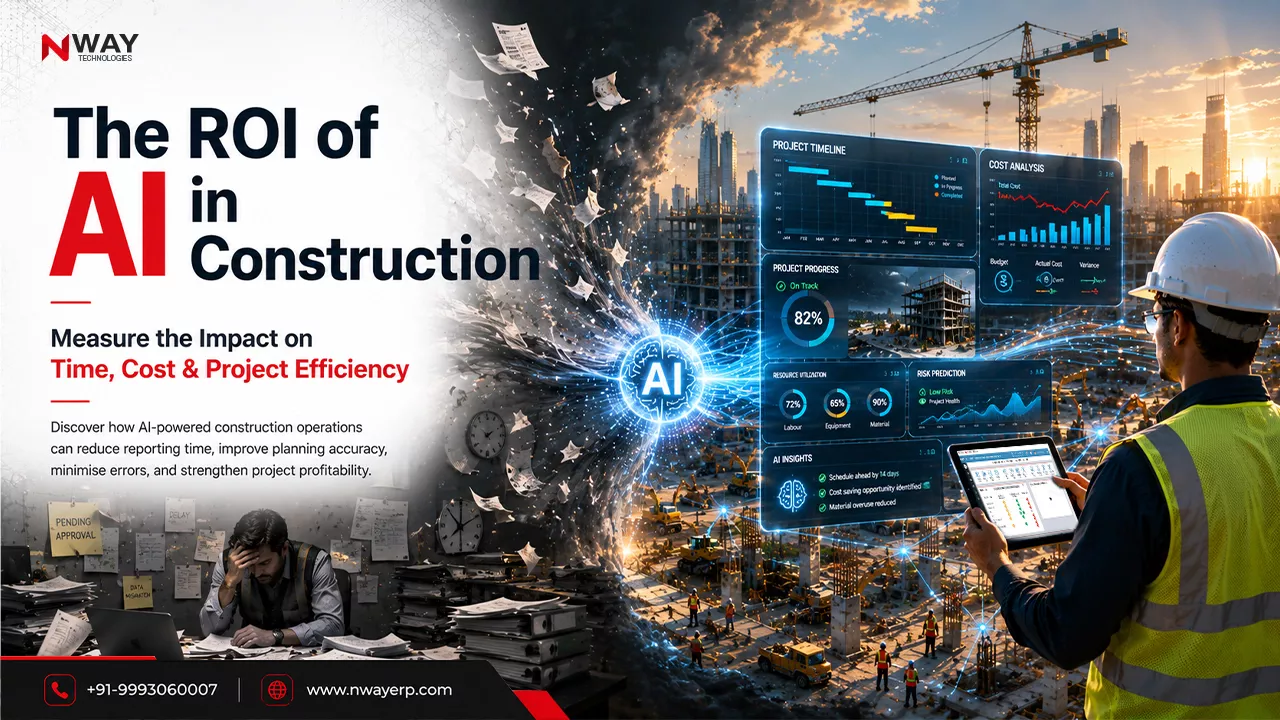
ROI of AI in Construction becomes evident as organisations improve financial accuracy, streamline project execution, enhance compliance, strengthen vendor coordination, monitor costs in real time, track workforce productivity, and efficiently manage multiple projects across locations while ensuring long-term operational scalability.
Practical Applications: Who Benefits and How
The figures below are estimates based on Nway’s internal client implementation data and outcomes reported by customers for post-deployment.
Use Case 1: Infrastructure Contractor – Highway Project
A mid-sized contractor managing a ₹120 crore state highway project was spending 6 days every month manually preparing RA bills for three clients simultaneously. Payment disputes were common because measurement books weren’t synchronised with invoice claims. After deploying AI-powered billing and invoicing software integrated with their site measurement workflow, billing preparation dropped to under 12 hours, and payment realisation improved by 18 days on average. The ripple effect on working capital was immediate and material.
Use Case 2: Real Estate Developer – Multi-Tower Residential Complex
A residential developer running a 4-tower project with 11 active subcontractors struggled with procurement leakages estimated at 4–6% of project cost annually. By implementing construction project management software with billing automation and three-way matching, purchase order compliance improved to 94%, and GRN discrepancies were reduced by 73%. Subcontractor billing disputes dropped significantly once rates and measurement data were centralized and transparent.
Use Case 3: Infrastructure EPC Firm – Multi-State Projects, CFO Perspective
A CFO at a large EPC firm was managing 9 simultaneous projects across 4 states but had zero real-time visibility into project finances, proving why ERP for EPC Construction Improves Project Visibility and Control. Instead, she relied on 3-week-old, manually compiled reports from site accountants.
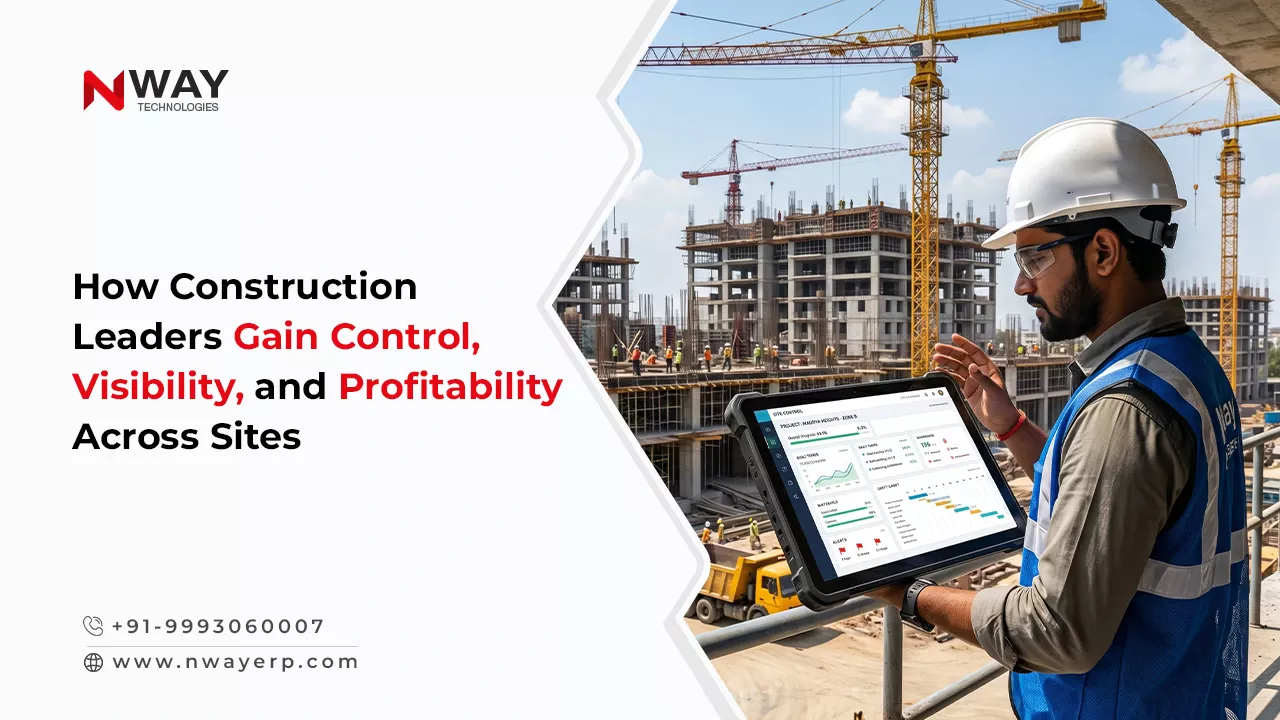
After implementing an end-to-end project management system with AI-driven dashboards, everything changed. Weekly reviews were now backed by live data, enabling her to spot two projects heading toward cost overruns before they crossed the 20% mark and take timely corrective procurement action.
Built for Indian Construction: Where Domain Depth Meets AI
The gap between generic project management software and what Indian construction businesses actually need is significant. Generic tools, even sophisticated ones, lack the domain specificity to handle BOQ-driven billing, works contract GST, RCM compliance, GRN-based procurement, or BOCW labour tracking. They require expensive customisation, long implementation timelines, and ongoing consulting to approximate what a purpose-built solution delivers out of the box.
Core Module –
- Estimation & BOQ Management: drawing-linked quantity takeoff, rate analysis, and revision tracking
- Procurement & Vendor Management: indent-to-PO workflows, GRN-based three-way matching, and vendor scorecards.
- Project Cost Control: WBS-level budget vs actual tracking and EVA dashboards.
- RA Billing & Subcontractor Billing: measurement book–linked progress billing with retention and escalation logic.
- Statutory Compliance: GST works contract treatment, RCM, GSTR-2A/2B reconciliation, and BOCW labour tracking.
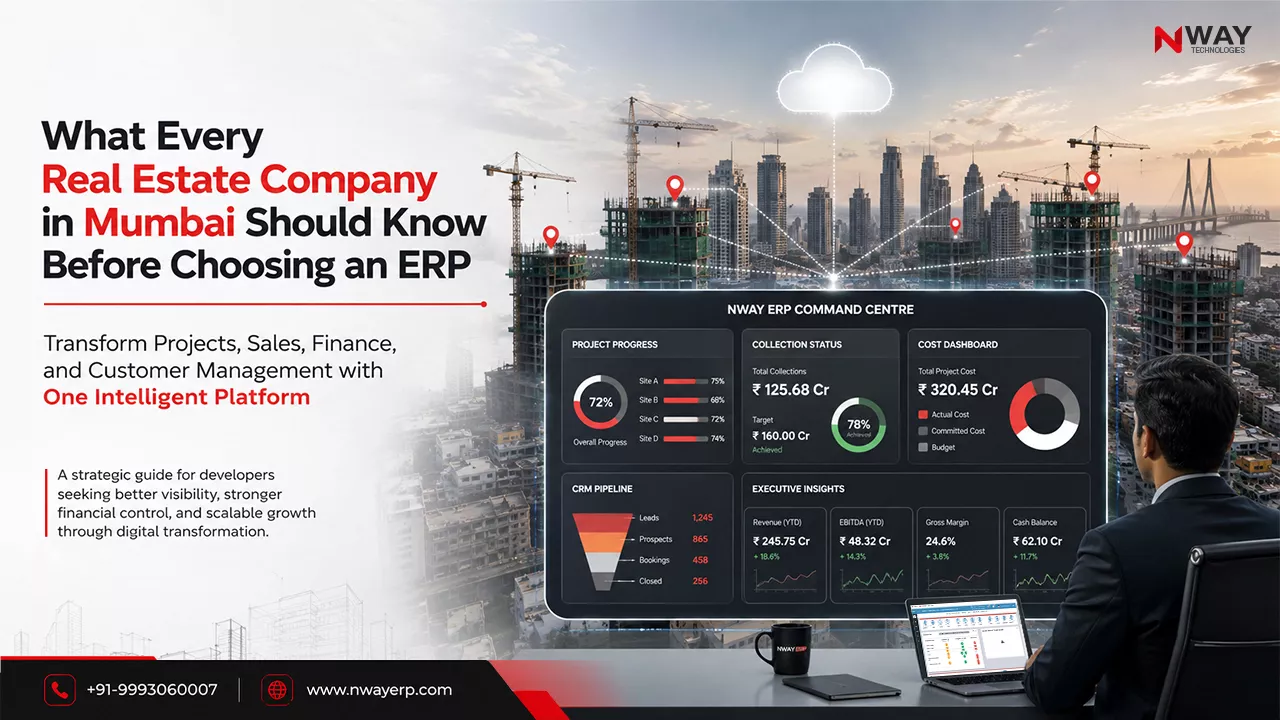
- Multi-Project Executive Dashboards: consolidated, drill-down visibility for CFOs and Operations Heads across sites.
How Nway differs from alternatives
Unlike generic enterprise platforms such as SAP, which are designed for broad manufacturing and supply-chain scenarios and require heavy customization to support BOQ-based, RA billing-driven construction workflows, Nway is purpose-built for this domain enabling faster deployment with native capabilities aligned to project execution.
While accounting-centric solutions like Tally ERP effectively address bookkeeping and statutory compliance, they lack built-in support for BOQ, WBS, and measurement of book-linked billing, forcing critical construction processes outside the system. In contrast, Nway seamlessly integrates these workflows within a single platform.
Similarly, project and field-service tools such as Jonas Software are primarily tailored to North American field service and trade contracting models, and do not natively support RA billing, works contract GST, or BOCW compliance requirements mandated under Indian regulations, areas where Nway is specifically designed to deliver full compliance and operational alignment.
For companies that have outgrown spreadsheets but are wary of enterprise ERP complexity and cost, Nway ERP offers a cost-effective path to operational intelligence without the implementation overhead. Whether you’re a contractor managing three projects or an infrastructure conglomerate running twenty, the underlying principle is the same: decisions made on accurate, real-time data consistently outperform those made on memory, assumption, or delayed reports.
Expert Insight: Why Construction AI Adoption Is Accelerating
According to the KPMG Global Construction Survey 2023 – India Edition, construction companies increasingly use AI and ERP platforms to improve project visibility, reduce cost overruns, and automate Compliance processes. Organisations that centralise project data gain better control over budgets, billing cycles, and resource utilization
Conclusion
Industry leaders and ERP adoption trends clearly indicate that AI in project management is not a future capability for the construction sector; it’s a present-day competitive differentiator. Companies that continue managing multi-crore projects through manual processes and fragmented tools will find themselves increasingly disadvantaged: slower billing cycles, less precise cost control, heavier compliance risk, and limited capacity to scale.
The construction firms that will define the next decade of India’s infrastructure growth are those investing now in AI project management software that connects planning to procurement, procurement to execution, and execution to billing within a single, auditable, real-time system.
The transition doesn’t require replacing your entire operation overnight. It starts with choosing a platform that understands how construction projects work and building operational discipline on top of that foundation.
Key Takeaways
- AI in project management addresses the root cause of construction overruns: fragmented data and delayed visibility, not individual team failures.
- End-to-end project management software that connects BOQ → procurement → cost tracking → RA billing eliminates the manual handoffs where leakage accumulates.
- Automated RA billing systems reduce billing cycle time from days to hours, improving cash realisation and reducing payment disputes.
- India-specific compliance: GST works contracts, RCM, GSTR-2A/2B reconciliation, and BOCW must be native to the ERP, not manually overlaid.
- AI construction ERP software built for India gives CFOs, Contractors, and Project Managers a single source of truth across multiple projects and sites.
- The ROI of using AI ERP software in construction projects is measurable: faster billing, lower procurement leakage, and real-time cost control compounds significantly at scale.
Looking for a smarter way to manage construction projects?