Introduction
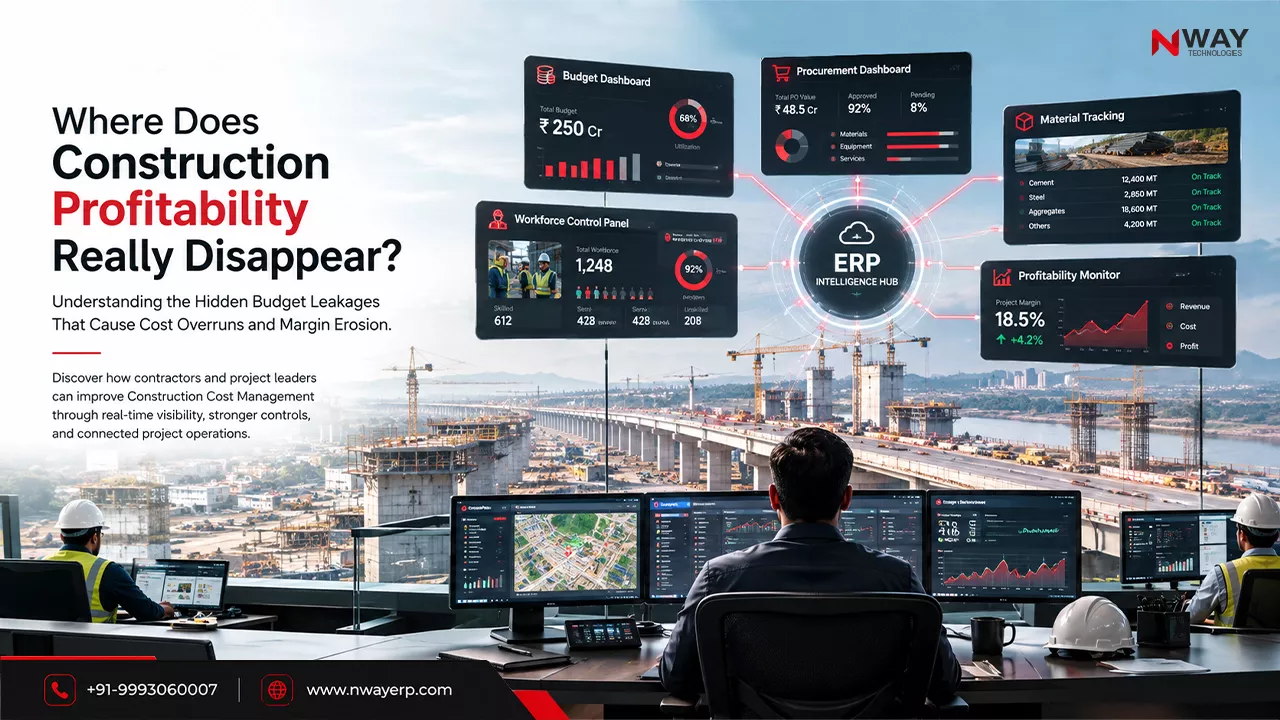
India’s construction sector is growing at an unprecedented pace, projected to reach ₹18 lakh crore by 2030, driven by government infrastructure programmes, smart cities, and private real estate. Yet behind the cranes and concrete, a significant number of contractors and builders are still managing multi-crore projects through a patchwork of Excel sheets, WhatsApp threads, and siloed software.
The result? Budget overruns. Delayed billing. Material pilferage. Subcontractor disputes. And CFOs who cannot answer the most basic question: “What is our actual cost-to-completion right now?”
If you are a Project Manager, Builder, Contractor, or Operations Head reading this, you already know the problem intimately. This guide will show you exactly why the construction industry struggles with traditional methods and how the right Construction ERP Software India solution resolves these challenges at their root.
Table of Contents:
- The Indian Construction Industry: High Stakes, High Complexity
- Why Manual Methods Are Failing Construction Firms Today
- What Is Construction ERP Software?
- Business Outcomes Tied to ERP Adoption
- Nway ERP: Built for the Indian Construction Reality
- Conclusion
The Indian Construction Industry: High Stakes, High Complexity
Construction in India is not generic manufacturing. It is a sector defined by:
- Multi-site execution – contractors managing 5 to 50 projects simultaneously across geographies.
- Labour-intensive operations – daily wage workers, subcontractors, and specialised agencies with complex attendance and payment structures.
- Material volatility – steel, cement, and aggregate prices shifting week to week, requiring tight BOQ control.
- Government compliance – GST on works contracts, TDS deductions, EPF/ESIC for labour, and retention of money under FIDIC or state PWD norms.
- Client billing complexity – Running Account (RA) bills, progress-based invoicing, mobilisation advances, and price escalation clauses.
Generic accounting software or ERP designed for manufacturing simply does not handle these nuances. This is where ERP for the construction industry diverges sharply from off-the-shelf solutions.
Why Manual Methods Are Failing Construction Firms Today
The Spreadsheet Problem
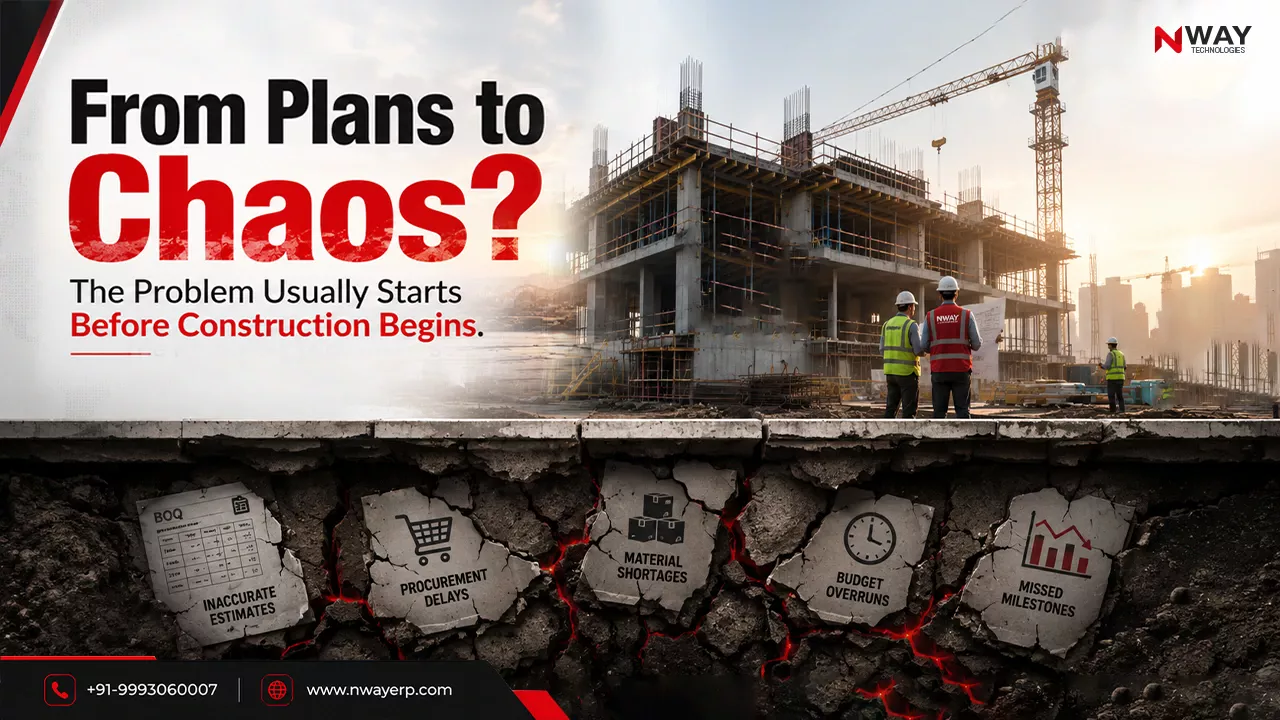
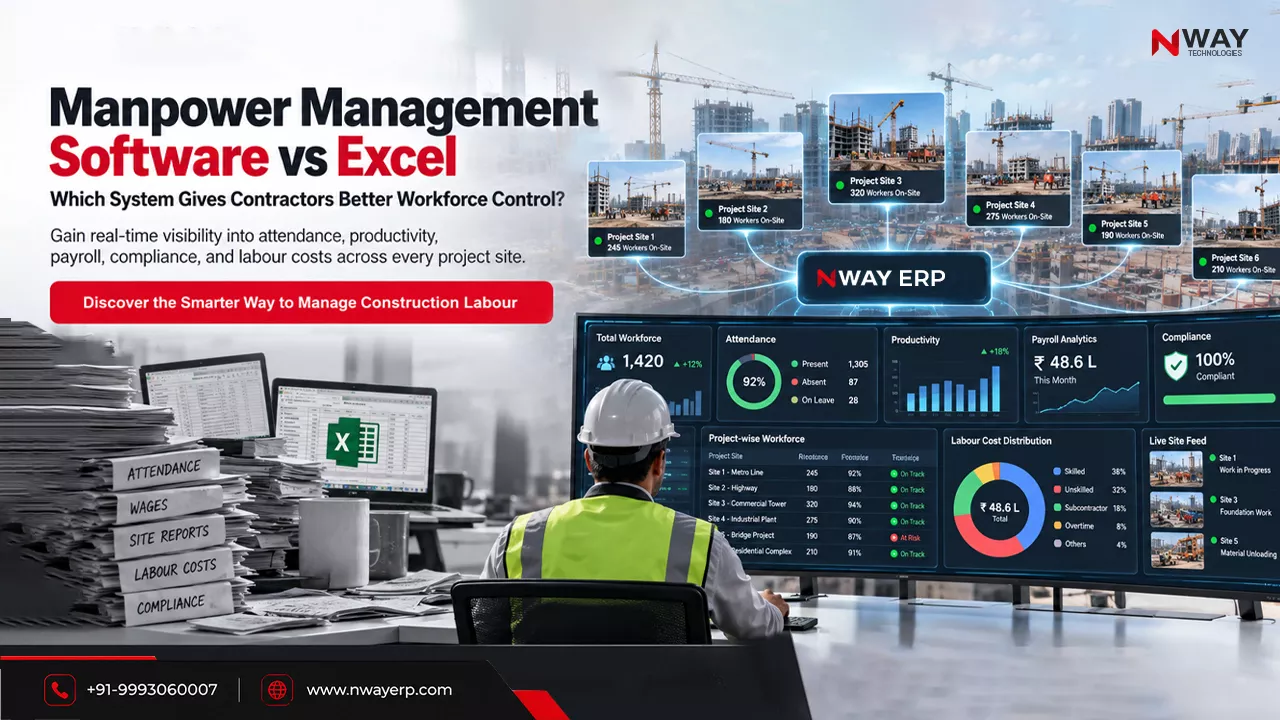
Most mid-sized construction firms in India maintain separate Excel files for BOQ tracking, purchase orders, material receipts, labour attendance, and billing. Each file is owned by a different department. Reconciling them for a management review takes 3–5 days and still produces inconsistent numbers.
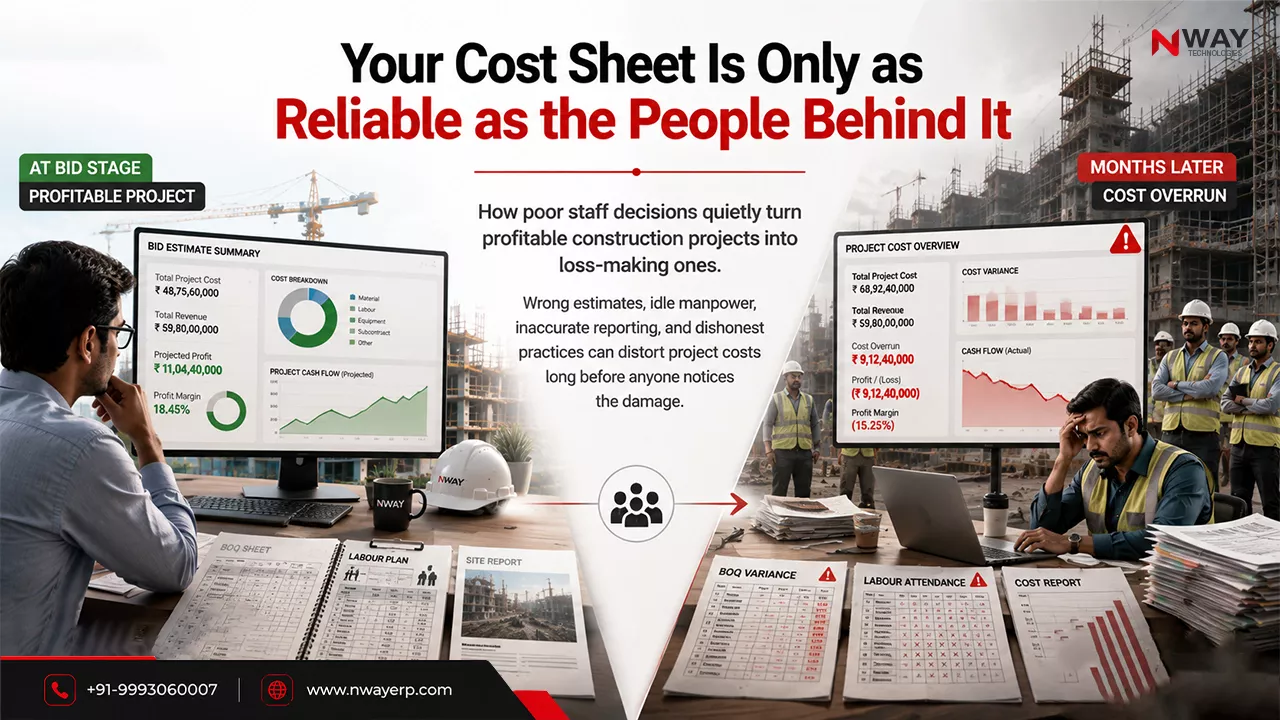
Scenario: A Hyderabad-based infrastructure contractor executing a ₹120 crore road project discovered, six months into execution, that their actual cost was 28% above the budgeted estimate.
The reason? Material consumption at the site had never been reconciled against the BOQ. By the time it was caught, the damage was done.
This is not an anomaly. It is the default operating condition for firms without integrated construction management software.
The Siloed Approvals Problem
Purchase approvals routed through email. Work orders shared over WhatsApp. Site engineers raising indent requests by phone. When data lives in disconnected channels:
- Duplicate purchases go undetected.
- Budget approvals bypass finance.
- Site managers make commitments that accounts don’t know about.
The Billing Delay Problem
RA bills in construction require certifying work done at the site, applying agreed rates, deducting retention money, computing GST, and raising a formal invoice, often for multiple packages across the same project. Manually, this process takes 15–30 days per cycle. Cash flow suffers. Relationships with clients deteriorate.
What Is Construction ERP Software?
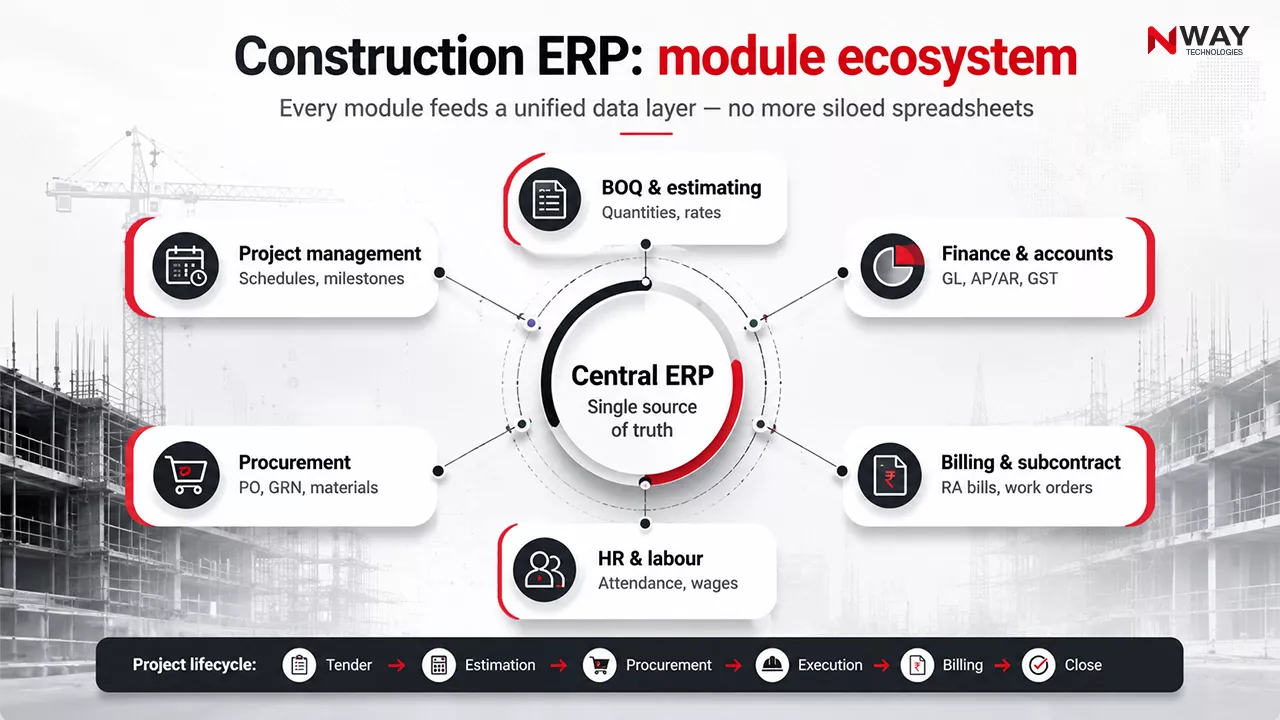
Construction ERP (Enterprise Resource Planning) is an integrated software platform that unifies all operational and financial functions of a construction business into a single system. Unlike generic ERP, construction-specific ERP is engineered for the project lifecycle:
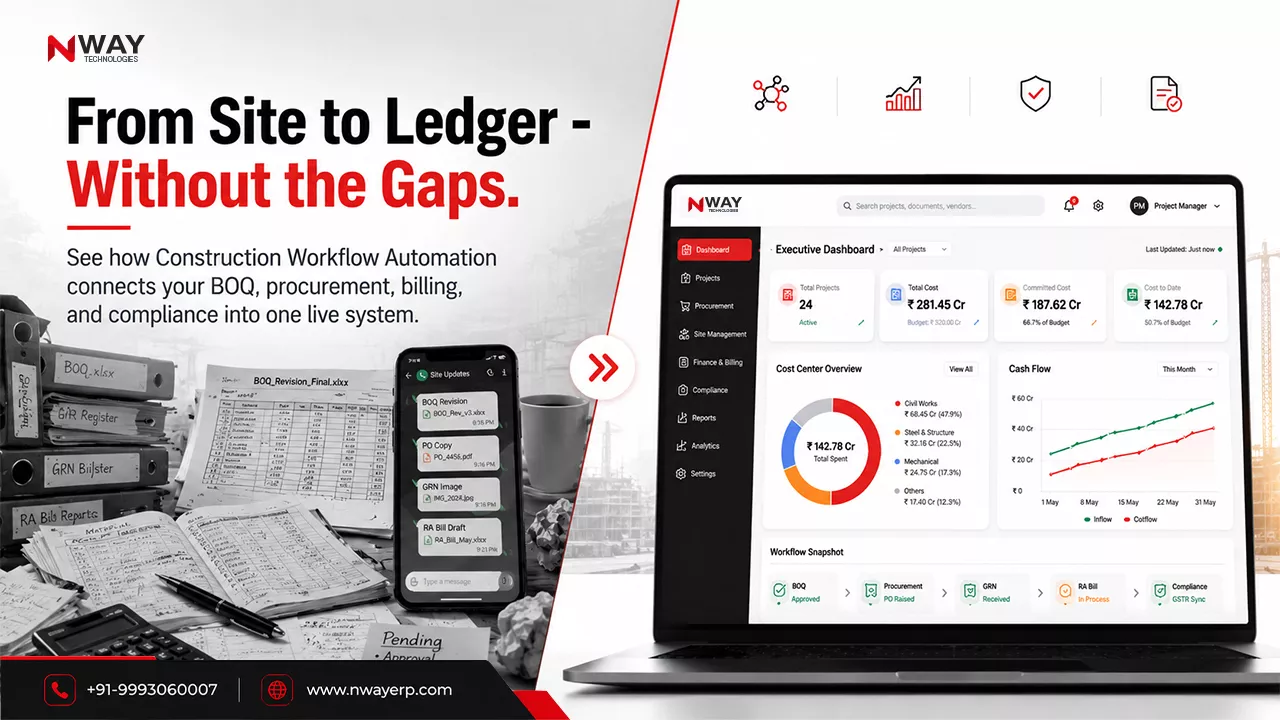
Tender → Estimation → BOQ → Procurement → Execution → Billing → Project Close
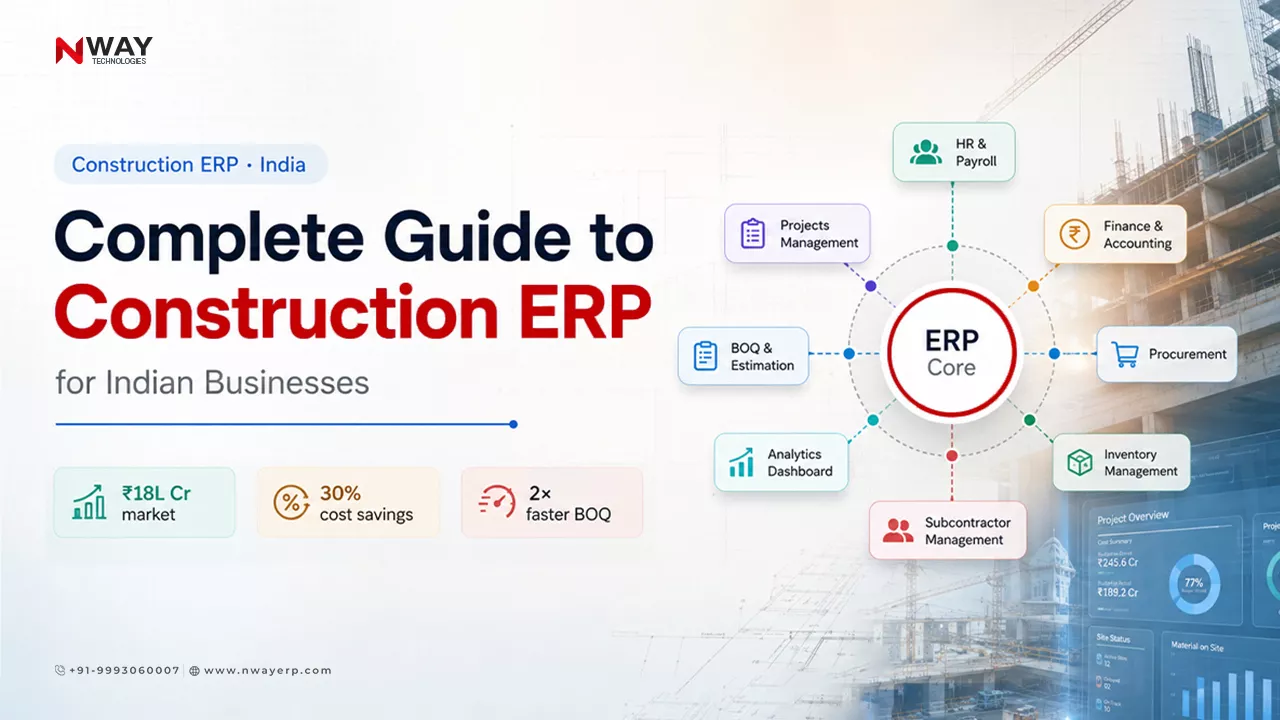
Key functional modules include:
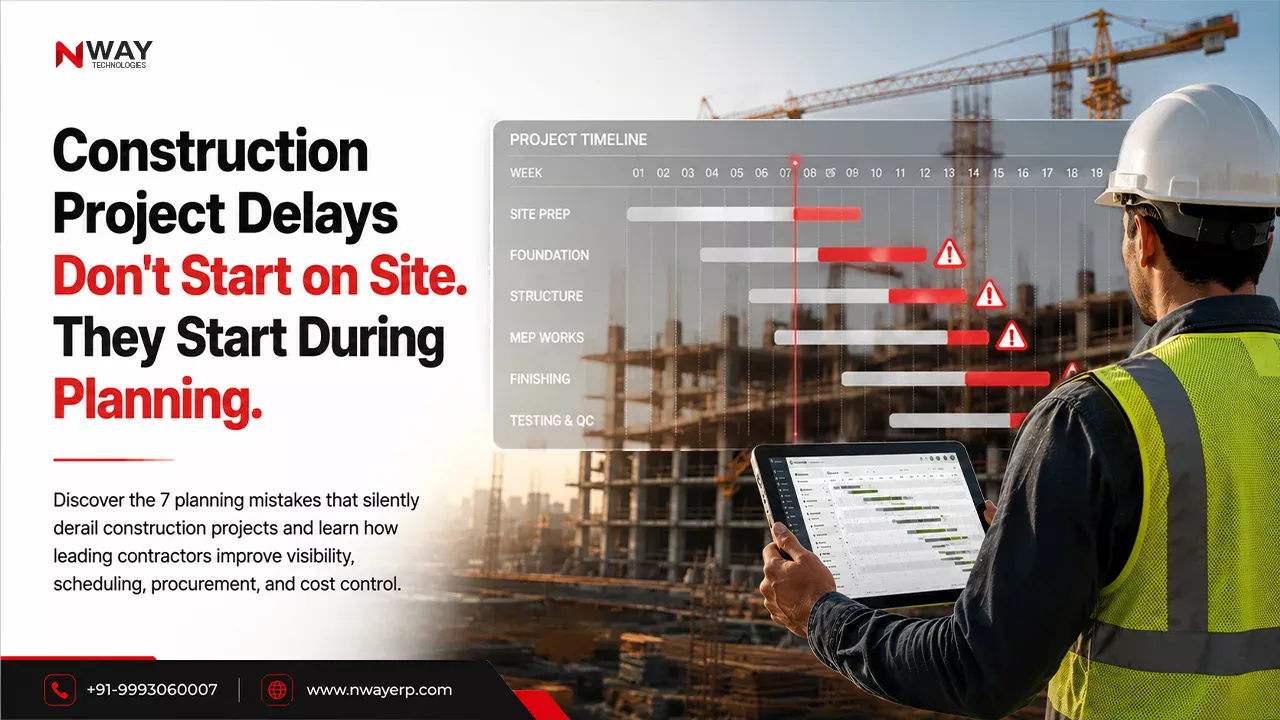
- Project Management & Scheduling Track project timelines, milestones, WBS (Work Breakdown Structure), and resource allocation. Identify delays before they become cost overruns.
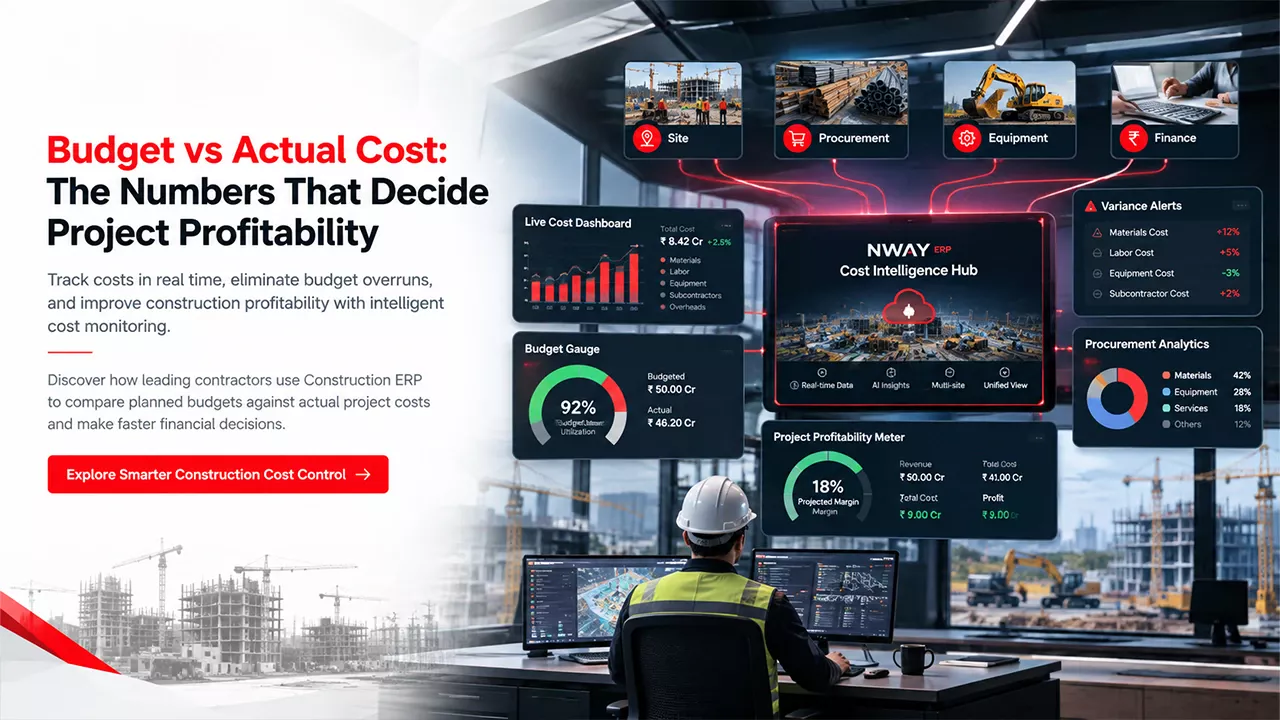
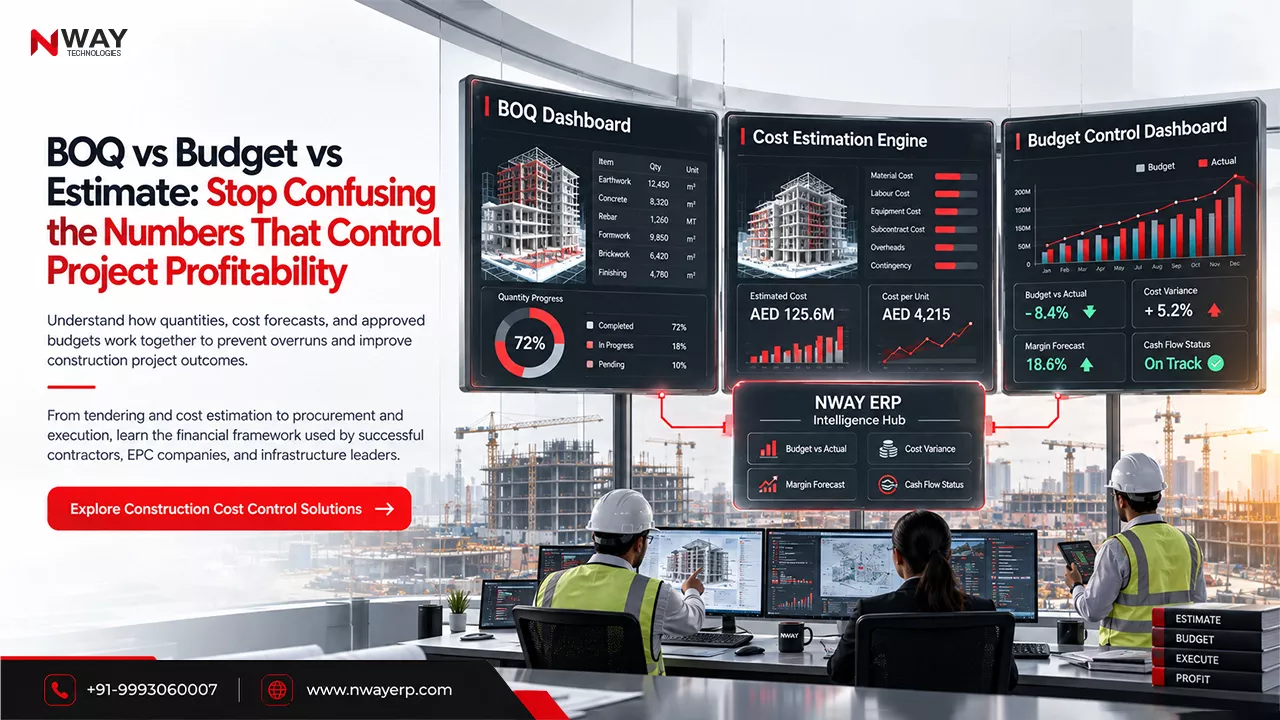
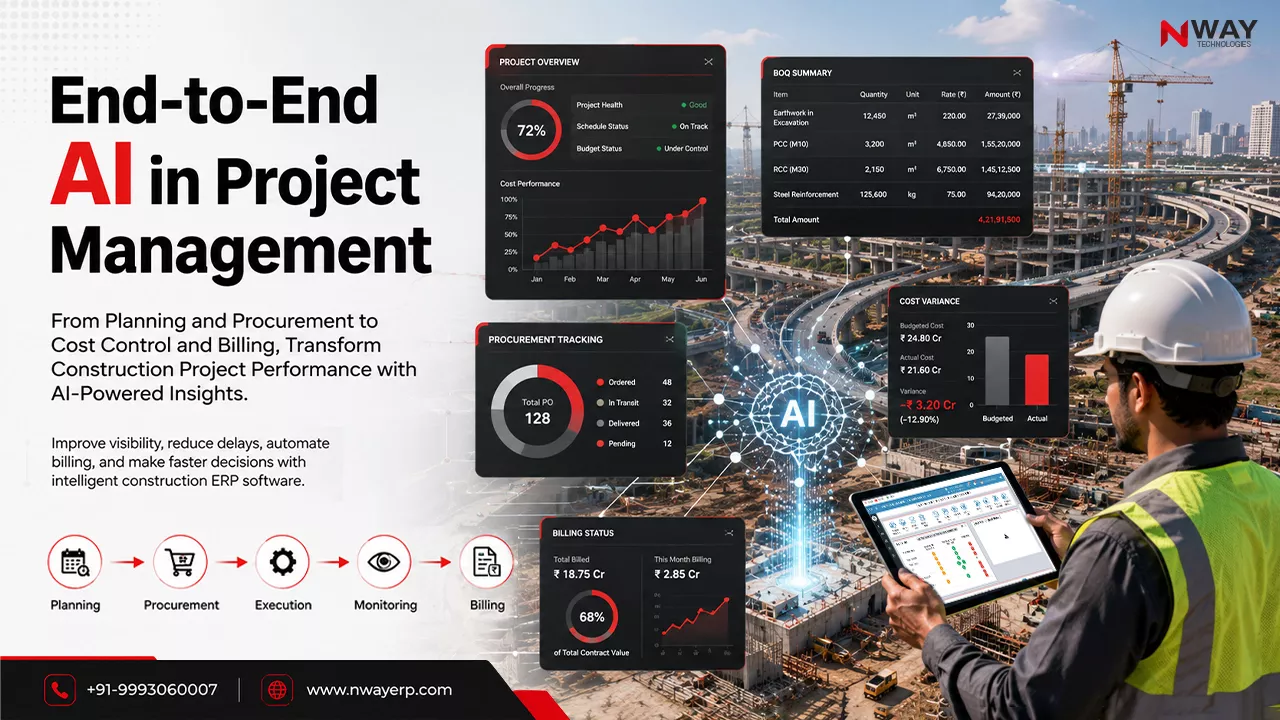
- BOQ & Cost Estimation Build Bills of Quantities digitally, link them to procurement, and monitor actual vs. budgeted costs in real time. This is the financial heartbeat of any construction project.
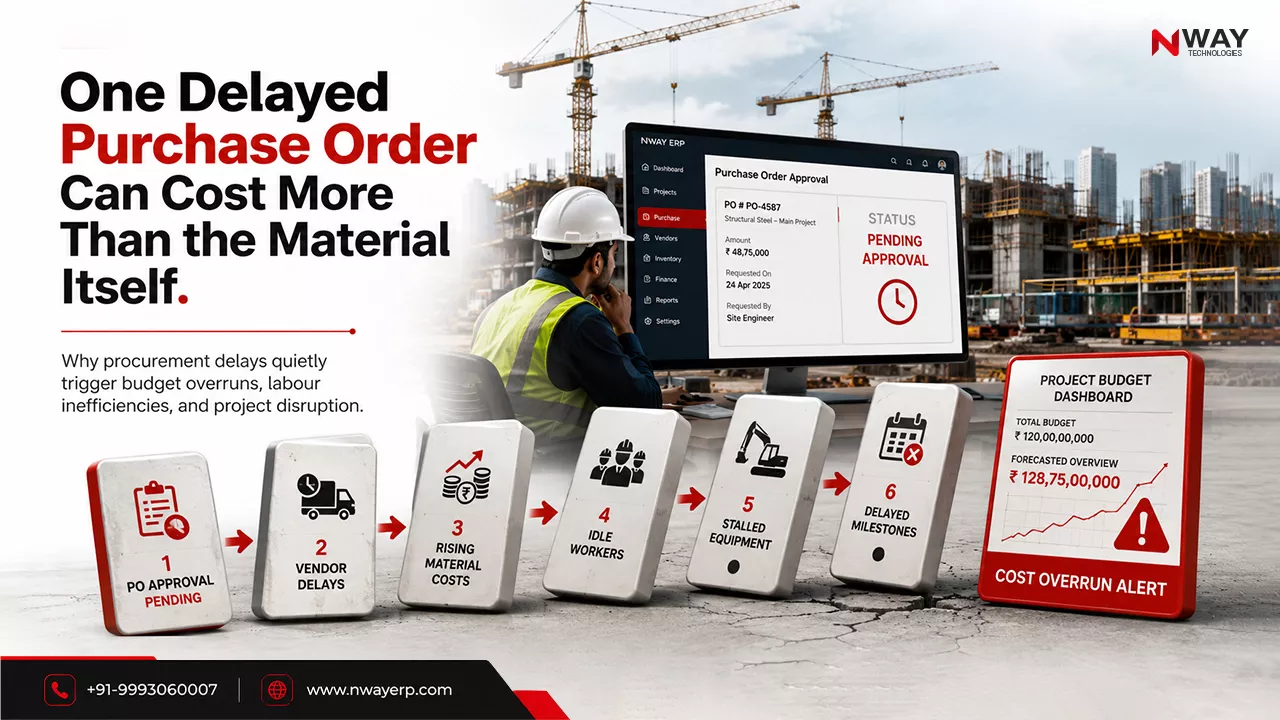
- Procurement & Inventory Management Manage indent requests, vendor quotations, PO approvals, GRN (Goods Receipt Notes), and stock transfers across multiple sites with full audit trails.
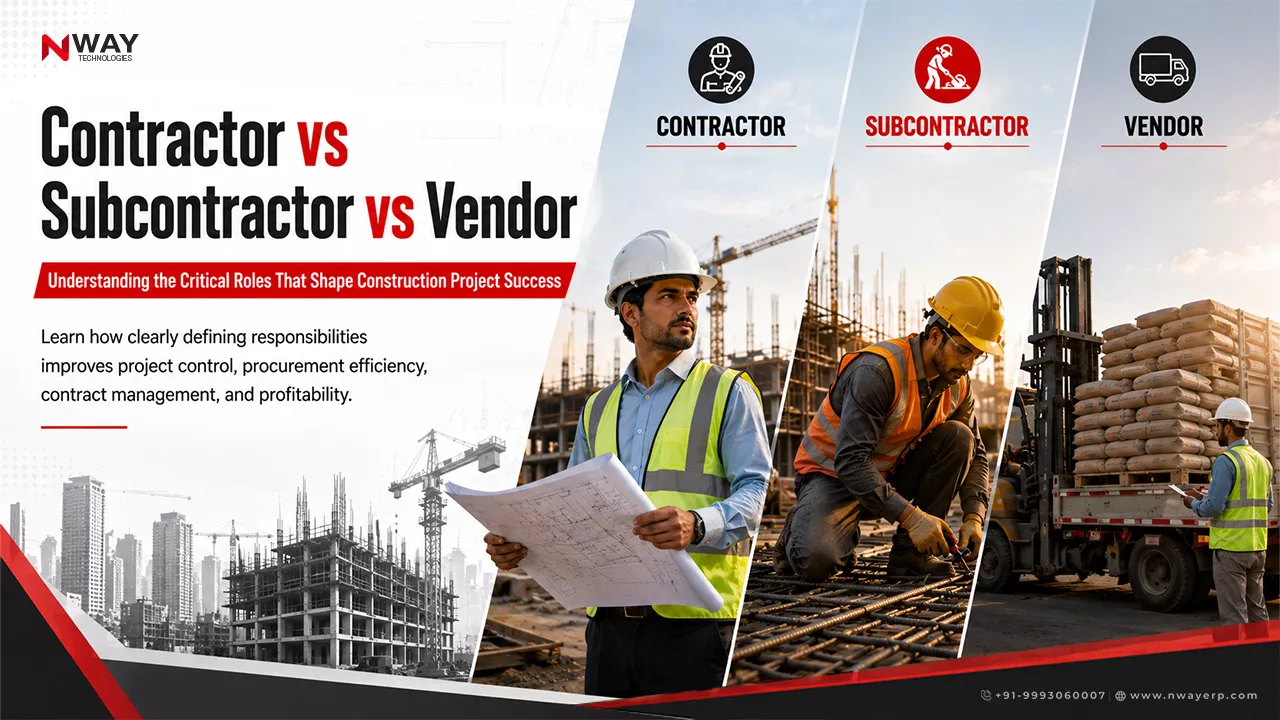
- Subcontractor & Work Order Management Issue work orders to subcontractors, track milestones, certify work completion, and process payments all within a single workflow.
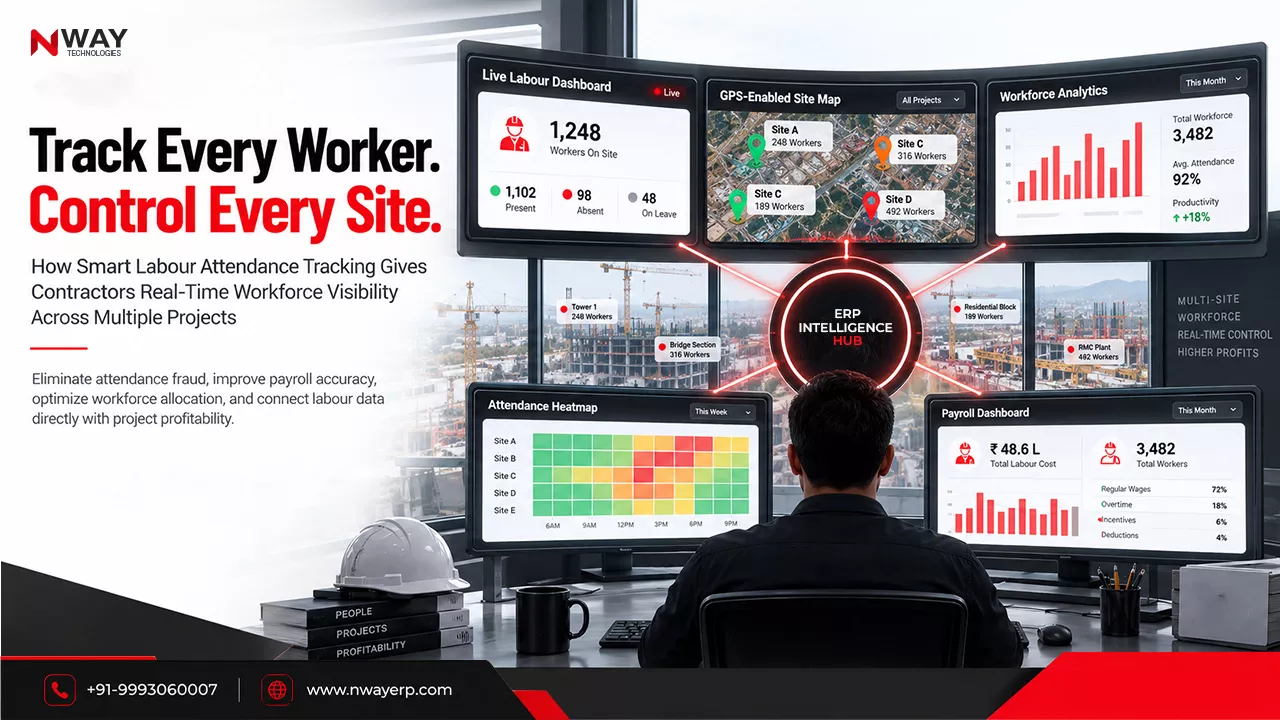
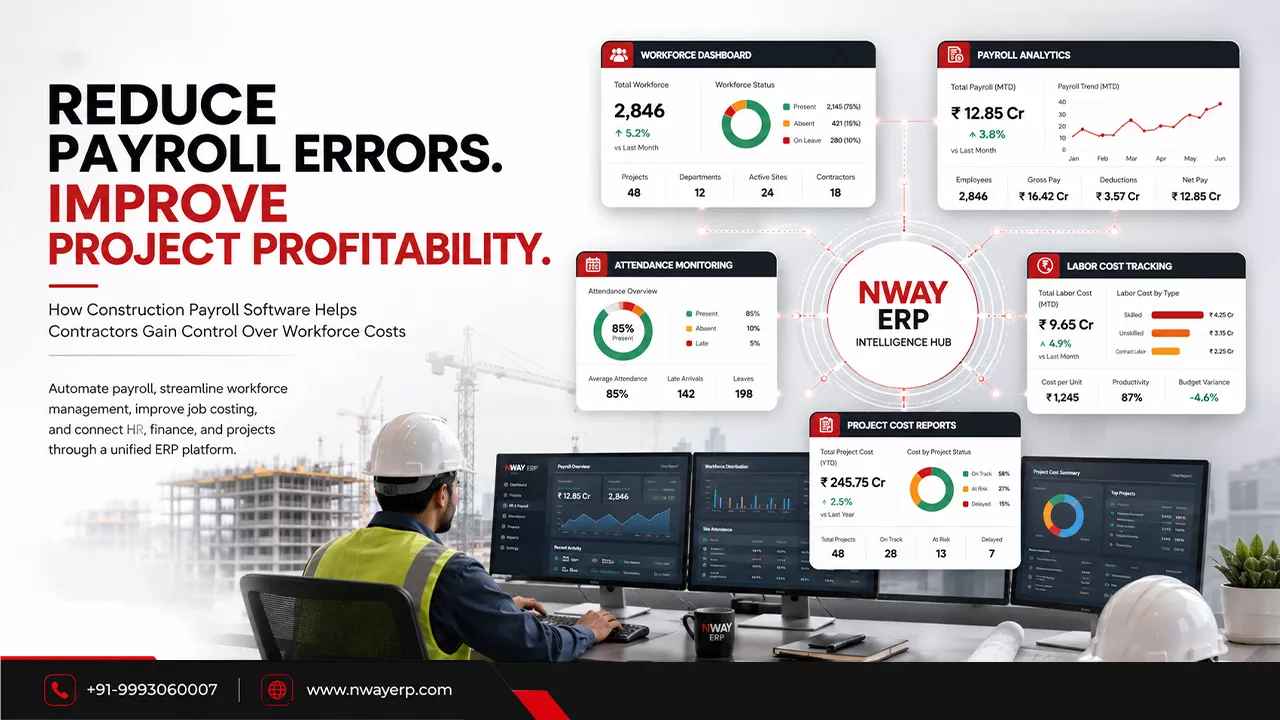
- HR, Labour & Payroll Handle daily attendance for site workers, calculate wages (daily/monthly/piece-rate), manage EPF/ESIC deductions, and maintain statutory compliance registers.
- Finance, GST & Compliance Auto-compute GST on works contracts (SAC codes), manage TDS deductions, track retention money, and generate MIS reports for management review.
- Construction Billing Software Generate RA bills, progress invoices, and client statements with automated retention and escalation calculations. Reduce billing cycles from weeks to 1–2 days.
Real-World Use Cases: Where ERP Transforms the Jobsite
Use Case 1: Multi-Site Material Control for a Real Estate Developer
A Pune-based developer managing 12 residential towers was losing an estimated ₹2.8 crore annually to untracked material transfers between sites. After deploying construction ERP with site-wise inventory management, all inter-site stock movements required a digital transfer note. Within three months, material wastage dropped by 22%, and the developer could see real-time stock levels from any device.
Use Case 2: Faster Cash Flow for a Civil Contractor
A Delhi NCR civil contractor executing three NHAI packages was raising RA bills manually a 25-day cycle. After implementing construction billing software as part of an ERP rollout, certified quantities were auto-populated from the measurement books, GST was computed automatically, and bills were raised in 48 hours. The improvement in cash flow reduced dependence on working capital loans by ₹1.2 crore over a year.
Use Case 3: Subcontractor Dispute Resolution for an Infra Firm
A Bengaluru infrastructure company had recurring payment disputes with subcontractors due to unreconciled work completion records. With ERP-driven work order management, site engineers certified completed milestones digitally, and subcontractor payments were auto-calculated against agreed rates. Disputes dropped to near zero within two billing cycles.
Business Outcomes Tied to ERP Adoption
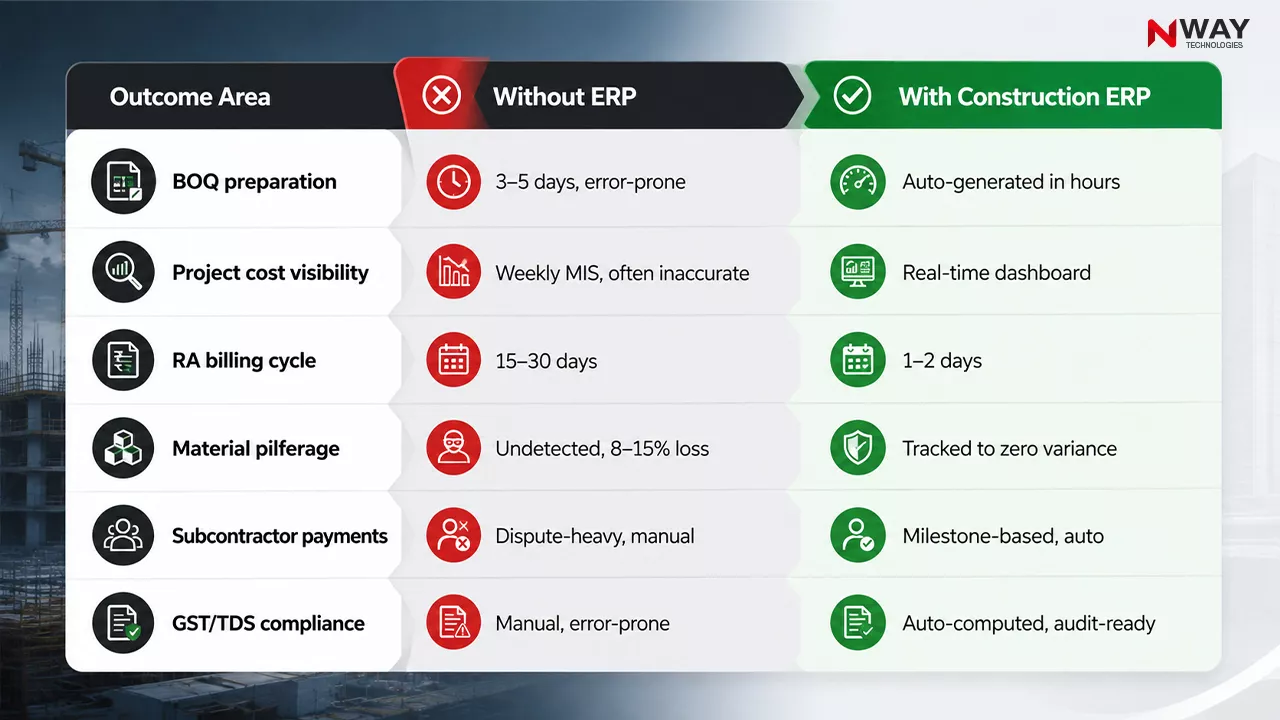
Firms that deploy the best construction ERP software in India consistently report a 20–35% reduction in procurement costs and a 40-60% reduction in billing turnaround time within the first year.
How to Choose the Right ERP for Construction Companies
When evaluating ERP software for construction companies, look for these capabilities:
- Construction-specific BOQ engine – not a generic item master adapted for construction.
- Multi-project, multi-site architecture – ability to manage dozens of projects with independent budgets and shared resources.
- Indian statutory compliance – built-in GST (works contract), TDS, EPF/ESIC, and labour welfare fund handling.
- Cloud-based deployment – accessible to site engineers, project managers, and CFOs from any location and device.
- Mobile access for site teams – indent raising, attendance marking, and material receipt from site-level mobile apps.
- Vendor and subcontractor portals – collaborative access without giving full system access.
- Integration capability – connects with AutoCAD, Tally, or client-side project management tools where needed.
Nway ERP: Built for the Indian Construction Reality
Most ERP platforms are adapted from manufacturing or retail. Nway ERP is engineered from the ground up for the construction and infrastructure sector in India.
Its modules map directly to how Indian contractors operate, from BOQ-linked procurement and RA billing to BOCW (Building and Other Construction Workers) compliance and cement/steel consumption tracking. The platform is cloud-based, mobile-ready, and priced for mid-market contractors, making enterprise-grade construction management accessible without enterprise-level IT budgets.
For firms looking for the best construction ERP software in India that understands the nuances of Indian construction contracts, Nway ERP bridges the gap between field operations and financial control.
Point to focus on
- Indian construction firms lose 20–40% of project margins to manual inefficiencies in BOQ, procurement, and billing.
- Construction ERP software integrates project management, finance, procurement, HR, and billing into one platform.
- Cloud-based ERP for construction companies eliminates data silos and enables real-time decision-making across multiple sites.
- Construction billing software automates RA bills, retention tracking, and GST/TDS compliance, reducing billing cycles from weeks to days.
- Domain-specific ERP built for Indian contractors outperforms generic ERP by handling BOQ, work orders, and labour compliance natively.
Conclusion
India’s construction boom is a generational opportunity, but only for firms that can execute with control. The margin between profit and loss on a large infrastructure or real estate project increasingly comes down to operational discipline: precise BOQ tracking, real-time cost monitoring, accurate billing, and compliant subcontractor management.
Manual methods and disconnected spreadsheets have taken the industry this far. They will not take it further.
Construction ERP Software India is no longer an IT investment; it is an operational necessity. The firms deploying it today are building the competitive advantage that will define the sector over the next decade.
For a closer look at why this shift is accelerating now, see our analysis on why 2026 is the tipping point for ERP adoption in Indian construction, and explore our roundup of the top construction management software for 2026 if you’re comparing options.