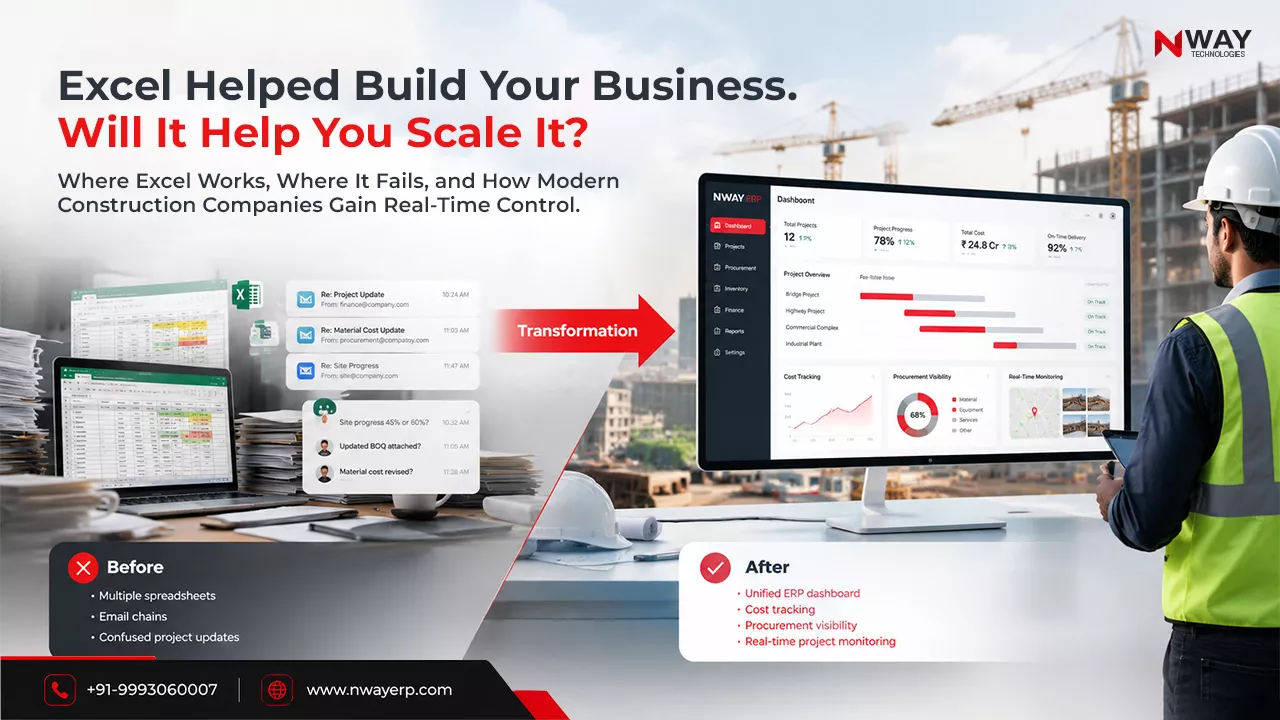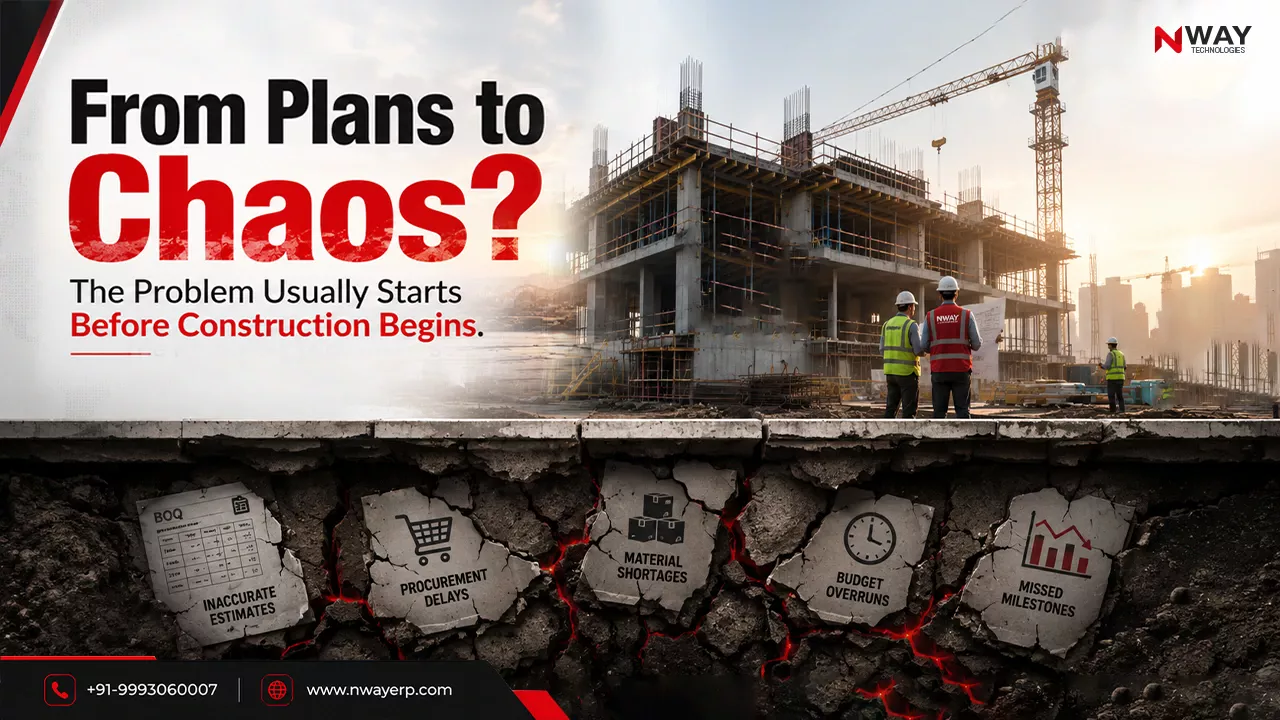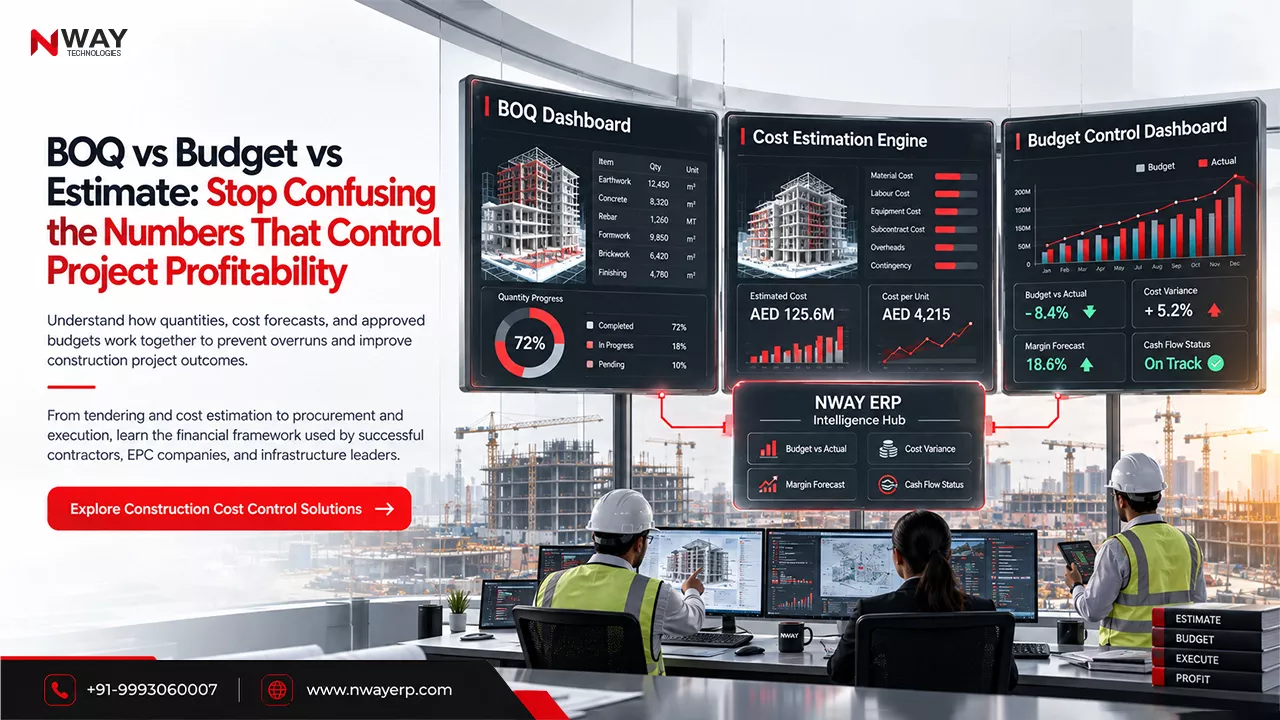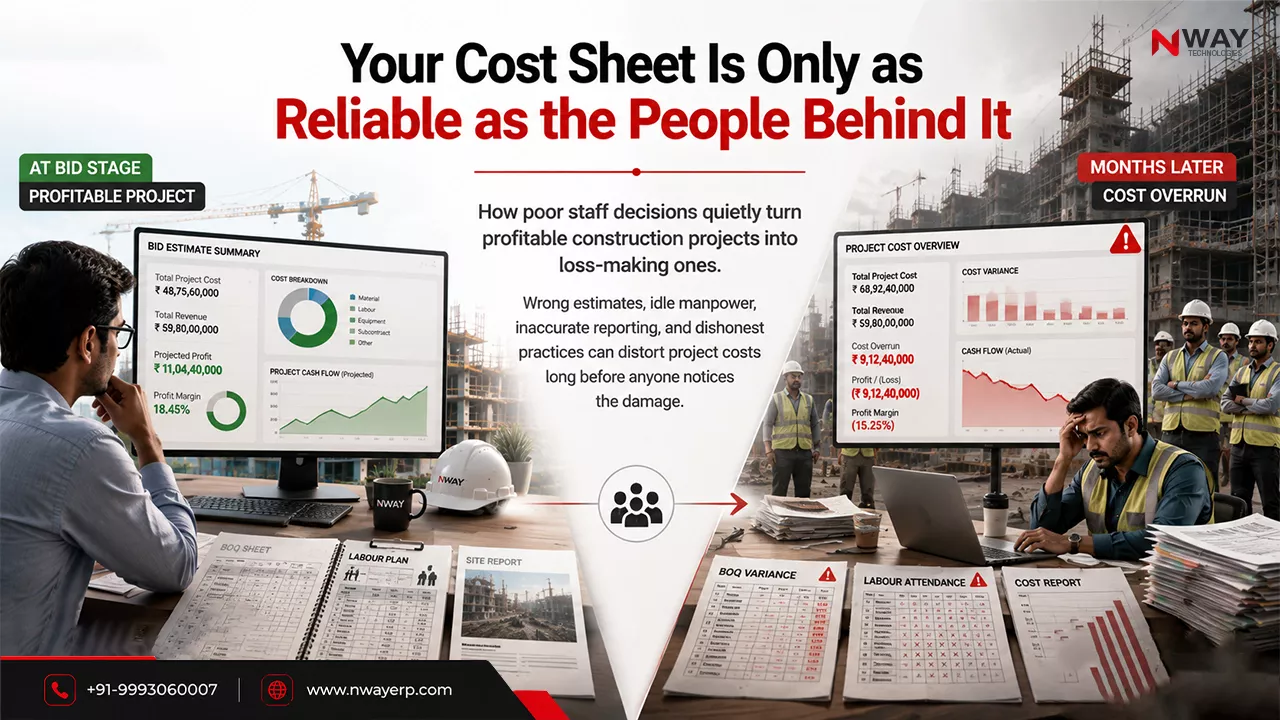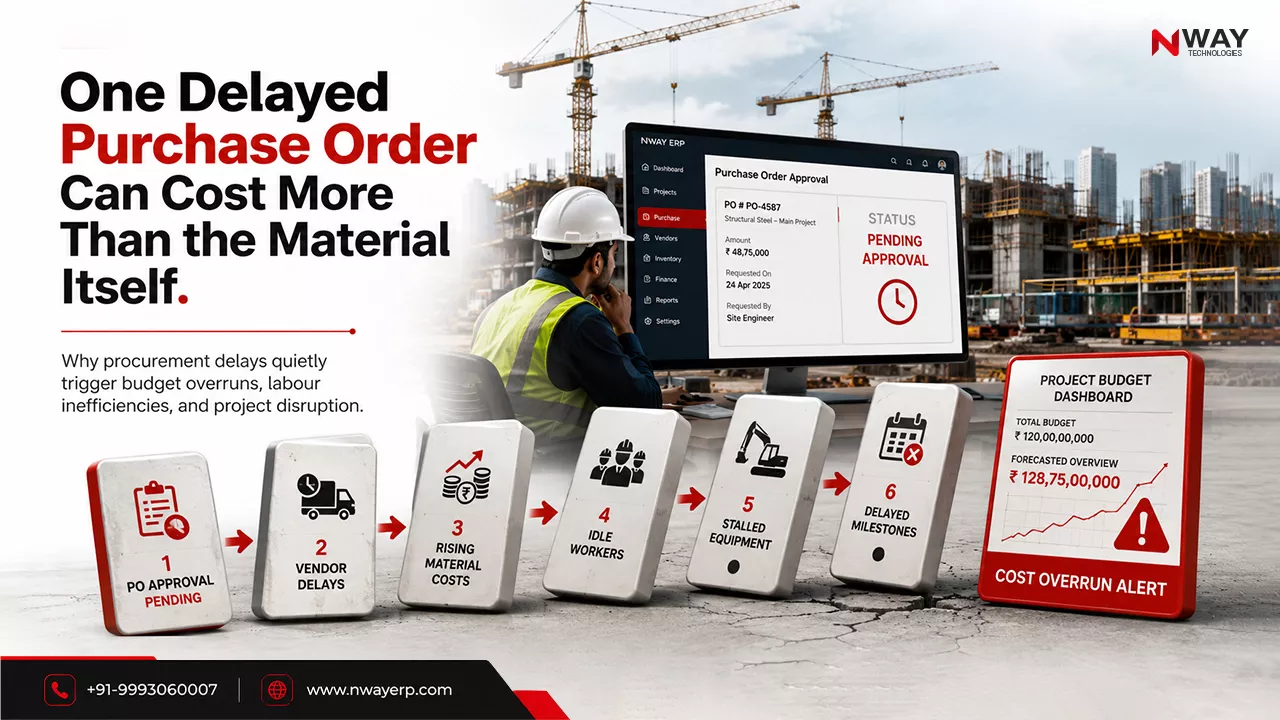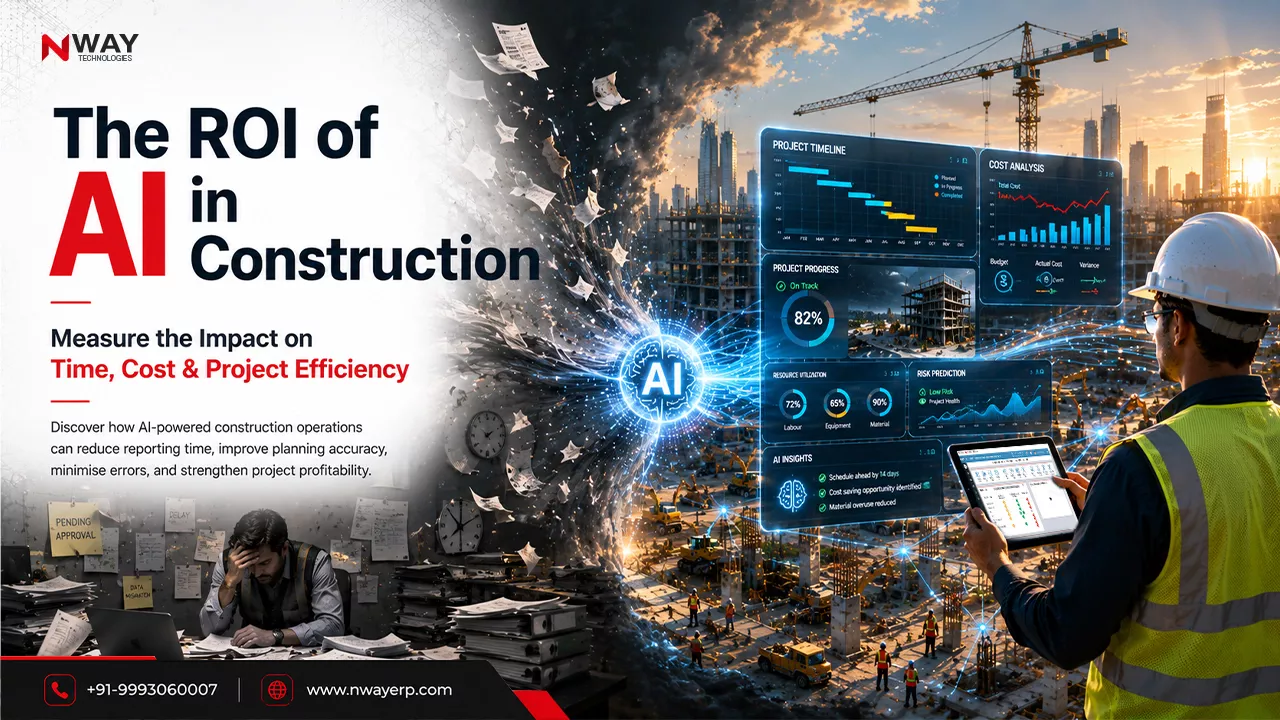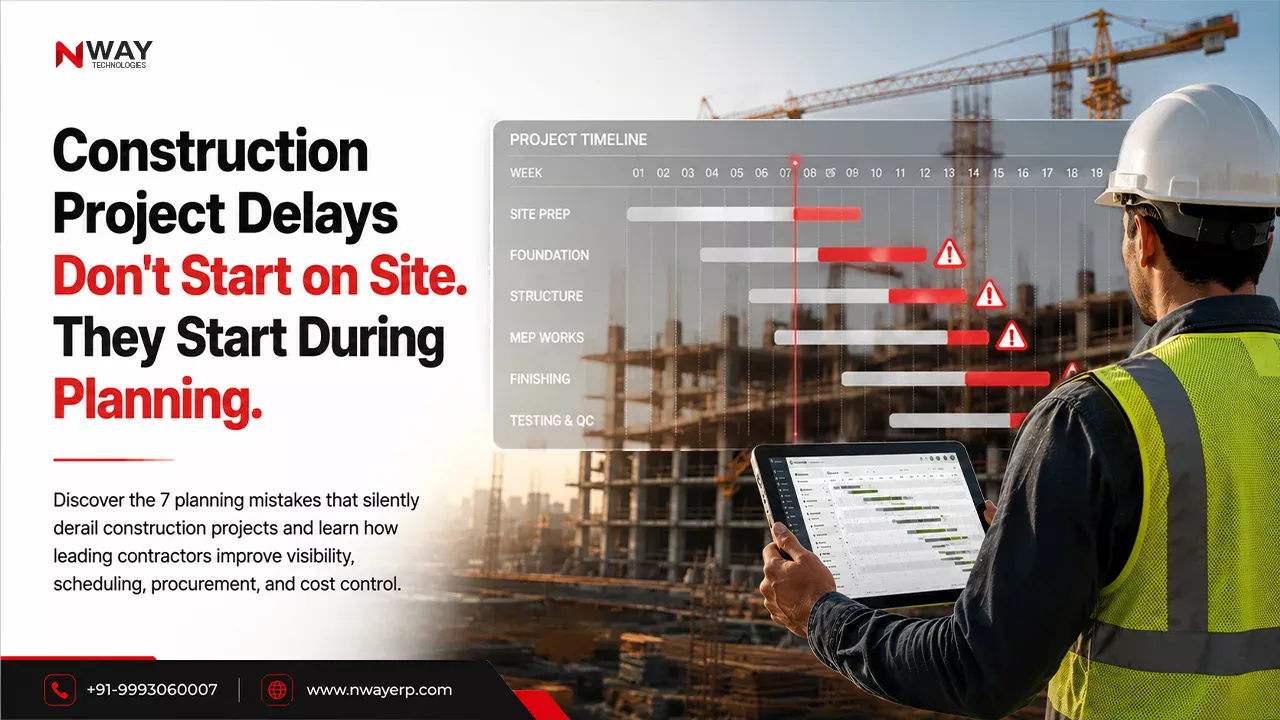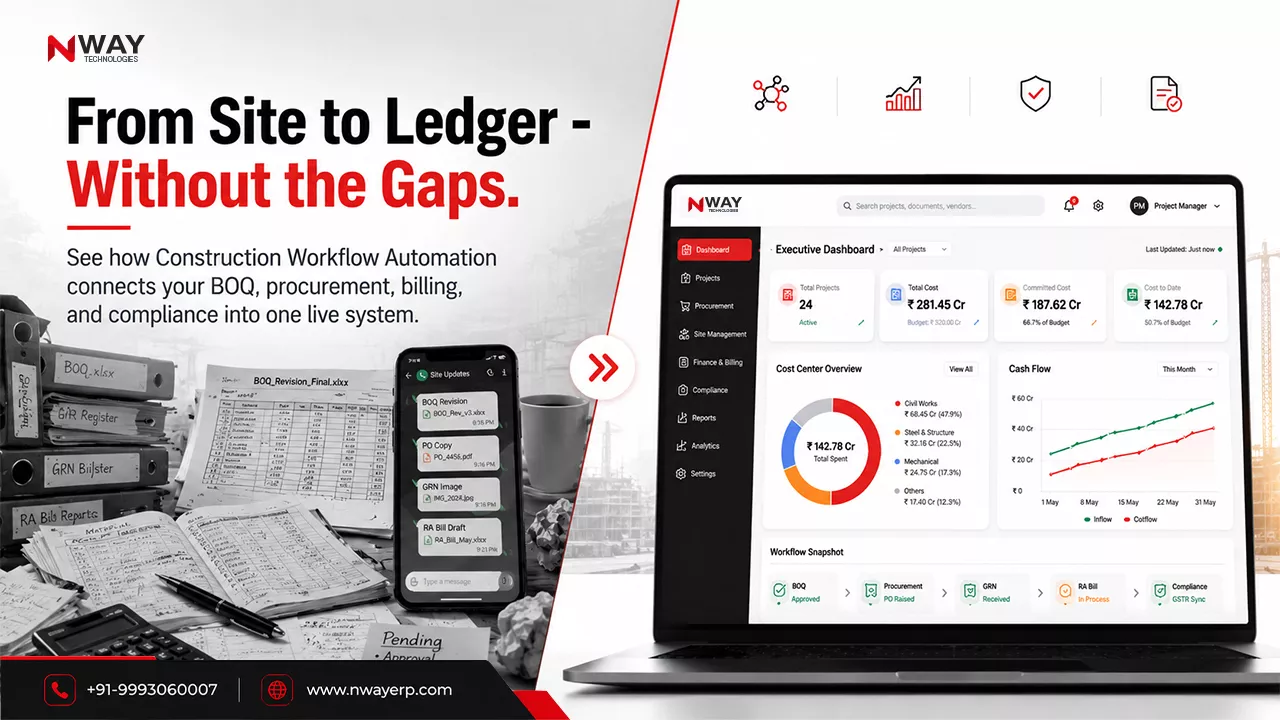
A site engineer emails a Bill of Quantities revision at 9 p.m. The purchase team, unaware, releases a purchase order against the old BOQ the next morning. Three weeks later, during RA billing, the mismatch surfaces and by then it has already cost the project a material overorder, a delayed GRN reconciliation, and a tense conversation with the client’s quantity surveyor. This is not hypothetical. It is Tuesday, in thousands of construction offices.
Multiply that scenario across procurement, subcontractor billing, compliance filings, and site progress tracking, and you get a construction business that is perpetually one spreadsheet away from a costly surprise. This is the operational reality that construction workflow automation is built to solve — not by adding more software to the stack, but by connecting the sequence of approvals, documents, and cost centers that make up a project lifecycle for construction and infrastructure firms of every size.
Table of Contents:
- The Construction Industry’s Productivity Problem
- What Is Construction Workflow Automation?
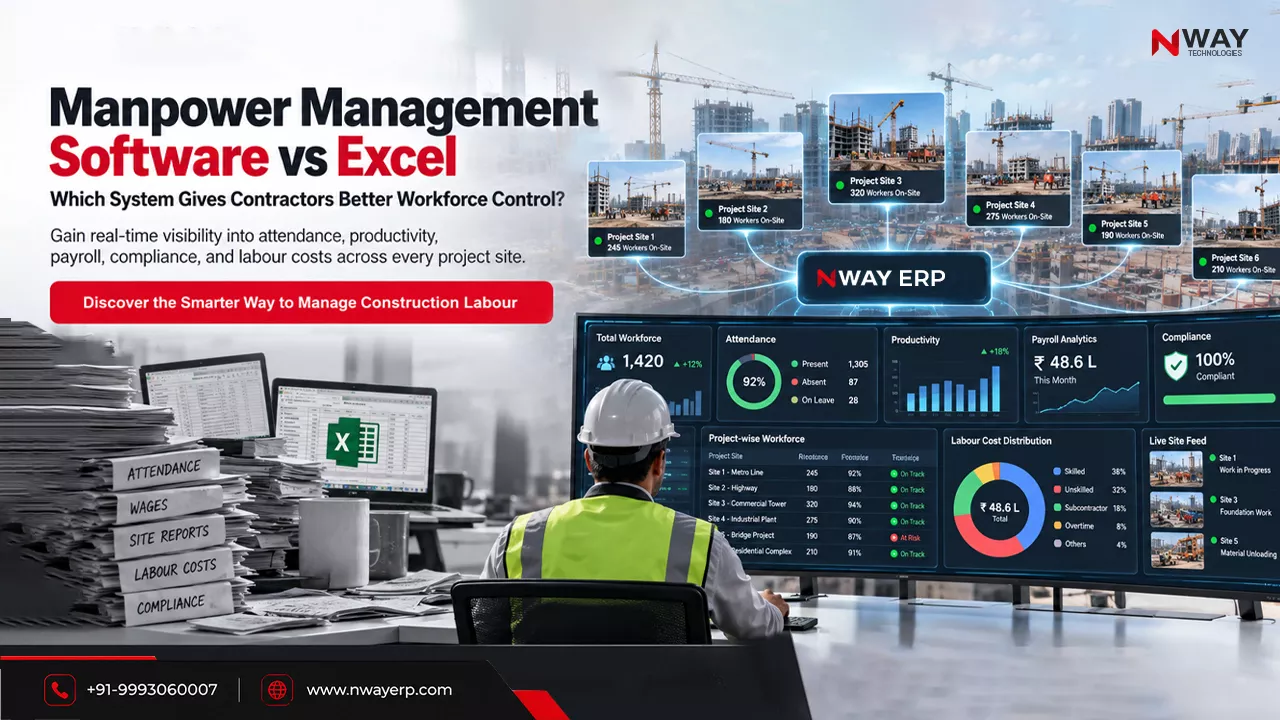
- The Inefficiencies of Manual Operations
- The Real Cost of Manual Workflows
- The Power of Automation: A New Operating Model for Construction
- Revolutionising Construction Management with ERP Software
- Conclusion
The Construction Industry’s Productivity Problem
The numbers make the case better than any sales pitch could. Global construction productivity grew by only about 10 percent between 2000 and 2022, a fraction of the pace achieved by the broader economy over the same period, according to McKinsey & Company’s analysis of construction productivity trends. Margins remain thin, projects routinely run over budget and schedule, and the sector continues to be flagged as one of the least digitised major industries globally, trailing manufacturing and retail by a wide margin in technology adoption.
For Indian construction and infrastructure firms specifically, this shows up as familiar, repeatable pain: RA bills that take weeks to reconcile, GRNs that don’t match purchase orders, GST input credit that slips through GSTR-2A/2B mismatches, and site-to-head-office reporting that runs on WhatsApp forwards and Excel macros. Construction Digitisation is no longer a competitive advantage; it is becoming a baseline requirement for firms that want to protect margins in an increasingly cost-sensitive bidding environment.
What Is Construction Workflow Automation?
Construction Workflow Automation refers to the use of connected rule-based digital systems to manage the sequence of approvals, documentation, and data hand-offs across a project’s lifecycle from tendering and procurement through execution, billing, and compliance closeout. Rather than treating each function (procurement, site engineering, accounts, compliance) as an isolated silo, Workflow automation in construction links them through a single source of truth.
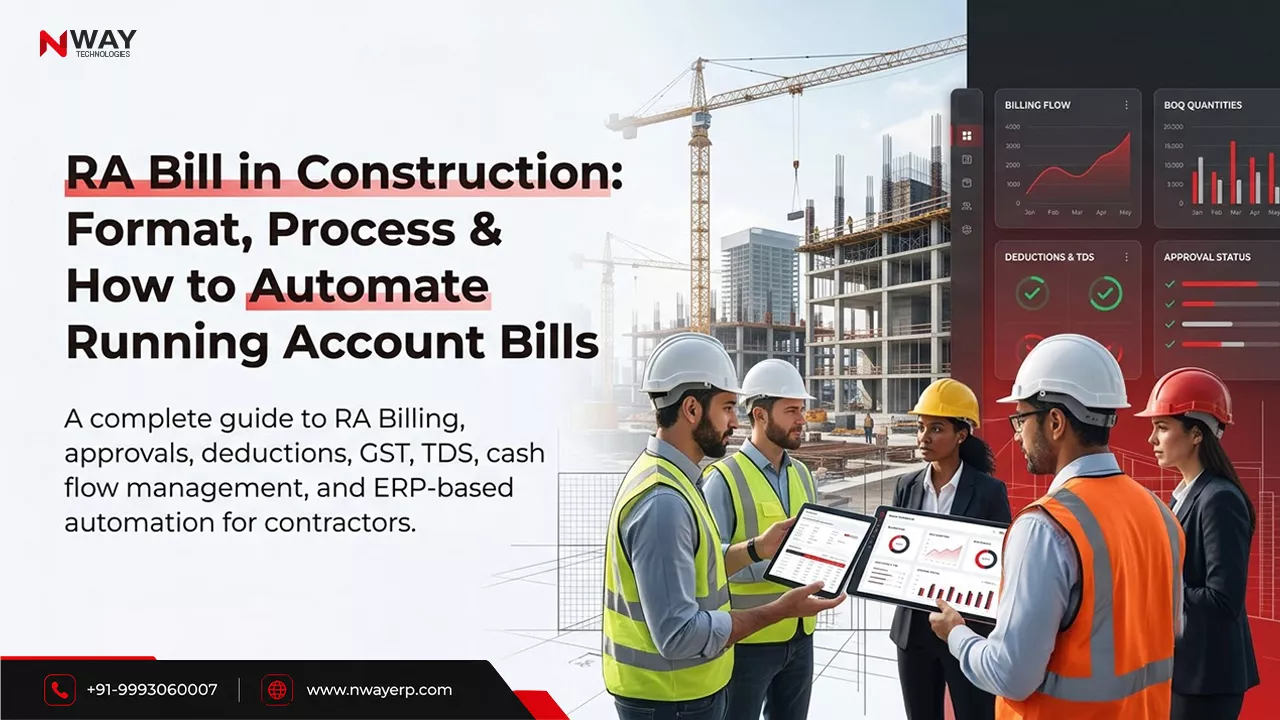
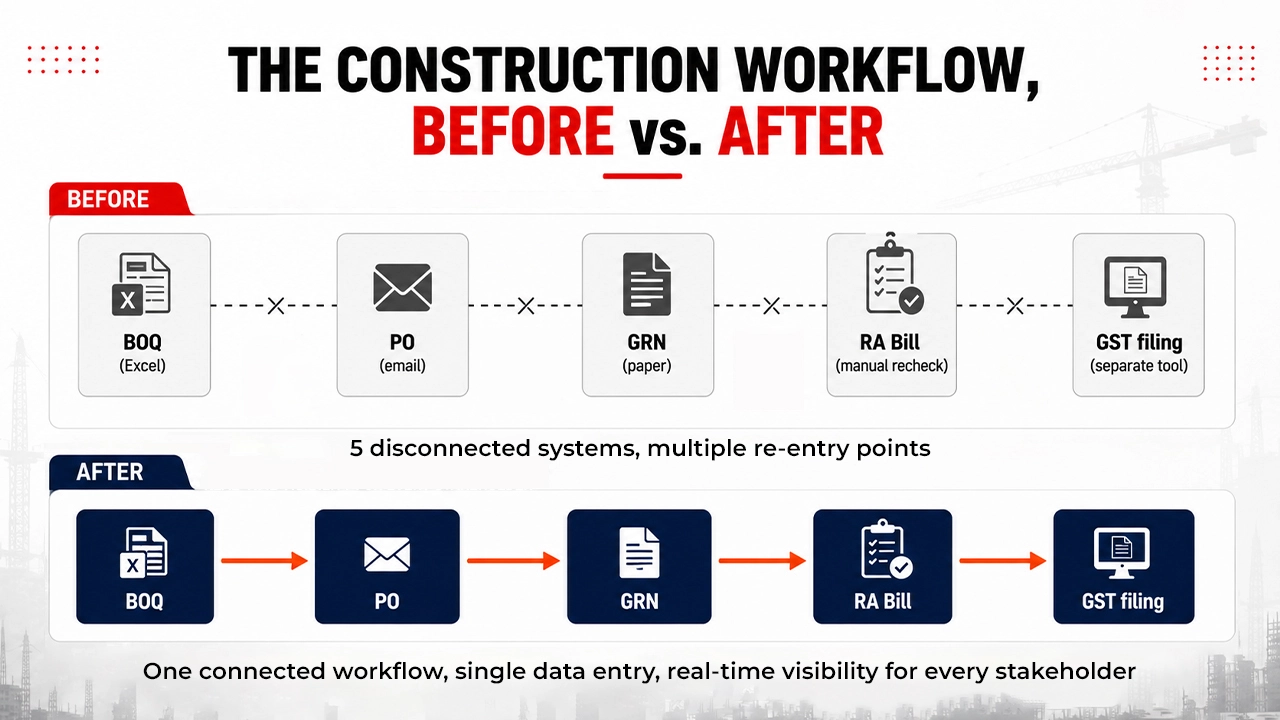
In practice, this means a BOQ revision automatically flows to procurement; a GRN automatically triggers a three-way match against the purchase order and vendor invoice; and an RA bill automatically pulls verified quantities instead of relying on a site engineer’s manual recheck. This is the essence of Construction Process Automation not replacing human judgment, but removing the manual re-entry and re-verification steps where errors and delays compound.
The Inefficiencies of Manual Operations
Most construction firms are not short on effort; they are short on connected systems. Manual and semi-digital methods (Excel trackers, WhatsApp groups, disconnected accounting software) worked when projects were smaller, and teams were co-located. At today’s scale, they break down in predictable ways:
Fragmented Data Across Tools and Sites
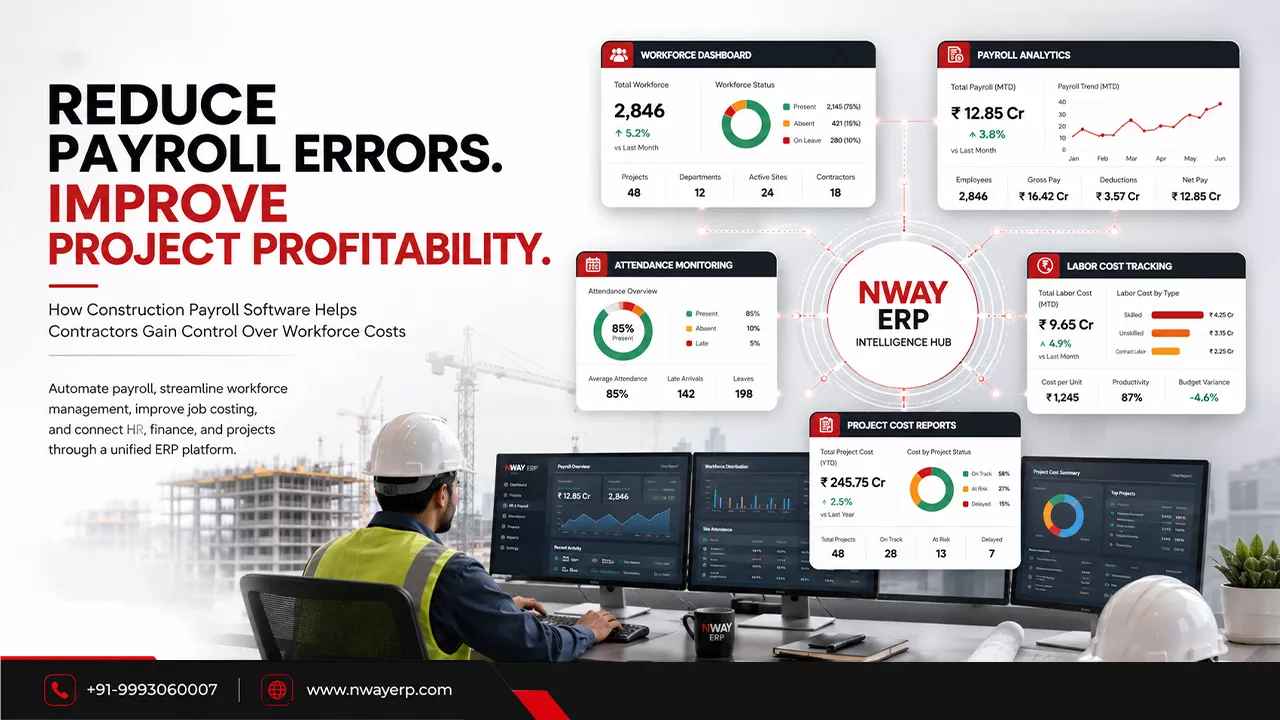
Site engineers track progress in one format; procurement tracks vendor POs in another, and accounts reconcile GST in a third. Nothing talks to anything else, so every handoff is a manual re-entry, and every re-entry is a chance for error.
Data Migration Challenges Faced by Construction Companies
Firms that do attempt to digitise often stall at the first hurdle: migrating years of BOQ, vendor, and project-cost history from spreadsheets and legacy tools into a structured system. Without a clear migration plan, historical cost data the very thing needed to estimate future projects accurately get left behind or entered inconsistently, undermining the value of any new system from day one.
Approval Bottlenecks and Delayed Visibility
When approvals depend on someone physically signing a register or forwarding an email chain, cost center owners lose real-time visibility into committed spend. CFOs frequently discover budget overruns only at the RA billing stage, long after the spend has already occurred.
The Real Cost of Manual Workflows
The cost of staying in a manual is not abstract. Many organisations struggle to realise measurable value from their digital transformation investments, often because initiatives are implemented as point solutions rather than connected workflows. For construction firms, this gap shows up directly on the balance sheet.
| Manual Process | Business Impact |
|---|---|
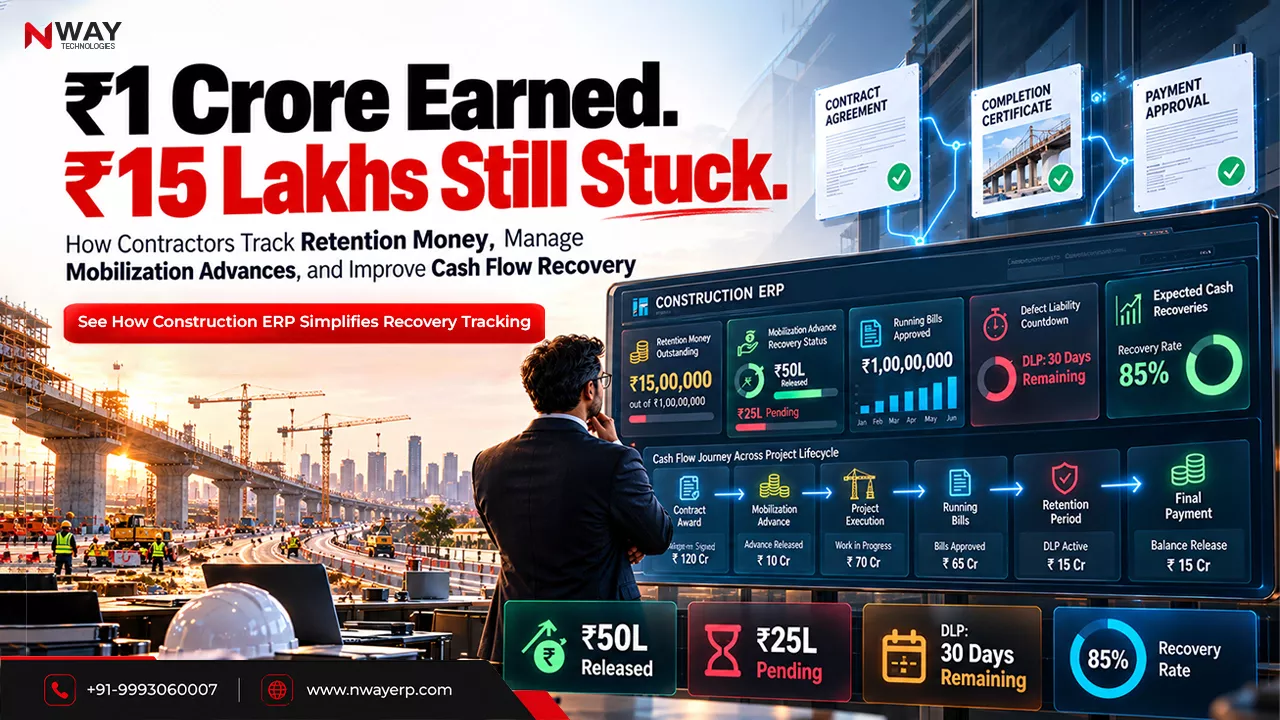
| Manual RA billing & cost tracking | Delayed billing cycles, disputed quantities, cash-flow strain |
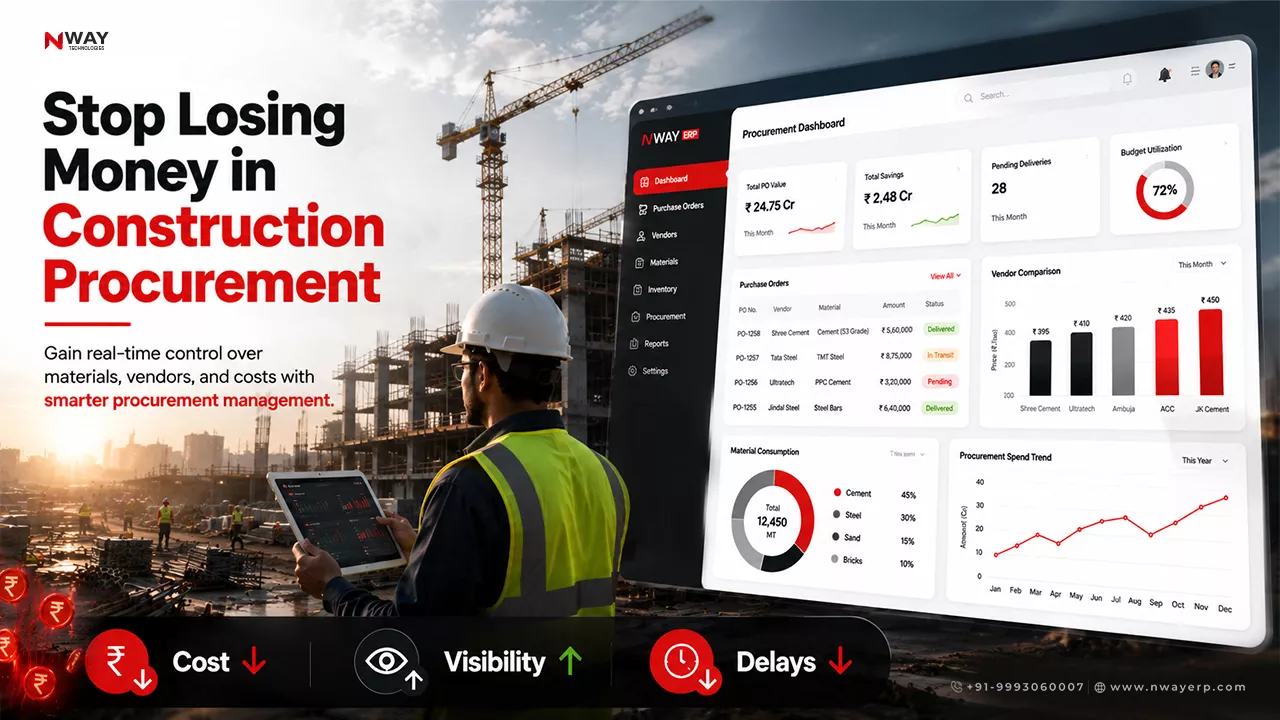
| Disconnected procurement & GRN | Material over-ordering, vendor payment mismatches |
| Manual GST/GSTR-2A-2B reconciliation | Lost input tax credit, compliance risk under RCM & BOCW |
| Siloed site-to-office reporting | Delayed decisions, budget overruns discovered too late |
Curious where your workflows are leaking time and cost?
Explore how Construction Workflow Automation fits into your current process
The Power of Automation: A New Operating Model for Construction
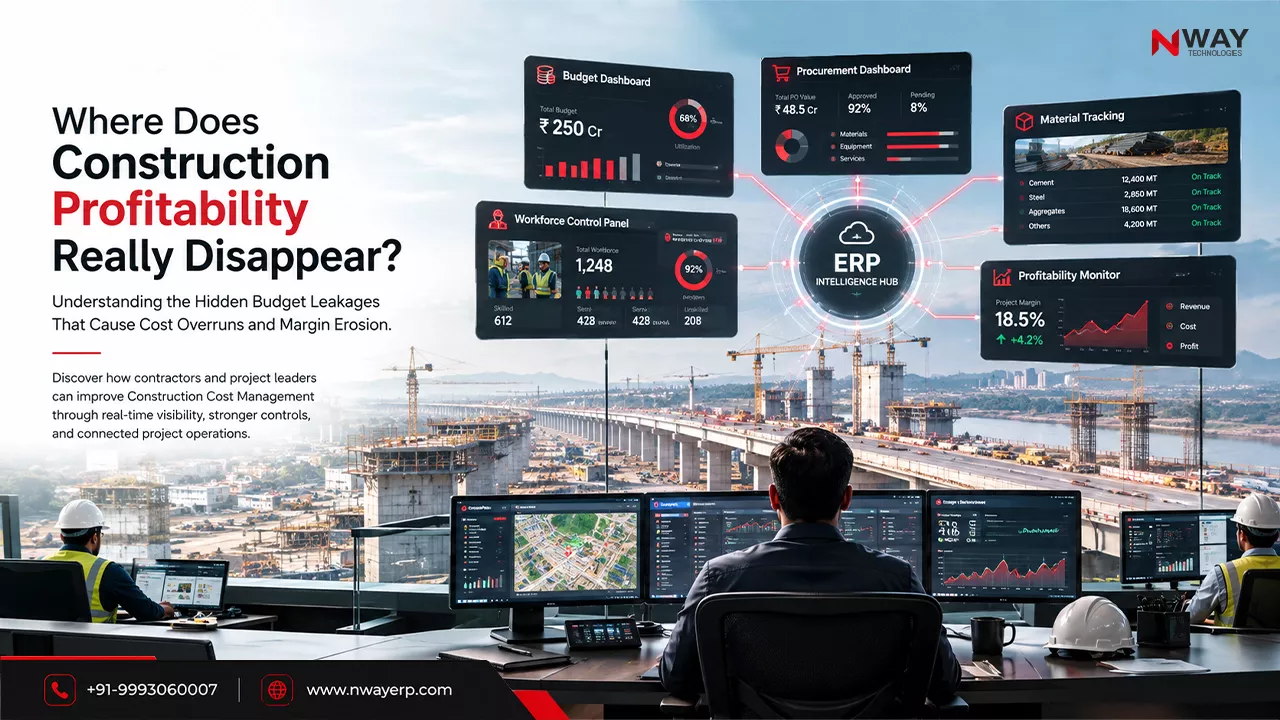
This is where the power of automation changes the equation. Rather than digitising individual tasks, Construction Operations Management platforms connect the full project lifecycle tendering, BOQ, procurement, site execution, RA billing, and compliance into one workflow with a shared data layer.
Automated Procurement and Vendor Workflows
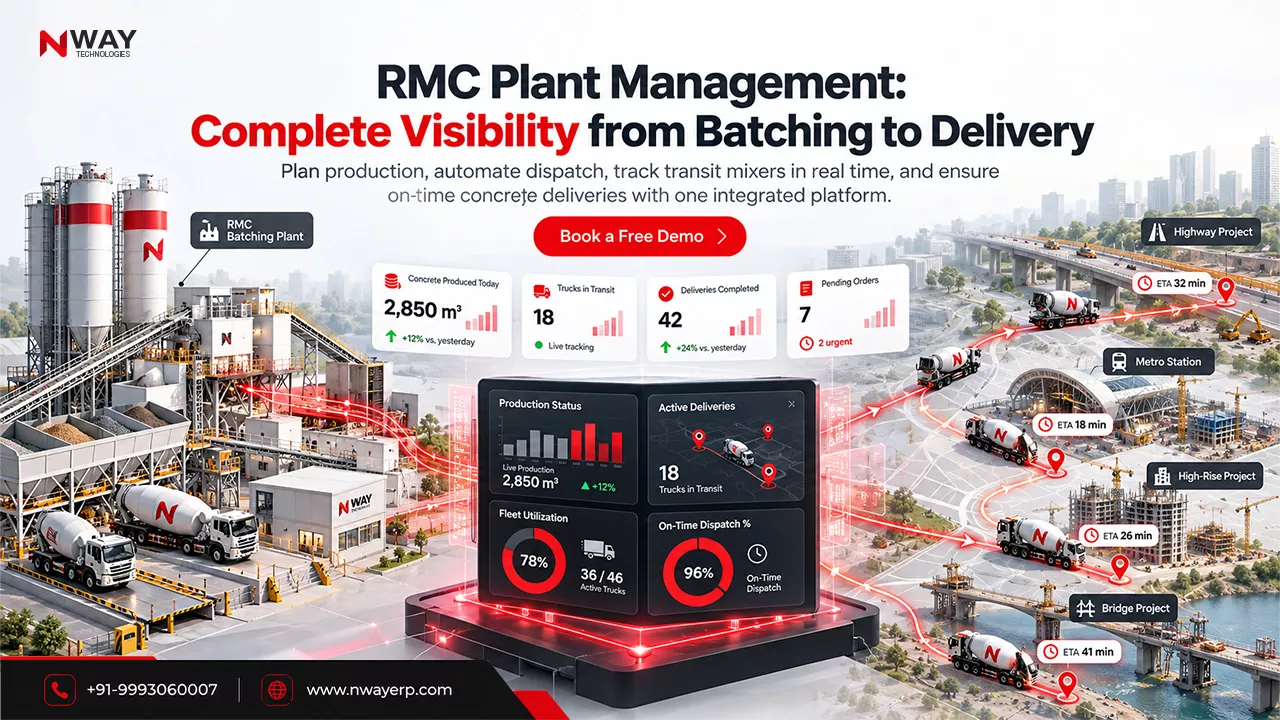
Purchase requisitions are routed automatically to the right approver based on cost center and value threshold. GRNs are matched against POs and vendor invoices without manual cross-checking, closing the gap where over-ordering and payment disputes typically originate.
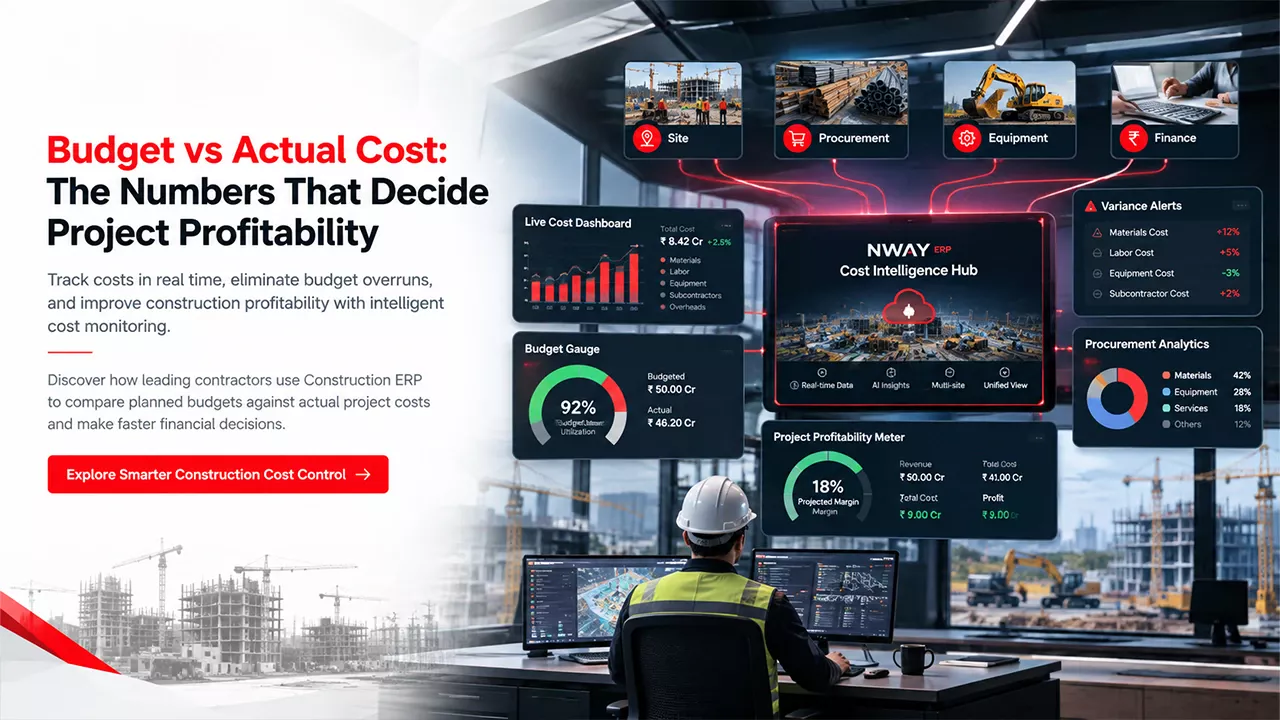
Contractors Can Manage Cost Centers Easily with Construction Cost Management Software
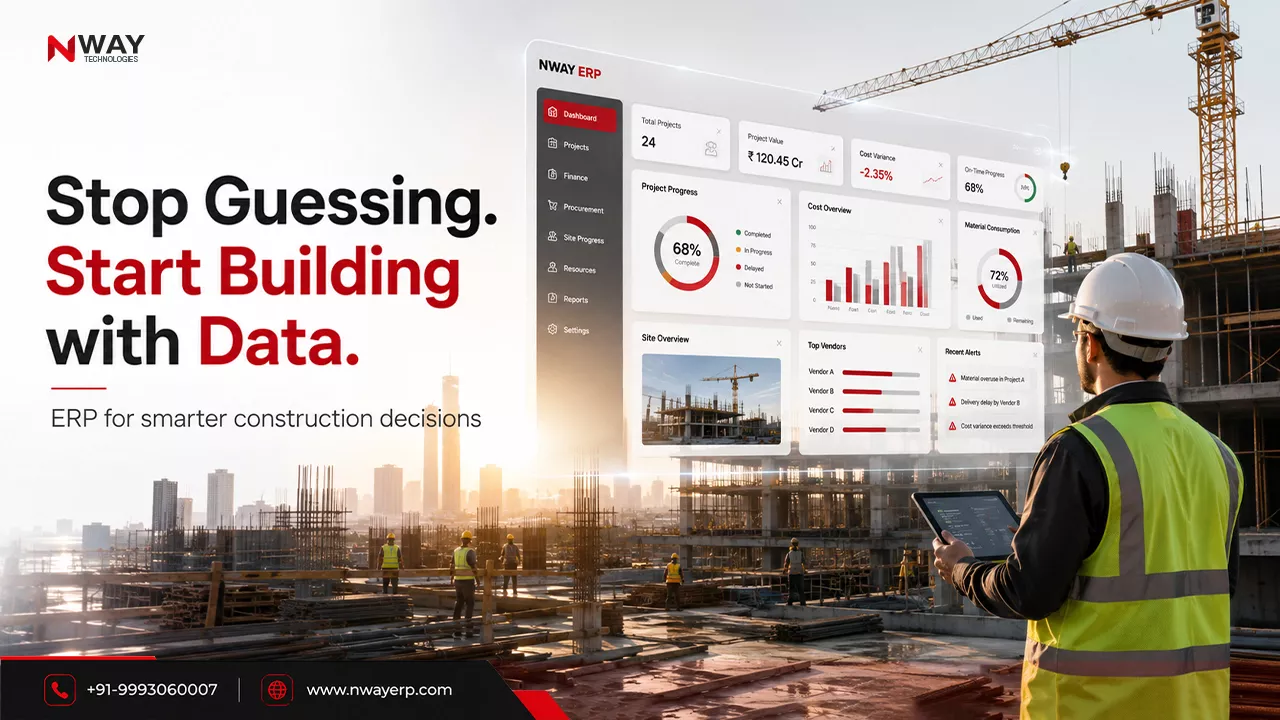
Every WBS element, cost center, and RA bill line becomes trackable in real time, not just at month-end, with Construction Cost Management Software. Contractors and CFOs get a live view of committed versus actual spend, which means budget overruns are flagged as they happen — not discovered three weeks later during reconciliation
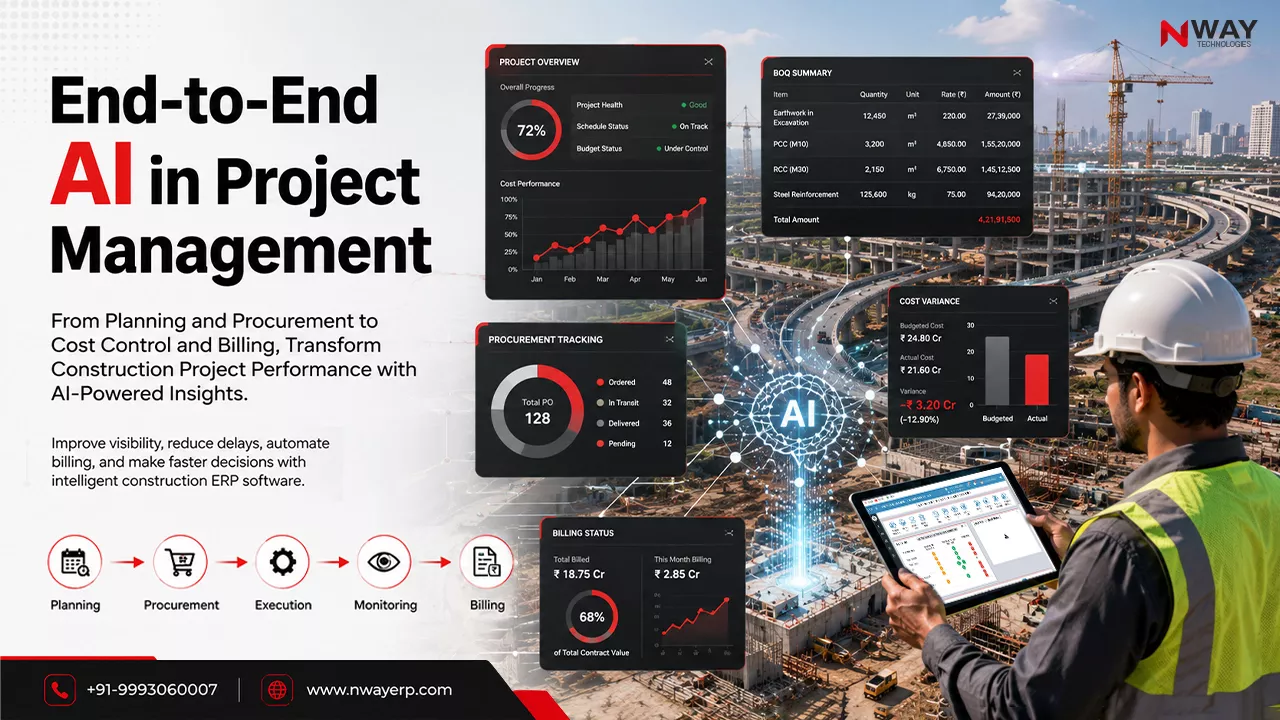
AI in Project Management and AI Construction Project Management Software
The next layer of Automated Construction Processes brings predictive capability: AI Construction Project Management Software can flag schedule slippage risk based on historical project data, highlight vendors with a pattern of delayed deliveries, and surface anomalies in billing before they become disputes. AI in Project Management doesn’t replace the project manager’s judgment; it gives them an earlier, better-informed starting point.
Benefits Tied to Business Outcomes
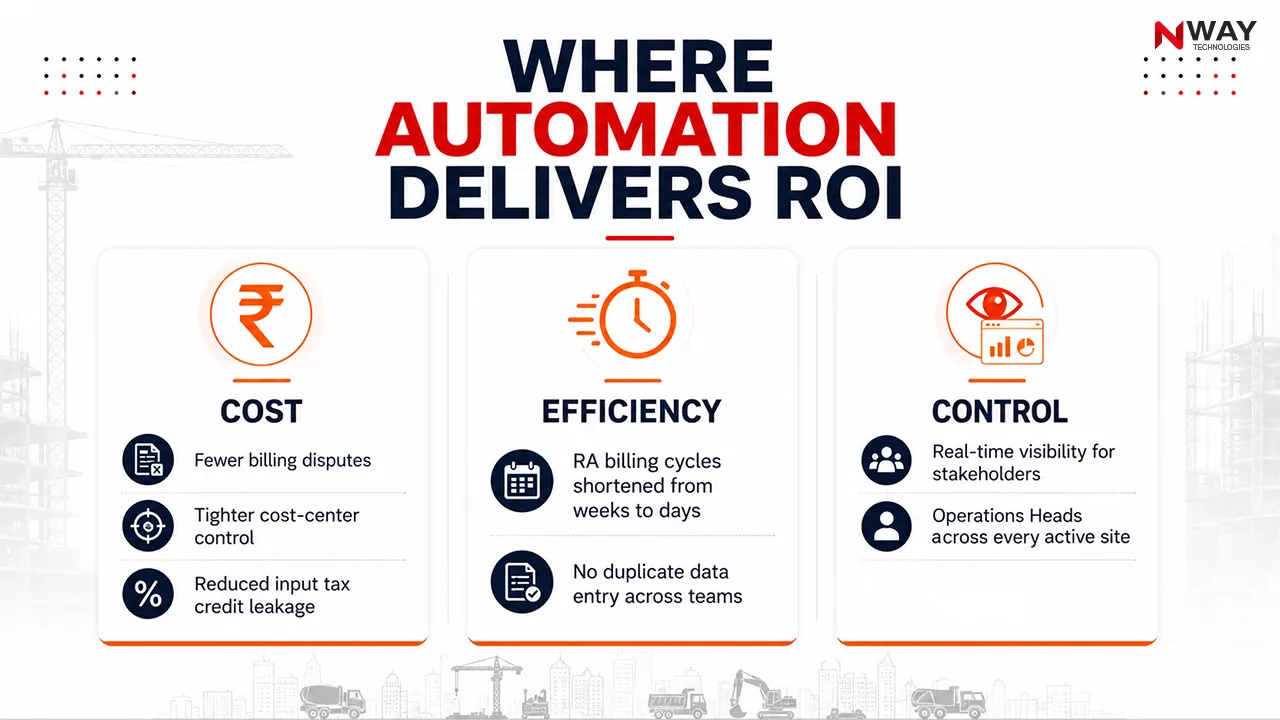
Cost: Tighter cost-center tracking reduces leakage from over-ordering, billing disputes, and missed GST input credit.
Efficiency: Automated approvals and three-way matching remove the re-entry and re-verification work that slows down RA billing cycles.
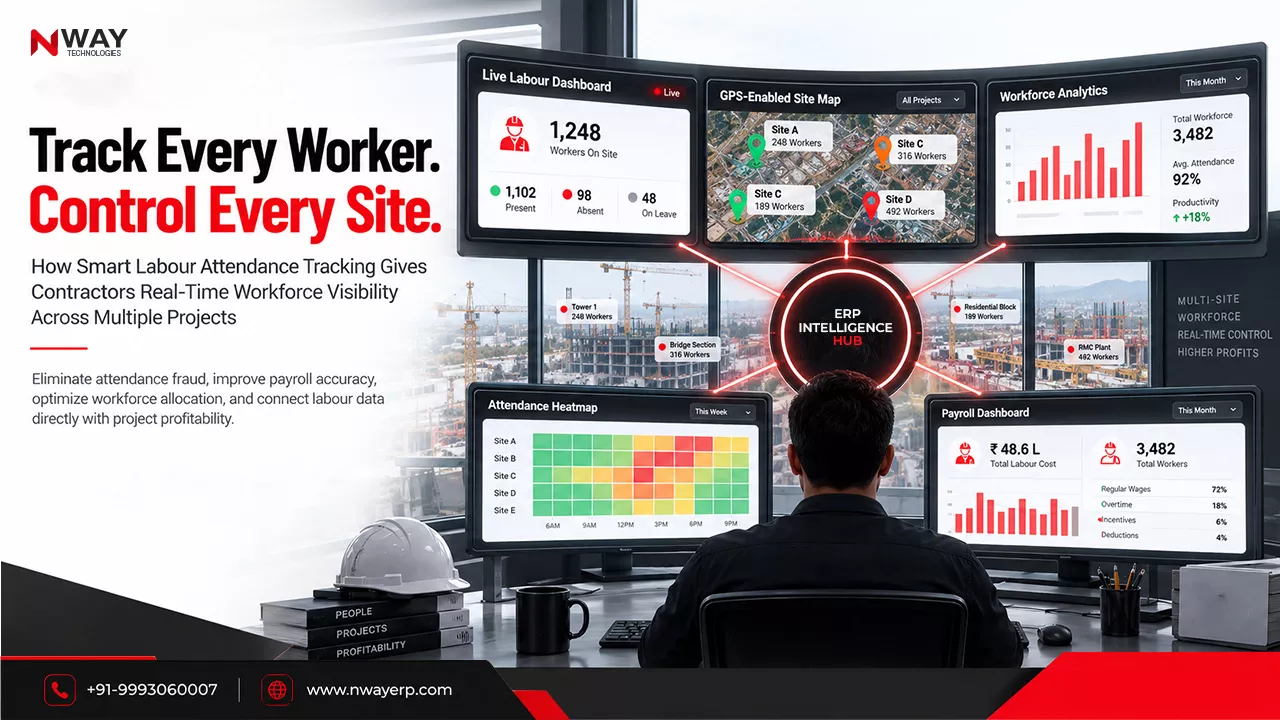
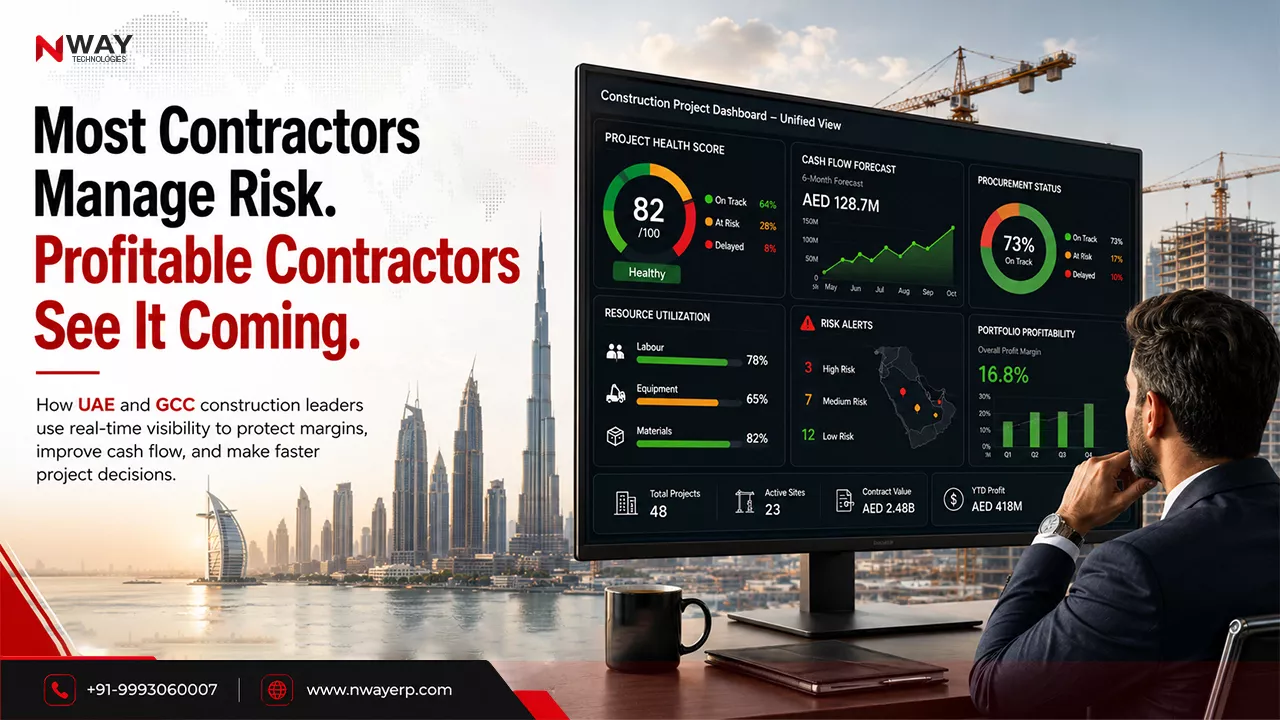
Control: Project Managers, CFOs, and Operations Heads gain a single, real-time view of every site’s cost and progress status, instead of waiting for month-end reports.
Revolutionizing Construction Management with ERP Software
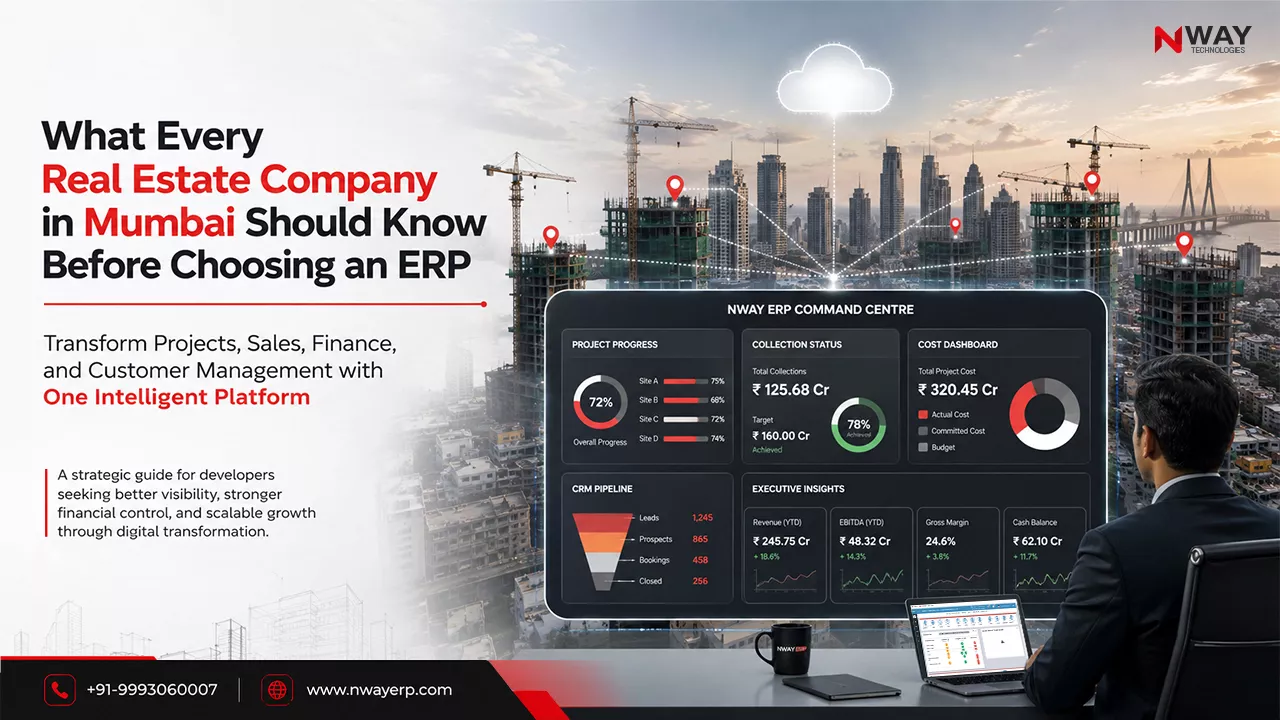
The Importance of Project Management Software for construction firms isn’t about adding another dashboard; it’s about replacing a patchwork of disconnected tools with one domain-specific system built around how construction actually works: BOQs, RA billing, GRNs, WBS structures, and Indian compliance requirements like GST.
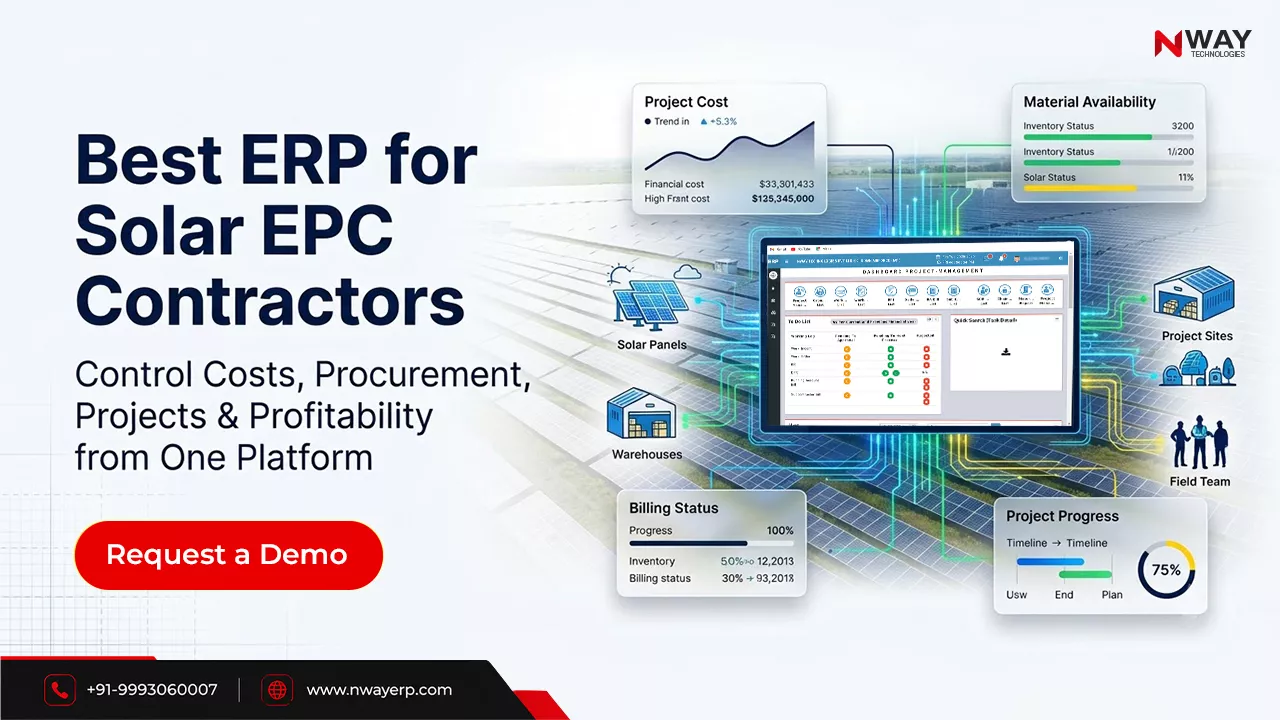
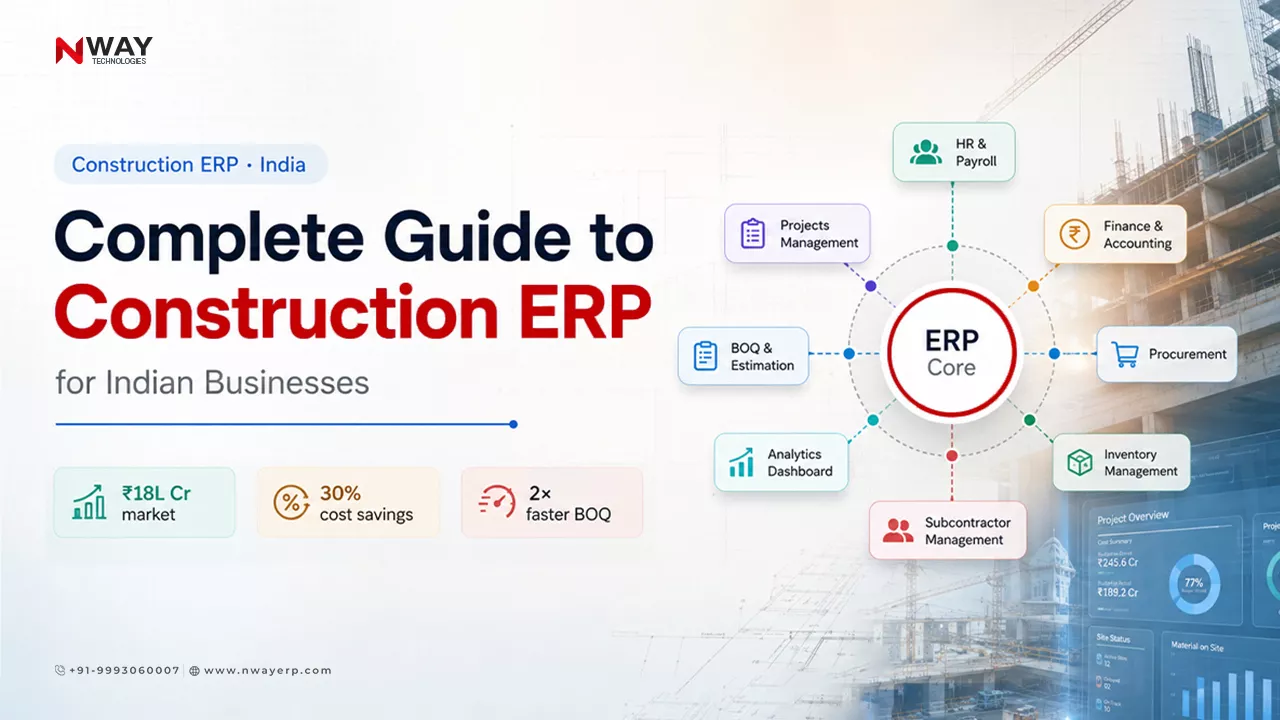
This is the thinking behind Nway ERP: a cloud-based, scalable construction ERP Software purpose-built for construction and infrastructure businesses, rather than a generic manufacturing ERP retrofitted for the sector. Because it’s cloud-based, site teams and head-office finance work off the same live data without needing on-premises infrastructure. Because it’s domain-specific, the terminology, approval flows, and compliance logic already reflect how Indian construction firms bill, procure, and report, reducing the customization burden that typically makes ERP rollouts slow and expensive. And because it’s positioned as cost-effective and scalable, growing contractors and mid-sized infrastructure firms can adopt Construction Workflow Automation without the multi-year, multi-crore implementation typical of legacy ERP suites, a meaningful consideration for firms that have been priced out of enterprise-grade systems until now.
Conclusion
Construction has spent two decades near the bottom of the productivity league table, not for lack of effort, but because its workflows have remained disconnected spreadsheets here, WhatsApp there, manual GST reconciliation everywhere. Workflow Automation in Construction doesn’t ask project teams to work harder within that fragmentation; it removes the fragmentation itself, connecting BOQ, procurement, billing, and compliance into a single, auditable flow.
The key takeaway for Project Managers, Contractors, Builders, CFOs, and Operations Heads is straightforward: the firms that close the gap between site execution and financial control through connected, domain-specific ERP software systems will be the ones protecting margin as material costs, compliance complexity, and project scale all continue to rise.
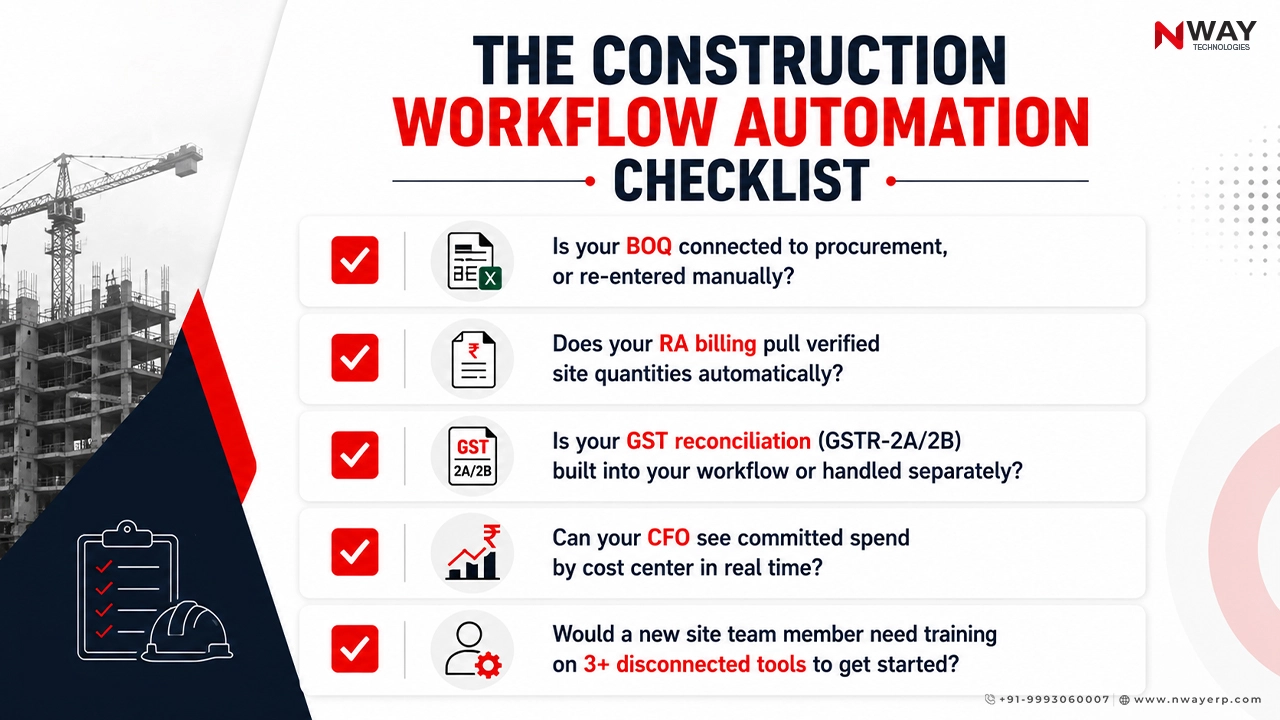
Run through the Workflow Automation Checklist above. If two or more items feel familiar, it may be time to see what a connected, construction-specific ERP looks like in practice.
Key Takeaways
- Global construction productivity has grown only ~10% since 2000 (McKinsey), largely due to fragmented, manual workflows.
- Construction Workflow Automation connects BOQ, procurement, GRN, RA billing, and compliance into one traceable flow instead of isolated tools.
- Manual methods fail predictably at scale: fragmented data, data migration challenges, and delayed approval of visibility.
- The ROI shows up in three places: cost (less leakage), efficiency (faster billing cycles), and control (real-time visibility).
- Domain-specific, cloud-based, scalable ERP like Nway ER reduces the customization and cost burden that typically slows the construction of ERP adoption.