The cement supplier who was cheapest in April is three days late in July. The steel vendor’s GSTIN was cancelled two months ago and nobody noticed until the input credit didn’t show up. And a small fabricator who’s registered as an MSME has been waiting 70 days for payment, which now affects your tax deduction too.
None of these is a procurement disaster on its own. Together, across 40 vendors and six sites, they’re how margins leak. Vendor management software puts every supplier’s documents, quotes, deliveries, quality and payments in one place, so you choose vendors on evidence and pay them on time.
Table of Contents:
-
- What is Vendor Management in Construction?
- Understanding the Vendor Management Challenge in Construction
- What are the KPIs for Vendor Management?
- What is Construction Vendor Management Software?
- Benefits of Construction Vendor Management Software
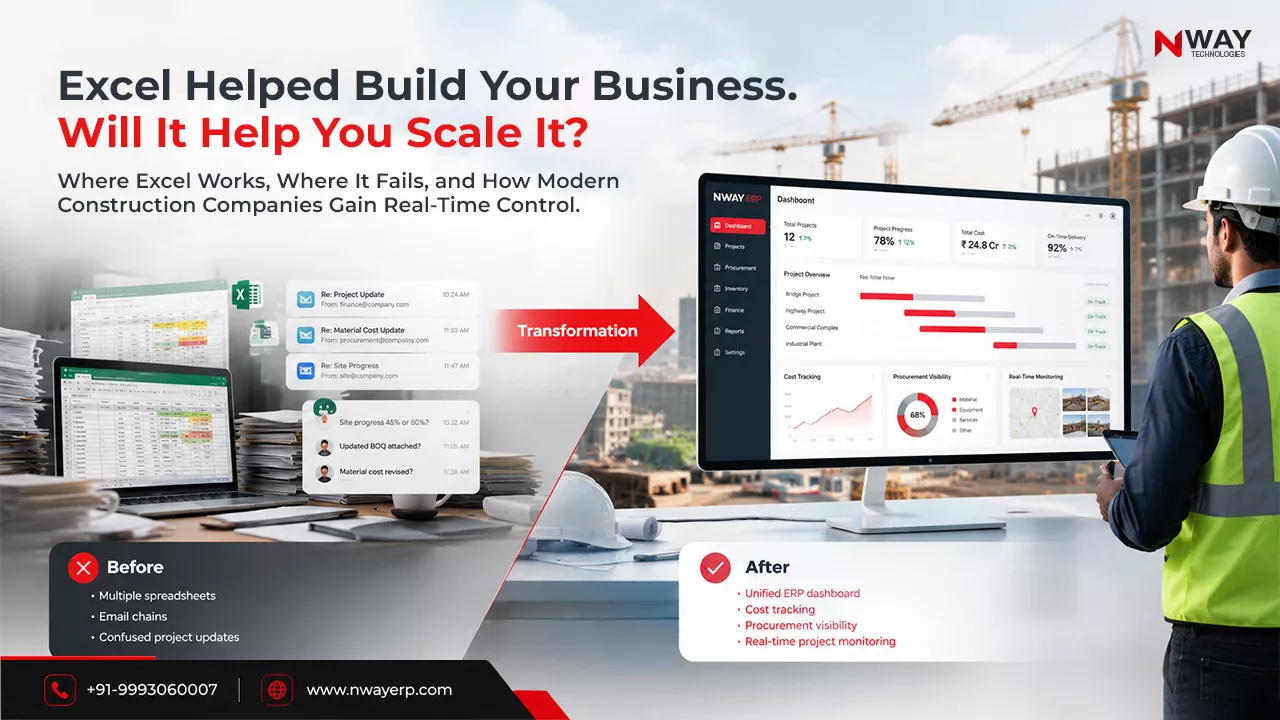
- Why Manual Vendor Management Fails in Construction Procurement
- Challenges in Construction Vendor Management & How Construction Procurement ERP Software Can Help
- How Nway ERP Solves Construction Procurement and Vendor Management Challenges
- What To Look For In A Vendor Management Software Solution?
- Why Every Construction Business Needs Vendor Management Software?
- Why Contractors Choose Nway ERP for Construction Procurement Management?
What is Vendor Management in Construction?
Vendor management in construction means selecting, onboarding, evaluating and paying the suppliers who provide your materials, equipment hire and services, and deciding who to keep using. It’s different from managing subcontractors, who do the work itself.
(See contractor vs subcontractor vs vendor.)
Understanding the Vendor Management Challenge in Construction
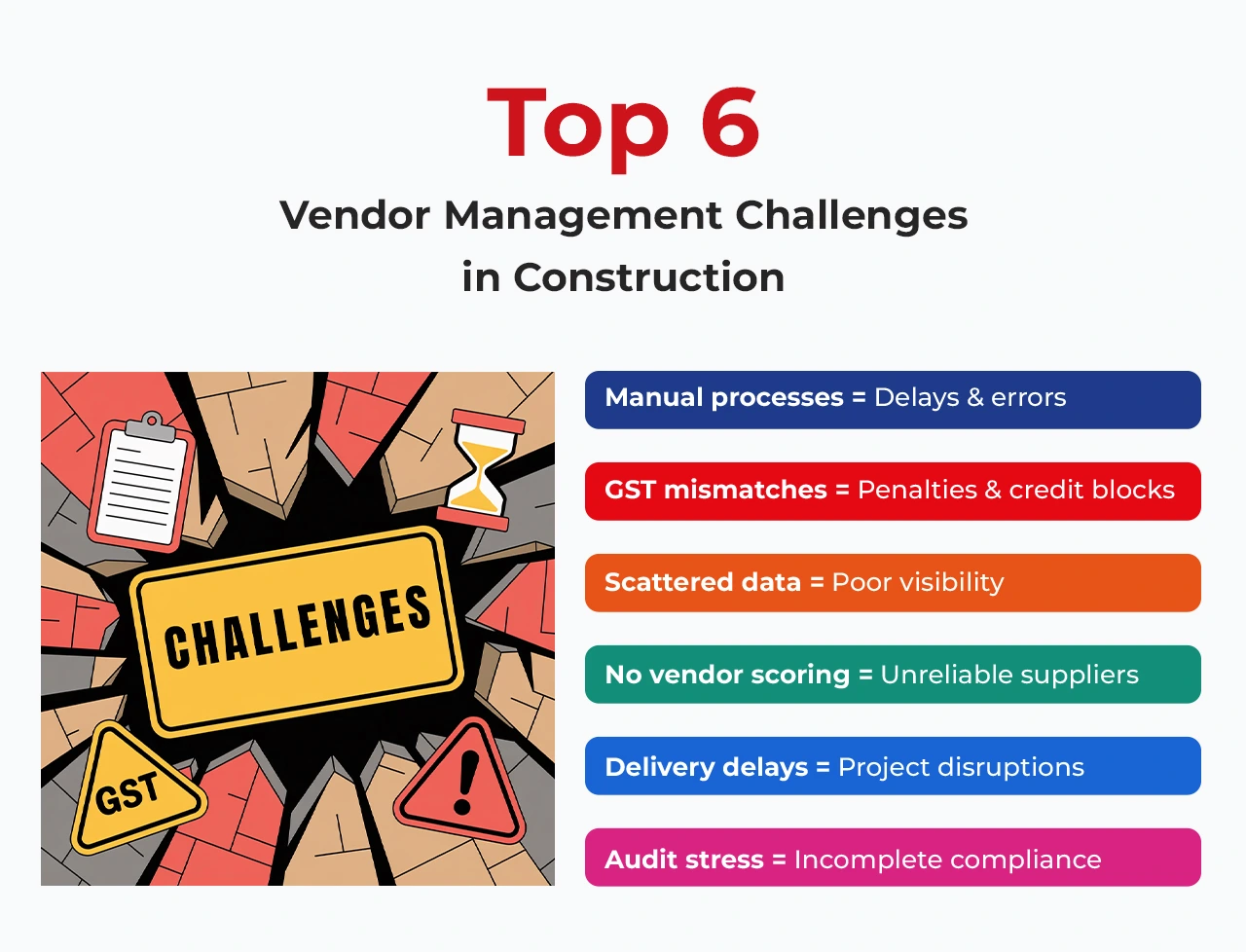
Managing vendors in construction isn’t just about placing orders. It’s about building a smooth process that ensures good materials, on-time delivery, and rule-following. Contractors often face these common problems:
- Manual Processes and Errors: Many construction companies still use paper, emails, or WhatsApp to manage buying. These manual steps often lead to mistakes, confusion, delays in approval, and poor follow-up with vendors.
- GST Compliance Complexity: India’s GST rules need exact matching of vendor GST details with invoices. If not done right, this can lead to heavy fines, blocked input tax credit, and audit trouble.
- Lack of Visibility: Without a central construction procurement system, it’s hard to follow stock levels, supplier performance, or site-specific buying status. This causes shortages, extra stock, and bad decisions.
- Unreliable Vendor Performance: Late deliveries or poor materials can delay projects and raise costs.
- Payment and Audit Challenges: Slow billing processes hurt vendor relationships, and scattered records make audits harder.
These issues show that vendor management in construction is more than just buying items. It needs a smart, automatic process that saves time, lowers risks, and helps keep projects profitable.
The vendor lifecycle: 6 steps
| Step | What happens | What the software should do |
|---|---|---|
| 1. Onboard | Collect GSTIN, PAN, bank details, MSME (Udyam) status, price lists | Verify GSTIN, store documents, flag MSME vendors |
| 2. Source | Ask for quotes on an indent | RFQ to several vendors, side-by-side comparison, L1/L2/L3 ranking |
| 3. Order | Issue a PO on approved terms | PO with rates, delivery dates and payment terms |
| 4. Receive | Check quantity and quality at site | GRN against PO, short and rejected quantity recorded, weighbridge quantity where relevant |
| 5. Pay | Match the bill and pay on time | PO–GRN–bill three-way match, TDS, due dates by MSME status |
| 6. Review | Rate the vendor | Scorecard from actual deliveries, rejections and price history |
The chain is only as strong as step 4. If GRNs are late or vague, every rating and payment after them is a guess.
Experience India’s Most Trusted Construction Procurement ERP
Tailored for GST, weighbridge, & boom barrier integration.
What are the KPIs for Vendor Management?
To check how well vendors are working and if buying processes are successful, contractors use key performance indicators (KPIs), such as:
- On-Time Delivery Rate: Over 95% of deliveries should arrive on time to avoid delays.
- Quality Compliance: At least 98% of materials must meet the right standards to avoid rework.
- Cost Variance: Buying costs should stay within 5% of what was agreed in quotes.
- Response Time: Vendors should reply to questions or problems within 24 hours.
- Compliance Rate: 100% of vendors must follow GST and other rules.
- Invoice Accuracy: Over 95% of bills should match buying orders and item receipts.
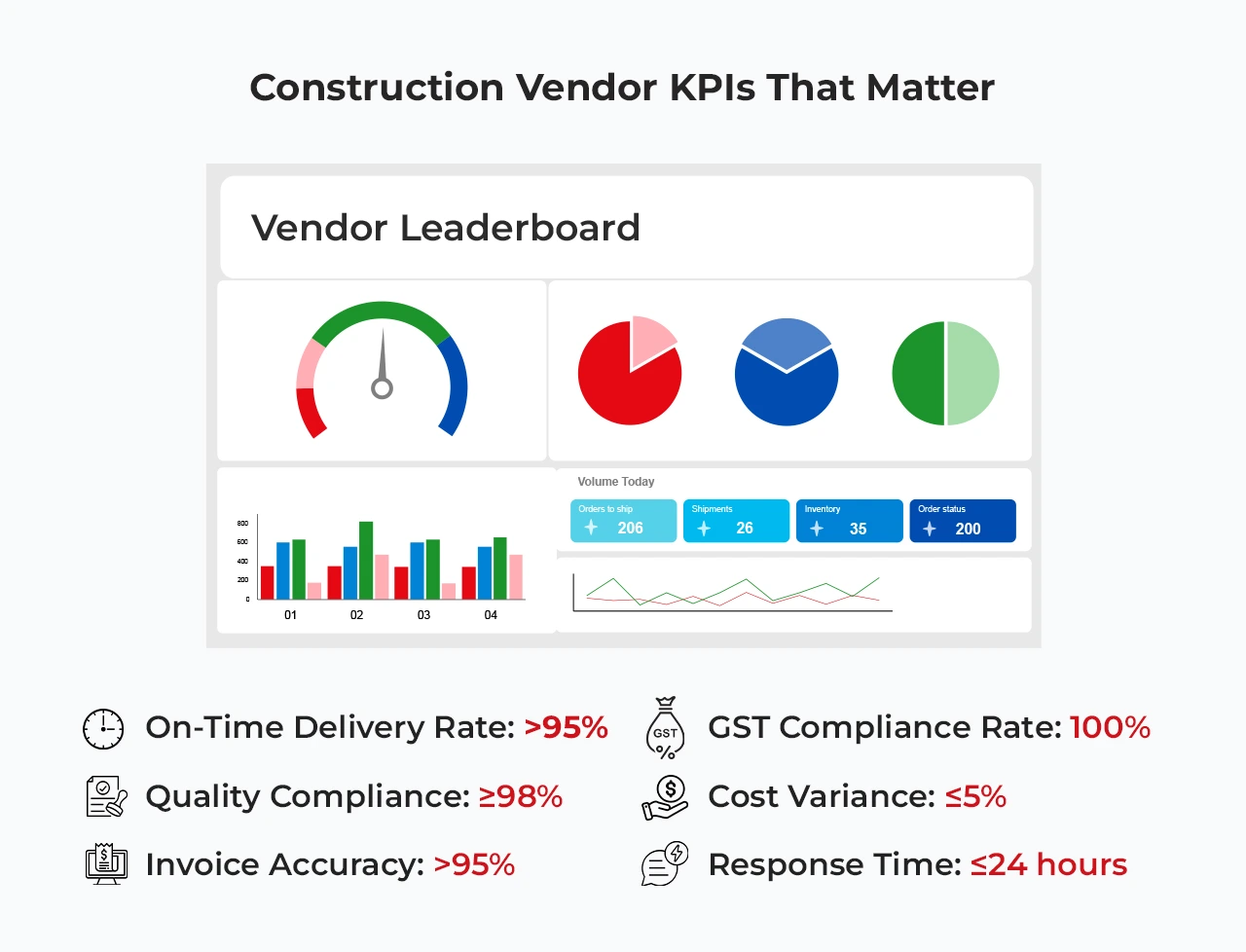
A strong construction vendor management software tracks these KPIs and gives each vendor a score—L1 for top vendors, L2 for reliable ones, and L3 for those needing improvement. This helps contractors choose suppliers wisely.
What is Construction Vendor Management Software?
Construction Vendor Management Software is a digital platform used to manage all vendor-related tasks in construction. It replaces manual work with automated tools to make vendor control faster, easier, and more accurate.
Contractors use this software to:
- Add and approve vendors easily (onboarding),
- Track vendor performance with built-in KPIs,
- Store and manage all documents like contracts, GST details, and certificates,
- Send and compare RFQs to multiple vendors,
- Ensure GST and legal compliance,
- Track deliveries in real time across project sites.
When this Construction Vendor Management Software is connected to a Construction Procurement ERP, it becomes a complete system. It helps contractors handle the full procurement process — from planning to payment — with better speed, accuracy, and control.
Benefits of Construction Vendor Management Software
A good vendor management system for construction is more than just a list of suppliers. It plays a key role in making procurement smoother, cutting risks, and managing costs better. Here are its main benefits:
1. Centralized Vendor Data
No more scattered Excel files or paper records. A construction ERP stores all vendor details — like contact info, compliance papers, contracts, PAN/GST numbers, past orders, and payment history — in one safe place. This helps you:
- Quickly find verified vendor info across all sites
- Speed up vendor onboarding and approvals
- Make audits and checks faster and easier
2. Automated Procurement Workflows
Every step — from RFQs to payments — is handled digitally. Manual work is slow and leads to mistakes. Construction Vendor Management Software helps you:
- Send RFQs to many vendors at once
- Auto-create purchase orders after approvals
- Match bills with deliveries and quality checks
- Send payment reminders and credit notes
This cuts manual work, speeds up procurement, and keeps everyone updated in real time.
3. Vendor Performance Monitoring
Keep track of how your vendors are doing — and hold them accountable. Construction success depends on timely, quality supplies. Vendor management tools offer built-in performance checks like:
- On-time delivery rates
- Quality acceptance or rejection records
- Price trends over time
- Speed of response to quotes or issues
This data helps you rank vendors (L1, L2, L3) and choose the ones who meet your standards.
4. Data-Driven Vendor Selection
Choose vendors based on real facts, not guesswork. Construction Vendor Management Software lets you:
- Compare vendor quotes side by side
- Check past vendor results
- View price changes and material cost history
This helps you negotiate smarter, cut costs, and make better buying decisions using solid data.
5. Improved GST Compliance
Always be ready for audits. Manual GST entry is risky and often leads to mistakes. With ERP-based vendor management:
- GSTINs are checked when vendors are added
- Tax details are filled in and linked to POs and GRNs
- Any mismatches are flagged before payments are made
This helps you stay compliant with Indian GST rules, makes audits easier, and protects your input credits.
Where vendor management goes wrong on construction projects
- Choosing on price alone. The L1 quote wins, then arrives late, and the crew waits. The cheapest rate isn’t the cheapest delivery.
- No memory. Ratings live in the purchase manager’s head. When they leave, the history leaves with them.
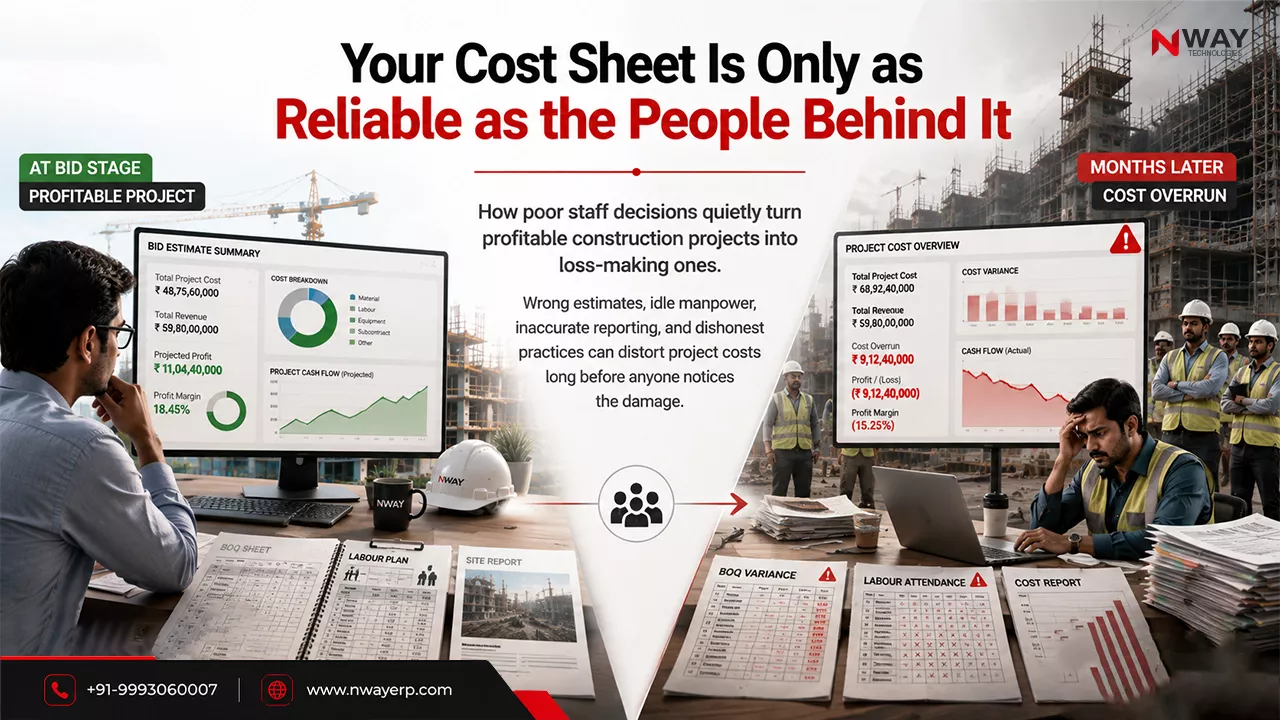
- Bills that don’t match receipts. Paying for quantity that was ordered but never received is one of the commonest procurement leaks.
- GST gaps. A vendor with a cancelled or non-filing GSTIN means input credit you can’t claim. See GST in construction.
- Late payments to MSMEs. These now carry interest, and can cost you the tax deduction (see below).
- Single-vendor dependency. One supplier’s delay becomes your project delay.
A vendor scorecard you can actually use
Rate every vendor out of 10 on five measures, weight them, and update the score after each delivery.
| Measure | Weight | Vendor A | Vendor B |
|---|---|---|---|
| On-time delivery | 30% | 9 | 6 |
| Quality (rejections) | 25% | 8 | 7 |
| Price vs market | 20% | 6 | 9 |
| Compliance (GST, documents) | 15% | 10 | 8 |
| Responsiveness | 10% | 7 | 6 |
| Weighted score | 8.1 | 7.15 |
Vendor B is cheaper, but Vendor A is the better choice for anything on the critical path. Software builds this score automatically from GRNs, rejections and price history, so nobody has to fill in a spreadsheet.
Why Manual Vendor Management Fails in Construction Procurement
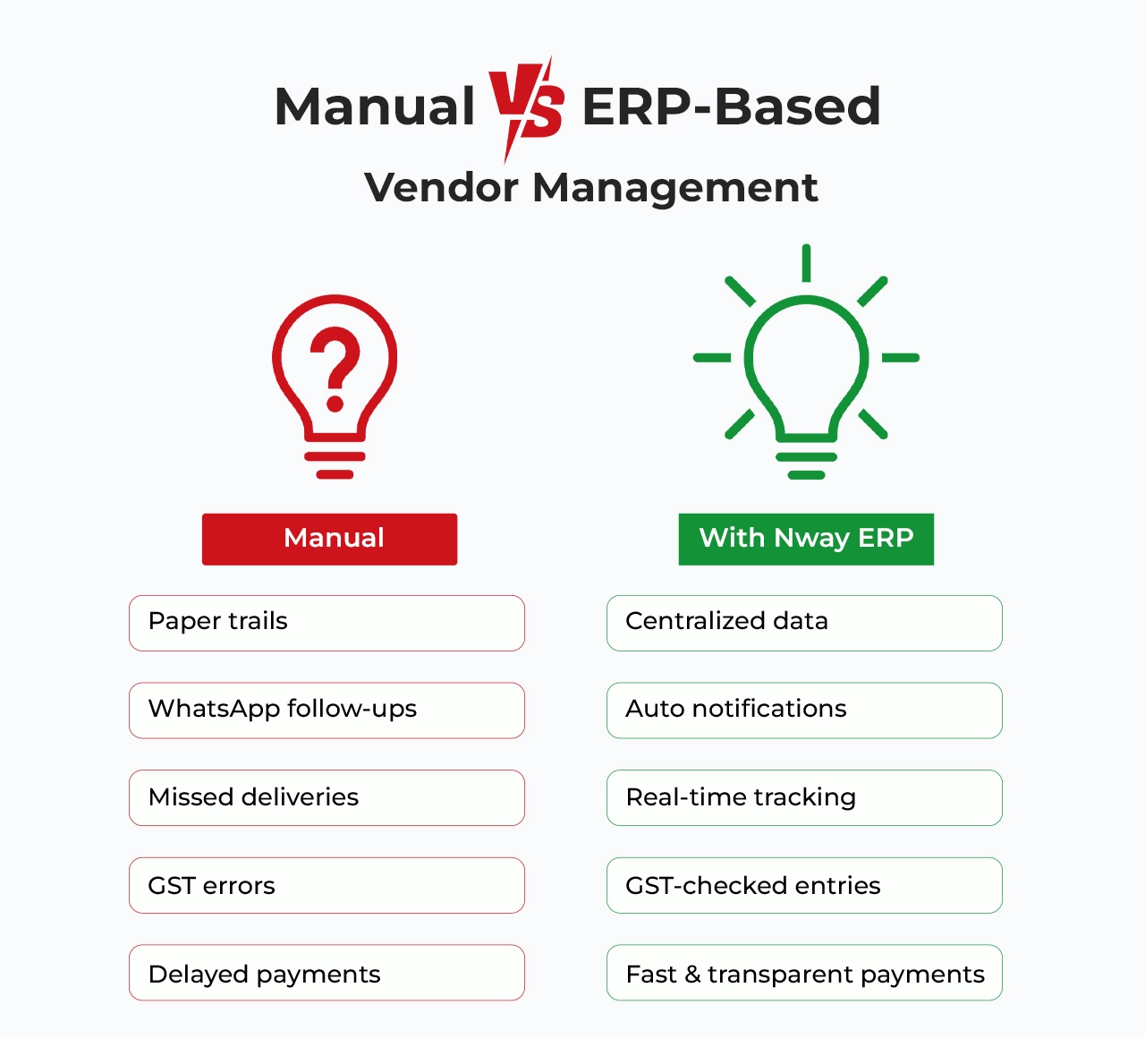
Many contractors still handle procurement by hand or use basic tools. This might work for small jobs, but it quickly becomes slow, risky, and unmanageable as the project size grows.
Data Silos and Visibility Gaps
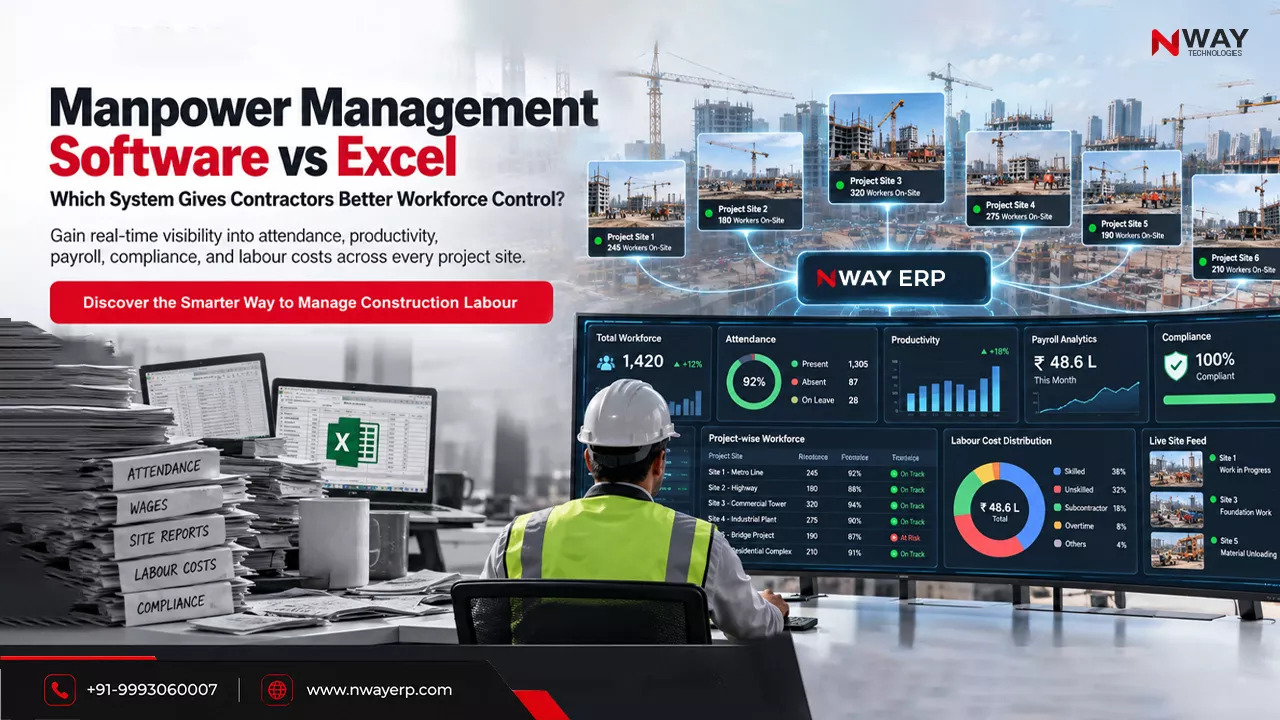
Without proper software, information is scattered across spreadsheets, emails, and paper files. This makes it hard to follow vendor performance, track stock, or know what’s happening at each site in real time.
Slow Procurement Cycles
Manually creating purchase requests, comparing vendor quotes, and processing payments takes a lot of time. This adds days or even weeks to your procurement timeline.
GST Mismatches
Manual data entry often causes GST errors. These mistakes can lead to fines, blocked input tax credits, and compliance issues.
Get 100% GST Compliance on All Vendor Invoices Automatically!
Protect your input tax credits and avoid penalties.
Poor Vendor Accountability
Without automatic tracking of KPIs or vendor rankings, it’s hard to know which vendors are doing well or to demand better performance or pricing.
These problems show why construction procurement automation isn’t just a nice-to-have — it’s a must. It helps contractors stay fast, competitive, and profitable in today’s demanding construction environment.
Challenges in Construction Vendor Management & How Construction Procurement ERP Software Can Help
Vendor management in construction is not just about finding suppliers. It’s about working with many vendors across different project sites, making sure materials arrive on time, checking quality, staying GST-compliant, and syncing buying timelines with project schedules. If these tasks are done by hand or using basic tools, they can slow down the project and raise costs.
One major issue is scattered vendor data. Contractors often deal with different vendors at each site. This leads to duplicate entries, different pricing, and no way to check vendor performance in one place. Without a central system, it’s hard to trust vendors or create company-wide standards for procurement.
Material verification is another big problem. Contractors often get the wrong quantity or poor-quality items. If there’s no way to check deliveries properly, these issues show up only after work starts. That leads to delays, rework, and disputes. Matching deliveries with purchase orders on time is critical — but almost impossible with manual logs.
GST compliance adds more stress. Manual checks often miss errors in vendor GST details or invoice mismatches. This can lead to fines and blocked input tax credits — which hurts businesses already working with tight margins.
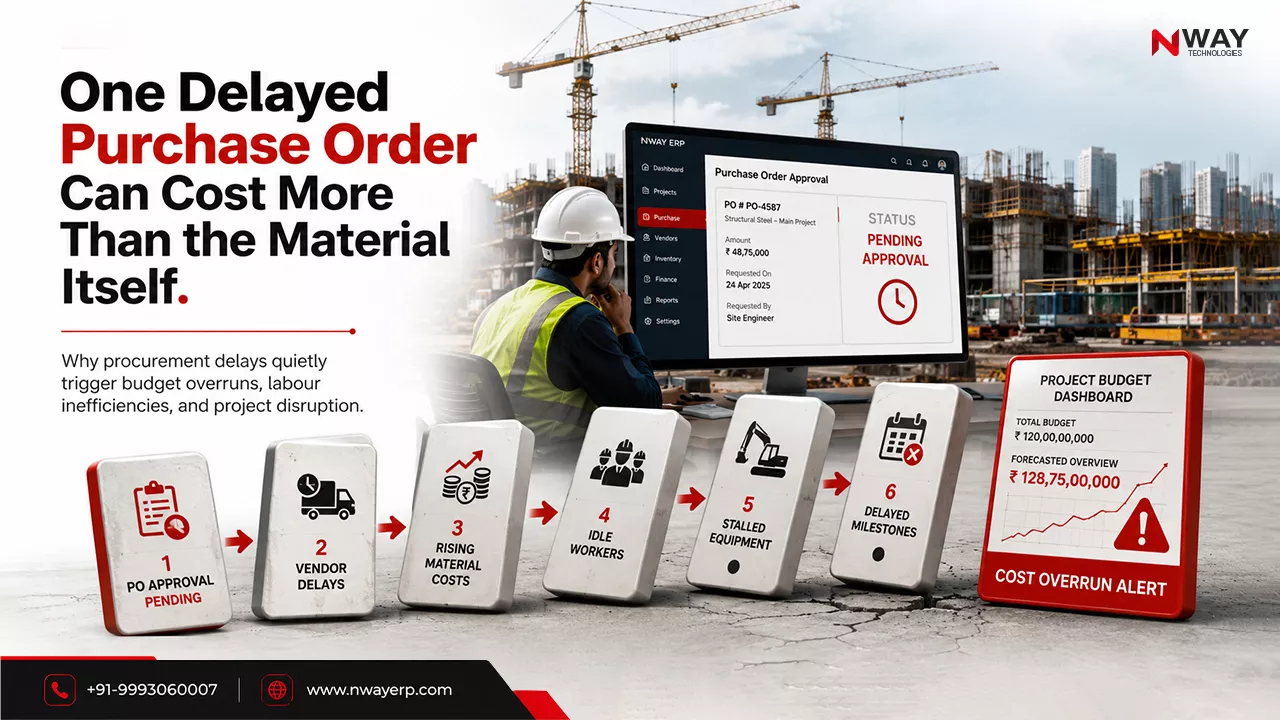
Timely procurement is also a challenge. Materials must reach the site exactly when needed — not too early, not too late. If approvals, indent requests, and order tracking are done by hand, delays are very likely, especially when multiple sites are involved.
This is where a construction-specific procurement ERP like Nway ERP makes a big difference. It solves these problems by:
- Automating procurement steps
- Keeping all vendor data in one place
- Checking GST details in real time
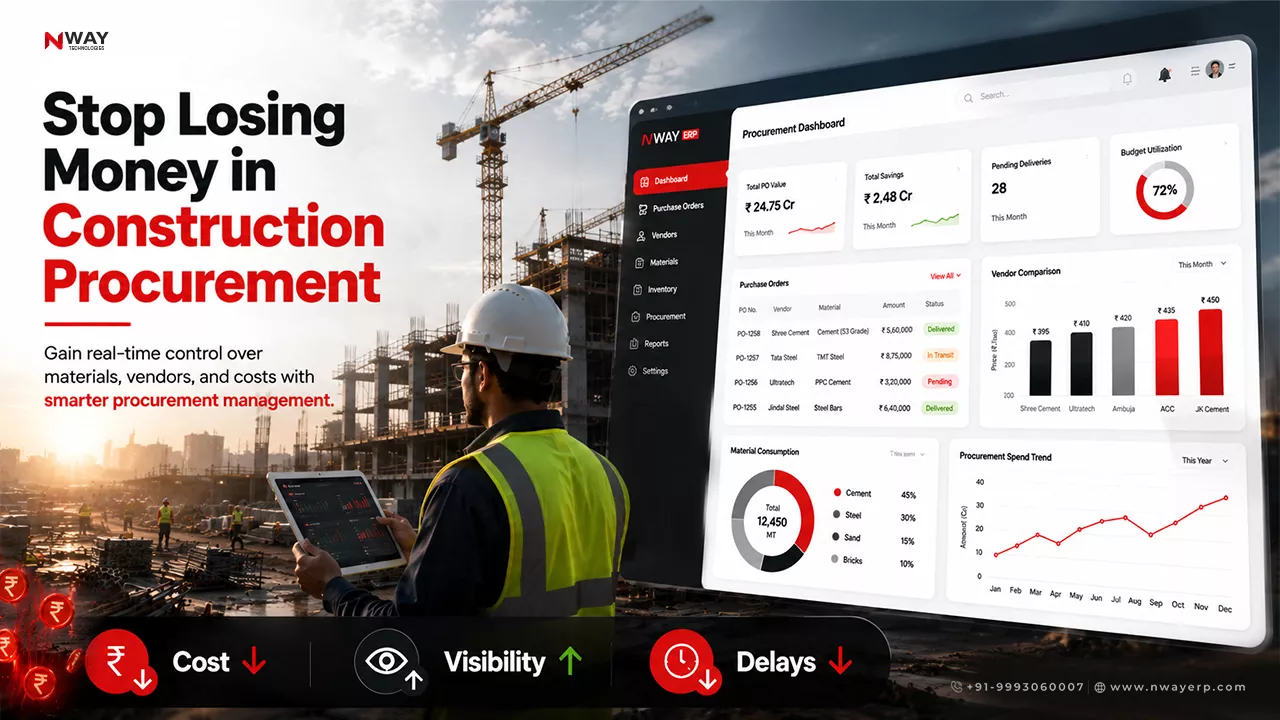
- Tracking vendor performance and stock levels using dashboards
It turns slow, manual work into a smart, automated system that helps projects stay on schedule and within budget.
How Nway ERP Solves Construction Procurement and Vendor Management Challenges
Nway ERP’s construction procurement system is built specifically for Indian contractors. It’s made to solve real problems faced in vendor management and procurement across construction sites. Here’s how it helps:
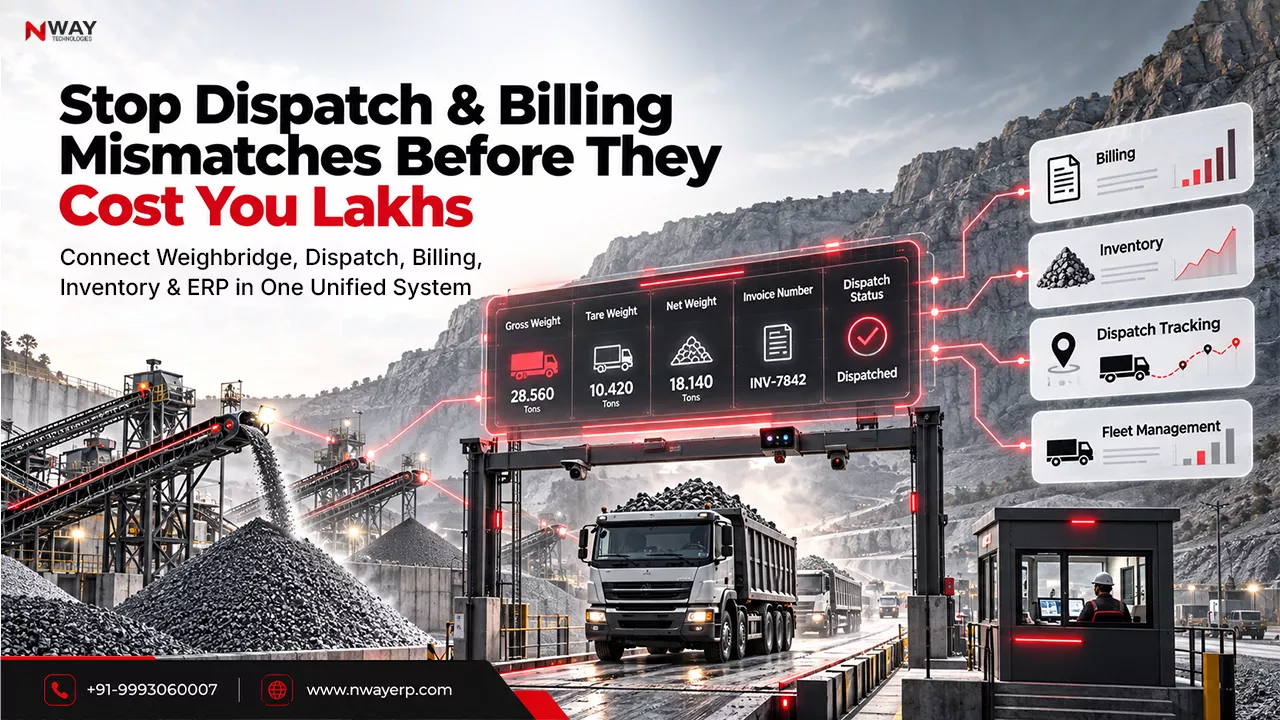
1. Weighbridge and Boom Barrier Integration
Nway ERP connects with weighbridge machines and boom barrier systems to confirm deliveries at the gate. It:
- Captures truck weight and time, with auto-logged images
- Compares actual weight with the purchase order to stop fraud or mistakes
- Uses RFID or ANPR systems to allow only approved trucks inside
- Speeds up material checks by 30%, saving manual inspection time
2. Automated GST Validation and Compliance
Nway ERP checks GST numbers, tax rates, and invoice amounts automatically. It lowers the risk of fines and errors. It also saves all GST-related papers digitally, so audits become easier and rules are always followed.
3. Vendor Scorecards and Ranking
The software tracks vendor KPIs all the time and ranks them:
- L1 (top vendors),
- L2 (reliable),
- L3 (needs work)
This helps you:
- Use L1 vendors for critical needs
- Get better prices and terms using performance data
- Save 15–20% on procurement through smart vendor choices
4. Real-Time Dashboards, Analytics, & Alerts
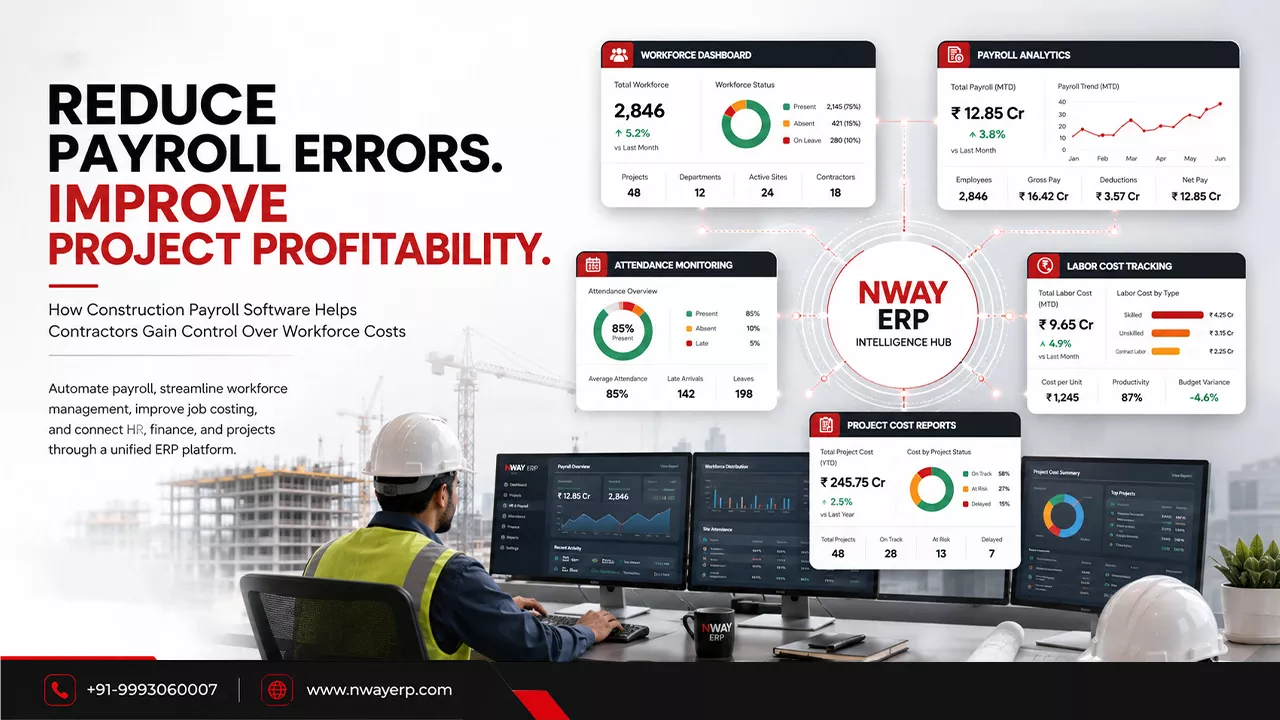
Nway ERP gives you clear dashboards and alerts. You can check:
- Stock levels
- Vendor results
- Procurement costs
- Budget limits
This works across all your sites, helping you make faster and better decisions.
5. Procurement Process Automation
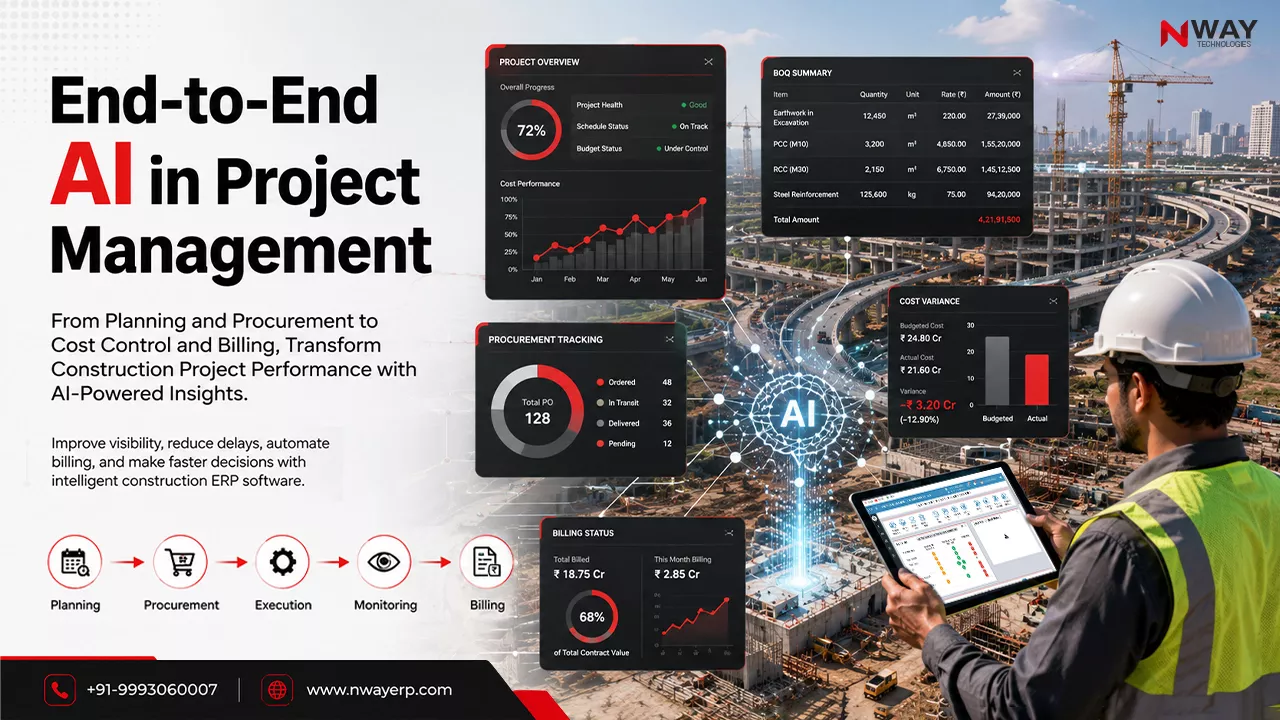
The ERP automates everything — from material requests to final payments. It covers:
- Indent creation
- RFQ sending
- Purchase orders
- Item receipts
- Invoice matching
- Payment processing
This cuts buying cycle time by up to 40%, reduces errors, and keeps vendor relations strong with on-time payments.
6. Multi-Site Coordination and Mobile Access
Nway ERP works for multiple sites. All your procurement data is stored in one place. The mobile-friendly design lets teams request materials, approve orders, and track deliveries from anywhere — reducing delays and improving response time.
Learn More: How Does Construction ERP Software Help in Resource Management?
What to look for in vendor management software
- Vendor onboarding with GSTIN verification and document storage
- MSME status and due-date tracking
- RFQs and side-by-side quote comparison (L1/L2/L3)
- Approved vendor list per material category
- PO, GRN and bill in one flow, with a three-way match
- Vendor scorecards built from real delivery and quality data
- Price history per item and vendor
- Multi-site access, so every site buys from the approved list
- TDS and payment tracking linked to accounts
- Mobile GRN entry at site
Standalone vendor portal vs vendor management inside ERP
| Standalone vendor tool | Vendor management in construction ERP | |
|---|---|---|
| Vendor database and documents | Yes | Yes |
| RFQ and quote comparison | Yes | Yes |
| GRN at site against PO | Rarely | Yes |
| Three-way match with accounts | Via integration | Built in |
| Cost booked to project | No | Yes |
| Rating from actual deliveries | Manual | Automatic |
If you buy for one office, a standalone tool may be enough. If you buy for many sites and want vendor performance tied to site receipts and project cost, it needs to sit inside your ERP. See how this fits into construction procurement management.
Cut Vendor-Related Cost Overruns by Approx. 20%
Use smart analytics to negotiate better prices & control budgets.
Why Every Construction Business Needs Vendor Management Software
Whether you’re a mid-sized builder or a large contractor, weak vendor management can cause serious problems. It can delay your project, raise costs, and shrink your profits. In today’s competitive and rule-heavy construction world, manual methods or generic tools are no longer enough for procurement management in construction.
This is where dedicated Vendor Management Software built into a Construction Procurement ERP makes a big impact.
With a specialized construction vendor management software like Nway ERP’s construction procurement, you get full control over the entire buying process. This type of construction purchase management system keeps all vendor data in one place, automates communication, and lets you track delivery status and material quality in real time. This keeps projects moving and budgets safe.
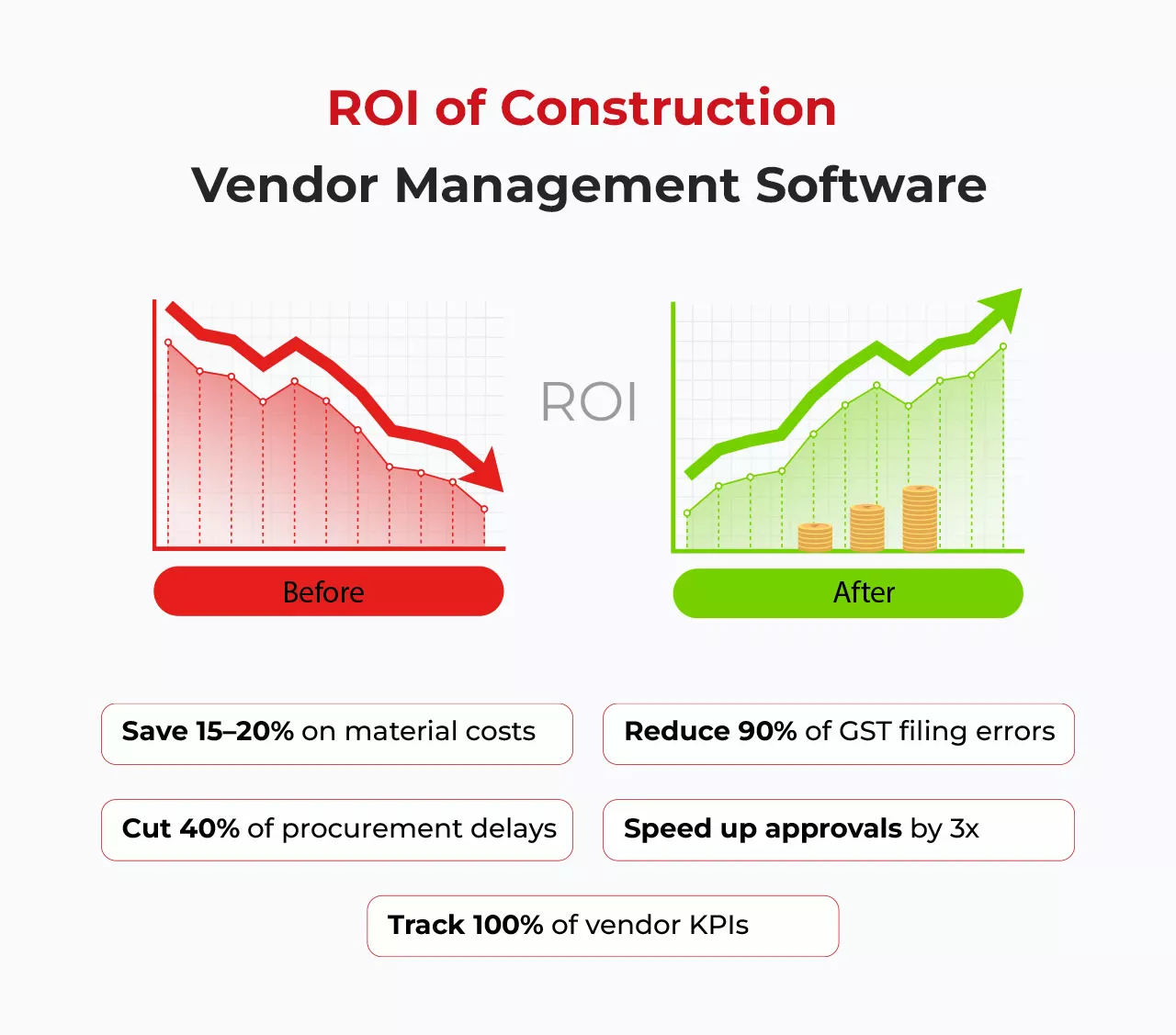
The software also improves vendor accountability. You can monitor supplier performance, give feedback, and build stronger vendor relationships by paying on time and staying transparent. With the right procurement tools for construction projects, you avoid delays caused by material shortages, poor supplies, or missed rules.
Also, built-in construction procurement automation helps your company stay GST-compliant, makes audits easier, and lowers the chance of fines. This gives you confidence in every purchase, backed by complete documentation and vendor scorecards.
In today’s fast-moving construction industry, using a dedicated construction procurement system in Indi
a helps you stay efficient and competitive. It brings everything under control — from vendor communication to order tracking — and turns messy processes into a smooth, cost-saving system.
In short, any construction business — big or small — can benefit from using a smart Construction Procurement Management system with vendor management features. It helps you cut risk, get better vendor results, and deliver projects on time and on budget.
Learn more: How Construction Engineering Software Can Cut Your Costs by 20%
Why Contractors Choose Nway ERP for Construction Procurement Management
Contractors trust Nway ERP’s construction procurement system in India because it’s built to meet real needs in the construction industry. Here’s why it stands out:
- Tailored for Indian construction Nway ERP includes features like GST validation, weighbridge integration, and boom barrier control — all designed for the way Indian contractors work.
- Affordable and scalable It works for both small and large companies. Whether you’re an SME or a pan-India contractor, the system grows with your business.
- User-friendly The interface is simple and easy to learn. Teams across departments and sites can start using it quickly, with no heavy training needed.
- Comprehensive Nway ERP covers every step of procurement — from adding vendors to making final payments. Everything is connected in one system.
- Supportive You get the smoothest customer support and full customization options, so the software fits your exact needs.
How NWAY ERP handles vendor management
NWAY ERP manages vendors inside its purchase module, alongside stores, projects and accounts:
- Vendor registration with GST checks and document storage
- RFQs, quote comparison and L1–L3 vendor ranking
- POs, site GRNs and weighbridge integration for quantity checks
- Three-way match and payment tracking in accounts
- Vendor performance reports from real delivery data
If your vendor history lives in one person’s head and three spreadsheets, book a demo and see your suppliers rated on what they actually delivered.
Before publishing, confirm with the product team: GSTIN auto-verification, MSME due-date tracking, the automatic vendor scorecard and mobile GRN.
In Conclusion
Managing vendors well is key to successful construction procurement. With tight deadlines and strict GST rules, using manual processes or basic ERPs can lead to delays, higher costs, and compliance issues.
A dedicated Construction Procurement ERP like Nway ERP changes this. It automates procurement, checks GST compliance, connects with tools like weighbridges, and gives useful data through dashboards and vendor scorecards.
If you’re a contractor looking for construction vendor management software or procurement tools for construction projects, Nway ERP is the smart, affordable solution — made for India’s construction needs.
Boost Vendor Accountability & Improve Delivery Timelines by up to 30%
Nway ERP helps you manage your procurement and vendors effectively!