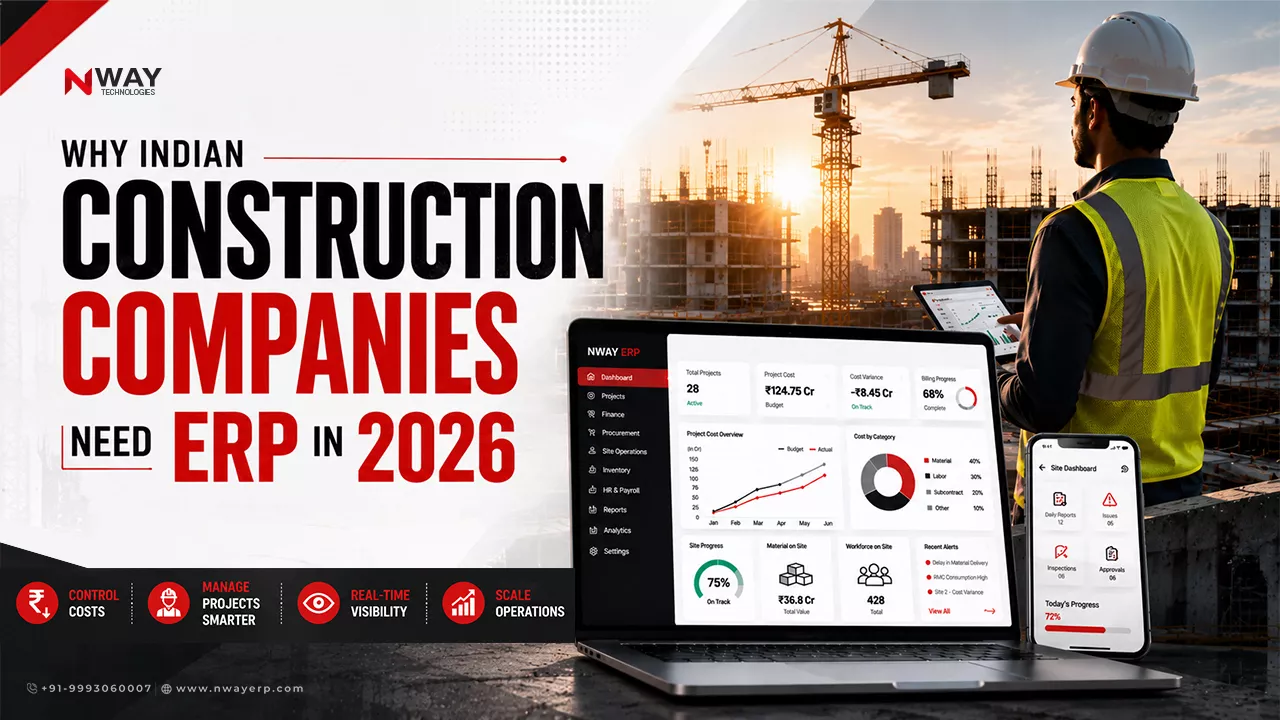
Introduction
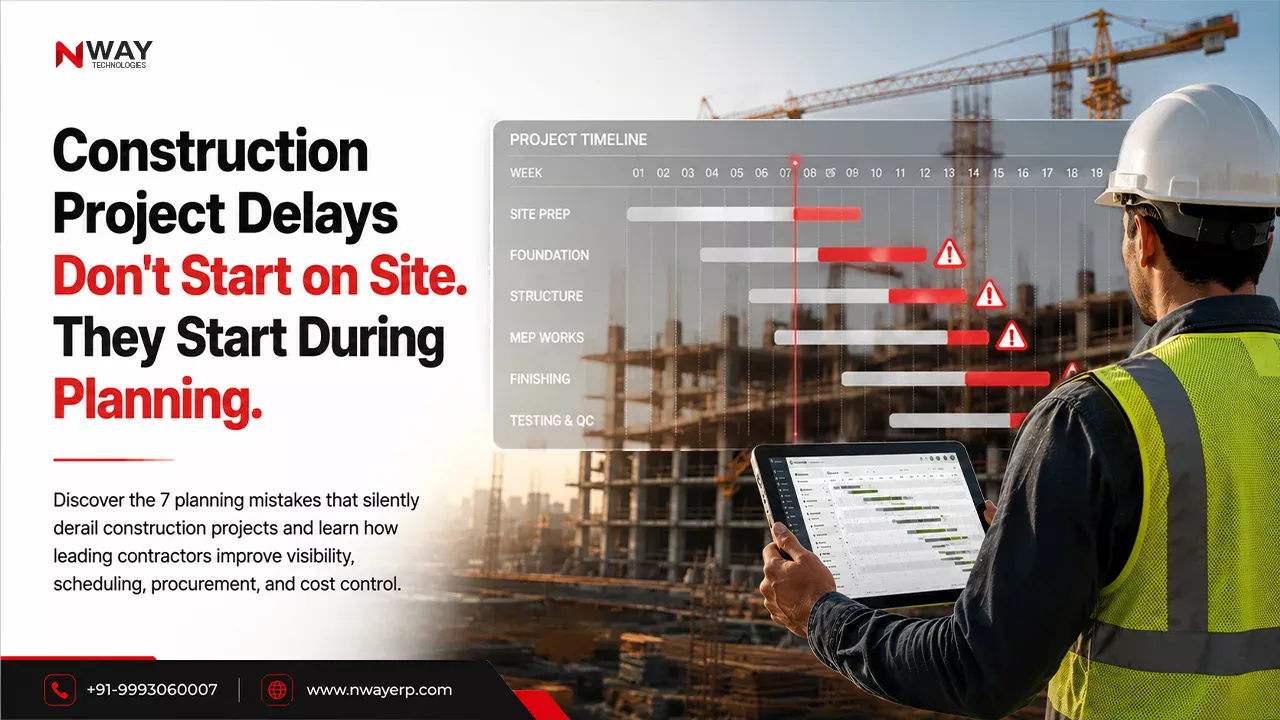
Picture this: A mid-sized infrastructure contractor in Pune is managing three highway projects simultaneously. The site engineer in Nagpur is calling the head office for updated BOQ figures. The procurement team just placed a duplicate material order because the PO tracker was an Excel file; no one updated in three days. The CFO is staring at a ₹40 lakh cost overrun, and no one can explain where it happened.
This is not an unusual story. It is Tuesday morning for thousands of construction companies across India.
India’s construction sector is on a growth trajectory that few industries can match. The government’s infrastructure push from PMGSY to Smart Cities to National Infrastructure Pipeline is generating unprecedented project volumes. Yet, the operational backbone of most contractors still runs spreadsheets, WhatsApp groups, and tribal knowledge.
The gap between the scale of opportunity and the maturity of operations is where profitability bleeds out. And in 2026, that gap has a name: the absence of construction management software.
Table of Contents:
- Construction in India is growing, but so is complexity
- The Limits of Manual Methods in Construction
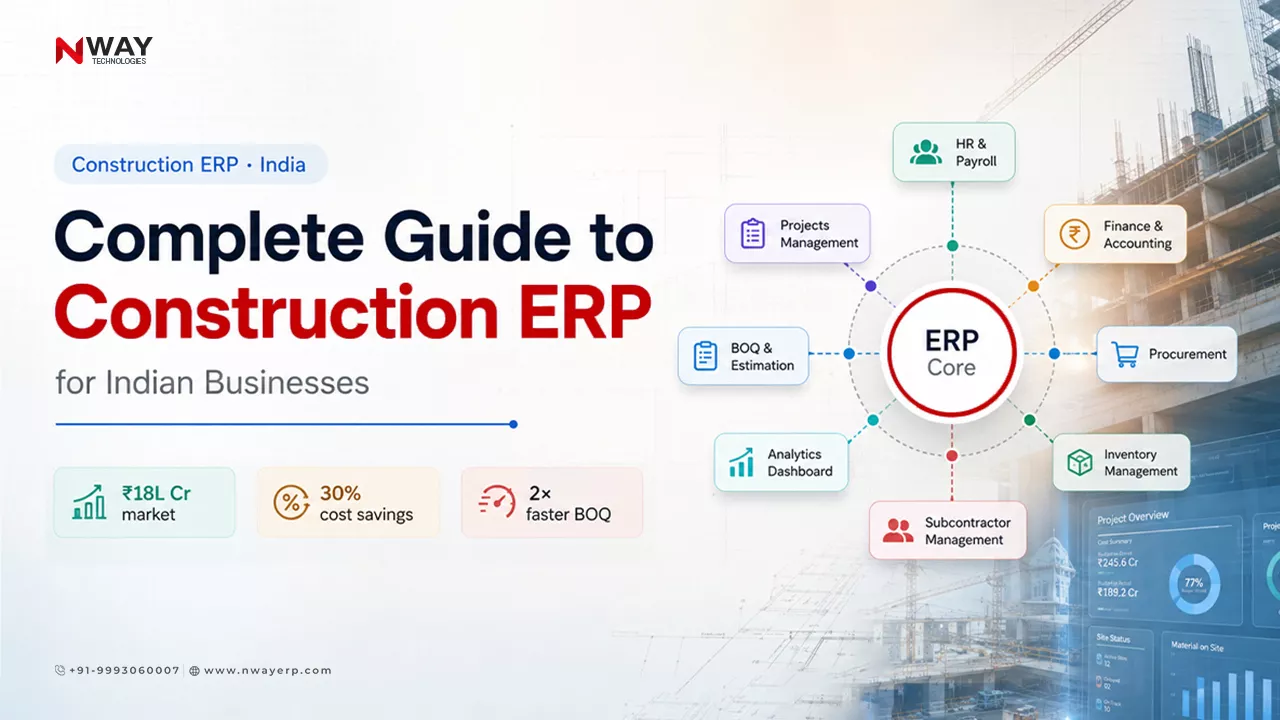
- The Seven Core Challenges Construction ERP Software Solves
- Real-World Scenarios: Where ERP Changes the Game
- What to Look for in a Construction ERP Solution
- Conclusion
Construction in India is growing, but so is complexity
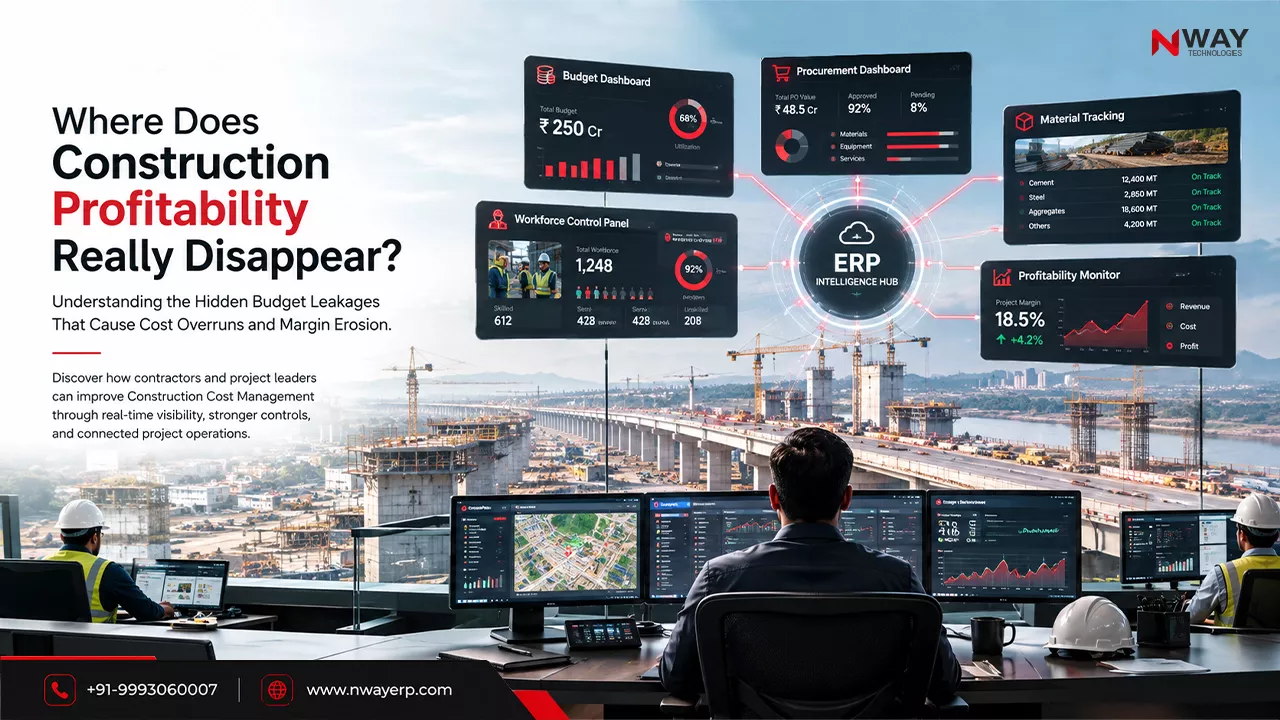
India’s construction sector contributes nearly 9% of GDP and employs over 70 million workers. The sector is expected to reach $1.4 trillion by 2025, making it the world’s third largest. Yet, despite this scale:
- Over 60% of Indian construction projects face cost overruns of 20–30% above sanctioned estimates
- Time overruns on government infrastructure projects average 4–5 years beyond initial timelines
- Material wastage on poorly managed sites can account for 5–15% of total project cost
- Procurement inefficiencies, duplicate orders, and vendor payment delays are endemic to the sector
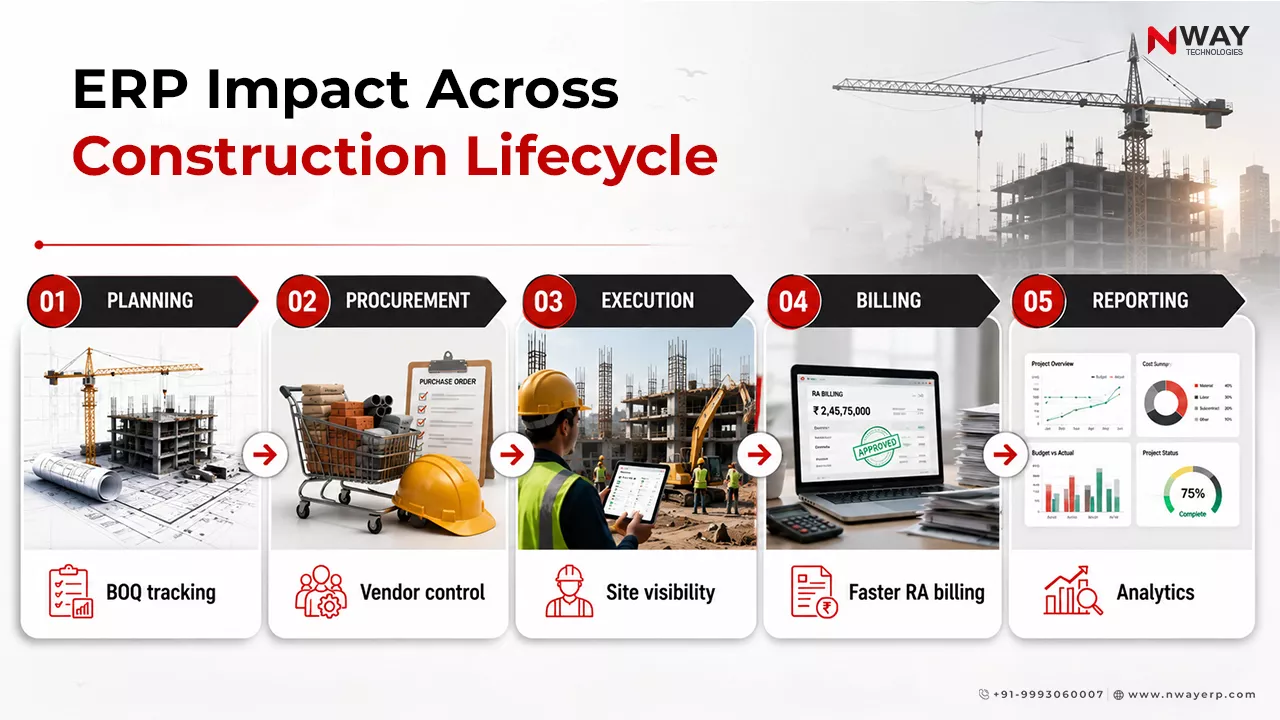
The challenge is not willingness; it is the absence of a unified system to manage the full project lifecycle: estimation, procurement, execution, billing, and compliance. ERP for construction companies bridges this gap.
The Limits of Manual Methods in Construction
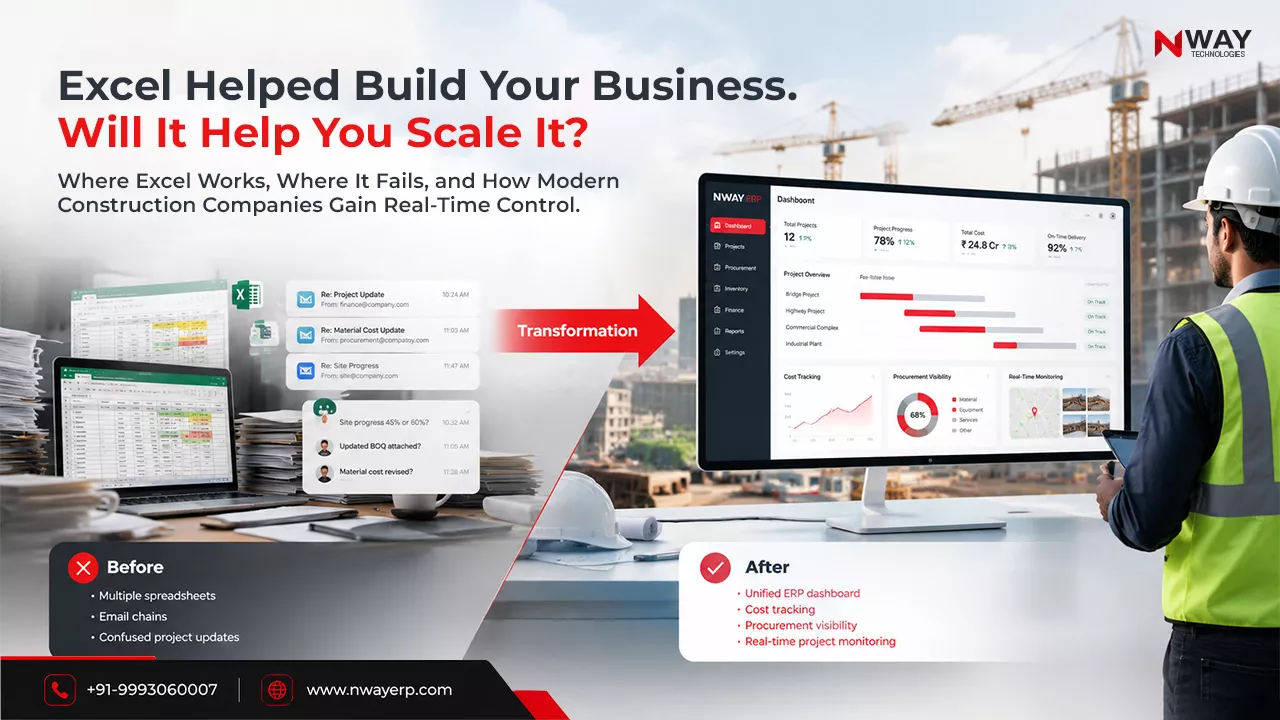
To be fair, construction businesses have been running spreadsheets for decades, and some have done reasonably well. But as project complexity increases, as regulatory scrutiny tightens, and as margins shrink, the cracks in manual systems become structural failures.
What breaks down first:
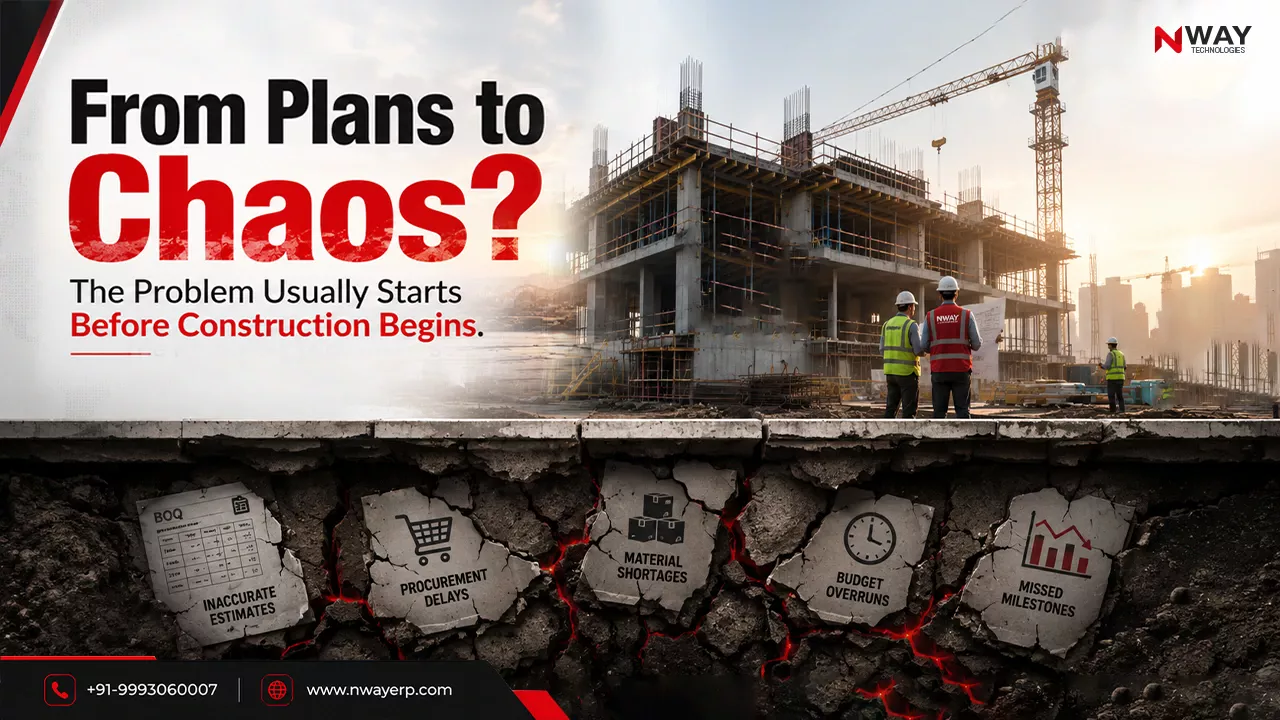
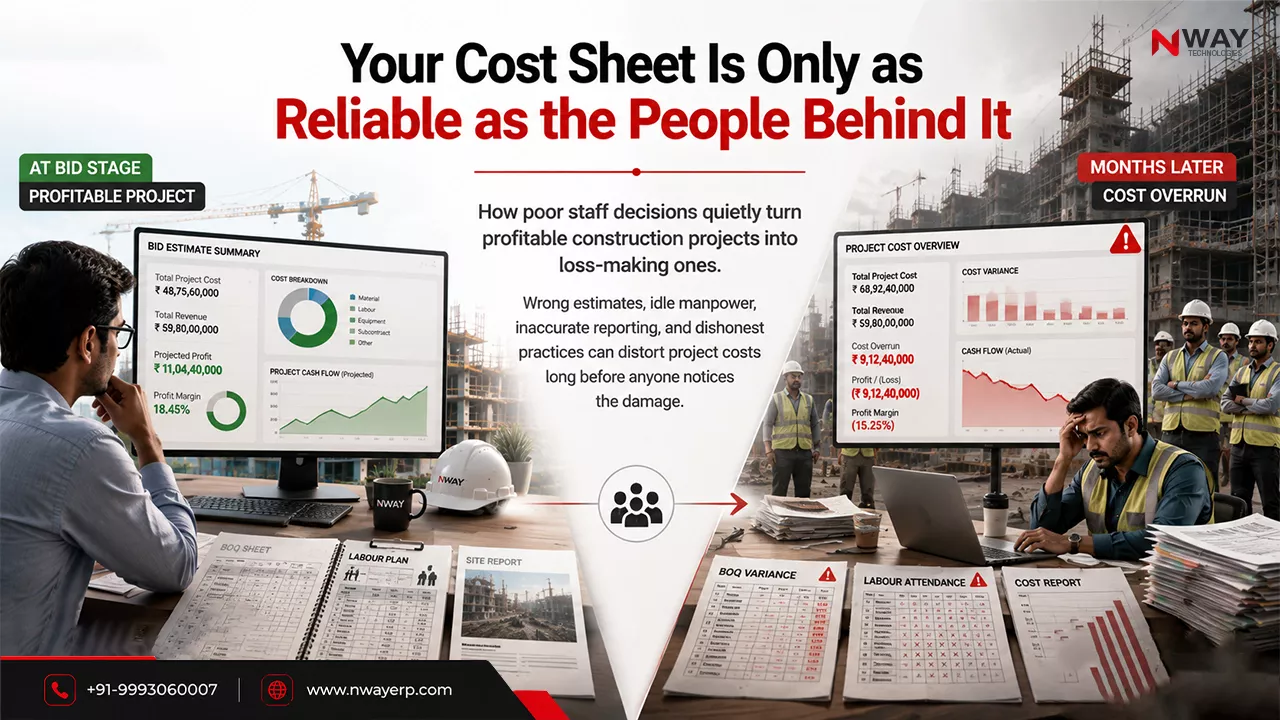
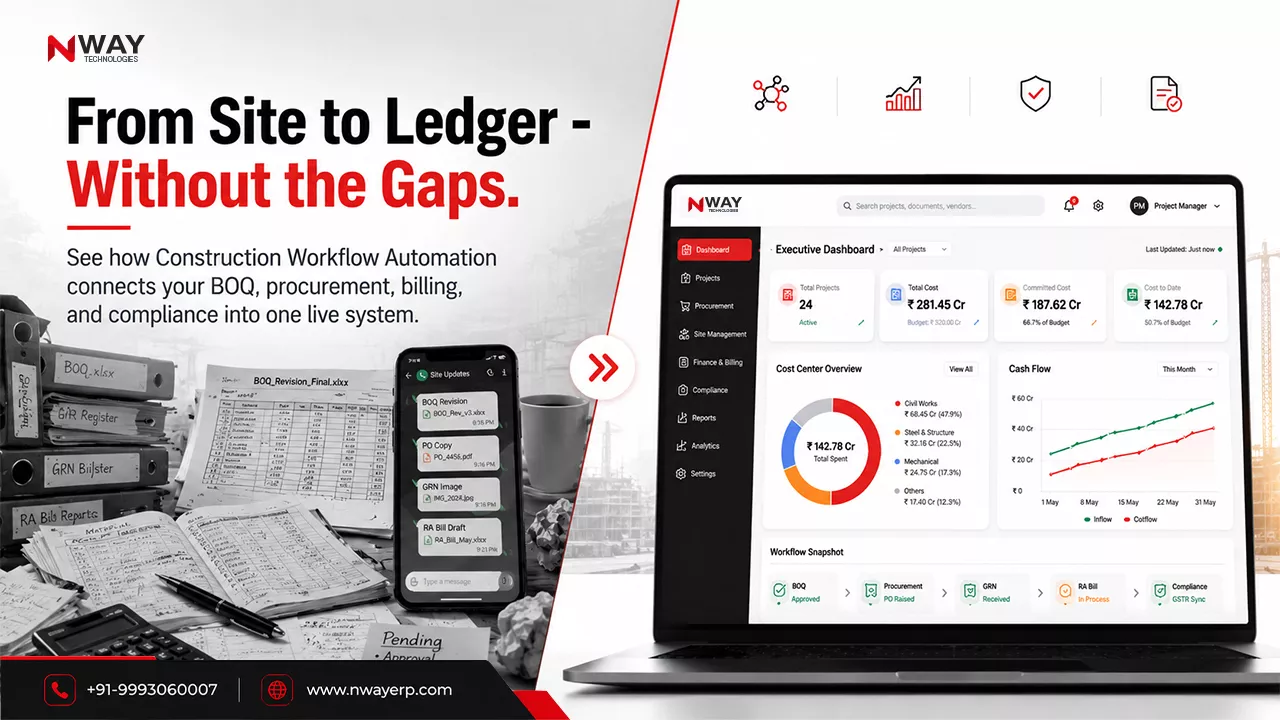
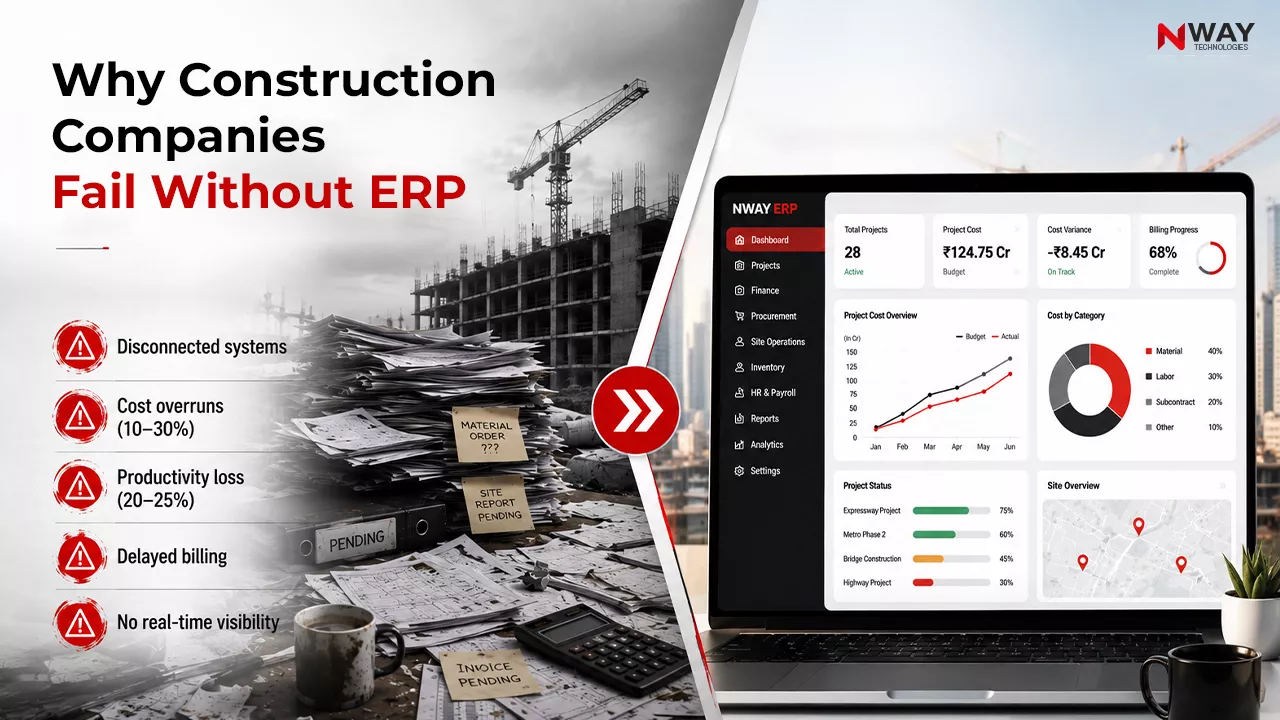
- BOQ and Estimation Errors: When BOQ sheets are maintained in Excel, version control is nearly impossible. A single formula error cascades into mis-procurement and cost variance that no one catches until it’s too late.
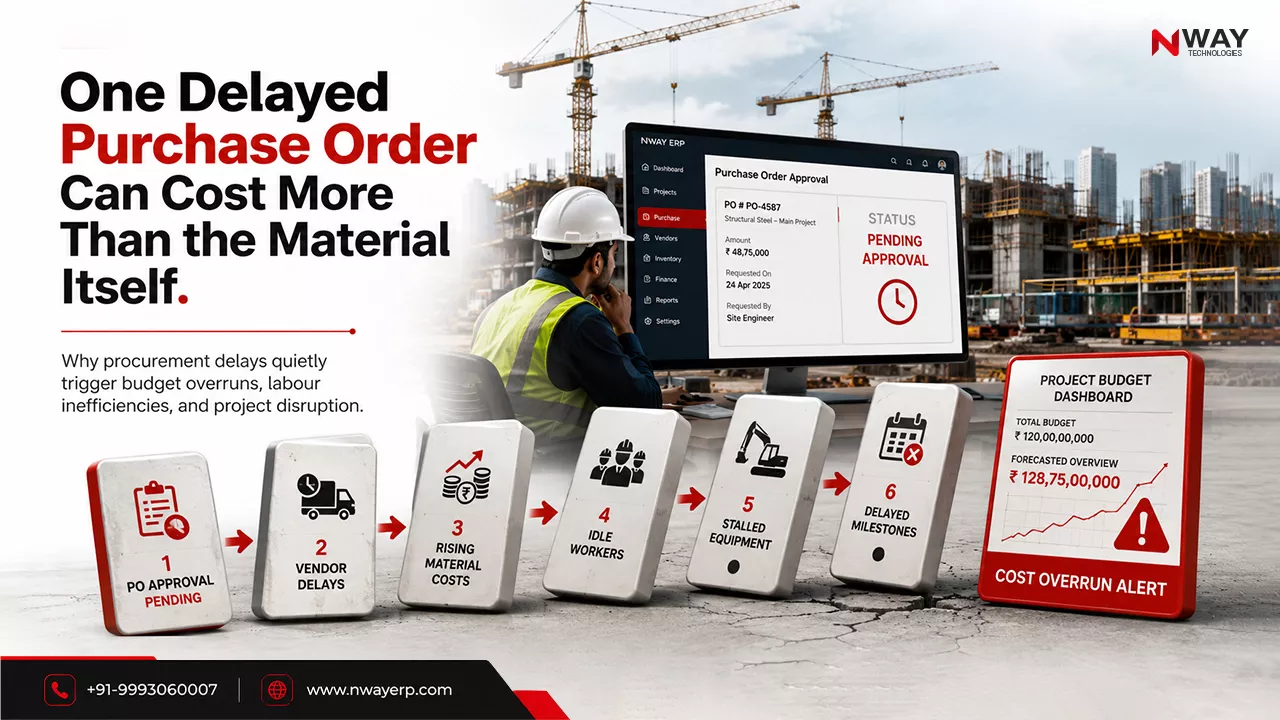
- Procurement Without Visibility: Purchase orders issued over phone calls, and WhatsApp messages cannot be tracked, audited, or reconciled. Over-ordering and under-ordering happen simultaneously across different sites.
- No Real-Time Cost Tracking: By the time a monthly MIS report reaches a CFO, the financial damage is already done. There is no mechanism to alert site managers when a budget head is about to breach.
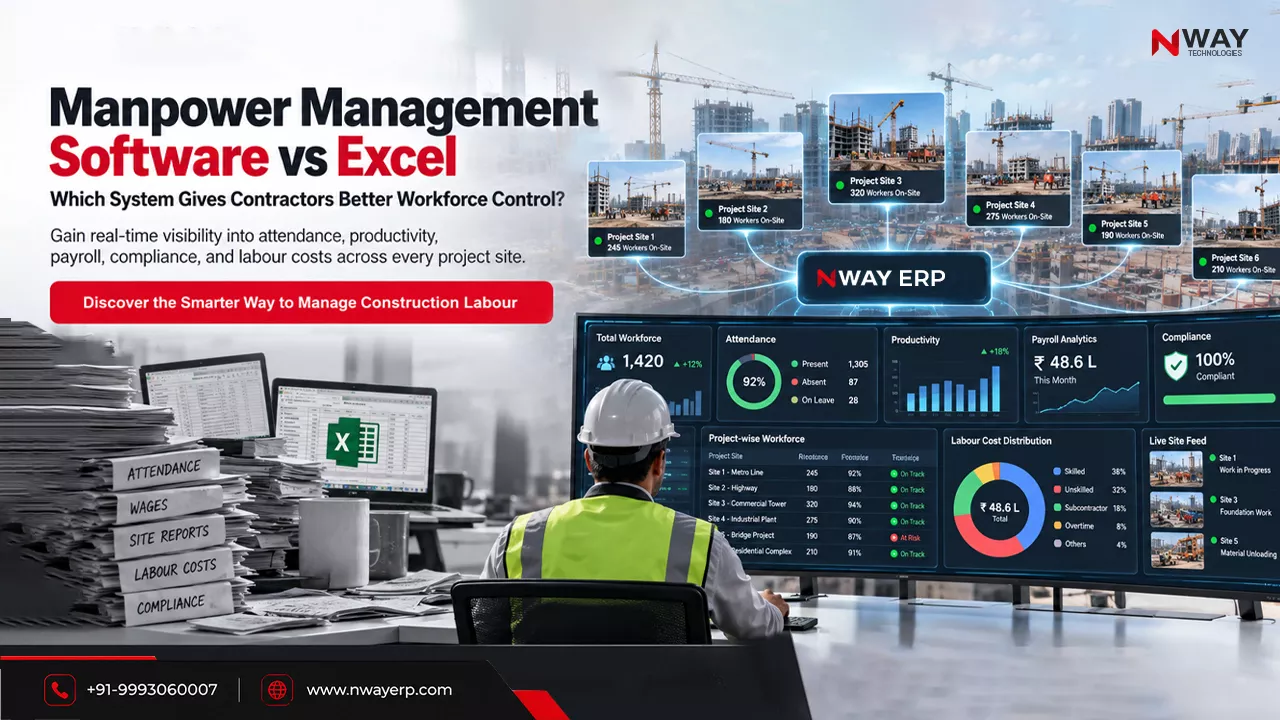
- Labour and Subcontractor Management: Wage disbursement, attendance, and work-order compliance are typically managed through paper registers and informal systems creating liability and accuracy problems.
- Compliance and Documentation Overload: GST-compliant invoicing, contractor billing, TDS deductions, and audit trails are increasingly mandatory and impossible to manage without a structured system.
Manual processes are not just inefficient in 2026; they are a competitive liability.
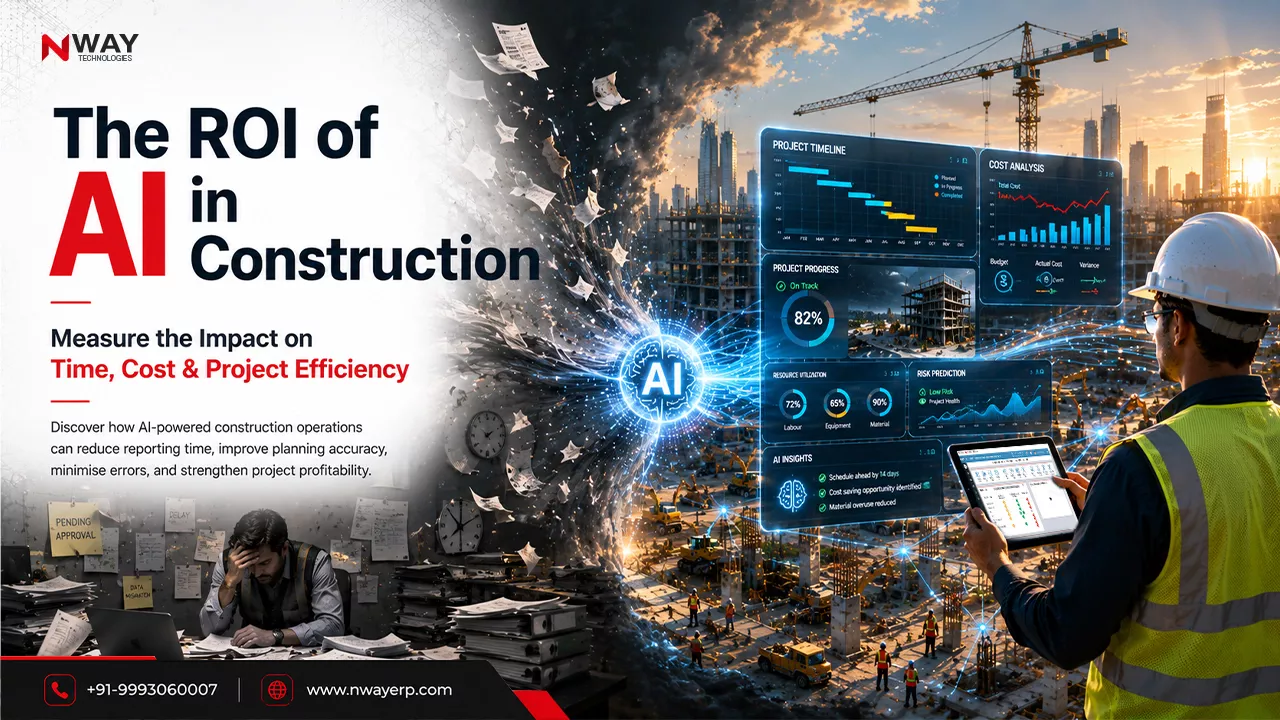
Before Your Next Project Becomes Another Overrun—Fix the System
The Seven Core Challenges Construction ERP Software Solves
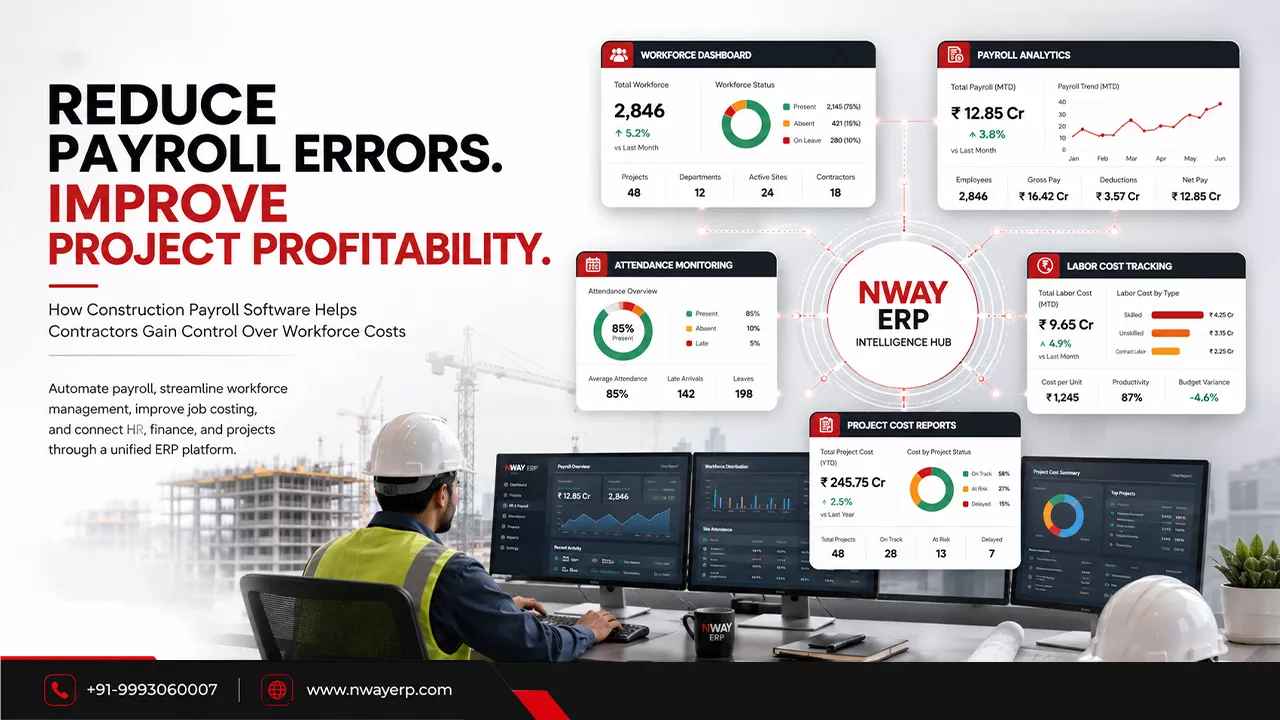
Project Cost Control and Budget Overruns
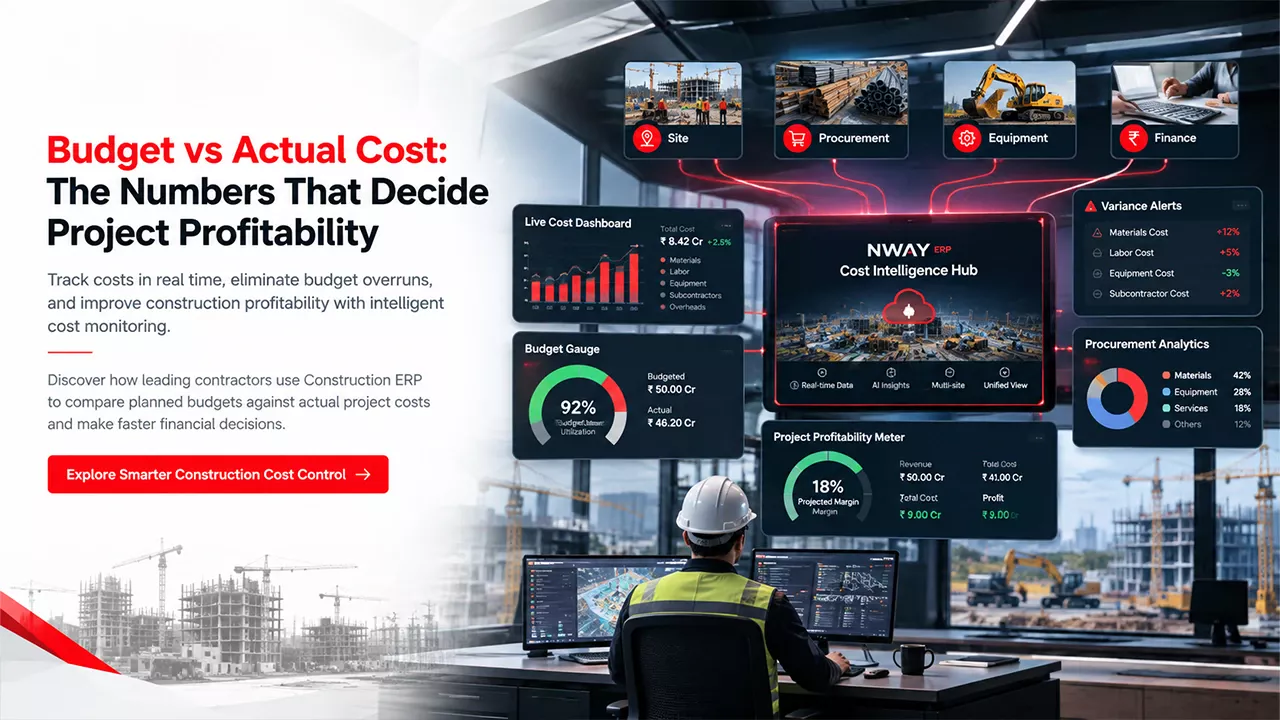
Budget overruns are the single biggest profitability killer in construction. Construction business management software provides real-time budget vs. actual tracking at a granular level broken down by cost head, work package, and project phase. Site managers and CFOs get alerts when expenditure approaches thresholds, enabling course correction before overruns occur.
Procurement and Material Management
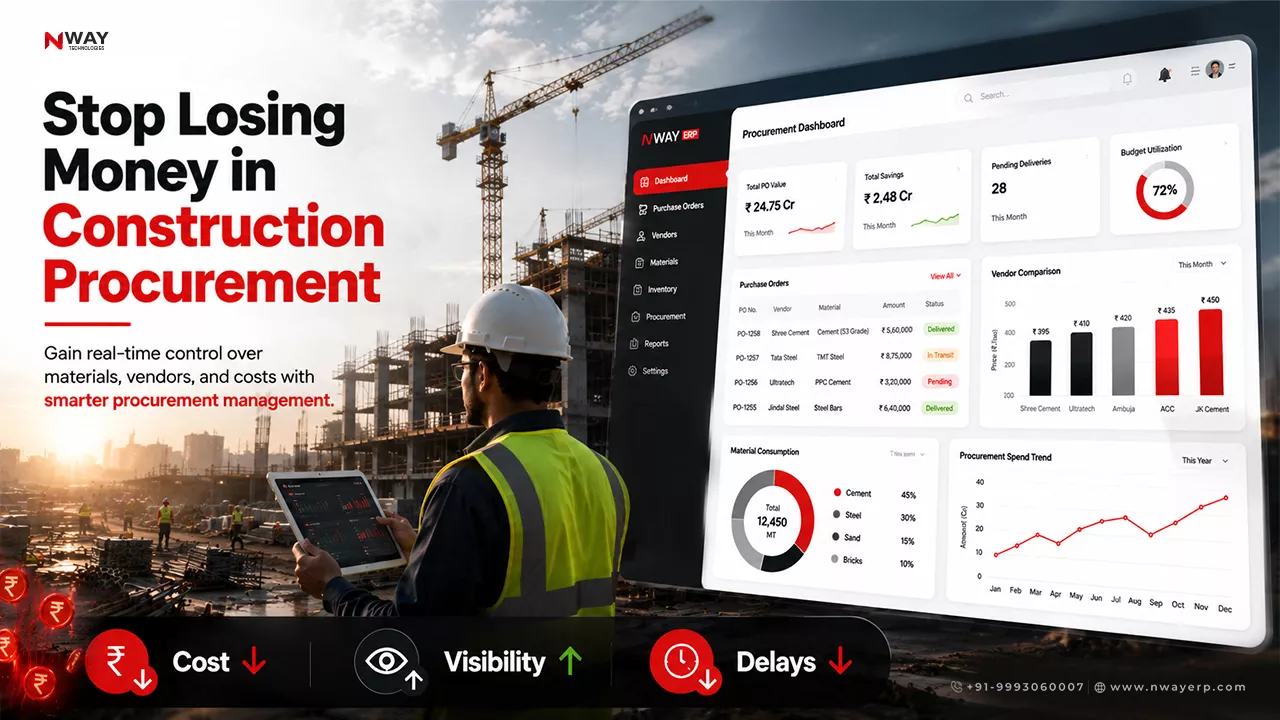
From indent creation to vendor selection, PO generation, GRN, and payment every procurement step must be documented, approved, and auditable. ERP for construction companies automates this workflow, eliminates duplicate orders, enforces approval hierarchies, and maintains a vendor performance scorecard that improves supplier accountability over time.
BOQ Management and Estimation Accuracy
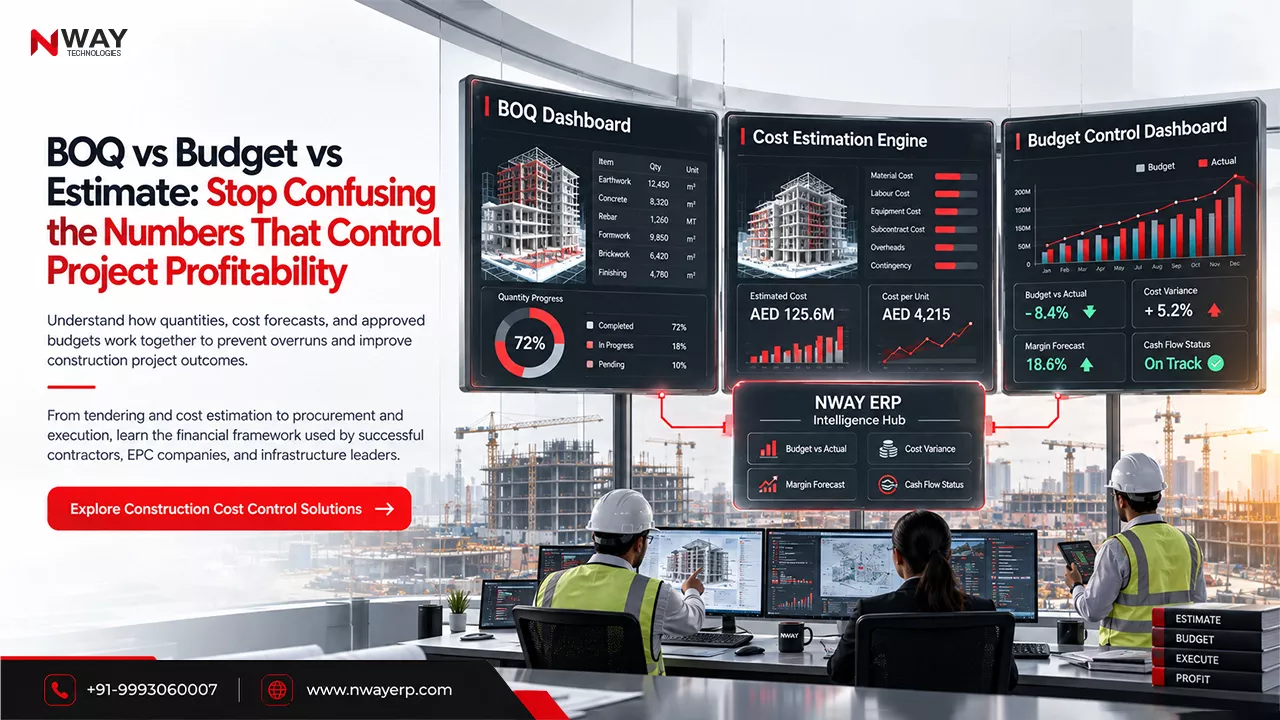
Accurate Bill of Quantities is the foundation of every project. Construction ERP software enables BOQ preparation linked directly to procurement and cost tracking so that when a material rate changes, the impact cascades automatically across estimation, budgeting, and billing. This eliminates the lag between field reality and financial reporting.
Subcontractor and Labour Management
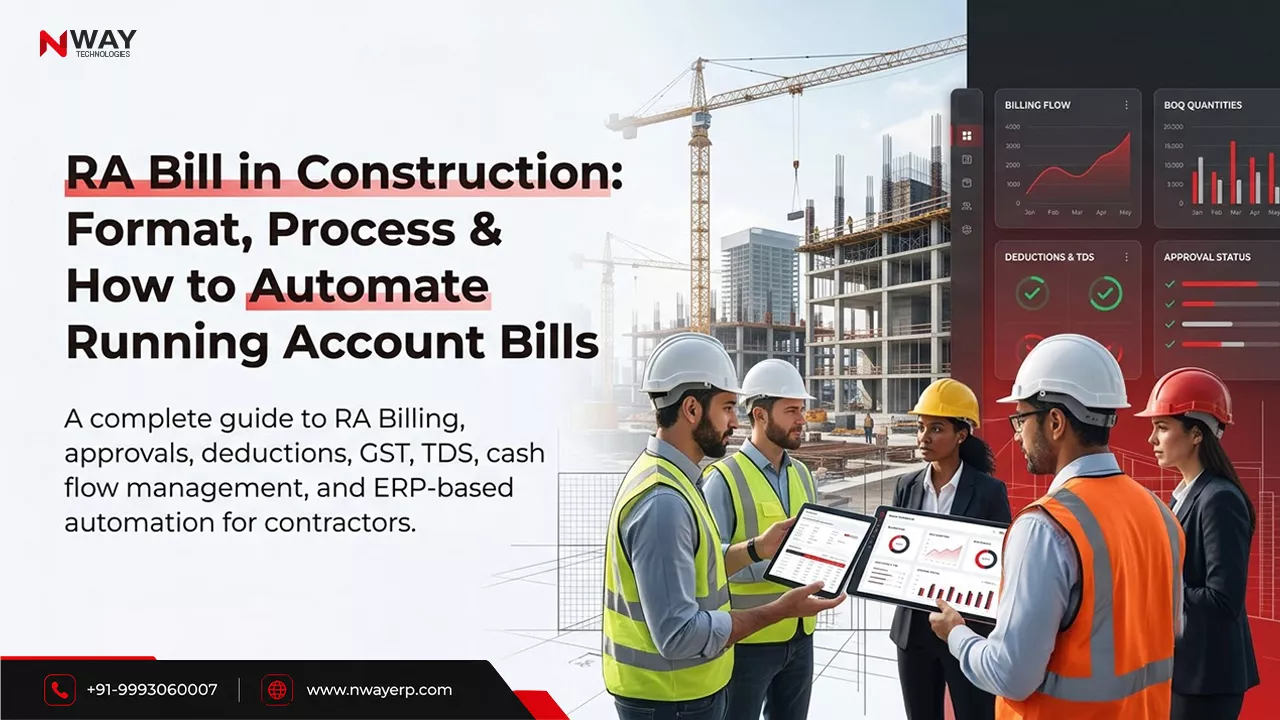
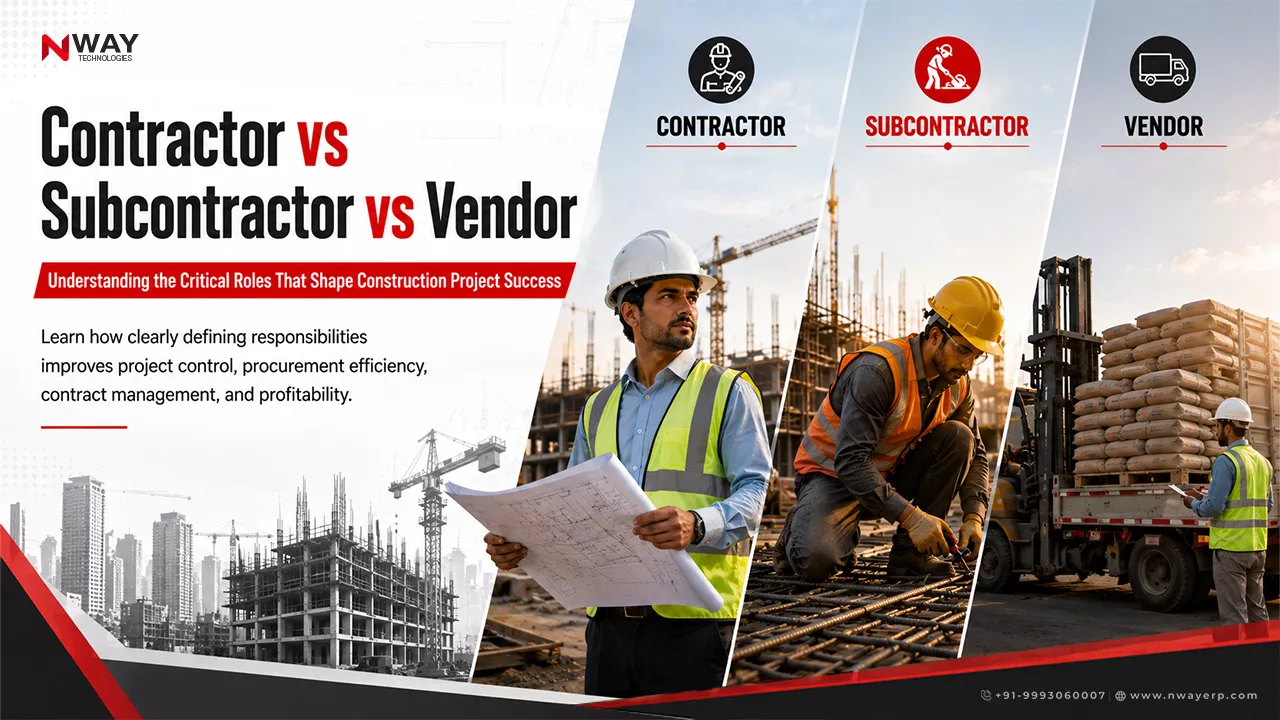
Managing dozens of subcontractors across multiple sites each with their own work orders, measurements, and payment terms is a coordination nightmare without a structured system. ERP software for builders and contractors enables work-order tracking, measurement book recording, RA bill processing, and payment reconciliation on a single platform.
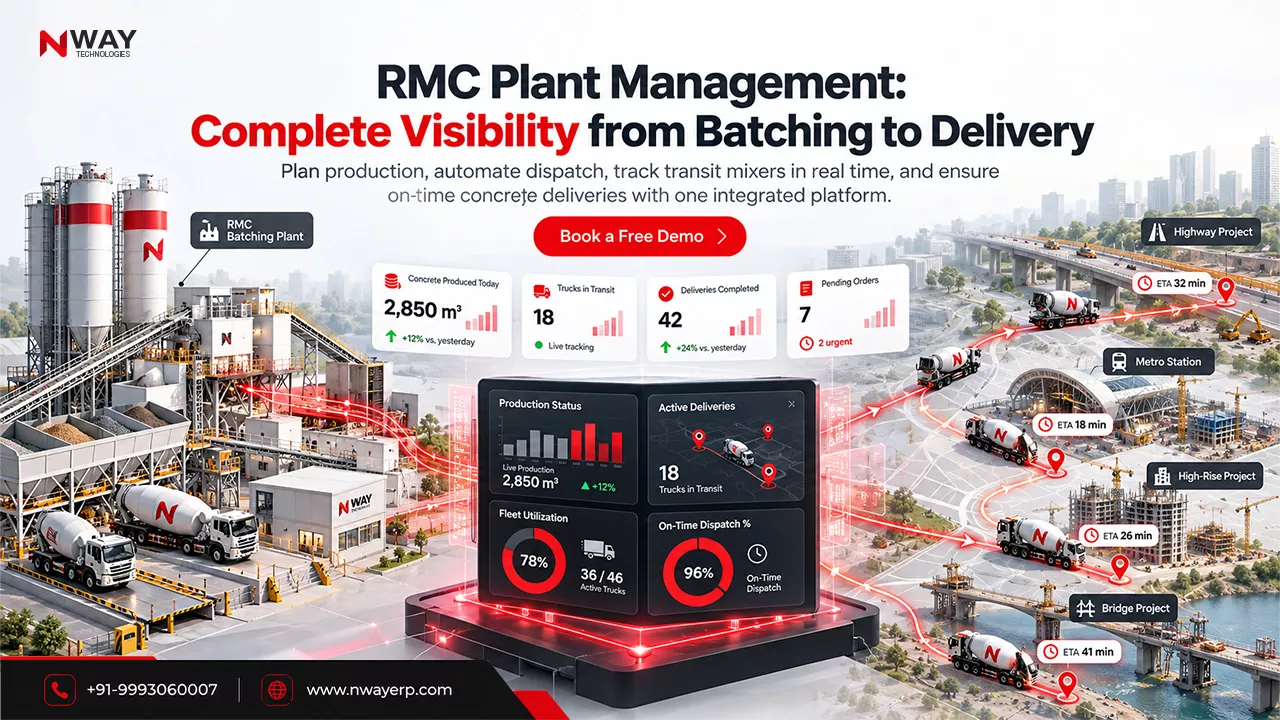
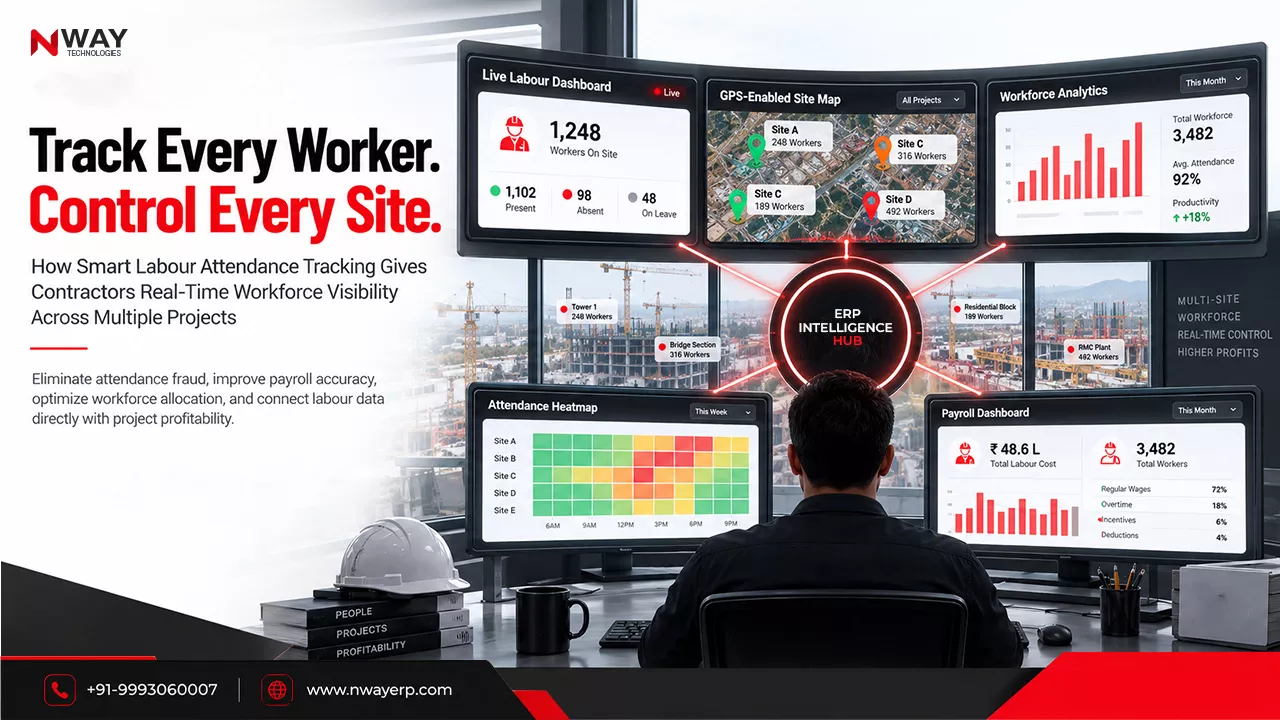
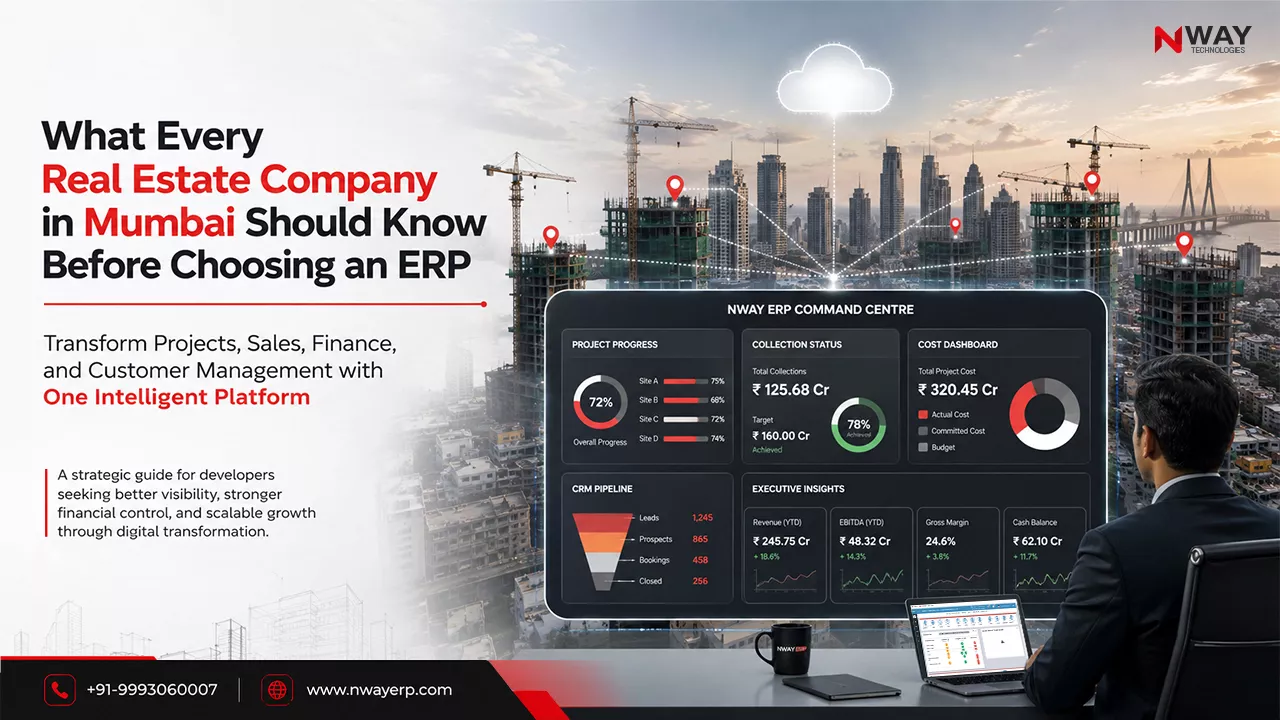
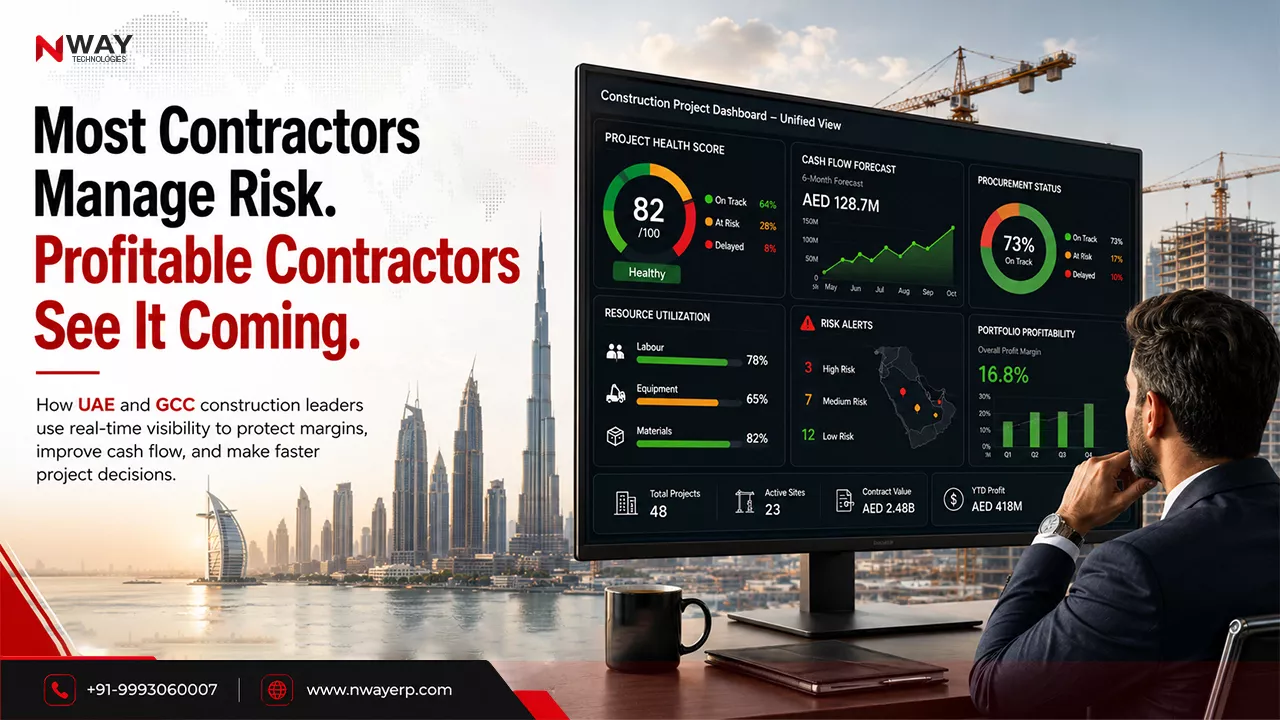
Multi-Site and Multi-Project Visibility
For contractors managing multiple projects simultaneously, consolidated visibility is essential. Construction ERP India solutions offer dashboards that roll up KPIs across all sites — resource utilization, cost performance, schedule adherence — into a single executive view. Read how multi-site management works in practice.
Compliance, GST, and Audit Readiness
GST-compliant billing, e-invoicing, TDS calculations, and document management are now table stakes for any serious contractor. Construction management software handles all this automatically, generating compliant documents, maintaining an audit trail, and reducing the compliance burden on finance teams. See our full guide to GST in construction for the input-credit and billing mechanics.
7. Equipment and Asset Tracking
Heavy machinery is one of the largest capital expenses in construction. Without tracking, equipment idle time, maintenance lapses, and asset misallocation are common. ERP-driven machinery and vehicle management provides maintenance scheduling, usage tracking, and cost allocation across projects.
Real-World Scenarios: Where ERP Changes the Game
Scenario 1 – The Contractor with 8 Sites:
A contractor managing 8 sites across Gujarat and Rajasthan was reconciling financial data manually at month-end. It took 12 days to produce a consolidated P&L. After implementing cloud-based construction ERP, real-time dashboards reduced reporting time to under 2 hours, freeing the finance team to focus on analysis rather than data gathering.
Scenario 2 — The CFO Chasing Overruns:
A CFO at a ₹200 crore infrastructure company discovered a ₹18 lakh material over-procurement only during a quarterly audit. With ERP, procurement triggers are linked to budget heads. Any PO that breaches the approved budget requires an additional authorization workflow. Overruns are caught before they happen, not after.
Scenario 3 — The Project Manager Underwater in Paperwork:
A project manager was spending 3–4 hours daily compiling reports from different sources. ERP software automated data collection from the site, procurement, and finance and generated exception-based alerts. The PM now spends more time in the field and less on spreadsheets.
What to Look for in a Construction ERP Solution
Not all ERP systems are built for construction. Generic ERP platforms often require expensive customization to handle construction-specific workflows like BOQ management, RA billing, work-order-based costing, and multi-site operations. Here is what a purpose-built solution should offer:
- Domain-specific modules: Estimation, BOQ, procurement, subcontractor management, equipment tracking, and project accounting all built for construction, not retrofitted
- Cloud-based architecture: Site access from mobile devices, real-time data sync, and no dependency on-premises servers
- Integration: Seamless connection between project management, procurement, finance, and HR functions
- Implementation speed: A system that can be deployed in weeks, not years, with training support tailored for construction teams
- Indian compliance: GST, TDS, e-invoicing, and statutory compliance built into the platform.
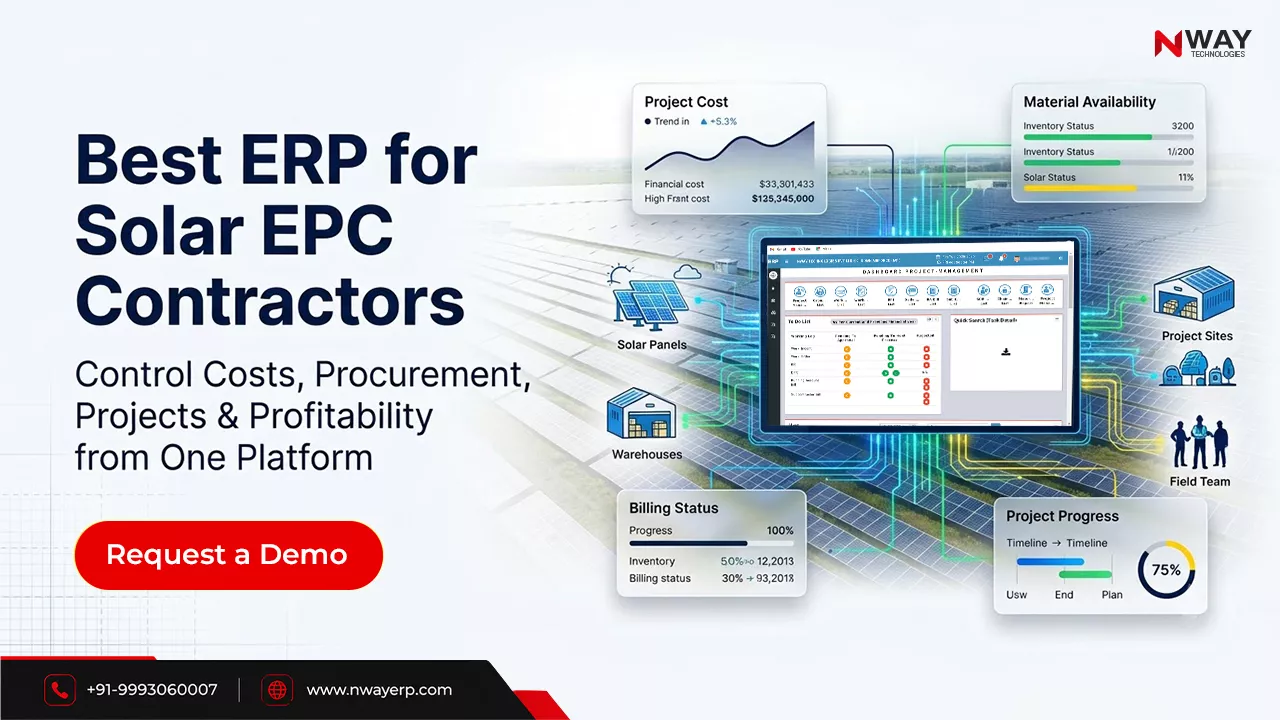
Nway ERP is purpose-built for Indian construction companies — with modules covering BOQ management, contractor billing, multi-site dashboards, GST compliance, and mobile site access. With 250+ clients across 480+ cities, it is one of the most widely deployed construction ERP platforms in India.
Points to focus on
- India’s construction sector faces systemic challenges in cost control, procurement, and multi-site management that manual methods cannot solve at scale
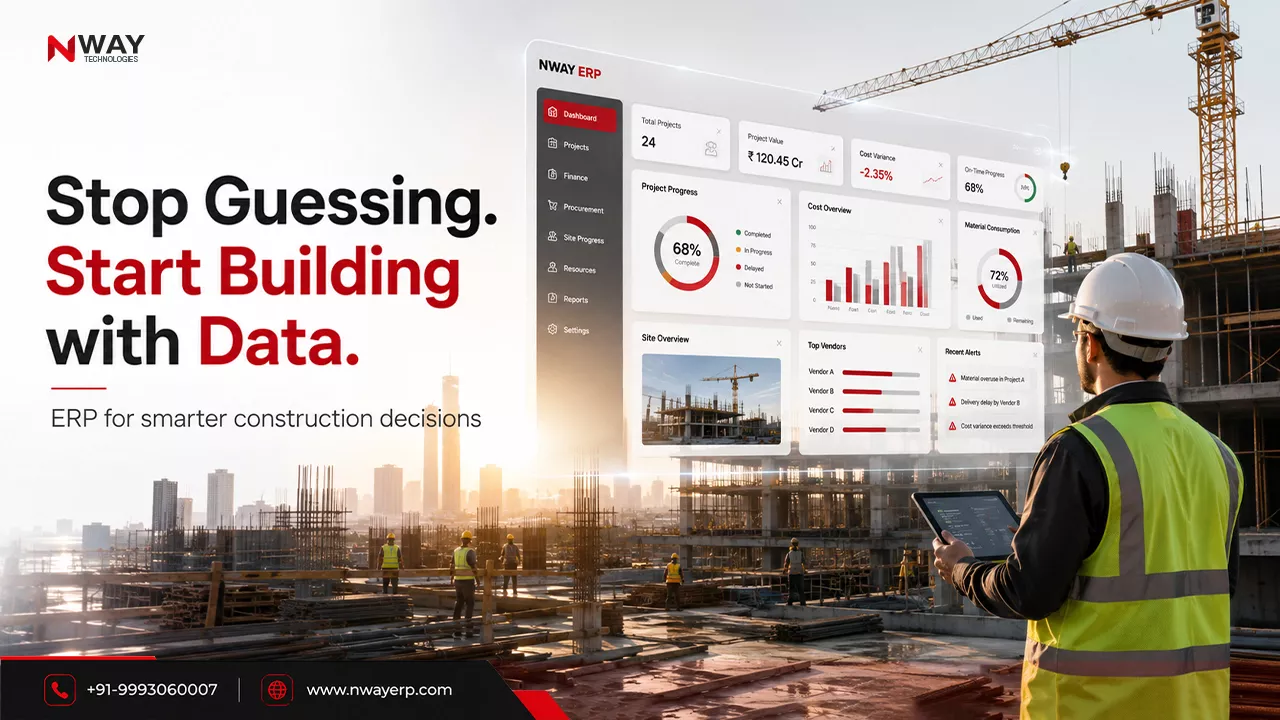
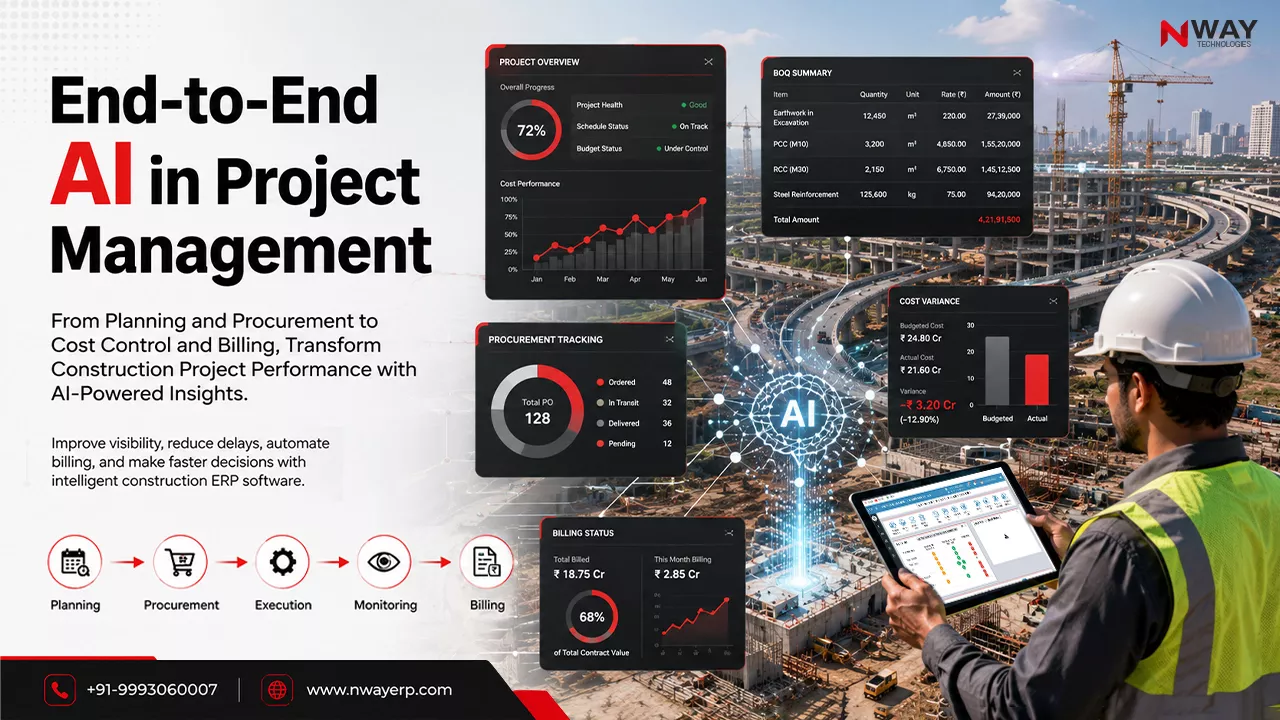
- Construction management software provides real-time visibility across the full project lifecycle from BOQ to billing
- ERP for construction companies reduces material wastage, eliminates procurement duplication, and enables accurate budget tracking
- Cloud-based, scalable ERP is the right fit for Indian contractors managing growing project portfolios
- The right time to implement construction ERP is before the next project not after the next overrun
Conclusion
Indian construction is at an inflexion point. The volume of work coming through government infrastructure programmed, real estate recovery, and private sector capex is enormous. But the companies that will capture this opportunity profitably are not just the ones with the largest teams or the lowest bids.
They are the ones who can execute with precision controlling costs, managing procurement transparently, tracking subcontractors efficiently, and giving leadership real-time visibility into project health.
ERP software for builders and contractors is no longer a back-office investment. It is a core operational capability as essential to a modern construction business as a theodolite or a crane.
The companies that implement construction ERP in 2026 will not just work more efficiently. They will bid more accurately, manage better, and grow faster than competitors still running on spreadsheets. If you’re comparing specific platforms, our roundup of the top construction management software for 2026 is the next place to look.
Get Real-Time Control Across Every Construction Site