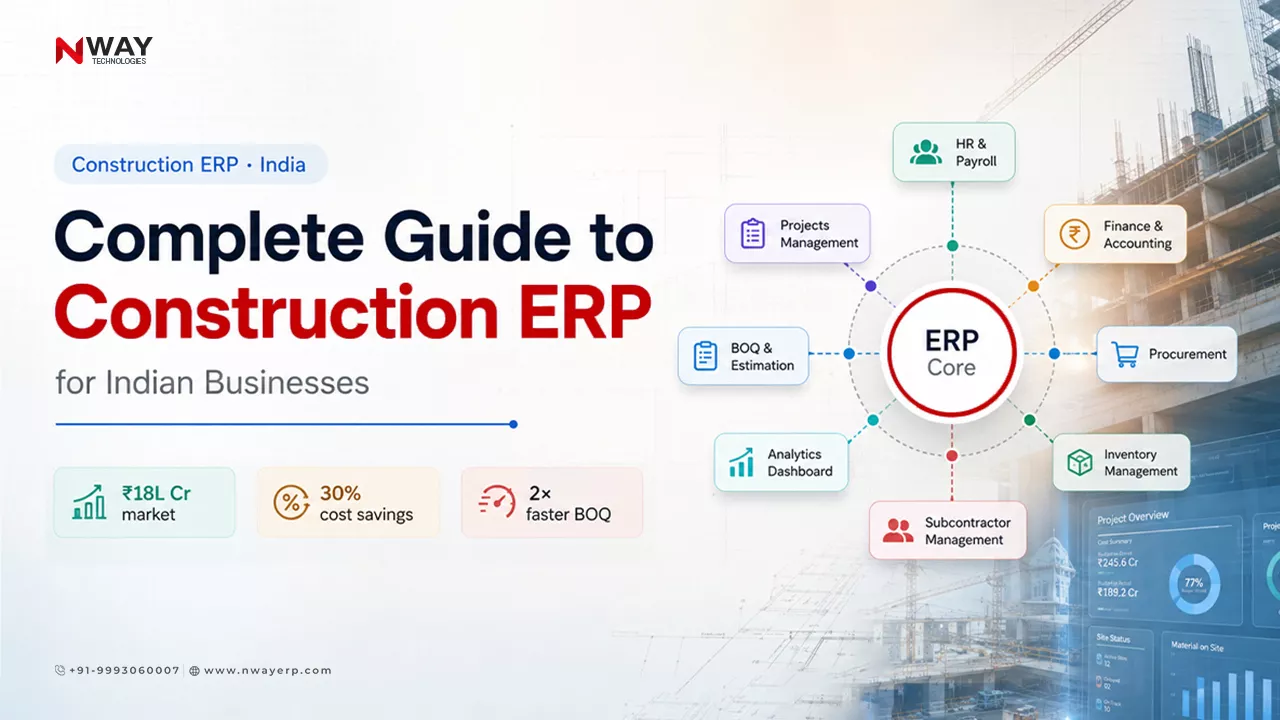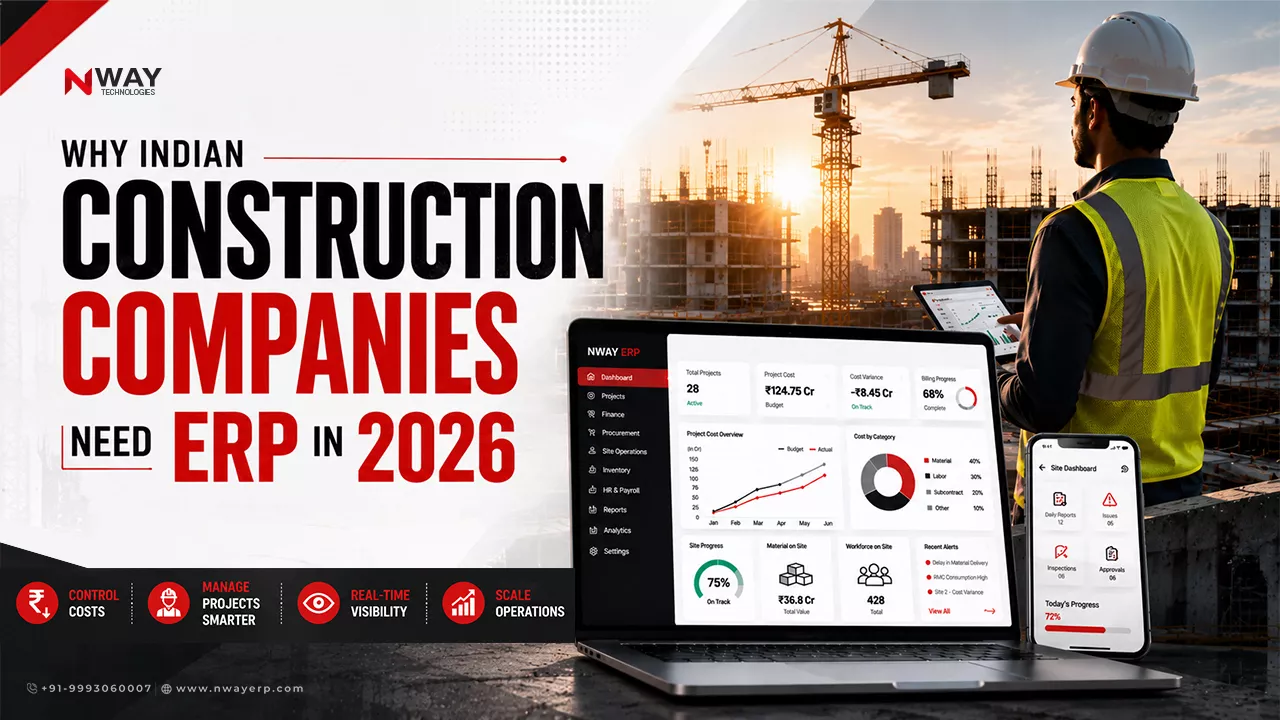
Discover why Construction ERP Software India is critical in 2026 to control costs, improve efficiency, and eliminate project delays in construction businesses.
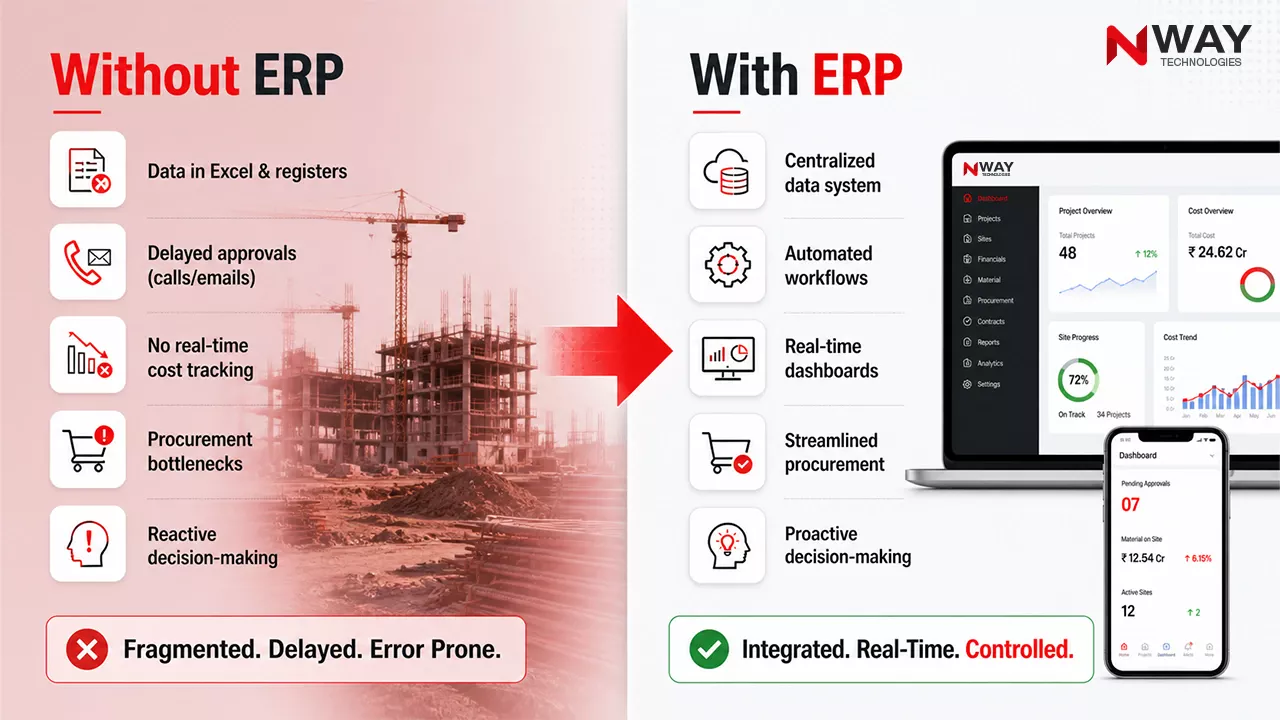
Table of Contents:
- The Cost of Waiting Has Never Been Higher
- A Sector Under Pressure
- Why It’s Hard: The Reality of Traditional Systems
- Why 2026 Is the Inflection Point for ERP Adoption
- From Reactive to Predictive Operations
- ERP Is No Longer Just for Large Enterprises
- Delay Is Now a Strategic Risk
Introduction: The Cost of Waiting Has Never Been Higher
The Indian construction industry is entering a high-stakes phase in 2026. With large-scale infrastructure investments, tighter compliance requirements, and increasing project complexity, the margin for operational inefficiency has nearly vanished.
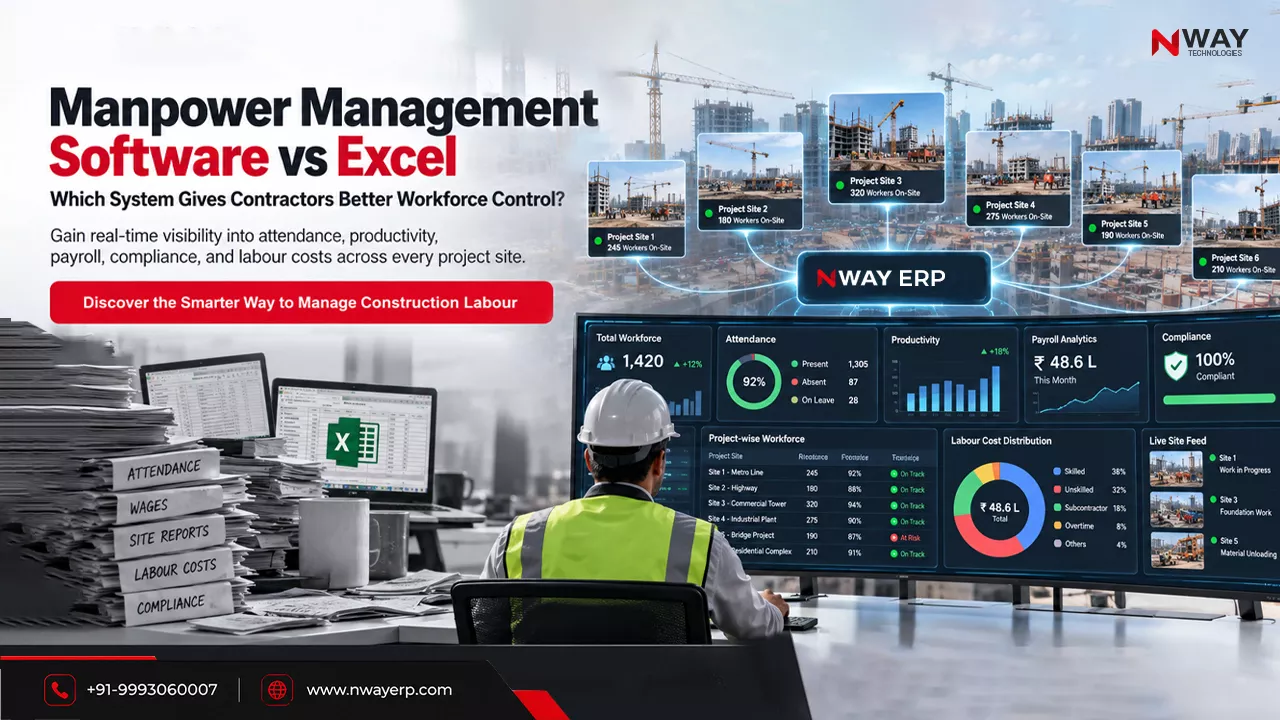
Yet, many contractors, builders, and infrastructure firms still rely on fragmented tools, Excel sheets, manual registers, and disconnected software to manage projects. The result? Delays, cost overruns, and lack of real-time visibility.
At this point, ERP adoption in the construction industry is no longer a strategic advantage; it is a baseline requirement.
A Sector Under Pressure
India’s construction sector is projected to reach $1.4 trillion by 2027, driven by government initiatives like Gati Shakti and Smart Cities Mission. However, growth comes with systemic challenges:
- Frequent cost escalations due to volatile material prices
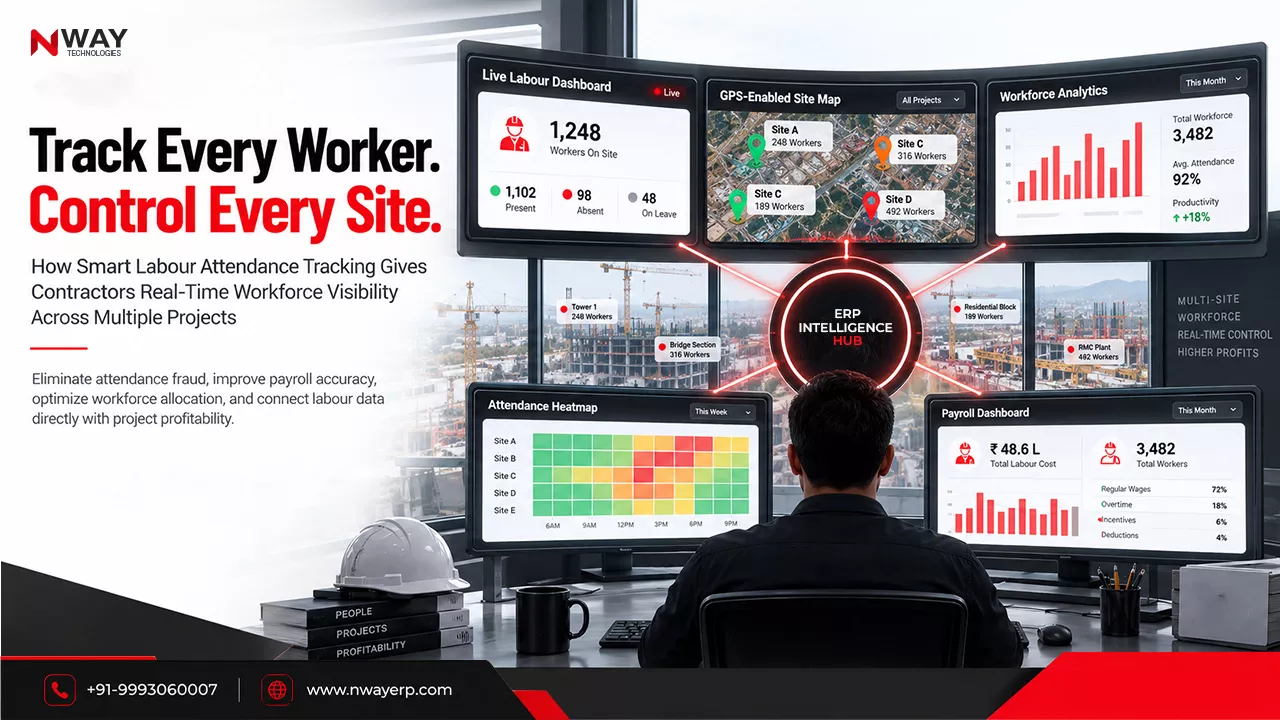
- Labour management inefficiencies across multiple sites
- Procurement delays impacting project timelines
- Limited real-time visibility into project progress and costs
- Compliance and audit complexities
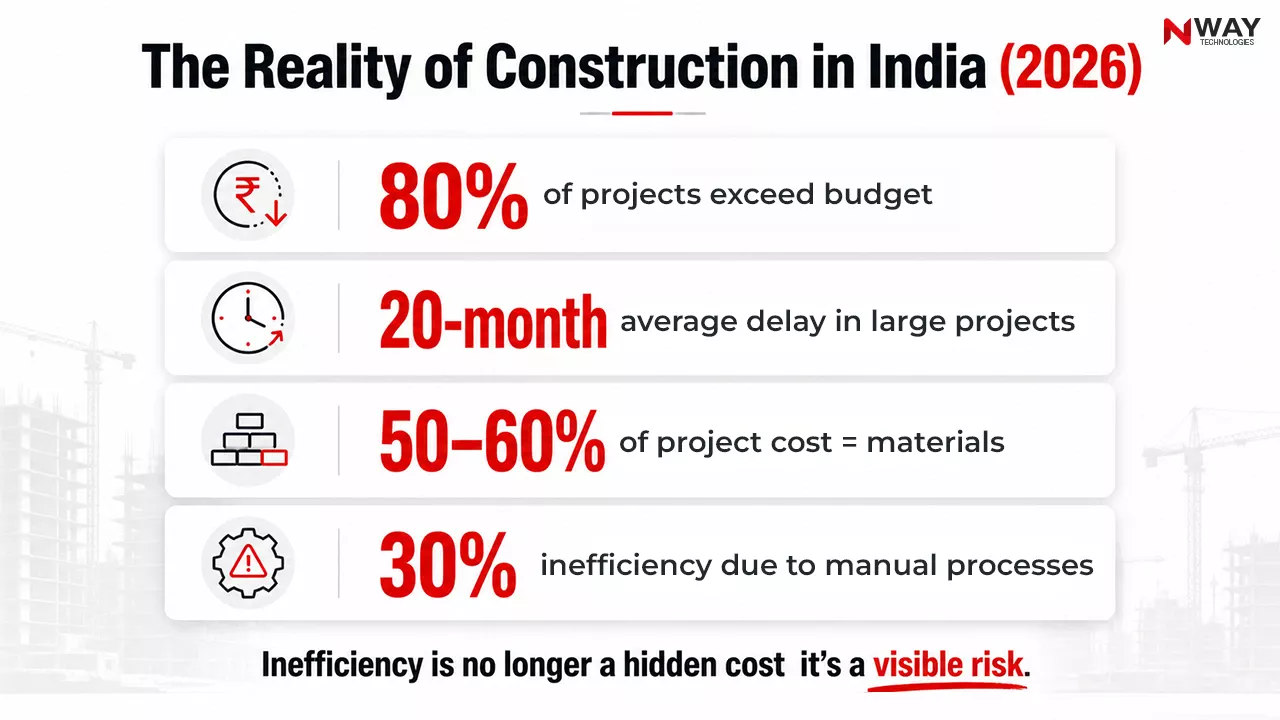
A McKinsey report highlights that large construction projects globally run 80% over budget and 20 months behind schedule on average. In India, these inefficiencies are often amplified by manual processes.
This is precisely where the construction of ERP software becomes mission critical.
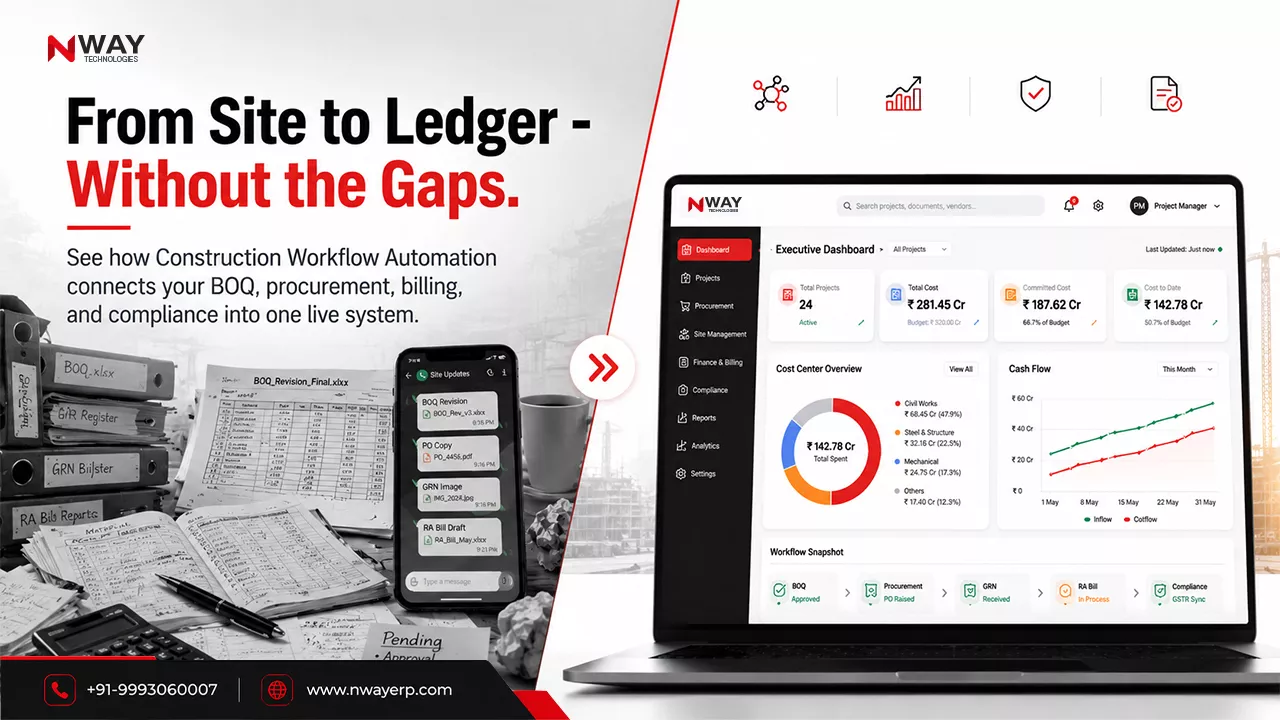
See What ‘One Source of Truth’ Looks Like for Your Projects
Get a clear view of how integrated construction ERP can streamline your operations without disrupting your current workflows.
Why It’s Hard: The Reality of Traditional Systems
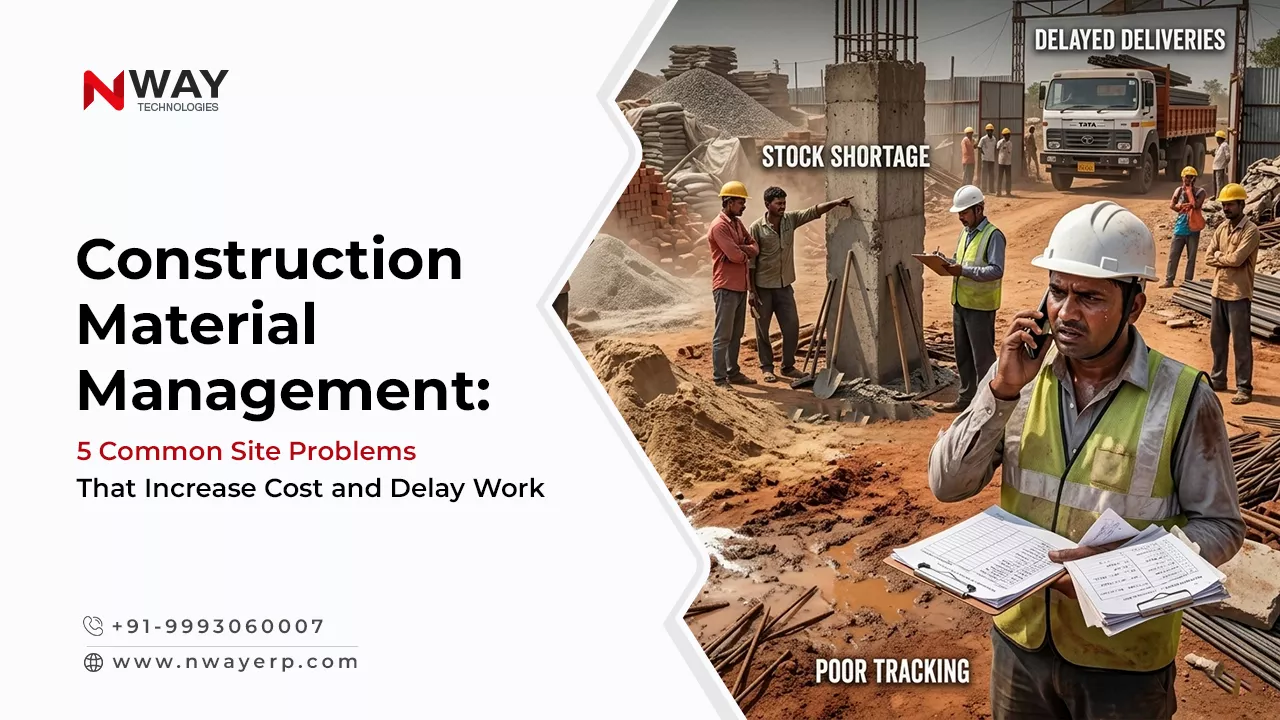
Despite the clear need, many companies delay ERP implementation due to perceived complexity. The ground reality includes:
Fragmented Data Ecosystems
Project data is scattered across departments; procurement, finance, and site teams operate in silos.
Manual Cost Tracking
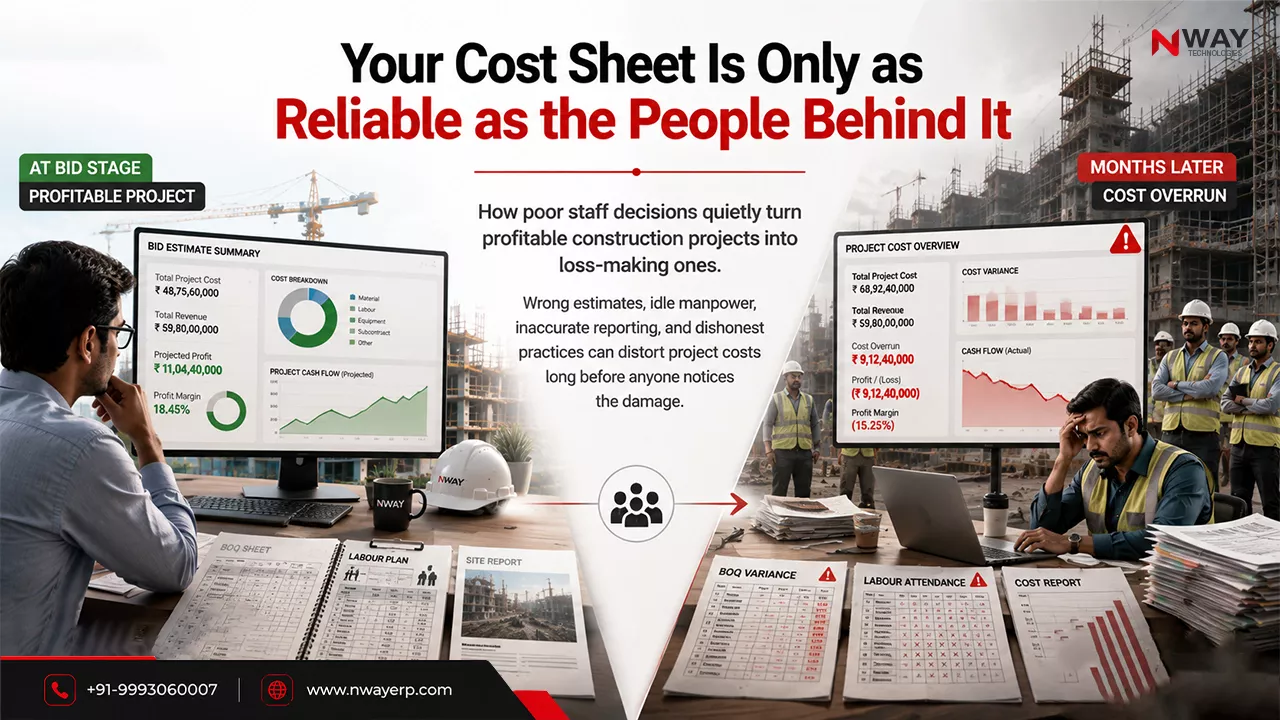
Tracking project costs through spreadsheets leads to delayed insights and inaccurate forecasting, contributing to construction project cost overrun.
Resistance to Change
Site teams and operational staff often resist digital tools due to lack of training or familiarity.
High Implementation Myths
Many assume ERP systems are expensive, rigid, and suited only for large enterprises. While these challenges are valid, they are increasingly outweighed by the risks of not modernizing.
Why 2026 Is the Inflexion Point for ERP Adoption
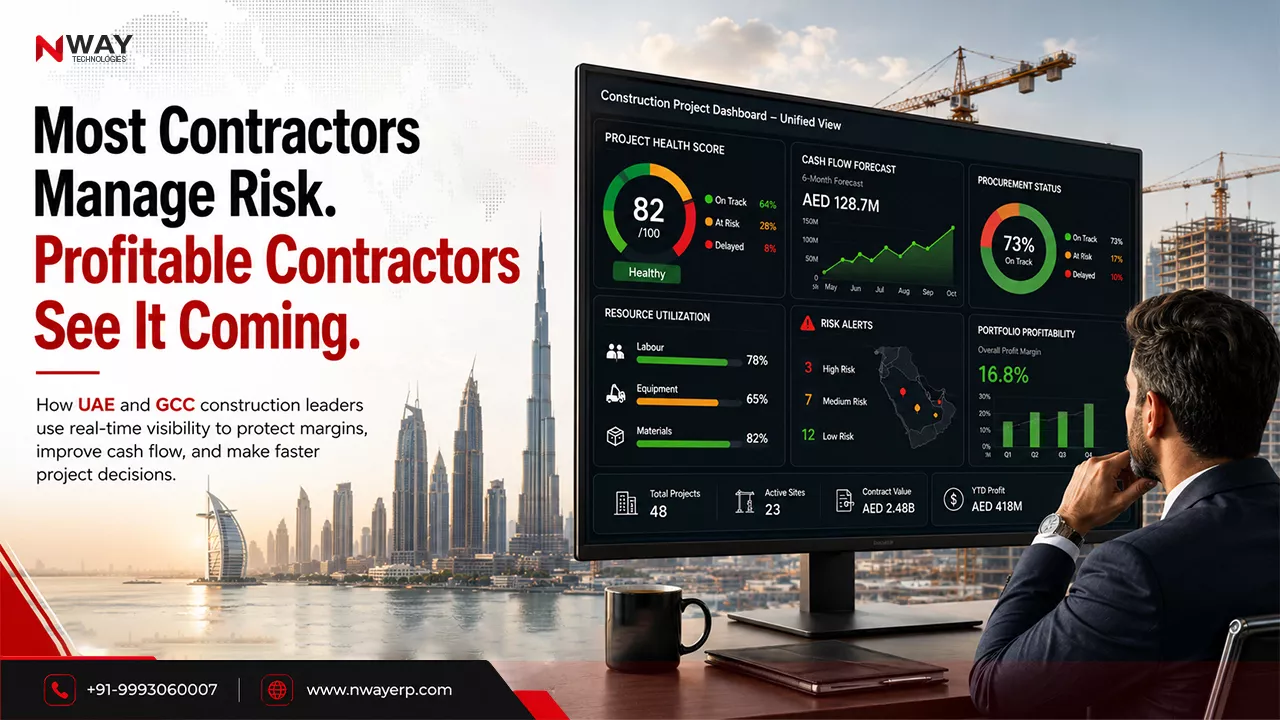
Real-Time Cost Control Is Now Non-Negotiable
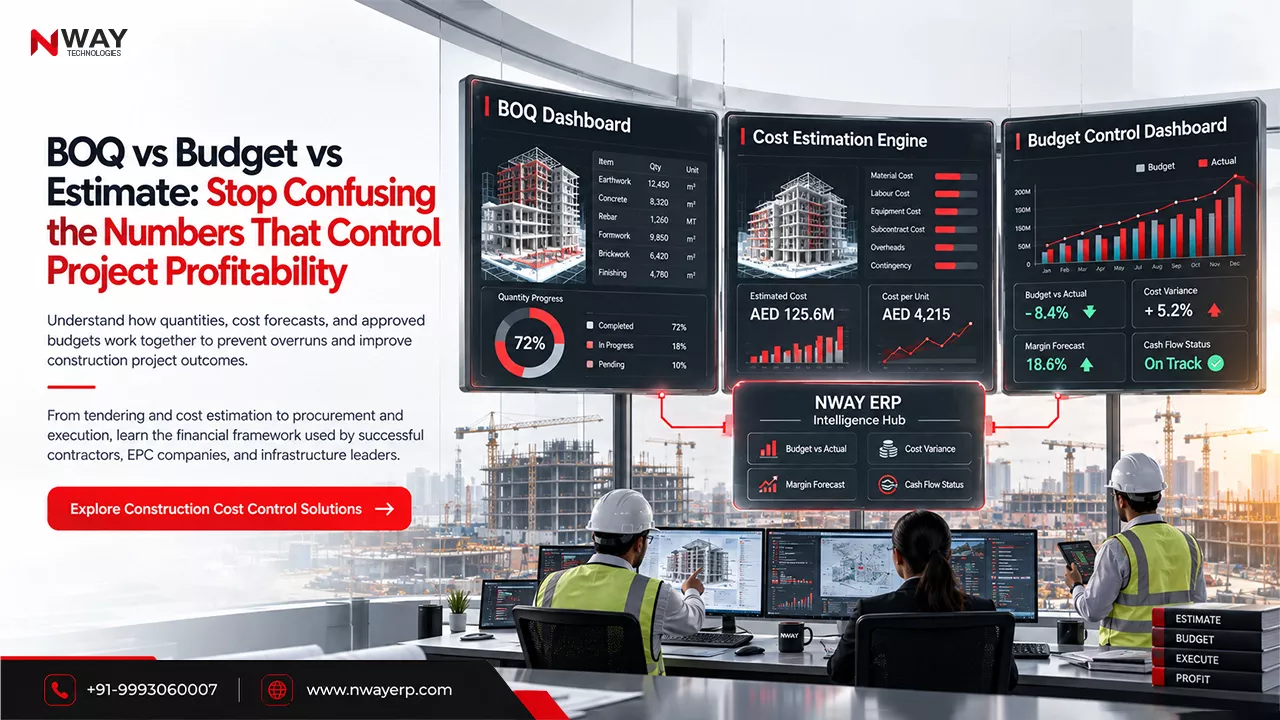
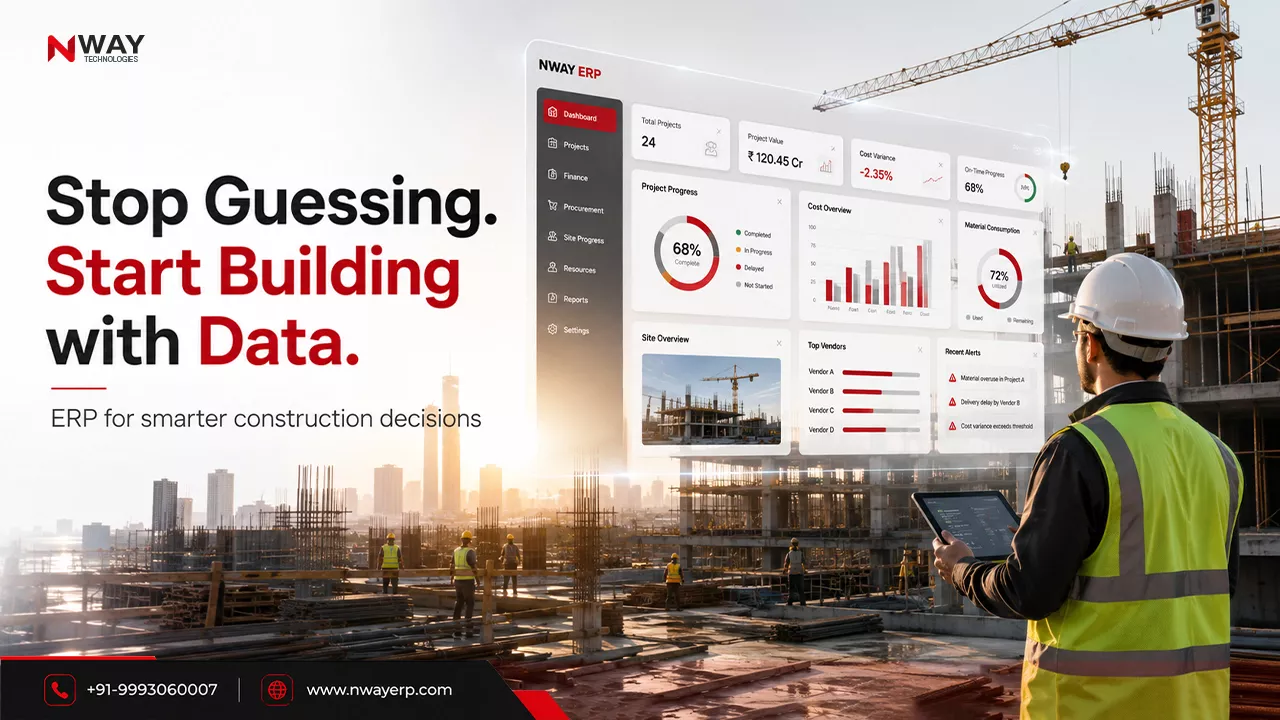
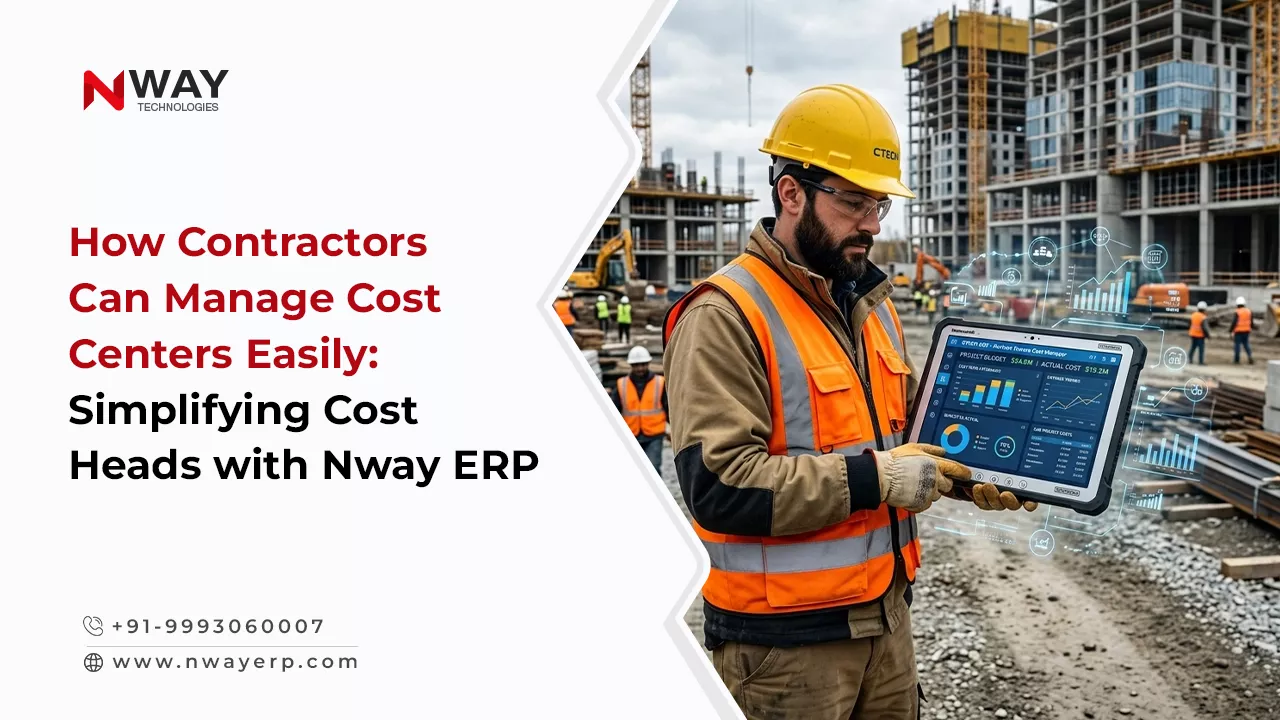
Construction margins are tightening. Without real-time cost tracking across BOQs, material consumption, and subcontractor billing, companies risk profit erosion.
A modern construction project management software integrated with ERP enables:
- Live budget vs actual comparisons
- Automated cost allocation
- Early detection of deviations
Integrated Procurement Is Critical to Project Timelines
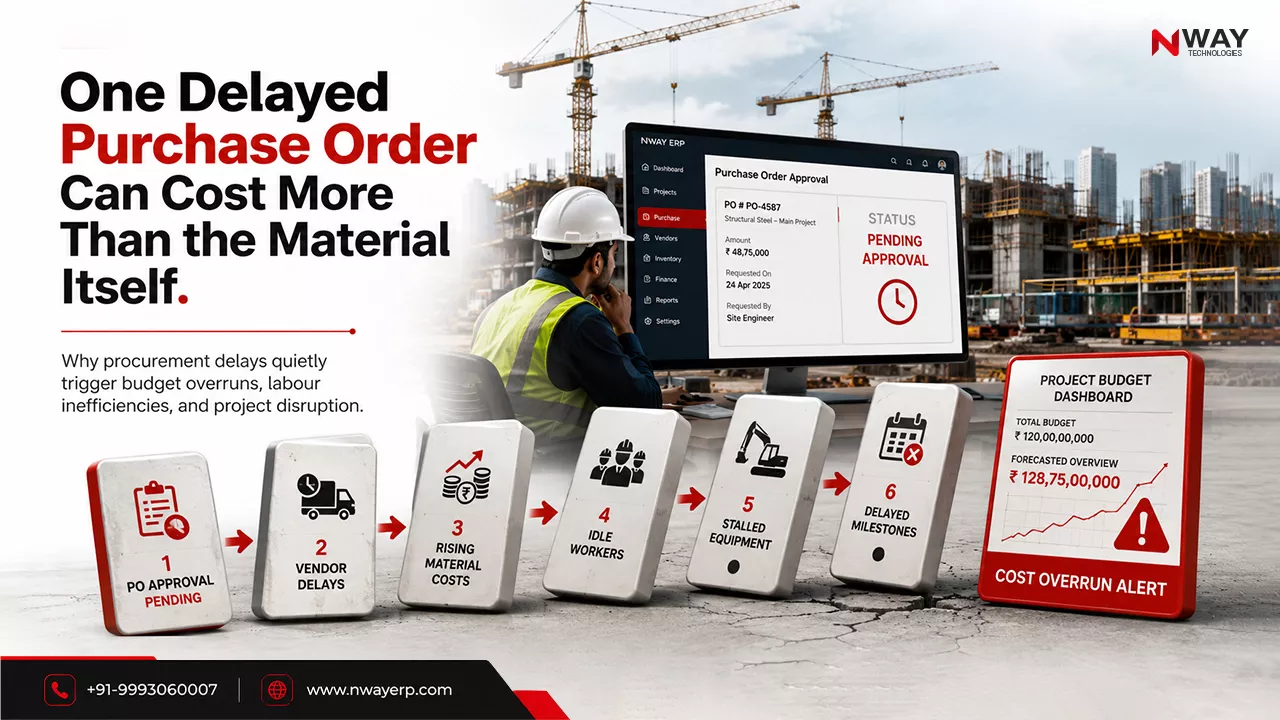
Procurement delays remain one of the biggest causes of stalled projects.
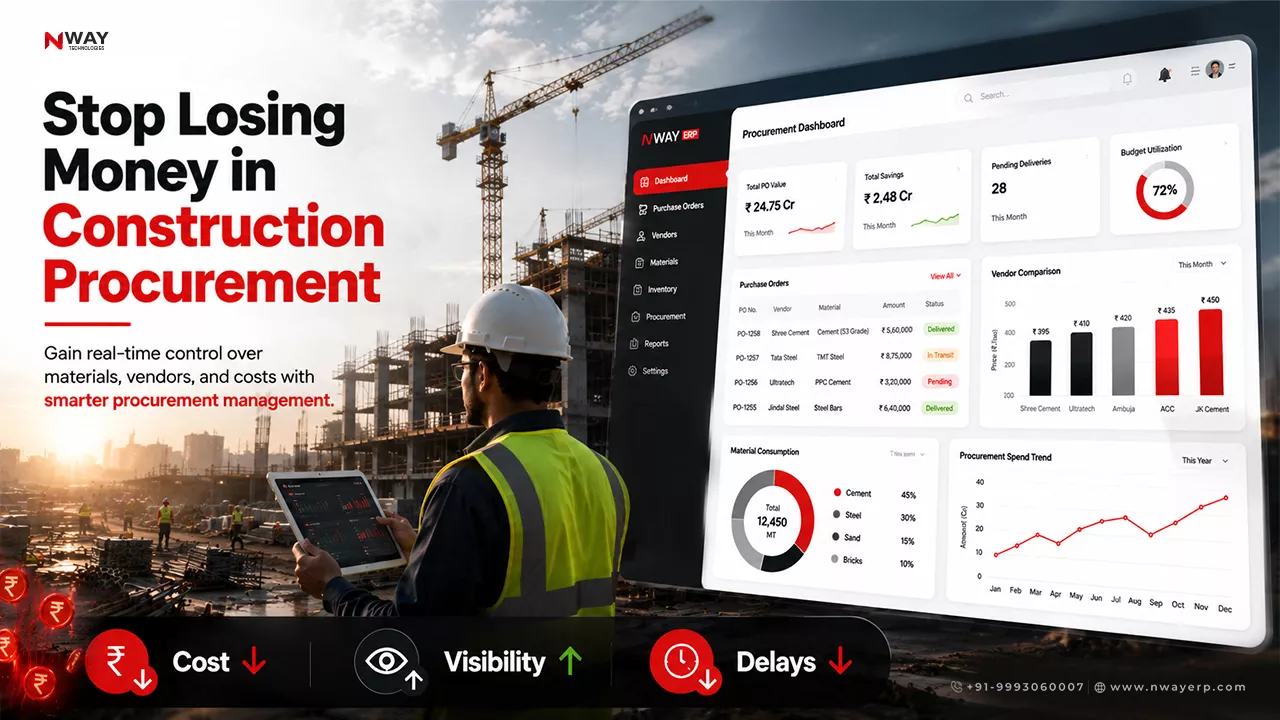
With procurement management construction ERP, companies can:
- Automate purchase requests and approvals
- Track vendor performance
- Optimise inventory across sites
This ensures materials are available exactly when needed for no overstocking, no shortages.
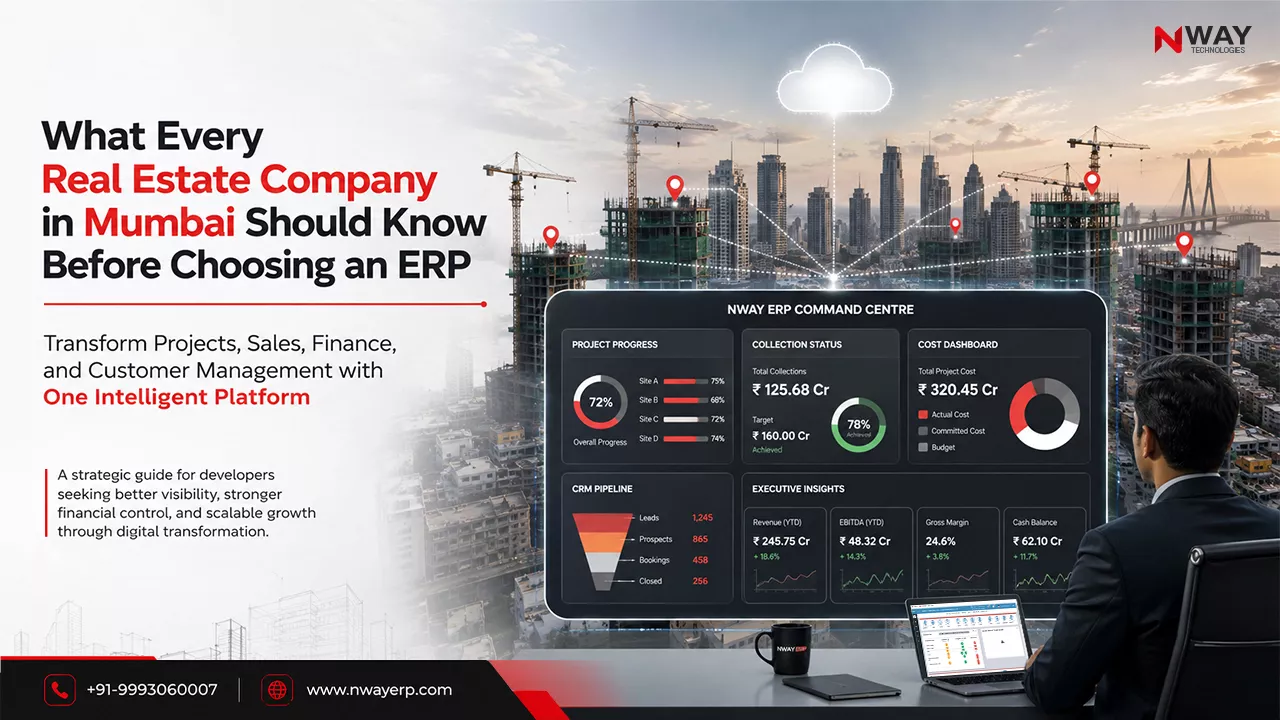
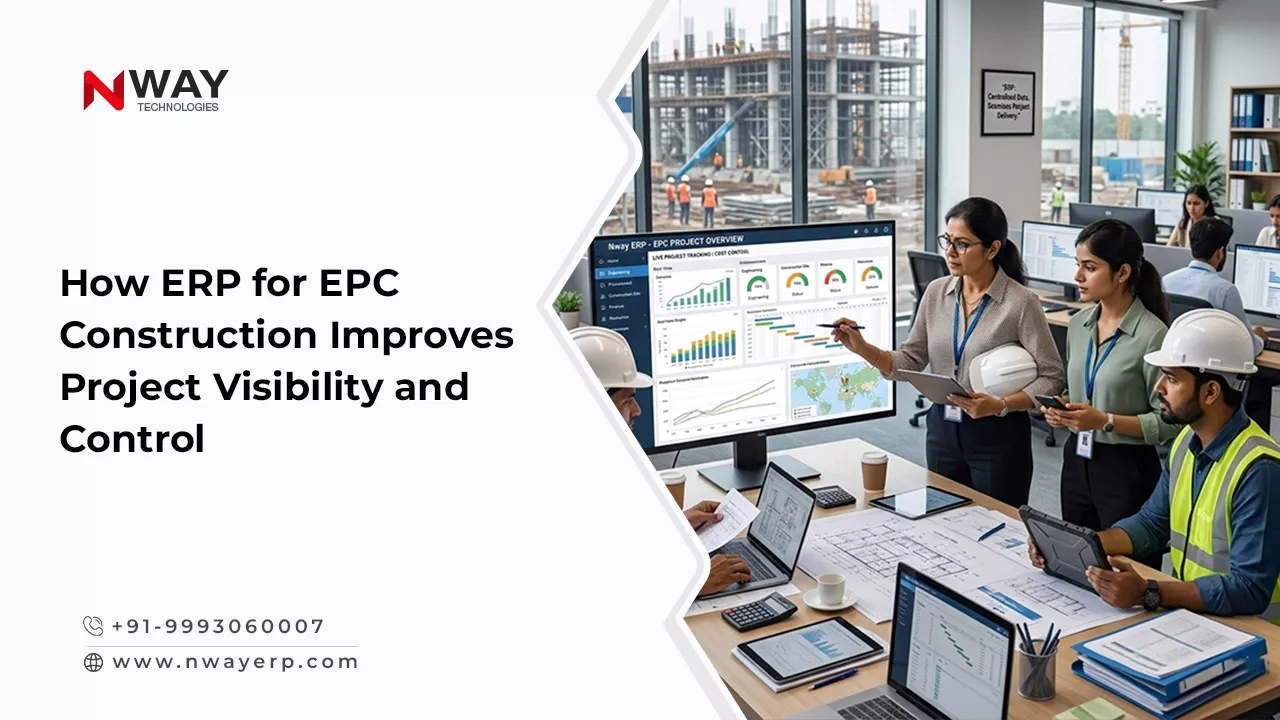
Multi-Site Operations Demand Centralized Visibility
Managing multiple sites without a unified system leads to inconsistent reporting and decision delays.
A cloud-based construction ERP software India solution offers:
- Central dashboards for all ongoing projects
- Remote monitoring of site activities
- Standardized workflows across locations
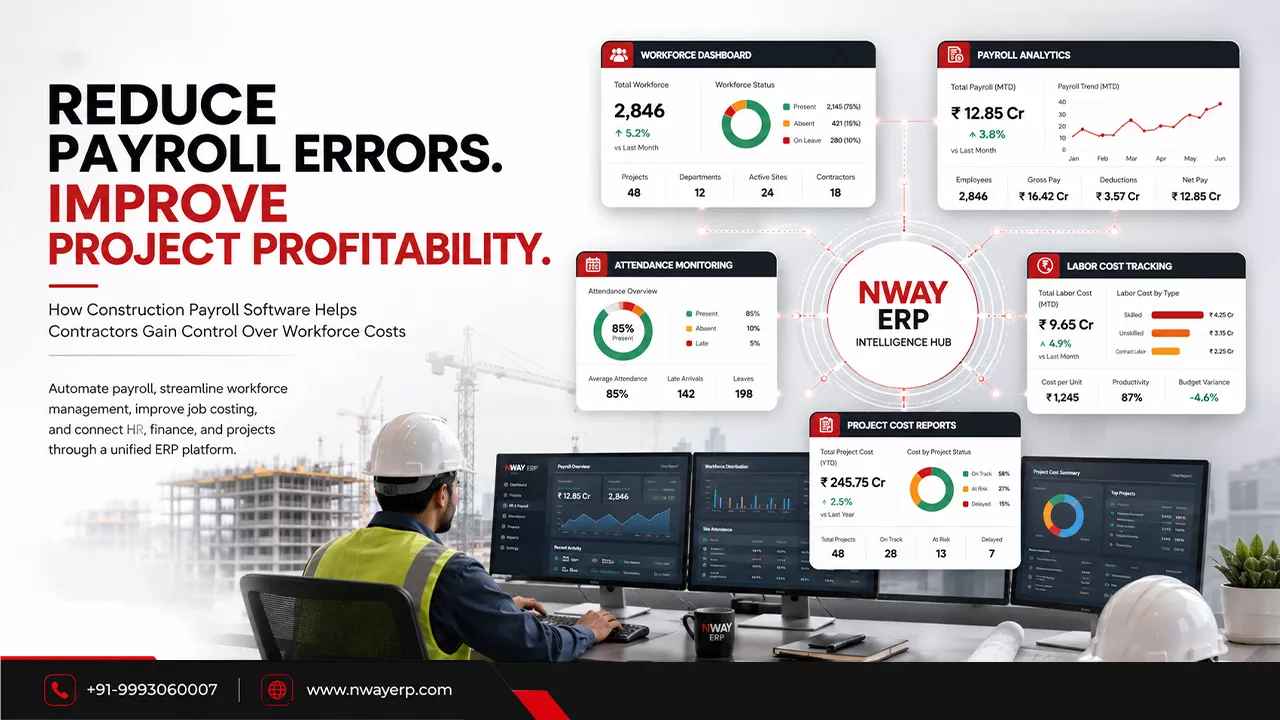
Labour and Contractor Management Needs Digitization
Labour is one of the most dynamic and difficult elements to manage in construction.
With labour management software construction and contractor management ERP, businesses can:
- Track attendance and productivity
- Manage subcontractor contracts and billing
- Ensure compliance with labour regulations
Inventory Leakages Are No Longer Acceptable
Material costs account for 50–60% of total project expenses. Even minor inefficiencies can significantly impact margins.
A robust construction inventory management software enables:
- Real-time stock tracking
- Automated material reconciliation
- Reduced pilferage and wastage
From Reactive to Predictive Operations
Consider a mid-sized infrastructure contractor managing 8–10 projects simultaneously.
Before ERP:
- Weekly manual reporting
- Delayed cost visibility
- Frequent procurement bottlenecks
- 10–15% cost overruns
After ERP implementation:
- Daily automated dashboards
- Real-time cost tracking at BOQ level
- Streamlined procurement workflows
- Reduced overruns to 3–5%
This shift is not incremental, it is transformational.
ERP Is No Longer Just for Large Enterprises
Modern construction ERP software 2026 solutions are:
- Cloud-based – eliminating heavy infrastructure costs
- Scalable – suitable for SMEs to large enterprises
- User-friendly – designed for on-site adoption
- Cost-effective – removing per-user licensing barriers
This democratization is accelerating ERP adoption across the industry.
Point to focus on
2026 marks a critical shift where ERP adoption in construction industry becomes essential, not optional
Manual systems directly contribute to cost overruns and inefficiencies
Construction ERP software in India enables real-time visibility, cost control, and operational efficiency
Integrated modules like procurement, inventory, and labour management drive measurable business outcomes
Modern ERP solutions are accessible, scalable, and designed for construction-specific workflows
Conclusion: Delay Is Now a Strategic Risk
The question is no longer “Should we adopt ERP?”
It is “How long can we afford to operate without it?”
In 2026, construction companies that continue relying on manual systems will struggle with cost overruns, inefficiencies, and missed deadlines while competitors leverage integrated systems for speed and control.
ERP is not just a technology upgrade. It is an operational backbone for modern construction businesses.
If cost overruns, delays, and limited visibility are slowing down your projects, it may be time to rethink your systems.
See how a construction-focused ERP can bring control, clarity, and scalability to your operations.