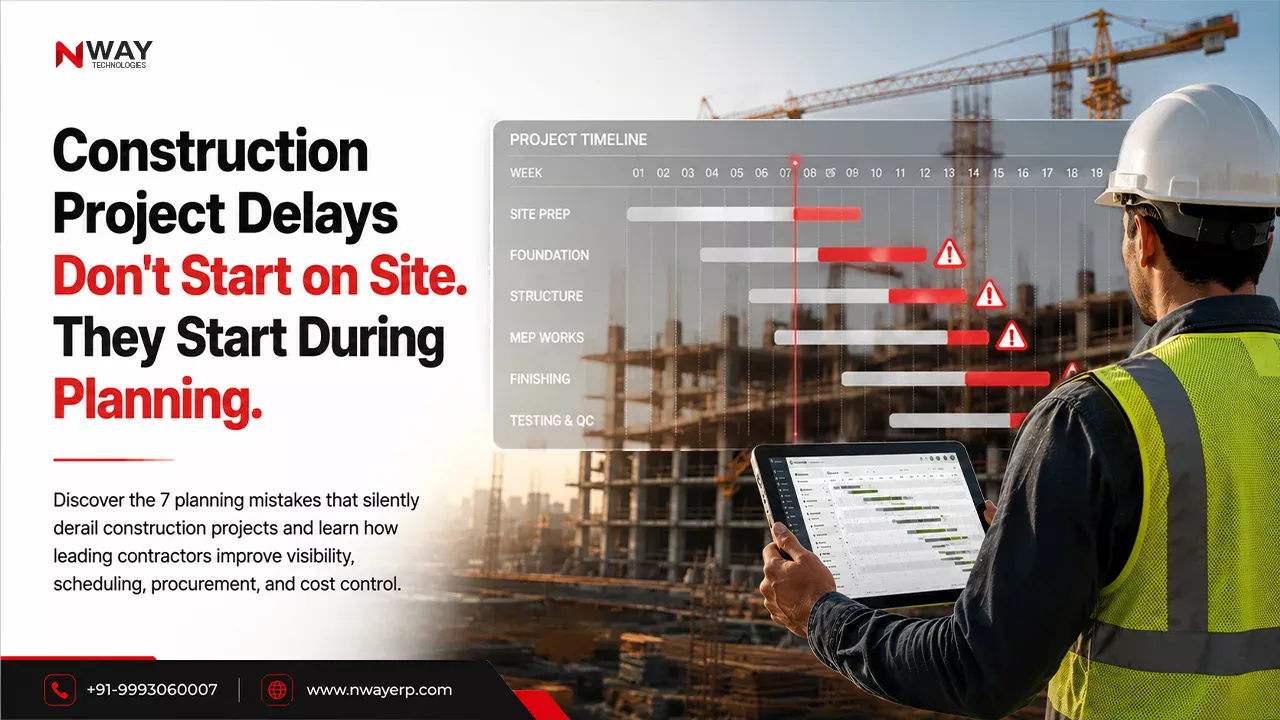
Construction project delays rarely begin with one dramatic site failure. In most cases, they start much earlier—inside the BOQ, the procurement plan, the baseline schedule, the approval workflow, or the cost monitoring process. By the time a missed milestone shows up on a Gantt chart, the real problem has usually been building for weeks. Modern construction management software helps teams identify planning risks before they impact project timelines.
That is why contractors cannot treat planning as a paperwork stage that ends before execution starts. Planning is where delivery risk is either exposed or hidden. When scope, material flow, labor deployment, budgets, and approvals are not connected, even experienced teams run into avoidable delays.
In this guide, we break down the most common construction planning mistakes, explain the reasons for construction delays behind them, and show how better systems help project teams regain control.
Table of Contents:
- The Clock Is Already Running. Are You Keeping Up?
- The Construction Reality: Why Delays Are Structural, Not Accidental
- Why Manual Methods Are No Longer Enough
- The 7 Construction Project Planning Mistakes That Cause Delays
- Strategic Direction
- How Nway ERP Helps Prevent Construction Project Delays
- Conclusion
The Clock Is Already Running. Are You Keeping Up?
A mid-size infrastructure contractor wins a ₹40 crore road project. The timelines are set, the BOQ is signed, and the team is ready. Twelve months later, the project is 40% complete with cost overruns crossing ₹8 crore, a strained client relationship, and three pending variation orders still unresolved. Sound familiar?
Construction project delays are not just operational inconveniences; they are business-defining events. In India’s construction sector alone, studies indicate that over 85% of infrastructure projects face time or cost overruns. Yet the root causes are rarely on-site. More often, they originate in the planning room, weeks or months before the first brick is laid.
This guide unpacks the most critical construction project planning mistakes that lead to delays and explains how modern ERP-driven project management can help you systematically eliminate them.
The Construction Reality: Why Delays Are Structural, Not Accidental
Construction is one of the most complex industries to manage. Unlike manufacturing, every project is unique in different terrain, different regulatory environments, and different subcontractor ecosystems. The sector faces a compounding set of structural challenges:
- Multi-tier supply chains involving vendors, sub-contractors, and labour contractors
- Regulatory dependencies approvals, NOCs, environmental clearances
- Weather and site conditions that alter work schedules unpredictably
- Resource-sharing across concurrent projects
Cash flow pressures tied to RA billing cycles and client retention policies
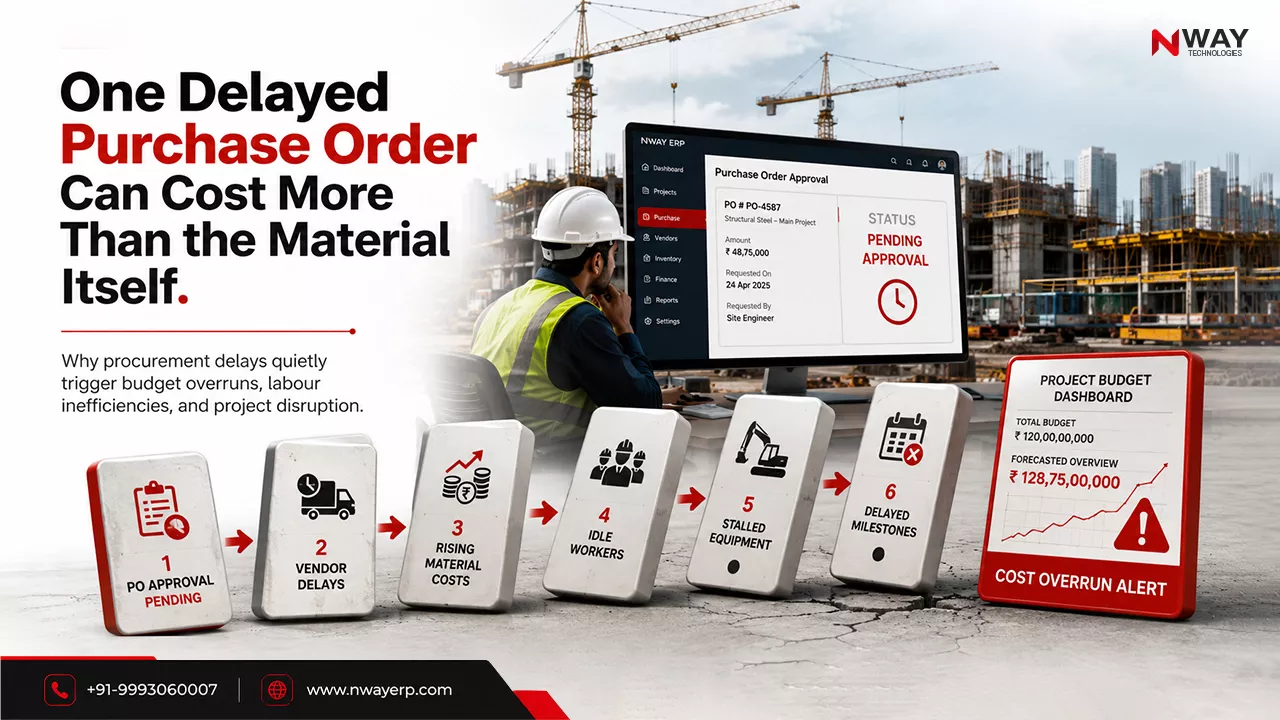
In this environment, construction planning mistakes don’t just cause inconvenience; they cascade. A procurement delay at Stage 2 becomes a labour productivity problem at Stage 4, which becomes a penalty clause dispute at Stage 6.
Why Manual Methods Are No Longer Enough
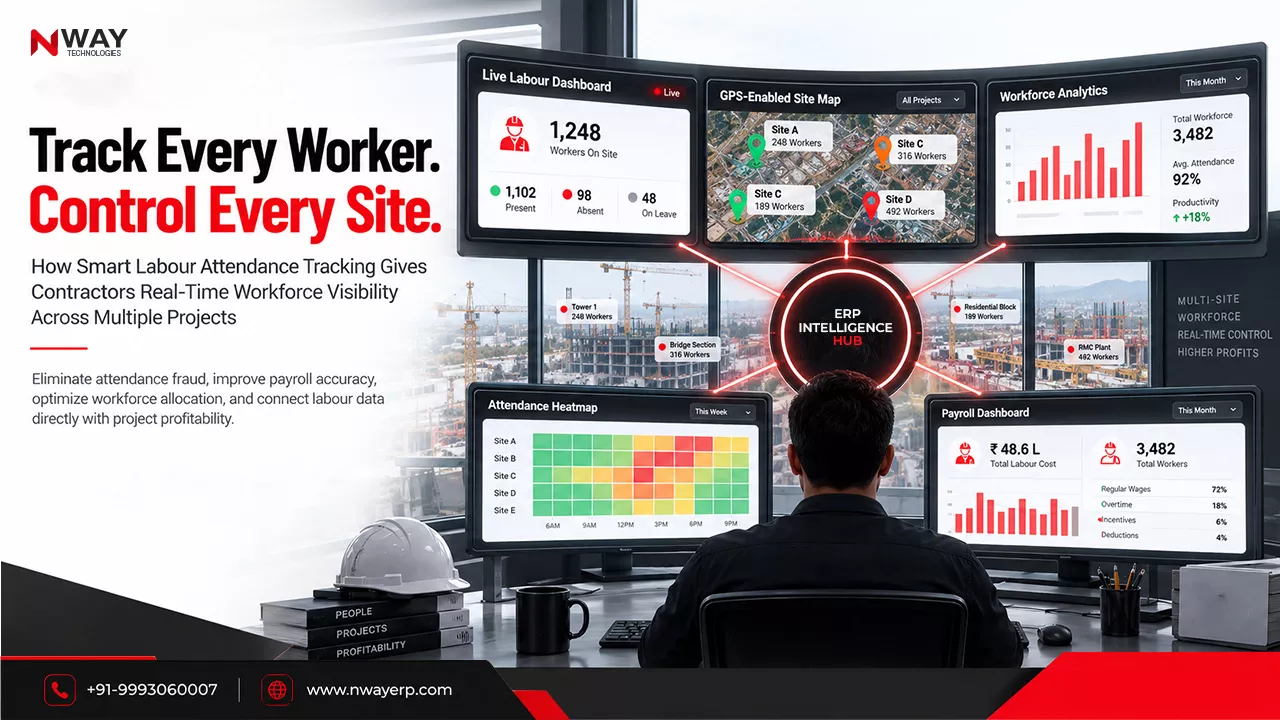
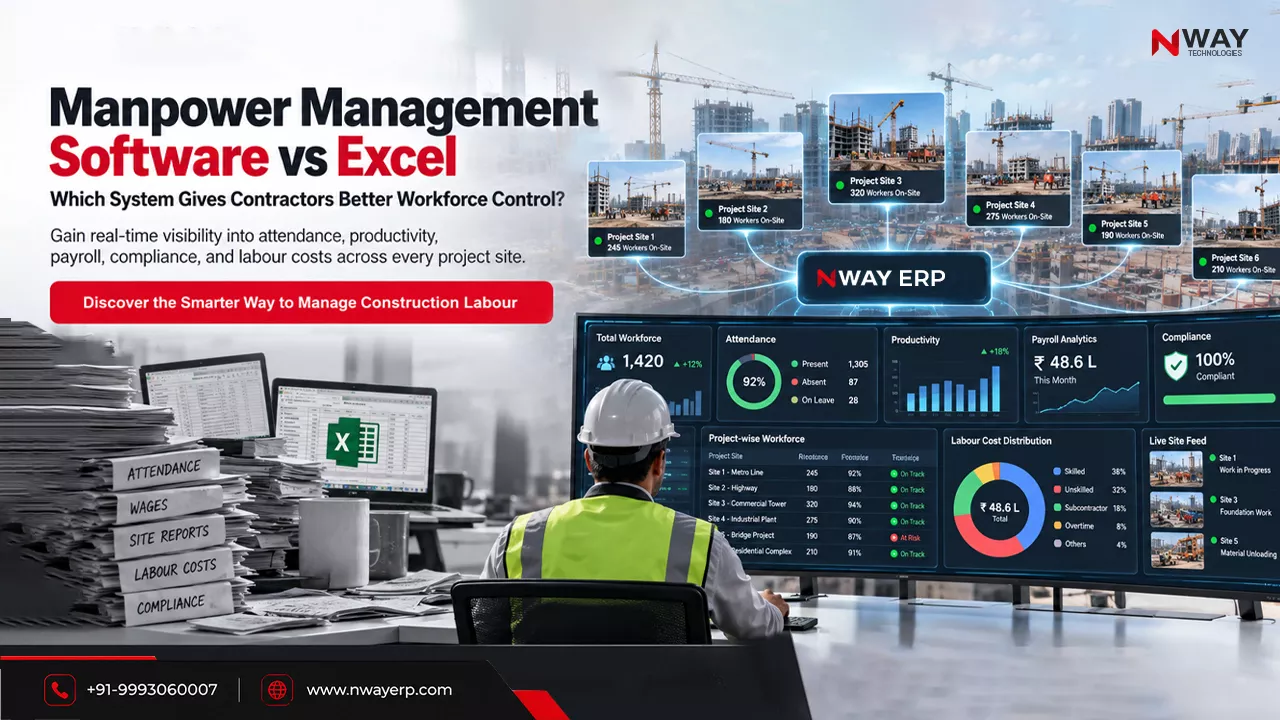
Most construction firms still rely on a patchwork of Excel sheets, WhatsApp updates, verbal approvals, and fragmented ERP systems not designed for project-based operations. The result?
- No single version of the truth for project progress
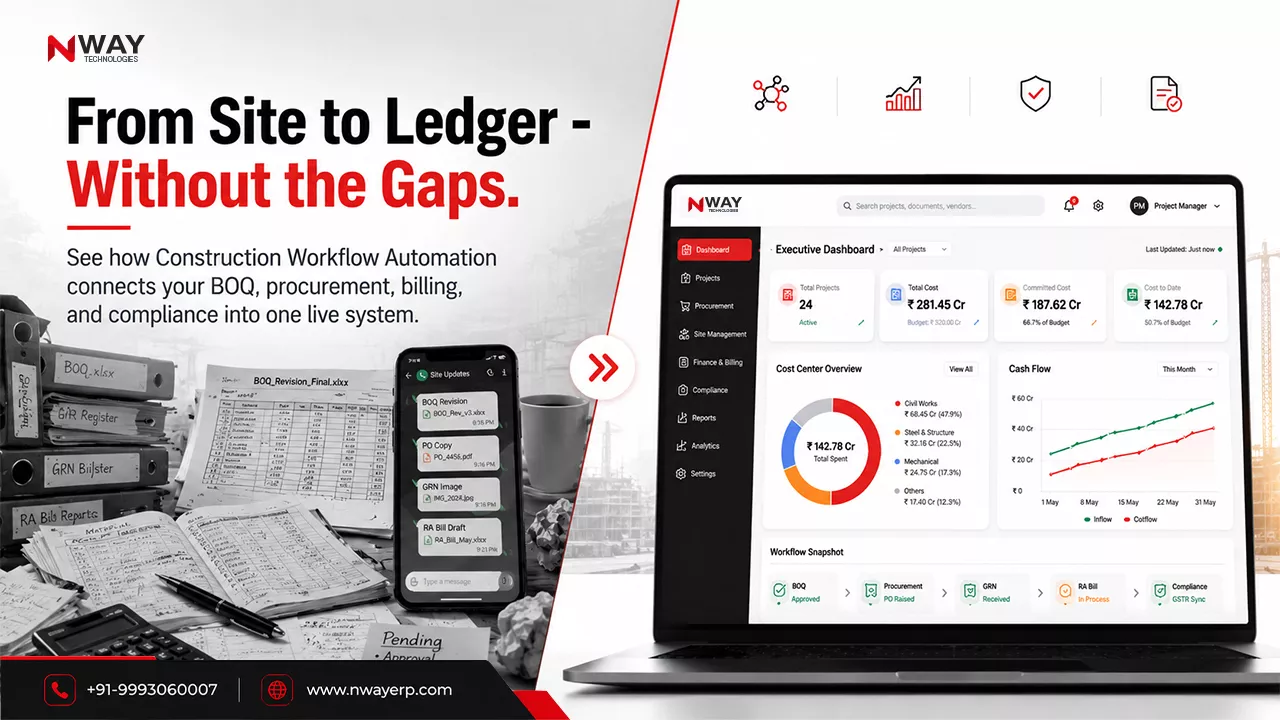
- BOQ revisions communicated verbally rather than through traceable workflows
- Budget vs. actual tracking done retrospectively rather than in real-time
- Procurement decisions made on gut feel rather than live inventory data
- MIS reports prepared manually often outdated by the time leadership reviews them
The core problem is not a lack of data; it’s a lack of integrated, real-time visibility. Construction project management problems are rarely due to incompetence; they stem from decisions made with incomplete or stale information. Many of these construction industry challenges can be addressed through integrated systems that provide real-time visibility across planning, procurement, budgeting, and project execution.
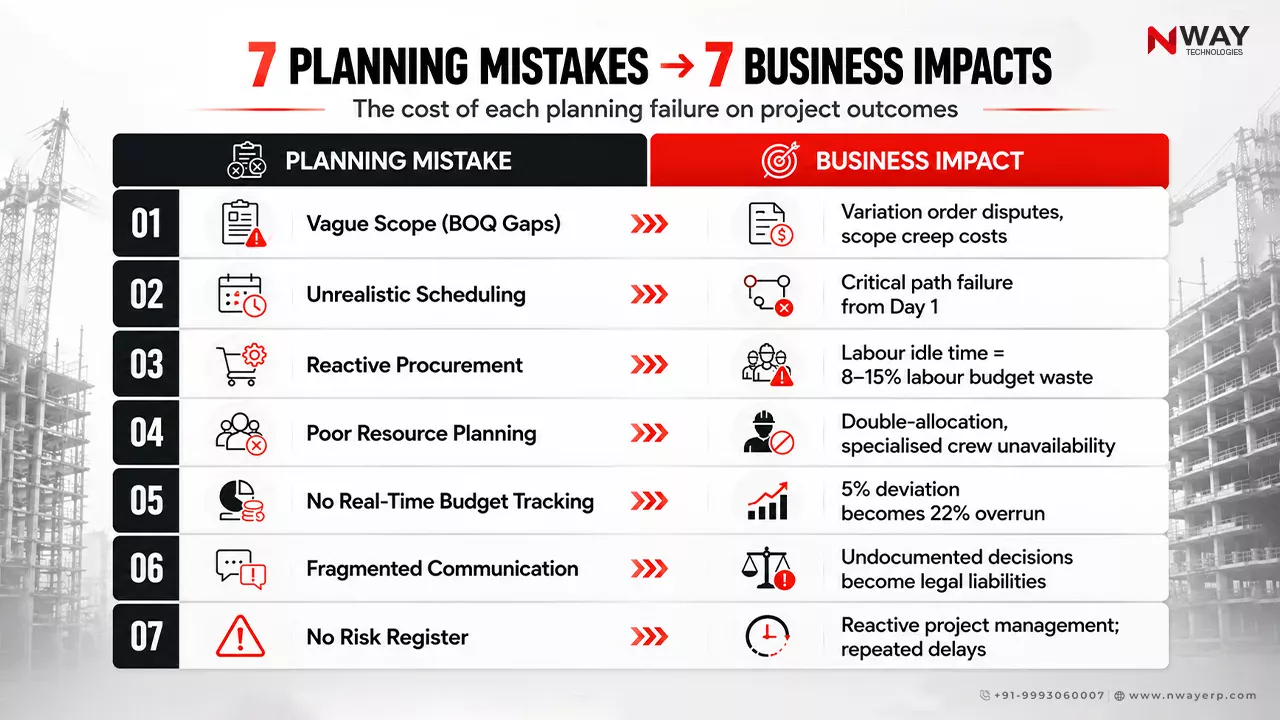
The 7 Construction Project Planning Mistakes That Cause Delays
1. Vague or Incomplete Scope Definition
Every construction project delay audit eventually circles back to scope creep. When the Bill of Quantities (BOQ) is prepared with ambiguous line items, approximate quantities, or missing work categories, the project is set to fail before mobilisation begins.
The scenario: A contractor finalizes a hospital construction project with a BOQ that doesn’t account for MEP (mechanical, electrical, plumbing) coordination activities. Six months in, coordination requirements surface as a critical path item, causing a 45-day delay.
The fix: Scope must be locked at the pre-mobilisation stage with a structured BOQ review process that flags gaps, maps dependencies, and establishes a baseline for variation order management. Effective BOQ governance plays a critical role in project success. Learn more about BOQ best practices in our guide on BOQ Management in Construction.
2. Unrealistic Project Scheduling
Construction scheduling issues are often born in the boardroom, not on-site. Projects are frequently scheduled to win tenders, not to reflect realistic resources and procurement timelines. The result is a plan that looks good on paper but begins slipping from Week 1.
Key red flags include parallel activities that need to be sequential; procurement lead times not factored into the critical path, and no buffers for statutory approvals or client review periods.
Industry benchmark: procurement for long-lead items (steel, specialized equipment) requires 6–12-week lead times. Schedules built on 2–3 weeks are planning fiction.
3. Poor Procurement Planning and Material Mismanagement
Procurement is a circulatory system for construction projects. When purchase orders are raised reactively rather than against a planned procurement schedule aligned to the BOQ and project milestones, material shortages become inevitable.
Common procurement failures:
- No vendor pre-qualification, leading to last-minute vendor sourcing
- GRN (Goods Receipt Notes) not matched against purchase orders in real time
- Material issued to site without reconciliation against project consumption plans
- No visibility into stock levels across multiple project sites
These construction planning mistakes compound quickly idle labour costs alone. When materials are delayed, they can consume 8–15% of a project’s labour budget.
Modern contractors are moving away from reactive purchasing and adopting structured procurement processes that align materials with project schedules and milestones. A well-defined procurement strategy helps eliminate material shortages, reduce delays, and improve cost control. Read our detailed guide on Construction Procurement Management to learn more.
4. Inadequate Resource Planning and Labour Management
Resource planning in construction is not just about headcount; it’s about the right skill sets, at the right location, at the right time. Projects that share resources across sites without a centralized visibility layer routinely face the same crew being double-allocated, or specialized teams unavailable when critical activities hit the schedule.
Sub-contractor management adds another layer of complexity. Without formal milestone-linked contracts and progress tracking, sub-contractor delays become the contractor’s delay and ultimately, the client’s problem.
5. Absence of Real-Time Budget Tracking
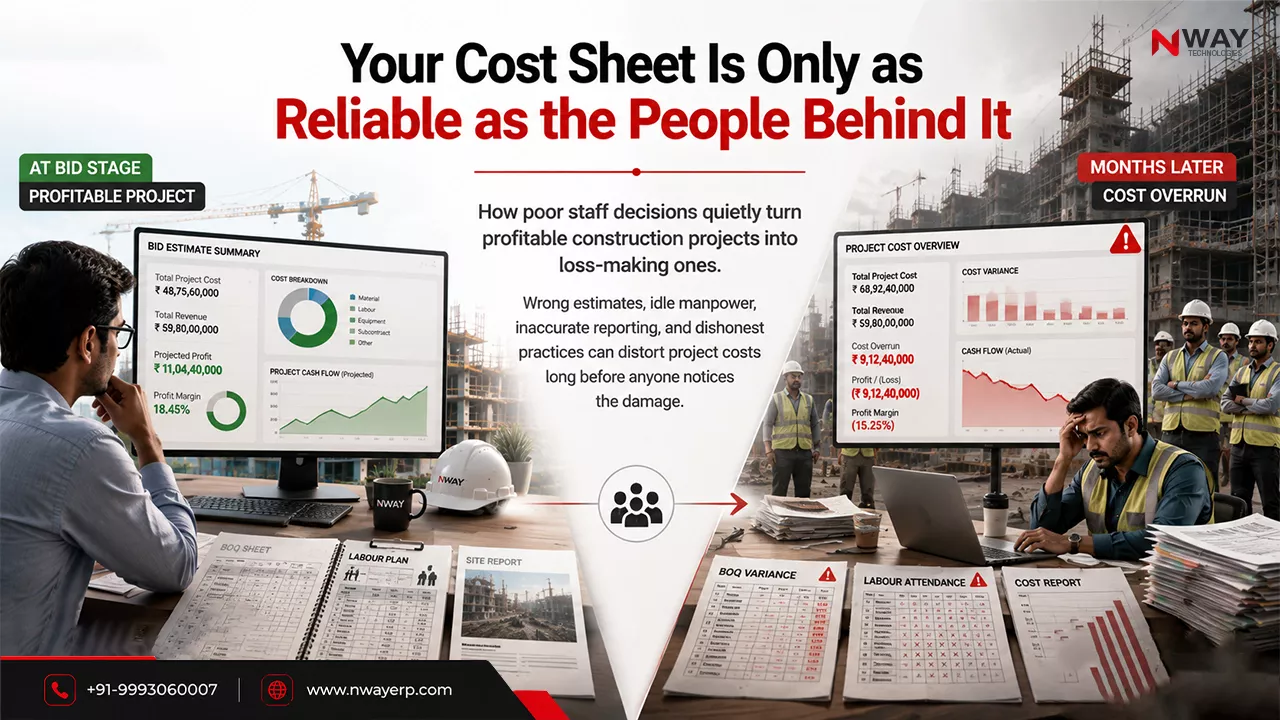
One of the most critical risks in construction project management is the delay between when cost overruns occur and when leadership becomes aware of them. Monthly MIS reports reviewed in the third week of the following month are not effective project controls; they are merely postmortem analyses.
Real-time budget vs. actual tracking is the difference between catching a 5% cost deviation and managing a 22% overrun. Projects without live financial dashboards lack the decision of velocity needed to course-correct.
6. Fragmented Communication and No Audit Trail
Construction projects involve dozens of stakeholders, including site engineers, procurement teams, accounts departments, clients, consultants, and sub-contractors. When communication flows through WhatsApp groups and informal verbal approvals, critical decisions lack traceability.
In construction project risk management, undocumented decisions are liabilities. When disputes arise, and they do, the absence of an audit trail for variation of approvals, material substitutions, or schedule changes shifts risk dramatically toward the contractor.
7. No Risk Register or Contingency Planning
Few construction firms maintain a formal risk register at the project level. Construction project risk management is often treated as an insurance conversation rather than an active planning discipline. Projects that don’t map risks, weather windows, statutory approval delays, price escalation for key materials are perpetually reactive.
Contingency planning is not pessimistic. It is the hallmark of a construction firm that consistently delivers.
Want better visibility into your project timelines and costs?
Strategic Direction
From Reactive Management to Proactive Control
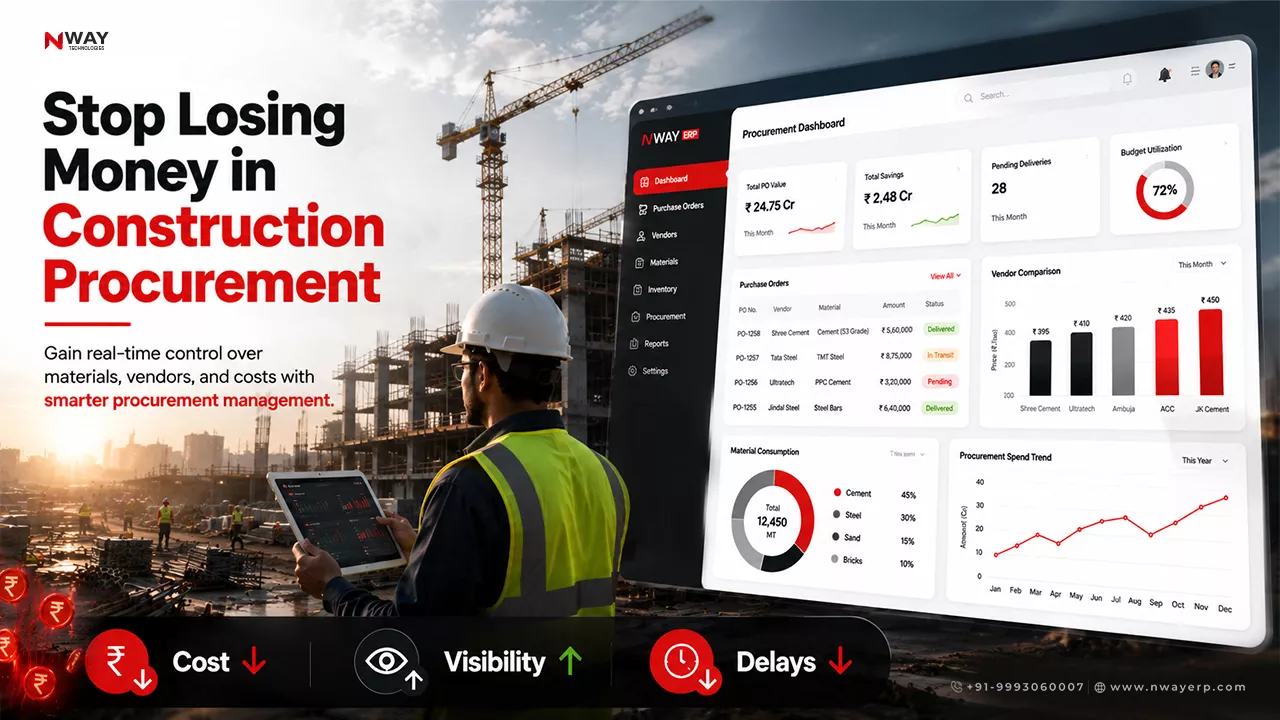
The antidote to these construction project delays is not more spreadsheets or more meetings. It is a structured digital operating layer one built for the operational realities of construction and infrastructure businesses.
Integrated Project Planning and BOQ Management
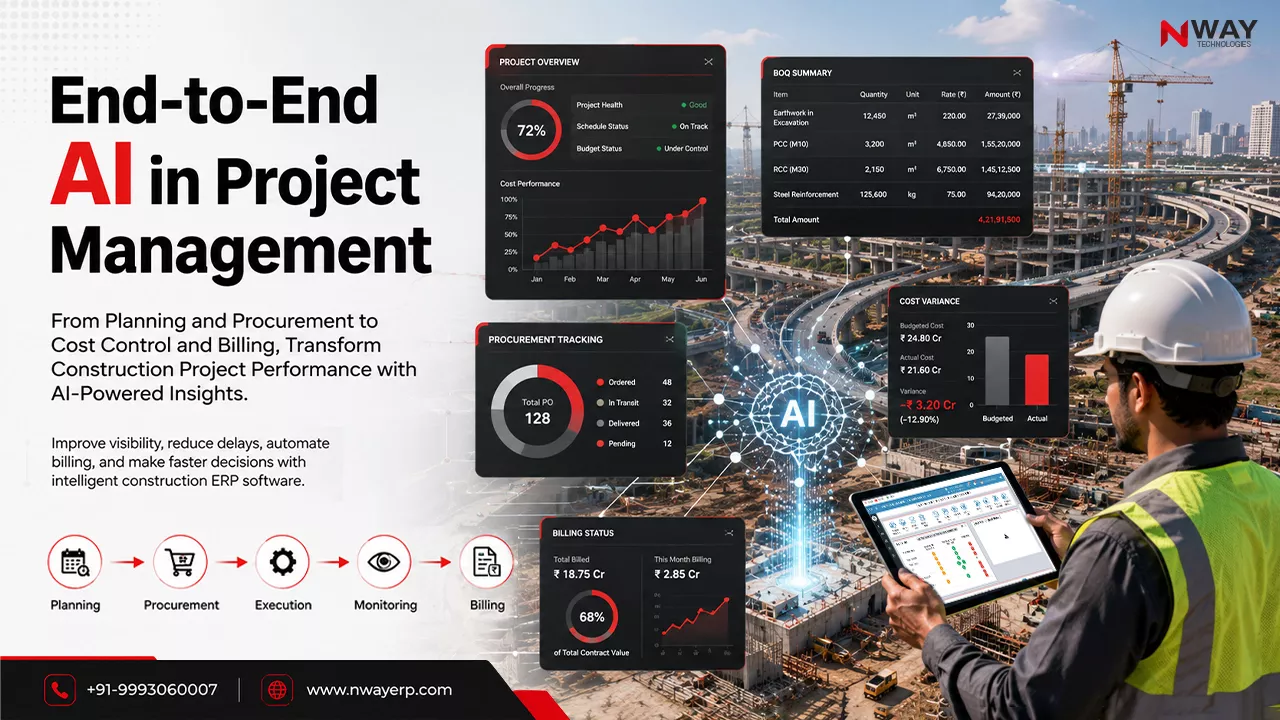
Construction project management software allow teams to build BOQs directly linked to procurement triggers, cost codes, and milestones. Any scope of change creates an automatic downstream alert across procurement, finance, and scheduling teams simultaneously.
Procurement Automation Against Project Milestones
Modern construction ERP platforms eliminate reactive procurement by linking purchase orders directly to BOQ line items and project schedules. Material requirements are forecasted not guessed based on planned activity timelines, and vendor lead times are mapped into the critical path automatically.
Real-Time Budget vs. Actual Dashboards
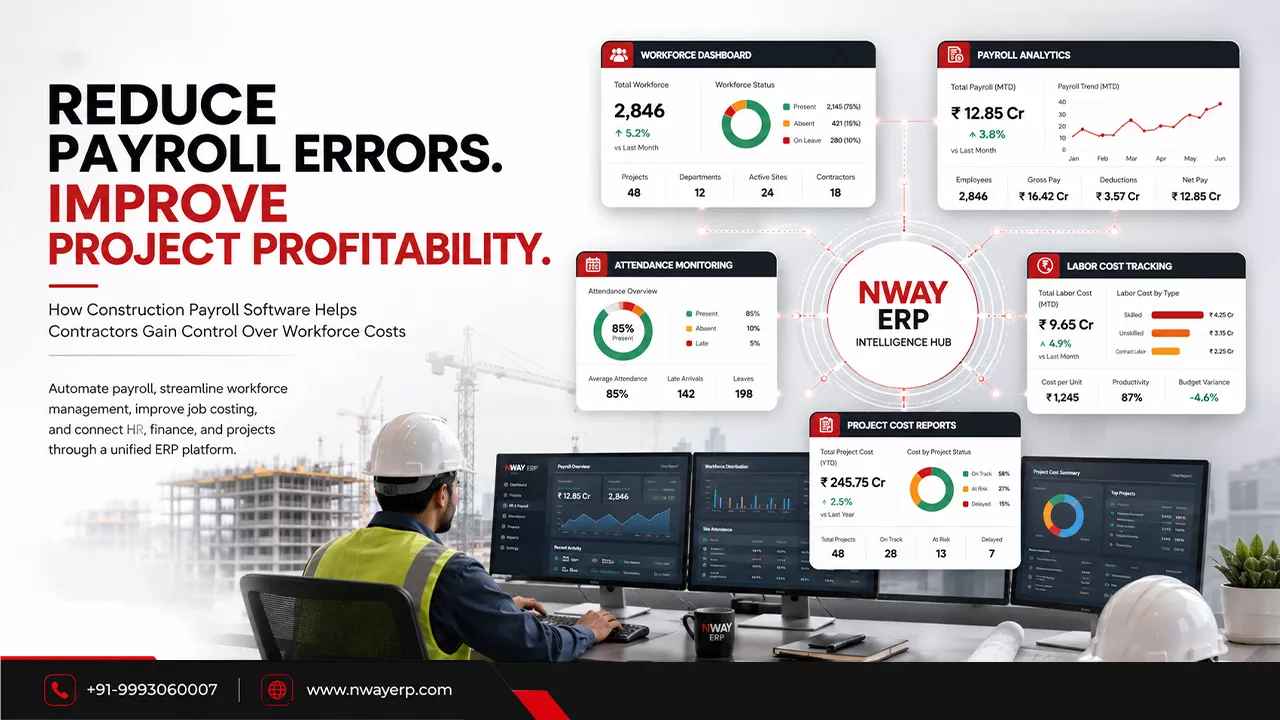
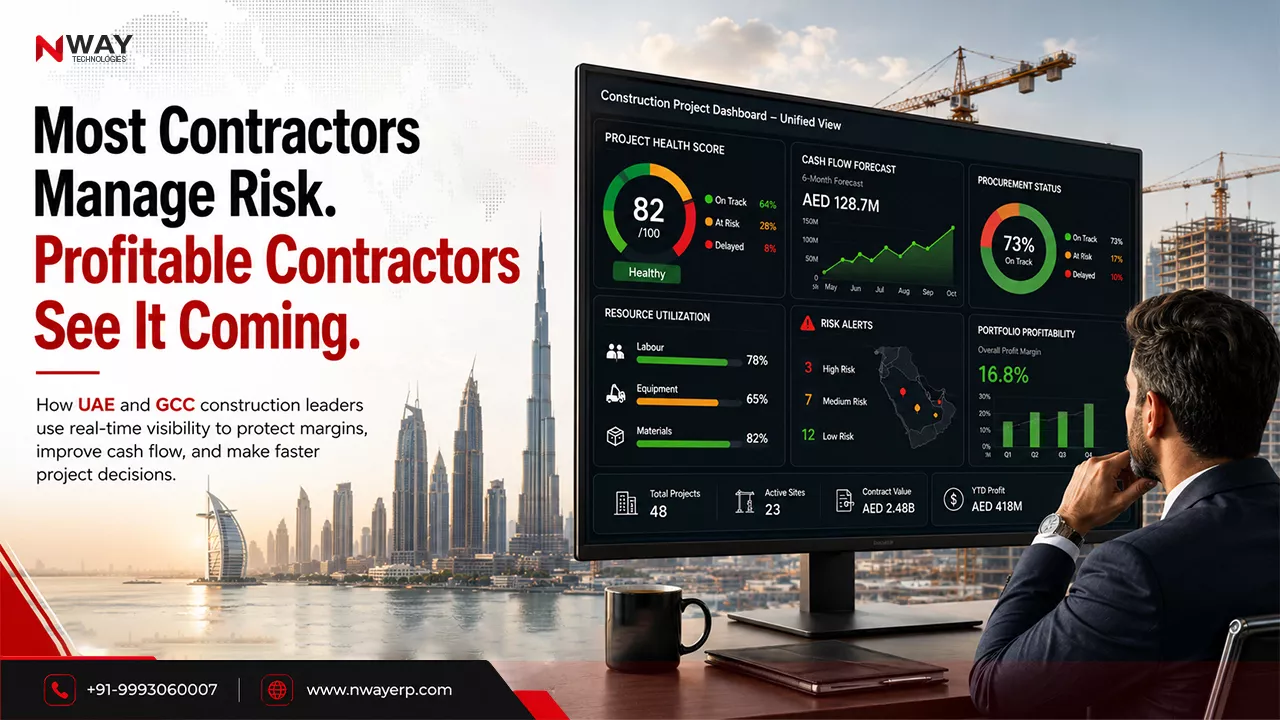
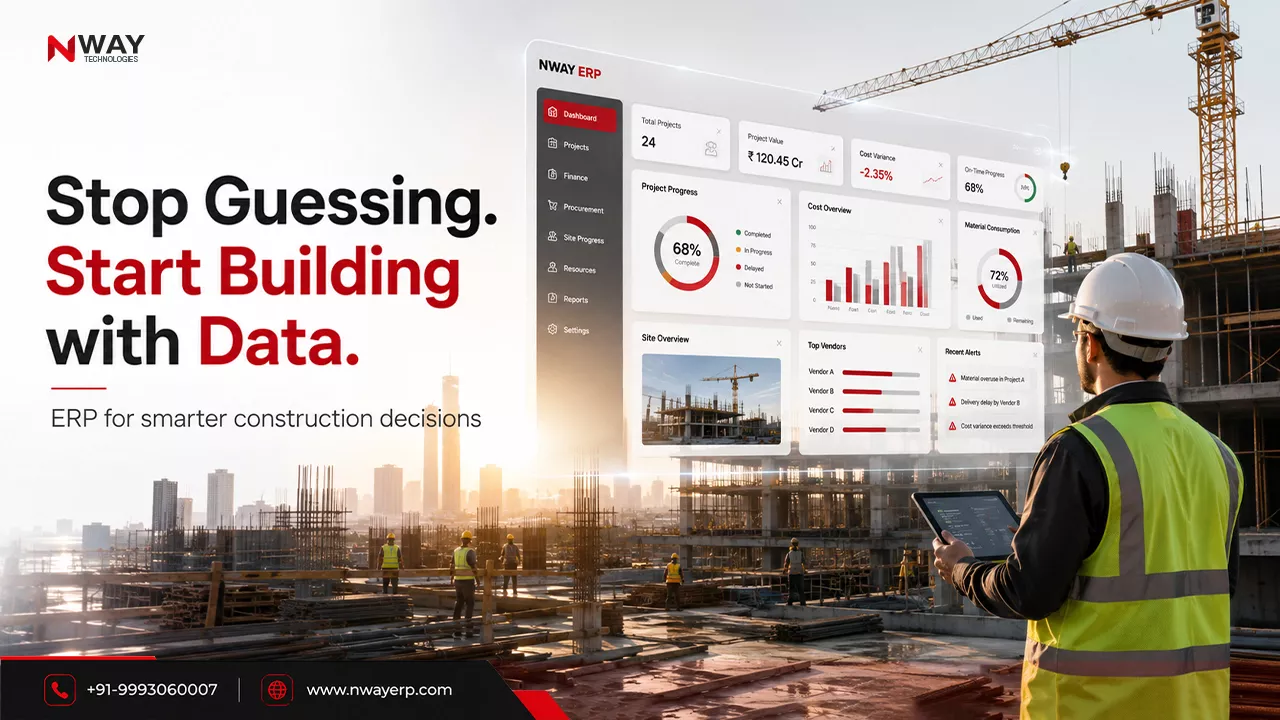
CFOs and project directors need financial visibility that reflects today’s project status, not last month. Live dashboards (MIS) that track cost commitments, GRN-linked expenditures, and progress billing against RA bills give leadership the visibility to act, not just report.
Centralised Communication with Full Audit Trail
When variation orders, material approvals, and sub-contractor instructions flow through a centralised platform with timestamps, approver records, and document attachments, the risk of undocumented decisions disappears. Every stakeholder works from the same version of the truth.
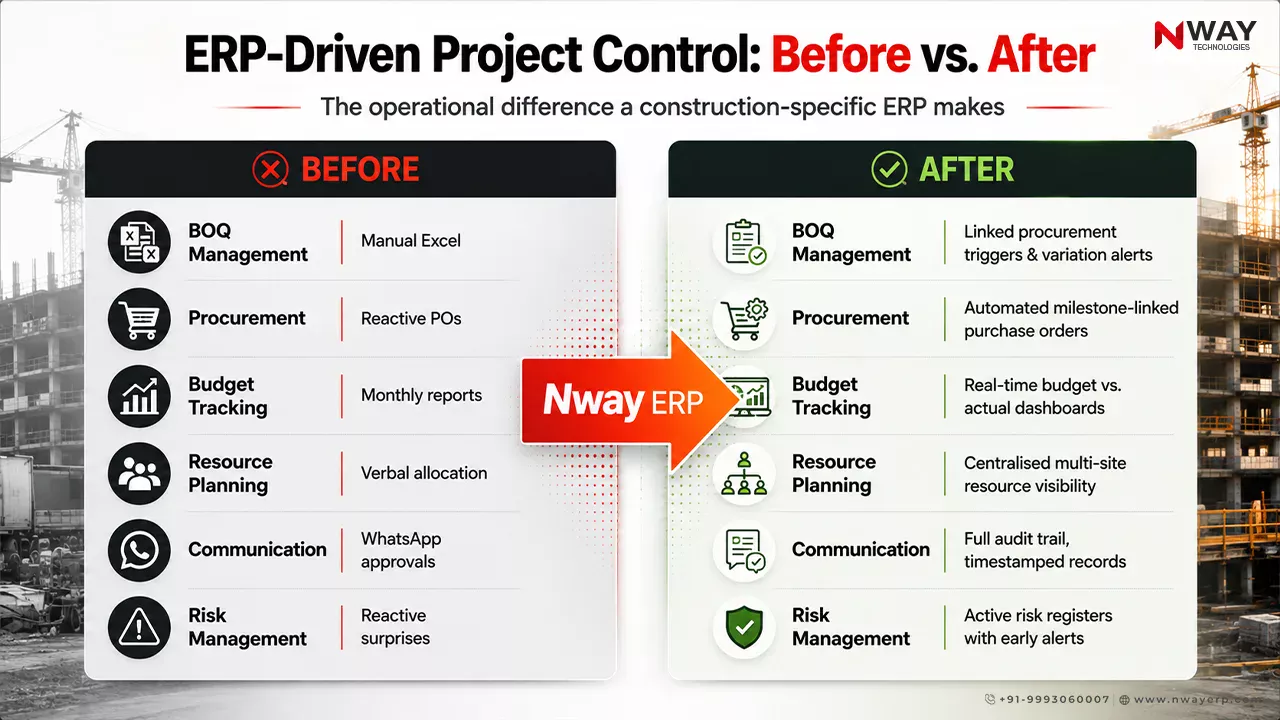
Manual Construction Planning vs ERP-Based Planning
| Activity | Manual Process | ERP-Based Process |
|---|---|---|
| BOQ Management | Excel Sheets | Centralized BOQ Control |
| Procurement | Reactive Purchasing | Automated Procurement |
| Budget Tracking | Monthly Reports | Real-Time Visibility |
| Resource Allocation | Manual Coordination | Multi-Site Tracking |
| Project Progress | Delayed Updates | Live Dashboard |
| Communication | WhatsApp & Calls | Complete Audit Trail |
| Risk Management | Reactive | Proactive |
How Nway ERP Helps Prevent Construction Project Delays
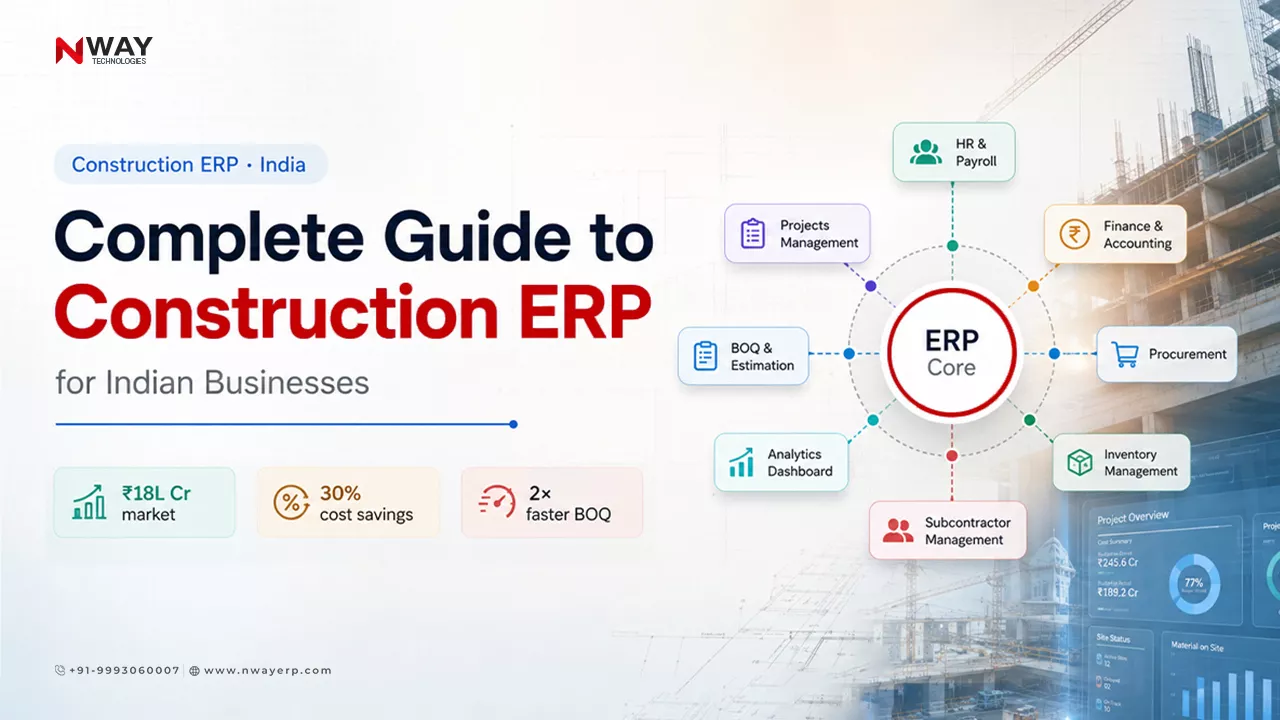
Nway construction ERP software is purpose-built for construction companies, infrastructure contractors, developers, and project-based businesses.
The platform helps organizations:
- Manage BOQs with complete version control
- Automate procurement based on project milestones
- Track budgets against actual costs in real time
- Monitor labour productivity and resource utilization
- Manage subcontractors and vendor performance
- Control inventory across multiple project sites
- Generate project MIS reports instantly
- Maintain complete approval and communication audit trails
By bringing project planning, procurement, finance, inventory, and execution into a single platform, Nway ERP enables contractors to make faster decisions and reduce project delays significantly.
Point to focus on
- Over 85% of construction projects face time or cost overruns most originate in planning failures, not site execution.
- Vague BOQ, unrealistic scheduling, and reactive procurement are the three most consequential planning mistakes.
- Real-time budget vs. actual tracking is the single highest-leverage financial control in construction project management.
- Undocumented decisions are legal and financial liabilities centralised audit trails are non-negotiable
- Construction of project risk management must be an active planning discipline, not a post-incident review.
- ERP systems built specifically for construction, not adapted from generic platforms, deliver domain-specific controls that prevent delays.
Conclusion
Construction project delays rarely happen without warning. The signals are present in the BOQ, in procurement timelines, in resource allocation spreadsheets, and in informal WhatsApp approvals long before they manifest as missed milestones on a Gantt chart.
The firms that consistently deliver on time are not the ones with the most experienced project managers. They are the ones who have eliminated the information gaps that allow planning failures to compound undetected.
The goal is not to predict every risk but to build a system where risks are visible, decisions are documented, and corrections happen in real time rather than post-mortem.
See How Nway ERP Prevents Project Delays