Construction projects rarely fail for lack of effort. They fail because dozens of contractors, suppliers and crews work to different plans, and delays or cost overruns surface too late to fix. Project management techniques give the team a shared way to plan and sequence work; tools turn those plans into schedules, reports and checks that people use on site every day.
Here’s the software that turns these techniques into daily practice.
This guide covers the eight techniques used most in construction, compares them side by side, and explains the tools that support each stage of a project, from planning to handover.
Project Management Techniques and Tools
Waterfall technique
The traditional, sequential approach — each phase (design, procurement, execution, handover) must finish before the next begins. Best suited to projects with fixed scope and few late-stage changes, like standard residential builds or government infrastructure with locked specifications.
Best for: Fixed-scope projects, regulatory/government contracts.
Limitation: Little room to adapt once a phase is signed off.
Critical Path Technique
CPM maps every task and its dependencies to find the longest unbroken chain of activities — the “critical path” — which determines the minimum possible project duration. Any delay on a critical-path task delays the entire project; tasks off that path have float (slack) and can shift without affecting the deadline.
Best for: Multi-contractor projects with complex task dependencies
Limitation: Needs accurate task-duration estimates to be reliable — garbage in, garbage out
Program Evaluation and Review Technique (PERT)
PERT is CPM’s cousin for projects where task durations are uncertain. Instead of one estimate per task, it uses optimistic, pessimistic, and most-likely time estimates to calculate a weighted average — visualized as a network chart. It’s the standard choice for long-duration, high-uncertainty projects like infrastructure and highway construction.
Best for: Long-term projects with unpredictable variables (weather, land acquisition, approvals)
Lean Construction
Adapted from Lean manufacturing, this technique focuses on eliminating waste — of material, time, and labor — through continuous improvement and just-in-time delivery of materials to site. It pairs well with the Last Planner System (below) for weekly work planning.
Best for: Projects where material wastage and idle labor are eating into margins
Last Planner System (LPS)
A collaborative scheduling technique where the people actually doing the work — site supervisors, foremen — commit to weekly task plans instead of a single top-down master schedule. It surfaces blockers early and dramatically improves schedule reliability on-site.
Best for: Large sites with multiple subcontractors working in parallel
Agile / Scrum for Construction
Borrowed from software development, Agile breaks work into short, reviewable cycles (“sprints”) rather than one long linear plan. In construction, this looks like phased design-build delivery or fast-track construction, where design and execution overlap. It suits projects where requirements evolve — interiors, fit-outs, real estate developments responding to buyer feedback.
Best for: Fast-track and design-build projects, real estate fit-outs
Earned Value Management (EVM)
EVM measures project performance by comparing planned value, earned value, and actual cost—giving a real-time answer to “Are we ahead or behind, and by how much money?” It’s the technique finance-conscious project owners lean on most, because it ties schedule performance directly to budget performance.
Best for: Projects with tight budget oversight and multiple stakeholders demanding cost visibility
Line of Balance (LOB)
Line of Balance schedules repetitive work, such as floors of a tower, kilometres of road or sections of pipeline, as sloped lines on a time–location chart. Each line shows one crew moving through the units. When two lines get too close, crews will clash; when they diverge, a crew is idle.
Best for: roads, pipelines, railways, high-rise floors and housing blocks.
Limitation: less useful for one-off, non-repetitive work such as a single industrial building.
Comparing construction project management techniques
| Technique | Best for | Main strength | Main limitation |
|---|---|---|---|
| Waterfall | Fixed-scope and government projects | Simple, clear phase gates | Hard to change once a phase closes |
| Critical Path Method (CPM) | Projects with many dependent tasks | Shows which delays move the end date | Needs reliable duration estimates |
| PERT | Long projects with uncertain durations | Builds uncertainty into the schedule | More estimating effort per task |
| Lean Construction | Projects losing money to waste and idle labour | Cuts material and time waste | Needs a culture of continuous improvement |
| Last Planner System | Large sites with many subcontractors | Reliable weekly plans from the people doing the work | Needs disciplined weekly meetings |
| Agile / Scrum | Design-build, fit-outs, evolving scope | Adapts quickly to change | Poor fit for locked specifications |
| Earned Value Management (EVM) | Budget-sensitive projects | Links progress to cost in one number | Needs accurate progress measurement |
| Line of Balance (LOB) | Repetitive linear or floor-by-floor work | Keeps crews flowing without clashes | Weak for non-repetitive work |
Construction project management tools
Techniques are the method; tools are how teams apply them day to day. Group them by project stage.
Planning tools
- Work Breakdown Structure (WBS): splits the project into deliverables and work packages, so every cost and task has an owner.
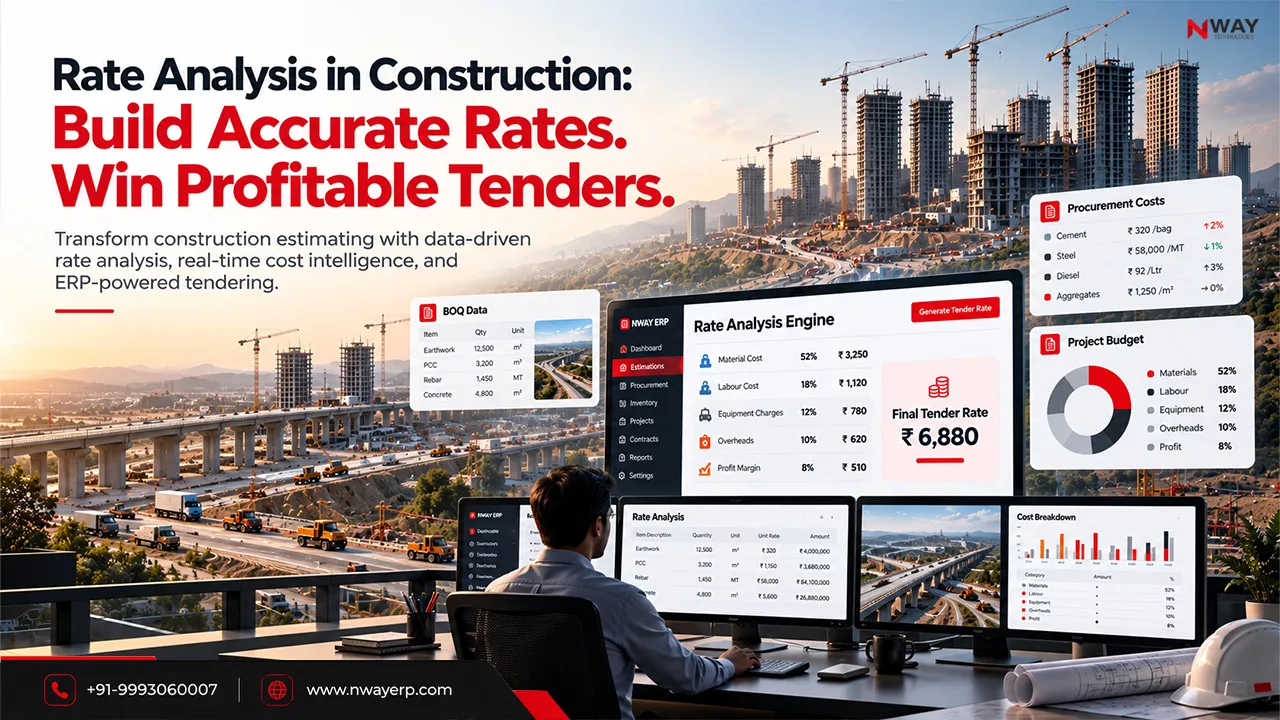
- Bill of Quantities (BOQ) and estimate: quantifies materials and labour and becomes the baseline for cost control.
- RACI matrix: records who is Responsible, Accountable, Consulted and Informed for each work package.
Scheduling tools
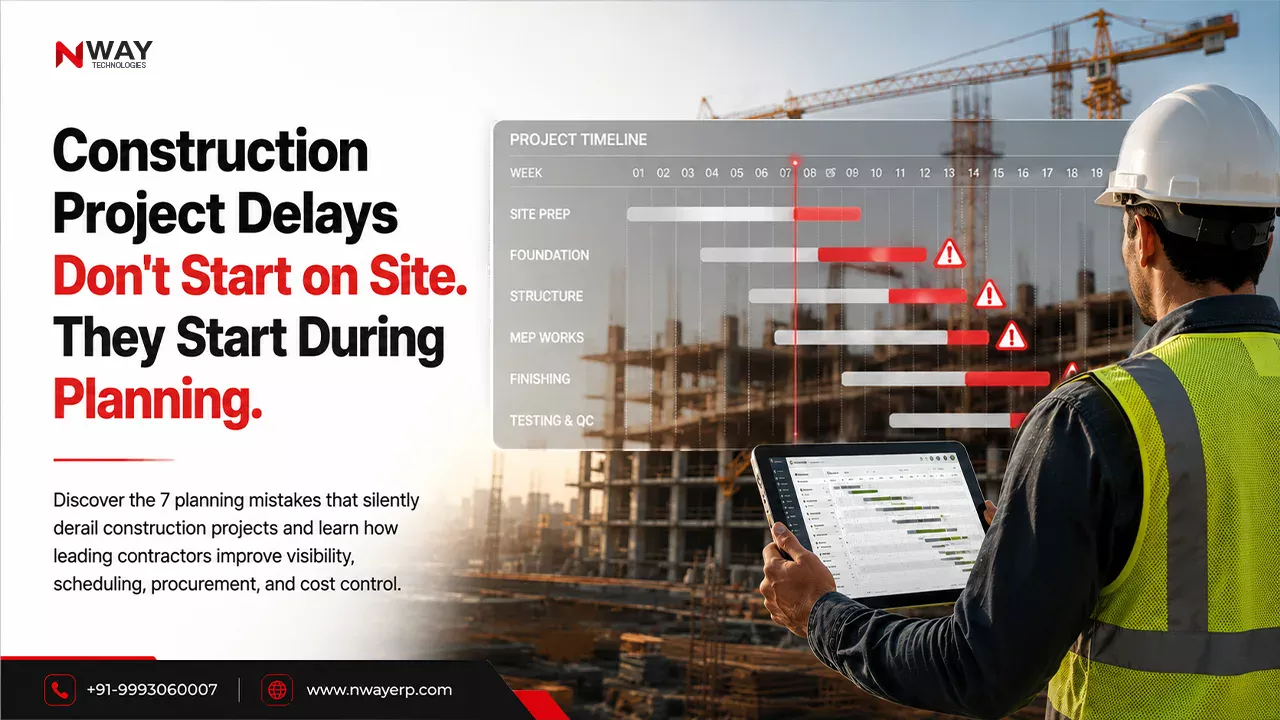
- Gantt chart: a bar chart of tasks against time; the most common schedule format shared with clients.
- CPM network diagram: shows task dependencies and highlights the critical path.
- Look-ahead schedule: a rolling 3–6 week site plan, often used with the Last Planner System.
Monitoring and control tools
- Daily Progress Report (DPR): records work done, labour, material and machinery each day.
- S-curve and EVM dashboard: plots planned vs actual progress and cost. Schedule Performance Index (SPI) = EV ÷ PV; Cost Performance Index (CPI) = EV ÷ AC. A value below 1 means behind schedule or over budget.
- Risk register: lists each risk, its likelihood, impact, owner and response.
- Change order log: tracks scope changes, their cost and approval status.
- BIM (4D/5D): links the 3D model to the schedule (4D) and cost (5D) to spot clashes and sequencing issues before work starts.
Quality management tools
- Inspection and Test Plan (ITP): defines what gets checked, when, by whom and against which standard.
- Checklists and snag lists: standard pre-pour, post-pour and handover checks.
- Non-Conformance Report (NCR) log: records defects and their corrective action.
- Root-cause tools: 5 Whys and fishbone (Ishikawa) diagrams for repeat defects.
Software categories
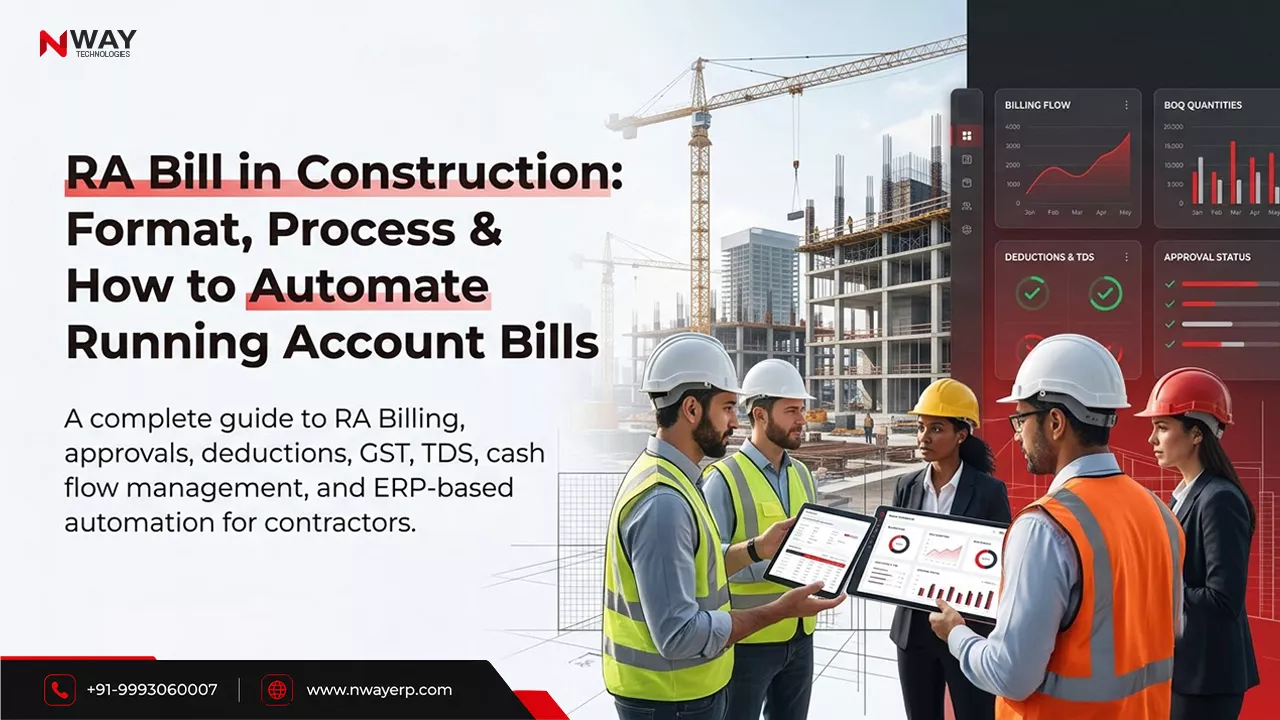
- Scheduling software: Primavera P6, NWAY ERP, and Microsoft Project for CPM and Gantt schedules.
- Field and collaboration platforms: document control, RFIs, photos and site reporting.
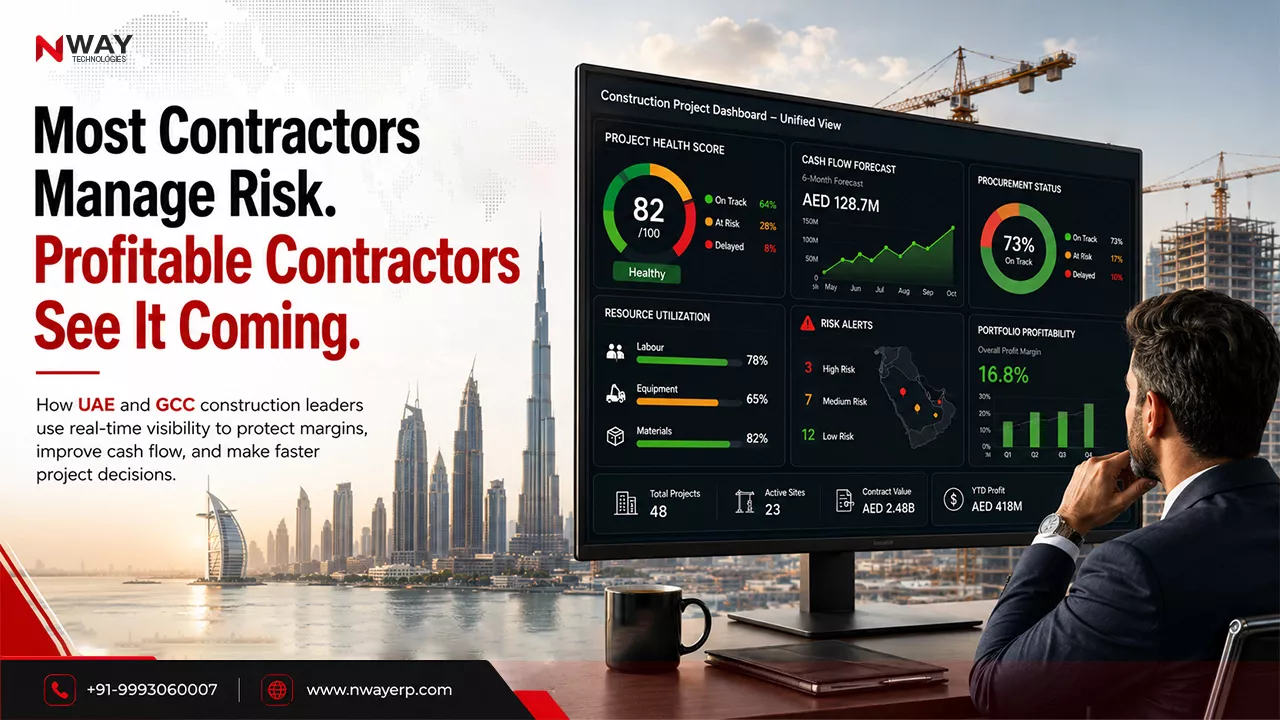
- Construction ERP: combines project planning with purchase, inventory, labour, and finance, so cost and progress come from the same data
Worked example — finding the critical path
A small foundation package has six activities:
| Activity | Duration (days) | Depends on |
|---|---|---|
| A. Site clearing Critical | 2 | — |
| B. Excavation Critical | 4 | A |
| C. Rebar and formwork fabrication 1-day float | 3 | A |
| D. Foundation concreting Critical | 5 | B, C |
| E. Curing Critical | 7 | D |
| F. Plinth masonry Critical | 4 | E |
| Critical path: A → B → D → E → F = 22 days (A → C → D → E → F = 21 days)
Path A–B–D–E–F takes 22 days; path A–C–D–E–F takes 21. The critical path is A–B–D–E–F, so the package needs at least 22 days. Activity C has 1 day of float: it can slip a day without moving the finish date, but a one-day delay in excavation delays everything. For PERT, each duration becomes a weighted estimate: (Optimistic + 4 × Most likely + Pessimistic) ÷ 6. |
||
How to choose the right technique
- Fixed scope, government, or tender-based work: Waterfall for phases, CPM for the schedule.
- Long projects with uncertain approvals or weather: PERT, updated monthly.
- Repetitive linear work (roads, pipelines, railways, floors): Line of Balance.
- Many subcontractors on one site: Last Planner System with a look-ahead schedule.
- Evolving design or fit-outs: Agile-style phased delivery.
- Tight budgets or multiple funders: add EVM on top of whichever scheduling method you use.
Most large projects combine methods: CPM for the master schedule, Last Planner for weekly site plans, and EVM for cost reporting.
Conclusion
No single technique fits every construction project. CPM and PERT set the schedule, Lean and the Last Planner System make it reliable on site, Line of Balance keeps repetitive crews moving, and EVM tells you whether progress is worth what it costs. Choose the method that matches your project’s scope stability and complexity, and back it with tools that keep plans, progress and cost in one place.
FAQs