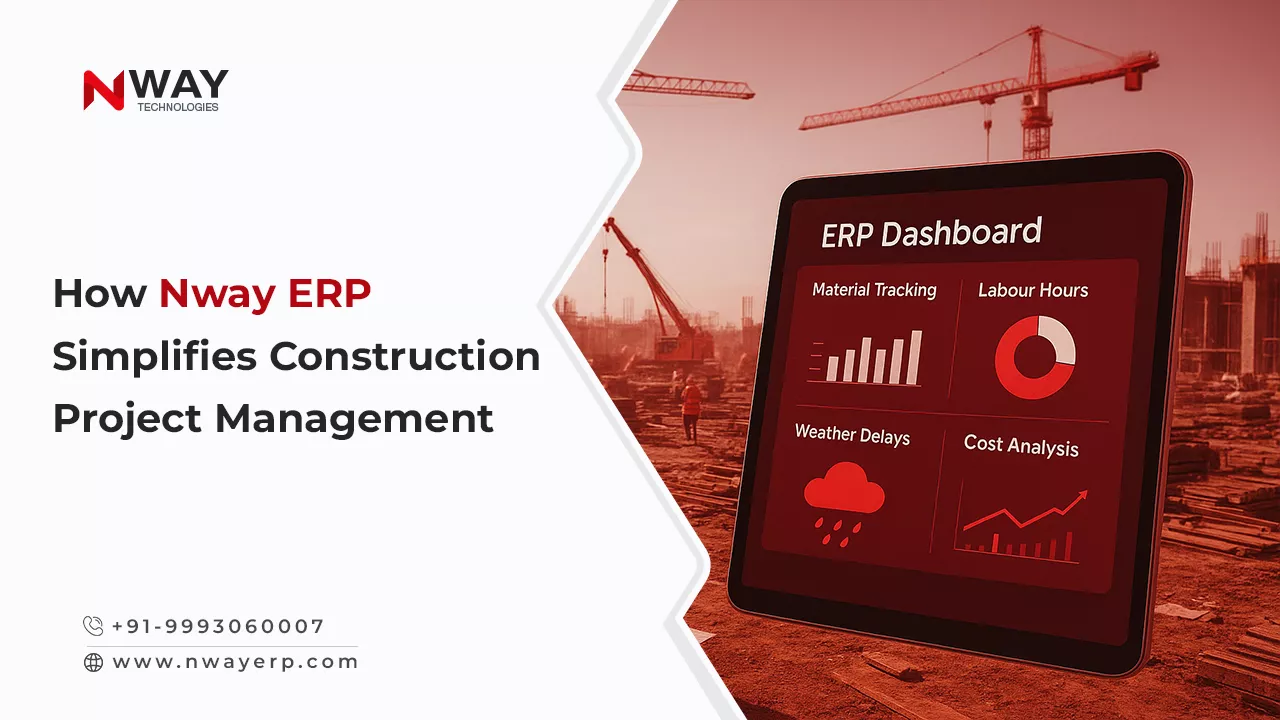
Construction Project Management Software: How Nway ERP Simplifies Every Site

Imagine this: you are standing at a busy construction site. The sun is burning, machines are noisy, and workers are everywhere. You need updates – on material delivered, labour hours used, delays due to weather, cost overruns – all in real time. But right now, you rely on paper forms, phone calls, spreadsheets. It feels chaotic. Mistakes happen. Decisions are delayed. And profit margins shrink.

Construction project management software helps builders and contractors plan, track and control every site from one platform—replacing paper forms, WhatsApp updates, and scattered Excel sheets

That’s the story of many construction firms today. But it doesn’t have to be this way. With good construction project management software, chaos becomes control.

This blog explains how Nway ERP, a strong ERP for construction, makes project management smoother. You will learn how our construction ERP software uses construction workflow automation and thoughtfully designed features to reduce waste, speed-up decisions, and bring clarity to every site.

Table of Contents:

What Is Construction Project Management Software?

Let’s break it down simply:

  • It’s a tool that helps you plan, execute, monitor, and close construction projects.
  • It tracks labour, materials, machines, timelines, costs.
  • It automates routine tasks. It ensures everyone (site, office, suppliers) sees the same info at same time.

When done well, construction project management software saves time, cuts costs, and keeps all your projects on time, everytime.

Why Construction Firms Desperately Need Better Tools in 2025

Between rising costs, labour shortages, supply delays, and climate‑impacts – managing projects has never been tougher.

Here are the trends forcing change:

  • Real‑time data matters. Managers want to see project status now, not at month end.
  • Cloud & mobile access are essential. Field work demands tools that work on phones or tablets.
  • Automation of workflows. Approvals, safety checks, material requests – all need to move without human delays.
  • Integration with IoT, BIM, analytics are becoming important so that decisions are data‑backed, not guesswork.What Is Construction Project Management Software?

How Nway ERP Makes Construction Project Management Simple

Managing construction projects is complex. It involves many people, tasks, and tools. A small mistake or delay can lead to big losses. This is where Nway ERP helps. It brings everything into one smart system.

Below are the features that make Nway ERP a strong construction ERP software designed to simplify and improve daily operations.

1. Unified Data and a Single Source of Truth

With Nway ERP, all teams work on one platform. Site workers, procurement teams, finance staff, and managers use the same data.

  • No more scattered spreadsheets
  • No missing updates
  • No duplicate entries

This keeps your project data clean, updated, and visible in real time. Everyone sees the same numbers. This is the core of good construction project management software.

2. Smart Planning and Accurate Estimation

Planning is key in construction. You need to know how much material, labour, and equipment is required.

Nway ERP, the most trusted ERP for construction, helps teams:

  • Forecast costs
  • Plan work schedules
  • Estimate labour and machine needs

When things change, it’s easy to adjust. You can re‑estimate in minutes. This prevents delays and keeps budgets under control.

3. Real-Time Field Reporting from Anywhere

Field teams often face delays when sending updates to the office. With Nway ERP, this problem is solved.

Using our mobile app, workers can:

  • Log work hours
  • Request materials
  • Report issues or delays

Everything updates instantly in the system. Office staff and managers can see real-time progress. This is a must-have feature in modern construction project management software.

Want to learn how ERP software can shape the future of your construction business and ensure long-term success? Check out our blog: The Future of Construction: Leveraging ERP Software for Long-Term Success

4. Automated Workflows and Approvals

Construction work includes many approval steps. Delays in approvals can stop the entire project.

Nway ERP uses construction workflow automation to make this faster. You can set rules for:

  • Purchase order approvals
  • Budget limits
  • Safety checks
  • Quality control forms

The system sends alerts. Approvals move forward automatically. No need to chase signatures. This saves time and reduces project delays.

5. Inventory and Equipment Management

Keeping track of materials and machines is hard without the right system. Many projects lose money due to:

  • Wasted materials
  • Idle equipment
  • Missing tools

Nway ERP, as a reliable construction ERP software, helps track:

  • Stock levels
  • Material usage
  • Equipment movement
  • Maintenance schedules

It ensures you use resources better and avoid extra costs.

6. Finance, Billing, and Cost Control

Construction businesses must manage money carefully. Without clear numbers, budgets can fail.

Nway ERP connects all financial activities:

  • Procurement
  • Payroll
  • Vendor payments
  • Budget tracking
  • Invoice approvals

You can compare planned vs actual costs. This helps spot overspending early. That’s why it’s one of the top features in a smart ERP for construction.

7. Role-Based Dashboards and Easy Reporting

Different people need different data. Site engineers, project managers, finance heads—they all have unique needs.

Nway ERP offers:

  • Custom dashboards
  • Role-based access
  • Clear charts and reports
  • Automated alerts

This makes reporting fast and useful. Everyone sees only what they need – no clutter, no confusion.

These features make Nway ERP more than just software. It’s a complete construction project management software that simplifies daily tasks, cuts errors, and improves decision-making. With built-in construction workflow automation, it helps construction companies save time, reduce costs, and grow faster.

What Makes Nway ERP Different from Other Construction ERP Software

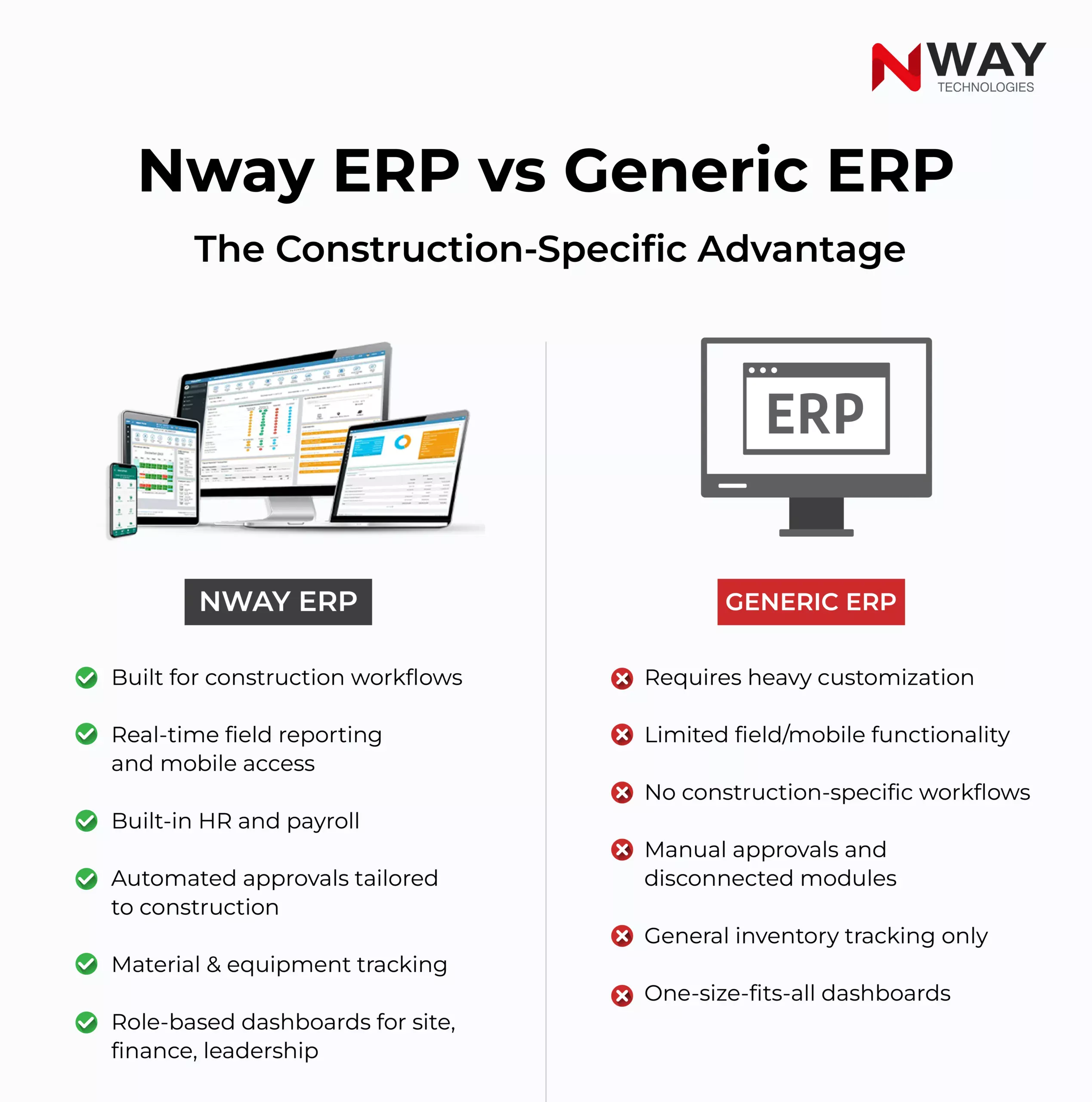
Let’s compare. Many tools try to serve many industries. But Nway ERP is built for construction. It knows your pain points.

Tailored for construction workflows: material procurement, equipment tracking, labour hours, safety audits etc. Not generic features that you then adapt.

Strong automation: approvals, workflows, mobile updates, safety checks automated so you don’t chase paperwork.

Mobile‑first and cloud-first: field teams need it on devices, remote sites need sync. Nway ERP delivers everytime!

Local compliance built in: including Indian rules (GST, contract norms, etc.), so you don’t need to integrate external tools.

Ease of use & support: good training, simple UI, strong customer support. Because a feature‑rich tool doesn’t help if no one uses it.

What can you expect after adopting strong construction project management software like Nway ERP?

Here are the benefits of opting for an ERP built especially for the construction industry:

Benefit What Changes You’ll Notice
Faster decisions You’ll see delay, cost overspend, material shortages earlier so that you can act sooner.
Lower costs & less waste Better inventory control, less over‑ordering, fewer idle machines.
Boosted field productivity Site staff send updates live. Less rework, fewer lost documents.
Better accountability Everyone’s role, tasks, approvals are traceable. No finger‑pointing.
Improved safety & compliance Safety checklists, compliance forms submitted, tracked, audited.
Scalable growth When you add a new site or new project, you don’t double your chaos. Our system scales with you.

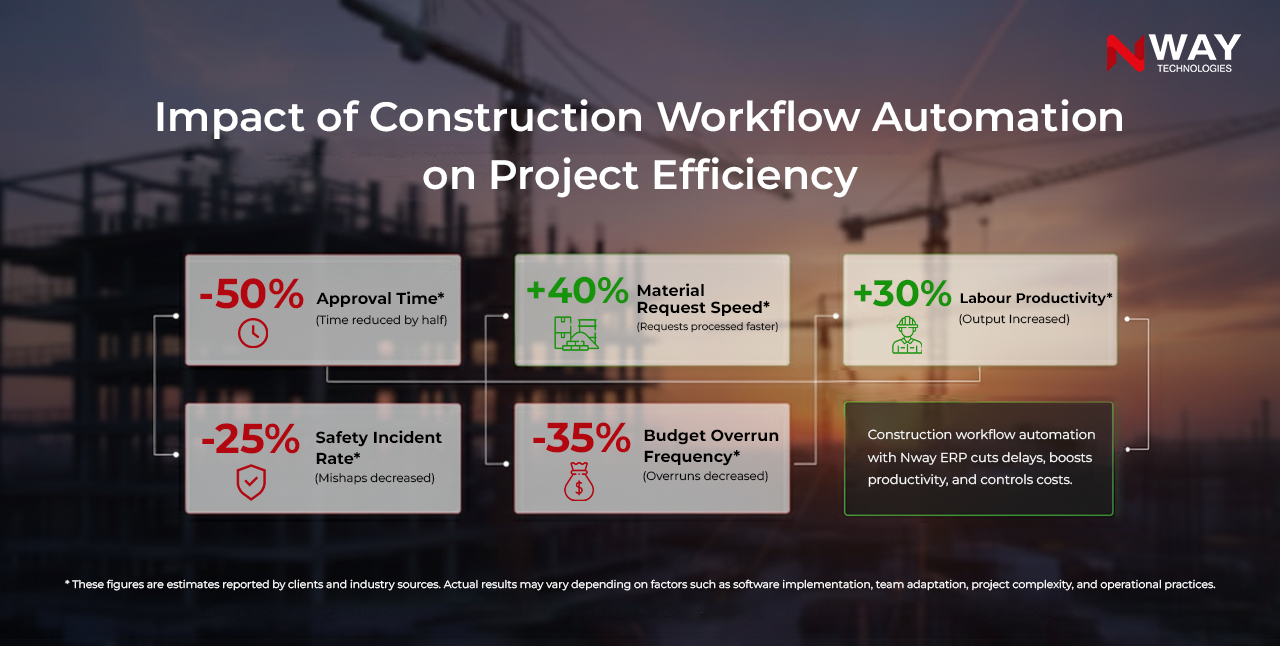
Impact of construction

Common Pitfalls & How Nway ERP Helps You Avoid Them

Even good tools can fail if not used well. Here’s what construction firms often mess up and how Nway ERP avoids them.

Resistance to change: Nway ERP offers intuitive interface + training. So workers and managers adapt more easily.

Poor internet/mobile access on site: Nway ERP works well in low bandwidth, offline where needed; mobile access is strong.

Over‑customization → complexity: Nway ERP balances flexible workflows with simplicity so you can customize but not get lost.

Data scattered in different systems: Nway ERP keeps finance, operations, inventory together. No jumping between tools.

Ignoring metrics: System gives real‑time dashboards. You track KPI’s: budget variance, schedule delay, machine idle time, etc.

Why Construction Workflow Automation Matters

Let’s zoom in: construction workflow automation is the hidden gear that keeps everything moving smoothly.

Approvals: Manual approvals slow everything. Automate so that cost estimates, vendor invoices, safety forms, etc. all go through predefined steps.

Notifications: If something is pending, people get alerts on mobile, email, and other channels that you choose.

Safety & Compliance: Digital safety checks, forms, audits. No paper forms lost, no compliance risk.

Material / Equipment Request: Field requests auto routed. Inventory updated live.

Role based permissions: Only authorised people approve cost items, handle finances, change estimates, etc.

When automation works, your project doesn’t pause. No more delays because someone forgot to sign. No more cost surprises. Nway ERP is redefining construction workflow automation for 250+ active clients as of 2025.

Having trouble migrating construction data during software upgrades? See how companies overcome these challenges: Data Migration Challenges Faced by Construction Companies

How To Get the Most Out of Your Construction Project Management Software

Maximizing the benefits of construction project management software like Nway ERP requires a clear plan and careful steps. When used correctly, this powerful ERP for construction transforms project workflows, improves team coordination, and boosts overall efficiency. Here’s how to get the best results:

1. Map Your Current Construction Processes in Detail

Start by documenting all key workflows: approvals, material ordering, safety inspections, labour tracking, and more. Understanding where delays, bottlenecks, or rework occur helps tailor the construction ERP software to your exact needs. A clear map ensures smooth implementation of construction workflow automation features that save time and reduce errors.

2. Define Roles and Permissions Clearly

Assign specific roles within the system. Decide who approves purchase orders, who inputs data, and who views reports, etc. Clear role definition minimizes confusion and ensures accountability.

3. Leverage Mobile Access and Train Field Teams

Equip your site teams with the mobile app. This allows real-time updates from anywhere – logging work hours, material requests, or safety checks. Training is critical. When workers and managers understand how to use the mobile features, it drives adoption and maximizes the power of construction workflow automation embedded in the software.

4. Pilot the Software on a Single Project First

Start small. Implement the software on one project to test workflows and gather insights. Use this pilot to identify challenges, adjust settings, and optimize automation rules. This phased approach minimizes risk and builds confidence before a full rollout across all sites.

5. Track Key Metrics that Matter to Your Business

Select and monitor critical metrics like cost overruns, schedule delays, equipment downtime, and labour productivity. The right construction project management software provides dashboards and reports to track these in real time. Continuous monitoring helps catch issues early and keeps projects on track.

6. Collect Regular Feedback from Your Team on Site

Your team’s experience is vital. Regularly ask if forms are easy to use, if the app functions well offline, and whether the workflows are efficient. Feedback helps fine-tune the system to fit real-world conditions. This ongoing improvement ensures the software truly supports daily construction operations.

Following these steps will unlock the full potential of your construction project management software. With Nway ERP, the power of specialized construction ERP software and construction workflow automation turns project challenges into smooth, manageable tasks – delivering stronger results on every site.

If you are reading this, you probably want to stop fighting delays, cost overruns, missing data, frustrated workers. You want control. You want predictability. You want your construction projects to finish stronger and more profitable.

That’s exactly what construction project management software is for. And Nway ERP is a powerful choice because it offers ERP for construction with strong construction workflow automation, built‑in mobile/cloud, real-time data, safety, compliance, and cost control.

Make the change. Move from reacting to being in control. Your next project doesn’t have to be harder. It can be better.

Key Features to Look for in Construction Project Management Software

Not every project management tool is built for construction. Generic software can track tasks, but construction sites run on BOQs, daily reports, running bills and tight schedules. When you evaluate construction project management software, check for these core features first.

Gantt Charts and Project Scheduling

A Gantt chart shows your whole project on one timeline: every activity, its start and end dates, and how tasks depend on each other. Good construction project management software lets you break a project into phases, layers, tasks and sub-tasks, assign each one to a team, and adjust the schedule when things change on site. With Nway ERP, project managers can plan and inspect work layer-wise through Gantt charts. This makes it easy to spot slippage before it becomes a delay.

BOQ and SOR (Schedule of Rates)

The Bill of Quantities (BOQ) is the backbone of construction costing. It itemises materials, labour and work quantities for every activity. The Schedule of Rates (SOR) fixes the rate for each item of work. Your software should let you create a BOQ for each task, apply the SOR directly to it, and keep costs consistent across the project. In Nway ERP, SOR can be applied to tasks and layers, and a BOQ is generated for each task and layer for future reference and cost control.

DPR (Daily Progress Report)

The Daily Progress Report records what happened on site each day: work completed, labour deployed, materials consumed and machinery used. Paper DPRs arrive late and often get lost. Construction project management software should let site engineers submit DPRs from a mobile app so managers see progress the same day. Nway ERP’s mobile app captures DPRs from the field and sends alerts to project managers for instant review and action.

RA Billing (Running Account Bills)

Contractors in India get paid through RA bills raised against work completed at each stage. Manual RA billing is slow and error-prone, which delays cash flow. The right software links billing to measured work and BOQ quantities. That way bills are accurate, easy to verify and quick to raise. Integrated finance also keeps RA bills, vendor payments and GST records in one place.

Planned vs Actual Progress

The most useful report for any project manager compares what was planned with what actually happened: in time, quantity and cost. Construction project management software should compare planned schedules and budgets with actual site data from DPRs, purchases and labour records. Nway ERP’s dashboards show this variance in real time, so you can catch cost overruns and delays early and correct course while there is still time.

Critical Path and Milestone Tracking

In every project, some activities decide the final completion date. This sequence is the critical path. If an activity on the critical path slips, the whole project slips. Look for software that highlights dependent tasks, tracks key milestones such as foundation, structure and finishing, and alerts you when a critical activity falls behind. This helps you move resources to where they matter most instead of reacting after deadlines are missed.

FAQs

What are the latest trends in construction project management software for 2025?
In 2025, modern construction project management software focuses on real-time data, mobile-first access, automation of routine tasks, and integration with AI and IoT. Companies are now choosing platforms that offer predictive insights, risk alerts, and streamlined collaboration between field and office teams.
Is construction ERP software suitable for infrastructure and road projects?
Yes, modern construction ERP software like Nway ERP is fully capable of handling large-scale infrastructure, road, and government projects. It supports multi-site operations, contract management, quality control, and compliance – all critical for infrastructure works.
What is construction workflow automation, and why is it important?
Construction workflow automation refers to using software to manage and streamline repetitive tasks like approvals, form submissions, scheduling, and alerts. It improves speed, reduces manual errors, and ensures every process follows the right steps, saving time and money on projects.
Can Nway ERP be integrated with other accounting or HR software?
Yes, Nway ERP supports seamless integration with popular accounting, HR, and payroll systems. This makes it easy for construction companies to sync financial data, streamline HR processes, and reduce manual data entry across different platforms.
Additionally, Nway ERP comes with built-in HR and payroll modules, allowing businesses to manage employee records, attendance, salary processing, and compliance – all within the same system. This eliminates the need for separate software and creates a fully connected construction management environment.
Does construction ERP software help with vendor and subcontractor management?
Absolutely. A good ERP for construction helps manage subcontractor agreements, monitor performance, track payments, and maintain compliance. Nway ERP includes features for vendor registration, RFQs, contracts, and billing, offering full visibility and control over external partners.
How does construction project management software improve client reporting?
Construction project management software offers real-time dashboards and automated reports that can be shared with clients. This builds trust by showing transparent updates on progress, costs, timelines, and risks without needing to manually compile reports every week.
Can construction ERP software help reduce project delays?
Yes. By centralizing data and automating workflows, construction ERP software like Nway ERP helps spot delays early, alerts teams in real time, and ensures faster decision-making. This proactive approach is key to delivering projects on time.
Is there a difference between general ERP and ERP for construction?
Yes. General ERP systems are built for multiple industries and often need heavy customization. An ERP for construction is built specifically for construction workflows like job costing, material tracking, site reporting, and subcontractor management. Nway ERP is designed with these exact needs in mind.
How do I choose the best construction project management software for my company?
Look for a platform that is built specifically for construction, offers real-time data access, includes construction workflow automation, supports mobile users, and allows easy integration with your existing tools. Consider scalability, local support, and ease of use as key decision factors.
Can Nway ERP be used by developers, contractors, and builders alike?
Yes, Nway ERP is flexible and built for all types of construction professionals – whether you’re a real estate developer, a general contractor, a subcontractor, or a government contractor. It supports project planning, budgeting, billing, labour management, and more – all in one platform.

How Clear Communication Drives Efficiency in Construction?

How-Clear-Communication-Drives-Efficiency-in-Construction

Clear communication is crucial in the construction industry, where projects involve multiple stakeholders. Whether between project managers, architects, engineers, contractors, or suppliers, effective communication ensures efficiency, reduces costly errors and enhances
overall project success. Poor communication in construction, on the other hand, can lead to delays, budget overruns, safety issues, and misappropriation of goals.

In this blog, we will discuss the impact of poor communication in construction, the benefits of clear communication, the role of ERP systems in streamlining communication, why NWAY stands out, and how improving communication can drive efficiency in construction projects.

Table of Contents:

Key Takeaways

Poor communication in construction leads to delays, cost overruns, and safety risks.

Clear communication helps in driving efficiency, collaboration, and decision-making.

Construction ERP software streamlines communication by centralizing data and optimizing reporting.

NWAY ERP is the ideal solution for construction companies enhancing communication and optimizing operational efficiency.

Investing in better communication strategies today ensures long-term success in construction projects.

Reasons for Poor Communication in Construction

Communication is often one of the most important aspects in the construction industry for smooth functioning, but various construction projects face significant challenges due to ineffective tools and the construction industry:

1. Lack of a Centralized Information System

Many construction companies still rely on fragmented systems, manual documentation, and email chains, which can lead to miscommunication and loss of important project details.

2. Complexity of Construction Projects

Large-scale construction projects involve multiple teams, including architects, engineers, contractors, and suppliers. Lack of effective communication makes it difficult to align project goals and objectives.

3. Misinterpretation of Data and Instructions

Construction plans, drawings, and specifications can be complex. Without effective communication, they can create difficulty and misunderstandings, leading to errors, rework, and project delays.

4. Delayed Reporting and Updates

Without a system for real-time communication, delays in reporting progress, safety issues, or material requirements can slow down project execution and increase costs.

5. Language Barriers and Cultural Differences

Construction projects often involve a diverse workforce with different languages and cultural backgrounds. A lack of a clear communication strategy can lead to misunderstandings.

6. Resistance to Technology Adoption

Many construction companies resist adopting digital tools, relying on traditional methods instead. This resistance creates inefficiencies and limits the ability to share and create project information effectively.

7. Lack of Standardization

Without standardization and communication protocols, different teams may use varying methods to relay information, leading to inconsistent communication.

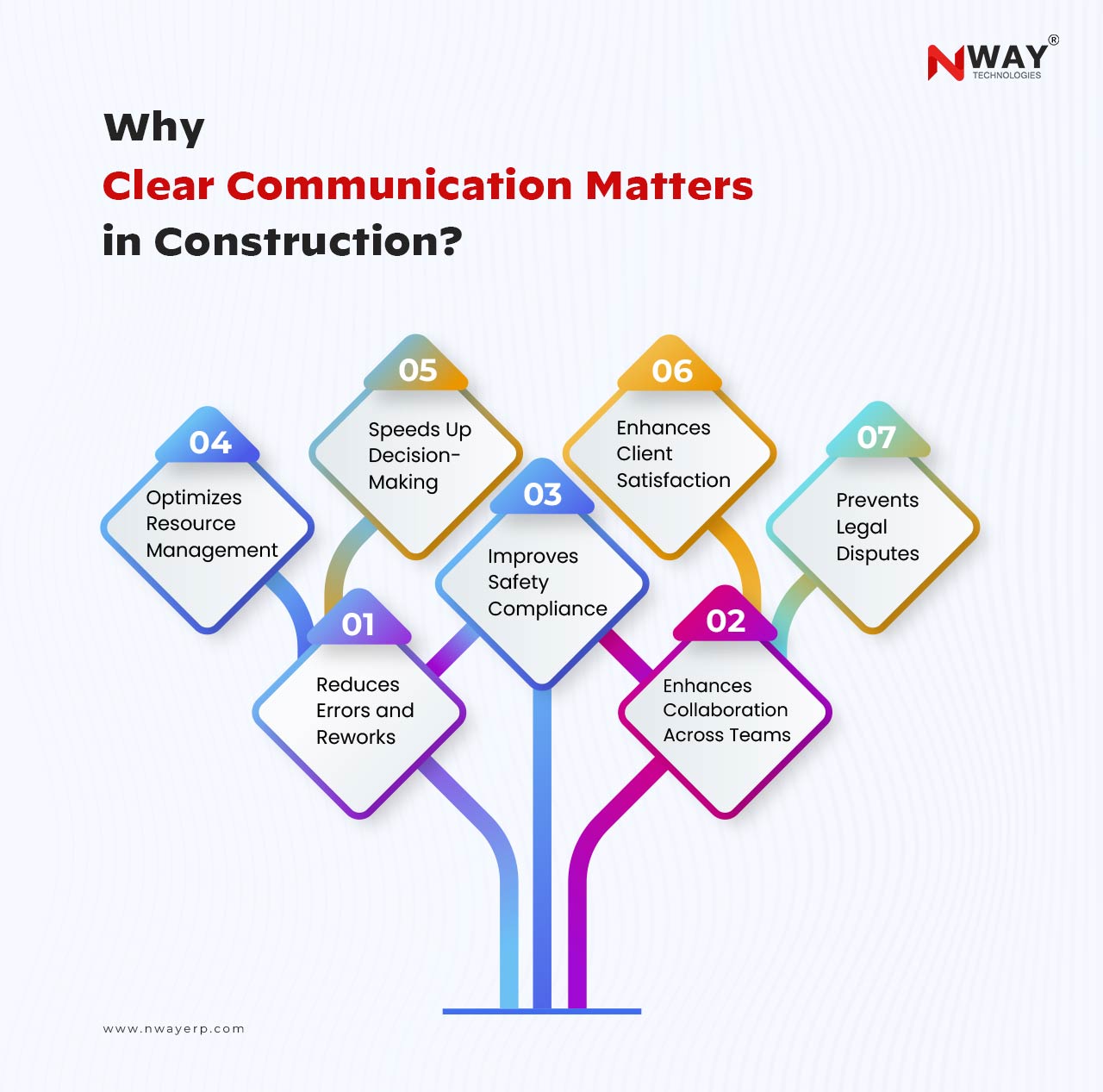
Why Clear Communication Matters in Construction?

How-Clear-Communication-Drives-Efficiency-in-Constructionr

Clear communication is the key to a successful construction business. Here are a few reasons why effective communication is necessary:

1. Reduces Errors and Reworks

When instructions and project details are communicated accurately, the likelihood of errors is significantly reduced. This also minimizes rework and saves both time and money.

2. Enhances Collaboration Across Teams

Construction projects involve collaboration between multiple teams. It also helps ensure that everyone stays on the same page, improving coordination and efficiency.

3. Improves Safety Compliance

Construction sites have strict safety protocols. Clear communication about safety measures helps prevent accidents and ensures compliance with regulatory standards.

4. Optimizes Resource Management

It helps accurate and timely communication, construction managers can better allocate materials, labor, and equipment, reducing waste and enhancing safety and productivity.

5. Speeds Up Decision-Making

Construction projects often require quick decisions to address unexpected challenges. With effective communication, project managers can access real-time data to make informed decisions quickly.

6. Enhances Client Satisfaction

When stakeholders are well-informed about project progress, potential delays, and changes, it builds trust and leads to higher client satisfaction.

7. Prevents Legal Disputes

Clear documentation and well-communicated contracts reduce the chances of disputes arising from misunderstandings, scope changes, or contractual disagreements.

Role of Construction ERP in Improving Communication

An ERP system is vital in improving clear communication in construction. It integrates all  project-related information into a single platform. It also streamlines information flow and improves collaboration.

A few of the reasons why ERP improves communication:

  • Centralized Data Management: An ERP system consolidates all project information, ensuring that everyone has access to accurate and up-to-date data.
  • Real-Time Project Updates: With ERP, teams receive real-time updates on project progress, material requirements, labor allocation, and financial status, reducing delays and misunderstandings.
  • Enhanced Document Management: ERP software provides a secure and organized way to store and share information, and project documents, such as blueprints, contracts, compliance reports, and documents. It helps maintain transparency, accountability, and accessibility.
  • Optimized Reporting and Notifications: Effective ERP can help generate optimized reports and notifications, keeping stakeholders informed about project progress, deadlines, and potential risks.
  • Seamless Communication Across Departments: By integrating different construction processes, an ERP system facilitates smooth communication between procurement, finance, project management, and field teams.
  • Mobile Accessibility: With mobile-friendly interfaces, site workers and managers can access project data and updates from anywhere in the world, ensuring real-time communication and responsiveness.
  • Improved Collaboration with Subcontractors and Project Managers: Construction ERP software helps subcontractors and project managers stay connected, have clear communication in construction, and reduce miscommunication and project disruptions.

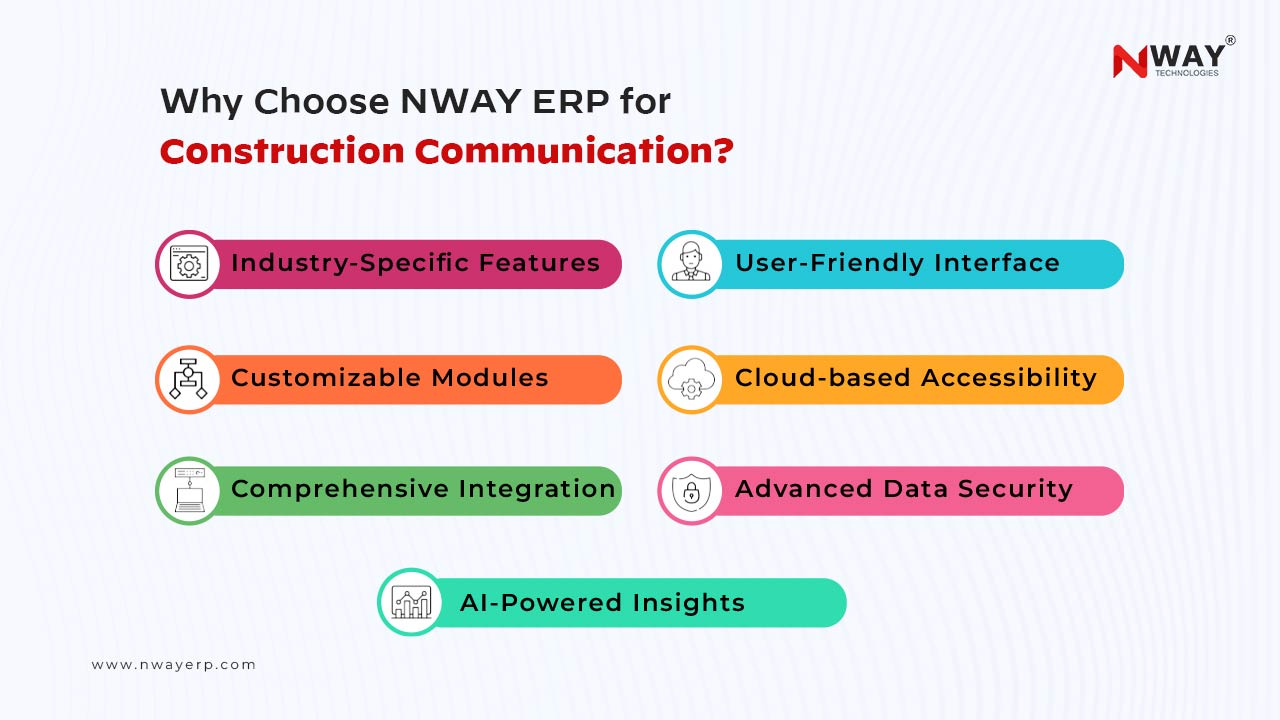
Why Choose NWAY ERP for Construction Communication?

Why-Choose-NWAY-ERP-for-Construction-Communication

While many ERP solutions exist, NWAY ERP stands out as the best choice for construction businesses. Being India’s leading construction ERP software, it provides services like:

  • Industry-Specific Features: NWAY ERP is designed specifically for the construction industry, it helps address the unique challenges of project management, procurement, and workforce management.
  • User-Friendly Interface: NWAY ERP offers an intuitive interface that helps companies ensure ease of use with effective communication and collaboration.
  • Customizable Modules: Construction ERP software provides modules tailored to fit the specific needs of construction companies, ensuring flexibility and efficiency.
  • Cloud-based Accessibility: With cloud-based deployment, NWAY ERP allows teams to access project data from anywhere. It also helps ensure seamless communication in remote locations.
  • Comprehensive Integration: NWAY ERP integrates with accounting, inventory, HR, and procurement systems, ensuring coordination between multiple departments.
  • Advanced Data Security: With robust security protocols, NWAY ERP maintains project data, keeping it protected from unauthorized access.
  • AI-Powered Insights: NWAY ERP provides AI-driven analytics to forecast potential delays, optimize resources, and provide actionable insights for better decision-making.

Read more in our latest blog on Impact of ERP Software on the Construction Industry.

Conclusion

In the construction industry, projects are complex and require seamless communication and collaboration. Poor communication leads to delays, cost overruns, and safety risks. It is important to ensure smooth coordination, with better resource management, and timely decision-making.

By adopting NWAY ERP, businesses can enhance communication, reduce inefficiencies, and achieve greater efficiency. Prioritizing clear communication in construction today will lead to improved productivity, project outcomes, reduced costs, and higher profitability in the long run. Contact us now to learn how NWAY ERP can help improve communication and optimize processes.

FAQs

Why is Communication Important in the Construction Industry?
Effective communication ensures that all stakeholders, project managers, engineers, contractors, and suppliers. Stay aligned, reducing errors, delays, and cost overruns while enhancing safety and efficiency.
What are the Common Causes of Poor Communication in Construction?
Poor communication can result from a lack of centralized information, project complexity, misinterpretation of data, delayed reporting, language barriers, resistance to technology, and a lack of standardization of communication processes.
How does Poor Communication Impact Construction Projects?
Miscommunication can lead to errors, rework, project delays, budget overruns, safety risks, and even legal disputes. It also reduces productivity and creates inefficiencies in resource allocation.
How can Clear Communication Improve Project Efficiency?
Clear communication minimizes misunderstandings, speeds up decision-making, optimizes resource allocation, improves communication, and helps safety compliance, it also improves overall project execution.
Can NWAY ERP be accessed remotely?
Yes, NWAY ERP is cloud-based, allowing users to access project data, reports, and updates from anywhere, ensuring seamless collaboration even in remote locations

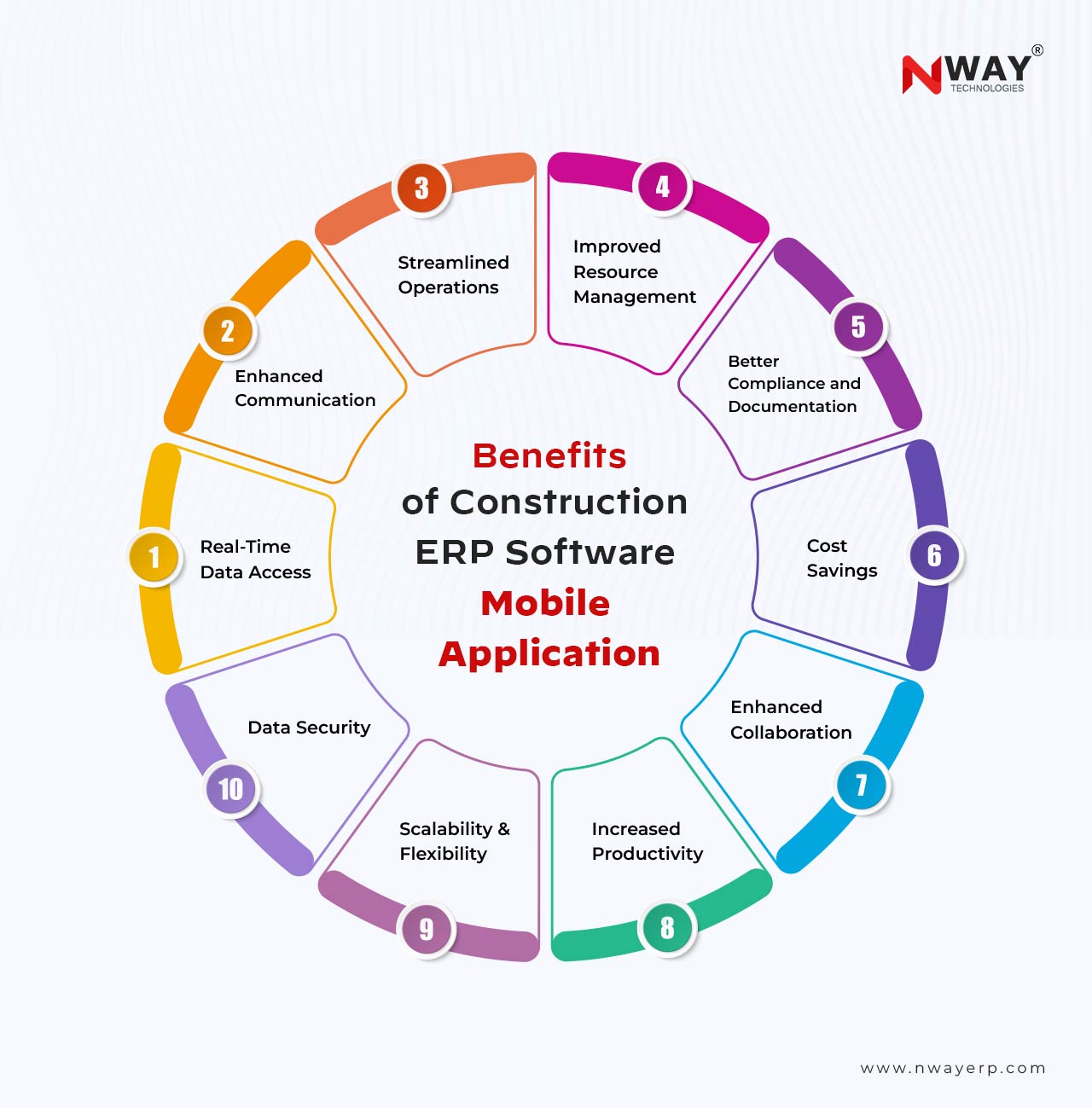
10 Benefits of Construction ERP Software Mobile Application

10-Benefits-of-Construction-ERP-Software-Mobile-Application

In the rapidly growing construction industry, embracing technology is no longer optional – it’s a necessity. Mobile applications for construction ERP software are transforming how projects are managed, improving efficiency, and driving better outcomes.

Here are the key benefits of integrating a mobile application with your construction ERP Software:

Benefits-of-Construction-ERP-Software-Mobile-Application

01. Real-Time Data Access

With mobile applications, stakeholders like contractors, managers, project managers, and supervisors have instant access to critical project data, anytime and anywhere, according to the access required and given to them. This also ensures:

  • Updated information for field workers and office staff.
  • Reduced delays caused by outdated or inaccessible data.
  • Improved decision-making through accurate, real-time insights.
  • Enhanced client reporting and transparency by providing up-to-date progress reports and metrics.

02. Enhanced Communication

Seamless communication between on-site and off-site teams is essential for successful project execution. A mobile ERP app facilitates:

  • Instant messaging and notifications.
  • Easy sharing of updates, reports, and images.
  • Reduced communication gaps and misunderstandings.

03. Streamlined Operations

From managing resources to tracking project timelines, a mobile ERP application streamlines operations by:

  • Automating routine tasks such as attendance tracking and inventory management.
  • Allowing on-site updates for progress tracking and resource allocation.
  • Providing tools for scheduling and workflow management.

04. Improved Resource Management

Efficient resource utilization is crucial in construction. A mobile ERP helps by:

  • Offering real-time tracking of equipment and materials.
  • Providing insights into workforce allocation and performance.
  • Tracking from anywhere and anytime helps you ensure optimal use of resources and reduced wastage.

05. Better Compliance and Documentation

Construction projects often require strict adherence to efficiency. A mobile ERP simplifies compliance by:

  • Storing essential information, data, and documents for quick reference and access.
  • Enabling real-time updates to compliance checklists.
  • Providing instant alerts for non-compliance or safety issues.

06. Cost Savings

By reducing inefficiencies and preventing costly errors, a mobile ERP app significantly lowers project costs.

It helps achieve this by:

  • Minimizing manual data entry and paperwork.
  • Reducing delays and rework through better planning.
  • Offering insights for effective budgeting and cost management.
  • Cutting travel expenses by enabling remote access to project data and approvals.
  • Preventing on-site errors through real-time updates and notifications. It also provides effective better budgeting and cost management.
  • Preventing on-site errors through real-time updates and notifications.

07. Enhanced Collaboration

A mobile ERP app fosters collaboration among stakeholders by:

  • Enabling shared access to project data and updates.
  • Supporting integration with other tools and platforms.
  • Allowing seamless coordination between contractors, clients, and suppliers.
  • Providing shared dashboards for real-time visibility of project status.
  • Attaining real-time editing capabilities for documents and schedules.

08. Increased Productivity

The construction industry thrives on efficiency, and a mobile ERP app boosts productivity by:

  • Allowing on-the-go updates and approvals, speeding up workflows.
  • Reducing the need for physical and back-and-forth meetings, communication, and saving time.
  • Empowering field teams with the tools they need to perform effectively.
  • Facilitating faster approval workflows and minimizing downtime, ensuring seamless project progress.

09. Scalability & Flexibility

As projects grow in size and complexity, a mobile ERP application provides the scalability and flexibility needed to adapt by:

  • Supporting multiple projects simultaneously.
  • Customizing features to meet unique project requirements.
  • Ensuring smooth integration with existing systems and workflows.

10. Data Security

Construction ERP Software Mobile Applications provide robust security measures that ensure maximum safety for any sensitive information. It includes:

  • Secure access protocols to prevent unauthorized usage.
  • Data encryption that prevents information during transmission.
  • Regular updates to safeguard against unauthorized sources and further data loss.

Conclusion

A Construction ERP Software Mobile App is a game-changer for the industry. It not only bridges the gap between field and office operations but also ensures that projects are completed on time, within budget, and to the highest quality. By leveraging the best of their ability mobile ERP software can stay ahead of the competitive market and drive long-term success.

So how are you managing your construction projects? Are you using construction ERP software that can help you streamline all your construction projects from anywhere and anytime? If not this is the right time to opt for good software that can simplify all your construction operations. Contact us now and one of our experts will help you understand the use of construction ERP software and its implementation, processes, and benefits.

Why Construction ERP Software is a Game-Changer for Your Projects

Game-Changer-1

The construction industry is huge and involves various operations, stakeholders, locations, and processes. From managing budgets and timelines to ensuring quality and compliance, the challenges can seem insurmountable. Construction ERP software can simplify these complexities and bring unparalleled efficiency to your projects.

Read this blog to learn more about why project management in construction is necessary and how ERP software can become a game-changer, covering features, benefits, and cognitive benefits for your organization.

Key Takeaways:

  • Introduction

  • Role of Construction ERP Software

  • Key Features of Construction ERP Software

  • Why Construction ERP Software is a Game-Changer

  • The Challenges Faced by Construction Companies

  • How does construction ERP software address these challenges?

  • Adopting Construction ERP Software: Key Considerations

  • Conclusion

Role of Construction ERP Software in the Construction Industry

Construction ERP software is an integrated solution tailored for the construction industry. It provides a centralized platform to manage all facets of construction projects, such as planning, procurement, inventory, workforce, finances and reporting. It is specifically designed to address the unique challenges and helps achieve seamless collaboration, enhanced decision-making, and better project management.

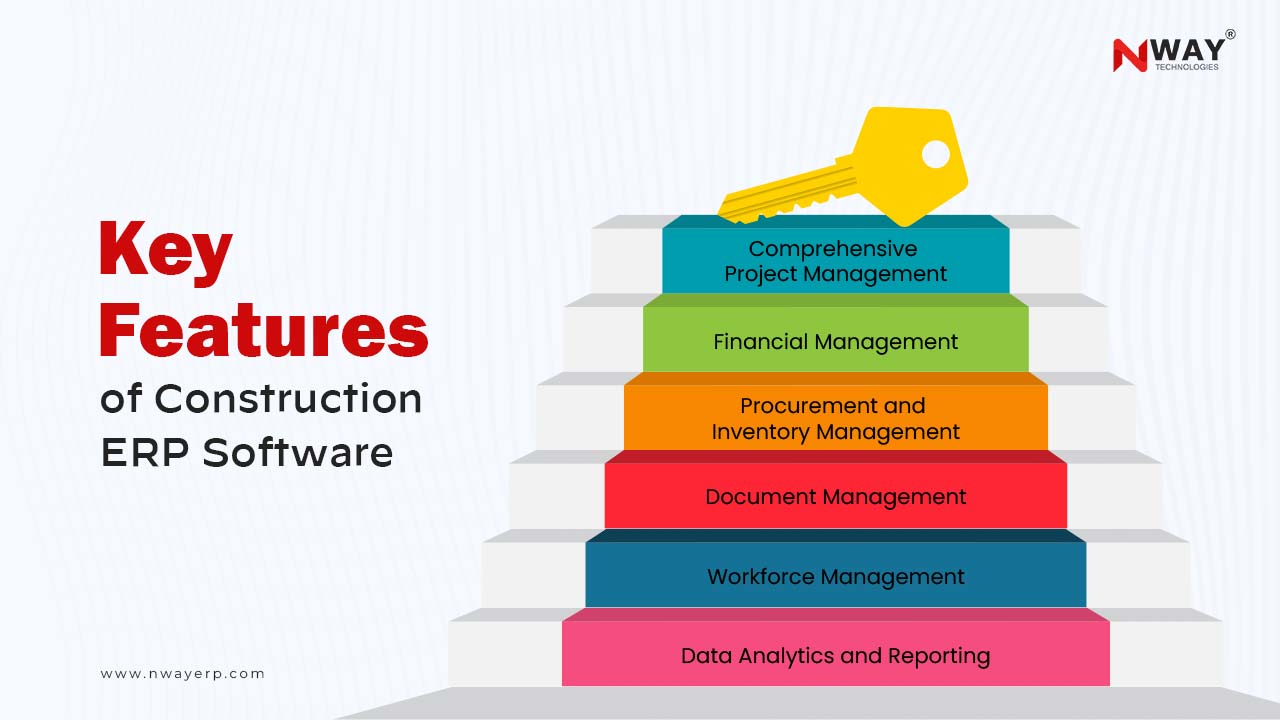
Key Features of Construction ERP Software

Game-Changer

Comprehensive Project Management

Centralized dashboard to manage multiple projects

Real-time tracking of progress and milestones

Tools for scheduling, task allocation, and resource management

Financial Management

Budget planning and control

Automated billing and invoicing

Integrated with accounting systems

Procurement and Inventory Management

Vendor management and material procurement tracking

Automated inventory control to avoid shortages or excesses

Document Management

Secure storage of blueprints, contracts, and compliance documents

Easy sharing and version control for seamless collaboration

Workforce Management

Timesheet tracking and automated payroll integration

Simplified allocation of labor based on availability and skill

Data Analytics and Reporting

Real-time insights into project performance

Customizable reports for financials, timelines, and resource utilization

Why Construction ERP Software is a Game-Changer?

Enhanced Efficiency and Productivity

Manual processes and disconnected systems often lead to inefficiencies and delays. Construction management software helps automate repetitive tasks, eliminates redundancy, and ensures all stakeholders have access to real-time information.

Improved Cost Control

Cost overruns are a common challenge in construction. Good ERP software enables precise budget tracking and highlights areas for improvement, ensuring cost-effective processes.

Real-Time Decision Making

With real-time data at their fingertips, project managers can make informed decisions promptly, minimize risks, and ensure timely project completion.

Better Collaboration

Construction ERP software provides a centralized platform to ensure architects, contractors, suppliers, and other stakeholders are on the same page, reducing misunderstandings and rework.

Compliance and Risk Management

Good ERP software makes it easier to track regulatory compliance and manage risks proactively by providing tools to ensure compliance with safety and environmental standards.

Scalability and Flexibility

Whether you are managing a small project or multiple large-scale projects, construction ERP software is scalable to meet your business requirements, making it a long-term investment.

The Challenges Faced by Construction Companies

Fragmented Communication

Relying on emails, spreadsheets, and separate software leads to communication breakdowns, missed deadlines, and costly errors.

Inefficient Resource Management

Without a centralized system, resource allocation becomes chaotic, leading to wasted labor, material shortages, or overstocking.

Budget Overruns

Manually tracking finances often results in errors, leading to unaccounted expenses and cost overruns.

Lack of Transparency

Using multiple documents and keeping things decentralized makes it difficult to get a holistic view of project performance, hampering decision-making.

Compliance Risks

Following processes that do not match with the government regulations and compliances leads to penalties, project delays, and reputational damage.

How an Efficient Construction ERP Software Addresses These Challenges?

Construction ERP software bridges the gaps by integrating all aspects of project management into one platform. It provides end-to-end visibility, real-time updates, and data-driven insights, ensuring effective project management in construction.

Game-Changer

Adopting Construction ERP Software: Key Considerations

Assess Your Needs

It is important to identify your needs, understand your pain points, and choose a Construction management software that can address them efficiently.

Choose the Right Solution

Opt for the right vendor with experience in the construction industry, offering robust support, regular updates, effective integration, and other benefits that can avail your growth in real aspects.

Ensure Proper Training

Ensure that the software you choose must provide efficient training to the entire team.

Plan for Integration

Ensure the software must integrate with existing systems to avoid disruptions.

Monitor and Evaluate

Continuously monitor the software’s performance and adapt processes as needed to maximize its effectiveness.

Conclusion

Construction ERP software is helping the modern construction industry in tremendous ways. Being a game changer, it provides a transformative solution to address the unique challenges faced by contractors, subcontractors, project managers, and other construction stakeholders. By streamlining processes, improving efficiency, and enabling data-driven decision-making, it empowers construction companies to deliver projects on time, within budget, and to the highest quality standards.

So how are you handling your projects?

Are you facing challenges in managing your projects manually?

If so, then good construction ERP software can help you solve all your major challenges, embrace the future of construction management, and experience the difference it makes in turning challenges into opportunities for growth and success.

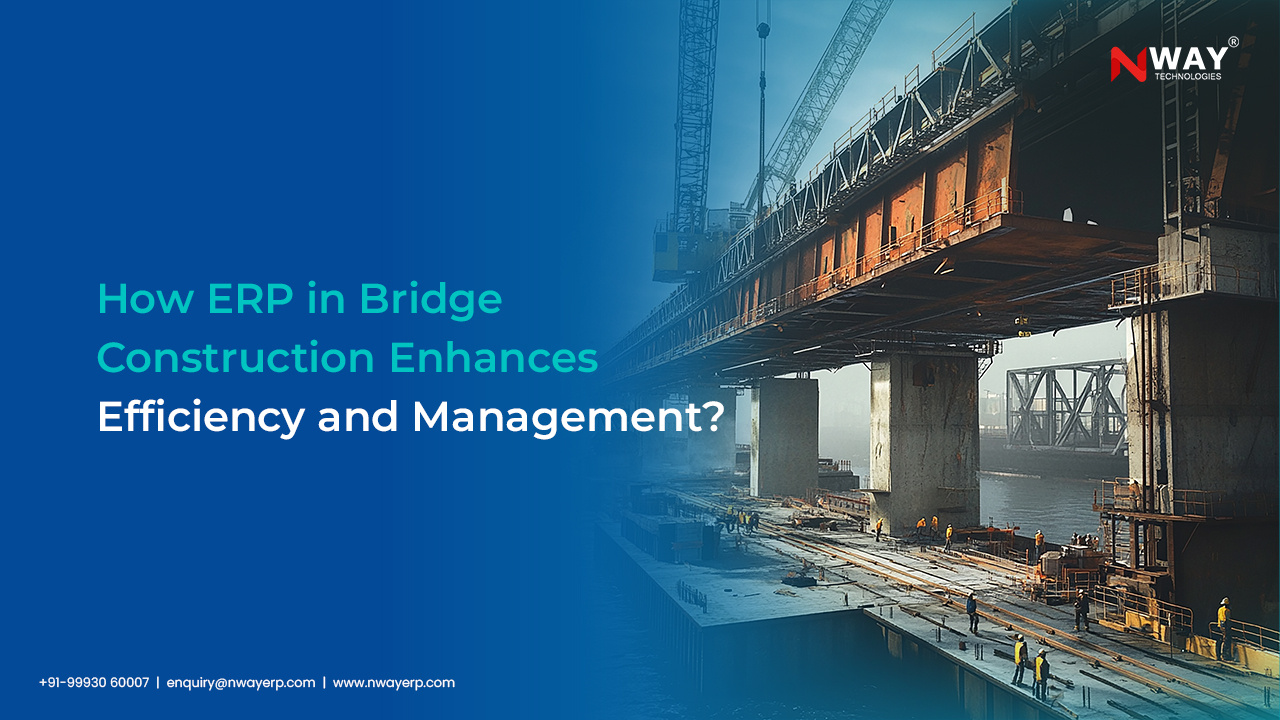
How ERP in Bridge Construction Enhance Efficiency & Management?

ERP in Bridge Construction

In the modern construction industry, there are various projects like roads, bridges, buildings, and more. Managing these projects is a highly complex task that needs precise coordination, resource management, and real-time tracking of progress. Specifically, bridge construction presents unique challenges, from securing raw materials to managing timeliness and ensuring compliance with local regulations. Bridge construction, in particular, brings a unique challenge, from securing raw materials to managing efficient compliance.

Construction ERP in bridge construction can help construction companies address these challenges by streamlining various aspects of improving communication and enabling data-driven decision-making.

In this blog, let’s explore how Construction ERP software for bridges can enhance efficiency and enable project management to deliver quality construction.

What is the Role of ERP in the Construction Industry?

Construction ERP software for bridges helps integrate various business processes into a unified system. An ERP system brings together different functions such as procurement, inventory management, human resources, financial management, project management, and more in a centralized platform. This also allows better control, coordination, and monitoring of various aspects of the construction process.

Challenges Faced in Bridge Construction

Bridge construction is one of the most popular forms of construction projects and modern construction techniques rapidly involve a high level of technical expertise. It involves coordination between multiple stakeholders and adherence to strict safety and quality standards.

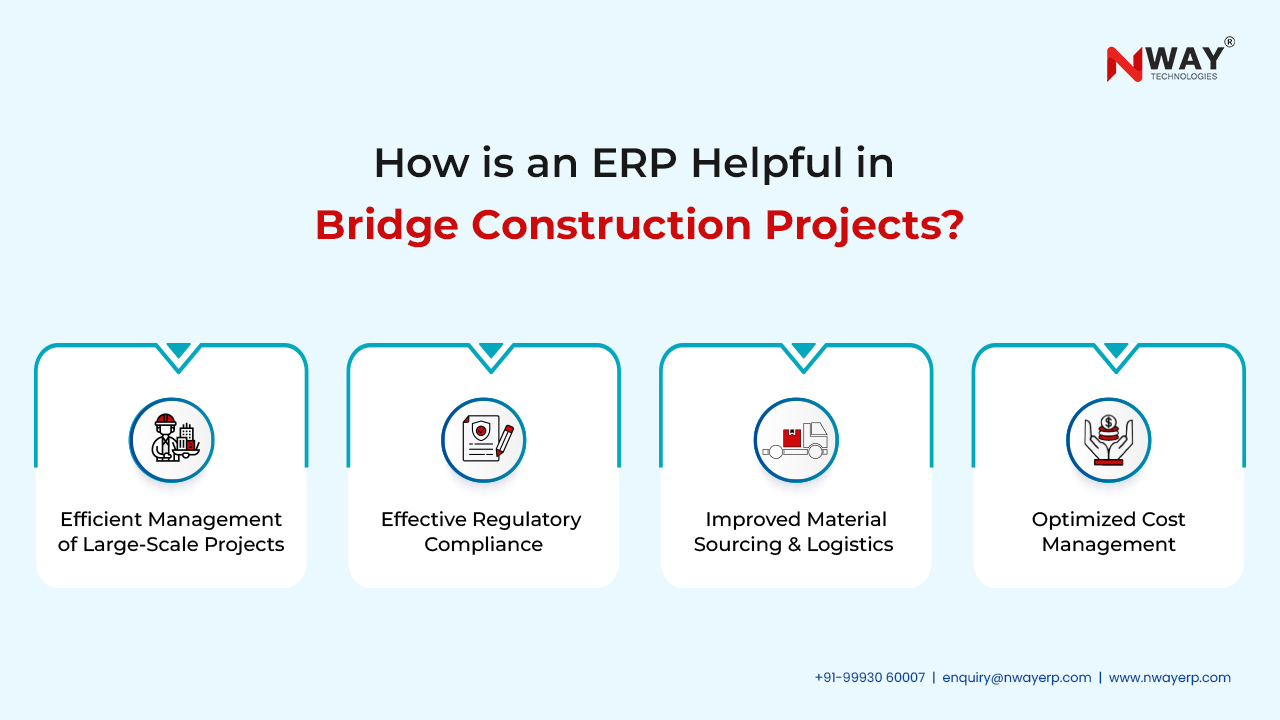
Major Challenges Faced in Bridge Construction

  • Large-Scale Project Management
  • Managing vast construction sites and coordinating the efforts of multiple teams.

  • Regulatory Compliance
  • Adhering to safety regulations, environmental standards, and other legal requirements.

  • Material Sourcing and Logistics
  • Availability of materials and sources on time.

  • Cost Overruns and Time Delays
  • Ensuring resources to avoid delays and budget overruns.

Construction ERP software for bridges can solve all these challenges efficiently with planning, execution, and monitoring.

ERP in Road Construction

Benefits of Bridge Construction Projects

Construction ERP software for bridges can enhance the efficiency and management of various projects.

Project & Scheduling

Any bridge construction needs meticulous planning and scheduling. An efficient ERP for the construction industry can help create detailed work schedules, assign relevant resources, and set milestones.

Resource Allocation

In bridge construction, resources such as equipment, labor, and materials are allocated judiciously. An ERP system helps ensure efficient resources by enabling real-time tracking and adjustment.

Timeline Management

Construction projects often suffer delays due to unforeseen circumstances like rain, landslides, and more. With an efficient ERP system, organizations can ensure that all phases of the project are completed on time. An ERP even allows for quick rescheduling and optimization of tasks to get the project back on track.

Cost Management

One of the greatest challenges in any construction project is managing costs and staying within budget. Bridge construction is no exception, often subject to cost overruns due to unforeseen complications, labor issues, or material price fluctuations.

Budgeting

ERP in bridge construction can allow project managers to establish a detailed budget at the outset of the project, ensuring all the cost heads like labor, equipment, and materials are accounted for.

Expense Tracking

As a project starts growing, a robust construction ERP software tracks all the expenses in real time, informing the senior management when the project starts exceeding the budget. This also allows proactive management of financial resources and reduces the likelihood of overspending.

Forecasting

ERP construction software can also predict potential cost overruns by analyzing past data and current spending patterns, allowing the project manager to make better decisions in resolving major issues.

Inventory Management

Bridge construction projects need raw materials such as concrete, steel, and asphalt. Ensuring a steady supply of raw materials without incurring wastage is critical for the smooth operation of the project.

Procurement and Supply Chain Coordination

With an efficient ERP in bridge construction, companies can integrate with suppliers, ensuring that materials are ordered in the right quantity and delivered on time. This also avoids bottlenecks caused by materials shortages.

Inventory Management

A robust inventory management system provides real-time visibility into inventory levels, helping the management to know what materials are in stock, what needs to be reordered, and what deliveries are expected. This also enhances the level of material availability reducing wastage.

Material Usage Report

Detailed reports on material consumption can help in identifying inefficiencies in the use of resources, allowing for adjustments to be made to prevent wastage and reduce costs.

Real-time Data and Reporting

One of the key advantages of ERP software is its ability to provide real-time data on various aspects of the project. In bridge construction, where conditions can change rapidly, having access to up-to-the-minute information is invaluable.

Progress Monitoring

ERP dashboards provide easier access to the progress of construction projects. This allows them to identify potential delays and address them before they become major issues.

Performance Metrics

An efficient ERP system helps in providing detailed analytics on various performance metrics such as labor productivity, material usage, and equipment utilization. This improves data-driven decisions that improve efficiency.

Custom Reports

Custom reports tailored to specific needs like financial performance, inventory, compliance and safety regulations.

Compliance and Risk Management

Bridge construction projects must adhere to a variety of regulations, from environmental laws to safety standards. Failing to comply with these regulations can result in legal complications, fines, and delays.

Regulatory Compliance

ERP construction software can be configured to ensure that all aspects of the project meet the required regulations. This includes tracking permits, safety inspections, and other compliance-related tasks.

Risk Mitigation

With efficient ERP software, organizations can identify potential risks to the project, such as delays, budget overruns, or safety issues.

Safety Management

Ensuring safety at work is necessary in bridge construction projects. ERP software for bridge construction can track safety incidents and enable workers to complete the necessary safety training.

Labor and HR Management

Managing labor is a crucial aspect of any construction project. Construction ERP software can streamline the process of managing workforce schedules, timesheets, and payroll, making sure that labor costs are kept under control.

Workforce Scheduling

An ERP system can help in scheduling workers based on their skills and availability, ensuring that the right people are on-site when required.

Time Tracking

Track employee working hours and ensure that timesheets are accurate, which is crucial for both payroll and project costing.

Payroll Management

With efficient payroll management, ERP software can handle everything from salary disbursement to tax calculations, reducing the administrative burden on HR teams.

Conclusion

With the rapid development in every sector, the construction industry is also expanding with the need for new bridge construction in every state, city, and highway. An efficient ERP software can make it easier to manage multiple projects with efficiency. It can enable greater collaboration, cost savings, and real-time monitoring.

A good construction ERP software like NWAY ERP can solve all the major challenges that companies are facing in bridge construction. It provides a path that leads to adaptable, data-driven, and capable results. So start your journey towards streamlined operations for each project. Request a demo now to discuss with one of our experts.

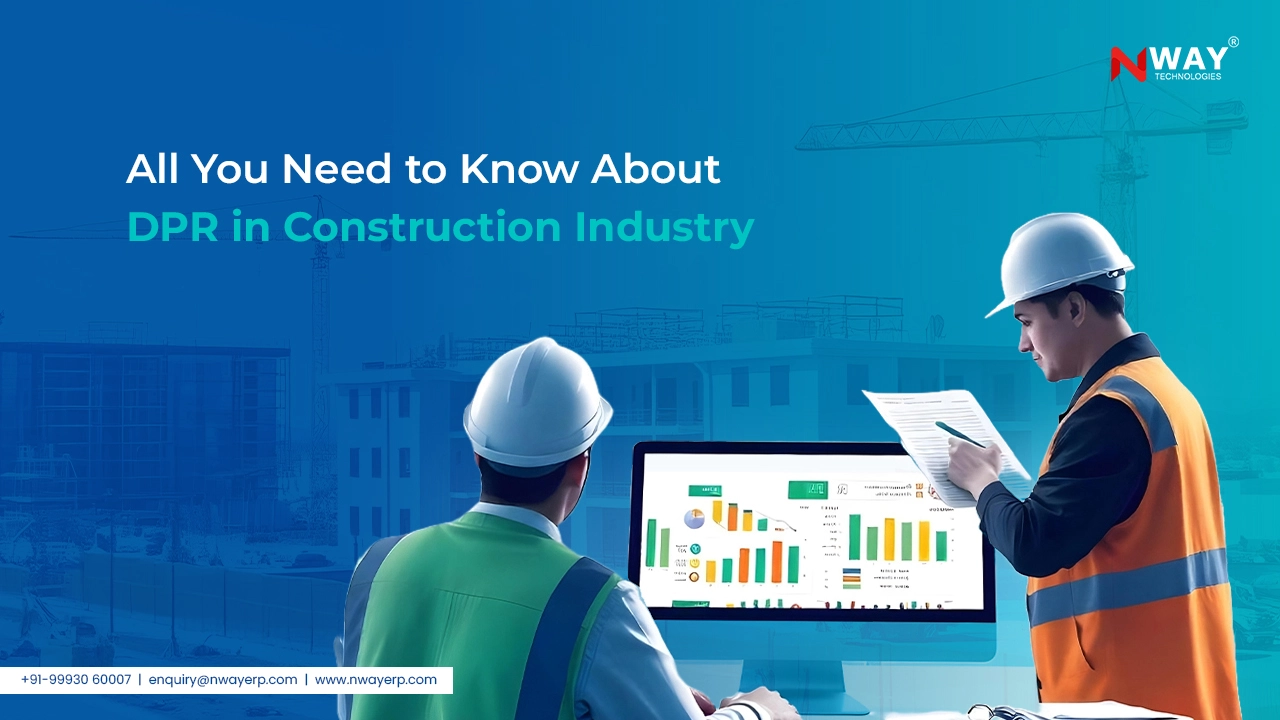
All You Need to Know About DPR in Construction Industry

DPR in Construction Industry

The construction industry is vast and involves various operations at every end. A single project includes multiple operations from procurement, finance, labor management, and more to managing projects following the same chain. Tracking every activity employees perform at any project or site becomes difficult. A well-implemented Daily Progress Report (DPR) can solve this problem. It can help keep track of all the activities that are being performed by employees for different operations, projects, and locations.

Continue reading “All You Need to Know About DPR in Construction Industry”