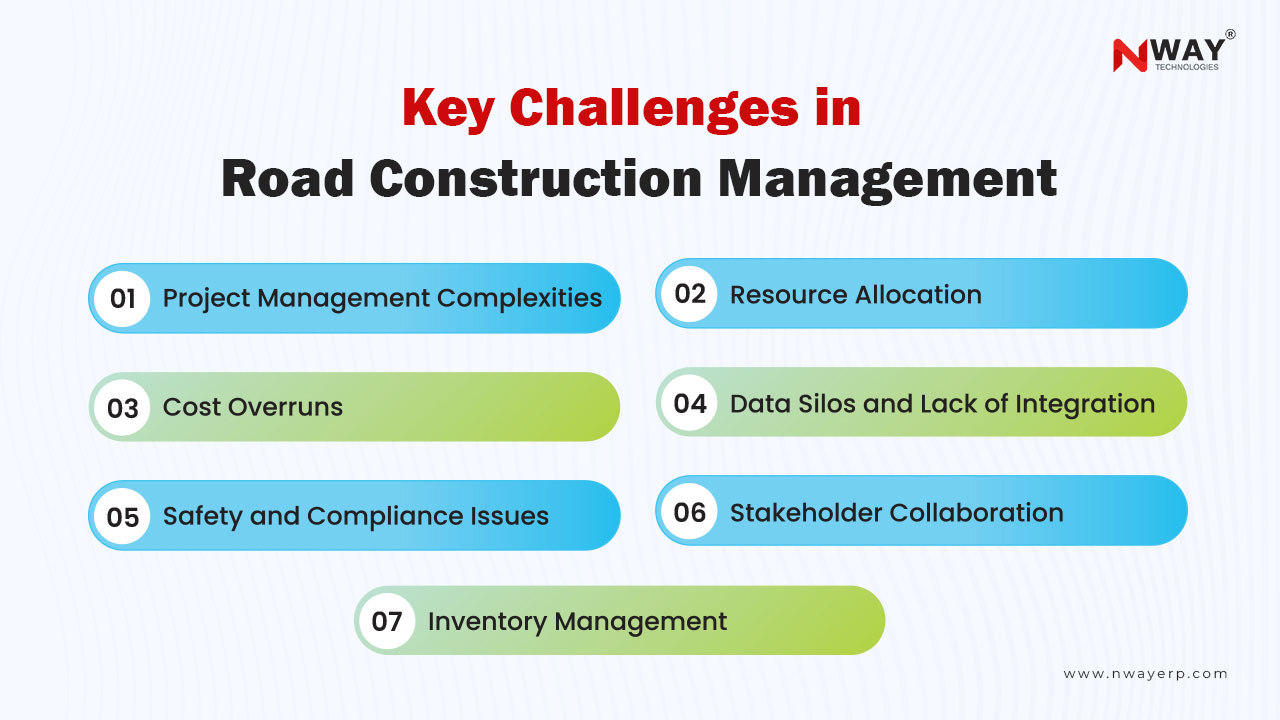
As populations grow, so does the need for safe and efficient roads. But building and maintaining highways is hard work. A single package can include excavation, grading, sub-base, bituminous or concrete paving, culverts, bridges, striping and road furniture, spread across many kilometres. Crews, equipment and materials move every day.
With this many moving parts, delays and cost overruns are common. Estimates sit in spreadsheets, site progress arrives by WhatsApp, and billing is prepared weeks later. By the time a cost overrun shows up in the books, the money has already been spent.
Heavy highway construction software fixes this by putting estimating, bidding, budgets, site reporting, equipment, procurement and billing on one platform. This guide explains what that software should do, how it controls cost on linear projects, and what road contractors should check before choosing a vendor.
Overview of All-In-One Heavy Highway Construction Software
All-in-one construction software brings many tools together on a single platform. For heavy highway contractors, that means project management, scheduling, estimating, procurement, equipment, billing and accounting all work from the same project data.
This is different from using separate tools for each job. When the estimate, the site report and the invoice all sit in one system, every team works from the same numbers. Nobody has to re-key data, and nobody waits for month-end to learn whether a stretch of road is making or losing money.
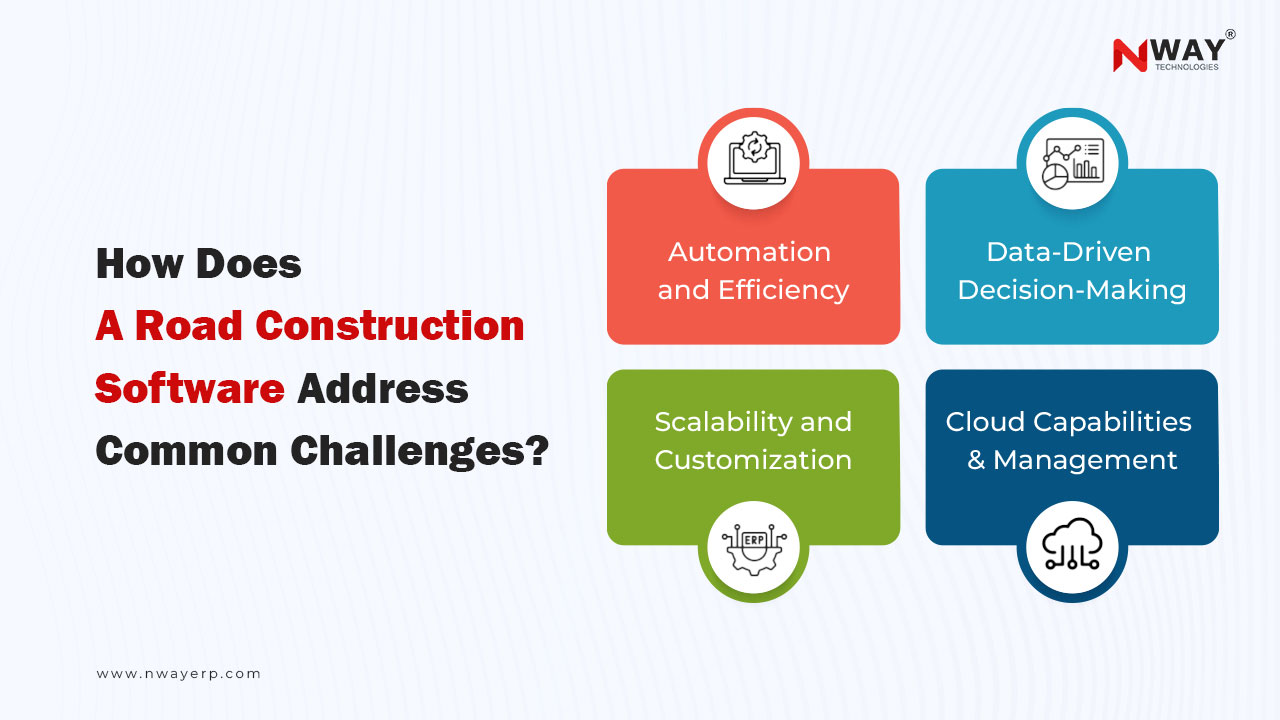
Benefits of Heavy Highway Construction Software
Better collaboration across teams. Estimators, project managers, site engineers, store keepers and accountants see the same information. Head office knows what is happening on a site 50 km away without phone calls.
Faster project management. Approvals, purchase requests, progress updates and bills move through the system instead of through paper files. Decisions that used to take days take hours.
Fewer errors. Data is entered once, at the source, and flows everywhere it is needed. This cuts the duplicate entries and spreadsheet mistakes that are common with manual or hybrid systems.
Problems show up early. Budget vs actual reports, material reconciliation and progress tracking show slippage in cost or schedule while there is still time to fix it.
Less paperwork, lower cost. Replacing registers, paper DPRs and scattered spreadsheets saves management time and reduces the leakage that comes with manual processes.
Traditional methods usually mix standalone software with manual procedures. That creates data silos, duplicate work and poor coordination between site and office. An integrated platform removes those gaps, which makes it more efficient, more accurate and more economical over the life of a project.
Core Features of Heavy Highway Construction Software
All-in-one construction software has several features specifically developed for major highway construction. These are a few examples:
- Project Management: Tools for planning, scheduling, allocating funds and resources, and managing risk across packages and sites.
- Estimating: Detailed cost estimates covering materials, labour, equipment hire and overheads.
- Accounting: Purchase requests, purchase orders, vendor management and stock at every camp or batching plant.
- Equipment management: Usage, fuel, maintenance and hire costs for plant and machinery.
- Billing and accounting: client RA bills, subcontractor bills, payroll, accounts payable and receivable.
- Document management: contracts, drawings, permits, approvals and test records stored against the project.
Learn more about all-in-one construction software and how it can benefit your construction projects.
Heavy Highway Estimating Software: From Quantities to a Winning Bid
Estimating is where highway profit is won or lost. Highway estimating software should turn drawings and tender quantities into a priced bid that the site team can later carry out, rather than a one-off spreadsheet that is forgotten once the contract is signed.
What good highway estimating software does
- Quantity-based BOQ: import or build the bill of quantities item by item (earthwork, GSB, WMM, DBM/BC, PQC, structures), with units that match the contract.
- Rate analysis: build each item rate from its material, labour, equipment and overhead components, so you can see exactly why a rate is what it is.
- Equipment costing: price pavers, rollers, graders and excavators by hourly or daily cost, including fuel and operator. Equipment is one of the largest cost drivers in road work.
- Road costing by section: split the estimate by chainage, package or structure so every stretch has its own budget.
- Bid versions and markup: compare scenarios, such as different haul distances, plant choices or margins, before you quote.
- Estimate-to-budget handover: the approved bid becomes the project budget automatically. This is the step that standalone estimating tools miss.
Highway bidding: estimate, quote and track tenders
On a highway job, costs leak through small daily variances: extra diesel, idle plant, material wastage, unplanned labour. Highway project cost control means catching these every week, not at the final bill.
- Budget vs actual by BOQ item and chainage: see which layer or structure is over budget, and by how much.
- Committed cost: purchase orders and work orders count against the budget before the invoice arrives.
- Material reconciliation: compare theoretical consumption of bitumen, cement and aggregate with what was actually issued from site stores.
- Cost-to-complete forecasts: project the final margin from current progress and spend, so management can act early.
Managing Bridges, Culverts and Structures Within a Highway Project
Most highway packages include bridges, ROBs, flyovers, underpasses and culverts. Each has its own drawings, concrete pours, reinforcement and subcontractors.
Bridge construction management software inside the same ERP lets you run each structure as a sub-project with its own BOQ, schedule and cost code, while it still rolls up into the overall highway budget. Tracking cost structure by structure also makes it easier to bill milestones and to manage specialist subcontractors, such as piling crews or bearing and expansion joint crews.
Site Execution: DPR, Labour and Materials on Linear Projects
Civil engineering road work runs through many stages, from site preparation and grading to paving and striping, and a road site can stretch for 20 km or more. The office cannot see progress directly. Highway construction management software should bring the site to the office every day:
- Daily progress reports (DPR): quantities completed by activity and chainage, with photos, entered from mobile.
- Labour tracking: attendance and productivity by gang, including subcontracted labour, through labour management.
- Store and inventory: material receipts, issues and stock at each camp or batching plant.
- Quality and approvals: test records and RFIs linked to the activity they relate to.
With all this data on one platform, construction project management becomes proactive instead of reactive.
Equipment and Plant Management for Road Contractors
Plant and machinery are a major share of a road project’s cost, so they need their own controls. Track hours and kilometres per machine, diesel issued versus consumed, breakdowns and maintenance, and hire charges for rented equipment.
Allocating equipment cost to the activity and chainage where each machine worked tells you your true cost per unit of work. It is also what makes your next estimate accurate.
Billing: RA Bills, Measurements and Subcontractor Payments
Cash flow on highway projects depends on timely running account (RA) bills. The software should generate client bills from measured quantities, apply escalation, retention and deductions, and track certification status.
On the other side, subcontractor bills should be checked against measured work and the work order rate before payment. That way you never pay for quantities the client has not certified. When billing is connected to construction finance and accounts, every bill updates project cost and company books at the same time.
How Nway ERP Supports Heavy Highway and Road Contractors
Nway ERP is a construction ERP built for contractors who run large, multi-site infrastructure projects. For road and highway work, it connects the full project cycle in one system:
- BOQ, rate analysis and estimating that become the project budget on award
- Budget vs actual cost control by BOQ item, structure and package
- Mobile DPR, labour attendance and site store management
- Plant and machinery tracking with fuel and maintenance records
- Purchase, work orders, subcontractor billing and client RA billing
- Finance and accounts integrated with every project transaction
Explore Nway’s road construction ERP, or request a demo with your own BOQ to see it working on a live highway package.
How to Choose Heavy Highway Construction Software: A Buyer’s Checklist
Use these questions when comparing software for road contractors:
- Does the estimate flow directly into the project budget, or do you have to re-enter it?
- Can you track cost and progress by chainage, layer and structure?
- Does it manage plant and machinery cost, including fuel?
- Can site teams submit DPRs from mobile when connectivity is patchy?
- Does it handle RA billing, escalation and subcontractor bills?
- Are finance and accounts built in, or do they need a separate integration?
- Can it run multiple packages and sites under one company?
- What do implementation, training and support look like, and is pricing per user or per module?
How All-In-One Construction Software Streamlines Project Management and Saves Time and Money
Integrating construction software streamlines the project management procedure by giving users access to a single platform for all project data. As a result, human data entry and errors are reduced. Furthermore, it enables project managers to identify potential problems early and take appropriate action.
By employing all-in-one construction software, contractors can save time and money on construction projects. They can lessen the requirement for labor-intensive, erroneous paper-based processes. Furthermore, they can increase cooperation and communication among numerous teams and stakeholders, which can help to avoid costly mistakes and delays.
Comparison of All-In-One Construction Software to Traditional Construction Methods
Traditional methods of construction typically combine computer software and manual procedures. It can result in data silos, redundant effort, and a lack of team coordination. These challenges are addressed by all-in-one construction software, which provides a unified platform for all project data.
All-in-one construction software is more effective, accurate, and economical than conventional construction techniques. Project managers can make better decisions because it eliminates the need for human data entry. Furthermore, it improves cooperation and communication across diverse teams and stakeholders, which can help reduce costly errors and delays.
How Civil Engineering Road Construction Can Benefit from All-In-One Software
Civil engineering road construction entails several procedures, from site preparation and grading through paving and striping. By offering a consistent platform for all project data, all-in-one construction software can help to speed up these procedures. It also includes services such as resource allocation, scheduling, and estimating that can assist project managers in more successfully planning and managing construction projects.
Civil engineering road construction projects may be completed more quickly and affordably with the help of all-in-one construction software. Contractors can improve collaboration and communication across numerous teams and stakeholders while removing the need for manual data entry. They can also monitor development and identify possible difficulties before developing them into significant ones.
Overview of Heavy Construction Estimating Software and How it Integrates with All-In-One Software
Heavy construction estimating software is a technological tool that helps contractors make accurate cost estimates for buildings. It includes the costs of hiring people, renting out equipment, and taking off materials. Project managers can use heavy construction estimating software with all-in-one construction software while planning and carrying out construction projects.
Using heavy construction estimating software allows contractors to create cost estimates that are more precise and reduce the possibility of cost overruns. They can also improve cooperation and communication between multiple teams and stakeholders, which can help prevent costly mistakes and delays.
Conclusion: The Future of Road Construction with All-In-One Construction Software
The demand for better roads keeps growing, and so does the pressure on contractors to deliver on time and within budget. Road and highway contractors rarely lose money through one big mistake. They lose it through small daily variances that nobody sees in time.
Heavy highway construction software that links estimating, bidding, site progress, equipment, procurement and billing gives you that visibility from bid to final bill. It improves collaboration, cuts manual errors and keeps every stakeholder working from the same data.
If you are comparing options, test each one against your own BOQ and a real package. Book a Nway ERP demo to see how it handles your next highway project.
FAQs
Who offers comprehensive construction management for large highway projects?
Comprehensive highway construction management comes from integrated construction ERP platforms that cover estimating, bidding, budgeting, site progress, equipment, procurement and billing in one system. Nway ERP is one such platform. It is built for contractors running large, multi-site road and infrastructure projects, with BOQ-based cost control, mobile DPR, plant management and RA billing connected to finance.
What is the leading heavy highway estimating software?
There is no single leader for every contractor. Dedicated estimating tools are strong if you only need bid preparation. If you want the estimate to become your project budget and be tracked against actual cost, choose heavy highway estimating software that is part of a construction ERP, so rate analysis, BOQ and cost control stay connected from bid to final bill.
What is the best software for road contractors?
The best software for road contractors tracks cost and progress by chainage and structure, manages plant and fuel, supports mobile DPRs from remote sites, and handles RA and subcontractor billing. An integrated road construction ERP covers all of these without multiple disconnected tools.
How much does highway construction management software cost?
Pricing depends on the number of users, the modules you need (estimating, projects, equipment, finance) and the deployment type. Most vendors quote after understanding your project volume and scope. Nway ERP offers a demo and a tailored quote based on your modules and team size.
Can highway estimating software also handle bidding and cost control?
Yes, if it is part of an integrated platform. The same BOQ and rate analysis used to prepare the bid becomes the approved budget on award. Actual costs from purchase, labour, equipment and subcontractors are then tracked against it for real-time highway project cost control.
Can the same software manage bridges and culverts within a highway project?
Yes. Good bridge construction management software lets you run each bridge, ROB or culvert as a sub-project with its own BOQ, schedule and cost code, while it rolls up into the overall highway budget and billing.
What is the difference between road construction ERP and project management software?
Road construction project management software focuses on schedules, tasks and progress. Road construction ERP software also covers estimating, procurement, inventory, equipment, billing and accounts, so every site transaction updates project cost and company finances automatically.
How does integrated digital road construction management reduce cost overruns?
It replaces spreadsheets and delayed site reports with daily data. Budget vs actual reports by item and chainage, committed cost from purchase orders, and material and fuel reconciliation show overruns within days. That gives managers time to correct them before they eat into the margin.