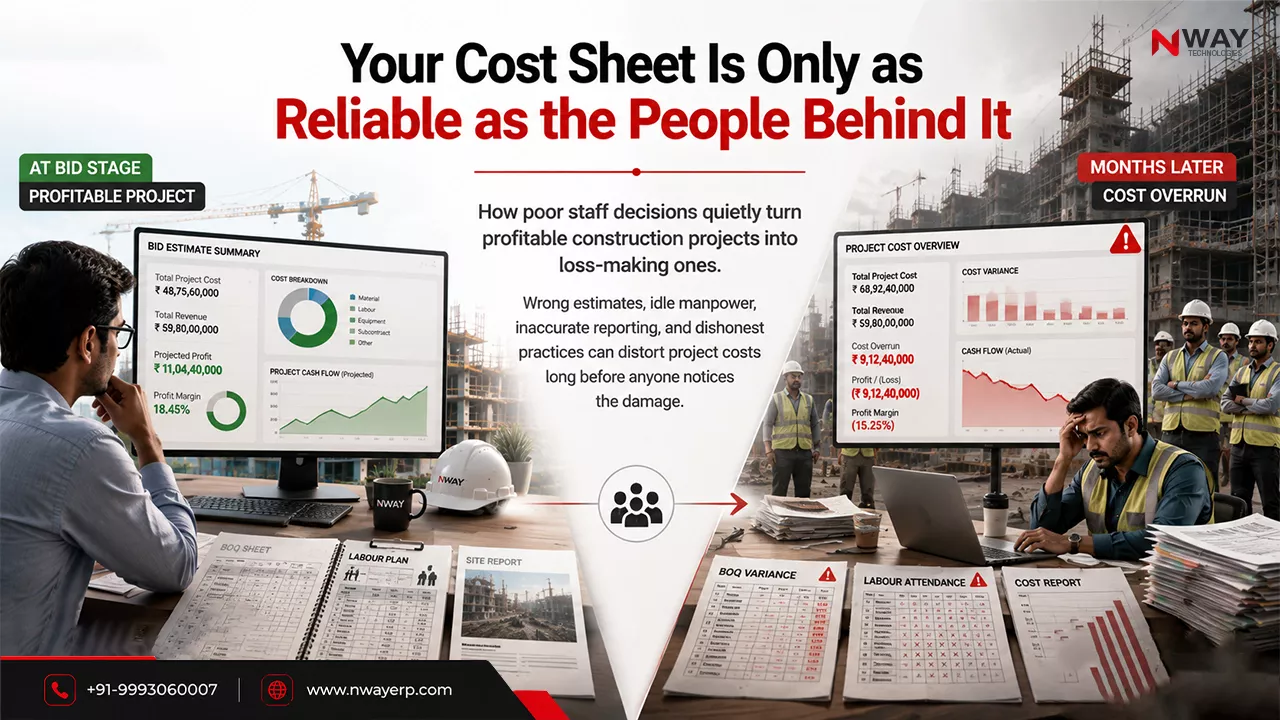
How Poor Staff Decisions Lead to Wrong Construction Cost Analysis

Table of Contents:

Introduction

Most contractors have experienced it.

The estimate looked solid. The quantities were checked. The rates seemed accurate. The projected profit was acceptable.

Yet six months later, the project is consuming cash faster than expected, labour costs are rising, and management is struggling to understand where the margins disappeared.

In many cases, the problem is not steel prices, cement rates, or client delays.

The problem is people.

Every construction cost analysis depends on human inputs. Estimators prepare quantity calculations. Site engineers report productivity. Supervisors verify manpower attendance. Procurement teams raise purchase requests. Billing engineers certify executed quantities.

When the wrong people are involved, either because they lack competence or because controls are weak, incorrect information enters the system. Once that happens, every decision based on that information becomes unreliable.

This is not a rare contractor problem. It is a challenge faced across the construction industry. Understanding how staff decisions affect construction labour cost and overall project profitability is the first step toward better project cost control. (See: Construction Labour Management Software)

Why Construction Cost Analysis Depends on People More Than Spreadsheets

Many contractors focus heavily on software, formulas, and reporting formats when discussing construction cost analysis.

But even the best ERP system or cost sheet cannot compensate for poor human decisions.

A cost analysis typically relies on:

  • BOQ interpretation
  • Quantity estimation
  • Productivity assumptions
  • Labour deployment plans
  • Material consumption estimates
  • Procurement schedules
  • Progress reporting
  • Billing and reconciliation records

Every one of these inputs originates from a person.

A spreadsheet rarely creates errors on its own. People do.
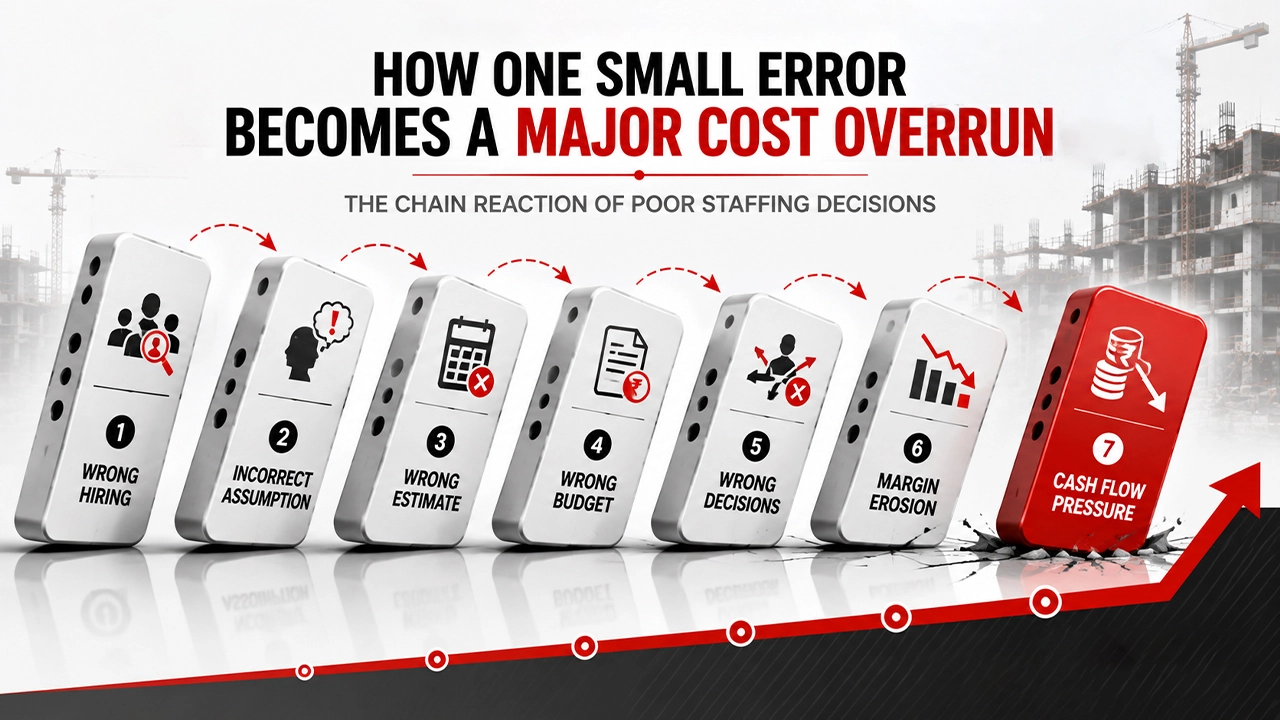
How One Small Error Becomes a Major Cost Overrun

The Hidden Risk of Hiring for Designation Instead of Competence

Construction projects often need to mobilize quickly. Under schedule pressure, companies sometimes hire based on job title rather than demonstrated capability.

This creates risks such as:

  • Incorrect quantity calculations
  • Misinterpretation of drawings
  • Unrealistic productivity assumptions
  • Poor site planning
  • Inaccurate labour forecasting
  • Faulty cost reporting

The result is often a wrong construction cost estimate that looks accurate on paper but fails during execution.

Example

A hypothetical mid-sized road contractor assigns bitumen quantity calculations to a junior estimator who has never worked on highway projects.

The estimator applies a formula used for a different pavement design and underestimates bitumen requirements by 6%.

Initially, the error appears insignificant.

However, because bitumen is one of the highest-value items in the BOQ, the underestimated quantity creates a major gap between planned and actual costs. By the time the mistake is discovered, multiple billing cycles have already been completed, and the contractor absorbs the additional expense directly from project margins.

The Hidden Cost Nobody Tracks: Idle Staff

Contractors carefully track material consumption, equipment usage, and subcontractor bills.

Unfortunately, workforce inefficiency often receives far less attention.

Idle manpower is one of the biggest hidden contributors to construction cost overruns.

A project might budget for:

  • 1 Project Manager
  • 3 Site Engineers
  • 2 Supervisors

But during execution, additional personnel are retained “just in case.”

Over time, payroll expenses continue even when productivity does not.

Why Idle Staff Become Expensive

Idle staff costs are dangerous because they rarely appear as separate problem areas.

Instead, they quietly accumulate inside:

  • Site overheads
  • Indirect expenses
  • Administrative costs
  • Labour budgets

On a project lasting 12 to 18 months, even a few unnecessary positions can significantly affect profitability.

The Impact on Construction Labour Cost Management

Poor workforce planning typically causes:

Workforce Issue Business Impact
Excess supervisors Increased overhead cost
Poor labour allocation Lower productivity
Unbalanced crew sizes Work stoppages
Duplicate responsibilities Decision delays
Underutilized engineers Reduced profit margins

Effective manpower planning in construction is not simply about having enough people.

It is about having the right people performing the right tasks at the right time.

How Labour Productivity Directly Influences Project Profitability

Labour is often one of the largest controllable costs in a construction project.

According to FMI’s 2023 Labour Productivity Study, contractors lose an estimated $30 billion to $40 billion annually due to labour inefficiencies, and nearly half of surveyed contractors reported declining labour productivity.

The lesson for contractors is simple:

Even small declines in labour productivity can have a major impact on construction project cost.

Common Productivity Killers

  • Poor crew planning
  • Frequent rework
  • Lack of supervision
  • Waiting for materials
  • Delayed approvals
  • Incorrect task sequencing
  • Inadequate skill levels

These issues increase construction labour cost without adding actual progress.
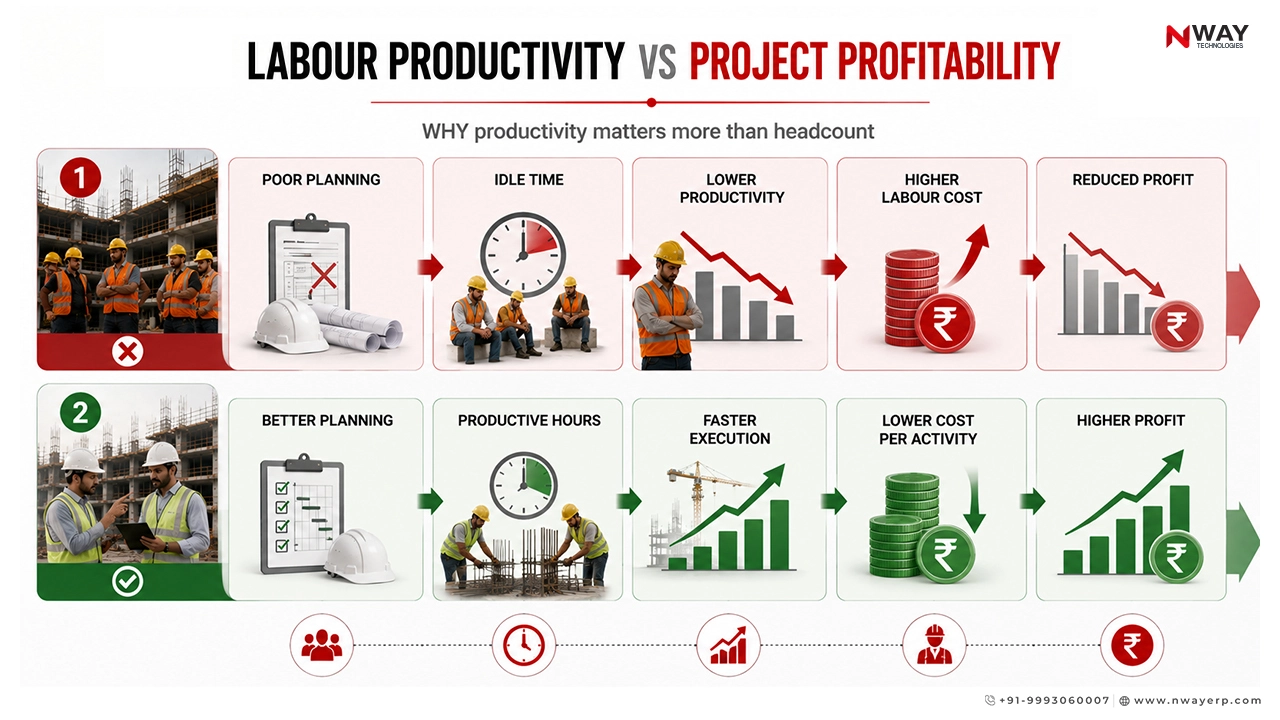
Labour Productivity vs Project Profitability

Incompetence Is Costly, Dishonesty Is Worse

Most contractors can address incompetence through training, mentoring, and better hiring practices.

Dishonesty is more difficult because it actively manipulates project information.

Examples include:

  • Inflated labour attendance records
  • False productivity reports
  • Quantity manipulation
  • Excess procurement requests
  • Material diversion
  • Vendor collusion

Unlike technical mistakes, these actions are intentionally designed to look legitimate.

Why Dishonesty Distorts Construction Cost Analysis

A contractor can only make good decisions when the underlying information is accurate.

When inaccurate information enters reports:

  • Cost forecasts become unreliable
  • Productivity analysis becomes misleading
  • Resource planning becomes ineffective
  • Future bids become risky

The most dangerous consequence is that management loses confidence in project data itself.

Once trust in reporting disappears, every financial decision becomes slower and more difficult.

Direct Costs vs Indirect Costs: The Real Damage

Many contractors focus only on direct financial losses.

Direct losses are easy to identify:

  • Excess labour payments
  • Material wastage
  • Rework expenses
  • Billing disputes

Indirect losses are often much larger.

Indirect Consequences

  • Incorrect bidding decisions
  • Faulty cash flow planning
  • Delayed management action
  • Poor resource allocation
  • Loss of confidence in project reports

Consider a contractor who believes a project still has an 8% margin because internal data appears healthy.

If the data is wrong, management might aggressively price a new contract assuming sufficient financial capacity exists.

In reality, the company could already be operating at a loss.

That is how poor staffing decisions spread beyond a single project and begin affecting the entire business.

Why This Problem Is So Common in Construction

Many contractors assume these issues happen only in poorly managed organizations.

The reality is very different.

Construction naturally creates conditions where staff-related errors can survive for months.

Industry Challenges

  • Rapid project mobilization
  • High employee turnover
  • Remote project locations
  • Multiple subcontractors
  • Pressure to fill vacancies quickly
  • Limited supervision across sites

This often leads to a hiring mindset of:

“Can this person start on Monday?”

instead of:

“Can this person perform effectively for the next 18 months?”

That short-term thinking frequently becomes a long-term cost problem.

(See: Why Labour Management Software is helpful for your Construction Business)
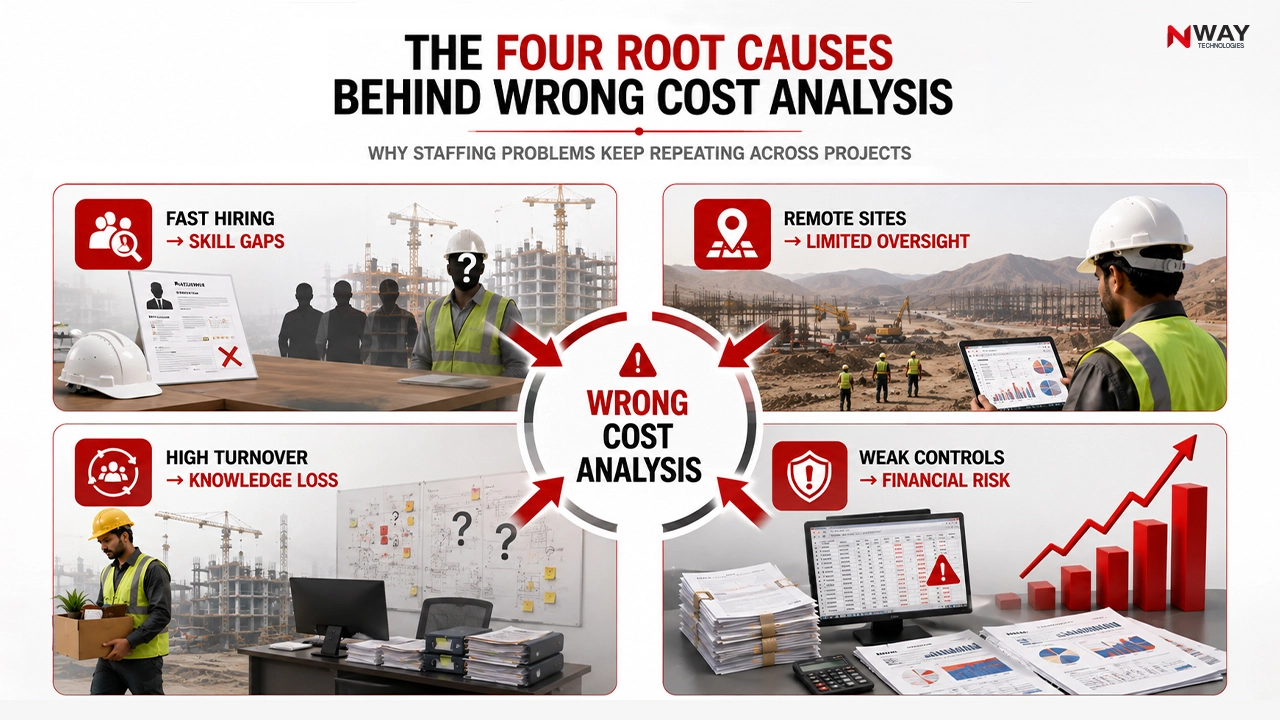
The Four Root Causes Behind Wrong Cost Analysis

Conclusion

Every contractor has faced projects where the numbers looked right initially but failed to match reality during execution.

While market volatility, client delays, and procurement issues certainly influence project outcomes, staff decisions remain one of the most overlooked causes of inaccurate construction cost analysis.

Wrong hiring, weak supervision, idle manpower, and dishonest reporting do not create immediate disasters.

Instead, they quietly distort the information upon which every future decision is based.

The important takeaway is that this challenge is not unique to your company.

It is a widespread reality across the construction industry.

The contractors who protect their margins most effectively are not necessarily those with the cheapest labour. They are the ones with the strongest workforce planning, the most reliable project data, and the most disciplined controls around how information enters their cost analysis process.

FAQs

How does labour affect construction cost?

Labour affects productivity, project duration, supervision requirements, overhead expenses, and rework costs. Poor workforce planning often increases total project costs even when material prices remain stable.

What is the biggest reason for labour cost overruns?

Common causes include poor manpower planning, inaccurate productivity assumptions, rework, idle workers, and ineffective supervision.

What is manpower planning in construction?

Manpower planning in construction is the process of determining how many workers, supervisors, engineers, and specialists are required at different project stages to achieve productivity goals while controlling costs.

How can contractors reduce labour cost overruns?

Contractors can improve labour allocation, monitor productivity, verify attendance records, reduce idle manpower, and implement stronger project cost controls.

Why do wrong cost estimates happen?

Wrong construction cost estimates often result from inaccurate assumptions, lack of site understanding, poor quantity calculations, inadequate workforce planning, or unreliable project data.

Procurement Delays Are a Chain Reaction: How One Late Purchase Order Wrecks Your Whole Budget

Table of Contents:

Introduction

A project manager reviews the weekly progress report and discovers that a critical activity has slipped by three weeks.

The immediate assumption is usually the same: “The supplier delayed delivery.”

But suppliers are often blamed for problems that started much earlier.

The steel didn’t arrive late because the supplier failed.

The cement wasn’t unavailable because the market suddenly ran out.

The MEP package wasn’t delayed because logistics stopped working.

In many cases, the real cause is much simpler and much more dangerous: the purchase order was raised too late.

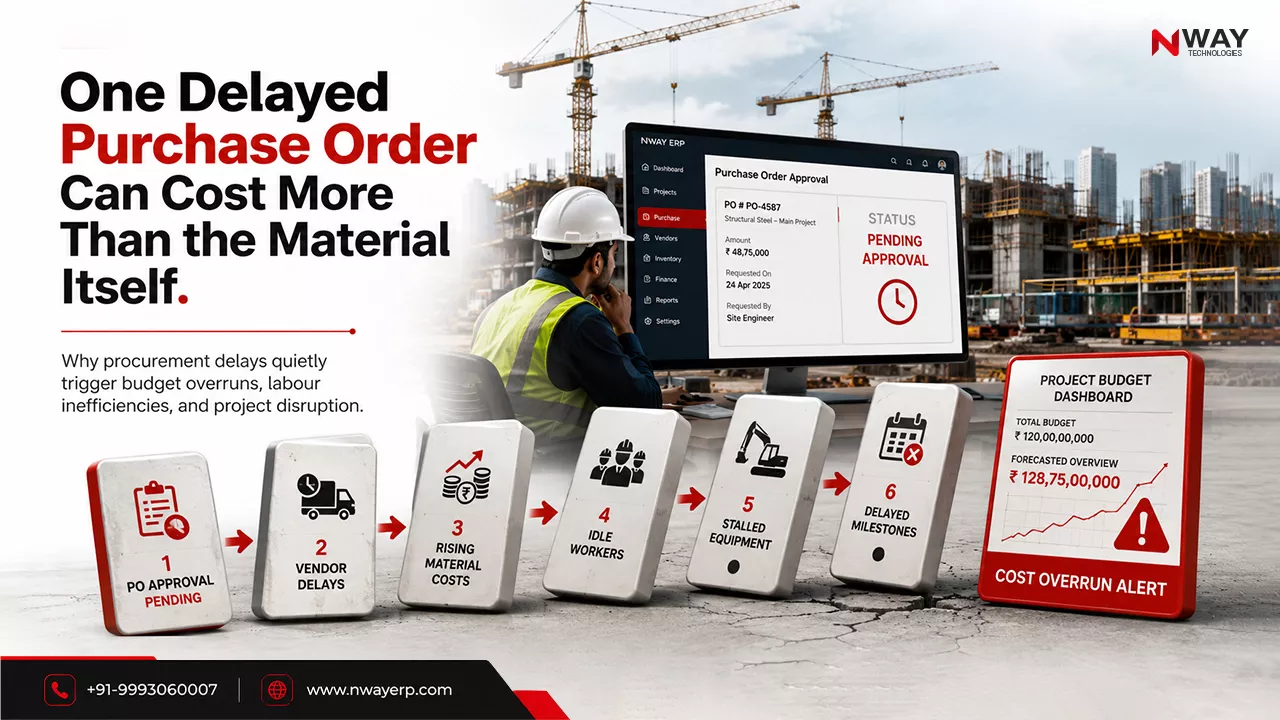
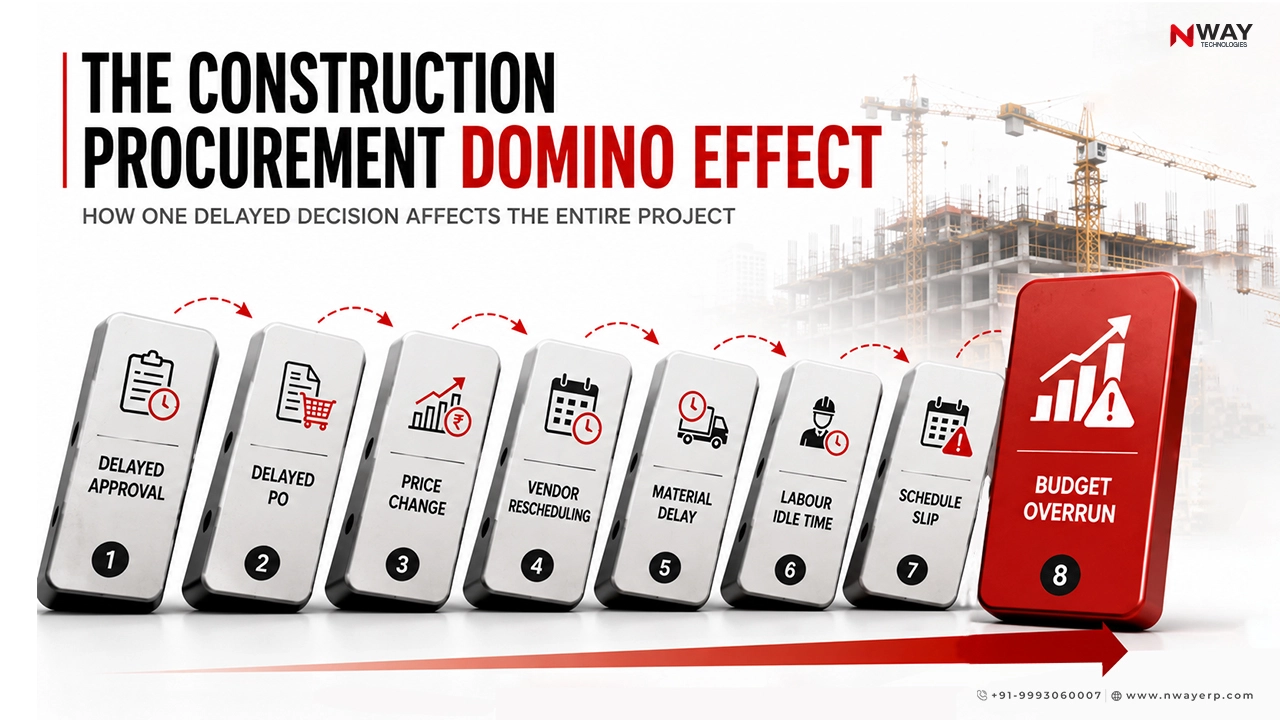
Construction companies rarely lose money because of one dramatic mistake. They lose money because small delays accumulate, interact, and create consequences far beyond their original source.

  • A delayed design approval pushes vendor selection back.
  • A delayed vendor selection pushes the purchase order back.
  • A delayed purchase order extends procurement lead times.
  • The extended lead time exposes the project to price fluctuations, availability issues, transportation delays, and resource disruptions.

By the time the issue appears on-site, the chain reaction is already underway.

This is why construction procurement management is not just a purchasing function. It is one of the most important controls for protecting project budgets, schedules, and profitability.

Why Procurement Delays Don’t Stay in Procurement

One of the most common misconceptions among contractors is that procurement problems belong to the procurement team.

They don’t.

Procurement delays affect almost every department involved in project delivery.

Function Impact of Procurement Delay
Site Team Material shortages
Planning Team Schedule disruption
Finance Team Budget pressure
Project Manager Activity slippage
Commercial Team Margin erosion
Management Reduced profitability

This happens because procurement sits at the center of multiple project workflows.

Materials connect planning to execution.

Without materials:

  • Labor sits idle
  • Equipment remains underutilized
  • Subcontractors cannot perform scheduled activities
  • Billing milestones get delayed
  • Cash flow slows down

What appears to be a procurement issue quickly becomes a business performance issue.

The Chain Reaction Nobody Sees Coming

Most contractors are familiar with material procurement delays.

What many do not realize is how quickly those delays compound.

A late purchase order construction issue usually follows a predictable pattern.

Step 1: Approvals Take Longer Than Planned

Material requirements are identified.

Quotes are collected.

Then the process stalls.

Sometimes it is waiting for technical approvals.

Sometimes it is waiting for management sign-off.

Sometimes it is simply because the request is not considered urgent yet.

The project loses valuable procurement time before ordering even begins.

Step 2: The Vendor Window Closes

Many suppliers allocate production capacity weeks in advance.

When purchase orders are delayed:

  • Prices may change
  • Quotation validity expires
  • Production slots shift
  • Alternative customers receive priority

The contractor suddenly finds that the original procurement plan is no longer available.

Step 3: Supply Chain Risk Increases

The longer procurement is delayed, the greater the exposure to:

  • Freight cost fluctuations
  • Transportation bottlenecks
  • Supplier backlog
  • Inventory shortages

This is particularly true for long-lead items and specialized materials.

Step 4: Site Productivity Suffers

Eventually the impact reaches the site.

  • Workers wait.
  • Activities are rescheduled.
  • Sequencing breaks down.
  • Project managers spend time solving preventable problems instead of driving progress.

This is where construction supply chain delays begin affecting profitability.

The Construction Procurement Domino Effect

How Material Procurement Delays Create Budget Overruns

Contractors often focus on the visible costs of procurement.

The hidden costs are usually much larger.

Problem Immediate Impact Budget Consequence
Delayed PO Price revision Higher material cost
Late delivery Idle workforce Labour inefficiency
Material shortage Equipment downtime Increased operating cost
Vendor change Quality risks Rework expenses
Expedited procurement Emergency purchasing Margin erosion

This is why construction procurement management directly affects profitability.

A delayed order doesn’t simply increase procurement costs. It reduces productivity across multiple project functions.

Lead-Time Risk: The Hidden Budget Killer

Most discussions about material procurement focus on pricing.

However, lead-time risk is often more dangerous than price risk.

Lead-time risk is not about what you buy.

It is about how long it takes to get it and what happens while you wait.

Consider two projects purchasing the same structural steel package.

Project A raises the purchase order immediately.

Project B delays approval by four weeks.

Both projects are buying the same material.

Yet Project B faces:

  • Higher exposure to price volatility
  • Increased supplier uncertainty
  • Greater transportation risk
  • Less schedule flexibility

A cost estimate built around a two-week procurement lead time becomes invalid when approvals extend that timeline to six weeks.

The budget did not fail because the estimate was wrong.

The budget failed because the assumptions changed.

This is one of the most overlooked causes of construction budget overruns.

How a Delayed Purchase Order Becomes a Cost Overrun

Hypothetical Example

A mid-sized contractor is executing a ₹50 crore commercial project.

The next phase requires structural steel fabrication.

The procurement team identifies the requirement well in advance.

However, vendor approval takes an additional four weeks.

During that period:

  • Steel prices increase
  • The selected vendor’s fabrication slot is assigned elsewhere
  • Delivery moves back by five weeks
  • Erection crews remain underutilized
  • Equipment rental continues despite limited progress

On paper, the procurement delay appears small.

In reality, the project absorbs:

  • Increased material costs
  • Additional labour expenses
  • Equipment idle costs
  • Schedule recovery costs

The cost impact extends far beyond the original purchase order.

(See: Why Construction Companies Lose Money in Procurement)

The True Cost of Material Procurement Delays

Most contractors calculate procurement costs incorrectly.

They focus only on purchasing costs.

The larger damage often comes from indirect losses.

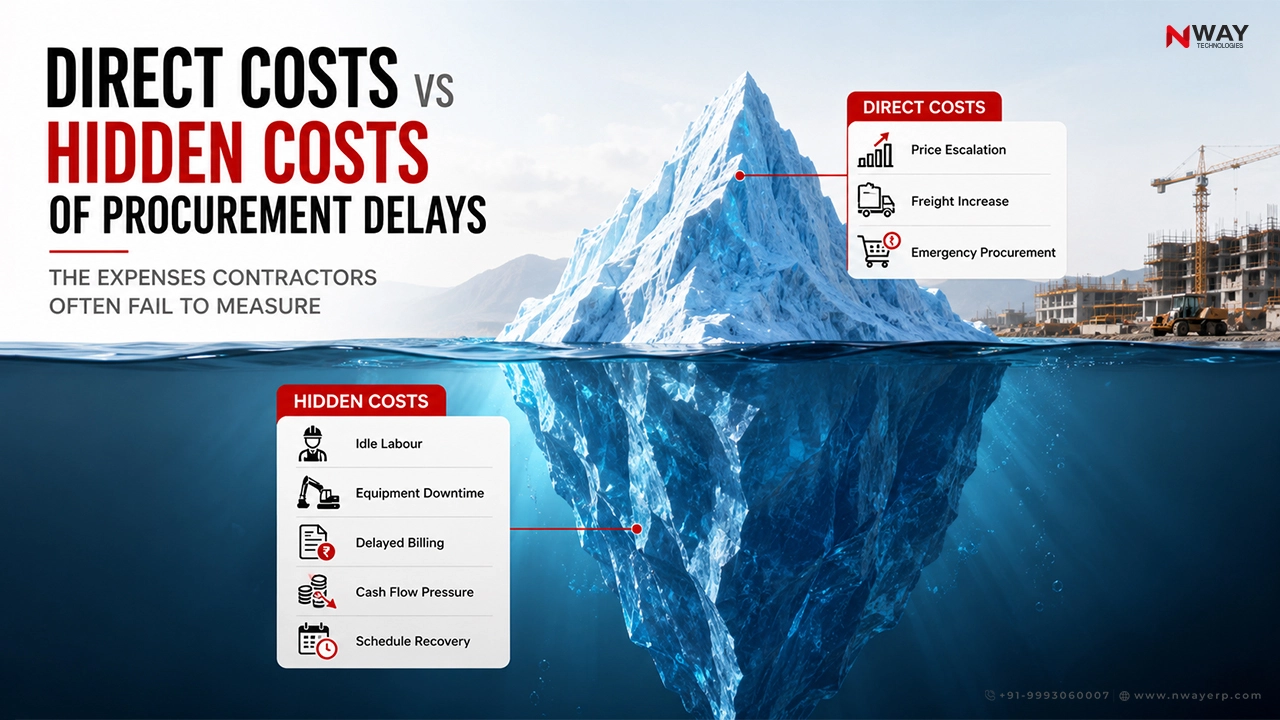
Direct Costs

  • Material price increases
  • Expedited freight charges
  • Emergency vendor sourcing
  • Contract price escalation

Hidden Costs

  • Idle labour
  • Equipment downtime
  • Productivity loss
  • Missed milestones
  • Delayed billing
  • Reduced cash flow
  • Penalty exposure

The hidden costs frequently exceed the material cost increase itself.

This is why procurement cost control should be measured across the entire project lifecycle, not just the purchasing department.

Direct Costs vs Hidden Costs of Procurement Delay

Why Traditional Procurement Methods Make Delays Worse

Many procurement issues are not caused by suppliers.

They are caused by poor visibility.

Contractors still commonly rely on:

  • Excel spreadsheets
  • Email approvals
  • WhatsApp communication
  • Manual quotation comparisons

These methods create decision latency.

The issue is not a lack of information.

The issue is that information moves too slowly.

By the time management realizes procurement is behind schedule, the consequences have already spread across planning, inventory, execution, and finance.

This is why modern construction supply chain management increasingly focuses on visibility rather than simply purchasing efficiency.

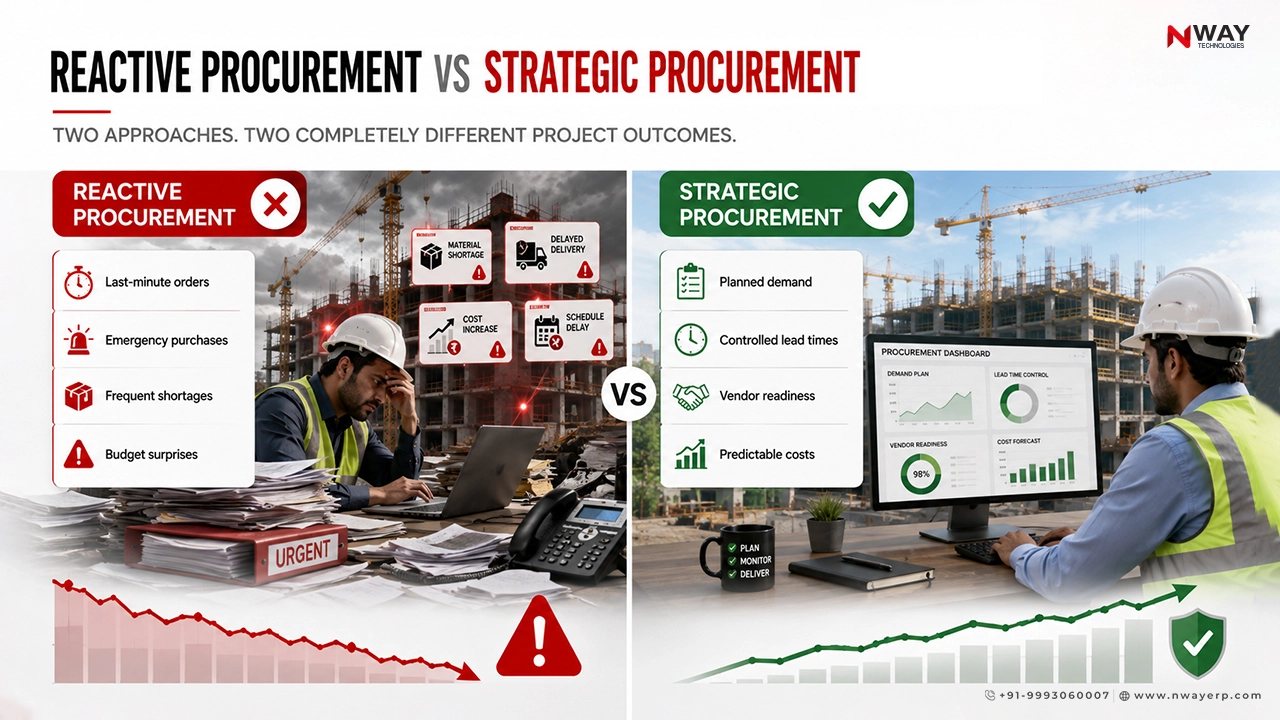
What Strong Construction Procurement Management Looks Like

Leading contractors don’t wait until materials are urgently needed.

They manage procurement proactively.

Key characteristics include:

BOQ-Driven Procurement Planning

Material demand is linked directly to project milestones.

Early Vendor Engagement

Critical vendors are identified before procurement becomes urgent.

Procurement Monitoring

  • Lead times
  • Supplier performance
  • Material availability
  • Pending approvals

Real-Time Cost Visibility

Procurement decisions are connected to live budget tracking.

Integrated Workflows

Planning, procurement, inventory, and finance operate as one connected process.

This transforms procurement from a reactive function into a strategic project control mechanism.

Reactive Procurement vs Strategic Procurement

Conclusion

Most projects do not fail because a supplier misses a delivery.

They fail because someone assumed there was still time to place the order.

That assumption can trigger a chain reaction that affects procurement, planning, execution, labour productivity, cash flow, and profitability.

The most successful contractors are not necessarily the ones negotiating the lowest material rates.

They are the ones making procurement decisions early enough to protect the entire project ecosystem.

Because in construction, one delayed purchase order is rarely just a procurement delay.

It is often the moment a project quietly starts moving toward a budget overrun.

FAQs

What is construction procurement management?

Construction procurement management is the planning, sourcing, purchasing, tracking, and coordination of materials and services needed for construction project execution.

How do procurement delays affect construction projects?

Procurement delays can cause material shortages, labour inefficiencies, project disruptions, delayed billing, and construction budget overruns.

What are the most common causes of material procurement delays?

Delayed approvals, poor planning, vendor selection issues, inaccurate forecasts, and insufficient procurement visibility.

Why is procurement lead time important in construction?

Lead time determines how quickly materials move from approval to site delivery. Longer lead times increase supply chain and cost risks.

How can contractors improve procurement cost control?

By connecting procurement planning, vendor management, cost tracking, and project schedules through structured workflows and real-time visibility.