How to Choose the Right Construction Management Software

In today’s building world, choosing the right construction management software is crucial. With many moving parts, many sites, and many people involved, you need a tool that brings everything together. In this blog, we’ll keep things simple.

We’ll help you pick up the right software, understand key features, and show how the right choice can help your business grow.

Table of Contents:

Why you need construction-specific tools

You might be tempted to use a generic project tool. But a construction business has special needs: many sites, heavy machines, labour, materials, cost tracking, schedules. A tool built for construction beats one built for any industry.

If you pick the wrong tool, you may end up creating more chaos than before.

Understanding your needs – questions to ask yourself

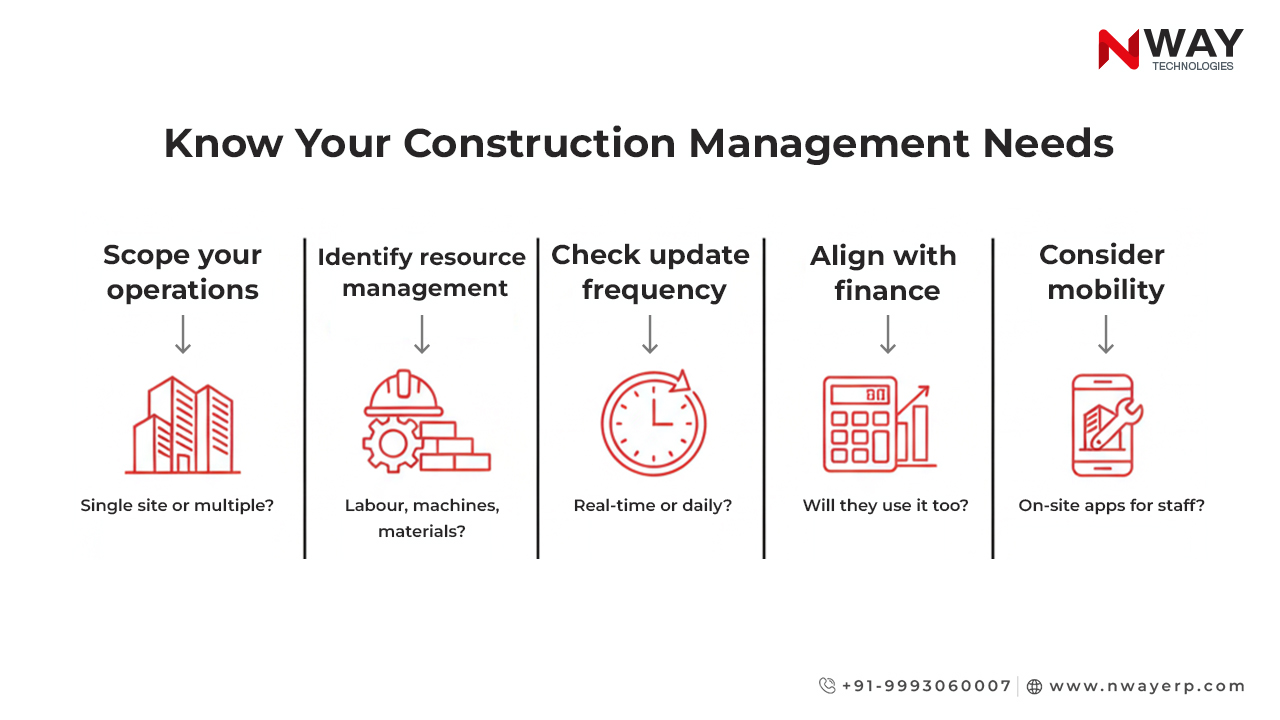
Before you dive into buying, ask yourself:

  • Do I need to track many sites at once?
  • Do I need to manage costs, labor, machines, and materials?
  • Do I want real-time updates from the site?
  • Will my finance team use the same system?
  • Do I want mobile apps for site staff?

With these answers, you’ll know what you need from a construction management software solution. If you’re a builder or developer, start with construction management software for builders.
Understanding your needs – questions to ask yourself

Key features to look for in a construction management software

When comparing options, make sure the software includes the right construction management software features. Here are some of the most important:

1. Multi-site visibility & real-time data

You should be able to see what’s going on at every site in one view. With good construction site management software, you get real-time data about labour, equipment, materials, and costs. No more waiting days for updates.

2. Cost tracking & construction accounting software

Construction cost tracking is a big deal. The software should integrate budget, cost, invoices, payments, and link them to projects. It should support your accounting team, giving them real figures and comparisons between planned vs actual.

3. Workflows, approvals & mobile access

Site teams must update things while on the move. The tool needs mobile apps, approval of workflows (for materials, changes, etc). This is part of the core of strong construction management software features.

4. Resource & equipment management

From machines to materials to labour – your software must track it all. Idle equipment, material wastage, labour inefficiencies all cost money. The right system keeps an eye on these.

5. Scalability: growth and multiple projects

If you have one site now but plan many more, your solution must scale. It must not slow down with more projects. This is where choosing the right ERP for construction industry matters: you’ll want a solution built for scale.

6. Integration with finance/operations

Your construction software should talk about accounting, HR, and procurement. That way you don’t have separate silos: the finance team, project team, and site team all stay in sync. A good ERP for the construction industry will cover this.

7. Real-time project monitoring software capabilities

Finally, you want tools to monitor progress daily. Real-time dashboards that show status, alerts when sites fall behind; cost overruns. This kind of real-time project monitoring software functionality ensures you stay ahead.

Looking for construction software that actually works? Start with Top 10 Features Every Construction Management Software Must Have

How to compare your options

Here are some steps to compare and choose:

  • List your must-have (from above).
  • Check that each software supports your size (single site vs many).
  • Ask for a demo with your actual use case (e.g., you track 5 sites, heavy machines).
  • Check if the software is built for construction, or just generic. A generic tool may lack important workflows.
  • Compare cost vs value: sometimes generic is cheaper but will cost you time later.
  • Check support, training, mobile access, and offline access.
  • Ask current customers, use case studies. How are they doing after implementation?

Why a construction-specific system beats a generic tool

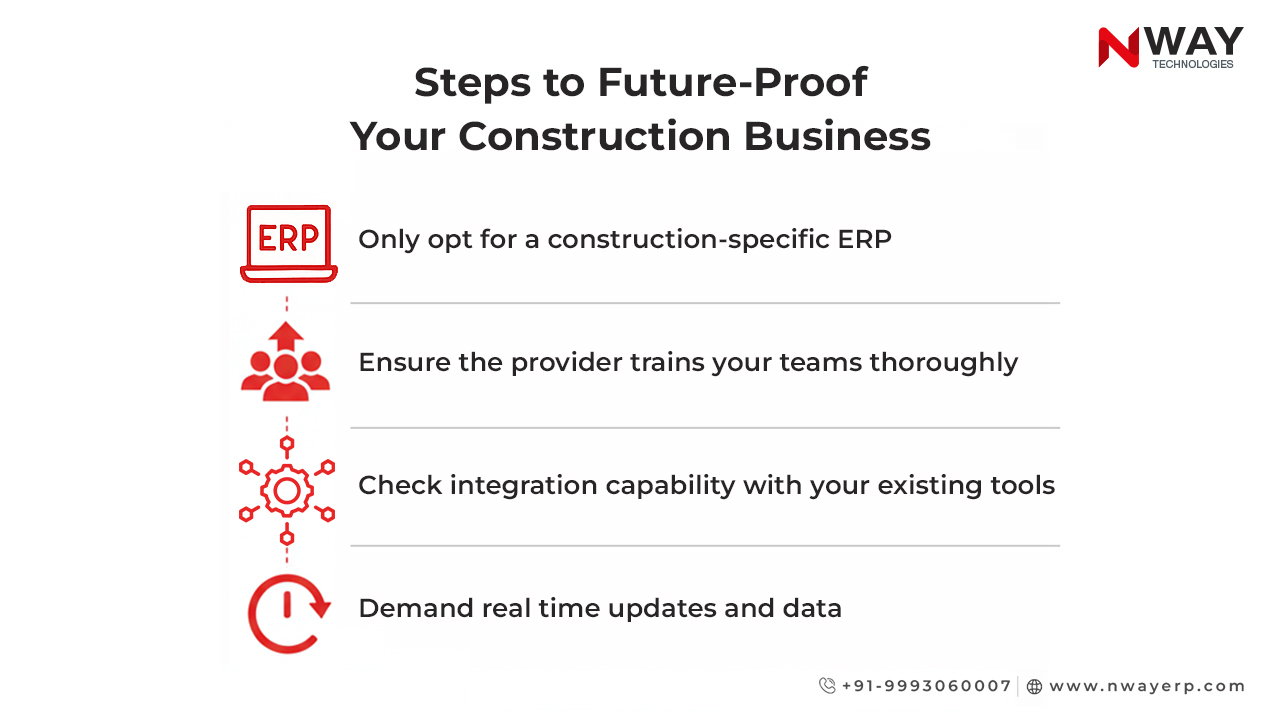
Generic tools (task managers, generic ERPs) may help, but they lack building-industry workflows. When you use software that is purpose-built for construction you get:

  • Modules designed for sites, materials, and machines.
  • Cost modules built for construction budgets.
  • Multiple site tracking.
  • Real-time field reporting.
  • Finance + project + operations in one place.

In short: a system made for your industry will give you better value, faster adoption, and fewer workarounds.
Why a construction-specific system beats a generic tool

Avoiding common mistakes

Here are things to watch out for:

  • Choosing software that has great features but is hard to use. If your users don’t adopt it, it fails.
  • Using one tool for everything, but it doesn’t scale or lacks site-reporting.
  • Ignoring mobile field access. Construction sites need mobile/remote updates.
  • Over customizing a generic tool to behave like construction software – high cost, slow rollout.
  • Not training your team. A good system + no training = low benefit.
  • Waiting too long to roll out across all sites. Better pilot first and then scales.

How this helps your business

With the right construction management software, your business will:

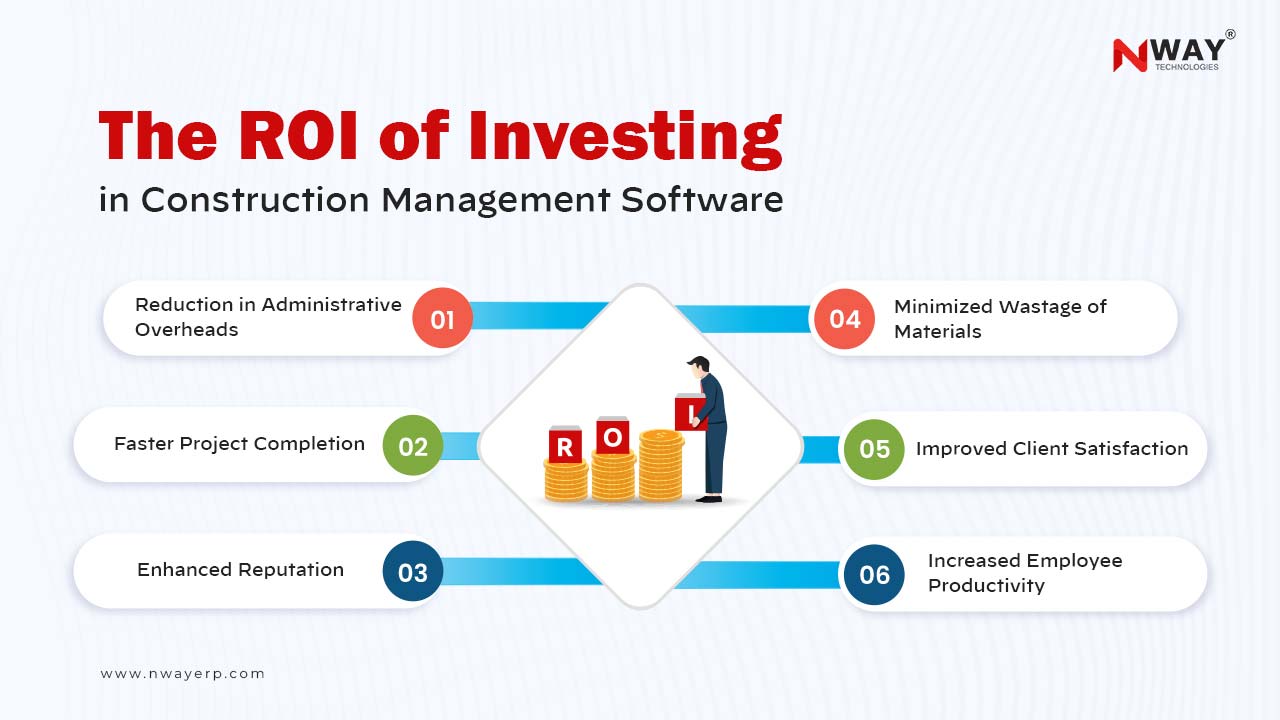
  • Finish projects on time, with fewer surprises.
  • Reduce cost overruns and waste.
  • Give your finance team accurate, real-time data.
  • Let site managers make decisions fast.
  • Scale operations without losing control.
  • Improve client satisfaction (you deliver on schedule).

A purpose-built Construction Management ERP isn’t the future- it’s now. Find out why in The Future of Construction: Leveraging ERP Software for Long-Term Success

How Nway ERP helps you

At Nway ERP, we specialize in delivering industry-specific solutions. We deliver an ERP for the construction industry that covers site tracking, cost control, multi-site management, mobile access and much more. With nearly 2 Decades of experience and hundreds of installations across India and the globe, we know what building companies need.

We help you choose the right construction management software by:

  • Providing a demo tailored to your business.
  • Aligning features like construction accounting software, construction site management software, and real-time project monitoring software.
  • Offering training and support so that your team uses it with confidence.
  • Enabling fast deployment so you see value quickly.

If you are ready to stop juggling spreadsheets, phone calls and delays – and start using the right software that truly supports your construction business – book a free demo with Nway ERP today.

FAQs

How do I know which Construction Management Software is right for my business?
Start by looking at your daily challenges. Do you struggle with cost tracking, site updates, or communication? The right construction management software should make all this easier – not more complex. Choose one that’s simple to use, has real-time dashboards, and fits your project size. Always ask for a demo so you can see how it works for your team before deciding.
Is it better to use ERP software made only for the construction industry?
Yes. A purpose-built ERP for the construction industry gives you modules for project management, accounting, site tracking, and material control – all in one place. Unlike generic ERP systems, it understands how construction businesses actually work, so you spend less time customizing and more time building.
Can Construction Management Software help me control costs better?
Absolutely. A good construction accounting software keeps your budgets, payments, and expenses in sync with your projects. You can track where every rupee or dollar is going, spot overspending early, and compare planned vs. actual costs. That’s how many contractors stop cost overruns before they happen.
What should I check before buying Construction Management Software?
Make sure the software includes core construction management software features like project scheduling, progress tracking, document sharing, mobile access, and financial integration. It should also act as a real-time project monitoring software, so you can view updates from every site instantly. And most importantly – check that it’s easy to use for your field and office teams.
How does Nway ERP make construction project management easier?
Nway ERP brings everything – project planning, cost control, site monitoring, and team collaboration – into one easy system. It’s a full construction site management software that gives you real-time visibility, smart reports, and complete financial control. Whether you run small projects or large multi-site operations, Nway ERP helps you save time, reduce errors, and deliver projects faster.

Why Construction ERP Software is a Game-Changer for Your Projects

Game-Changer-1

The construction industry is huge and involves various operations, stakeholders, locations, and processes. From managing budgets and timelines to ensuring quality and compliance, the challenges can seem insurmountable. Construction ERP software can simplify these complexities and bring unparalleled efficiency to your projects.

Read this blog to learn more about why project management in construction is necessary and how ERP software can become a game-changer, covering features, benefits, and cognitive benefits for your organization.

Key Takeaways:

  • Introduction

  • Role of Construction ERP Software

  • Key Features of Construction ERP Software

  • Why Construction ERP Software is a Game-Changer

  • The Challenges Faced by Construction Companies

  • How does construction ERP software address these challenges?

  • Adopting Construction ERP Software: Key Considerations

  • Conclusion

Role of Construction ERP Software in the Construction Industry

Construction ERP software is an integrated solution tailored for the construction industry. It provides a centralized platform to manage all facets of construction projects, such as planning, procurement, inventory, workforce, finances and reporting. It is specifically designed to address the unique challenges and helps achieve seamless collaboration, enhanced decision-making, and better project management.

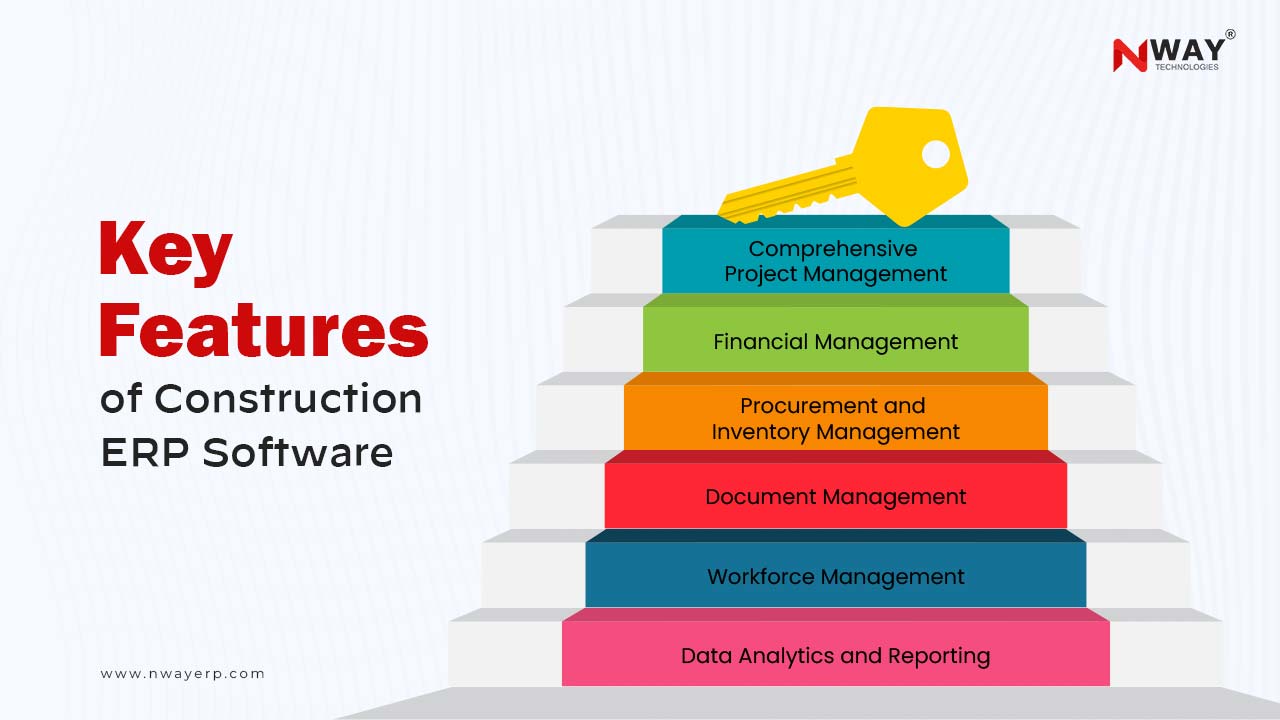
Key Features of Construction ERP Software

Game-Changer

Comprehensive Project Management

Centralized dashboard to manage multiple projects

Real-time tracking of progress and milestones

Tools for scheduling, task allocation, and resource management

Financial Management

Budget planning and control

Automated billing and invoicing

Integrated with accounting systems

Procurement and Inventory Management

Vendor management and material procurement tracking

Automated inventory control to avoid shortages or excesses

Document Management

Secure storage of blueprints, contracts, and compliance documents

Easy sharing and version control for seamless collaboration

Workforce Management

Timesheet tracking and automated payroll integration

Simplified allocation of labor based on availability and skill

Data Analytics and Reporting

Real-time insights into project performance

Customizable reports for financials, timelines, and resource utilization

Why Construction ERP Software is a Game-Changer?

Enhanced Efficiency and Productivity

Manual processes and disconnected systems often lead to inefficiencies and delays. Construction management software helps automate repetitive tasks, eliminates redundancy, and ensures all stakeholders have access to real-time information.

Improved Cost Control

Cost overruns are a common challenge in construction. Good ERP software enables precise budget tracking and highlights areas for improvement, ensuring cost-effective processes.

Real-Time Decision Making

With real-time data at their fingertips, project managers can make informed decisions promptly, minimize risks, and ensure timely project completion.

Better Collaboration

Construction ERP software provides a centralized platform to ensure architects, contractors, suppliers, and other stakeholders are on the same page, reducing misunderstandings and rework.

Compliance and Risk Management

Good ERP software makes it easier to track regulatory compliance and manage risks proactively by providing tools to ensure compliance with safety and environmental standards.

Scalability and Flexibility

Whether you are managing a small project or multiple large-scale projects, construction ERP software is scalable to meet your business requirements, making it a long-term investment.

The Challenges Faced by Construction Companies

Fragmented Communication

Relying on emails, spreadsheets, and separate software leads to communication breakdowns, missed deadlines, and costly errors.

Inefficient Resource Management

Without a centralized system, resource allocation becomes chaotic, leading to wasted labor, material shortages, or overstocking.

Budget Overruns

Manually tracking finances often results in errors, leading to unaccounted expenses and cost overruns.

Lack of Transparency

Using multiple documents and keeping things decentralized makes it difficult to get a holistic view of project performance, hampering decision-making.

Compliance Risks

Following processes that do not match with the government regulations and compliances leads to penalties, project delays, and reputational damage.

How an Efficient Construction ERP Software Addresses These Challenges?

Construction ERP software bridges the gaps by integrating all aspects of project management into one platform. It provides end-to-end visibility, real-time updates, and data-driven insights, ensuring effective project management in construction.

Game-Changer

Adopting Construction ERP Software: Key Considerations

Assess Your Needs

It is important to identify your needs, understand your pain points, and choose a Construction management software that can address them efficiently.

Choose the Right Solution

Opt for the right vendor with experience in the construction industry, offering robust support, regular updates, effective integration, and other benefits that can avail your growth in real aspects.

Ensure Proper Training

Ensure that the software you choose must provide efficient training to the entire team.

Plan for Integration

Ensure the software must integrate with existing systems to avoid disruptions.

Monitor and Evaluate

Continuously monitor the software’s performance and adapt processes as needed to maximize its effectiveness.

Conclusion

Construction ERP software is helping the modern construction industry in tremendous ways. Being a game changer, it provides a transformative solution to address the unique challenges faced by contractors, subcontractors, project managers, and other construction stakeholders. By streamlining processes, improving efficiency, and enabling data-driven decision-making, it empowers construction companies to deliver projects on time, within budget, and to the highest quality standards.

So how are you handling your projects?

Are you facing challenges in managing your projects manually?

If so, then good construction ERP software can help you solve all your major challenges, embrace the future of construction management, and experience the difference it makes in turning challenges into opportunities for growth and success.

Real-Time Project Tracking and Reporting with ERP for Road Construction

Real-Time Project Tracking and Reporting

In the fast-paced environment of the construction world, managing projects efficiently while maintaining accuracy is crucial. Various construction companies are getting a clear path to efficiently handle their projects using construction ERP software. It provides visibility into every aspect of their projects, from resource allocation and scheduling to cost management and compliance. This will also help companies empower stakeholders to make informed decisions, ensuring projects stay on time and within budget.

Continue reading “Real-Time Project Tracking and Reporting with ERP for Road Construction”