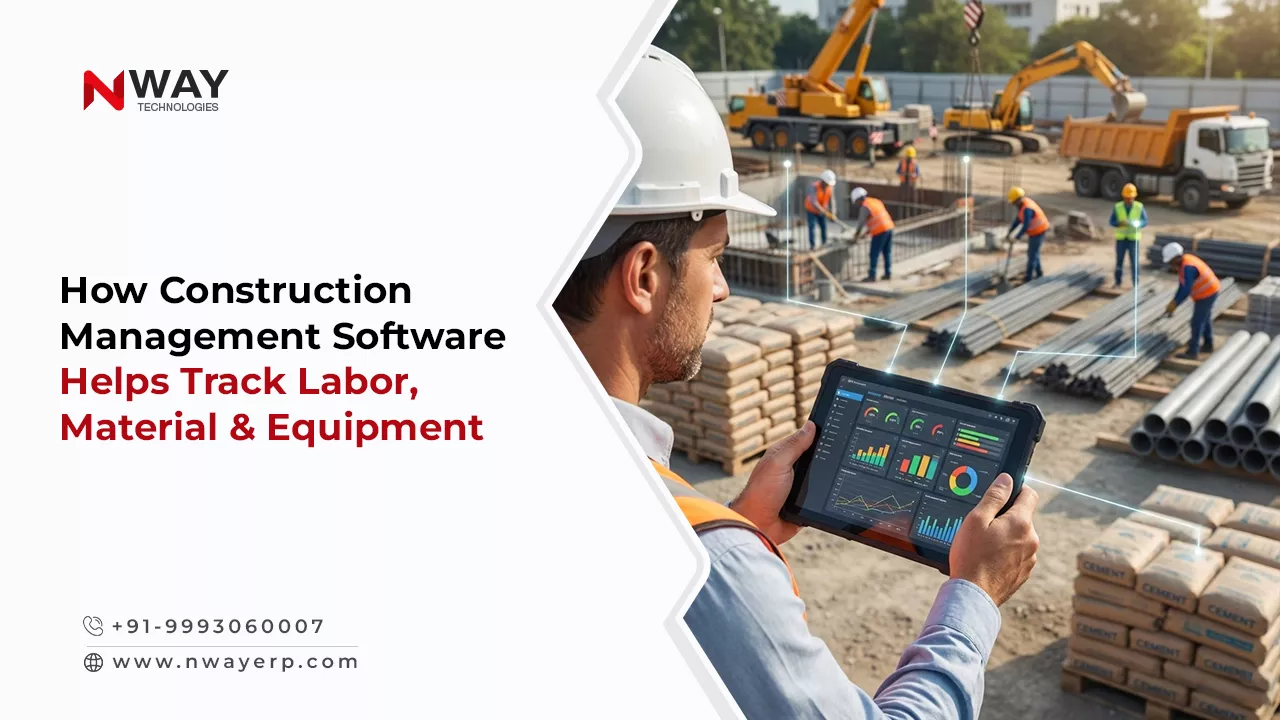
How Construction Management Software Helps Track Labor, Material & Equipment

Construction projects rarely fail because of planning. They fail because teams cannot see what is happening in real time. Labour cost management software becomes difficult when hours go unverified, materials are misallocated, and equipment appears available but sits idle. By the time errors surface, cost overruns and delays have already taken hold.

Construction management software addresses this gap. It captures real-time data, connects labor, materials, and equipment, and provides actionable insights. In India and the GCC, where projects span multiple sites and resources are complex, such visibility is critical for control and profitability.

Table of Contents:

Why tracking breaks down on construction sites

Many construction companies still rely on spreadsheets, manual logs, and delayed reports. Labor hours are estimated, material usage is reconciled late, and equipment tracking is inconsistent. These practices create blind spots that amplify risk.
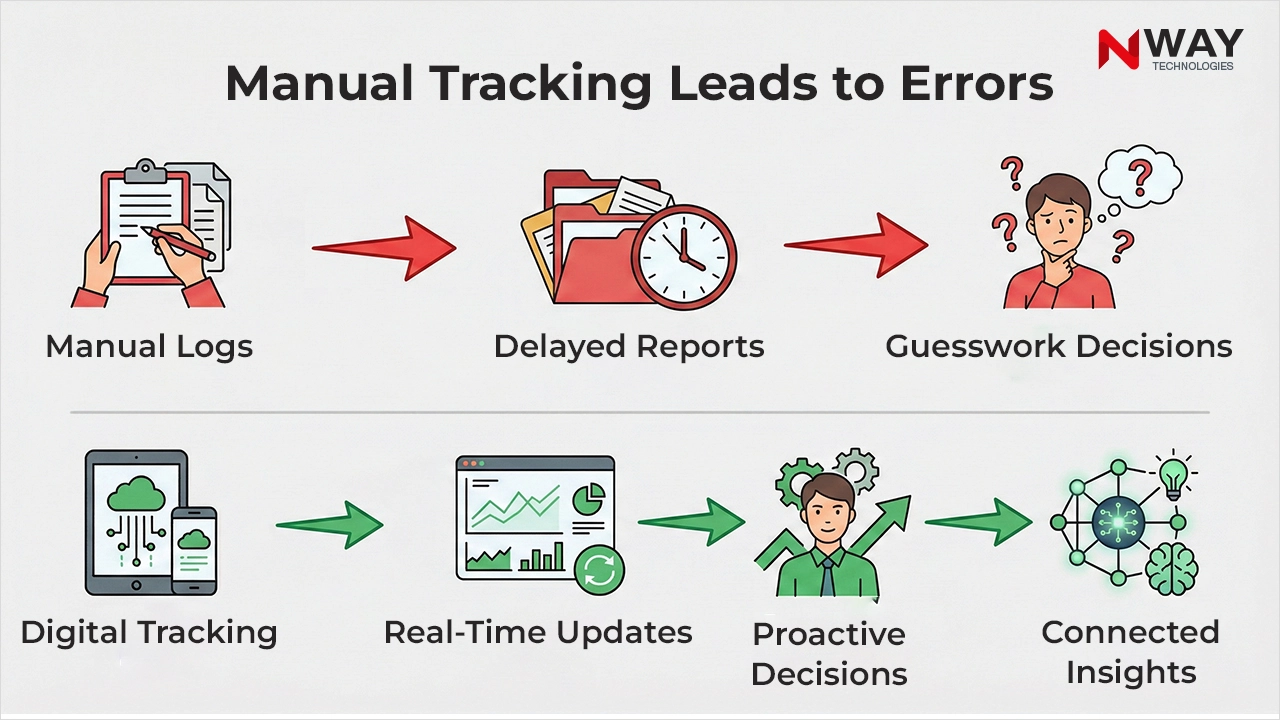
Manual Tracking Leads to Errors

In India, over 70 million construction workers make manual labor tracking unreliable across sites.

In the GCC, multi-site operations and leased equipment increase the cost of inaccurate tracking.

Key challenges include:

  • Labor hours often reported weekly or monthly
  • Material consumption tracked manually, prone to errors
  • Equipment utilization poorly monitored

Without real-time visibility, decision-making is reactive and costly.

The role of construction management software

Construction management software consolidates operations into a single view. It captures data directly from site activities and delivers actionable insights in real time. Teams can monitor resource utilization, identify bottlenecks, and take corrective action before delays or overspending occur.

By reducing dependency on manual updates, the software turns visibility into operational control. Errors in labor allocation, material usage, and equipment deployment are caught before they impact project costs.

Tracking labor with real-time data

Labor is typically the largest variable cost in construction. Without timely tracking, inefficiencies go unnoticed. Construction labour management software monitors attendance, work hours, and activity completion, linking labor costs to projects and budgets.

Advanced systems provide predictive insights. Daily data on attendance and productivity identifies potential delays, allowing managers to reallocate resources proactively.

Benefits include:

  • Early detection of productivity gaps
  • Accurate labor cost allocation
  • Reduced errors in payroll and reporting

Tracking materials across projects

Material costs often spiral due to over-ordering, delayed reconciliation, and mismanagement. Construction material tracking software monitors receipts, issues, and consumption, comparing actual usage to budgets.

Automated entry tools, like SmartEntry AI in Nway ERP, ensure purchase bills, GRNs, and quotations reflect real consumption. This helps teams prevent stockouts, minimize excess, and control procurement costs.

Material tracking impact includes:

  • Reduced waste and cost overruns
  • Faster procurement decisions
  • Better alignment of material usage with project schedules

Tracking equipment without manual logs

Equipment is a major capital cost, yet underutilization is common. Construction equipment tracking software provides insight into hours used, location, and maintenance schedules.

With Nway ERP, automated integration captures equipment activity in real time. Predictive insights flag idle equipment and forecast maintenance needs, helping teams optimize deployment and reduce rentals or downtime.

Benefits include:

  • Improved utilization of existing assets
  • Reduced rental and maintenance costs
  • Predictable operational planning

When basic software falls short

Standalone tools cannot unify labor, material, and equipment data. Manual reconciliation, delayed reporting, and disconnected spreadsheets continue to leave leadership blind to overruns. At scale, only construction ERP software ensures integrated control across operations and finances.

Why construction ERP software brings control

Construction ERP software connects operational insights with financial systems, creating a single source of truth. Labor, material, and equipment tracking feed directly into cost control, enabling informed decisions.

ERP adoption in India and GCC markets is growing steadily as firms recognize the need for real-time visibility and cost efficiency.
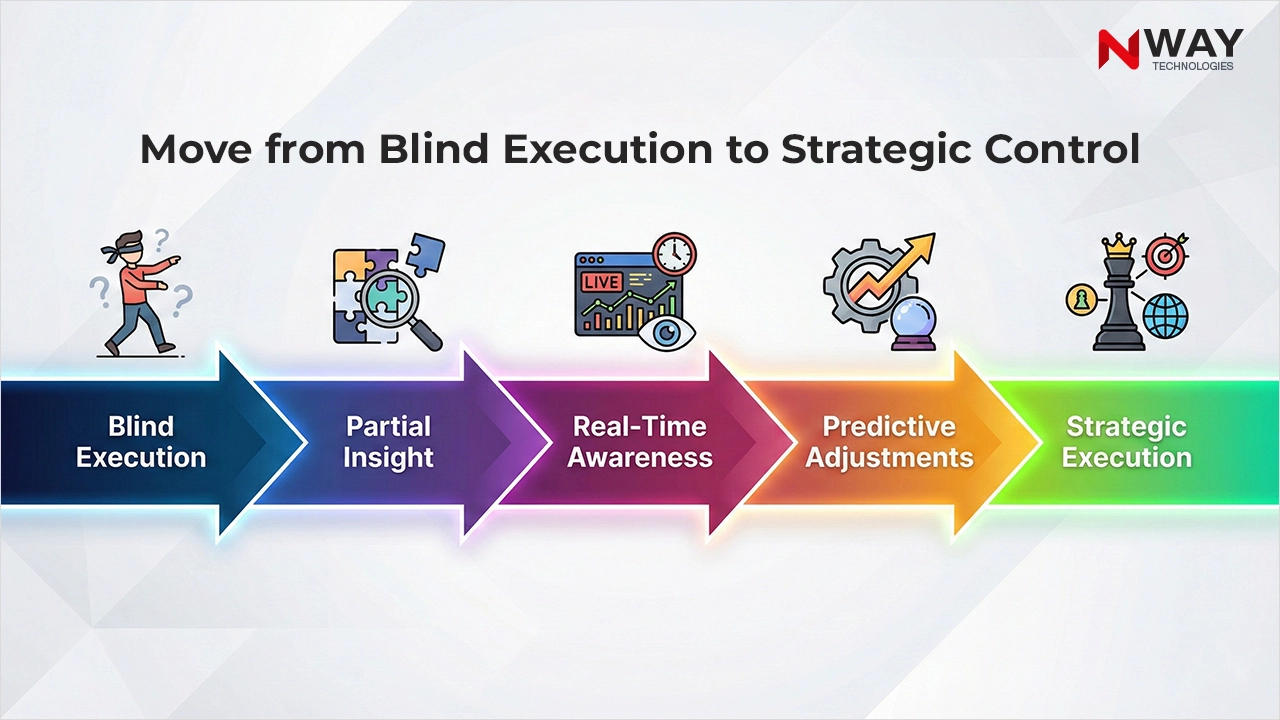
Move from Blind Execution to Strategic Control

What improves with one connected system

A connected system transforms operations. Teams see cost trends immediately, forecast accurately, and eliminate manual reconciliation. Over 65% of mid-to-large construction firms are investing in integrated construction platforms for better visibility and profitability.

Key improvements include:

  • Early detection of cost overruns
  • Accurate forecasting and budgeting
  • Streamlined reporting for management

How Nway ERP strengthens project execution

Nway ERP is designed to unify labor, material, and equipment management into a single, intelligent platform. Its modular architecture ensures that every aspect of construction operations is connected, from daily workforce deployment to material consumption and equipment utilization.
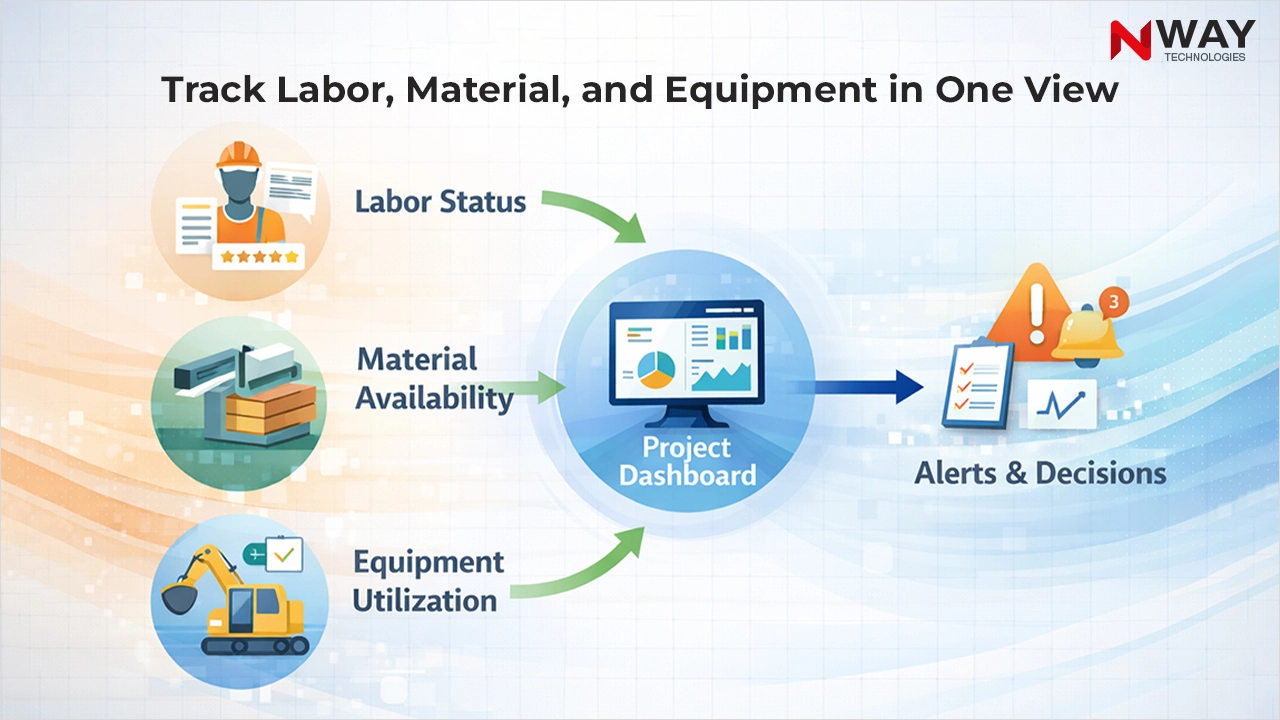
 Track Labor, Material, and Equipment in One View

Our key modules include:

  • Labor Management: Tracks attendance, task completion, and productivity across multiple sites. AI-driven insights alert managers to potential shortfalls before they impact schedules.
  • Material Management: Material Management software for construction automates entry of purchase bills, GRNs, and quotations using Smart Entry AI, ensuring data accuracy and preventing waste.
  • Equipment Management: Integrates weight bridge automation and predictive usage tracking, highlighting idle machinery, maintenance needs, and optimal deployment.
  • Project Monitoring: Central dashboards consolidate labor, material, and equipment data with budgets and timelines, providing a single source of truth.

Nway ERP’s AI capabilities are subtle but powerful:

  • AI Assistant: Generates instant reports, KPIs, and predictive forecasts from natural language queries.
  • SmartEntry AI: Eliminates errors in invoice and material entry, improving procurement accuracy.
  • Weight Bridge Automation: Captures vehicle weights, item identification, and usage patterns automatically.

Operational impact is immediate:

  • Labor efficiency improves as managers reallocate resources proactively.
  • Material costs drop due to accurate, automated tracking.
  • Equipment utilization rises while maintenance downtime decreases.
  • Real-time dashboards allow proactive decision-making across multiple sites.

By combining modular design, AI-powered automation, and actionable dashboards, Nway ERP transforms construction operations from reactive management to proactive control, turning operational data into measurable business outcomes.

Conclusion

Construction projects in India and the GCC operate at scale, with complex labor, material, and equipment management needs. Construction management software features are essential for enabling real-time tracking of labour, materials, equipment, and project progress. When extended into a platform like Nway ERP, operational visibility becomes actionable control. Companies reduce waste, prevent cost overruns, and make decisions with confidence. Nway delivers clarity, foresight, and efficiency, enabling projects to execute on schedule and within budget without adding administrative burden.

FAQs

What is construction management software?

Construction management software is a digital platform that helps contractors, builders and infrastructure companies plan, monitor and manage construction projects from one system. It can connect project planning, budgets, labour, materials, machinery, procurement, contractors, billing and reporting so project teams and management have a clearer view of project performance.

What does construction management software do?

Construction management software helps teams manage activities such as project planning, scheduling, daily progress reporting, material requirements, procurement, labour deployment, equipment usage, contractor billing, project costs and management reporting. The exact capabilities depend on the software and modules being used.

Who should use construction management software?

Construction management software can be used by general contractors, EPC companies, infrastructure contractors, builders and other organizations managing construction projects. Different users — including project managers, site engineers, procurement teams, store teams, finance staff and management — can access the information and workflows relevant to their roles.

What features should I look for in construction management software?

Important features include project planning and scheduling, budget and cost tracking, daily progress reporting, material and inventory management, procurement, labour management, contractor management, equipment tracking, billing, mobile access, dashboards and project-wise reporting. Companies managing multiple projects should also look for centralized multi-site visibility.

How does construction management software help control project costs?

Construction management software connects project budgets with actual spending and resource usage. Teams can monitor purchases, material consumption, labour costs, machinery expenses, contractor bills and other project costs against planned budgets. This makes it easier to identify cost deviations earlier instead of discovering them after project reconciliation.

Can construction management software track multiple construction projects?

Yes. Construction companies managing multiple sites can use construction management software to consolidate project information into a central system. Authorized users can monitor project progress, materials, labour, equipment, purchasing and costs for individual projects as well as across the organization.

How does construction management software connect construction sites with the head office?

Site teams can record project activities such as daily progress, attendance, material requirements, consumption and equipment usage digitally. This information can then be made available to project managers and head-office teams, reducing dependency on spreadsheets, phone calls and delayed manual reports.

What is the difference between construction management software and generic project management software?

Generic project management software mainly focuses on tasks, schedules and collaboration. Construction management software is designed around construction-specific processes and may also manage BOQs, material requirements, procurement, site inventory, labour, machinery, contractors, billing and project costs. A construction ERP can extend these capabilities further by connecting project operations with finance and other company-wide processes.

Can construction management software help prevent project delays?

Construction management software cannot eliminate every project delay, but it can help teams identify potential problems earlier. Real-time information about progress, labour availability, material requirements, equipment utilization and project costs gives managers more time to take corrective action when actual performance begins to differ from the plan.

Can construction management software be used from construction sites?

Cloud and mobile-enabled construction management software can allow authorized site users to access project information and update relevant activities from the field. This helps reduce delays between site activity and management reporting and keeps project information more current.

How does construction management software help manage labour, materials and equipment?

The software can connect labour attendance and allocation, material receipts and consumption, and equipment utilization with individual projects. This gives project teams a more complete view of the resources being used and helps management compare actual resource usage with project requirements and budgets.

How do I choose the right construction management software?

Start by identifying the processes you need to control, such as project planning, procurement, inventory, labour, machinery, contractor billing and project costing. Then evaluate whether the software supports your construction workflows, multiple projects, mobile users, reporting requirements, integrations, implementation needs and future growth. A product demonstration using your actual business scenarios can also help determine whether the system fits your operations.

How an ERP System Helps the Infrastructure Industry

Infrastructure projects are complex. They involve multiple teams, budgets, timelines, and compliance requirements. Managing everything with spreadsheets and disconnected systems is slow, error-prone, and costly. That’s where Infrastructure ERP software comes in. This type of software connects project planning, finances, resources, and reporting into a single, real-time system. With Infrastructure ERP software, infrastructure companies can track costs, manage resources, generate instant reports, and make decisions quickly. In short, an ERP system simplifies complexity, reduces risks, and keeps projects on time and budget.

Table of Contents:

What Is Infrastructure ERP Software?

Infrastructure ERP software is a digital platform that integrates all functions of infrastructure projects. It combines project management, finance, procurement, reporting, and field operations into one system. This eliminates the need for separate tools for each department, giving managers a complete view of their projects at any time.

For example, instead of juggling multiple spreadsheets for costs, labour, and equipment, teams can access everything from one dashboard. This improves visibility, speeds up decisions, and reduces errors. Using ERP for infrastructure projects ensures all teams are synchronized, reducing miscommunication and inefficiencies.

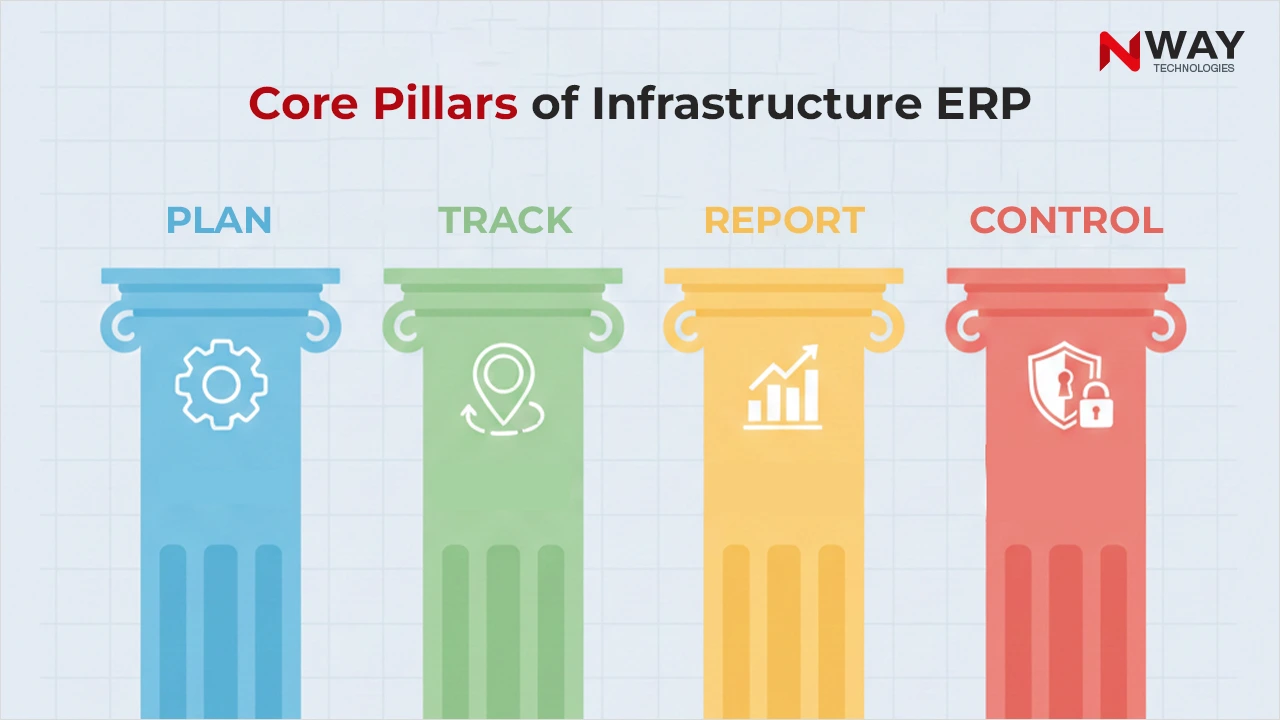
Core Pillars of Infrastructure ERP

Why the Infrastructure Industry Needs ERP

Large-scale infrastructure projects face several challenges:

Project delays: Different teams work across multiple sites, making coordination difficult.

Cost overruns: Without real-time tracking, material and labour costs often exceed budget.

Resource inefficiency: Equipment and workforce may be underutilized or mismanaged.

Compliance risks: Regulatory requirements demand detailed documentation and reporting.

These issues can be solved by implementing an ERP system for infrastructure industry, which centralizes data, automates processes, and gives managers a single source of truth. By adopting an Infrastructure project management ERP, companies can reduce errors, improve collaboration, and maintain control over complex projects.

Key Benefits of Infrastructure ERP Software

Implementing Infrastructure ERP software brings measurable improvements across projects. From planning and reporting to cost control and compliance, it streamlines operations so teams can work efficiently and make data-driven decisions.

Better Planning and Project Control

An Infrastructure project management ERP gives managers real-time insights into every project. They can track budgets, timelines, and resource allocation instantly. This reduces delays and improves decision-making. Implementing Infrastructure ERP software ensures teams can plan more accurately and adjust quickly when changes occur.

56% of organizations report that ERP improves decision-making processes.

Real-Time Reporting

ERP consolidates data from all teams, allowing instant reporting instead of waiting for manual updates. Managers can forecast costs, track KPIs, and make informed decisions quickly. Using ERP for infrastructure projects, stakeholders gain access to dashboards and real-time insights that improve overall efficiency.

71% of companies use ERP data for predictive analytics and project forecasting.

Cost and Waste Reduction

By tracking costs and resources in real-time, an Infrastructure ERP software or Construction management ERP software helps reduce waste and prevent budget overruns. Material usage and labour costs are optimized automatically. Companies adopting ERP for Construction save both time and resources by eliminating redundant manual processes.

ERP systems can reduce inventory costs by up to 20%.

Improved Productivity

With all teams using one system, communication is streamlined. Manual reporting drops, errors decrease, and productivity improves. A construction management ERP software ensures office and site teams are fully synchronized, and an Infrastructure ERP software supports efficient project execution across multiple locations.

Stronger Compliance

Infrastructure projects must comply with multiple regulations. ERP system for infrastructure industry automatically records approvals, documents, and updates, making audits easier and reducing compliance risks. By implementing an Infrastructure ERP software, companies can meet compliance requirements consistently without extra manual effort.

Infrastructure ERP and Construction Collaboration

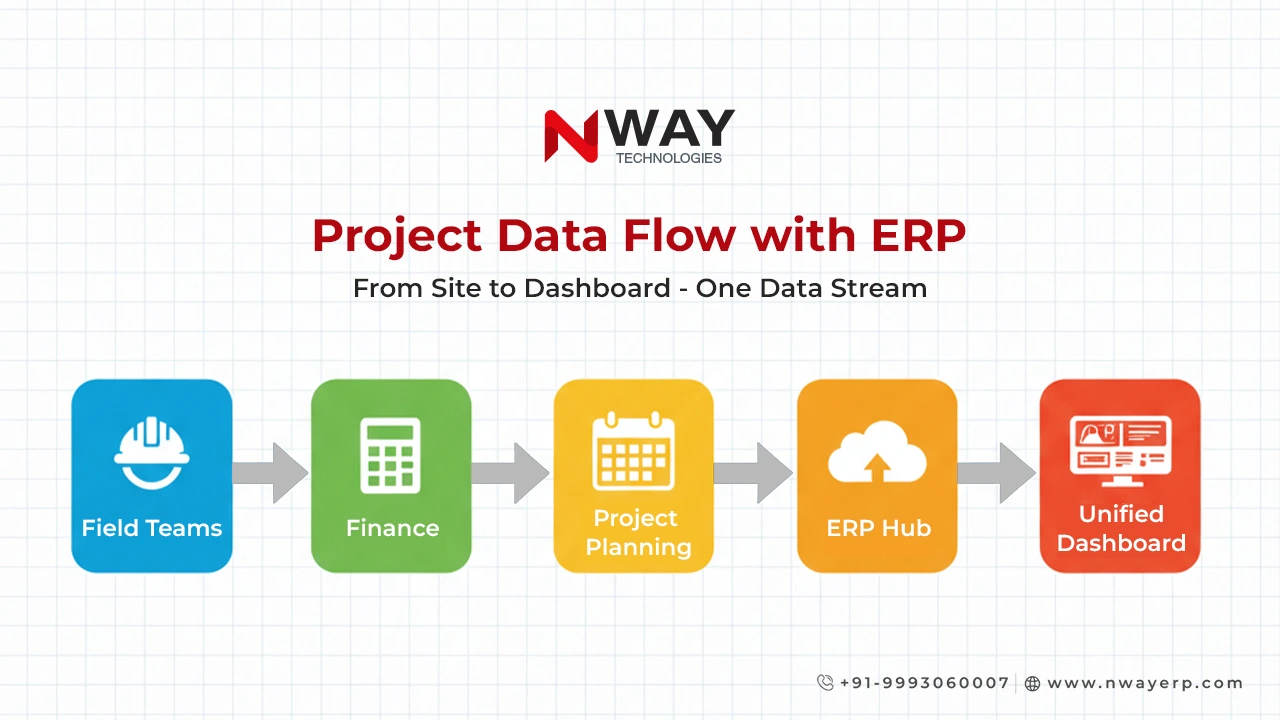
Project Data Flow with ERP

Many infrastructure firms also handle construction management. In these cases, the ERP is referred to as construction management ERP software or ERP for infrastructure projects.

These systems help:

  • Track labour and equipment use
  • Sync field teams with office planning
  • Manage change orders and invoices
  • Provide dashboards for project status

This leads to fewer errors and better coordination across teams, ensuring every project benefits from an Infrastructure ERP software system.

How Nway ERP Helps Infrastructure Businesses Win

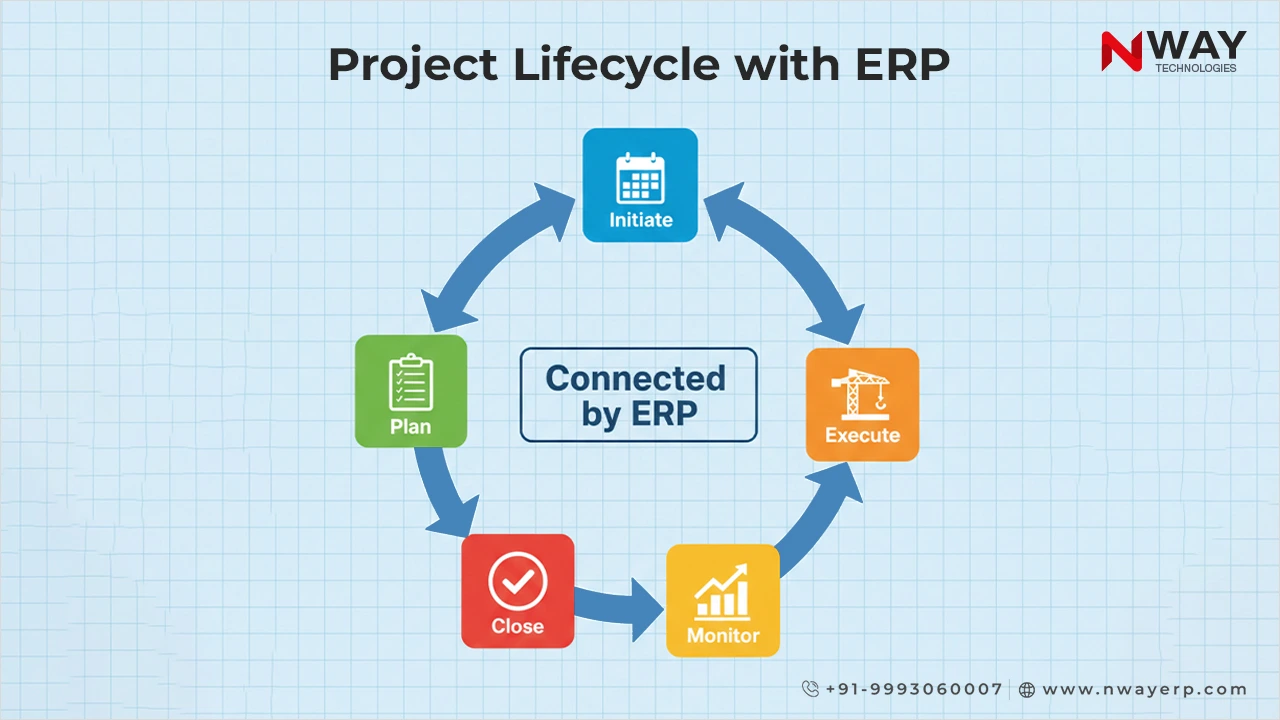
Project Lifecycle with ERP

At Nway ERP, we build Infrastructure ERP software that solves the real, day-to-day challenges of project teams.

Unified Project and Finance Views

Instead of switching between tools, your project team sees one unified dashboard with cost, resource, and timeline updates. This reduces errors and speeds up decisions.

Faster Reporting and Better Forecasts

Leaders can ask for instant reports – like resource forecasts or budget variances – without waiting for manual updates. This supports better planning and reduces risks.

Smarter Workflows to Cut Waste

With automated tracking of materials, labour, and finances, teams don’t waste time reconciling spreadsheets. This drives higher productivity and reduces delays.

Nway ERP’s Signature Features That Solve Tough Problems

Nway ERP includes features that tackle long-standing infrastructure pain points:

  • Smart data requests: Teams get reports or KPI insights in natural language, saving hours of manual reporting.
  • Intelligent entry tools: Invoices and field data are captured and matched automatically, reducing manual mistakes and speeding up finance cycles.
  • Automated site tracking: Vehicle logs and weighbridge data are captured automatically, ensuring accurate costs and resource tracking.

These tools help teams react faster, reduce manual effort, and make decisions backed by data – all while maintaining a human-friendly interface without making AI the focus.

Comparing With and Without ERP

The difference between working without ERP and using Infrastructure ERP software is clear. Manual processes lead to delays, errors, and cost overruns, while ERP centralizes information, automates workflows, and ensures projects stay on track.

Without ERP With Infrastructure ERP Software
Manual, delayed reports Real-time reporting
Disconnected systems Integrated data
Frequent errors Accurate forecasting
Poor budget tracking Controlled costs
Compliance risk Automated compliance

Conclusion

Infrastructure ERP software is essential for modern infrastructure companies. It simplifies complex projects, improves visibility, reduces costs, and increases productivity. Nway ERP takes this further by solving real industry problems and helping teams deliver projects on time, on budget, and with complete confidence.

Take the next step: Optimize your infrastructure projects with Nway ERP – a solution designed for results.

FAQs

What problems does Infrastructure ERP software solve in real projects?

Infrastructure ERP software addresses challenges like disconnected data, manual reporting, and budget overruns. It centralizes project information, improves visibility, and helps teams coordinate across multiple sites. For teams looking for a unified solution, platforms like Nway ERP can integrate project data in real time, making planning and reporting simpler.

How is an ERP for infrastructure projects different from regular business software?

Unlike standard business software, an ERP for infrastructure projects is built to handle complex timelines, multiple teams, and large resource needs. It combines project management, cost tracking, and compliance documentation into one system. Solutions like Nway ERP are examples of tools designed for these specific challenges, but the key is having an integrated system for all project operations.

Can an ERP system for infrastructure industry improve cost forecasting and decision-making?

Yes. ERP systems provide real-time cost tracking and forecasting tools, helping managers predict expenses and resource needs accurately. This allows teams to make informed decisions faster, rather than relying on delayed spreadsheets or reports. Some infrastructure teams use Nway ERP to access instant insights, but the main benefit is having timely and accurate project data.

Will Infrastructure ERP software work for both infrastructure and construction management ERP needs?

Yes. Many ERP systems for infrastructure also support construction management workflows, including labor tracking, procurement, and field reporting. The goal is to give teams one platform where all project activities are visible. Nway ERP is one example of a platform that bridges these needs, though any integrated ERP can deliver similar visibility and control.

How can Infrastructure ERP software help with compliance and documentation?

Infrastructure projects require detailed documentation and adherence to regulations. ERP systems store approvals, track changes, and maintain audit logs automatically, making it easier to comply with standards. Teams using Nway ERP may find compliance management simpler, but the main advantage comes from having a system that automatically organizes and safeguards project data.