The construction industry is changing faster than ever. Projects are bigger, timelines are tighter, and costs rise every year. This is pushing companies toward modern tools like Construction ERP Software, cloud systems, and AI-backed forecasting. The goal is simple: work faster, reduce mistakes, and improve control on every site.
Industry reports confirm this shift. Precedence Research valued the global construction software market at around USD 3.7–3.9 billion in 2024 and expects steady growth in the coming years.
Another estimate suggests the Construction ERP Software market may almost double – from USD 4.0 billion in 2025 to USD 8.4 billion by 2035.
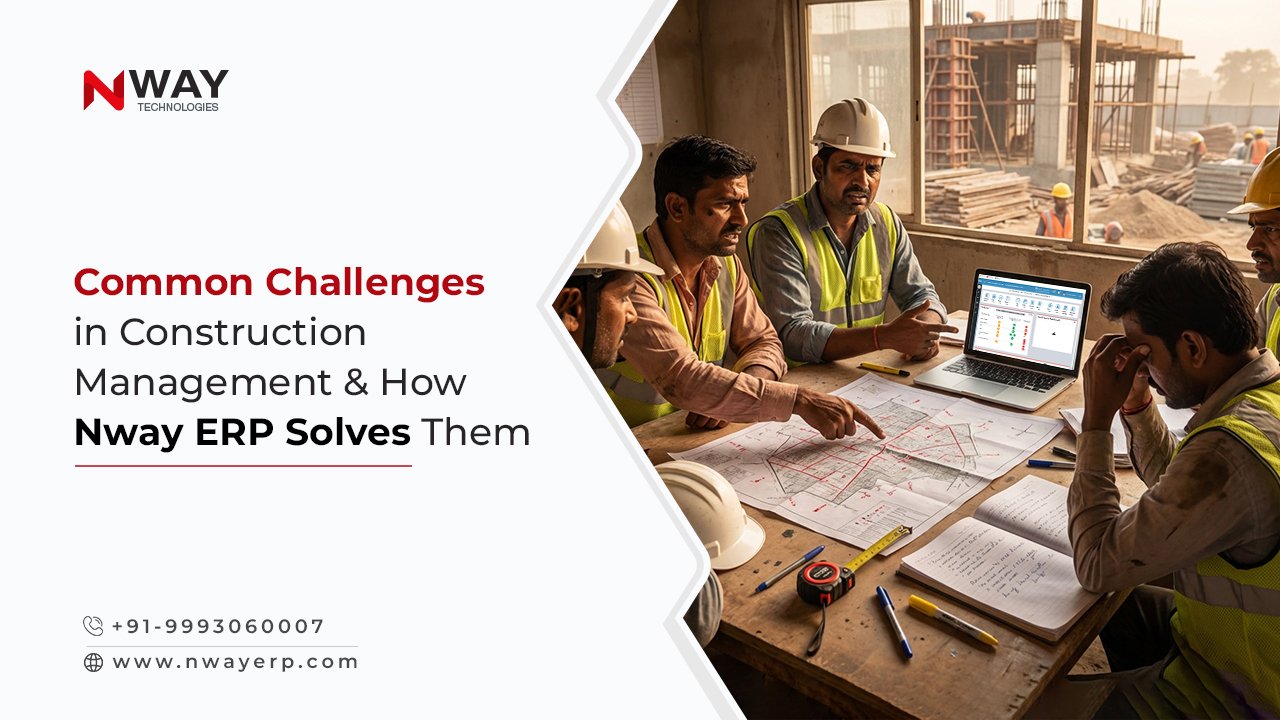
This growth is not coming from luxury. It is a direct response to real problems: scattered data, delayed communication, manual paperwork, inaccurate billing, unpredictable material needs, vendor inconsistency, and the increasing complexity of working across multiple locations.
Table of Contents:
- Cloud ERP Is Becoming the New Normal
- AI Is Moving From “Nice to Have” to “Quietly Essential”
- Procurement, Vendor Management, and Materials Are Becoming More Predictive
- Project Monitoring Is Turning Real-Time and Insight-Driven
- Finance Is Becoming Connected to Every Module
- How Nway ERP Fits Into This Future of Construction Technology
- Nway also adds practical AI – used only where it creates real impact
- Why this Matters
- Final Thoughts
Cloud ERP Is Becoming the New Normal
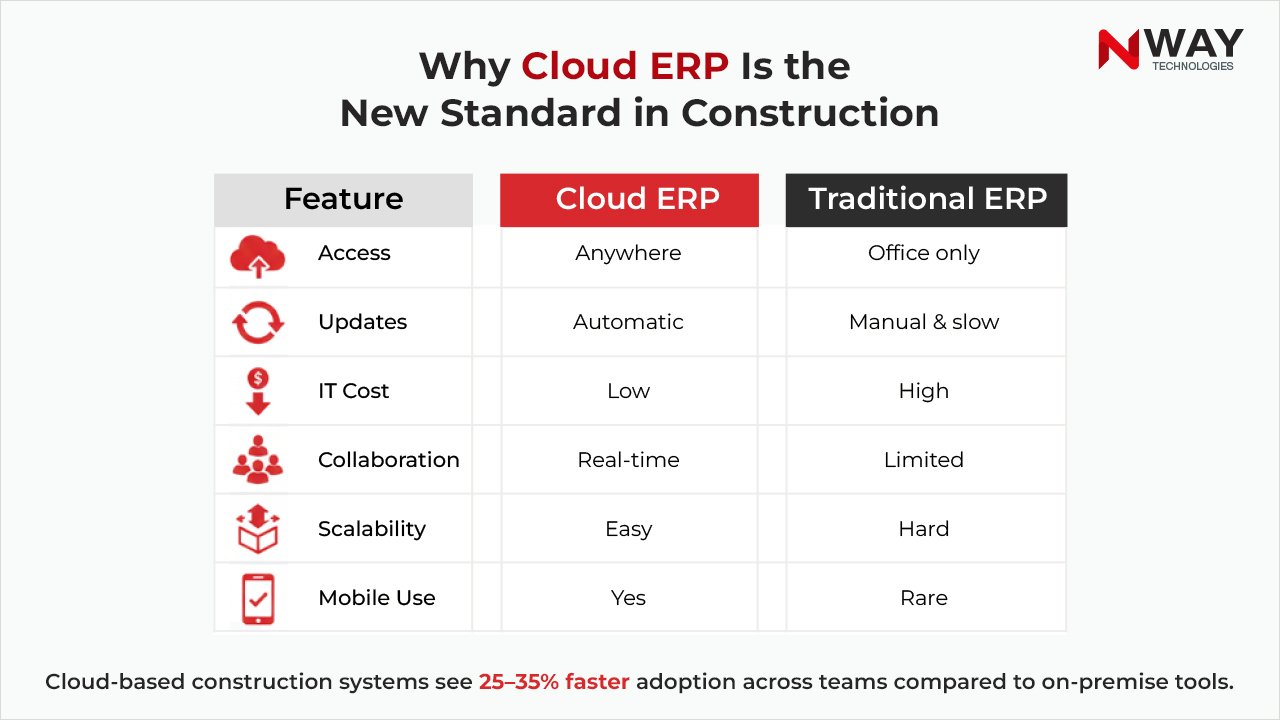
Earlier, companies stored their data on local systems. This meant every update came late, teams were disconnected, and decision-making was slow. But now, most new deployments are shifting to cloud ERP, which gives teams instant access to project information from any device – site, office, or home.
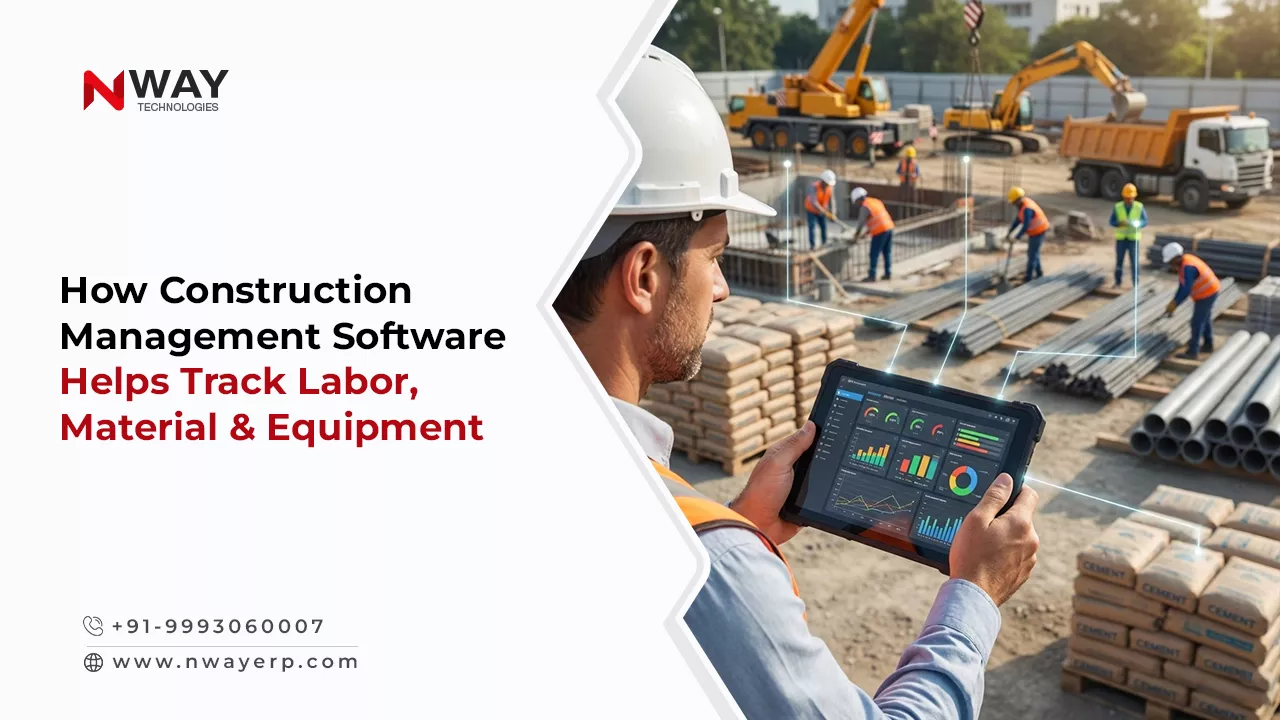
Cloud makes construction management smoother. Site teams can update material usage, raise purchase requests, upload images, record labour, and track progress in real time. Offices no longer wait for manual reports. Everyone works on the same live data.
This shift is expected to continue, and within a few years, cloud ERP will be the default option for contractors of all sizes.
AI Is Moving From “Nice to Have” to “Quietly Essential”
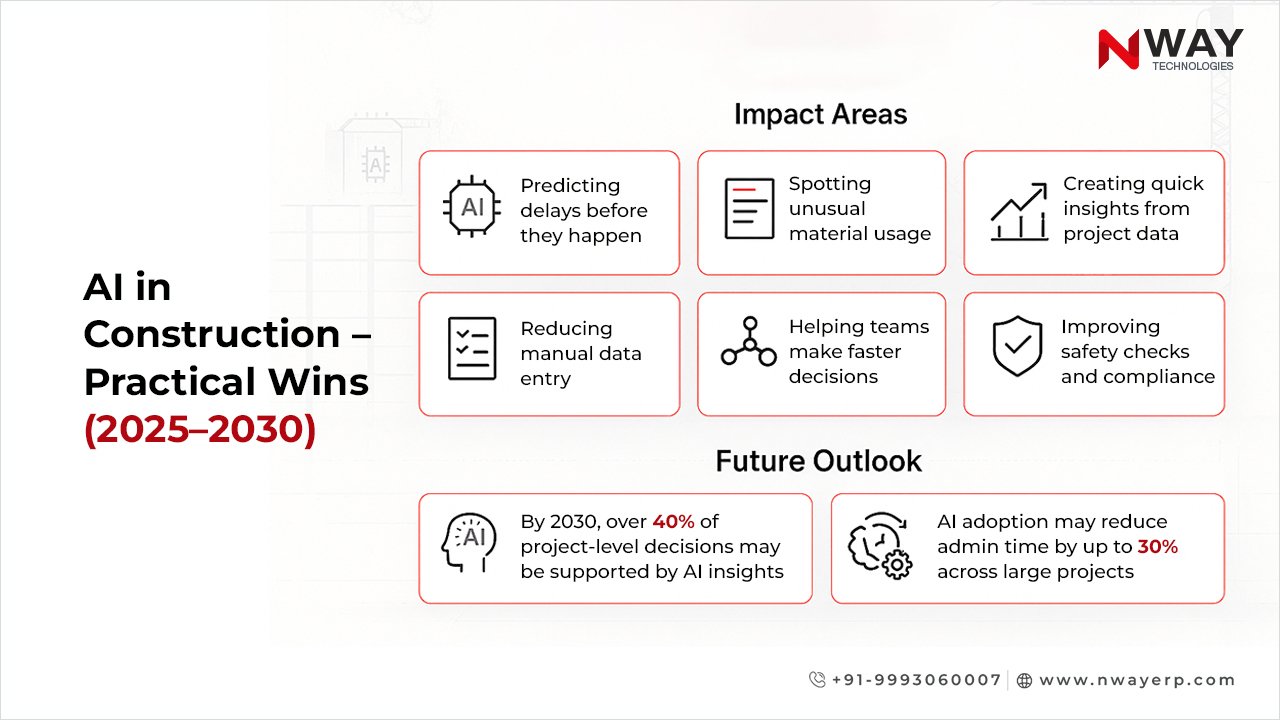
AI in construction is growing very fast. A report from Fortune Business Insights estimates the AI in construction market may rise from USD 3.9 billion in 2024 to USD 22.7 billion by 2032.
But AI is not arriving as a dramatic, disruptive force. Instead, it works in the background to make daily work easier.
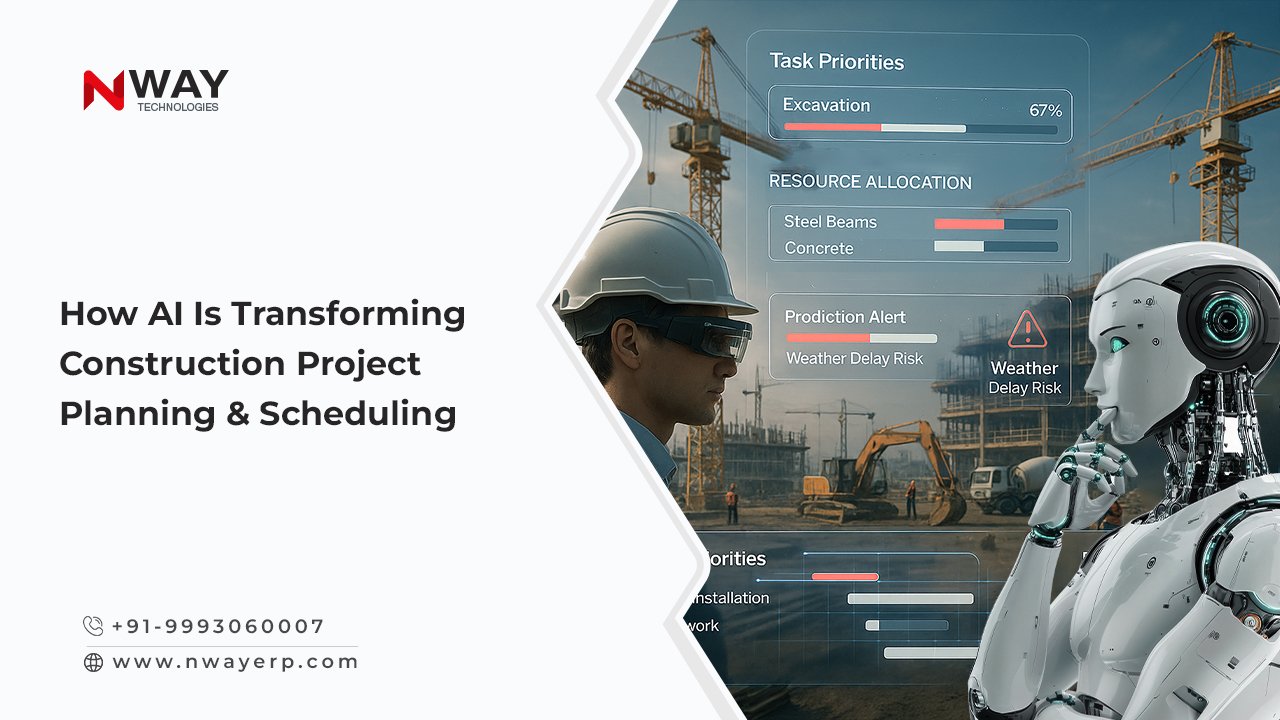
For example, AI helps teams forecast material needs by studying project consumption patterns. It highlights the chance of a cost overrun before it becomes a real problem. It checks vendor consistency by studying past delivery timelines and pricing variations. It also reads invoices, GRNs, and quotations with high accuracy – saving hours of manual effort.
In short, AI is becoming the quiet assistant every construction team needs.
Procurement, Vendor Management, and Materials Are Becoming More Predictive
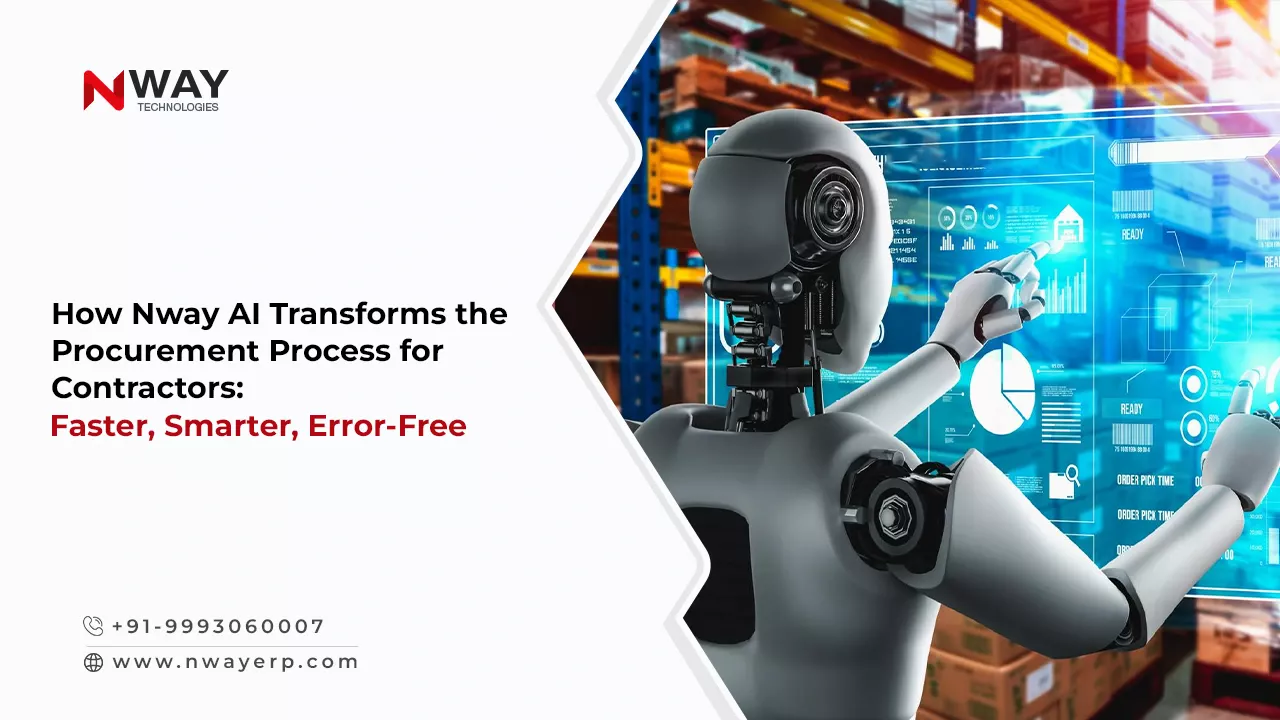
Procurement is one area where change is happening fastest. Earlier, buyers depended on experience and paperwork. Today, companies want data-backed clarity. They want to know which vendor performs best, who gives stable pricing, and which materials are likely to cause delays.
AI-enabled ERP systems now help buyers by:
- Predicting future material requirements
- Comparing vendor performance
- Identifying unusual price changes
- Verifying GRNs and purchase bills automatically
- Tying purchases to the project budget in real time
This means procurement is shifting from reactive decisions to planned, smart, and predictable operations.
Material management is also transforming. With digital systems, companies track stock levels, deliveries, issues, consumption, and even weighbridge entries without relying on manual records. This reduces wastage and keeps budgets on track.
Project Monitoring Is Turning Real-Time and Insight-Driven
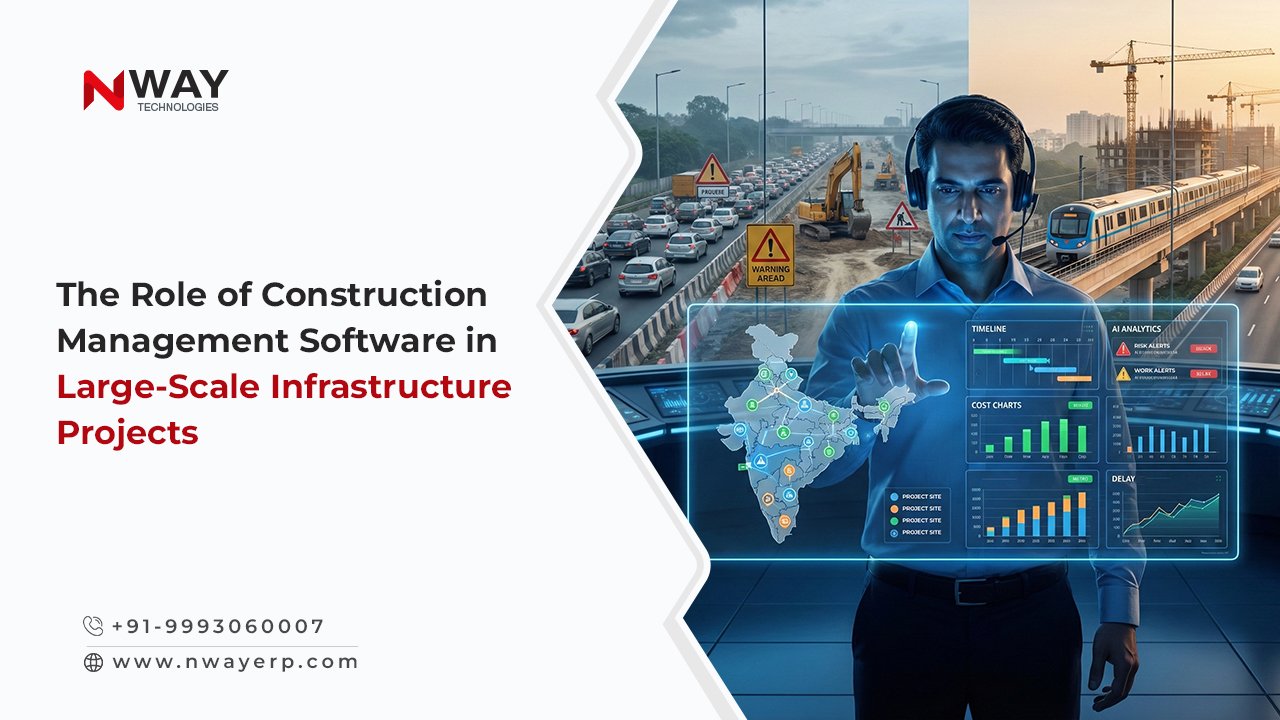
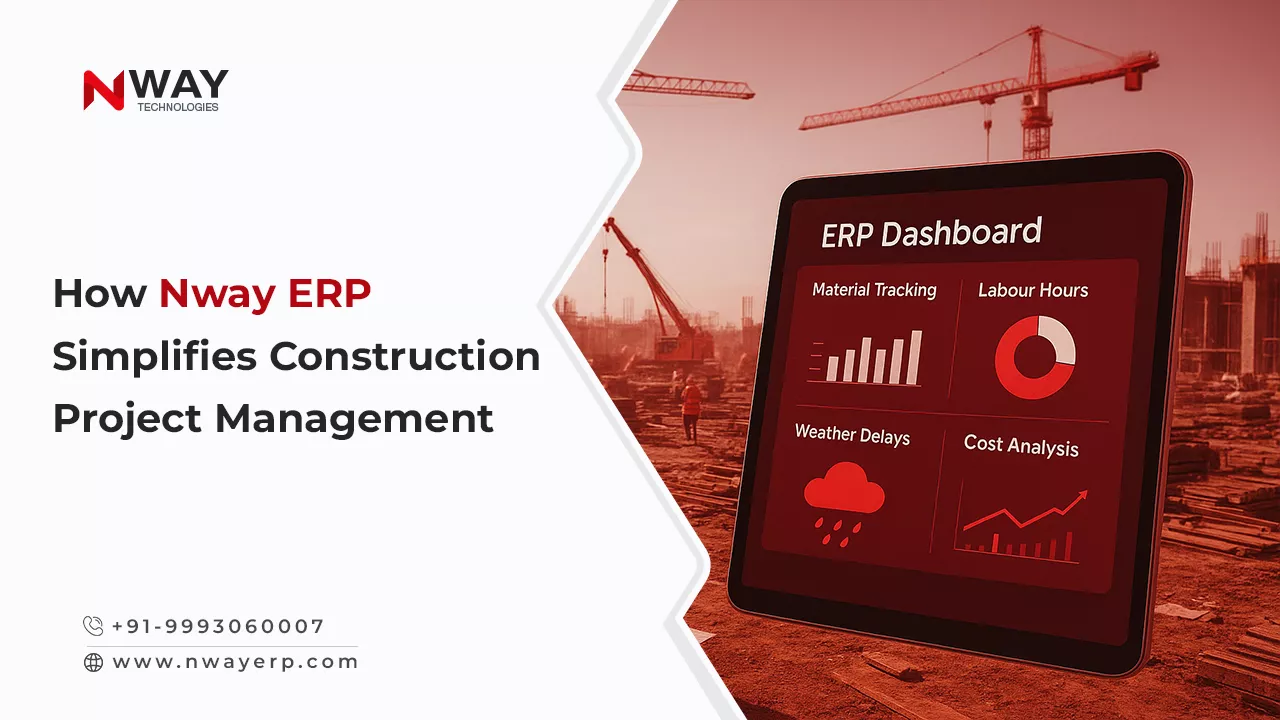
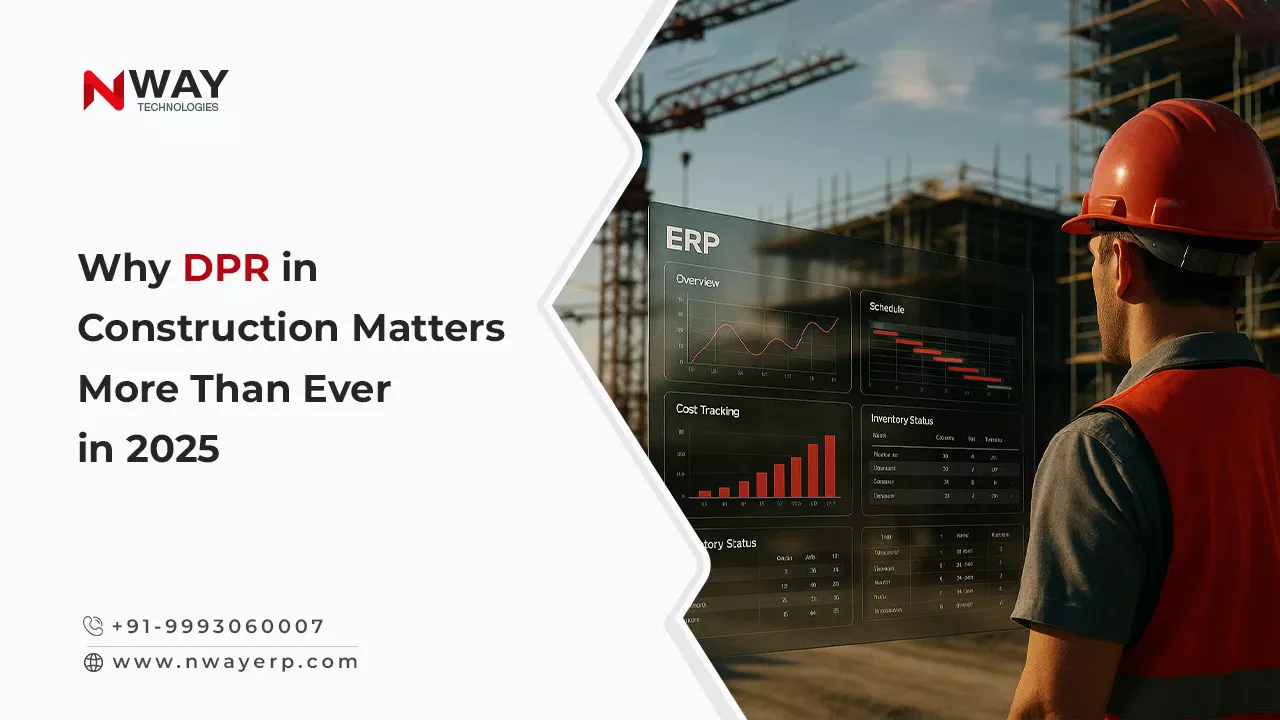
Project managers often struggle because they get updates late. By the time a problem is visible, it is already expensive. With cloud-based construction management software, updates happen instantly. Daily reports, progress percentage, labour count, material usage, and budget deviations are visible on a single dashboard.
The future is moving toward “early warnings”- systems that alert teams when something is likely to go wrong. Delay alerts, cost deviation signals, and workforce shortage indicators will all become standard.
In simple words, project tracking is shifting from after-the-fact reporting to real-time insight.
See exactly where your project costs are leaking –
try Nway ERP’s live cost view.
Finance Is Becoming Connected to Every Module
Finance teams traditionally spend hours matching invoices with POs, GRNs, and material consumption sheets. Small errors lead to large mismatches. The trend now is full integration – where finance is not a separate department but part of a unified system.
Modern ERP connects:
- Procurement with budgets
- Material data with vendor bills
- Contractor outputs with labour reports
- project progress with client billing
This reduces manual reconciliation and makes audits transparent.
How Nway ERP Fits Into This Future of Construction Technology
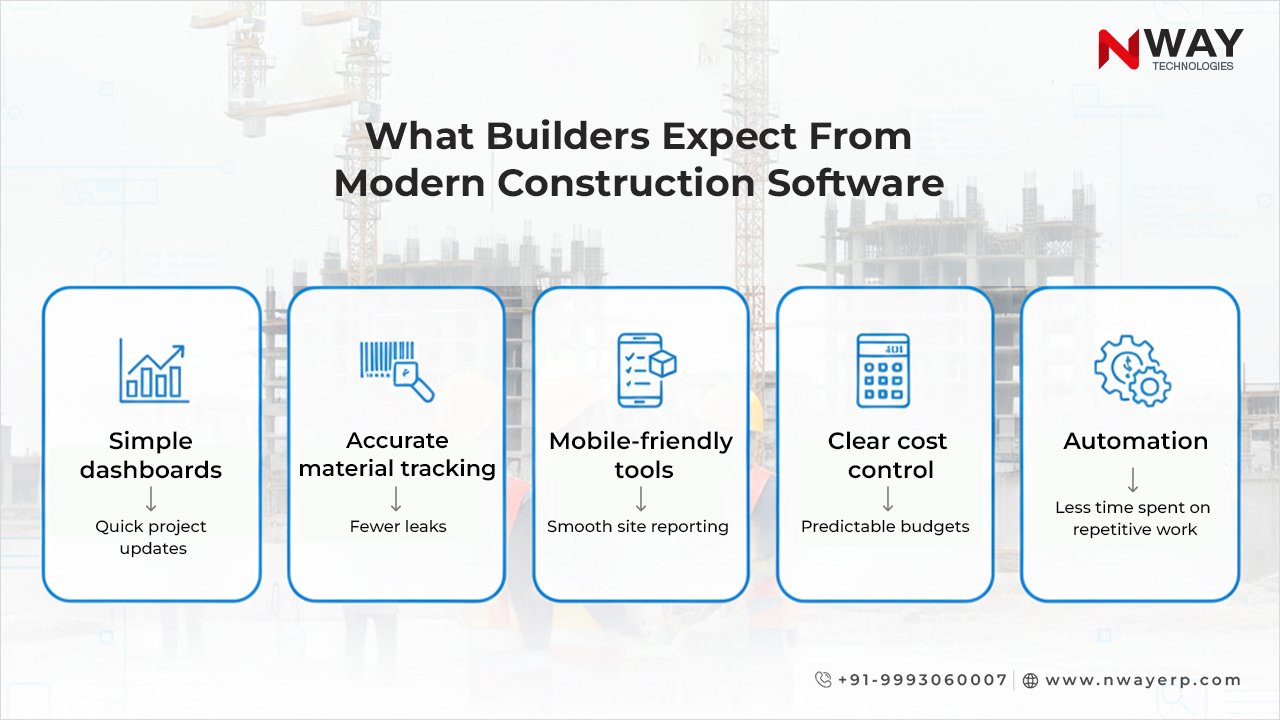
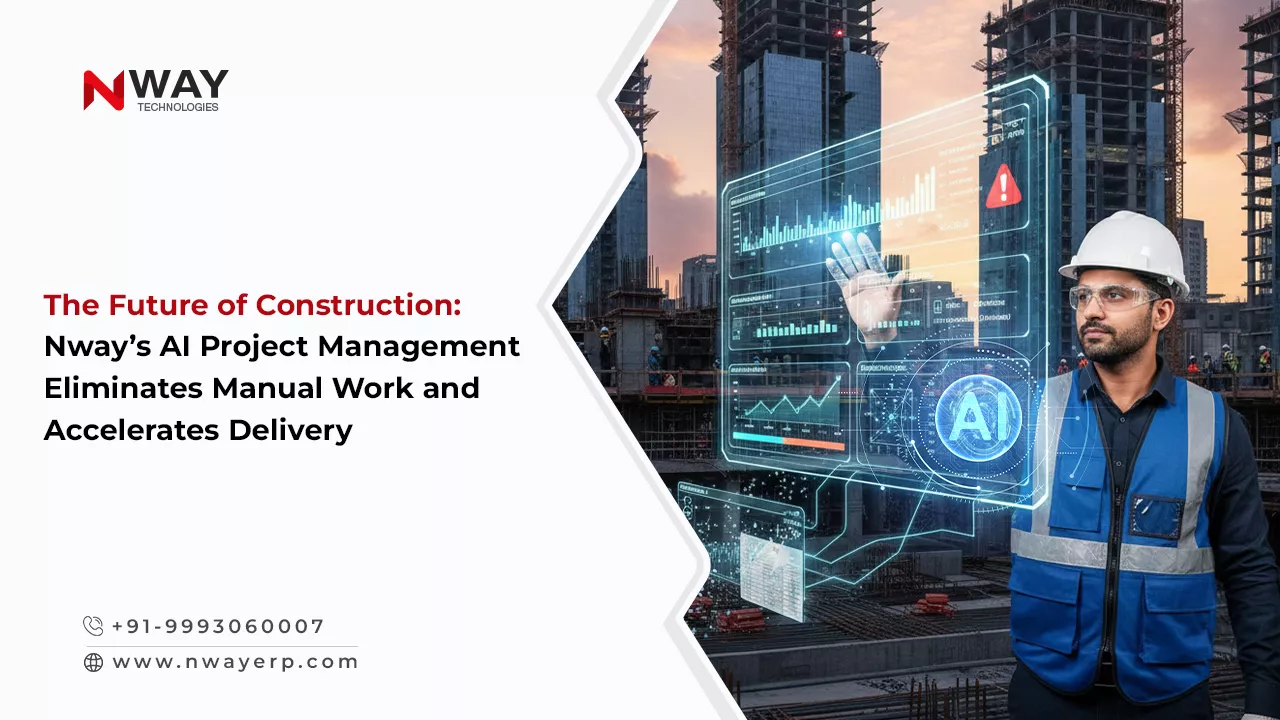
Nway ERP is built for this new era of construction technology. It brings all essential modules into one simple cloud platform so teams can work faster, stay organised, and make better decisions.
Nway supports every major construction workflow-
- Procurement & Vendor Management
- BOQ, Estimation & Project Planning
- Material & Inventory Control
- Site Execution & Daily Progress
- Contractor Billing & Client Billing
- Finance & Accounts
- Asset & Equipment Management
- HR, Payroll & Attendance
Each module is connected. When something changes on site, finance sees it. When material levels drop, procurement gets notified. When progress slows, management gets insight.
Nway also adds practical AI – used only where it creates real impact
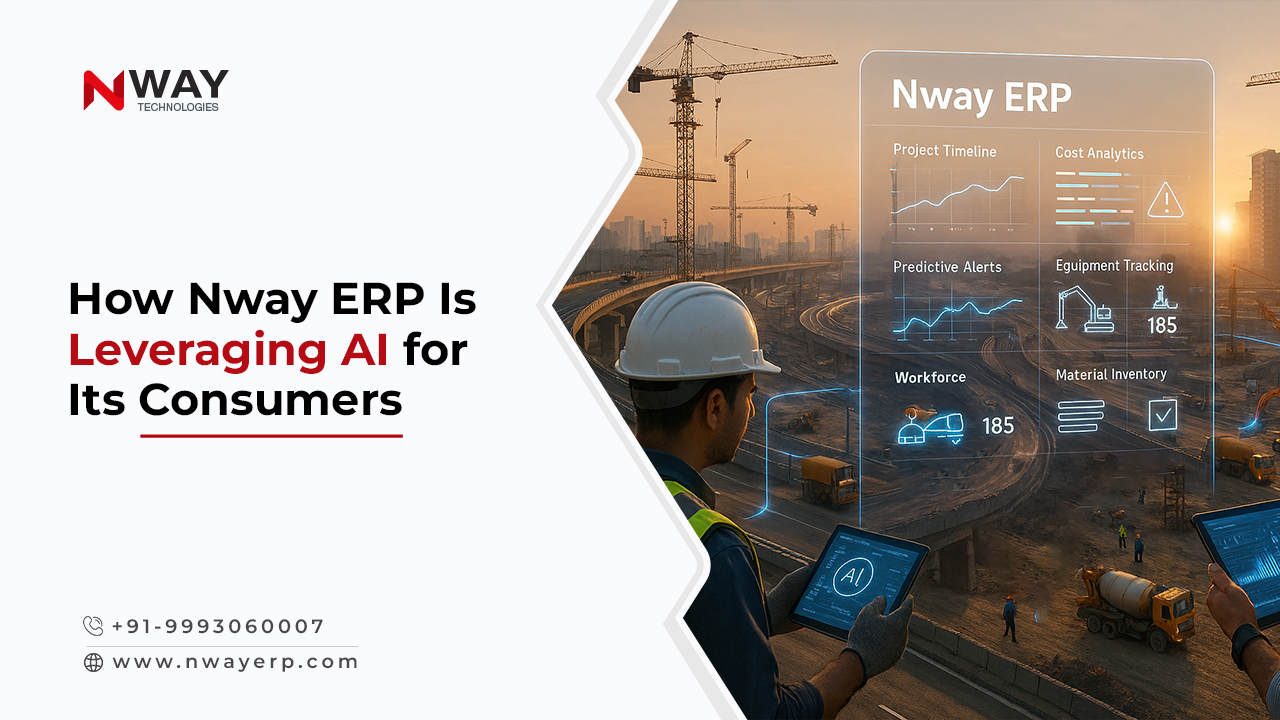
AI in Nway works quietly in the background to make construction work smoother. Its impact can be seen in key areas:
Time Saved: Reduces routine manual tasks like document checks and data entry, giving teams more time for actual project work.
Better Accuracy: Minimizes errors in procurement, billing, and material tracking, ensuring cleaner records and smoother audits.
Early Issue Detection: Highlights unusual patterns, such as unexpected material use or cost deviations, so problems can be addressed before they grow.
Clear Insights: Turns complex data into simple summaries, helping managers make faster, smarter decisions.
Predictable Workflows: Supports teams without changing how they work, making processes more reliable and consistent.
In short, AI in Nway quietly improves efficiency, clarity, and control – helping teams focus on building, not paperwork.
Why this Matters
Construction will only get more data-heavy in the coming years. Companies that use systems like Nway ERP will be able to forecast needs, prevent delays, control budgets, and deliver projects more confidently.
Final Thoughts
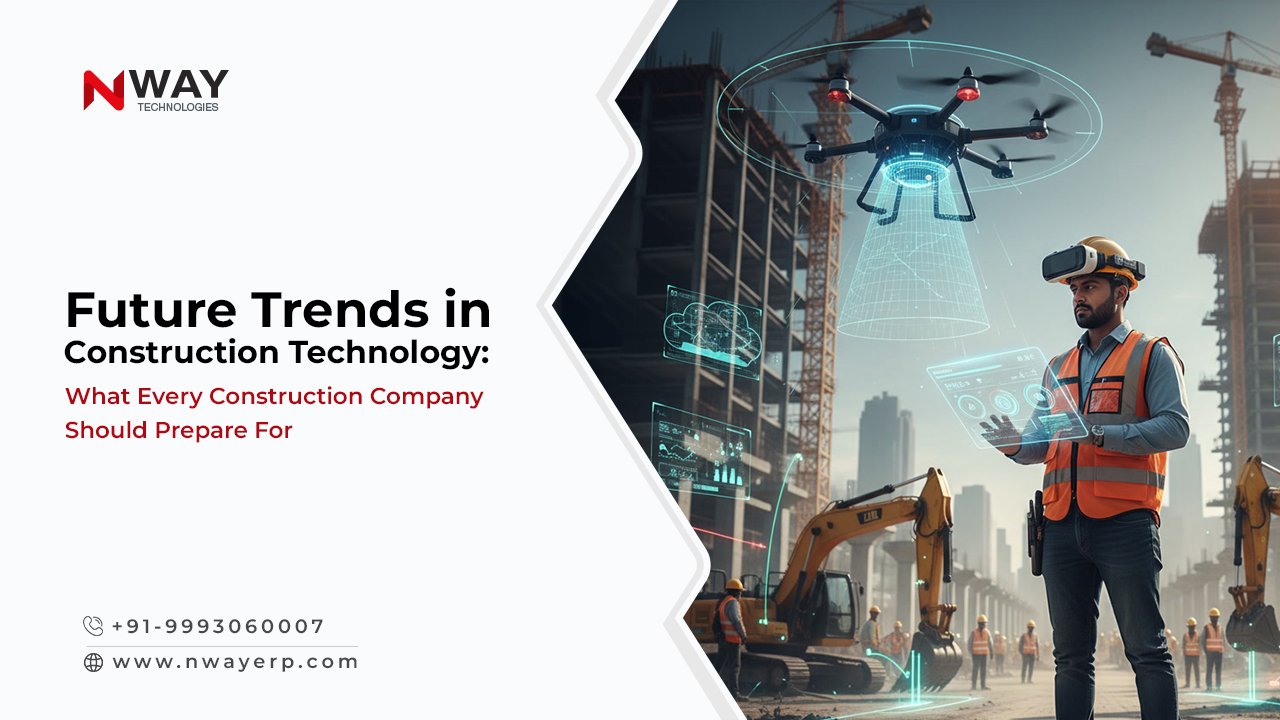
The future of construction is digital, connected, and insight-driven. Companies that adopt modern tools like Construction ERP Software and Construction Management Software today will gain faster project execution, better cost control, and improved collaboration across teams.
With Cloud ERP and AI-enabled ERP software, businesses can streamline procurement, manage vendors, track materials in real time, and forecast project outcomes with confidence.
If you want to prepare your business for this future, Nway ERP is built to help you get there.
Simple, connected, cloud-based, and future-ready.