Construction ERP software helps builders, contractors, and infrastructure companies manage multiple construction sites through centralized project tracking, procurement control, real-time cost monitoring, and resource planning.
According to industry studies, material wastage and poor coordination can increase construction project costs by 5–11%, especially in multi-site operations.
Are you struggling to manage multiple construction sites? Learn how ERP software for construction companies enables real-time control, cost savings, and efficiency.
Table of Contents:
- Introduction: When One Site Becomes Five, Chaos Multiplies
- Industry Context: Why Multi-Site Construction Is Uniquely Challenging
- Why It’s Hard: The Limits of Manual and Disconnected Systems
- How ERP Transforms Multi-Site Construction Management
- Real-World Scenarios: ERP in Action
- Subtle Product Alignment: What to Look for in the Right ERP
- Point to Focus on
- Conclusion: Control Isn’t About Working Harder, It’s About Working Smarter
Introduction
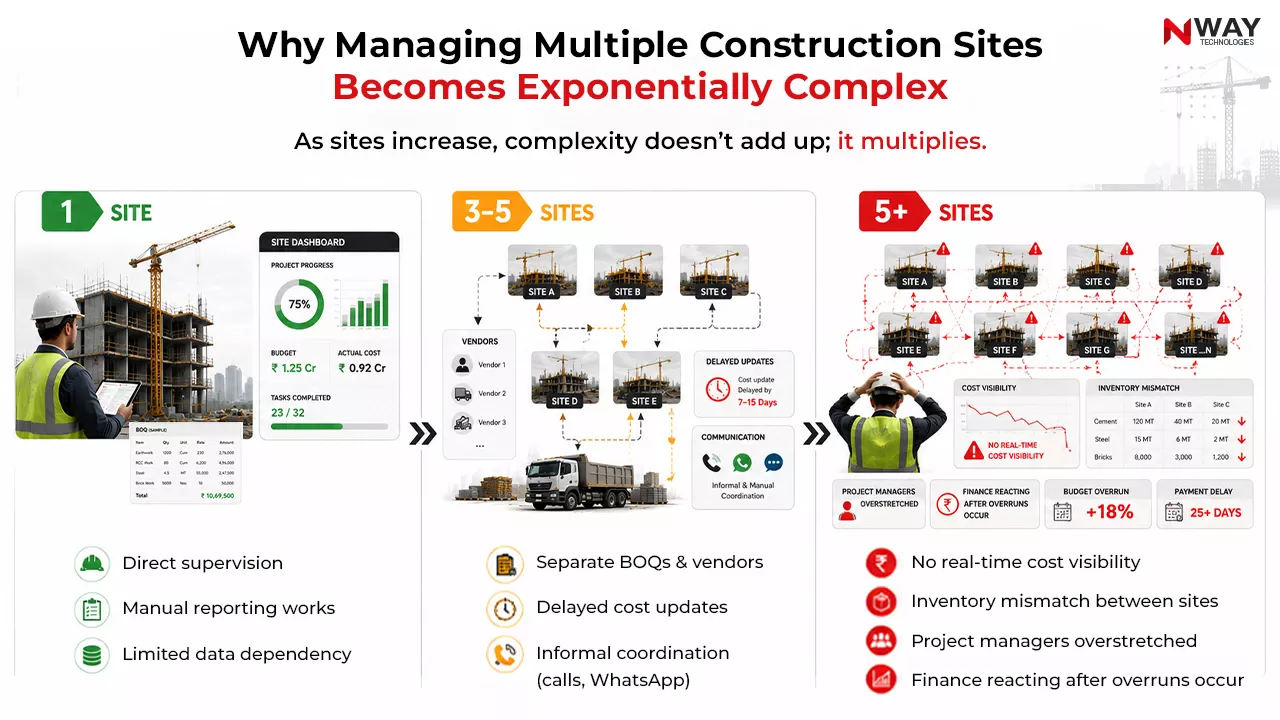
Managing a single construction site is complex. Managing five or fifteen simultaneously is an entirely different challenge.
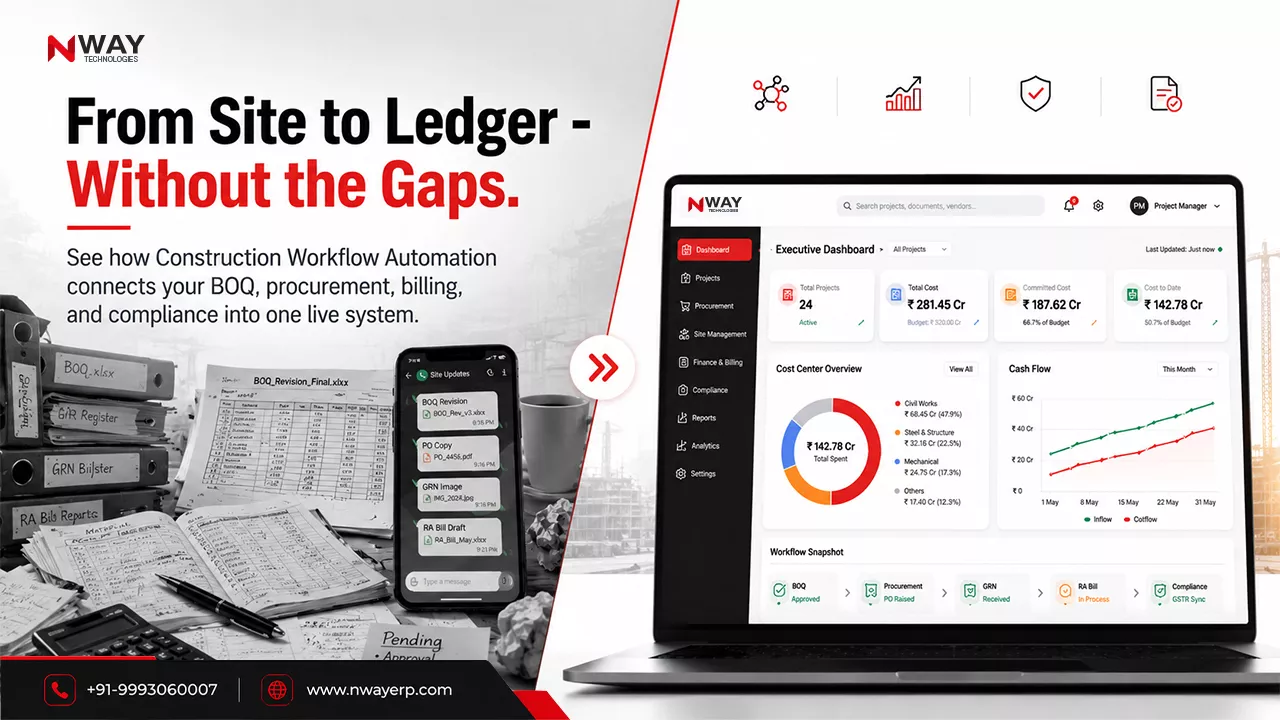
Project managers must track schedules, contractors struggle with material flow, and finance teams chase cost data that arrives too late. Spreadsheets, WhatsApp groups, and standalone accounting tools might work initially but as projects scale, visibility collapses.
At this stage, construction ERP software is no longer optional. It becomes essential for maintaining cost control, coordination, and project visibility across sites.
For builders and infrastructure firms operating across multiple locations, the question is no longer whether to adopt ERP, but how quickly they can standardize operations without increasing overhead.
Industry Context
Construction and infrastructure projects are not linear. Each site operates like a mini business with its own BOQs, vendors, labour force, timelines, and risks, yet leadership needs a consolidated view.
Common realities in Indian construction projects include:
- Separate procurement cycles per site
- Inconsistent cost reporting and delayed RA bills
- Equipment underutilized on one project and overbooked on another
- Inventory leakage due to poor site-level tracking
- Site teams and head office working on different versions of data
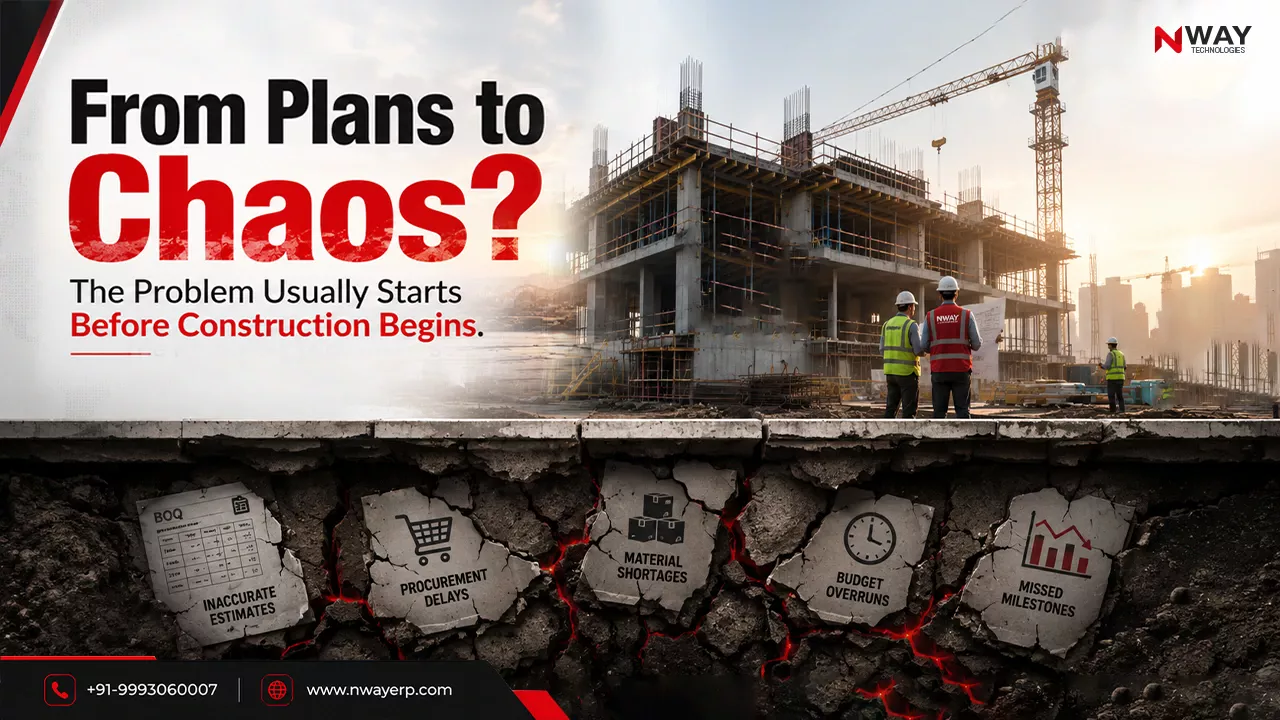
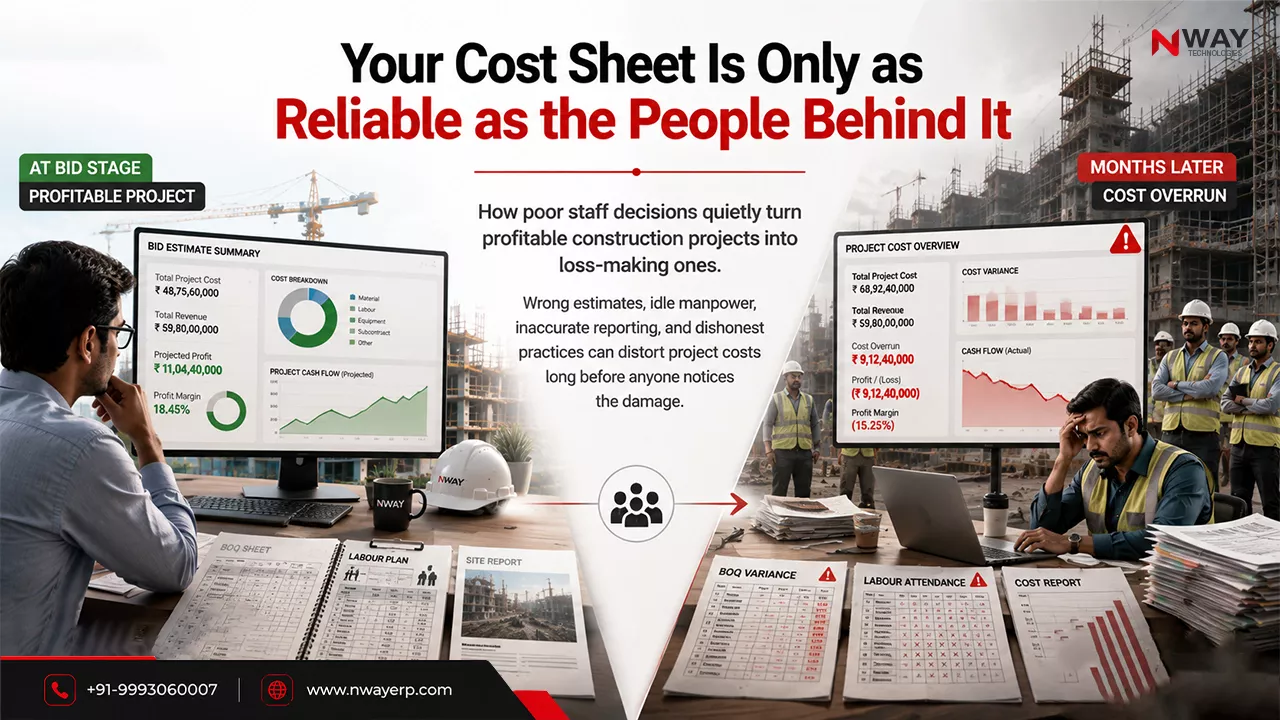
As the number of sites increases, these gaps compound resulting in budget overruns, delayed decisions, and loss of managerial control.
Why It’s Hard
Most construction firms don’t intentionally choose inefficiency; it emerges from tools that were never designed for multi-site complexity.
Where traditional methods break down
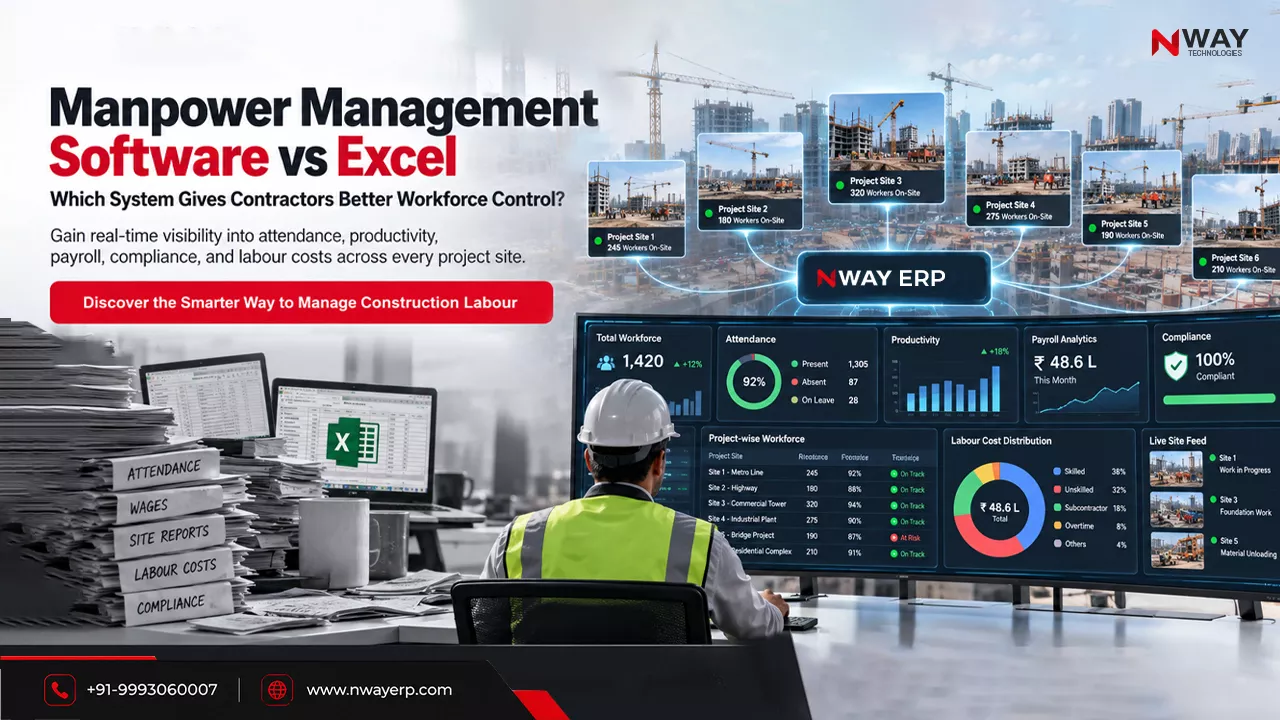
- Spreadsheetscan’t provide real-time visibility or version control
- WhatsApp-based communication lacks traceability and accountability
- Standalone accounting software offers financials without project context
- Manual stock registers obscure actual inventory consumption
When data flows late or inconsistently, decisions become reactive. By the time leadership identifies an issue, the cost impact has already occurred.
Still managing multiple sites with spreadsheets?
It’s time to move to a smarter, centralized system.
How ERP Transforms Multisite Construction Management
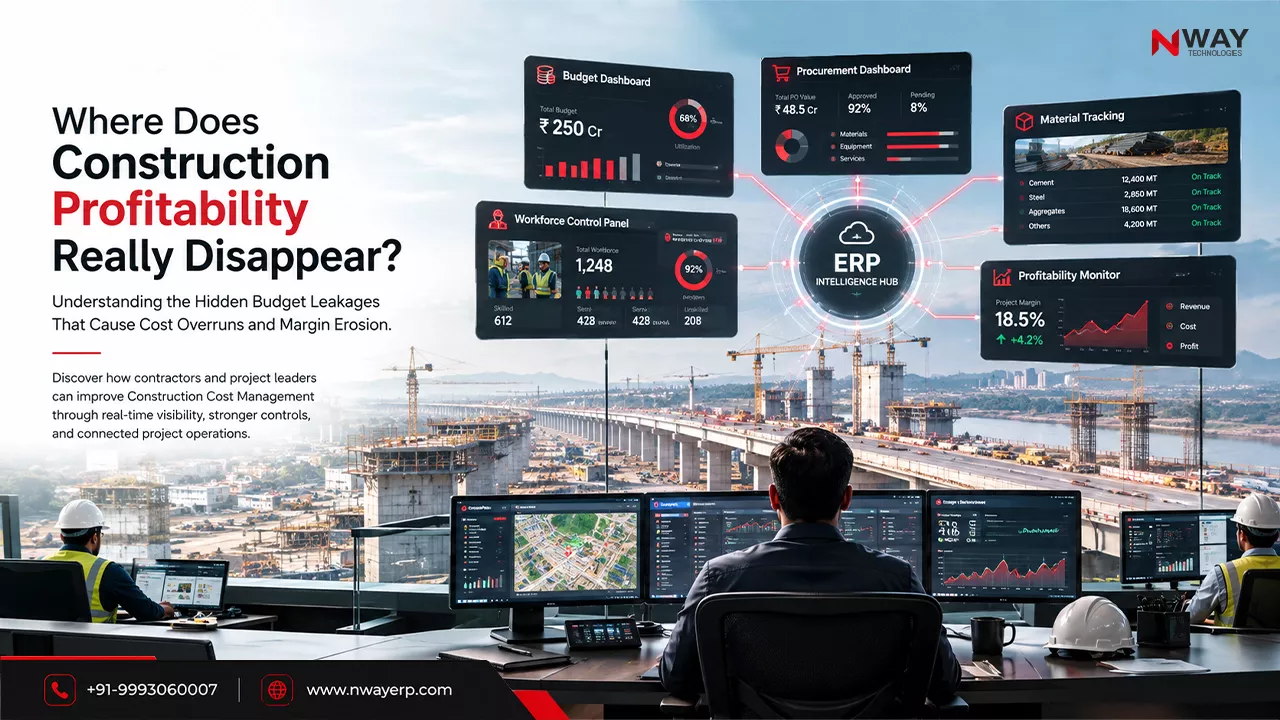
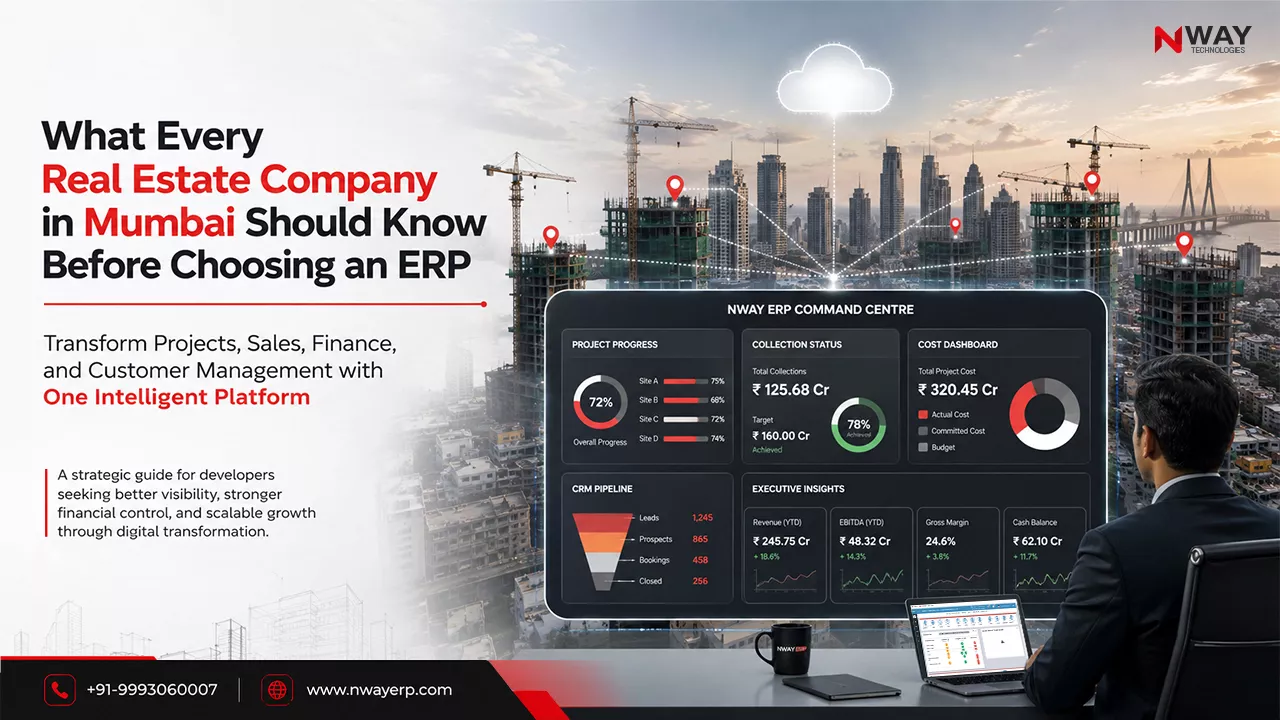
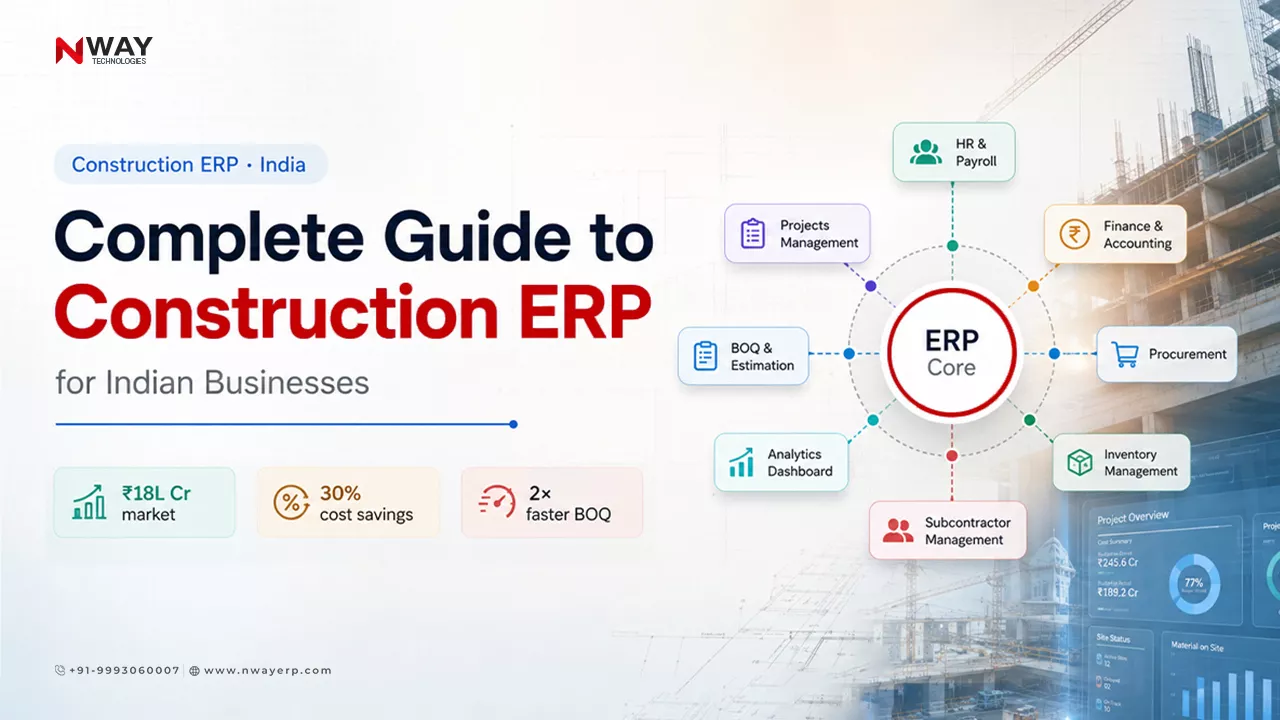
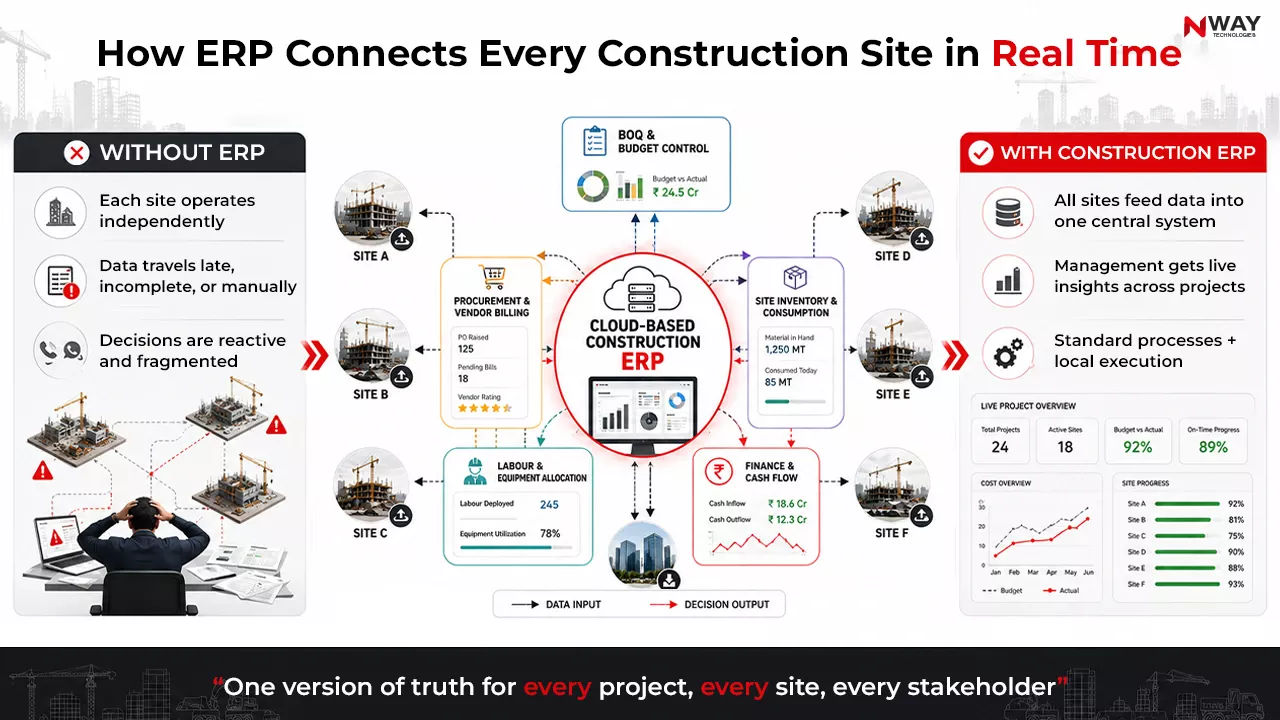
Construction project management for ERP centralizes operations, finance, and site execution into a single system, allowing leaders to manage many projects without multiplying effort.
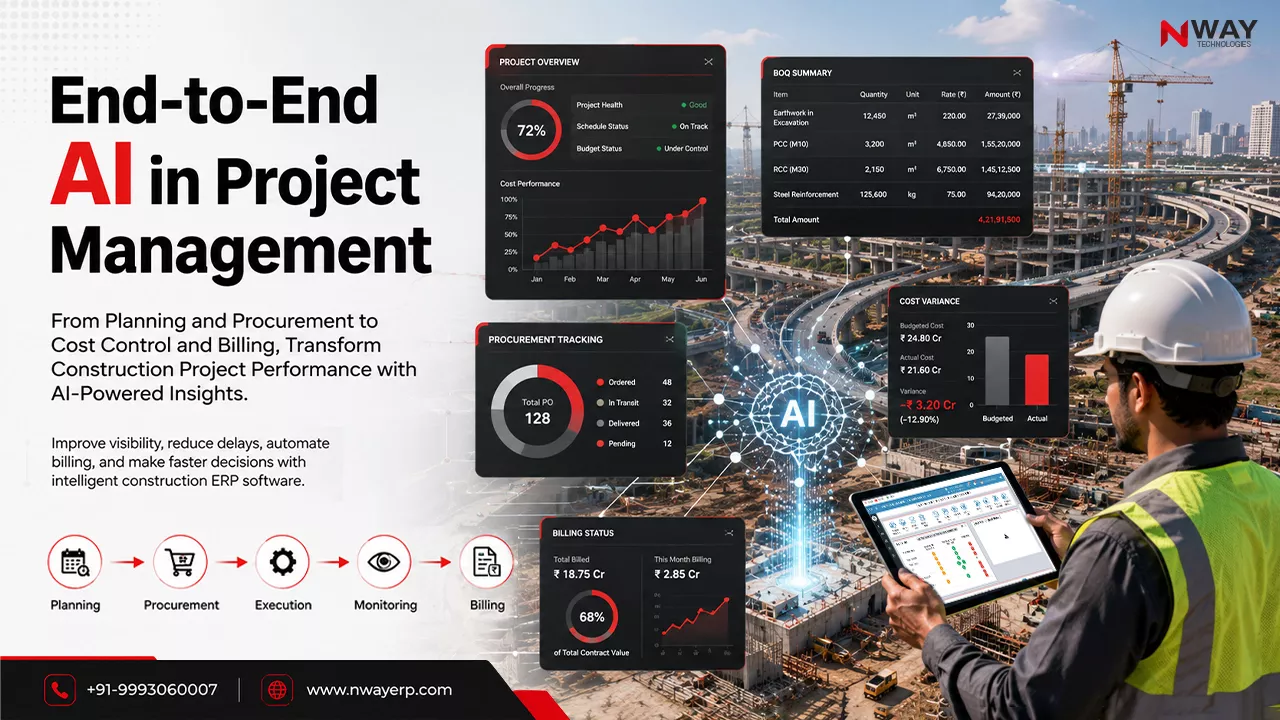
Centralized Project Lifecycle Management
ERP connects every phase of the project lifecycle:
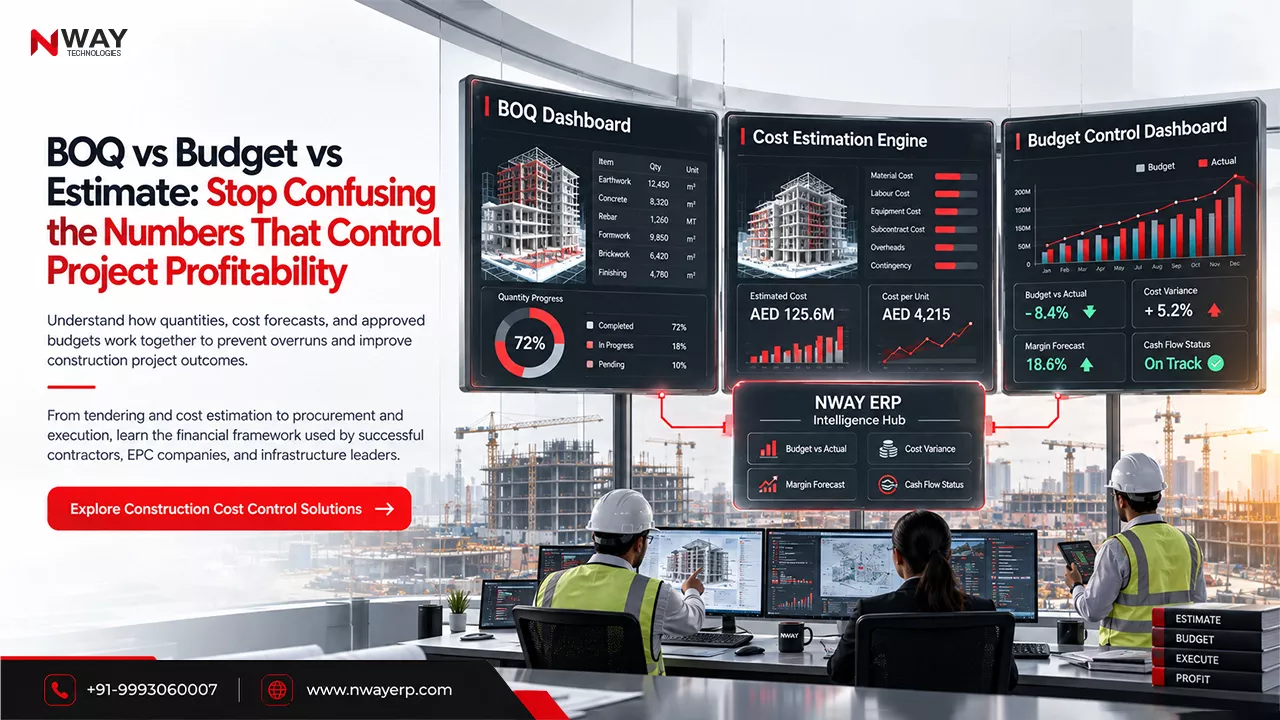
- Budgeting and BOQ mapping
- Task scheduling and milestone tracking
- Vendor billing, RA bills, and compliance
- Project closure and profitability analysis
Each site follows the same operational structure while management maintains flexibility at the execution level.
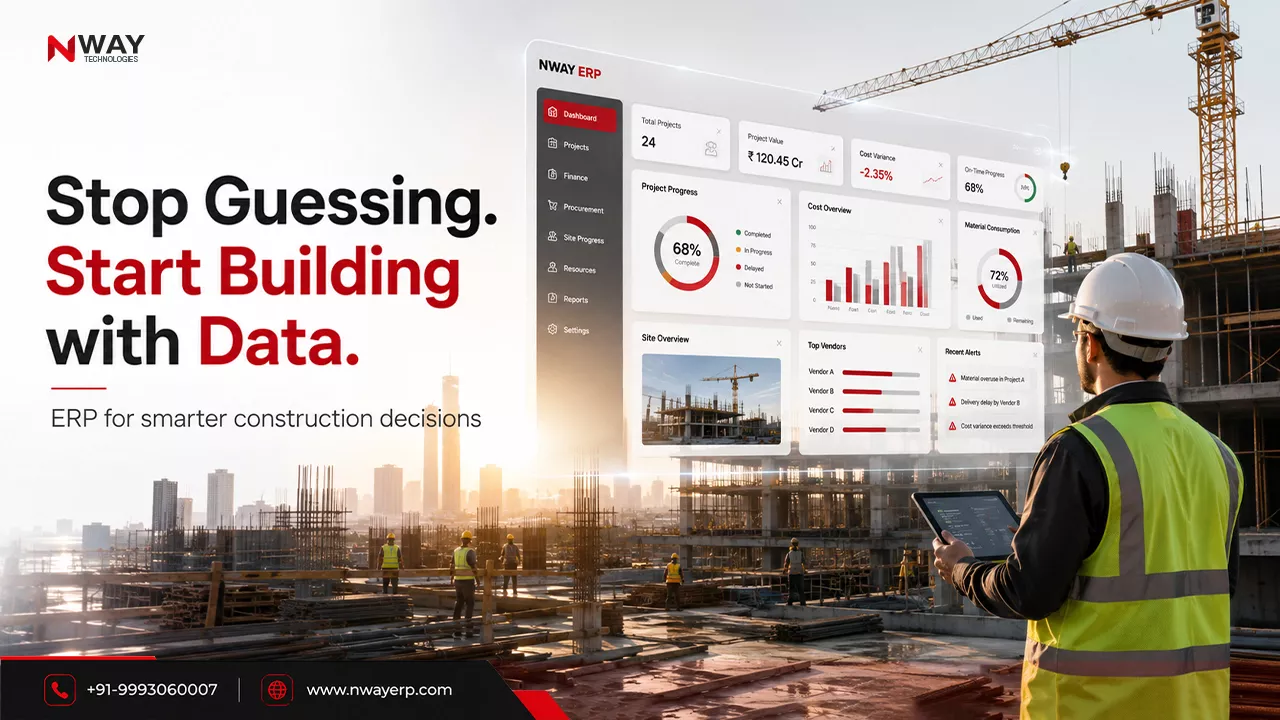
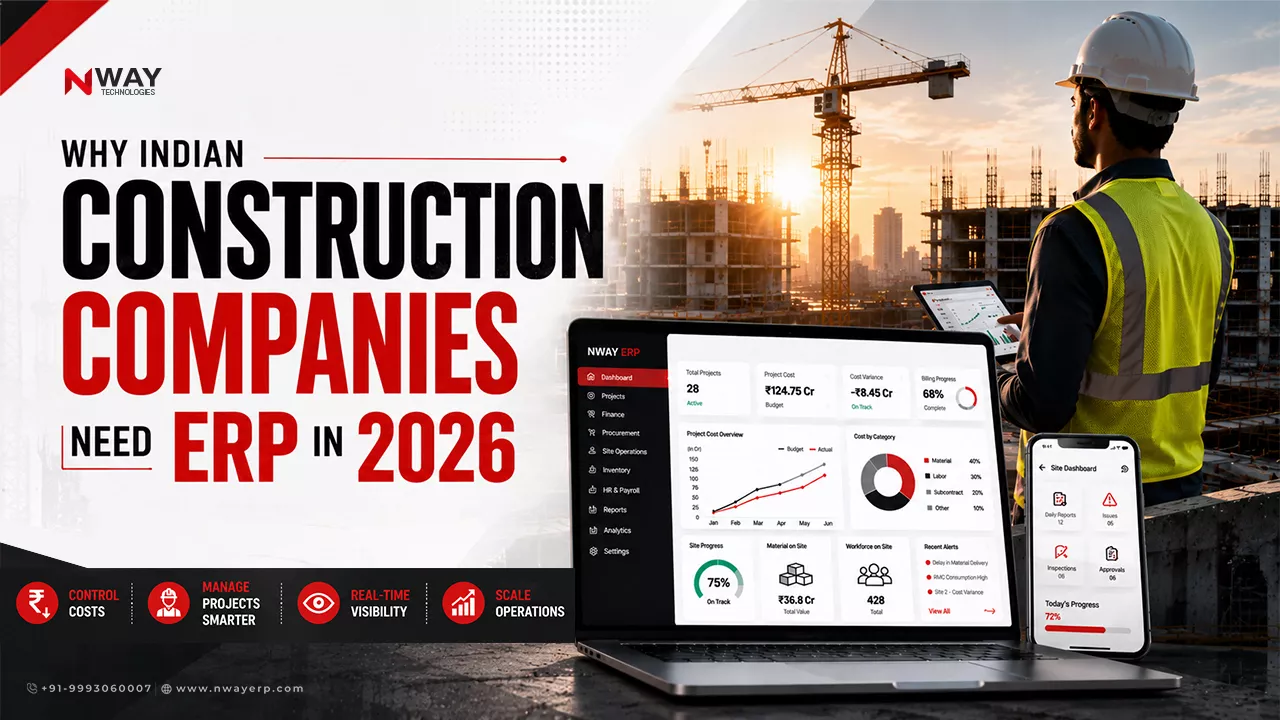
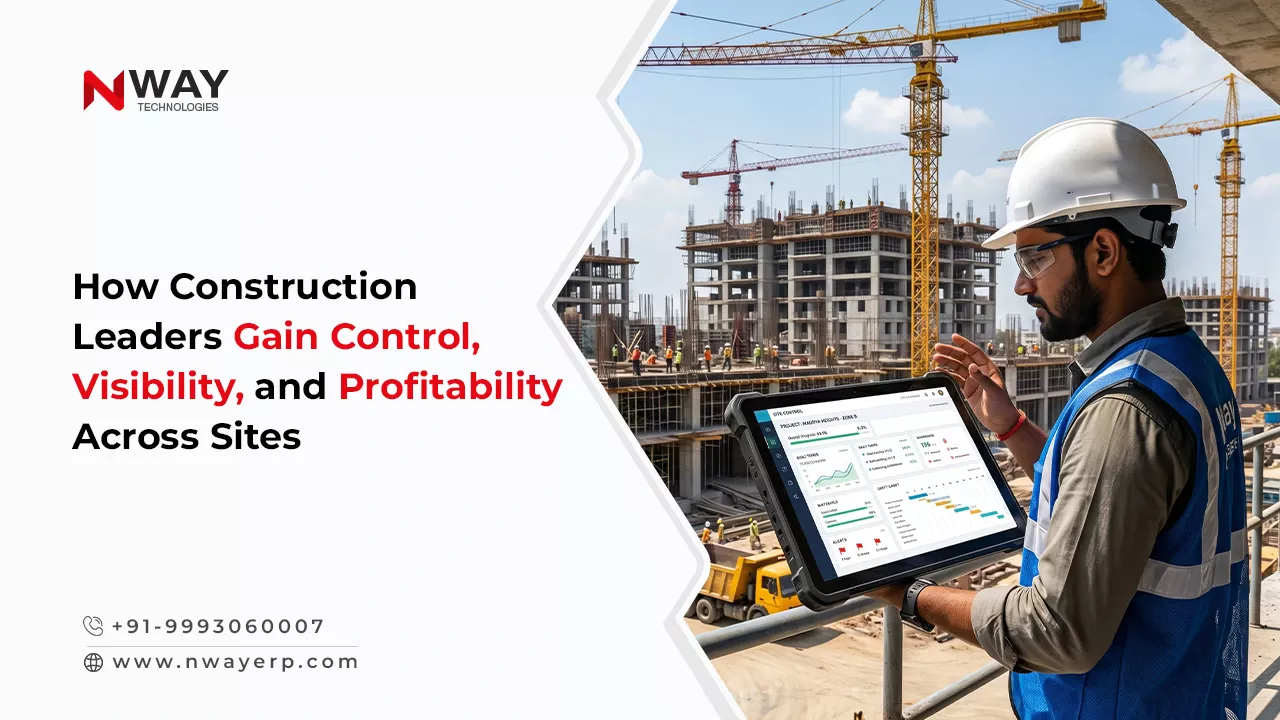
Real-Time Construction Site Monitoring
With cloud-based construction management software, site engineers update data directly from the field.
Leadership gains:
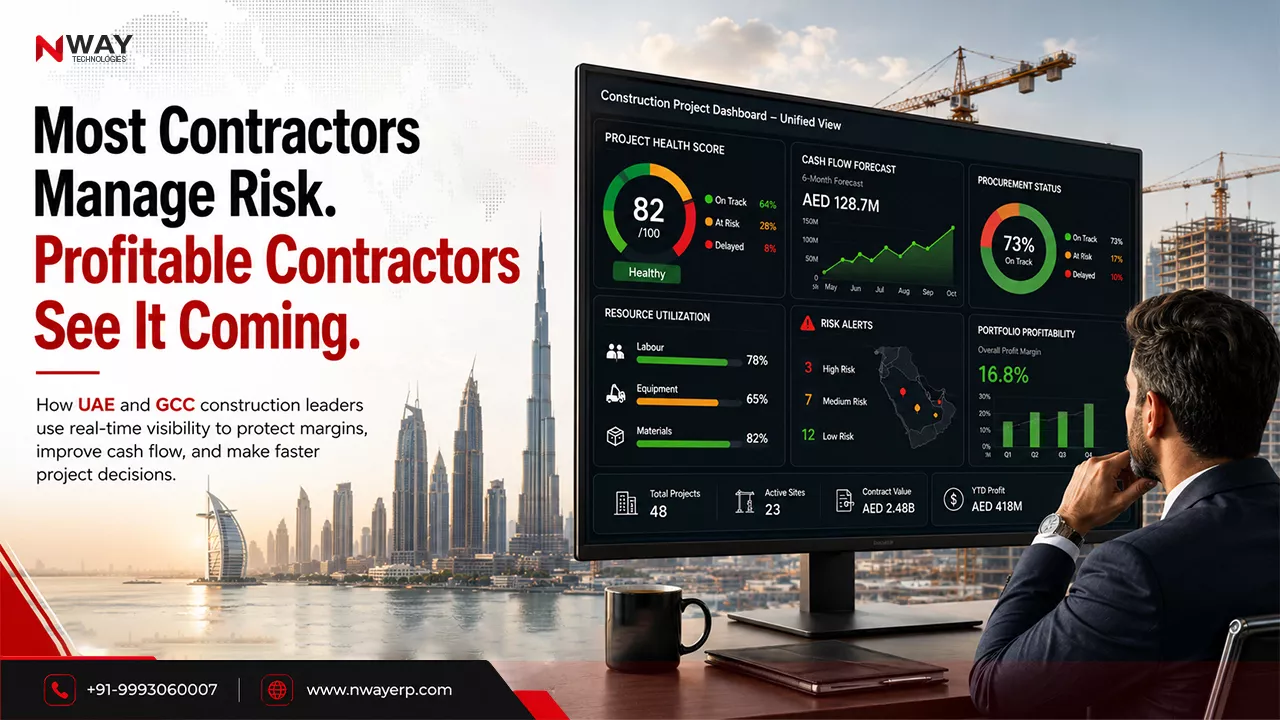
- Live progress dashboards
- Budget vs actual cost visibility
- Real-time alerts on schedule or cost deviations
This enables real-time construction site monitoring, preventing issues instead of post-mortems.
Smart Resource Allocation Across Sites
Labour, machinery, and materials often remain siloed within individual sites.
Using construction resource allocation software, ERP:
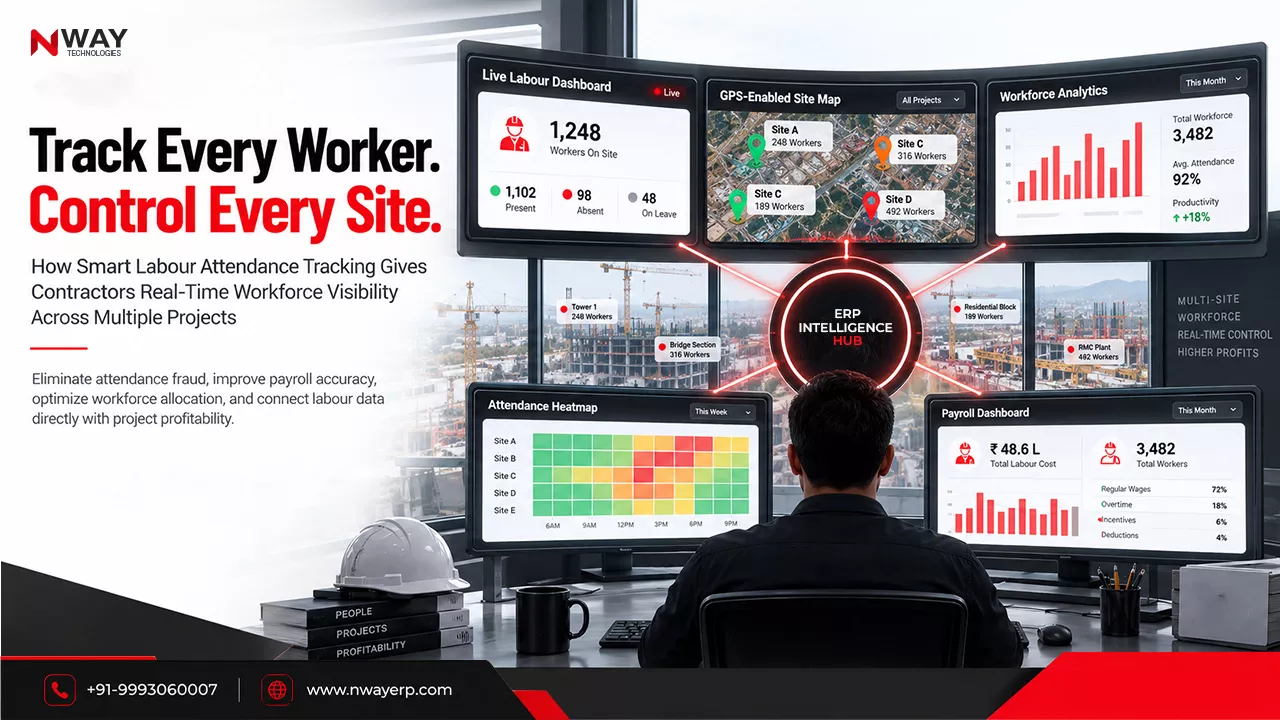
- Tracks equipment usage and idle time
- Optimises labour deployment across projects
- Prevents double-booking and shortages
This improves utilization rates while reducing emergency procurement and overtime costs.
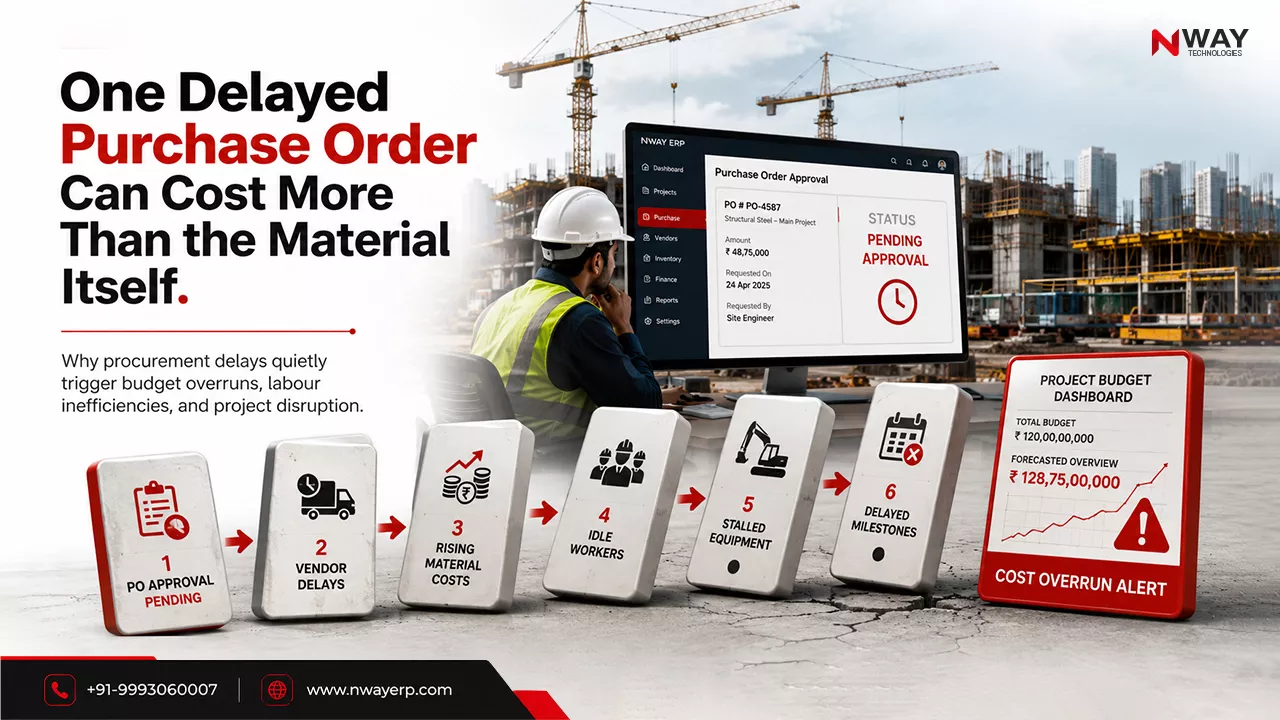
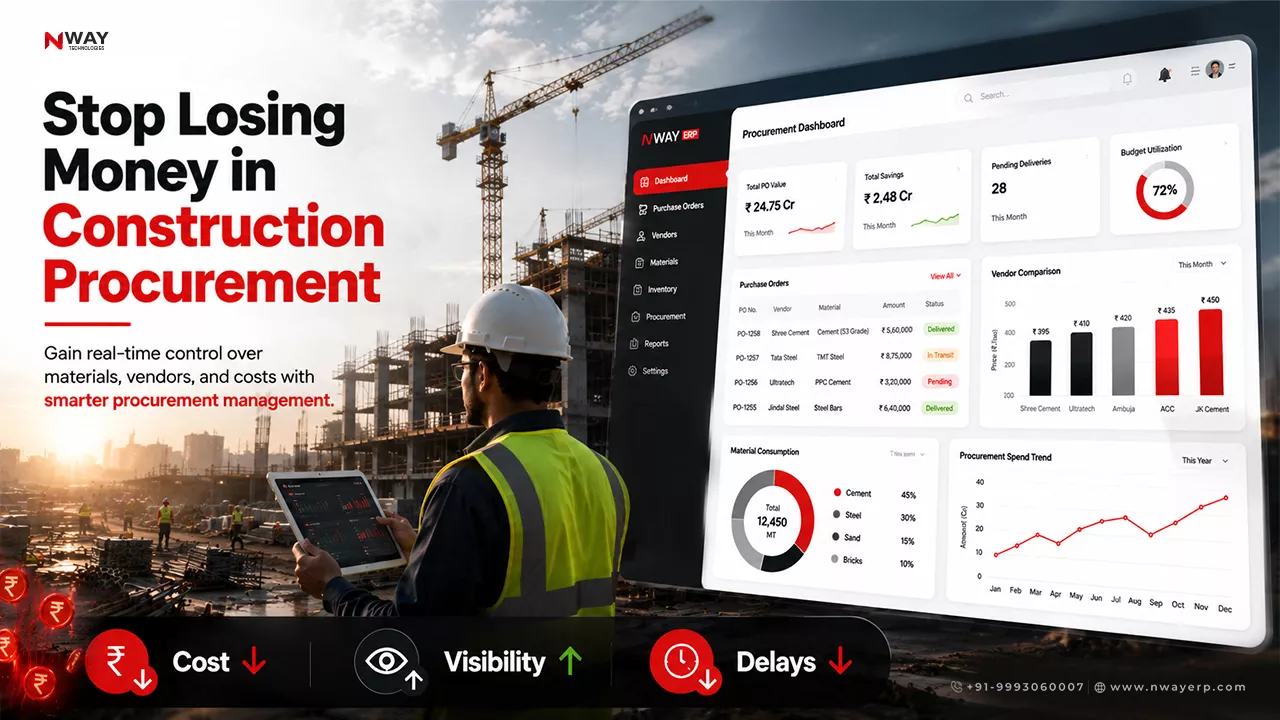
Unified Procurement and Inventory Control
Material wastage is one of the biggest margin killers in construction.
A construction inventory management ERP:
- Links BOQs to procurement plans
- Tracks material movement site-wise
- Matches consumption against estimates
Result: fewer stock-outs, less over-ordering, and significantly lower leakage.
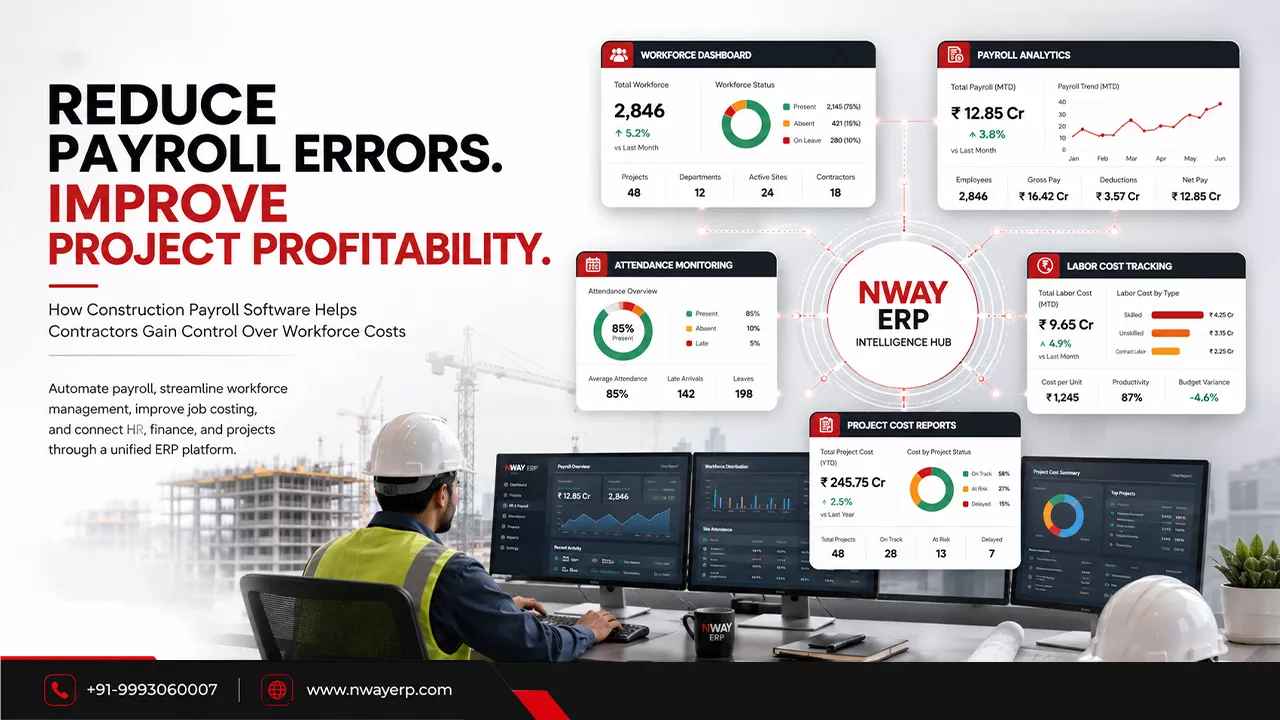
Finance and Cost Control at Scale
For CFOs and finance heads, ERP delivers:
- Project-wise P&L in real time
- Centralised cash flow tracking
- Faster monthly and quarterly closes
Instead of reconciling issues after they occur, finance teams gain forward-looking control critical in multi-site execution.
Real-World Scenarios
Scenario 1: Mid-sized Builder with 7 Sites
Without ERP:Monthly cost reports arrive 20–30 days late.
With ERP: Management reviews site-wise margins daily and intervenes early.
Scenario 2: EPC Contractor Managing Remote Infra Projects
Without ERP: Material tracking relies on phone calls and manual MRNs.
With ERP: Central procurement monitors real-time consumption across locations.
These aren’t edge cases; they reflect daily operational realities across construction Management ERP software deployments.
Business Benefits That Matter
Implementing ERP is not about technology; it’s about outcomes.
Tangible business impact
- Lower cost overruns through real-time cost tracking
- Faster decision-making with consolidated dashboards
- Operational consistency across all sites
- Scalable growth without adding proportional management overhead
For builders and contractors, ERP becomes the backbone for predictable execution.
Subtle Product Alignment
Not all ERPs fit construction.
A practical ERP for builders and contractors should be:
- Domain-specific (BOQs, RA billing, project costing)
- Cloud-based and accessible from sites
- Scalable with unlimited users
- Cost-effective for growing firms not just enterprises
The goal is adoption, not complexity.
Point to Focus on
- Multi-site construction magnifies inefficiencies
- Manual tools fail at scale due to delayed and fragmented data
- ERP centralizes project, finance, and site operations
- Real-time visibility drives faster, smarter decisions
- Domain-specific ERP enables controlled, scalable growth
Who Should Use Construction ERP for Multi-Site Management?
This solution is ideal for:
- Real estate developers
- EPC contractors
- Infrastructure companies
- Road construction firms
- Industrial project contractors
- Mid-sized builders scaling across locations
Conclusion
Managing multiple construction sites doesn’t require more spreadsheets or more managers; it requires better systems.
A well-implemented ERP brings discipline, visibility, and predictability to operations, allowing construction leaders to scale confidently while protecting margins.
The firms that succeed won’t be those with the most sites but those with the strongest operational control.
Discover how a construction-focused ERP can streamline your multi-site operations, improve cost control, and scale your business efficiently.