A builder in Pune is running three projects: a 14-floor residential tower, a row-house project on the city edge, and a commercial building that’s just cleared plinth. The owner gets updates on WhatsApp, the accounts team works in Tally, each site keeps its own material register, and sales tracks bookings in Excel.
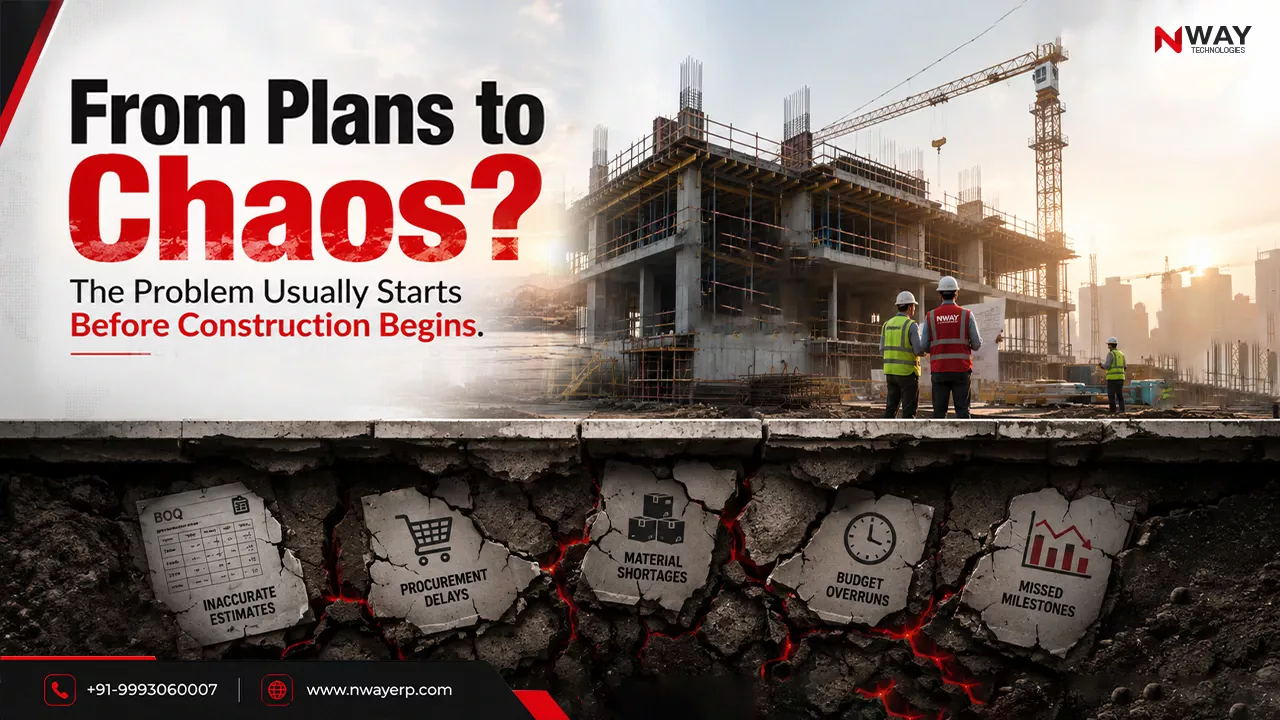
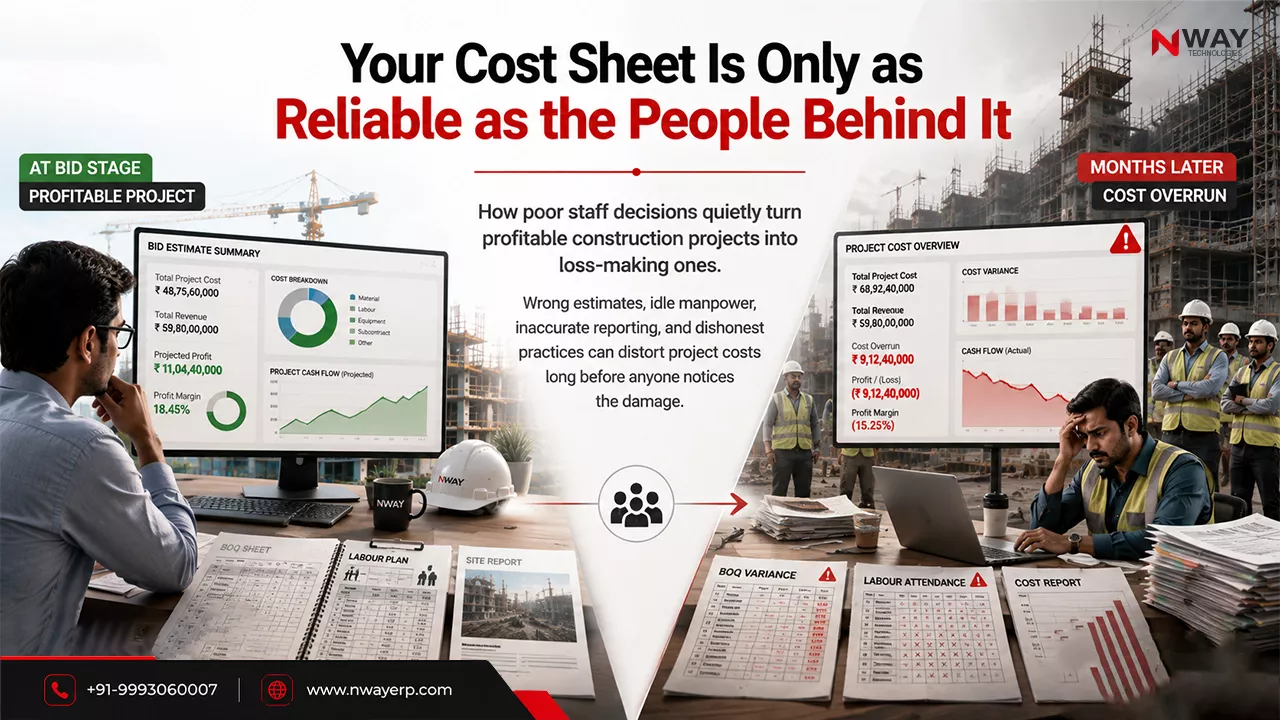
On Monday the owner asks one simple question: “Are we making money on Tower B?” Nobody can answer it until the month-end reports are stitched together, and by then the cement has been over-ordered, a contractor bill has been paid twice, and a customer demand letter is two weeks late.
That gap between what’s happening and what the owner can see is why builders move to construction management software.
Growing builders today manage more than just construction projects. They coordinate multiple teams across sites, track budgets, monitor equipment, and meet strict compliance standards. Using spreadsheets, emails, or disconnected tools slows progress and increases errors. That’s why construction management software is essential – it centralizes all project activities, provides real-time visibility, and helps builders make faster, data-driven decisions.
Table of Contents:
- What Is Construction Management Software?
- Why Growing Builders Need Construction Management Software
- Key Benefits of Construction Management Software
- How Nway ERP Helps Growing Builders Achieve Business Impact
- With vs Without Construction Management Software
What Is Construction Management Software?
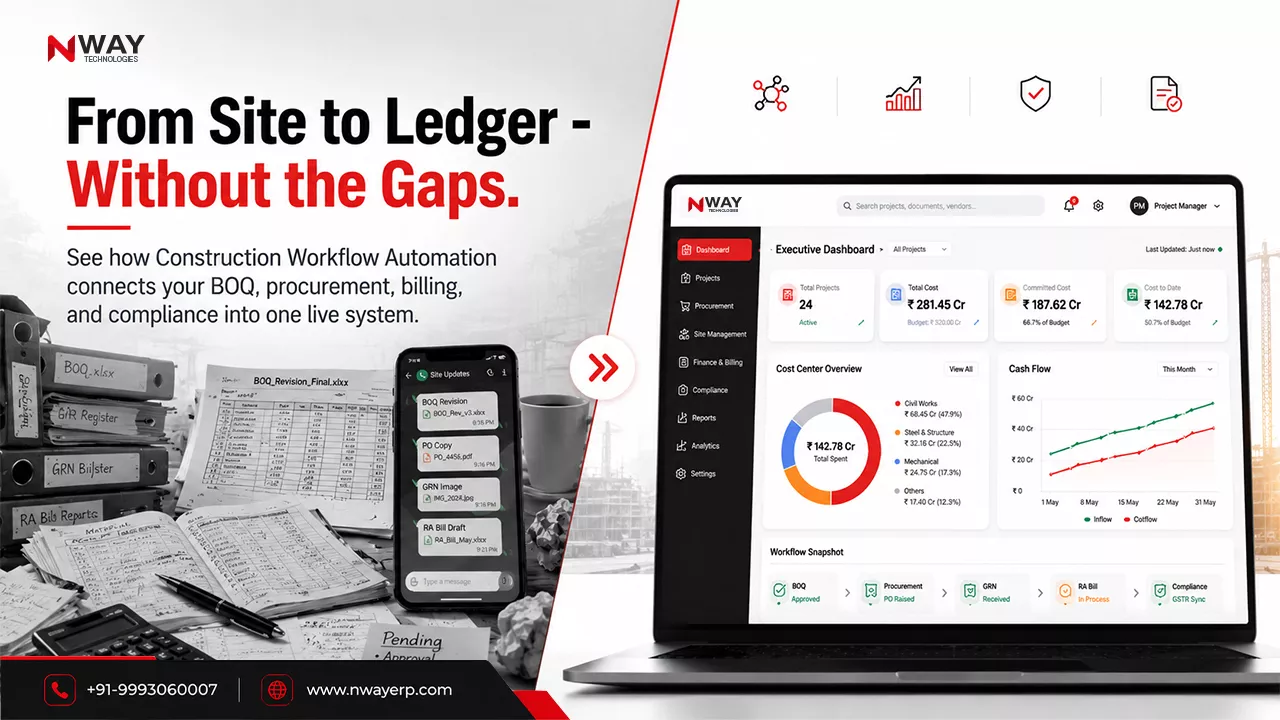
Construction management software for builders is one system that connects everything a builder does on a project, from budget and purchase to contractors, site material, progress, sales collections and accounts. Instead of separate registers, spreadsheets and phone calls, every team works on the same live data.
Why “for builders” matters: a contractor builds for a client and bills that client. A builder or developer buys the land, funds the construction, sells the units, and carries the risk end to end. So a builder needs project control and the link between construction progress, customer payments and compliance.
Why Growing Builders Need Construction Management Software
Builders face common but serious challenges:
Project delays: Multiple teams and sites can cause miscommunication and scheduling conflicts.
Budget overruns: Without real-time monitoring, costs often exceed estimates.
Resource inefficiency: Equipment and labor are underutilized or mismanaged.
Subcontractor coordination problems: Delayed approvals or missed updates slow progress.
Compliance headaches: Safety and regulatory documentation is scattered across systems.
A construction project management software addresses these issues by centralizing data, automating workflows, and providing insights that help managers act before problems escalate.
The problems that hold growing builders back
- No project-wise profit view. Costs sit in accounts, progress sits with site teams, and sales sits with the CRM or Excel.
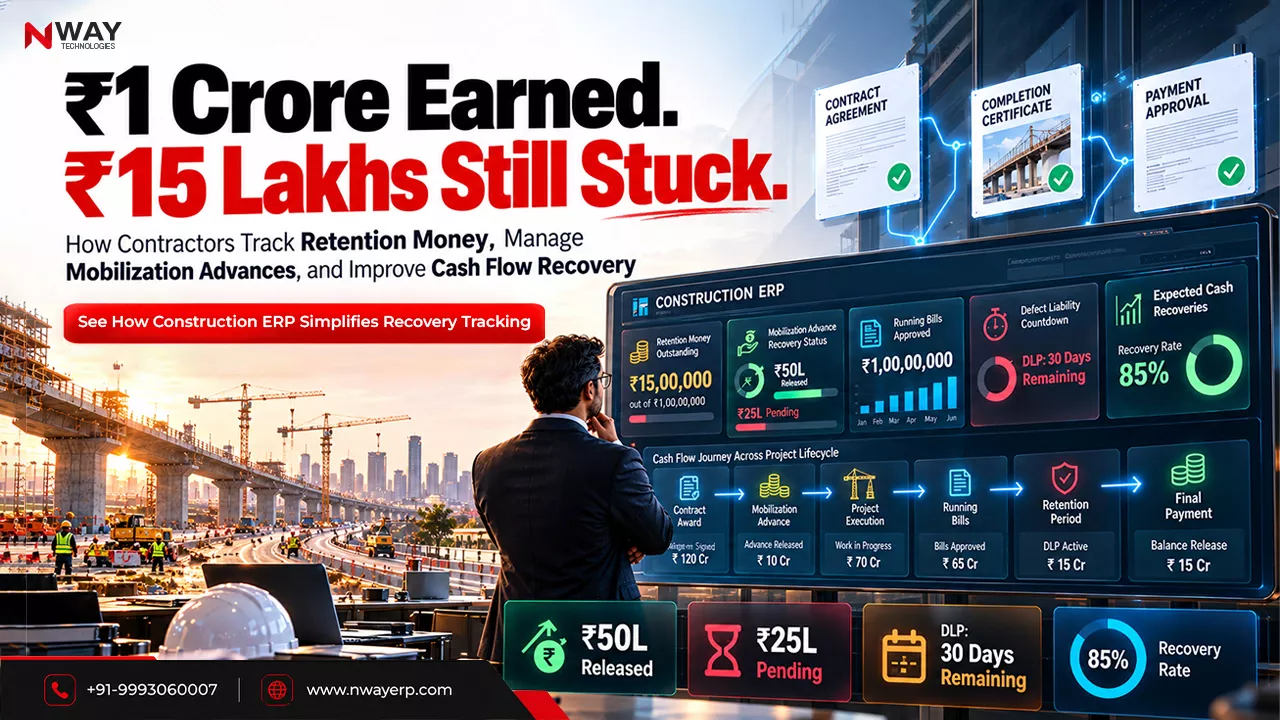
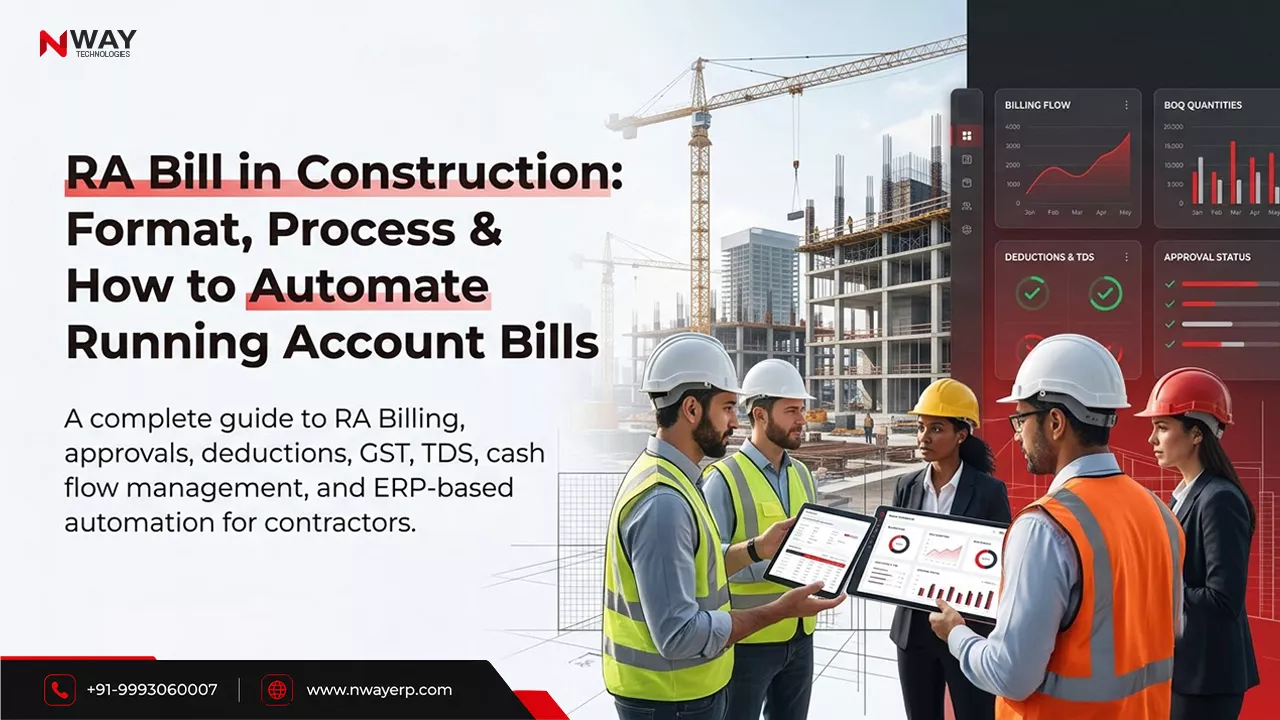
- Contractor bills that don’t match work done. Measurements, RA bills, retention and advances get tracked by hand.
- Material that disappears between sites. Transfers, wastage and unrecorded issues add up quietly.
- Demand letters that lag construction. If customers pay on slab or stage completion, every day of delay in raising demands hurts cash flow.
- Compliance reporting rebuilt every quarter. Progress and fund-use reports for RERA are put together manually.
- Approvals stuck in WhatsApp. POs, bills and payments wait for the right person to see a message.
Align field and office teams effortlessly with a unified view through Nway ERP.
Key Benefits of Construction Management Software
Implementing construction project management software helps builders gain a clear view of timelines, budgets, and resources. This allows teams to plan proactively, adjust quickly, and reduce delays across projects.
Better Planning and Predictive Scheduling
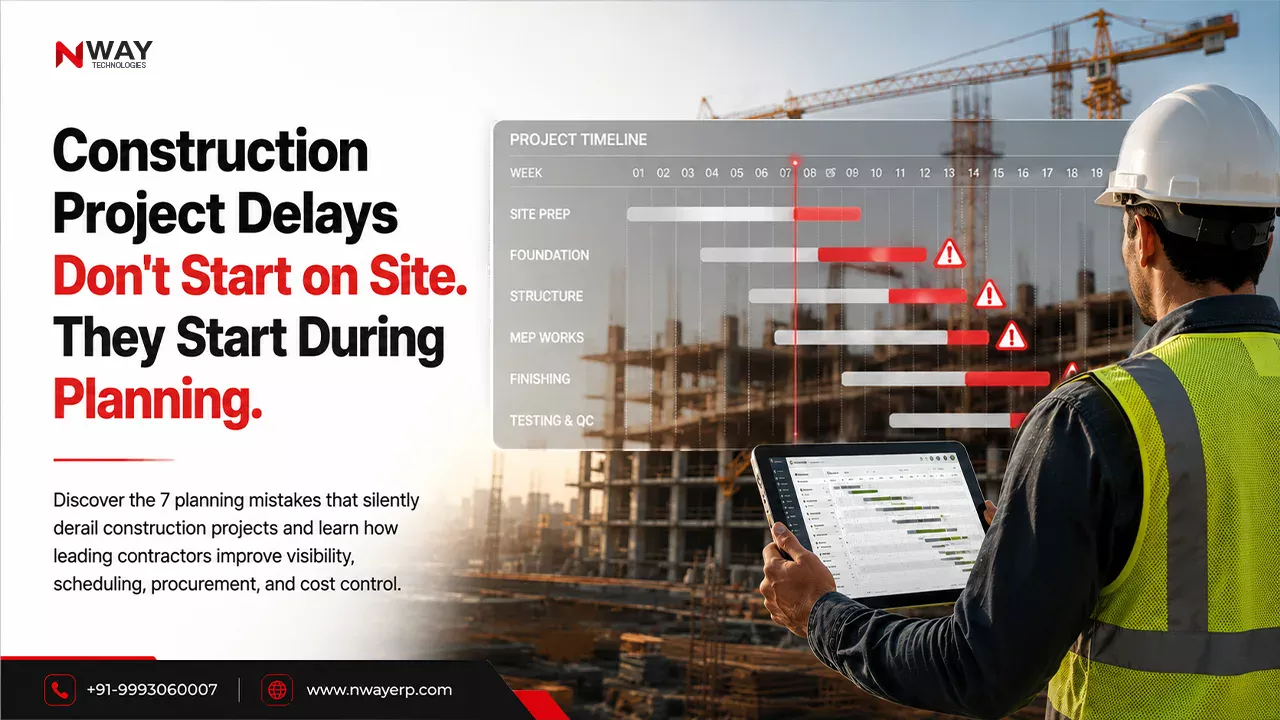
A construction management system gives managers real-time visibility into every project. They can track timelines, allocate resources, and adjust plans quickly when conditions change. Builders using construction software for builders report fewer delays and improved delivery times.
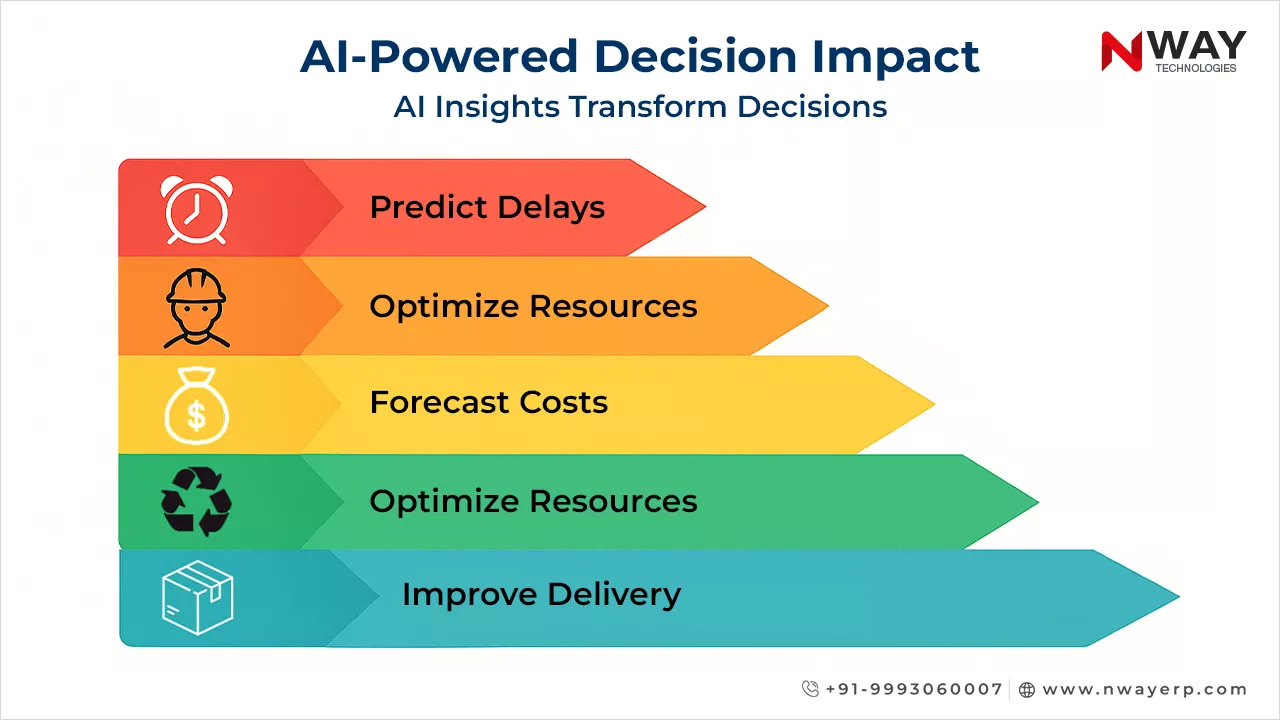
With AI-enhanced tools, builders can predict bottlenecks and schedule adjustments automatically, reducing idle labor and avoiding costly downtime.
Real-Time Collaboration and Team Alignment
Traditional communication via calls, emails, and paper slows teams down. Software for construction companies allows office and field teams to see the same project updates instantly.
AI-assisted dashboards provide intelligent insights about task progress, helping teams prioritize work and coordinate subcontractors more efficiently.
Accurate Cost Control and Resource Forecasting
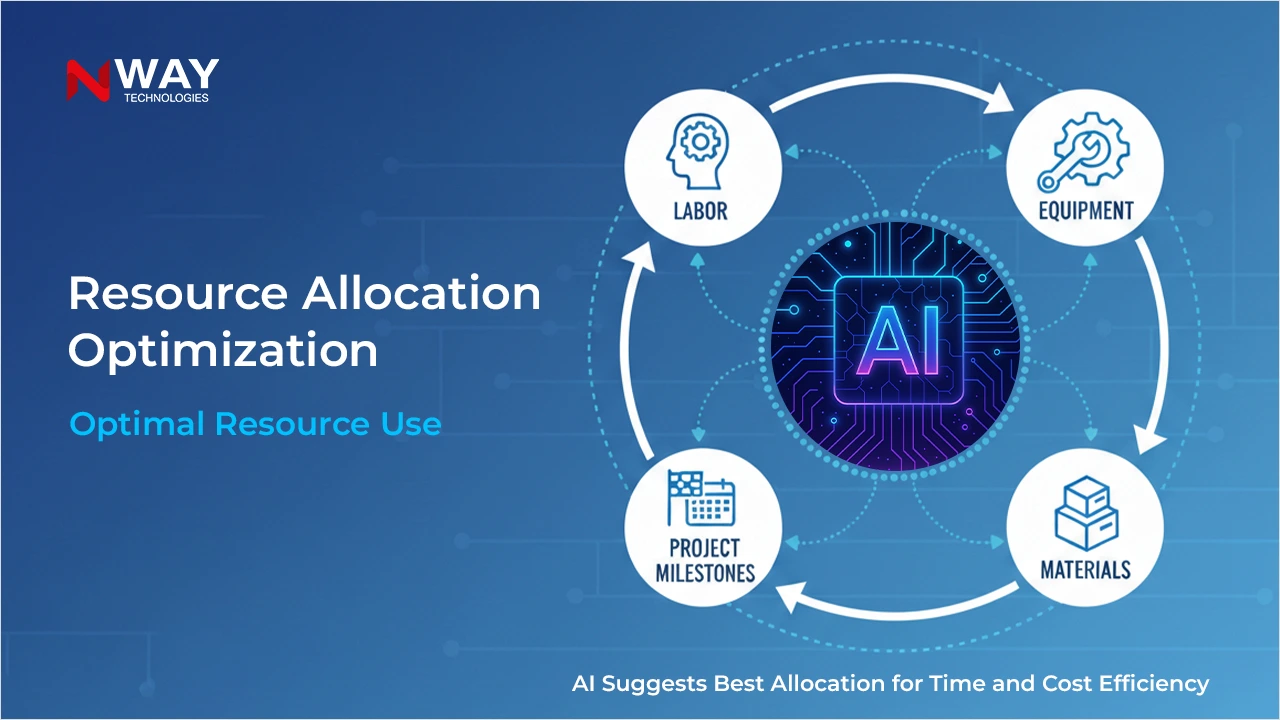
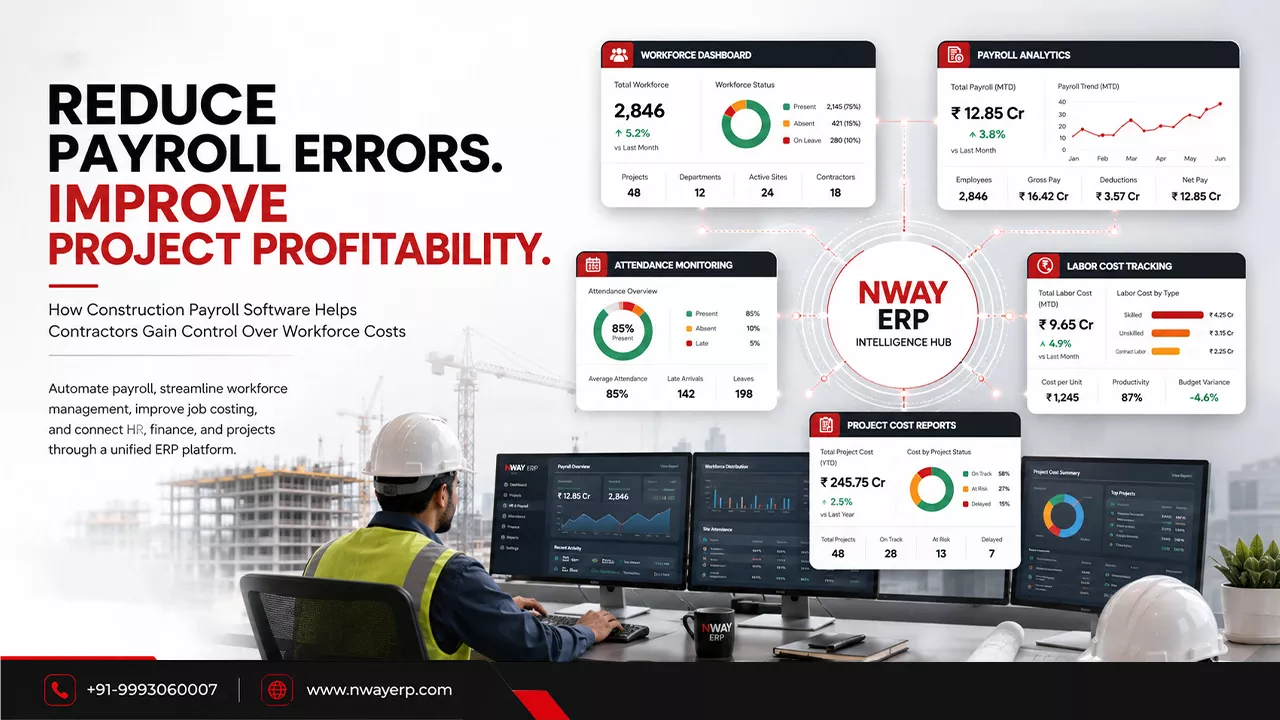
Budget tracking becomes simple with construction management software that monitors labor, materials, and equipment in real time. Builders can spot cost overruns early and make adjustments before it impacts profitability.
AI-driven forecasting enhances accuracy by predicting labor needs, material consumption, and equipment requirements – reducing waste and optimizing resource utilization.
Smarter Documentation and Compliance
Construction projects generate many documents: contracts, approvals, permits, safety reports. Builder management software consolidates all documentation, ensuring it is easy to retrieve and audit.
AI tools automatically track approvals, flag missing documents, and generate audit-ready reports, reducing compliance risk and saving administrative effort.
Industry Trends Highlighting Digital Adoption
Over 60% of construction firms now deploy cloud-based construction management software, enabling access to project data from any location.
Predictive analytics and AI-driven progress tools are increasingly used to anticipate delays and shortages before they affect delivery.
Mobile access ensures that field teams can update tasks, track resources, and communicate in real time.
These developments show that construction software for builders is not just a productivity tool – it fundamentally improves planning, risk management, and profitability.
8 ways construction management software helps builders
- One view of every project, tower and phase
See budget, spend, progress and pending approvals for each project, then drill into a tower or phase. The owner gets the Monday answer on Monday. - Budget vs actual before it’s too late
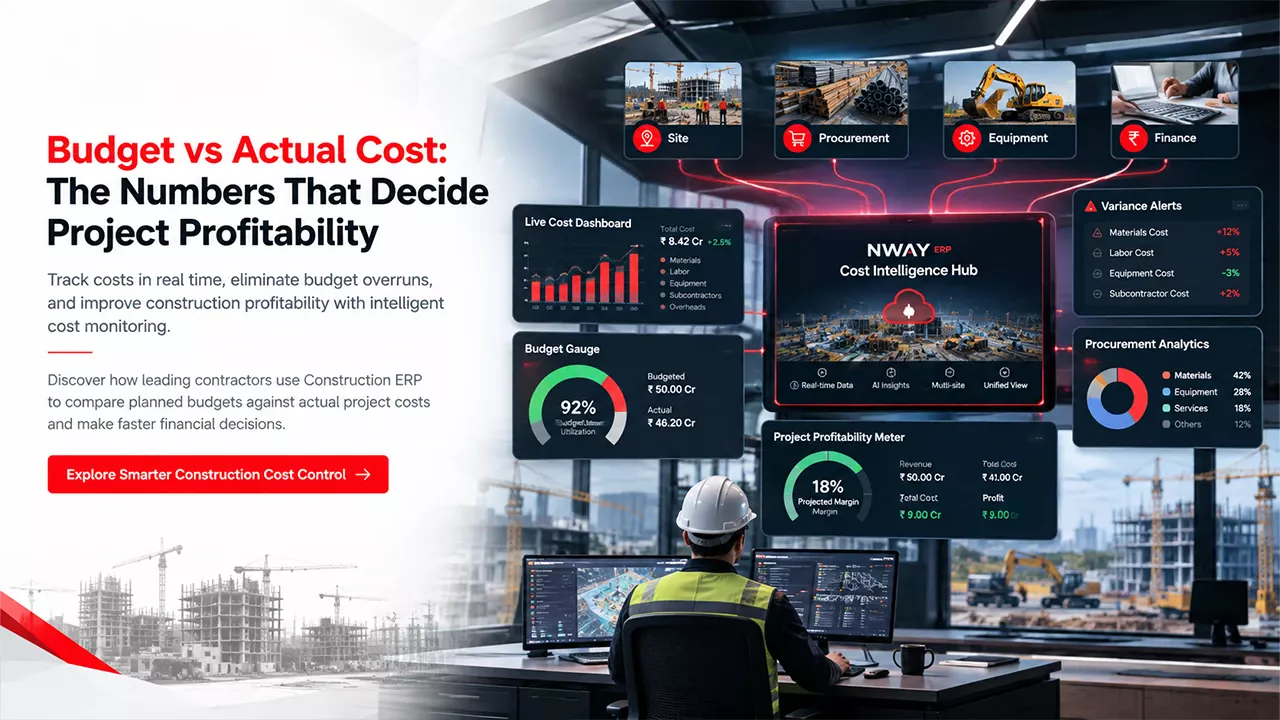
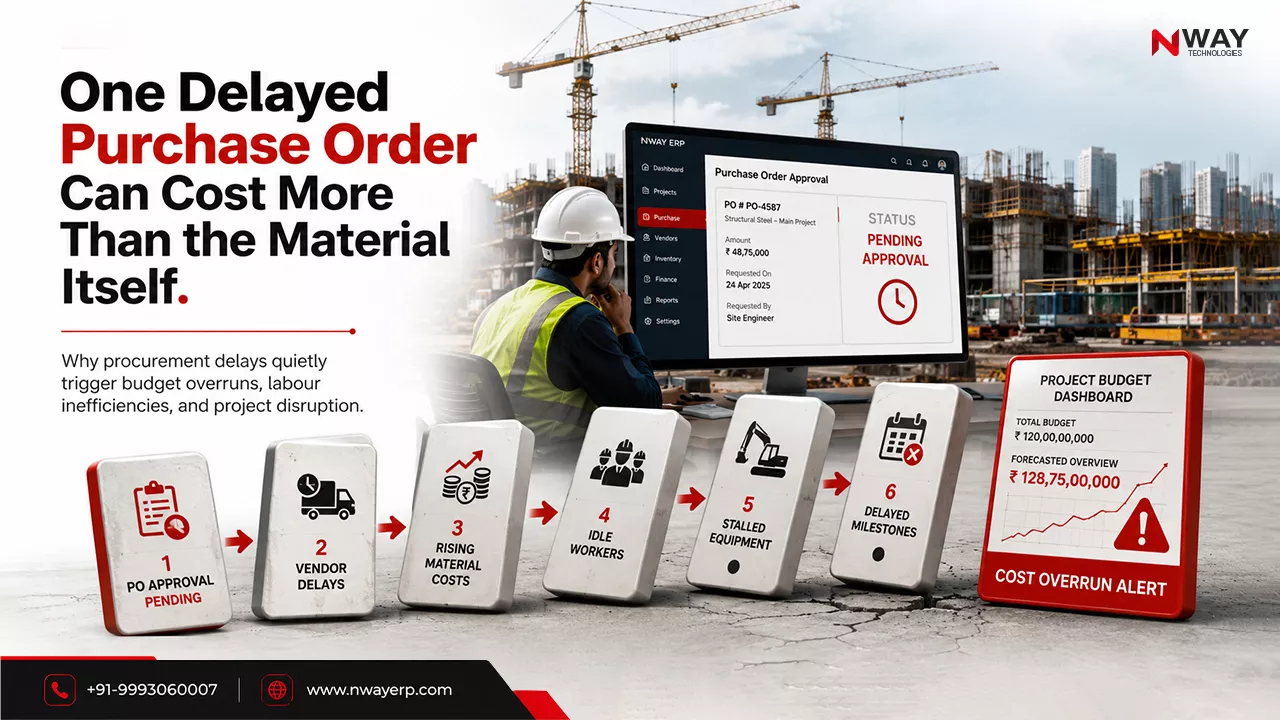
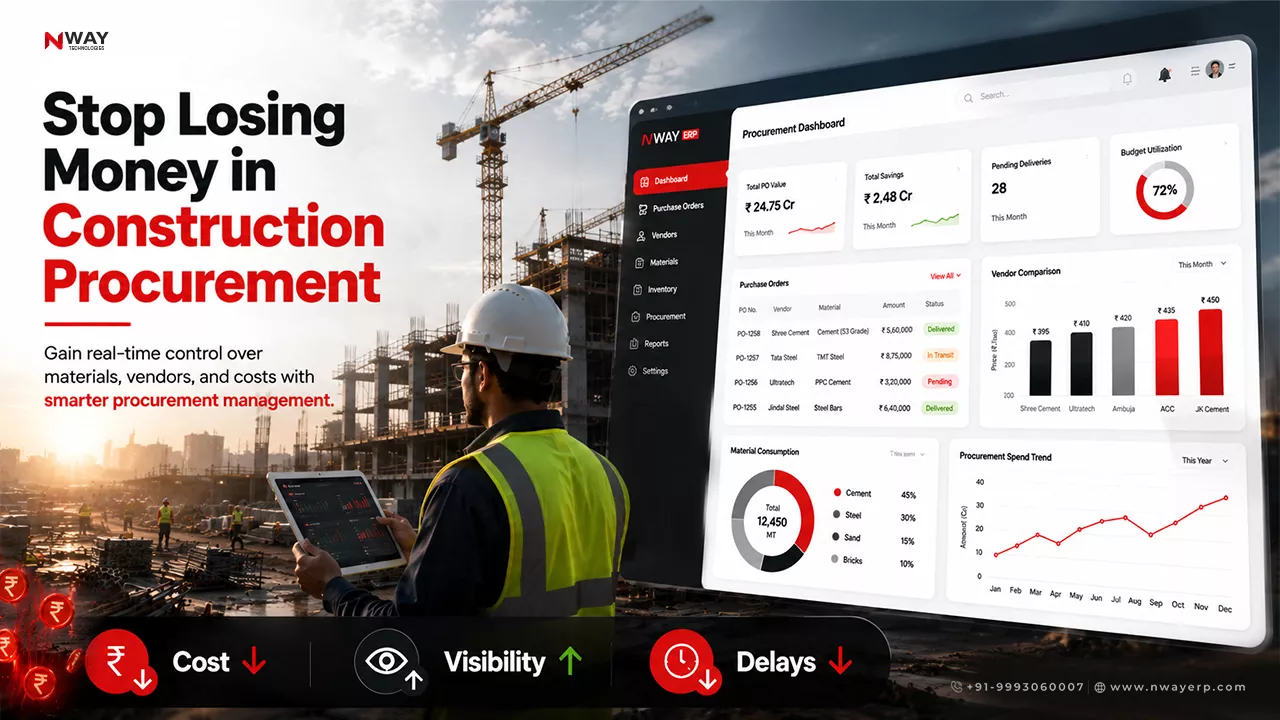
When purchase orders, contractor bills and site expenses post against the project budget as they happen, cost overruns show up in week three, not at possession. - Contractor bills you can trust
Work orders, measurements, RA bills, retention and advance recoveries sit in one place, so you pay for work actually done, once. - Material control across sites
Track receipts, issues, transfers and stock at every site store, and compare actual consumption against what the BOQ says you should have used. - Construction progress linked to customer collections
When site progress, sales and accounts share one system, the accounts team can see which customers are due for a demand as soon as a stage is complete, and track what’s outstanding. - Compliance reporting without the scramble
RERA requires developers to report project progress and keep a share of customer collections in a separate project account. When costs, progress and collections are already tracked project-wise, preparing these updates is a review, not a rebuild. GST on purchases and contractor bills is handled the same way. - Site updates from a phone
Site engineers record daily progress, labour, material requests and photos from the mobile app. The office sees it the same day, instead of waiting for the weekly meeting. - Approvals with an audit trail
Purchase requests, POs, bills and payments move through set approval levels, with a record of who approved what and when. Nothing gets lost in a chat thread.
How Nway ERP Helps Growing Builders Achieve Business Impact
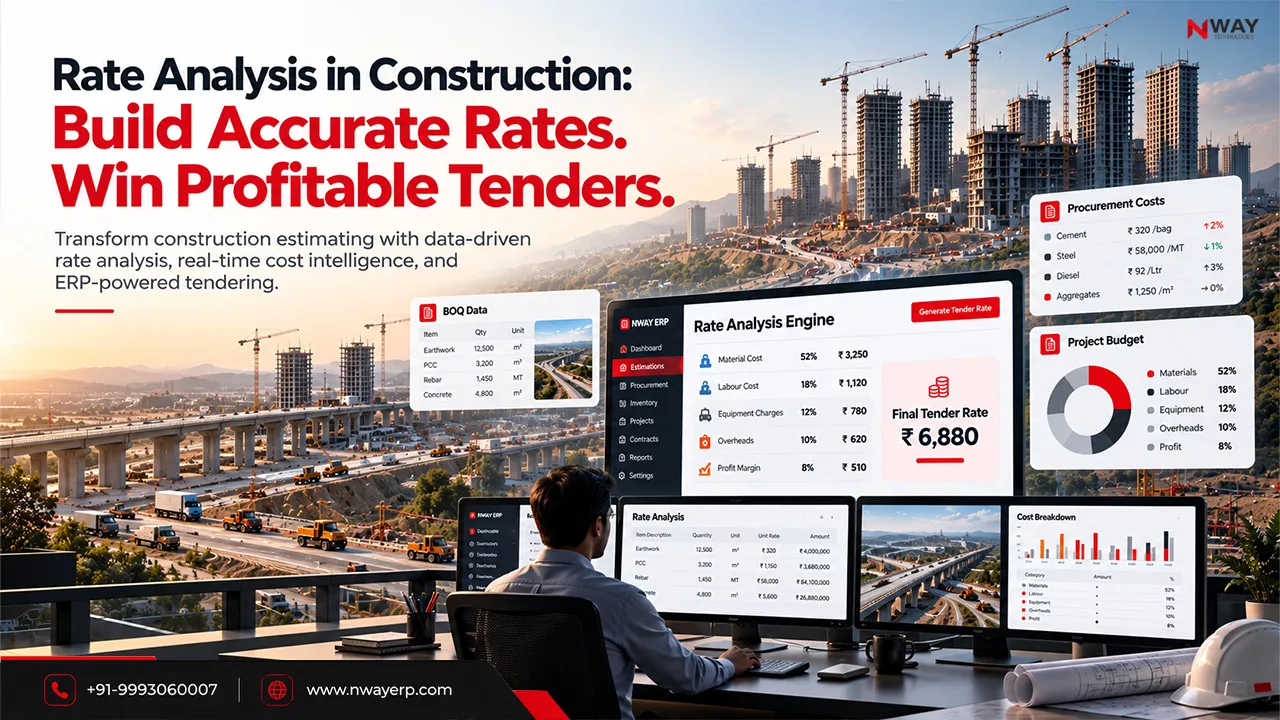
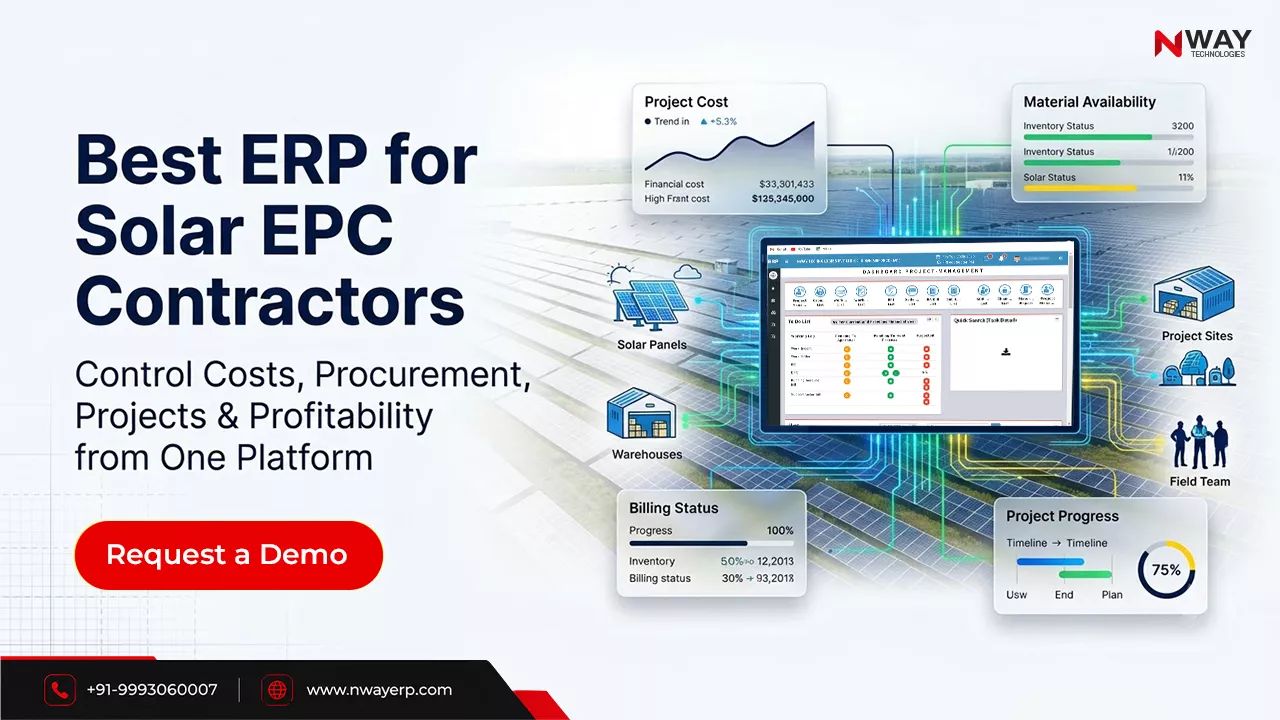
NWAY ERP is a construction and real estate ERP used by builders, contractors and developers across India. It brings projects, planning, purchase, store and inventory, contractor management, labour, finance and sales into one cloud platform with a mobile app and user-based pricing.
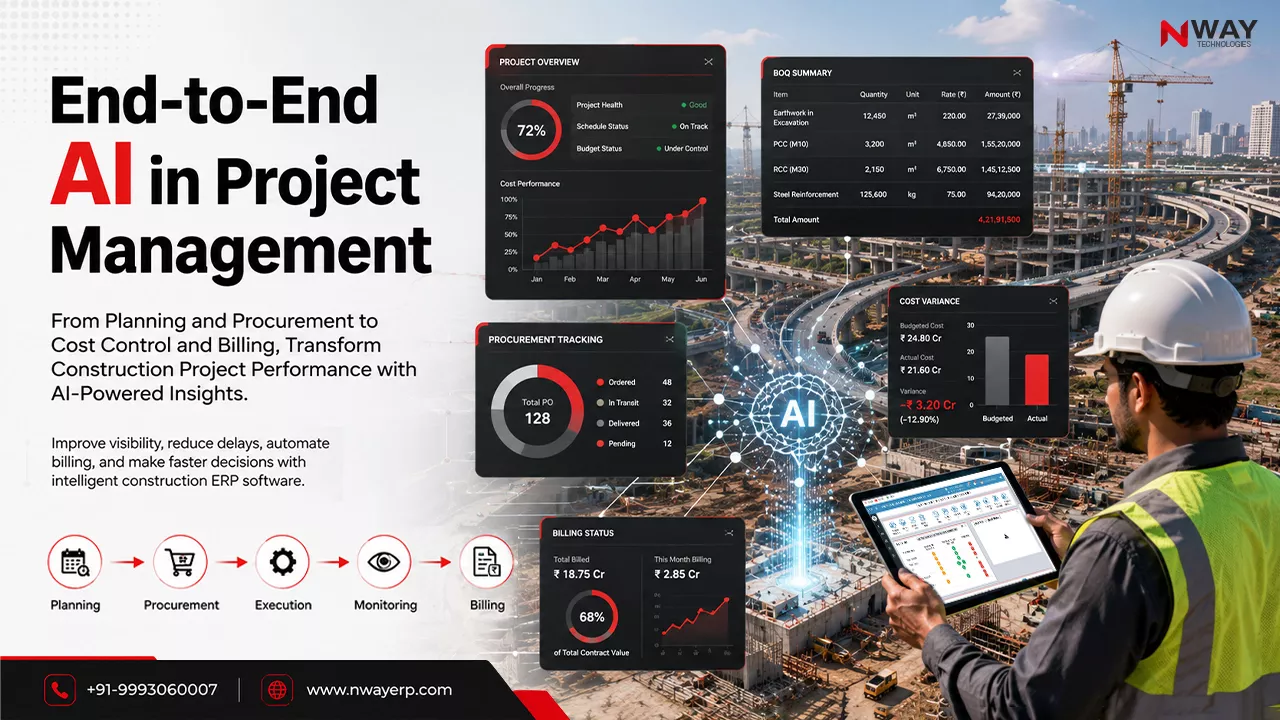
Builders don’t just need software; they need solutions that address real operational challenges across projects, teams, and sites. Nway ERP, an AI-enhanced construction management system, delivers this through a unified platform:
Unified Project and Resource Visibility
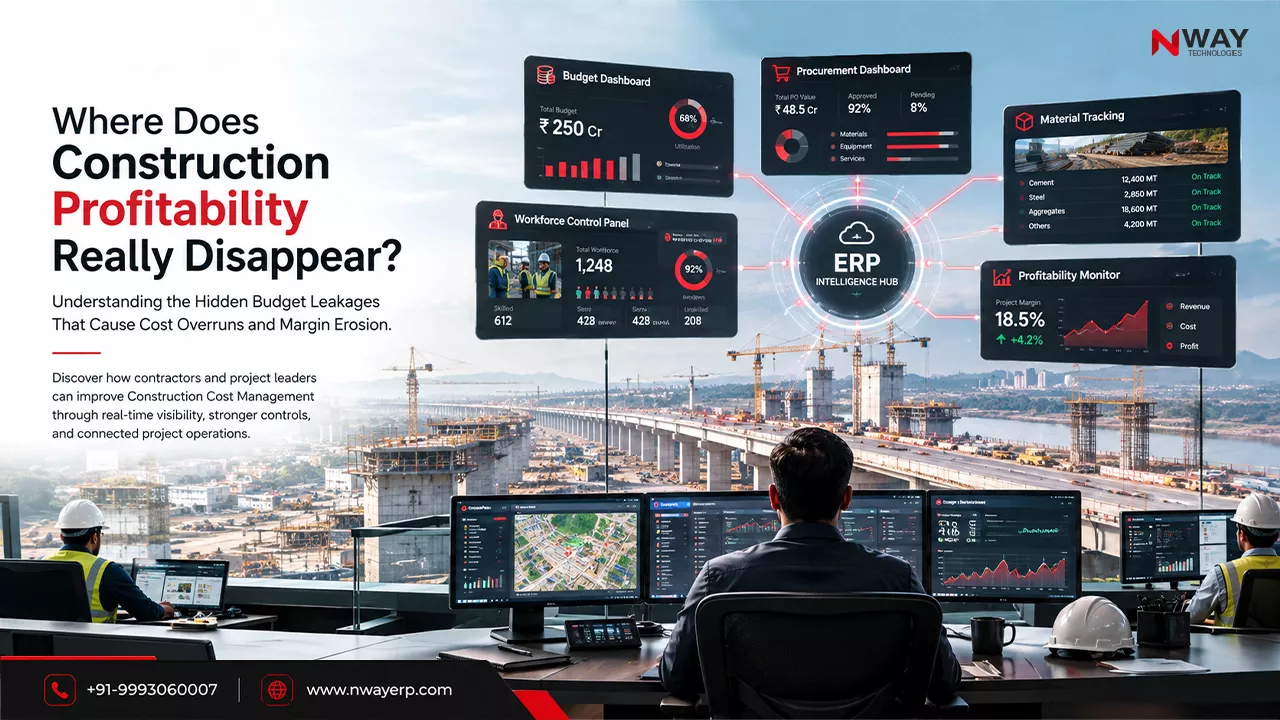
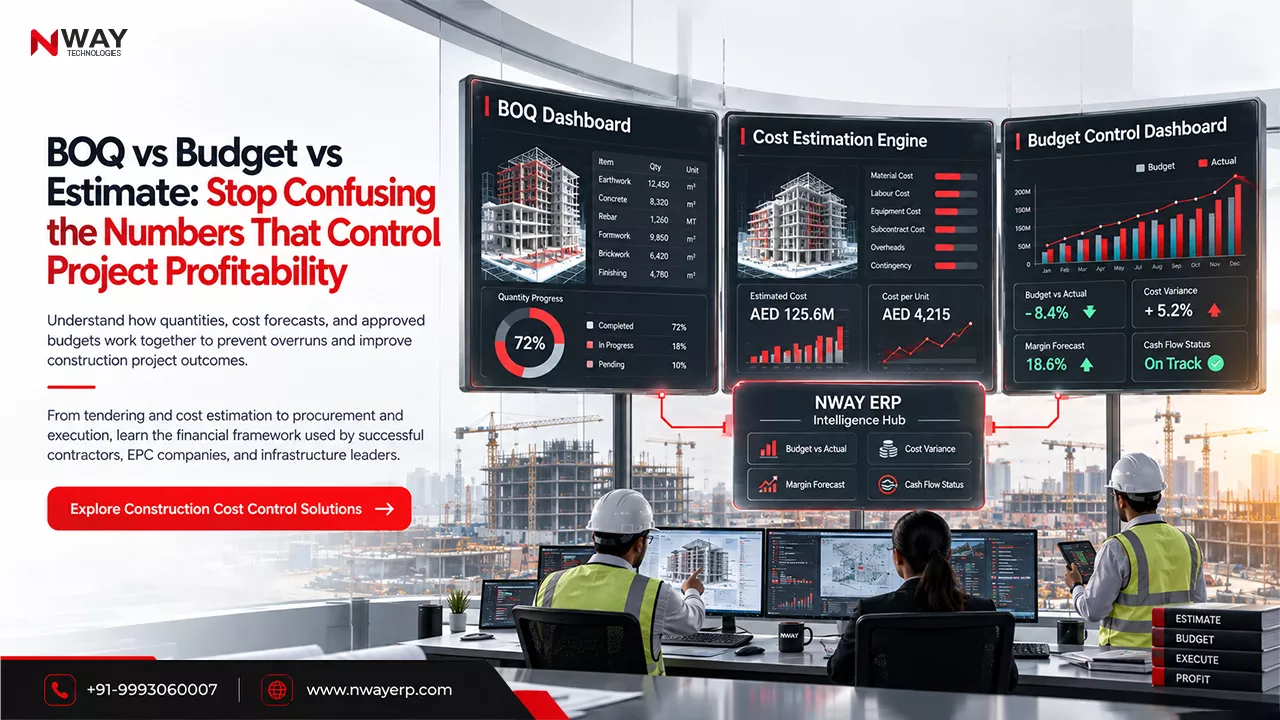
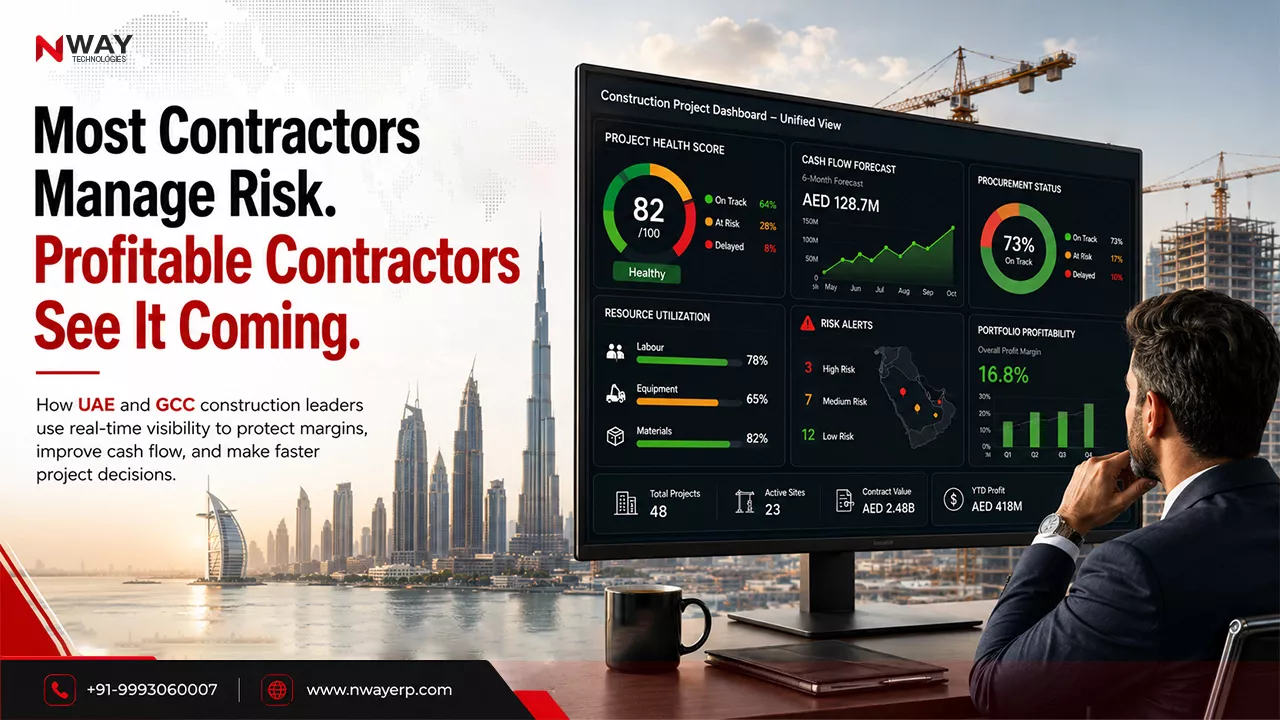
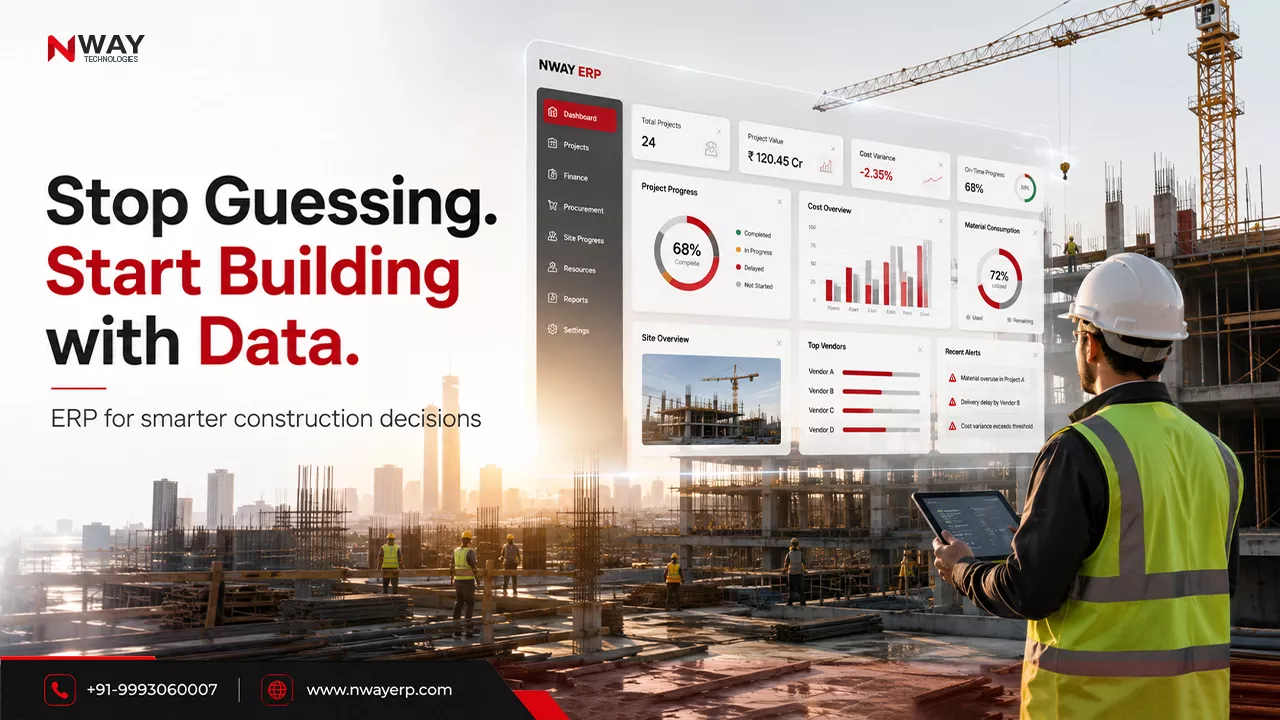
Instead of switching between spreadsheets, emails, and disconnected tools, project managers see all costs, schedules, equipment, and labor in one live dashboard. This makes it easier to track progress, identify delays, and coordinate multiple sites simultaneously.
AI-Driven Forecasting for Smarter Decisions
Nway ERP’s AI-powered assistant provides instant insights from project data. Builders can:
- Predict labor and equipment shortages before they impact timelines
- Forecast budget variances and material needs automatically
- Generate instant reports on KPIs, cost trends, or project health
This transforms decision-making from reactive to proactive and predictive, saving time and reducing costly mistakes.
Operational Efficiency and Risk Reduction
By automating tasks such as document tracking, approvals, and reconciliation of costs, Nway ERP reduces manual errors, miscommunication, and compliance risks. Field and office teams stay aligned, and managers can focus on execution rather than administration.
Business-Level Value Across the Project Lifecycle
The true impact of Nway ERP isn’t just in features – it’s in the results:
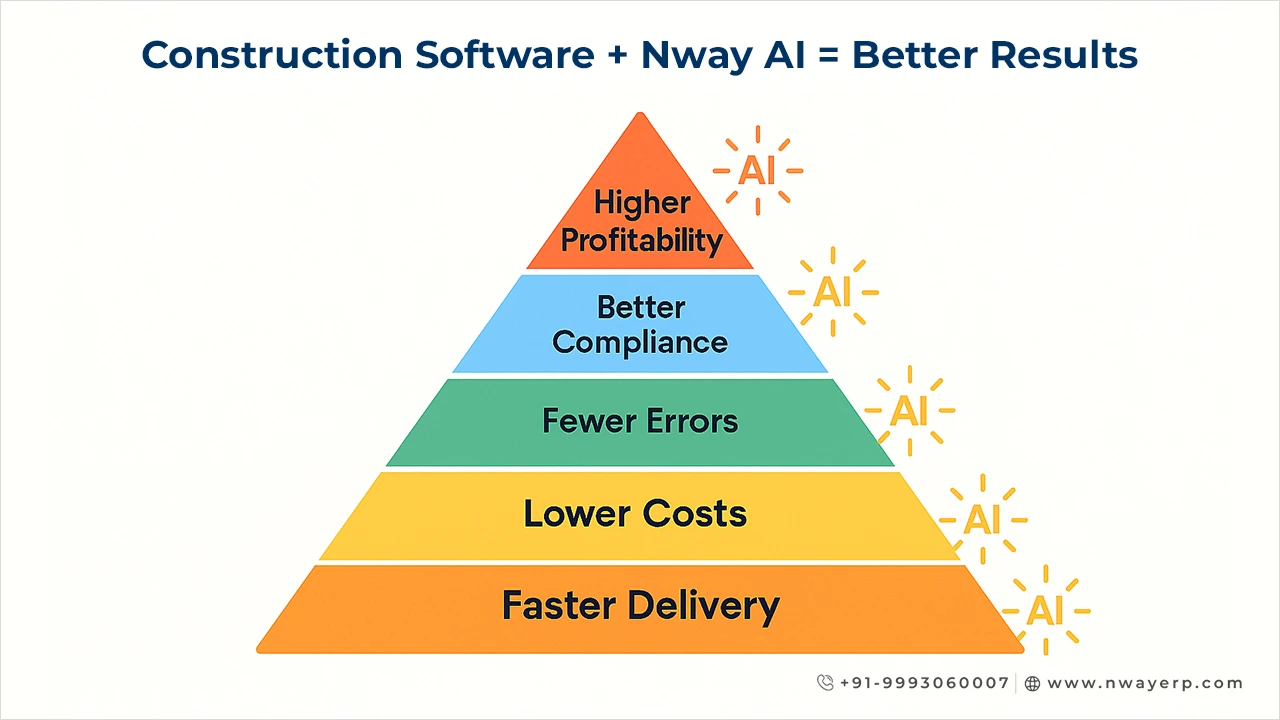
Faster project delivery: AI insights prevent delays and allow adjustments in real time
Lower operational costs: Smarter resource planning and automatic reconciliation cut waste
Better compliance and audit readiness: All documents, approvals, and updates are automatically tracked
Higher profitability: Optimized schedules, resource utilization, and cost control improve margins
AI Enhancements That Solve Long-Standing Challenges
Nway ERP’s intelligent capabilities act as tools that finally solve the toughest construction problems:
- Smart assistant for instant report generation and KPI insights
- Intelligent invoice and field data entry to reduce errors and speed finance cycles
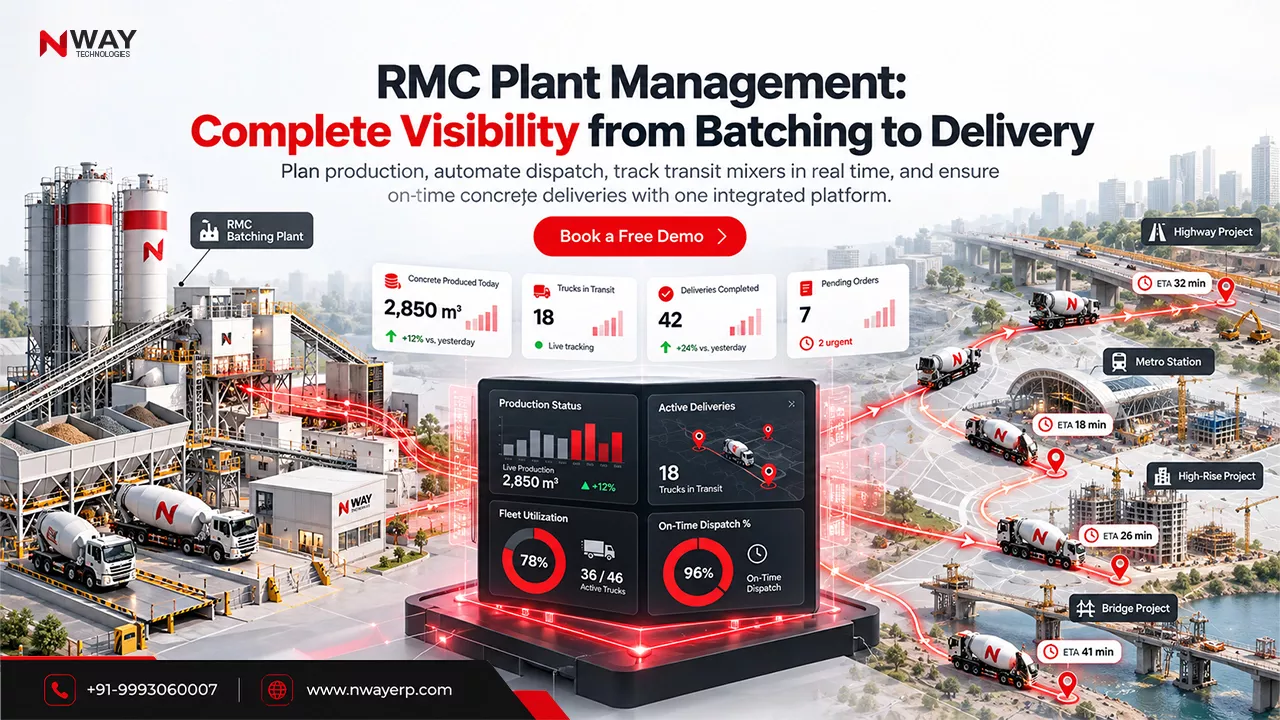
- Automated site tracking, including equipment usage and weighbridge integration
These AI-enabled tools augment human expertise, giving builders faster, more accurate data to make confident decisions. The result is projects delivered on time, on budget, and with reduced operational stress – exactly what growing builders need.
With vs Without Construction Management Software
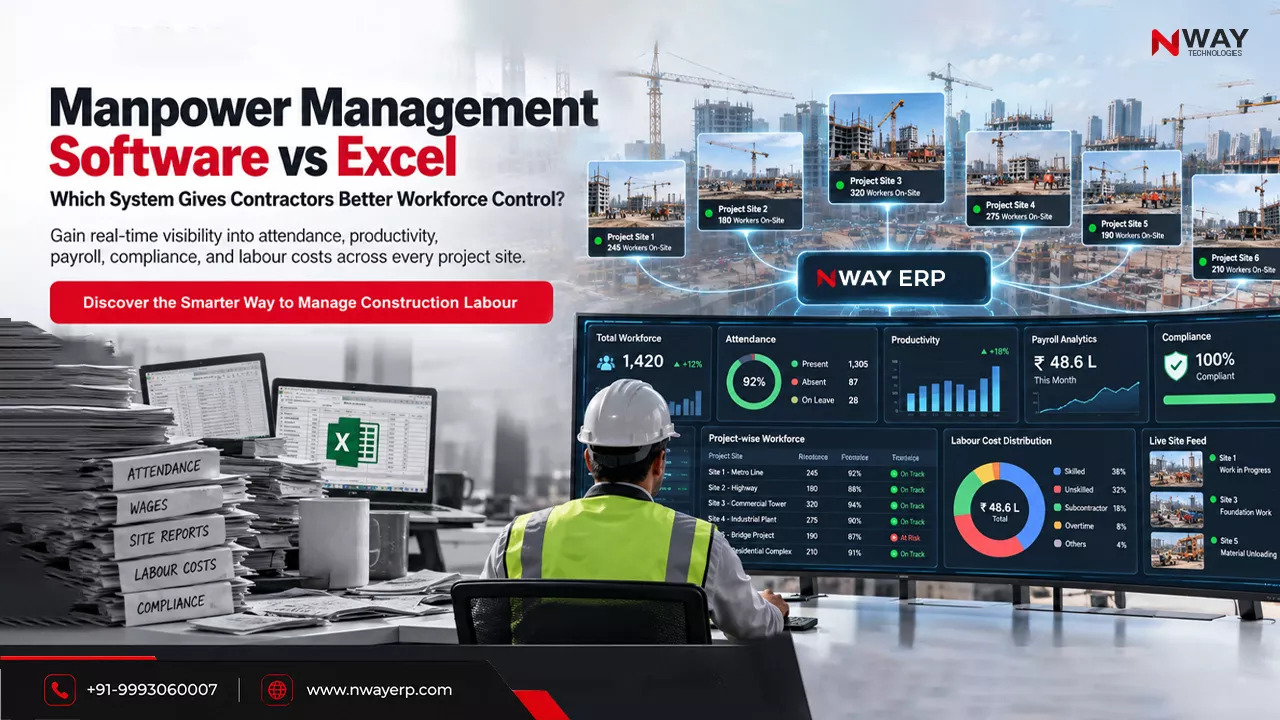
The difference between traditional project management and AI-enhanced construction management software is clear. Nway ERP helps builders reduce delays, control costs, optimize resources, and improve compliance – all while giving real-time insights for smarter decisions.
| Without Construction Management Software | With AI-Enhanced Construction Management Software (Nway ERP) |
|---|---|
| Schedules delayed due to manual coordination | Predictive AI scheduling flags potential delays before they occur |
| Budget overruns caused by disconnected cost tracking | Real-time cost tracking with AI forecasts material and labor needs |
| Subcontractor tasks misaligned or missed | Automated alerts and updates ensure subcontractor alignment across sites |
| Resource underutilization (equipment and labor idle) | AI suggests optimal allocation of labor, machinery, and materials |
| Reports take hours or days to compile | Instant AI-assisted reports provide KPIs, progress, and cost variance |
| Compliance documents scattered, risking audits | Automated documentation and audit-ready compliance tracking |
| Reactive problem-solving after issues occur | AI insights detect risks early and recommend preventive actions |
| Manual site monitoring with frequent errors | Automated site tracking captures equipment, material, and vehicle data accurately |
Conclusion
For growing builders, construction management software is essential to manage complex projects efficiently, improve team collaboration, and reduce risk. AI-powered insights add a new level of business intelligence – predicting delays, optimizing resources, and enabling proactive decision-making.
Nway ERP goes beyond software features. Its AI-enhanced construction management system provides unified visibility, predictive forecasting, and smarter workflows – delivering measurable impact on project delivery, cost control, and operational efficiency. Builders using Nway ERP can manage multiple projects confidently, on time, and within budget.
Reduce stress, prevent errors, and stay ahead of deadlines – learn how Nway ERP helps builders work smarter.